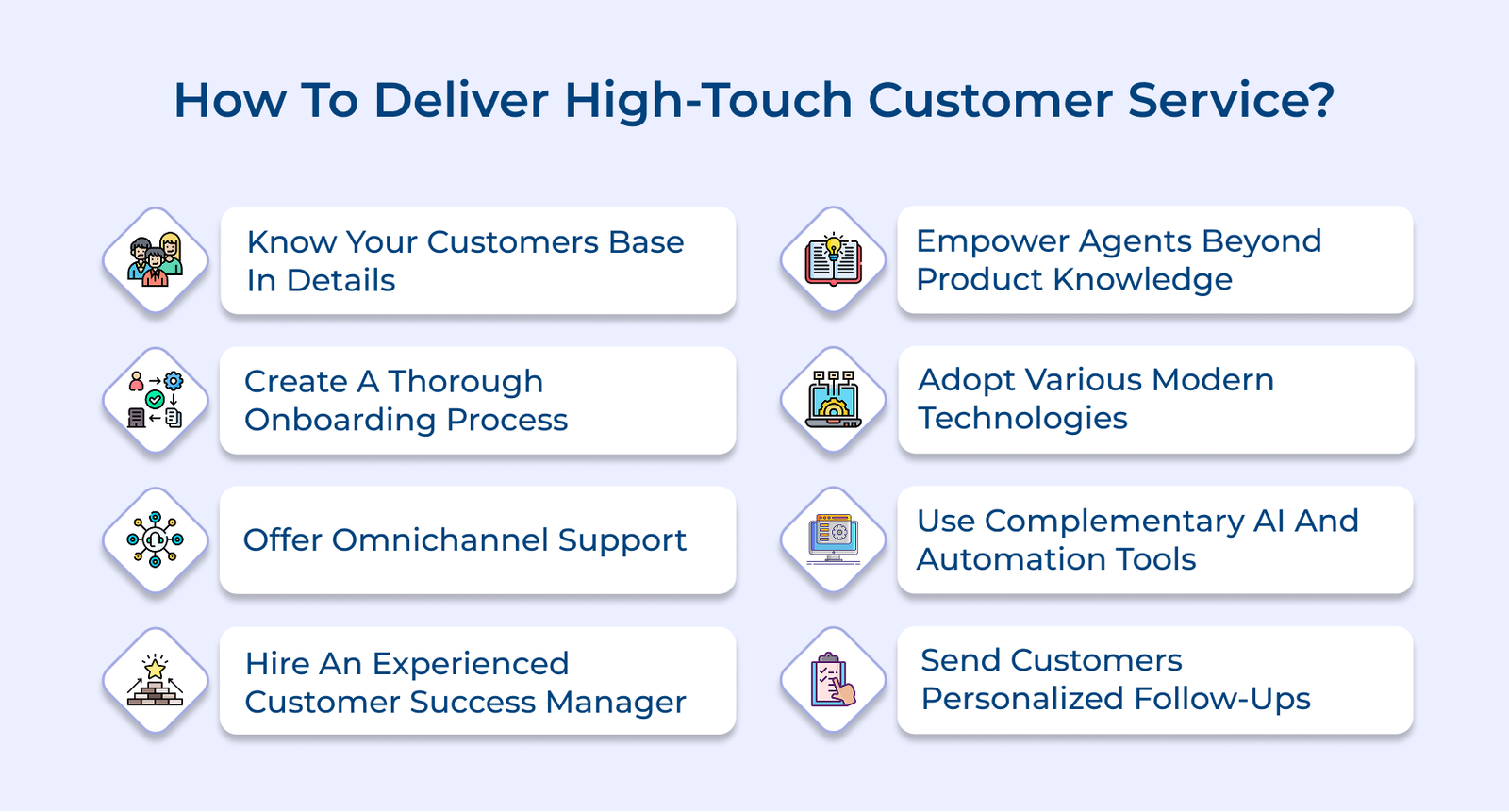
1. Know Your Customers Base In Details
You can tailor interactions, anticipate needs and offer solutions that truly resonate by knowing customers’ demographics, behaviors, preferences or challenges. The personalized approach enhances trust, loyalty and smoother customer experiences.
Organizations can harness CRM data, feedback and customer interviews to build detailed profiles. The insights help customize communication, recommend relevant products and develop proactive strategies that address potential issues before they arise, making customers feel valued.
Actionable tips:
- Conduct quarterly surveys to capture both quantitative data and qualitative feedback, keeping a pulse on evolving customer needs.
- Regularly update customer personas with fresh insights and share the resources across all teams for a unified approach.
2. Create A Thorough Onboarding Process
Effective onboarding sets the tone for the relationship, helping customers quickly realize value, reduce churn and build confidence in their decisions. Poor onboarding often leads to frustration and churn.
Create a structured, step-by-step onboarding program with clear milestones, training materials and regular check-ins. Offer resources in various formats (videos, guides, interactive tools) and track success at each stage to ensure customers receive consistent, tailored support throughout their journey.
Pro tips:
- Create a detailed onboarding checklist with clear milestones and success criteria, sharing it with customers at the beginning of their journey to set clear expectations.
- Hold regular progress reviews within the first 90 days, adjusting the onboarding pace and approach based on customer feedback to ensure a smooth experience.
3. Offer Omnichannel Support
Omnichannel support is crucial as customers expect seamless, high-quality service across all their preferred communication channels (email, phone, social media or chat). The approach enhances satisfaction by ensuring smooth transitions and eliminating the need to repeat information, streamlining issue resolution.
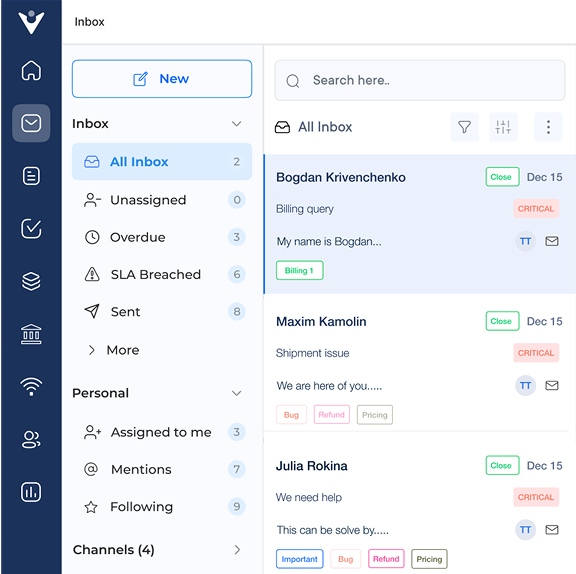
Implement an integrated support system that connects all channels, providing service reps with a unified view of customer interactions. It enables personalized, context-rich support that maintains consistency and acknowledges previous conversations, no matter the touchpoint.
Best practices:
- Implement a unified customer service platform that consolidates all communication channels, giving agents real-time access to customer interaction history.
- Develop channel-specific response protocols while ensuring a consistent brand voice and service quality across all platforms.
4. Hire Well Experienced Customer Success Managers
Experienced Customer Success Managers (CSMs) bring valuable expertise in problem-solving, relationship-building and proactive issue resolution. Their deep insights drive product adoption, ensure customer success and add strategic value by anticipating needs.
Leverage seasoned CSMs to shape customer success strategies, mentor junior team members and manage high-value accounts. Their knowledge not only refines processes but also provides critical feedback for product development and industry best practices.
How to implement:
- Create a hiring rubric that assesses both technical expertise and soft skills, focusing on candidates’ ability to build relationships.
- Establish mentorship programs that pair seasoned CSMs with juniors to enhance knowledge sharing and elevate best practices throughout the team.
5. Empower Agents With More Than Just Extensive Product Knowledge
Agents need more than just product knowledge—they require emotional intelligence, strong problem-solving skills, effective communication and industry insights. Empowered agents can make quick, creative decisions and handle complex issues, boosting customer satisfaction.
Implement training programs that combine technical skills with soft skills like conflict resolution, active listening and emotional intelligence. Empower agents with decision-making authority and provide them with the resources to understand the bigger picture of customer challenges.
Actionable tips:
- Implement regular role-playing sessions focusing on challenging scenarios, helping agents develop both technical and interpersonal skills through practical experience.
- Establish a decision-making framework that defines agent authority, enabling them to make customer-focused decisions independently, without unnecessary escalations.
6. Adopt Various Modern Technologies
Modern technology is crucial for delivering efficient, scalable and top-tier customer service. The tools track interactions, automate tasks, offer data-driven insights and enable proactive support. Without them, businesses risk losing their competitive edge and falling short of customer expectations for fast, efficient service.
Adopt a unified tech stack with CRM systems, analytics tools, communication platforms and customer feedback systems. The technologies should integrate seamlessly to provide a 360-degree view of customer interactions, automate workflows and generate insights to continuously enhance service quality.
Pro tips:
- Perform quarterly technology audits to pinpoint gaps in your current stack and explore new tools that can boost service delivery.
- Develop a comprehensive training program for new technology rollouts, ensuring all team members are equipped to use the tools confidently and effectively.
7. Use Complementary AI and Automation Tools Like Chatbots and Self-Service Tools
AI and automation are key to scaling high-touch services while keeping response times in check. The tools manage routine queries, provide 24/7 support and free up agents to tackle complex, high-priority issues. Self-service options also empower customers to find solutions independently.
Implement AI-driven chatbots for initial interactions and common questions, with seamless escalation to human agents for more complex issues. Create robust self-service resources, including knowledge bases, video tutorials and interactive guides, while automating tasks like scheduling, status updates or basic troubleshooting.
Actionable tips:
- Continuously review chatbot interactions to spot areas for improvement based on customer feedback and frequently asked questions.
- Create a self-service content calendar to ensure knowledge base articles are regularly updated and aligned with customer needs.
8. Send Customers Personalized Follow-Ups
Personalized follow-ups reinforce your commitment to customer success, strengthening relationships and driving loyalty. They create opportunities for feedback, early issue detection and show customers they’re valued, boosting retention.
Create a structured follow-up process tailored to customer segments, interaction types and lifecycle stages. Use automation to send personalized messages while keeping a human touch, referencing past interactions and customer goals for greater relevance.
Pro tips:
- Develop a follow-up matrix that outlines timing, channels and content for each customer segment, ensuring personalized yet consistent outreach.
- Establish a feedback loop to analyze follow-up responses, using insights to refine future interactions and enhance service delivery.
Low-Touch vs. High-Touch Customer Service
The following are the key differences between the two service models and help you determine which approach is best suited for your organization.