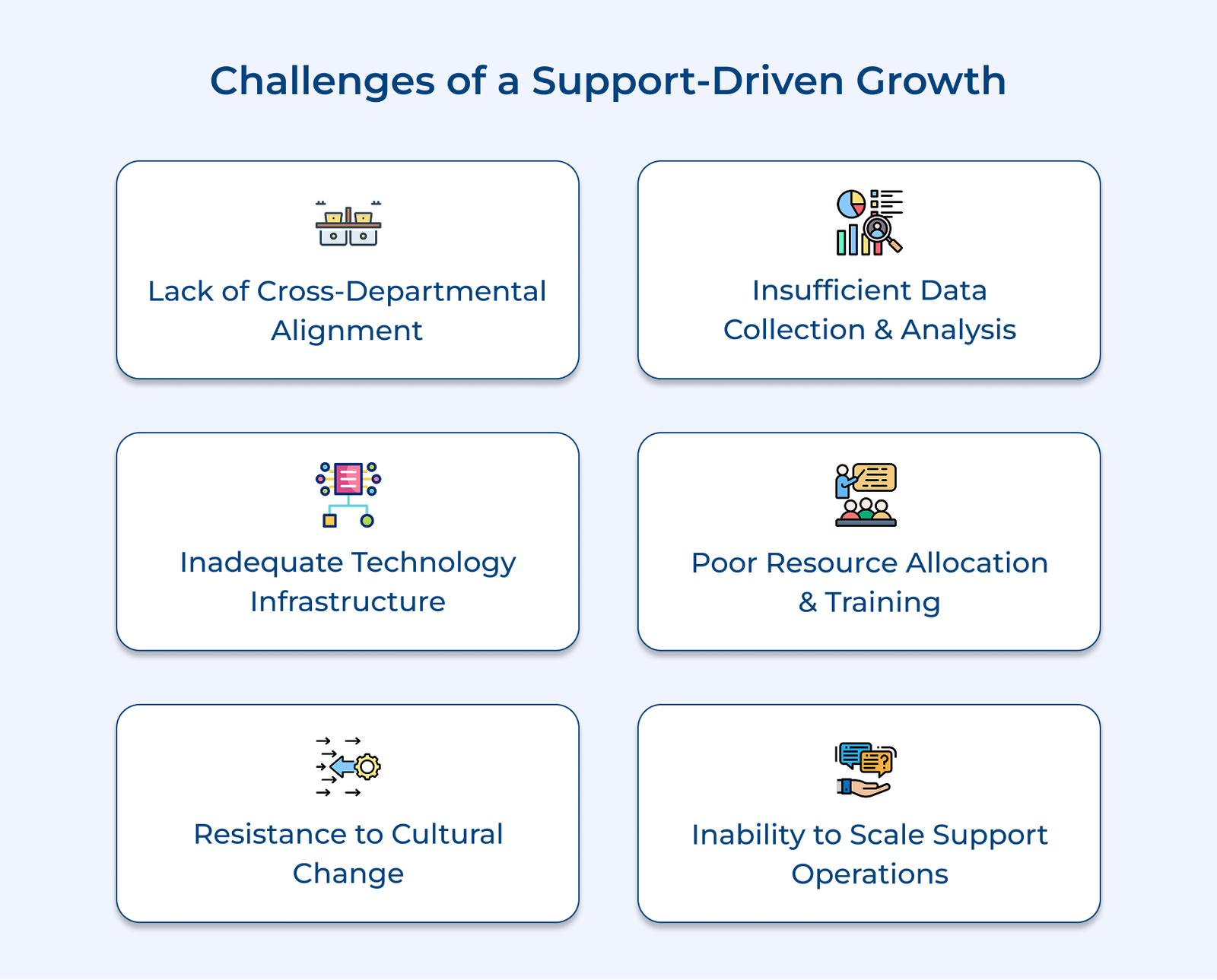
Key challenges:
1. Lack of Cross-Departmental Alignment
Teams work in silos, preventing support insights from reaching product and marketing. Poor communication and conflicting priorities result in missed opportunities or fragmented customer experiences.
2. Insufficient Data Collection and Analysis
Organizations struggle to capture meaningful customer data and fail to translate support interactions into actionable insights. Inaccurate or incomplete data results in poor decisions and missed chances for proactive support.
3. Poor Resource Allocation and Training
Support teams are often understaffed and undertrained, lacking the skills needed to drive growth. Limited career development opportunities contribute to high turnover and inconsistent service quality.
4. Resistance to Cultural Change
Organizations often face resistance when shifting from traditional support metrics to growth-focused KPIs. Teams struggle to embrace the new responsibilities and mindset needed for support-driven growth.
5. Inability to Scale Support Operations
Support quality deteriorates as the customer base grows, with teams unable to maintain personalized attention and proactive support. Automation efforts often miss the balance between efficiency and maintaining a personal touch.
- Invest in an integrated tech stack: Select scalable, integration-ready tools that meet both current and future needs, with a phased implementation plan to ensure smooth adoption.
- Build comprehensive training programs: Design structured onboarding focusing on technical and soft skills, while offering clear career development paths within the support team.
- Enhance cultural transformation: Drive change with executive support, clear communication of vision and recognition of behaviors that align with customer-driven growth principles.
- Build scalable support framework: Implement intelligent automation for routine tasks while preserving human interaction for complex issues. Regularly review and optimize support processes based on performance metrics.
Examples Of Support-Driven Growth
Let’s go through some real-life examples that demonstrate the tremendous impact the strategy can have on businesses.
1. Amazon’s Customer Obsession Model
Amazon revolutionized its support strategy with the “Customer Obsession” principle, empowering support teams to make immediate decisions for customer satisfaction—like offering instant refunds and replacements without returns. Representatives were also trained to suggest complementary products based on customer interactions.
The approach boosted Prime membership retention and increased customer spending. Amazon enhanced customer loyalty, repeat purchases and cross-selling success by transforming support into a proactive, growth-driving force.
2. Apple’s Genius Bar Revolution
Apple transformed tech support with the Genius Bar, turning it into a premium, consultative experience. Support staff were trained not only to solve technical issues but also to identify upgrade opportunities and introduce new products during interactions.
The model became a key revenue driver, boosting hardware upgrades and AppleCare+ subscriptions. It also fostered a loyal customer community, with Apple stores becoming destinations for both supporting and discovering new products.
3. Airbnb’s Host Support Network
Airbnb revamped host support to focus on more than just problem resolution. Their team helps hosts optimize listings, enhance guest experiences and achieve Superhost status through personalized coaching.
The support-driven strategy led to higher host retention, more property listings and improved earnings. Hosts who received the support delivered better service, boosting platform growth and driving higher guest satisfaction.
4. Nike’s Digital Support Experience
Nike integrated support with their Nike+ membership, training teams to use customer activity data to recommend products and personalize training programs.
The approach boosted growth in Nike’s digital ecosystem, driving higher engagement with apps and services. Support interactions transformed into personalized experiences, introducing customers to new products and strengthening loyalty.
5. Spotify’s Listener Support Evolution
Spotify reimagined support as “music experience specialists,” training staff to help users discover new music, improve playlists and maximize features. They integrated support with personalized recommendations during interactions.
The approach boosted premium subscriptions and reduced churn, turning support conversations into opportunities to engage users seamlessly.
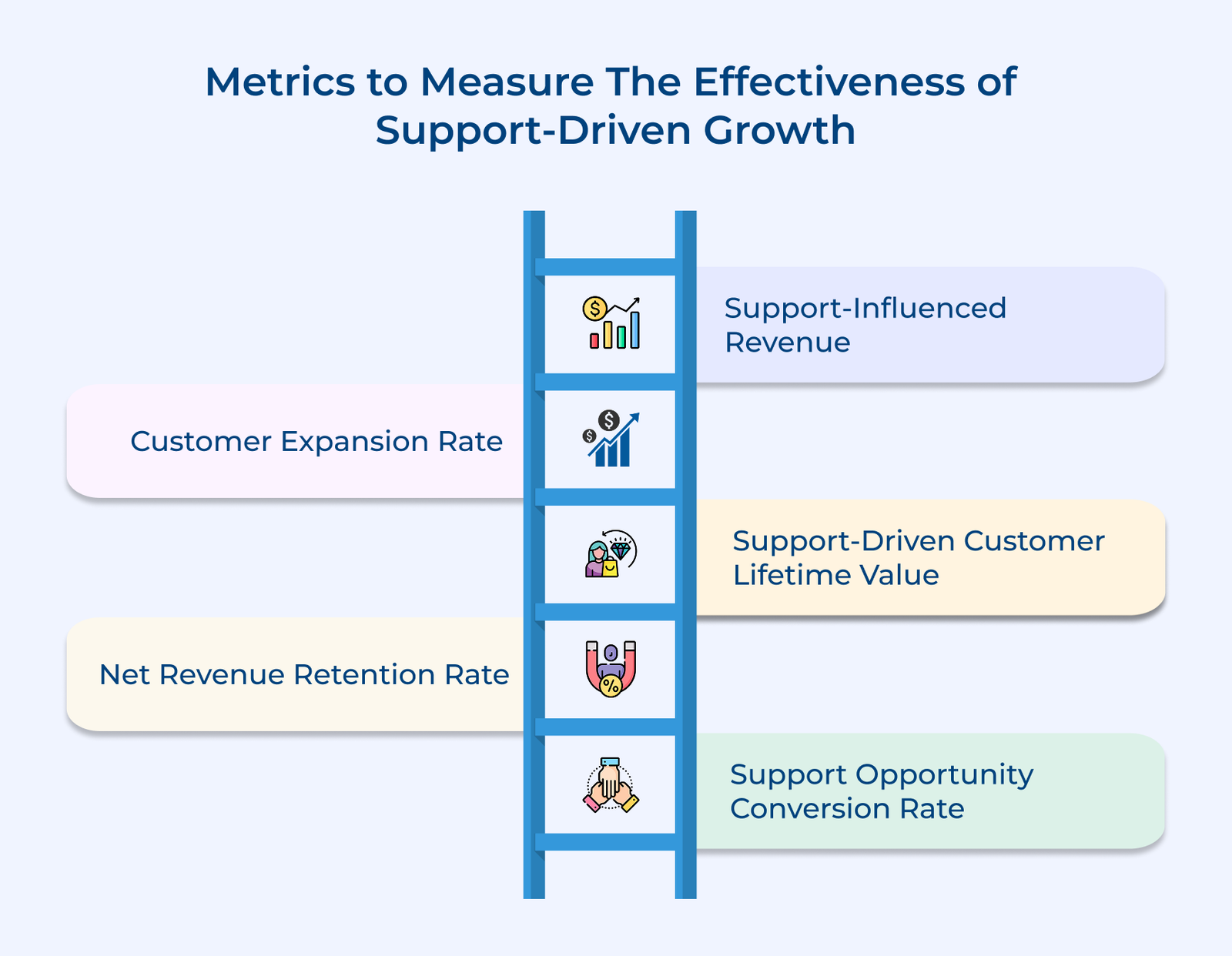
Metrics to Measure The Effectiveness of Support-Driven Growth Initiatives
Below are the essential metrics you need to assess the effectiveness of your support-driven growth initiatives, ensuring you’re not just working hard, but working smart.