1. Detailed communication: Email provides space for detailed explanations and step-by-step solutions. Customers can describe issues in depth, while agents can reply with comprehensive answers, including links, attachments and screenshots for clarity. The format enables complex problems to be addressed effectively without the constraints of real-time conversation.
2. Asynchronous communication: Email support doesn’t require immediate attention from either party. Customers can reach out anytime, even outside business hours, while agents can thoroughly manage their workload and research issues before replying. The asynchronous approach reduces pressure and ensures more thoughtful, accurate responses.
3. Cost-effective: Email support is more cost-effective than phone support, as agents can manage multiple inquiries at once. Templates and canned responses boost efficiency, saving time for common issues.
4. Global accessibility: Email support bridges time zones and language barriers, allowing international customers to reach out conveniently. Translation tools help overcome language differences, making it an ideal solution for global businesses.
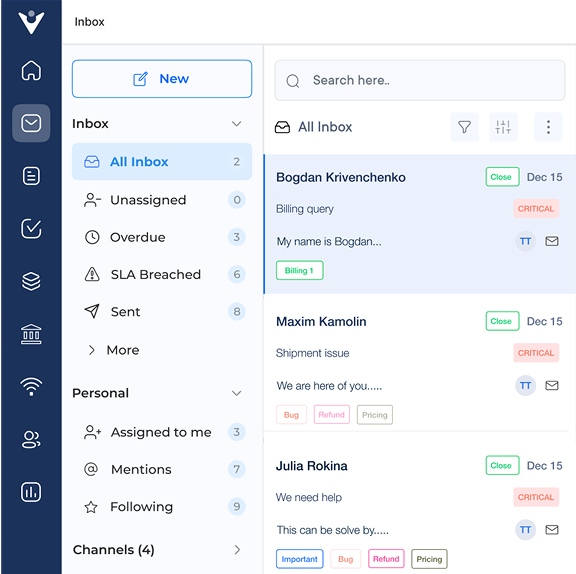
5. Integration with customer relationship management (CRM) systems: Email integrates with CRM systems to track customer interactions, giving agents a full view of a customer’s history and preferences. It enables personalized, context-rich assistance and ensures consistent communication.
Live Chat Vs Email Support: 7 Key Differences
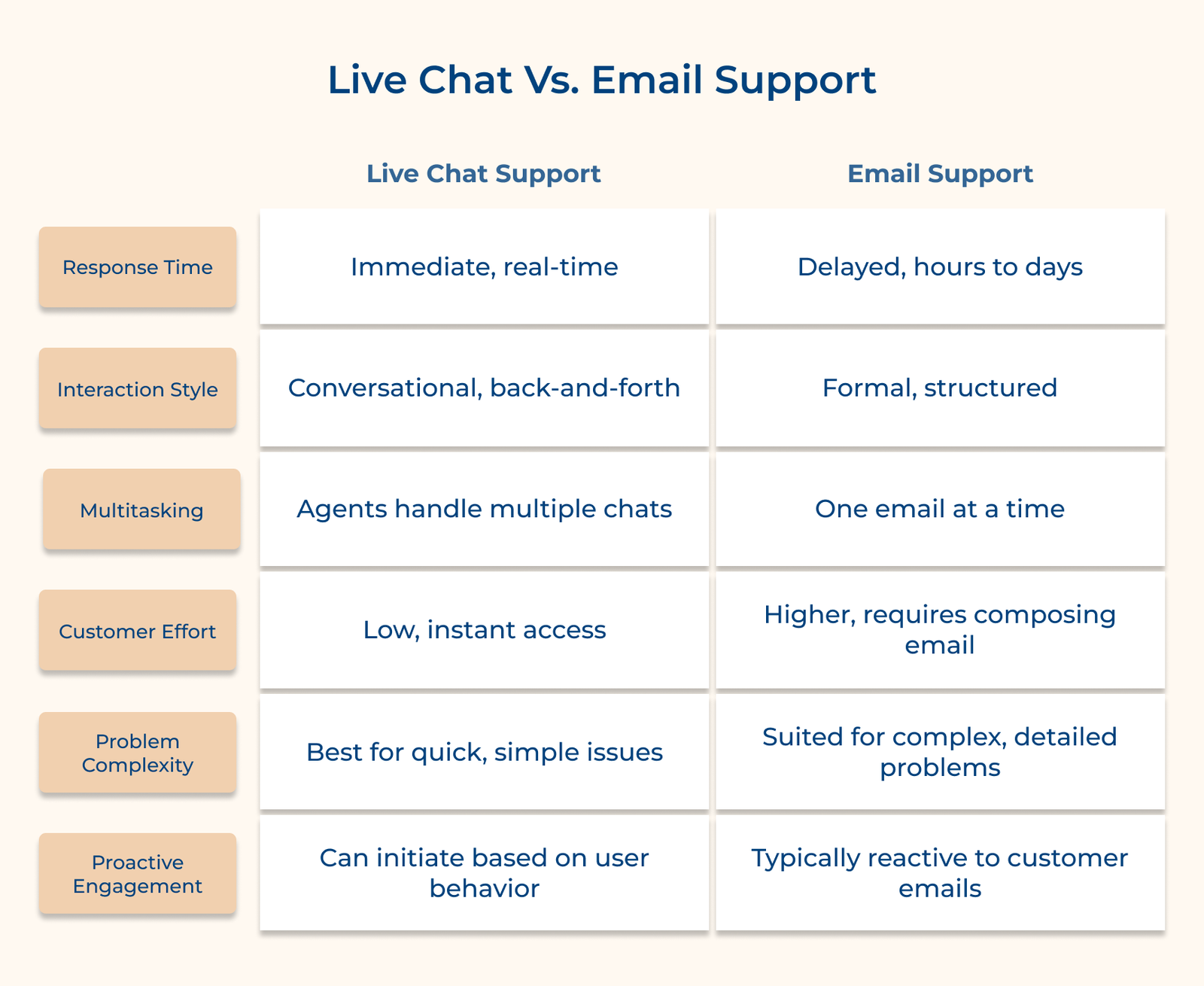
Following are seven key differences between live chat and email support, helping you make an informed decision that elevates your customer service game.
| Aspect |
Live Chat Support |
Email Support |
| Response Time |
Immediate, real-time |
Delayed, hours to days |
| Interaction Style |
Conversational, back-and-forth |
Formal, structured |
| Multitasking |
Agents handle multiple chats |
One email at a time |
| Customer Effort |
Low, instant access |
Higher, requires composing email |
| Problem Complexity |
Best for quick, simple issues |
Suited for complex, detailed problems |
| Proactive Engagement |
Can initiate based on user behavior |
Typically reactive to customer emails |
1. Response Time
Live chat support delivers real-time assistance, allowing customers to get immediate answers within seconds or minutes. The instant response helps resolve issues quickly and reduces customer frustration, providing a smoother, more efficient experience.
Email support tends to have longer response times, often requiring hours or even days to get a reply. While it’s effective for non-urgent matters, it lacks the immediacy many customers expect when seeking quick solutions or information.
Key takeaways:
- Live chat provides instant answers which leads to faster issue resolution.
- Email support is ideal for non-urgent issues, but its slower response time can frustrate customers with time-sensitive concerns.
2. Conversation Flow
Live chat enhances dynamic, real-time interactions, allowing agents and customers to exchange information quickly. The back-and-forth flow creates a more natural conversation, enabling faster issue resolution.
Email support follows a more structured and formal approach. Each email often includes detailed responses, but the process is slower, with longer wait times for follow-up questions and potential delays in resolving issues.
Pro tips:
- Live chat enables fast, real-time exchanges and quick clarifications.
- Email offers more detailed but slower communication.
3. Multitasking Capabilities
Live chat support allows agents to manage multiple conversations at once, enhancing efficiency. Agents can quickly handle several inquiries simultaneously with tools like pre-written responses and intuitive interfaces, streamlining customer support.
Email support requires more focus on each message. While agents can juggle different threads, the process is slower and more structured, meaning they can assist fewer customers in the same time frame.
Key takeaways:
- Live chat lets agents assist multiple customers at once, boosting efficiency.
- Email support is more focused on individual interactions, which can limit overall productivity.
4. Customer Effort
Live chat offers a seamless, low-effort experience for customers. They can initiate a conversation while continuing to browse or shop with a single click, meeting the demand for convenience and minimal disruption.
Email support requires more effort from customers. They must open their email client, write a message and often provide additional details or attachments, making the process more time-consuming.
Pro tips:
- Live chat provides a quick, hassle-free support experience for customers.
- Email support demands more effort and time from customers to initiate and manage communication.
5. Context and Personalization
Live chat support gives agents real-time context, such as the customer’s current page, browsing history and account details. It enables personalized, relevant assistance for a smoother experience.
Email support lacks instant context, often requiring agents to ask for additional details or search through past interactions. While still personalized, it can lead to more back-and-forth, making the experience less seamless.
Pro tips:
- Live chat provides immediate context, enabling highly personalized and relevant support.
- Email support often requires extra effort to gather context, which can delay a personalized response.
6. Record Keeping and Documentation
Live chat automatically logs conversations, providing quick access to transcripts for analysis or training. Its informal nature may result in less structured documentation than email.
Email support creates a detailed, organized record of all interactions, including solutions and attachments. Clear documentation is valuable for both customers and businesses, ensuring a comprehensive trail of communication.
Best practices:
- Live chat offers automatic logging but can lack structure in the documentation.
- Email support provides clear, comprehensive records that are easy to reference.
7. Emotional Connection and Tone
Live chat enhances a more personal, empathetic connection through real-time interactions. Agents can quickly adapt their tone and use casual language, emojis, or GIFs to create a friendly atmosphere.
Email support, while still capable of conveying empathy, tends to be more formal and structured. Its slower pace makes it harder to establish an immediate emotional connection, though it can still offer professionalism and clarity.
How to implement:
- Live chat enhances instant emotional connections with tone adjustments for a more personal touch.
- Email support, while more formal, offers professionalism and clarity, though it may lack a personal feel.
8. Integration with Sales and Marketing
Live chat integrates seamlessly with sales and marketing, offering proactive support based on customer behavior, such as preventing cart abandonment or answering pre-sale questions in real-time.
Email support, while useful for follow-up marketing, lacks the immediacy of live chat and is better suited for nurturing leads or providing post-sale communication.
Key takeaways:
- Live chat can be proactively used to support real-time sales and marketing efforts.
- Email support is ideal for long-term lead nurturing and detailed follow-ups, but less effective for immediate sales engagement.
What are the Limitations of Email Support?
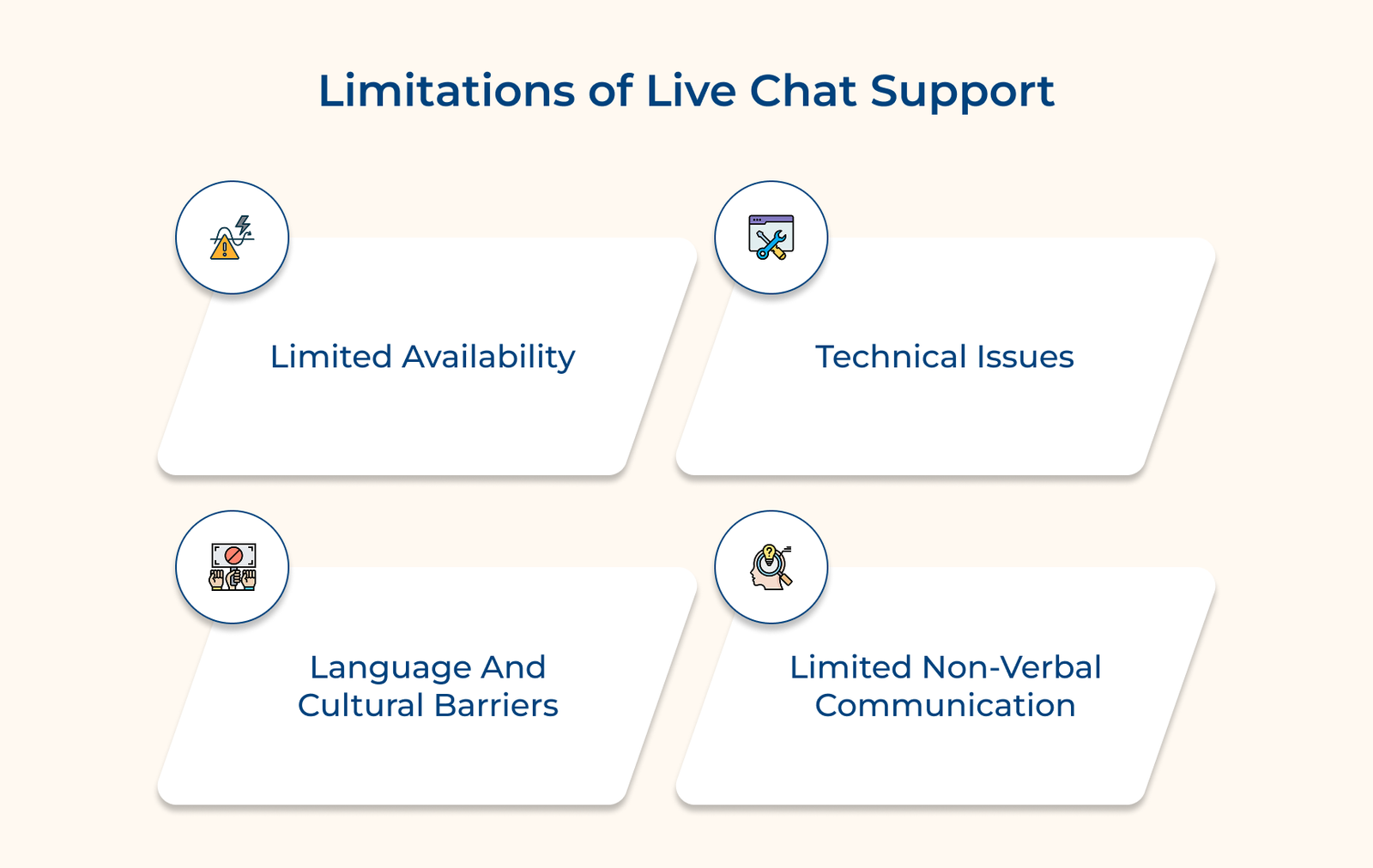
Let’s go through the key limitations that can affect the effectiveness of live chat as a customer service channel, potentially hindering its impact.