What is Lead Follow-up? Best Practices to Improve Conversion
The blog explains why timely, consistent lead follow-up matters. It shares practical steps to respond better, stay organized and convert more interested prospects into customers.
The blog explains why timely, consistent lead follow-up matters. It shares practical steps to respond better, stay organized and convert more interested prospects into customers.
Businesses have been dealing with the issue where they’ve been generating quality leads through their marketing campaigns and saw prospects show genuine interest in their product. Yet the momentum stalls as those leads sit in their pipeline without timely lead follow-up, eventually going cold.
Interest alone does not move deals forward, and delayed responses often drain momentum before there’s even a chance for things to develop. More often than not, the fundamental issue isn’t with the product or even marketing strategy. 80% of sales may require up to five follow-ups before closing a deal.
We’ve found that even now, many businesses lack a structured approach to engaging leads consistently and with intent. So without further ado, let’s dive in to understand how you can take up your follow-up game to the next level.
A lead follow-up system refers to a clear, repeatable way to stay in touch with potential customers after first contact. It helps you track conversations, remember when to reach out and make sure no interesting lead is forgotten.
Without a system, roughly 80% of sales requiring five follow-ups never happen because salespeople stop after two attempts. A proper system transforms this by ensuring consistent engagement that builds trust and keeps your business top-of-mind when prospects are ready to buy.
Key objectives:
Let’s go through the key benefits of lead follow-up and how consistent communication helps you convert interested prospects into customers.
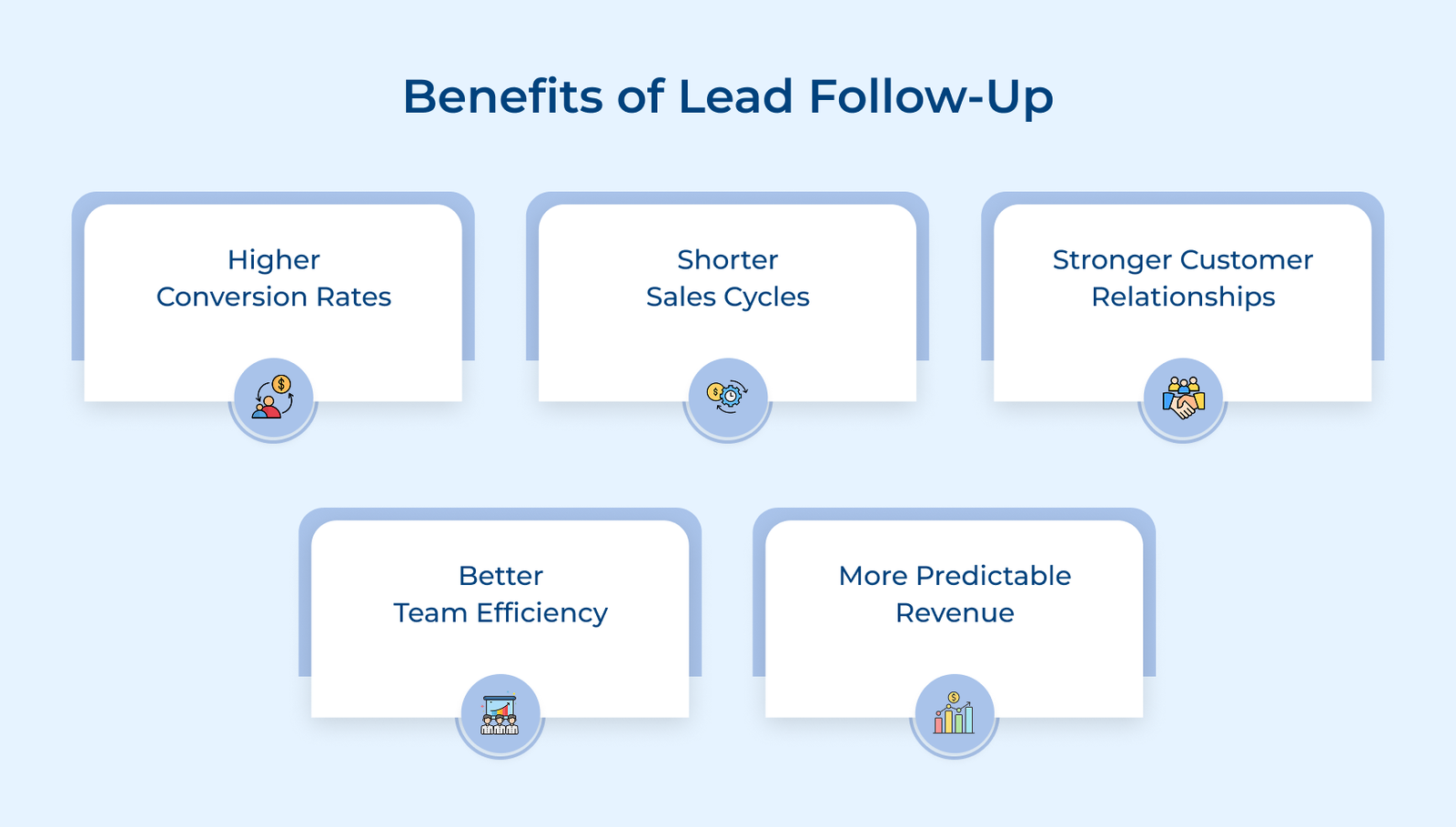
Higher Conversion Rates
Conversions improve because you stay present at key decision moments. Buyers need reminders or reassurance and steady follow-up keeps you relevant when others disappear.
Shorter Sales Cycles
Deals close faster when conversations don’t stall. Regular follow-ups address doubts as they arise and keep interest from fading due to delays or distractions.
Stronger Customer Relationships
Trust builds when prospects see you’re reliable and attentive. Thoughtful follow-ups show you’re focused on their needs, not just closing a deal.
Better Team Efficiency
Clear follow-up schedules and shared records remove guesswork. Your team knows who to contact, when to reach out and what was discussed last.
More Predictable Revenue
When every lead is tracked and followed consistently, your pipeline reflects reality. It makes planning easier and helps you spot problems before they hurt results.
Check out the core principles that make lead follow-up effective by helping you respond on time and build trust with prospects without overwhelming them.
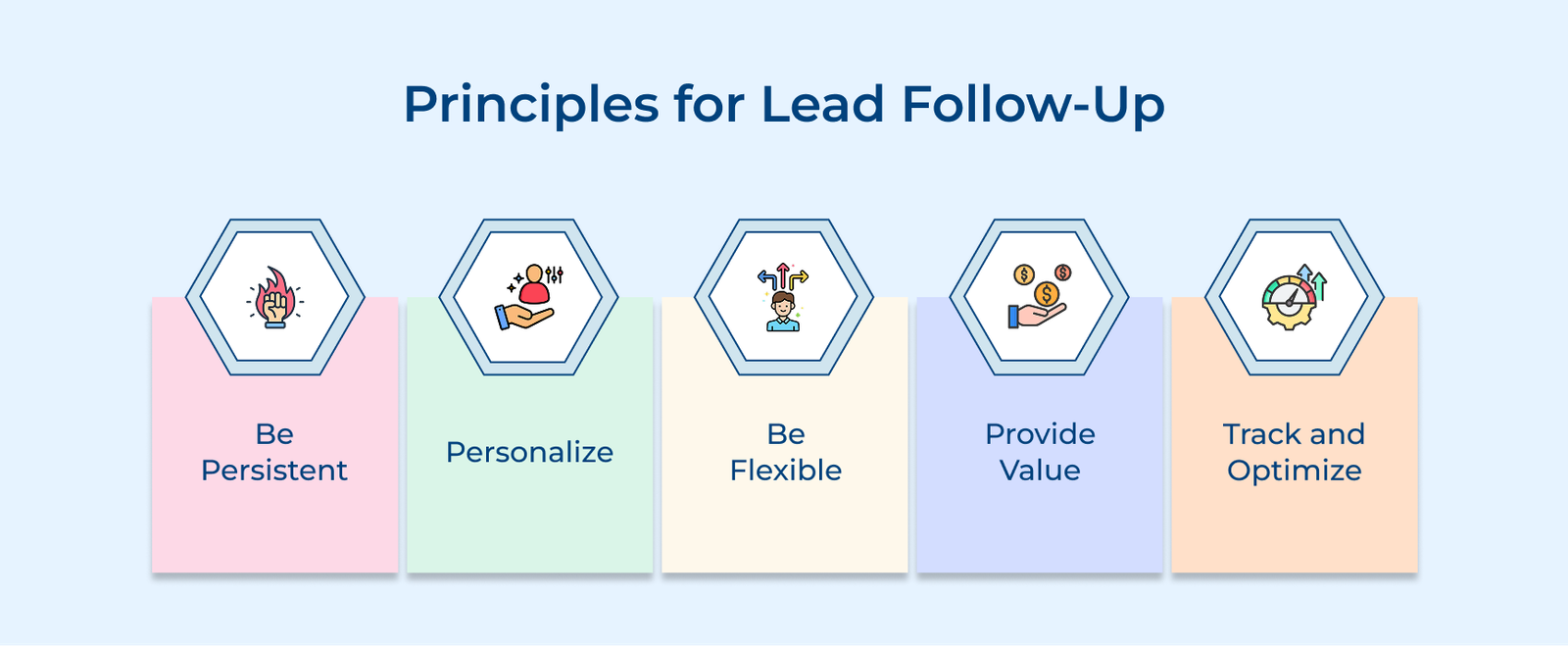
Persistence means showing up consistently without becoming annoying or crossing into spam territory. Your goal is to stay present in the prospect’s awareness so when they’re ready to make a decision, your solution comes to mind first.
Key elements:
The best lead follow-up sequences acknowledge that buying decisions happen on the prospect’s timeline, not yours. You provide support as needed, which may mean following up several times over months before getting a real response.
Generic messages get ignored because prospects can smell such marketing or email campaigns from miles away. Personalization shows you’ve done your homework and actually care about solving their specific problems rather than just hitting your quota.
Reference details from previous conversations or mentions of challenges they’ve shared on social media. Personalize your solutions to their industry context and company size instead of delivering the same pitch to everyone. Send resources that address the exact objections they’ve raised rather than generic whitepapers.
Rigid schedules fail because prospects progress at unpredictable speeds through their customer journey. Your system needs room to adapt when someone goes silent for two weeks or suddenly becomes extremely responsive.
Actionable tips:
Reading prospect behavior and responding accordingly demonstrates emotional intelligence that builds trust. Prospects who engage differently need tailored approaches and your follow-up system should adapt to both patterns naturally.
Every follow-up interaction should give the prospect something useful instead of just checking in to ask if they’re ready to buy. Value-driven follow-up shows you as a trusted advisor helping them succeed, even if they don’t buy.
Share industry insights that affect their business or introduce them to helpful contacts in your network. Send case studies showing how companies like theirs solved similar challenges or offer a quick audit of their current approach. Each touchpoint should answer the question: what’s in it for them?
What gets measured gets improved and follow-up effectiveness depends on knowing which approaches actually work versus which ones waste everyone’s time. Tracking turns your follow-up process from guesswork into a repeatable system that consistently delivers results.
Key metrics:
Use the data to refine your approach continuously rather than sticking with the same tactics year after year. Test subject lines, CTAs and sequences to see what resonates. Then focus on top performers and drop underperforming approaches.
Below are the best practices that can help transform your lead follow-up process and significantly enhance your conversion rates.
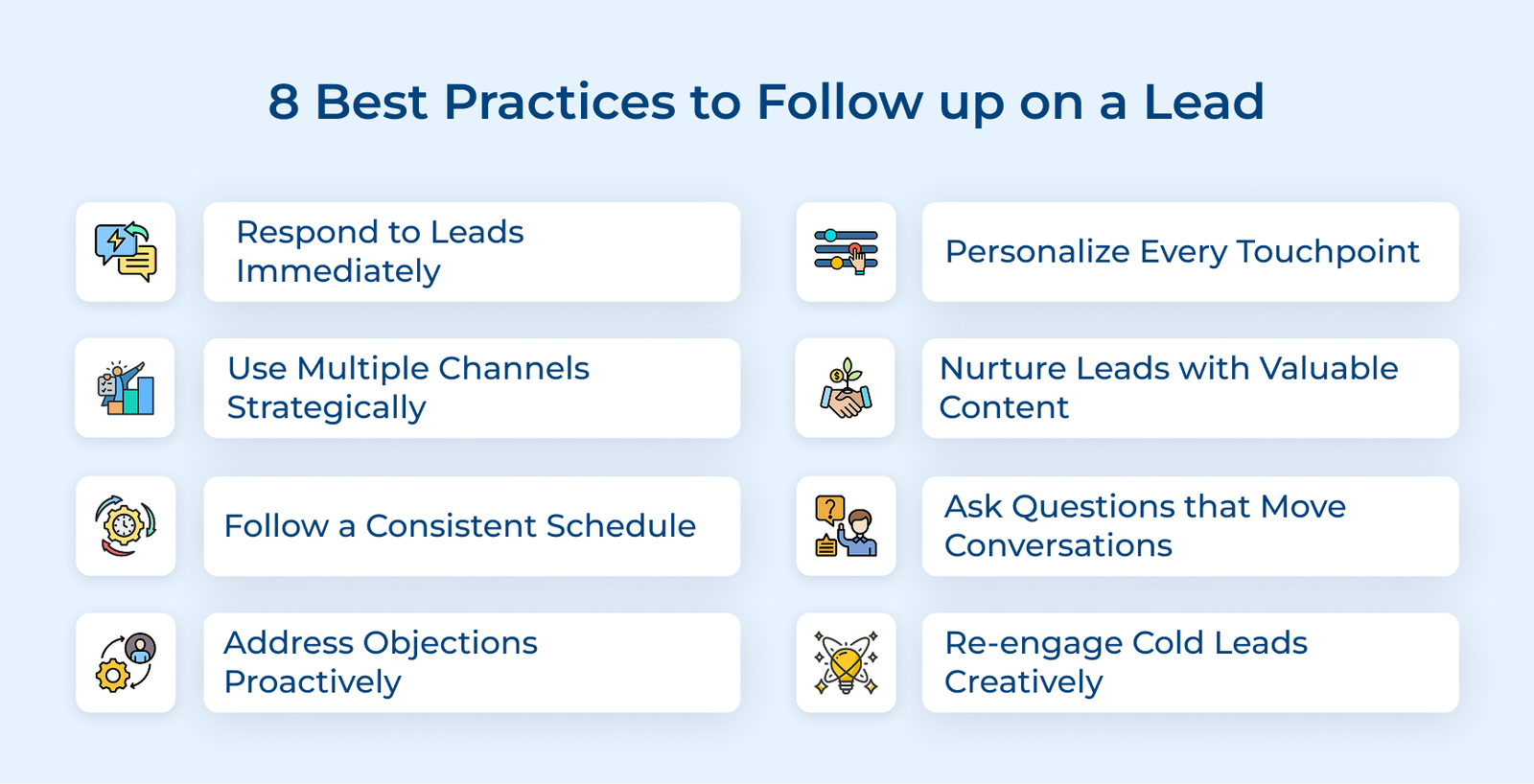
Speed is crucial because prospects reach out to multiple vendors at once and the first responder often wins. Leads contacted within five minutes convert far more effectively than those reached later.
Your immediate response strategy begins with automation that acknowledges contact instantly. Setting up automated acknowledgment messages ensures no lead waits in silence, wondering if their inquiry disappeared into a void. The messages bridge the gap between form submission and human contact.
Pro tips:
Beyond automation, you need alert systems that notify the right people the moment a lead arrives. Desktop notifications, mobile alerts, and Slack integrations ensure new leads are seen immediately, not hours later during routine inbox checks.
Key ways:
Generic lead follow-up messages signal that you see prospects as numbers rather than people with unique challenges. Personalization shows you care about their situation and boosts response rates by making communications feel relevant.
Key ways:
Channel diversity prevents your message from getting lost in a single crowded inbox or voicemail system. Skipping the practice means you’re gambling that your prospect actually checks the one channel you’ve chosen when they might prefer different platforms entirely.
Start by asking during your first conversation how they prefer to be contacted and then honor that preference as your primary channel. If someone stops responding after several attempts, it’s smart to try a different avenue since people’s attention shifts between platforms.
Key channels:
The key is reading engagement signals and adjusting accordingly, rather than rigidly sticking to one approach. If someone opens every email but never replies, yet promptly answers when you call, that tells you where to focus your energy.
Content-based lead follow-up transforms you from a salesperson chasing a close into a helpful resource solving problems. The approach of lead nurturing matters more than the leaders often think.
Prospects usually need education before they’re ready to buy and providing useful information builds trust. It is why nurtured leads are known to move through the sales cycle 23% faster than non-nurtured leads.
Key types:
Content only works when it’s timely and relevant. If it doesn’t connect to a question they asked or a problem they mentioned, don’t send it. One useful resource beats five random ones.
A clear follow-up schedule takes the guesswork out of when to reach out and keeps good leads from slipping through the cracks. Without one, you either contact people too often or forget to follow up at all.
A good schedule adjusts to the situation. Someone who just asked for a demo needs quick check-ins over the first week. A colder lead may only need a thoughtful touch once a month until interest picks up.
Pro tips:
Strategic questioning transforms follow-ups from status checks into discovery sessions that uncover real buying intent and decision-making dynamics. Questions reveal budget constraints, timeline pressures and stakeholder involvement that determine if a deal will close or stall.
Open-ended questions:
Closed-ended questions:
The questions work by first opening dialogue to understand context, then closing in on specifics that reveal if the prospect has the authority and resources to actually become a customer. The combination keeps conversations productive rather than circling surface topics.
Proactive objection handling means surfacing and resolving concerns before prospects use them as reasons to delay or decline. It matters because most prospects won’t voice real hesitations unless you create space for discussion and unaddressed doubts kill deals silently.
You use it by anticipating common objections from past deals and addressing them naturally before prospects even raise them. If pricing typically causes hesitation, your third follow-up might include an ROI calculator showing how quickly the investment pays for itself.
Key takeaways:
Re-engaging cold leads means reaching out to people who showed interest earlier but went quiet or said no. Timing changes, priorities shift and what didn’t work then may fit now.
Return with a new reason to talk
Cold leads haven’t said no forever, but they did lose interest in your original approach or timing was wrong. Returning with fresh angles like new features or updated pricing gives them reason to reconsider without repeating the same pitch.
Share meaningful updates
New features, product improvements or service changes give you a natural way to reconnect. The updates show progress and may solve the exact concern that stalled the conversation earlier.
Tie your message to real-world changes
Regulatory updates, market shifts or operational pressures can make your solution more relevant than it was months ago. Framing your outreach around the changes makes it useful, not intrusive.
Check out the key challenges of manual lead follow-up, where delays and inconsistent outreach cause promising prospects to lose interest before meaningful conversations ever begin.
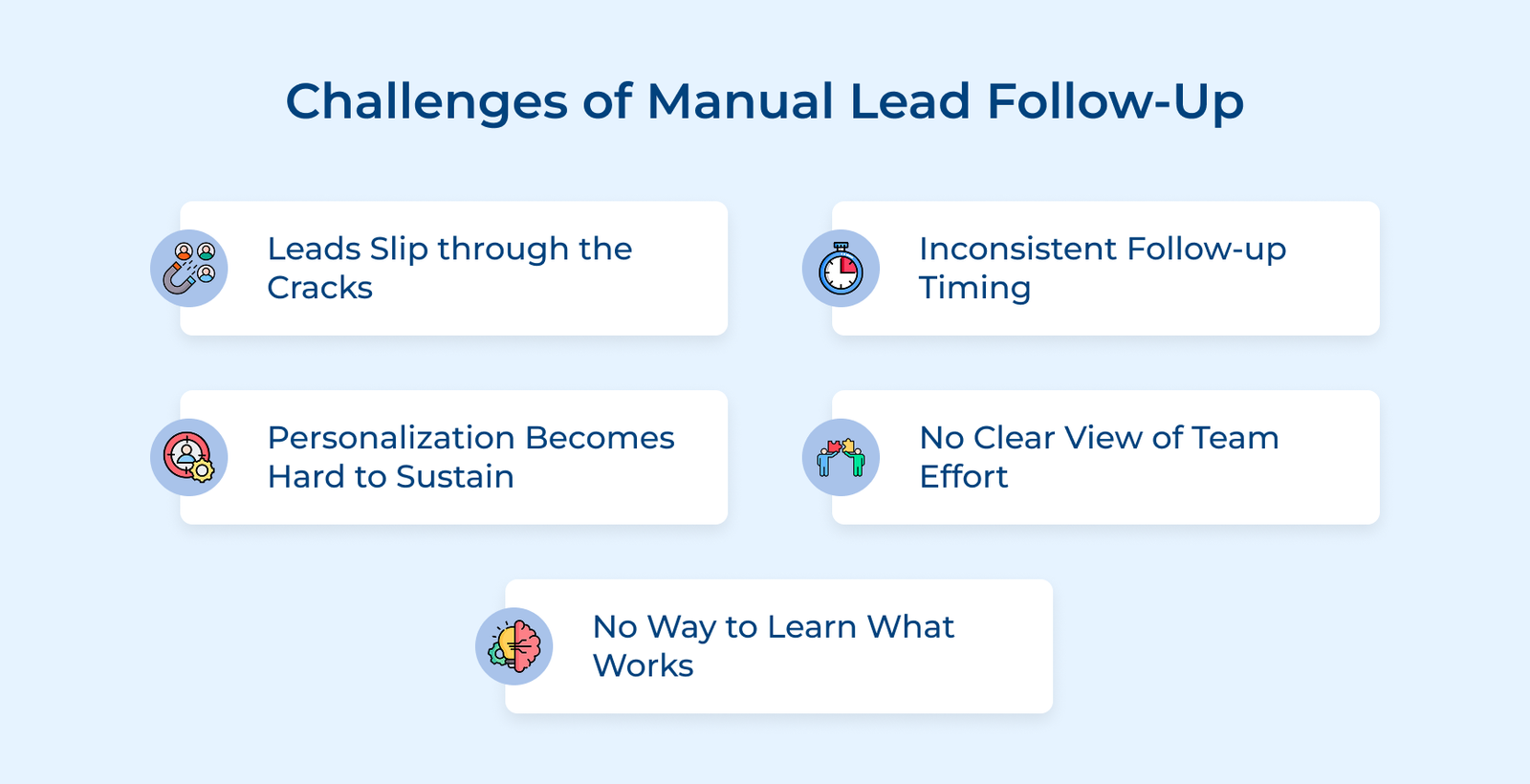
Leads Slip through the Cracks
When you’re juggling dozens of prospects, it’s easy to forget follow-ups. Strong leads get buried, responses come late and faster competitors step in first.
Inconsistent Follow-up Timing
Relying on memory and scattered notes leads to uneven outreach. Some prospects hear from you too often, others not enough, simply because there’s no clear schedule.
Personalization Becomes Hard to Sustain
Writing tailored messages takes time when details are spread across emails and call notes. You’re forced to choose between slow, careful follow-ups or quick messages that feel impersonal.
No Clear View of Team effort
Without a shared system, follow-up activity lives in individual inboxes. Managers can’t see who’s doing well, who needs help, or where deals are stalling.
No Way to Learn What Works
When nothing is tracked, improvement is guesswork. You can’t tell which messages, channels or timing lead to replies, so the same mistakes repeat.
Implementation steps:
Check out the platforms that stand out for their ability to automate follow-ups while keeping interactions personal and timely.
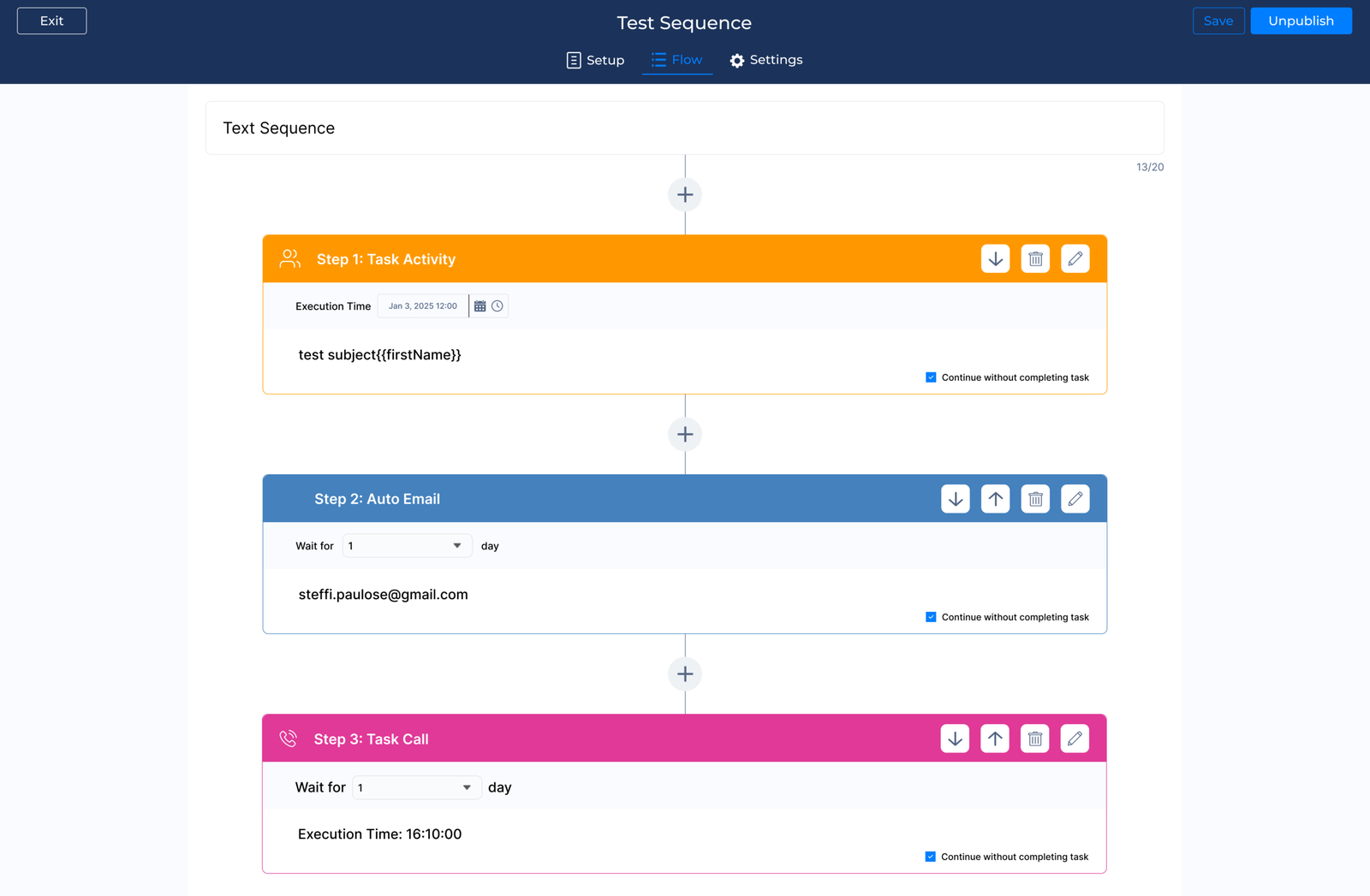
Veemo Sales is a sales-focused CRM designed specifically to help teams manage leads through visual pipelines that show exactly where each prospect stands. The platform prioritizes simplicity and actionability, making it easy for salespeople to see which leads need follow-up attention right now without getting lost in complicated menus or unnecessary features.
Key Features:
HubSpot pairs a built-in CRM with lead follow-up automation. It tracks emails, site visits and replies automatically, then sends follow-ups based on what prospects actually do without any technical setup needed.
Pipedrive shows your deals clearly in a visual pipeline, so you know exactly who needs follow-up next. It sets reminders by deal stage, logs calls and emails automatically. The reminders help reduce manual work.
Salesmate delivers robust follow-up automation at a price point that works for growing businesses without enterprise budgets. It includes built-in calling, texting and email, letting teams reach prospects through multiple channels while keeping all conversations in one place.
String lead follow-up is often the difference between steady growth and missed chances. When leads aren’t contacted on time, interest fades and the effort spent attracting them goes to waste.
The right follow-up system, combined with proven best practices, ensures you stay consistent across every interaction. Start implementing one or two strategies today rather than waiting for the perfect moment because your competitors are already following up while leads in your pipeline go cold.

Implementation typically takes two to four weeks, depending on your team size and existing processes. The first week involves setting up your CRM and importing contacts. The remaining weeks focus on building automated sequences and training your team to ensure consistent adoption.
Automation eliminates human error and ensures every lead receives timely follow-up, regardless of how busy your team gets. The system never forgets or misses follow-ups, giving prospects consistent communication that builds trust and improves conversions.
Few people decide on the first interaction. Follow-up keeps the conversation alive while they compare options, discuss internally and figure out timing, often the difference between winning or losing the deal.
Your first follow-up should happen within five minutes of initial contact because response speed dramatically impacts conversion rates. After that, follow up around day one, day three and day seven, adjusting based on how the lead responds.
Most sales require five to twelve touchpoints before closing, so stopping after two or three attempts leaves revenue on the table. If a prospect explicitly asks you to stop or shows zero engagement after eight to ten attempts, move them into a long-term nurture campaign instead.
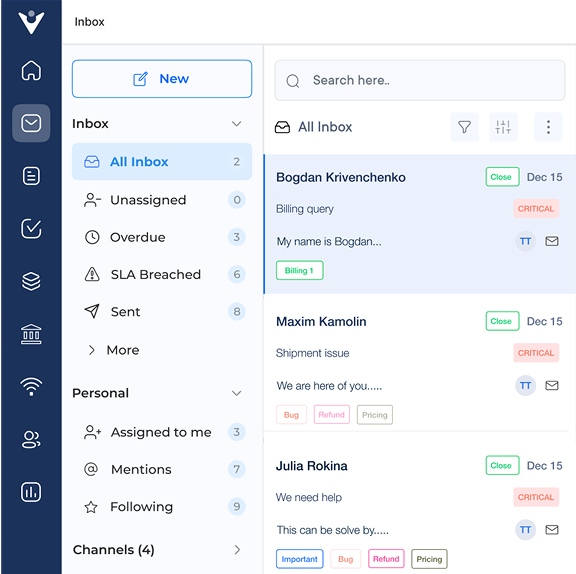
Grow Customer Relationships and stronger team collaboration with our range of products across the Conversational Engagement Suite.
Omnichannel Customer Support & Help Desk Software
AI Enabled Business Messaging and Chatbot Software
Sales Engagement & CRM Software
Call Center Software & Virtual Phone System
Product Marketing & Experience Platform
Customer Experience & Feedback Management Software

 How to Write Lead Nurturing Emails?: Tips, Examples & Mistakes
Scroll to top
How to Write Lead Nurturing Emails?: Tips, Examples & Mistakes
Scroll to top