1. Assess Current Channel Performance
Assessing the performance of your current channels provides a solid foundation for your omnichannel strategy. The evaluation highlights strengths, weaknesses and gaps between channels, helping you make informed decisions on resource allocation.
Conducting an audit of sales channels involves analyzing key metrics like revenue, conversion rates and customer satisfaction to identify high-performing channels and areas for improvement. The data serves as a benchmark for future success. Mapping customer touchpoints reveals how they interact with your brand across different channels, offering valuable insights into preferences and behavior.
Actionable tips:
- Create a standardized scorecard for each channel to track key metrics like conversion rate, average order value and customer satisfaction. Schedule monthly reviews to monitor progress and spot emerging trends.
- Utilize customer journey analytics tools to track cross-channel behavior and map common purchase paths. It helps identify which channels work best together and drive the most effective customer journeys.
2. Define Clear Objectives and KPIs
Clear objectives and KPIs are essential for guiding your omnichannel strategy. Without defined goals, it’s impossible to assess success or make data-driven decisions on resource allocation and adjustments. The metrics act as your roadmap for both implementation and optimization.
Setting SMART goals- specific, measurable, achievable, relevant and time-bound helps focus on key areas. Each goal should have clear success criteria and deadlines. Channel-specific metrics allow for granular performance tracking, ensuring every channel contributes to broader business objectives while considering its unique strengths.
Pro tips:
- Develop a hierarchical KPI structure that connects channel-specific metrics to business objectives, ensuring alignment and tracking contributions at every level.
- Implement automated reporting dashboards to display real-time progress toward goals, allowing quick identification of issues and opportunities.
3. Map Customer Journey Across Channels
Customer journey mapping offers a holistic view of how customers interact with your brand across all channels. The insight helps identify opportunities to enhance the customer experience, reduce friction and ensure smooth transitions between channels, boosting customer satisfaction.
Creating detailed customer personas through research into demographics, behaviors, preferences and pain points allows you to better understand the needs of different segments. It ensures your omnichannel strategy delivers personalized experiences based on real customer insights. Analyzing every interaction touchpoint, from discovery to post-purchase support, reveals pain points and highlights areas for improving cross-channel experiences.
Actionable tips:
- Conduct regular customer interviews to validate personas and journey maps – updating them quarterly to reflect changing evolving behaviors.
- Utilize heat maps and session recording tools to pinpoint where customers face challenges or drop-offs during their cross-channel journey.
4. Select Technology Infrastructure
A strong technology infrastructure is key to a successful omnichannel strategy. It ensures seamless integration between channels, provides valuable data insights and delivers consistent customer experiences. Without the right technical foundation, achieving true omni channel functionality is impossible.
When selecting a commerce platform, evaluate options based on scalability, integration capabilities and features. The platform should support multi-channel sales, inventory management and customer data integration while allowing room for future growth. Integrating POS, OMS, CRM and analytics systems creates a connected ecosystem, ensuring real-time data flow for consistent experiences.
Pro tips:
- Develop a comprehensive requirements document outlining both current needs and scalability, prioritizing platforms with strong API capabilities.
- Implement new technology in phases, beginning with core systems and progressively adding complex integrations. The approach minimizes risk and ensures thorough testing at each stage.
5. Optimize Website Experience
Your website is the core of your omnichannel strategy, where a smooth, optimized experience is crucial. A well-designed website allows customers to easily access information, make purchases and switch between channels seamlessly, while a poor experience can undermine your entire strategy.
Implement responsive design to ensure a consistent experience across all devices, with layouts, images or functionality that adapt to desktop, tablet and mobile screens. The design should reflect your brand identity while catering to different user contexts. Enhance the mobile experience by streamlining navigation, improving load speeds and simplifying the checkout process.
Pro tips:
- Conduct regular mobile usability testing with real users across various devices, documenting common pain points for ongoing improvement.
- Use A/B testing to optimize key conversion elements like CTAs, forms and checkout steps leveraging data to guide your optimization efforts.
6. Establish a Data Integration Framework
A strong data integration framework ensures consistent, accurate information flows across all channels and systems. The foundation supports personalized ]experiences, precise inventory management and data-driven decisions, all while maintaining data security.
Build a unified customer database that consolidates information from every touchpoint into a single source of truth. The central hub stores profiles, purchase history, preferences and interactions, enabling personalized experiences. Real-time synchronization, such as automated data updates, encryption and privacy compliance, ensures data accuracy across all systems.
Best practices:
- Implement a customer data platform (CDP) with real-time synchronization, prioritizing solutions with robust security features and compliance certifications.
- Establish a data governance framework that clearly defines data ownership, access rights and security protocols across all channels.
7. Develop Content Strategy
A cohesive content strategy ensures consistent messaging and brand voice across all channels while also adapting to each channel’s-unique requirements. It strengthens brand integrity, engages customers effectively and drives conversions through relevant, personalized content.
Develop channel-specific content plans that tailor formats, tone, and delivery to each platform, while keeping the core message consistent. A unified content calendar coordinates content releases across channels, maintains brand voice consistency and integrates social media platform strategies with other touchpoints.
Pro tips:
- Build a central content repository with tagged, channel-specific variations and use a content calendar to streamline publishing across all channels.
- Create channel-specific content guidelines that ensure brand consistency while optimizing for each platform’s unique needs.
8. Design Consistent Brand Experience
A consistent brand experience builds trust, strengthens brand identity and ensures a seamless customer journey across all channels. The recognition enhances loyalty and engagement, no matter how customers interact with your brand.
Create unified brand guidelines and standardize visual elements to ensure consistent presentation across all touchpoints. It includes detailed specs for logos, colors, typography and design elements. Align pricing across channels by coordinating offers, maintaining price parity and ensuring channel-specific deals complement each other.
Actionable tips:
- Create a digital brand portal for easy access to brand guidelines, assets and templates for all team members.
- Set up a centralized promotion management system to streamline and track offers across all channels.
9. Optimize Inventory Management
Efficient inventory management is key to fulfilling omnichannel expectations. It ensures product availability, enables flexible fulfillment, prevents stockouts and reduces excess inventory costs, enhancing customer satisfaction.
Implement real-time tracking systems to monitor inventory across all channels, using barcode or RFID technology and automated replenishment alerts to maintain accurate stock levels. Create a unified stock view that enables flexible fulfillment options like ship-from-store, buy online pickup in-store (BOPIS) and cross-channel returns while optimizing inventory allocation across channels.
Pro tips:
- Implement an advanced inventory management system with real-time synchronization and automated reordering based on set thresholds.
- Develop a comprehensive fulfillment strategy that defines rules for cross-channel inventory sharing and priority allocation during peak periods.
10. Train Staff and Define Processes
Well-trained staff and clear processes are key to effective omnichannel execution. They ensure consistent service, efficient operations and optimal use of systems, enabling seamless customer experiences across all channels.
Develop comprehensive training programs that cover system usage, customer service standards and cross-channel procedures. Include hands-on training sessions, role-playing and regular refresher courses to keep staff remaining proficient in managing cross-channel interactions. Establish clear standard operating procedures, including documenting workflows, escalation protocols and communication systems to ensure smooth cross-channel coordination.
Best practices:
- Create a training matrix to track staff competencies across different systems and schedule regular assessments.
- Develop clear process flowcharts and decision trees for common scenarios, making them easily accessible via a digital knowledge base.
11. Monitor and Optimize Performance
Continuous monitoring and optimization are vital to keeping your omnichannel strategy effective. Regular performance assessments help identify improvement opportunities, validate decisions and adapt to shifting customer needs while ensuring operational efficiency.
Track cross-channel KPIs by analyzing sales, customer satisfaction, channel efficiency and conversion rates. Identify trends that influence performance and gather customer feedback through surveys, reviews or service interactions. Use the insights to make data-driven adjustments to enhance the omnichannel approach.
Actionable tips:
- Build a real-time performance dashboard that tracks across all channels and holds weekly review meetings to analyze trends.
- Establish a structured feedback system to gather insights from both customers and employees, using the data to prioritize optimization efforts.
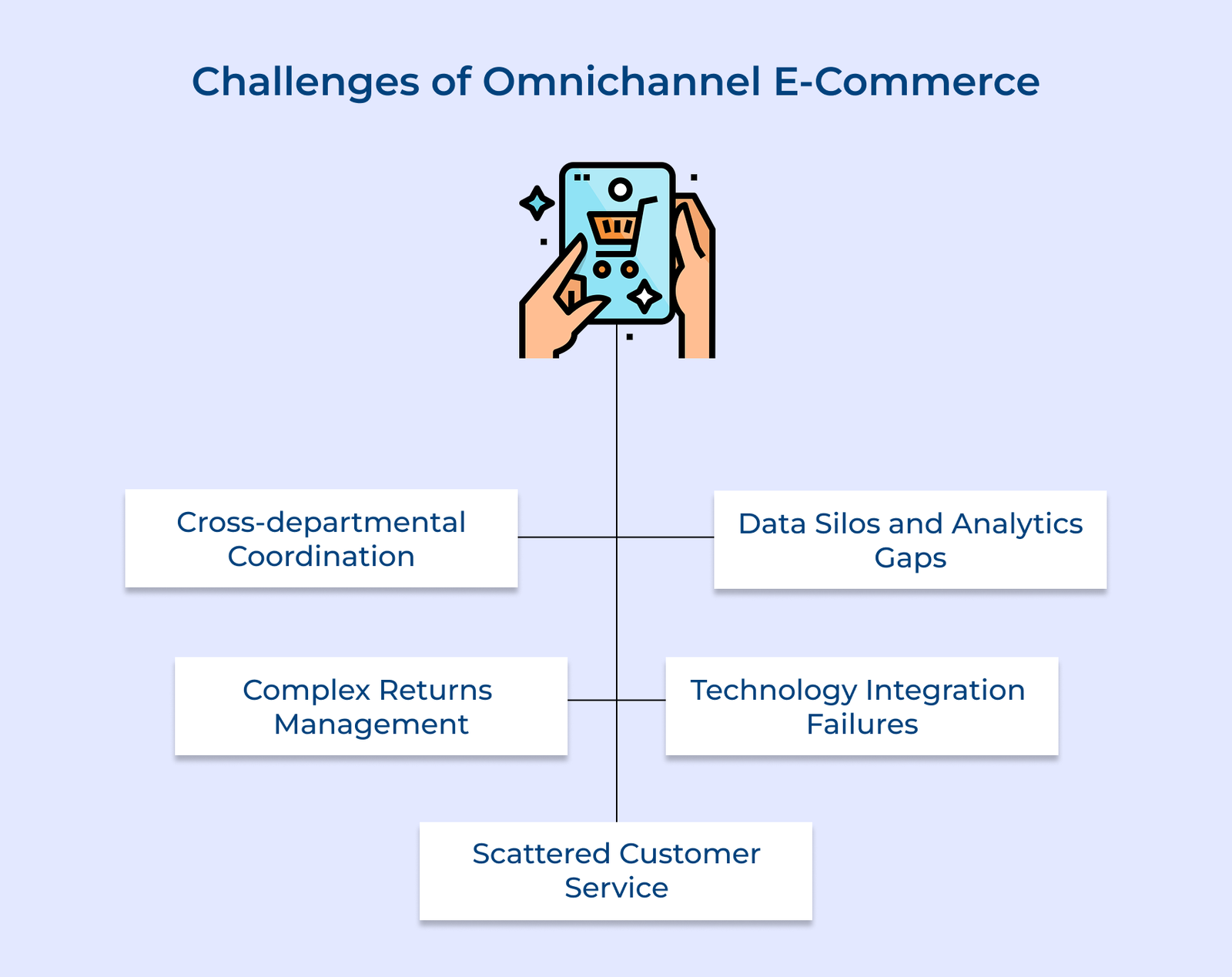
What are The Challenges with Omnichannel ECommerce?
Let’s go through the key challenges businesses encounter in omnichannel ecommerce platforms, from integration issues to maintaining a consistent customer experience.