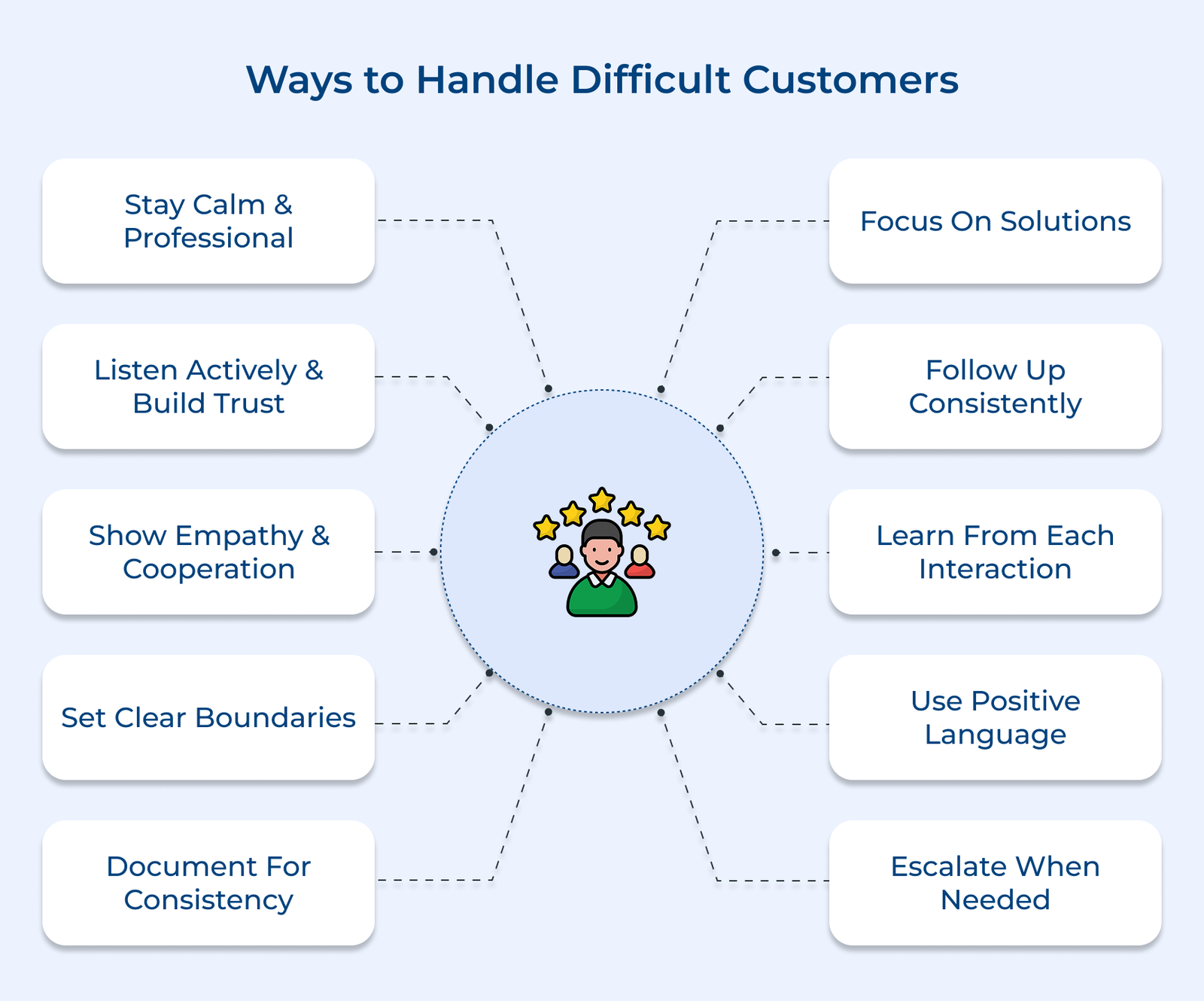
1. Stay Calm and Maintain Professional Composure
Remaining calm in tough customer situations requires mental focus and physical control. Deep breathing helps regulate your emotions, allowing you to respond thoughtfully rather than react emotionally. You create an environment conducive to problem-solving by focusing on controlled breathing and maintaining a steady voice tone.
Professional composure goes beyond staying calm – it’s about managing your emotional state while focusing on the facts. When a customer raises their voice over a delayed delivery, the representative remains composed, takes a deep breath and responds with empathy: “I understand how frustrating the delay is. Let me check the status of your delivery and see what we can do to resolve this right away.”
Actionable tips:
- Master the 5-second rule: When faced with an angry customer, pause for five seconds to breathe deeply and gather your thoughts. The quick moment of calm ensures a thoughtful, professional response.
- Create a personal calm-down ritual: Develop a go-to routine-like straightening your posture or taking a sip of water to reset and regain focus during tough conversations.
2. Listen Actively Without Interrupting Customers
Active listening is key to showing respect, understanding the root of issues and making customers feel valued. It’s not just about hearing their words—it’s about fully engaging in their story. Taking notes as they speak you capture every detail, demonstrating your commitment to resolving their concerns.
Using affirmative phrases and positive body language signals that you’re actively present. The true power of active listening is its ability to ease tense. When customers feel heard, they become more open to solutions. Restating key points not only confirms your understanding but also shows you’re taking their concerns seriously.
Pro tips:
- Implement the HEAR technique: Hold off on interrupting, emphasize key points in your notes, ask clarifying questions and repeat main concerns to confirm understanding.
- Develop a standardized note-taking template with sections for customer concerns, attempted solutions and desired outcomes to ensure consistent documentation after every interaction.
3. Show Empathy Through Words and Actions
Empathy is about more than just words—it’s about both verbal and non-verbal cues that show you understand. Acknowledge the customer’s frustration openly to validate their feelings. Use phrases that reflect your understanding, creating a genuine connection rather than sticking to a script.
True empathy goes beyond typical responses—it’s about expressing a sincere desire to help. When your tone, words and actions convey real concern, customers are more likely to engage positively in finding a solution.
Best practices:
- Create a personalized empathy statement bank with thoughtful, situation-specific responses that go beyond generic phrases. It will help you address a range of emotions authentically.
- Make perspective-taking a daily habit: Take a few minutes each day to put yourself in your customers’ shoes, enhancing your ability to respond with true empathy in any situation.
4. Set Clear Boundaries and Expectations
Clear boundaries are essential for preventing misunderstandings, managing expectations and providing a professional approach to problem resolution. Start by understanding what your organization can realistically deliver and communicate the limits upfront to avoid disappointments.
The key is transparency- clearly outline processes, timelines and limitations while maintaining a helpful, respectful tone. Setting boundaries effectively means being firm yet courteous, explaining what’s possible in a way that respects the customer’s needs. When customers know what’s achievable, they’re better able to work within the parameters.
Actionable tips:
- Create a “can-do/cant-do” reference sheet tailored to your role to communicate boundaries clearly and confidently in any situation.
- Develop a standard script for handling requests that exceed boundaries, focusing on alternative solutions you can offer instead of just what’s not possible.
5. Document All Interactions and Agreements
Effective documentation means recording customer interactions promptly, capturing key details, complaints, resolutions and any commitments made while the information is still fresh. Maintain organized records by saving all written communications. It ensures that any team member can seamlessly continue the conversation, providing consistent service and building trust through reliable follow-up.
Let’s consider that after resolving a billing dispute, the representative emails the customer: “As discussed on (date), we’ve agreed to adjust your bill by $X and set up a new payment plan starting (date). I’ve attached a summary of our conversation and the updated schedule for your reference.”
Actionable tips:
- Set up a standardized documentation system with templates to capture essential details: customer information, issue description, actions taken and follow-up steps.
- Make post-interaction documentation a habit by scheduling 5-minute breaks between calls to quickly record all relevant information.
6. Find Solutions Instead of Excuses
A solution-focused approach builds customer confidence, shows professionalism and leads to quicker, more satisfying outcomes. It shifts the focus from problems to opportunities- focusing on what can be done rather than what can’t. It requires creative thinking and a willingness to explore alternatives. Taking ownership of solutions means being proactive rather than reactive.
Let’s assume that when a preferred product is out of stock, instead of just apologizing, the representative offers: “While the model isn’t available today, I can either prioritize shipping for next week’s delivery or show you three similar models with comparable features available now.”
Actionable tips:
- Create a solution matrix for common issues, providing at least three alternative solutions for each typical customer concern.
- Use the “Yes and…” technique instead of “No, but…” to keep responses positive while presenting alternative solutions.
7. Follow Up Consistently After Resolution
Follow-up after resolution goes beyond confirming the immediate issue was fixed; it’s about verifying that the solution truly met the customer’s needs. The proactive check helps catch any lingering concerns before they escalate.
Sending confirmation of actions taken and asking for feedback shows customers that their satisfaction matters long after the initial interaction. It not only prevents future issues but also provides valuable insights for improvement, strengthening customer loyalty through genuine care.
Best practices:
- Create a follow-up schedule with clear timeframes (24 hours, 3 days, 1 week) for different issue types, ensuring consistent post-resolution contact.
- Set a feedback system that combines satisfaction ratings with open-ended questions about the resolution process for deeper insights.
8. Learn from Each Difficult Encounter
Each challenging interaction offers valuable lessons for improving service and preventing future issues. Analyze what triggered the situation and how it was handled to learn from the encounters. Look for patterns in complaints, identify common triggers and document effective resolution strategies for future use.
Sharing the insights with your team amplifies the learning experience. A culture of knowledge-sharing ensures that everyone benefits from individual experiences, leading to improvements in customer service.
Best practices:
- Keep a personal learning journal to track challenging interactions, successful strategies and key takeaways. Review it monthly to spot patterns and insights.
- Hold regular team sessions to discuss tough cases and collaborate on refining resolution strategies.
9. Use Positive Language During Conversations
Positive language is about more than avoiding negative words – it’s about reframing situations with a solution-focused mindset. You keep conversations productive, even in tough situations by replacing phrases like “I can’t” with possibilities.
Using positive language to emphasize your commitment to helping enhances collaboration. not confrontation. You maintain customer confidence and drive toward resolution by focusing on available solutions.
Instead of saying something like “We don’t have that in stock,” the representative offers: “I can prioritize an order for that item, arriving next Tuesday or show you similar items available now. Which would you prefer?”
Pro tips:
- Create a positive language chart with common negative phrases and their positive alternatives, practicing them regularly.
- Use the “positive sandwich” technique: start with what’s possible, address any limitations and then offer another positive solution or alternative.
10. Seek Help When the Situation Escalates
Knowing when and how to escalate issues ensures customers get the right support and even prevents negative outcomes. Recognizing the right moment to involve a supervisor comes with experience and understanding your limits. Spotting early signs of escalation and having clear procedures in place makes transitions smooth.
The key to effective escalation is maintaining professionalism. It includes introducing the supervisor, briefing them on the situation and ensuring the customer doesn’t have to repeat themselves.
Best practices:
- Create a personal checklist of escalation triggers (e.g., customer requests a supervisor, issue exceeds your authority, repeated failed resolution) to guide objective decision-making on when to escalate.
- Develop a standardized hand-off script that professionally introduces the supervisor, provides a summary of the situation and reassures the customer that escalation will help resolve their issue.
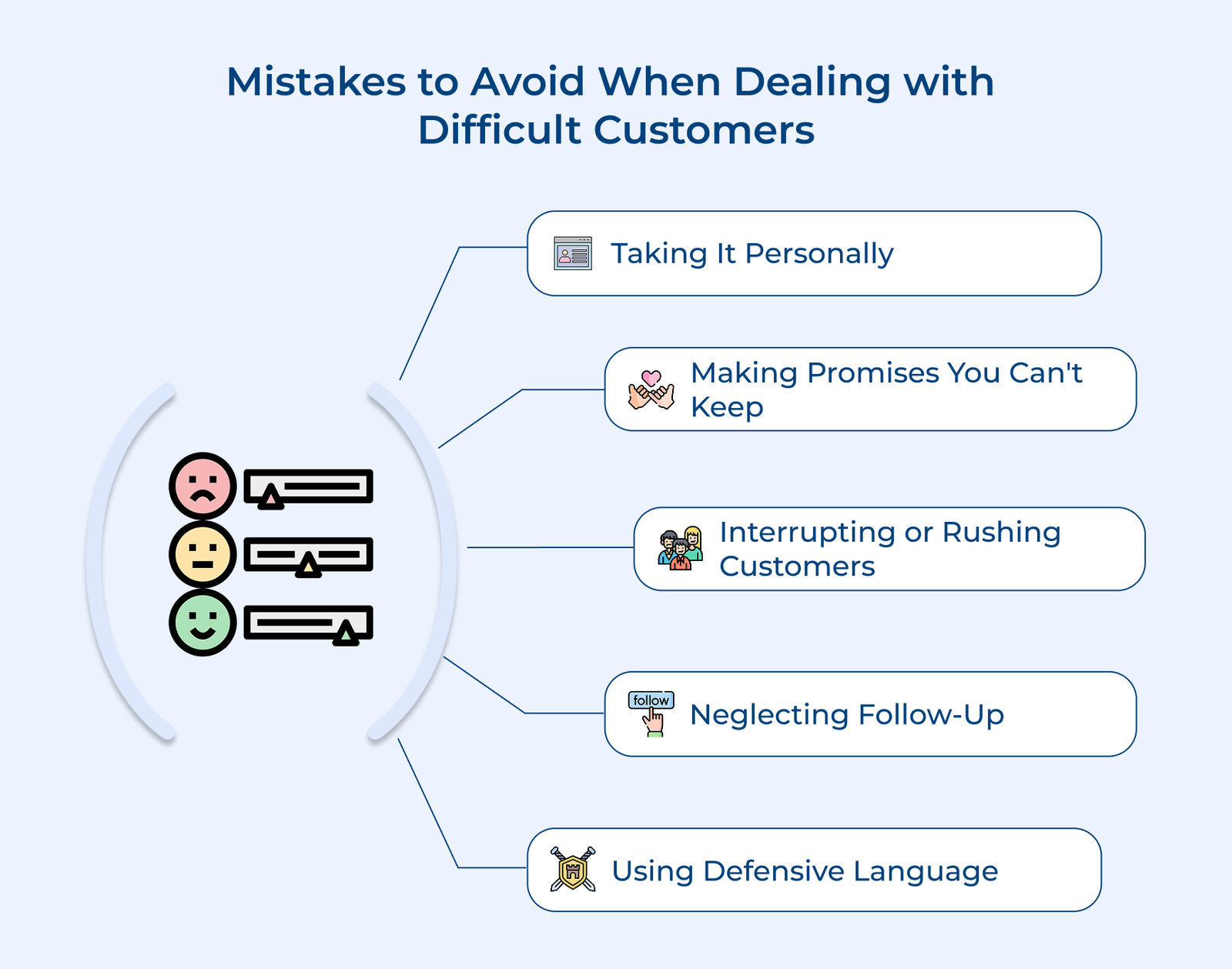
Common Mistakes to Avoid When Dealing with Difficult Customers
Below are some common mistakes businesses should avoid when handling difficult customers, ensuring better communication in challenging situations.