1. Lead Magnet Sales Funnel
A lead magnet sales funnel attracts potential customers by offering something useful at no cost in exchange for an email address. The real magic happens in the follow-up sequence, where you build trust before introducing paid offers.
Key factors:
- Landing page with a clear promise: Your page must instantly communicate what visitors get and why they need it now.
- Automated email nurture sequence: Subscribers receive helpful emails that expand on the topic and gently introduce a paid solution as the logical next step.
- Segmentation based on engagement: Tracking which links people click helps you send more relevant content based on their interests.
E-commerce stores and course creators use this template to build their email lists. They place lead magnets at strategic touchpoints like blog posts to capture visitors who aren’t ready to buy.
Key flow:
- Email 1 Delivery email: Share the promised resource, welcome the subscriber and explain what to expect next.
- Email 2 Value Email: Offer a simple tip or quick win related to the lead magnet topic.
- Email 3 Story Email: Share a real example that shows progress using ideas connected to your paid offer.
- Email 4 Entry offers email: Introduce a low-cost product as a natural next step for people who want deeper help.
2. High-Ticket Sales Funnel Template
The high-ticket sales funnel templates guide prospects toward premium offers that often cost thousands. Quality matters more than quantity here. The focus stays on serious buyers who are willing to invest time and money, not casual browsers.
Pro tips:
- Pre-qualifying leads before sales calls: Application forms ask about budget, goals and challenges. Sales calls happen only with people who can afford the offer and show real intent, which keeps close rates high.
- Building value through education: Email sequences explain the problem, the approach and the results clients can expect. Prospects reach the call already clear on why the price reflects the outcome.
- Creating urgency without discounting: Limited spots or enrollment periods encourage decisions while keeping the offer positioned as premium and considered.
Allowing anyone to book a call without screening wastes time and lowers conversion rates. Applications should always come before calendar access and include budget-related questions.
Key structure:
Application Page
- Prospect fills out the form about their business and budget
- Automated email confirms submission
Review & Booking
- Your team reviews applications within 24 hours
- Qualified prospects receive a calendar link
Sales Call
- Discovery conversation identifies exact needs
- Present the custom solution with pricing
Post-Call Sequence
- Proposal email with next steps
- Follow-up emails addressing objections
3. Product Launch Funnel
A product launch funnel builds focused excitement around a new offer before sales begin. Attention is concentrated into a short period, which helps people stay engaged instead of losing interest over time.
You deploy the funnel when introducing something new to your audience. The structure works by giving people content that builds desire during the pre-launch phase, then opening the cart for a limited time.
Key structure:
Week 1-2: Pre-Launch Content
- Daily videos teaching concepts related to your product
- Waitlist signup to get early access
- Behind-the-scenes content showing development
Week 3: Launch Event
- Live webinar revealing the full offer
- Opening announcement with early-bird pricing
Week 4: Cart Open Period
- Daily emails highlighting product features
- Countdown timers showing time remaining
Best practices:
- Spend at least two weeks building a waitlist before opening sales, so interest is already warm.
- Close the cart definitively rather than extending deadlines because people stop believing your urgency.
4. Webinar Sales Funnel Template
A webinar sales funnel uses live or recorded sessions to teach prospects and naturally introduce your product as the next step. Webinars work exceptionally well for B2B sales because decision-makers can consume detailed information on their schedule.
Key factors:
- Registration landing page: The page explains what people will learn and why the session is worth their time.
- Confirmation and reminder emails: Automated messages confirm the signup and remind attendees as the event approaches, so fewer people forget to show up.
- The webinar presentation: A structured talk that educates first and sells second while building toward your offer reveal.
- Replay and follow-up emails: Post-webinar messages that share the recording and give non-attendees another chance to buy.
Plan your webinar content around a transformation your audience desperately wants. Spend most of the presentation teaching a framework that delivers real value. Then introduce your product as the tool that helps them implement what they just learned.
Key structure:
- Day 1: Someone clicks your ad and registers for “How to 10x Your LinkedIn Leads in 30 Days.”
- Days 2-6: They receive reminder emails, building excitement.
- Day 7: They attend the webinar where you teach your framework, then offer your course at a special price.
5. Weekly Sales Funnel Report Template
The template provides a structured dashboard that tracks your funnel’s health through consistent measurement of key performance indicators. It turns scattered data into actionable insights.
- Stage-by-stage movement: The report shows how many people move from one stage to the next during the week. It makes it easy to see if traffic, leads or sales are slowing down.
- Drop-off point identification analysis: This section highlights exactly where you’re losing the most potential customers. If 1000 people visit your landing page but only 50 book a call, then you know where the problem is.
- Revenue and return: The report compares revenue generated against acquisition costs. The figures show if the funnel is actually making money.
Key structure:
Funnel Overview (Week of Dec 9-15)
Total Visitors: 2,450
– Email signups: 245 (10% conversion)
– Demo requests: 49 (20% of signups)
– Closed deals: 7 (20% close rate)
Key metrics
– Total revenue: $24,500
– ROI: 311%
Action items
– A/B test new subject lines
– Add testimonial video to sequence
6. Customer Journey Map Sales Funnel Template
A customer journey map shows every interaction a prospect has with your brand from first contact to final purchase. Many businesses lose customers at touchpoints they don’t even notice. Mapping the full journey uncovers hidden friction that quietly reduces conversions.
Use the template to spot gaps between what customers expect and what actually happens. Document every email, phone call and social media interaction to understand the true path to purchase.
Key stages:
Awareness stage
- Touchpoint: Instagram ad → Blog post → Email signup
- Pain point: Too many options and unclear differentiation
Consideration stage
- Touchpoint: Email sequence → Product page → Demo request
- Pain point: Missing specific use case information
Decision stage
- Touchpoint: Sales call → Proposal → Contract review
- Pain point: Unclear ROI justification for stakeholders
Pro tips:
- Talk with real customers about their journey rather than guessing because what you think happens often differs from reality.
- Update your map regularly as new touchpoints appear and customer behavior shifts with changing market conditions.
7. SaaS Onboarding Sales Funnel
A SaaS onboarding funnel turns free trial users into paying subscribers by helping them experience value early. Many trial users never return after signing up, but a clear, structured path ensures they see core benefits before the trial ends.
Key factors:
- Welcome sequence with quick wins: Guide new users to complete one meaningful action within the first session that demonstrates immediate value.
- Progressive feature introduction: Reveal advanced tools gradually based on usage, avoiding overwhelm while encouraging exploration.
- Engagement tracking and nudges: Monitor activity and send automated reminders when someone appears to be disengaging.
- Upgrade prompts at key moments: Present paid plan options right after users hit limitations or experience significant wins with your product.
SaaS businesses track which features activated users engage with most, then optimize the onboarding flow to push everyone toward those high-value actions. The key is creating small wins early so users feel invested before the payment decision arrives.
Key example:
Day 0: Signup
– User creates account and sees checklist with 3 setup tasks
– Welcome email sent with the getting started video
Days 1-3: Activation
– In-app tooltips guide first workflow creation
– Automated message when user hits first milestone
Days 4-10: Engagement
– Feature spotlight emails showcase advanced tools
– The invite team members’ prompt appears
Days 11-14: Conversion
– Trial ending reminder with upgrade benefits
– Personal outreach for high-engagement users
8. Tripwire Sales Funnel Template
A tripwire sales funnel turns cold traffic into buyers using a low-cost offer that’s easy to say yes to. Making a first purchase removes the biggest psychological barrier, making people far more likely to buy higher-priced products later.
You deploy this after capturing leads but before pitching your core offer to establish a buyer relationship early. The tripwire typically costs between $7-$47 and delivers immediate value while naturally leading to bigger purchases.
Key structure:
Step 1: Lead Magnet
– Free checklist lands the visitor on the thank you page
– Immediate tripwire offer: “Complete toolkit for just $9.”
Step 2: Checkout
– Simple one-click purchase
– Order bump: “Add bonus templates for $5.”
Step 3: Thank You Page
– Instant access to the Tripwire product
– Upsell offer for the main course at a discount
Step 4: Email Sequence
– Day 1: Delivery email with access
– Day 7: Main product introduction
– Day 14: Final offer before regular price
9. Challenge Funnel Template
The template engages prospects through a multi-day interactive program that builds momentum toward a paid offer reveal at the end. Challenges create commitment through daily action rather than passive content consumption. People who finish the challenge have already invested effort and are far more ready to buy.
Key elements:
- Your registration page must articulate the specific outcome participants will achieve by completing the challenge.
- Each day delivers one focused lesson plus an action step that participants complete and share.
- A private group keeps participants motivated through peer support and creates a fear of missing out.
- The paid program is positioned as the natural continuation for people who want to go deeper.
You implement it when you have a methodology that requires hands-on practice to appreciate its value. The challenge format demonstrates your teaching style while giving participants quick wins. They’ve seen real results by day 5 and trust you enough to invest.
Key structure:
Pre-Challenge
- Registration page with a countdown
- Confirmation email with prep instructions
Challenge Week
- Day 1: Welcome video + first action
- Day 2-4: Daily lessons + participant wins shared
- Day 5: Final lesson + offer reveal
Post-Challenge
- Cart open emails with bonuses
- Last chance reminder before close
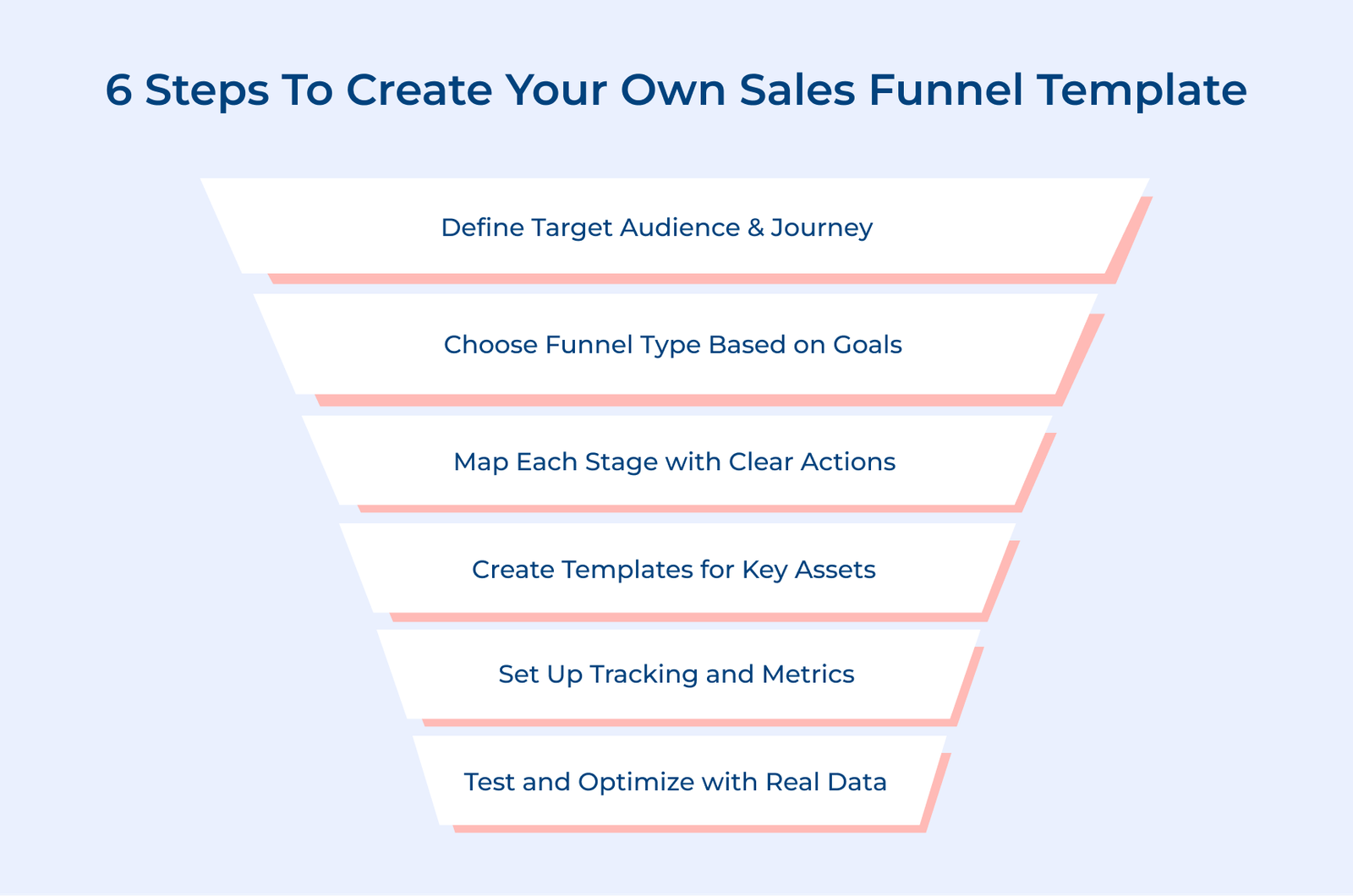
How do you Create your Own Sales Funnel Template?
The following are the key steps to build your own sales funnel template. Let’s check them out in more detail.