1. AI-Powered Chatbots
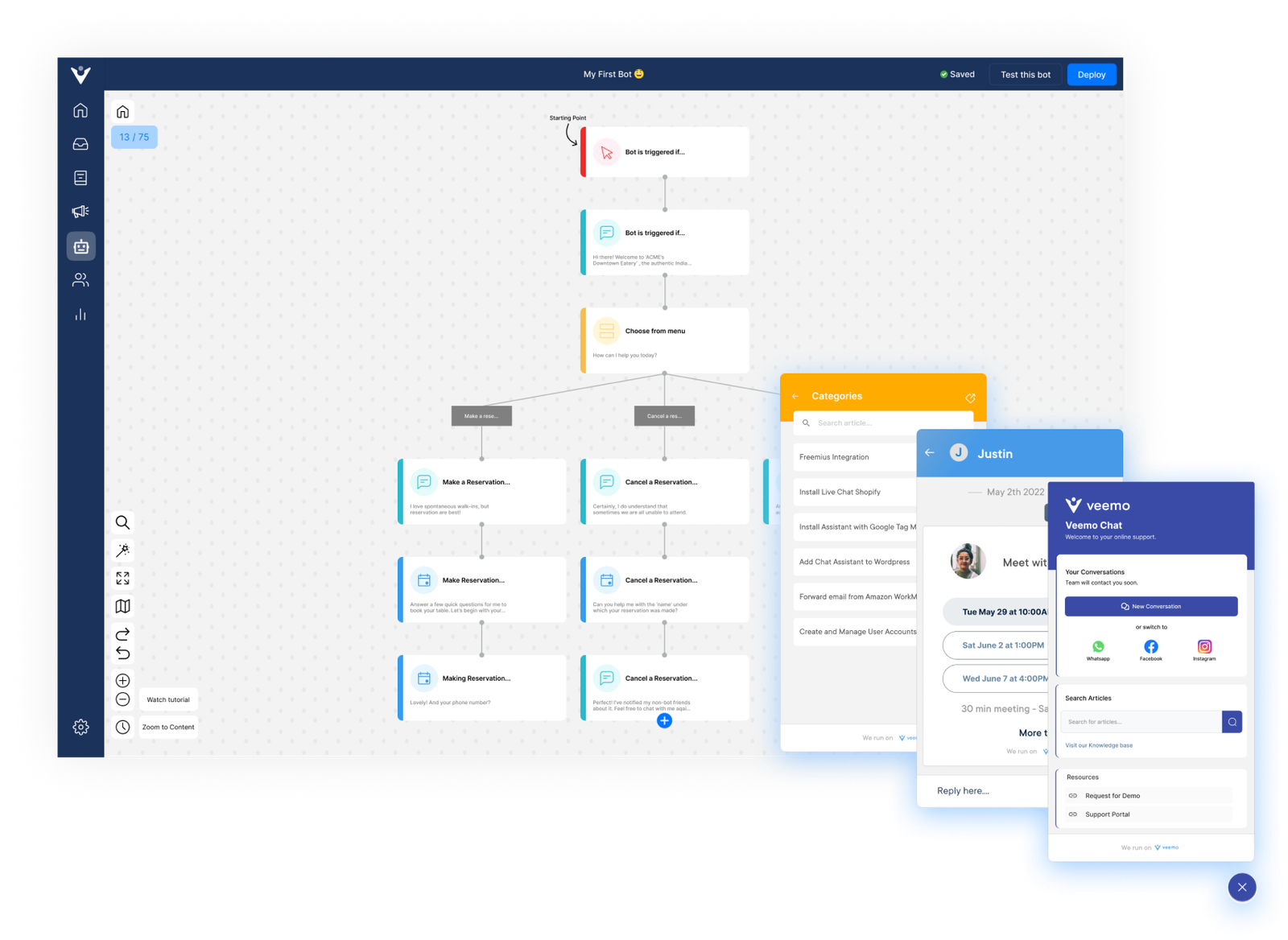
AI-powered chatbots handle initial conversations by answering common questions and qualify leads instantly without agent involvement. It ensures prospects receive immediate engagement, reducing drop-off at the critical stages of the buying journey.
2. Live Chat
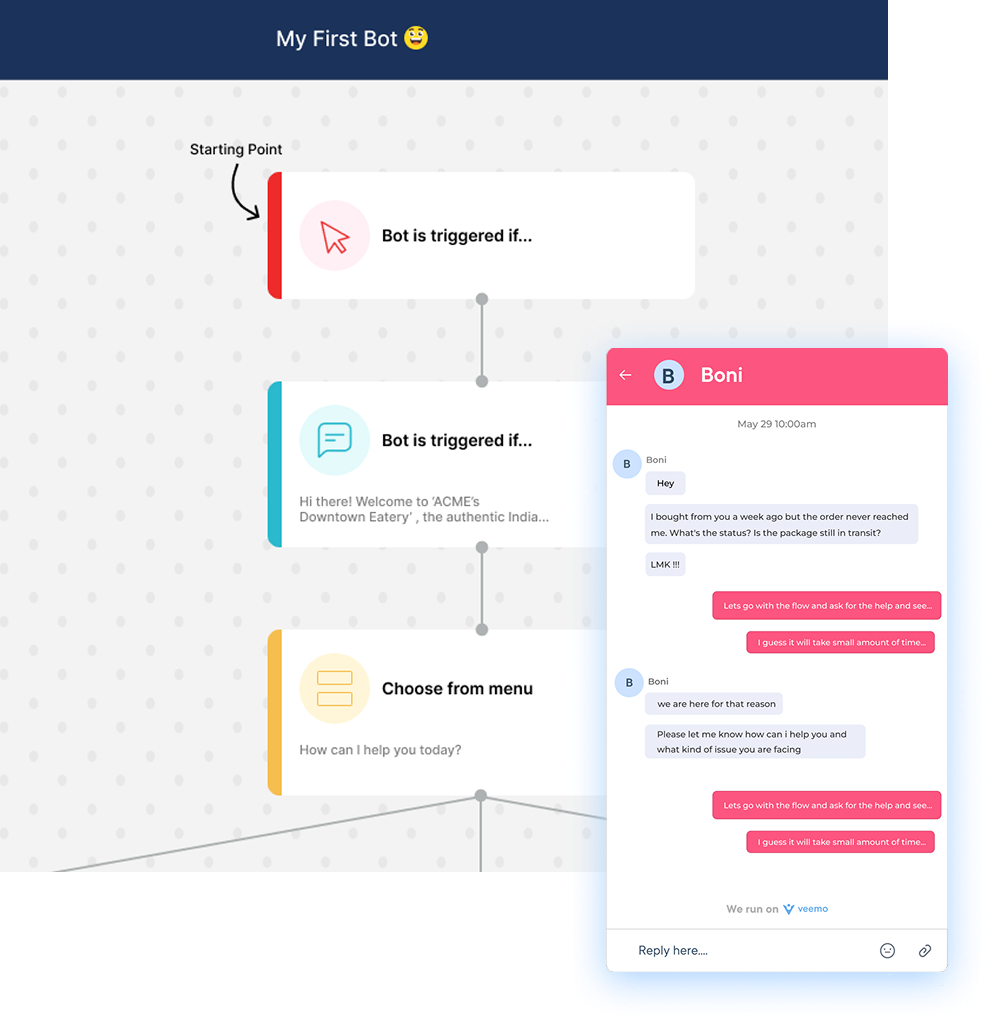
Live chat enables real-time conversations between agents and prospects, resolving questions and objections that arise during evaluation. This builds trust and often accelerates decision-making by resolving hesitations on the spot instead of disconnected follow-up emails.
3. Omnichannel Support
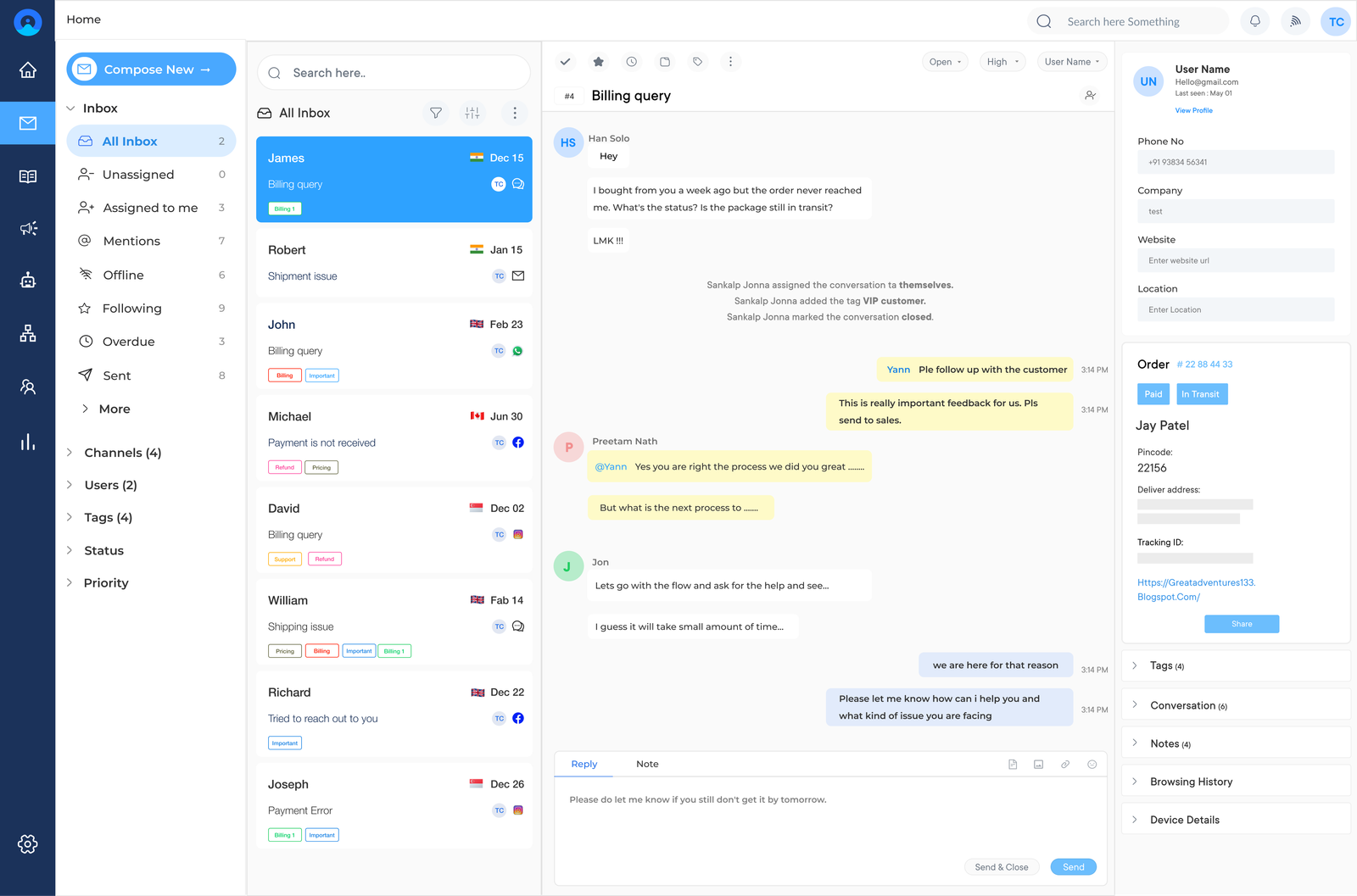
Unify conversations across live chat, email, social media and messaging apps into a connected experience. Businesses can use it to maintain consistent messaging and full context regardless of the channel a prospect chooses to engage.
4. Meeting Scheduling
Built-in meeting scheduling lets prospects book calls directly within the conversation, eliminating back-and-forth coordination. This streamlines the sales process, reducing friction between initial interest and a confirmed next step over the sales cycle.
5. Lead Scoring and Qualification
Evaluates prospect behavior, engagement level and intent to identify high-potential leads for follow-up. It ensures sales teams focus their limited time on prospects that are most likely to convert into paying customers.
6. Analytics and Reporting
Track conversation volume, response times and conversion rates across every channel to reveal gaps in the strategy. These insights help sales teams continuously refine messaging and optimize their conversational sales strategy over time.
7. Automated Follow-ups
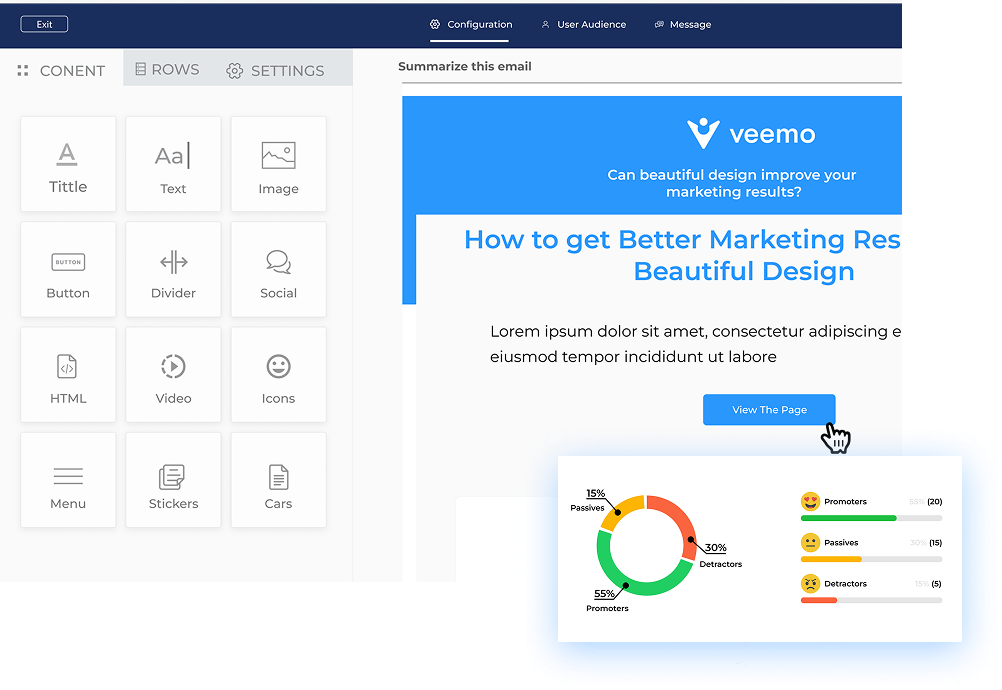
Ensure no potential customers are lost by sending a timely campaign after initial contact. This reliable nurturing keeps prospects engaged without requiring sales reps to manually track every single follow-up.