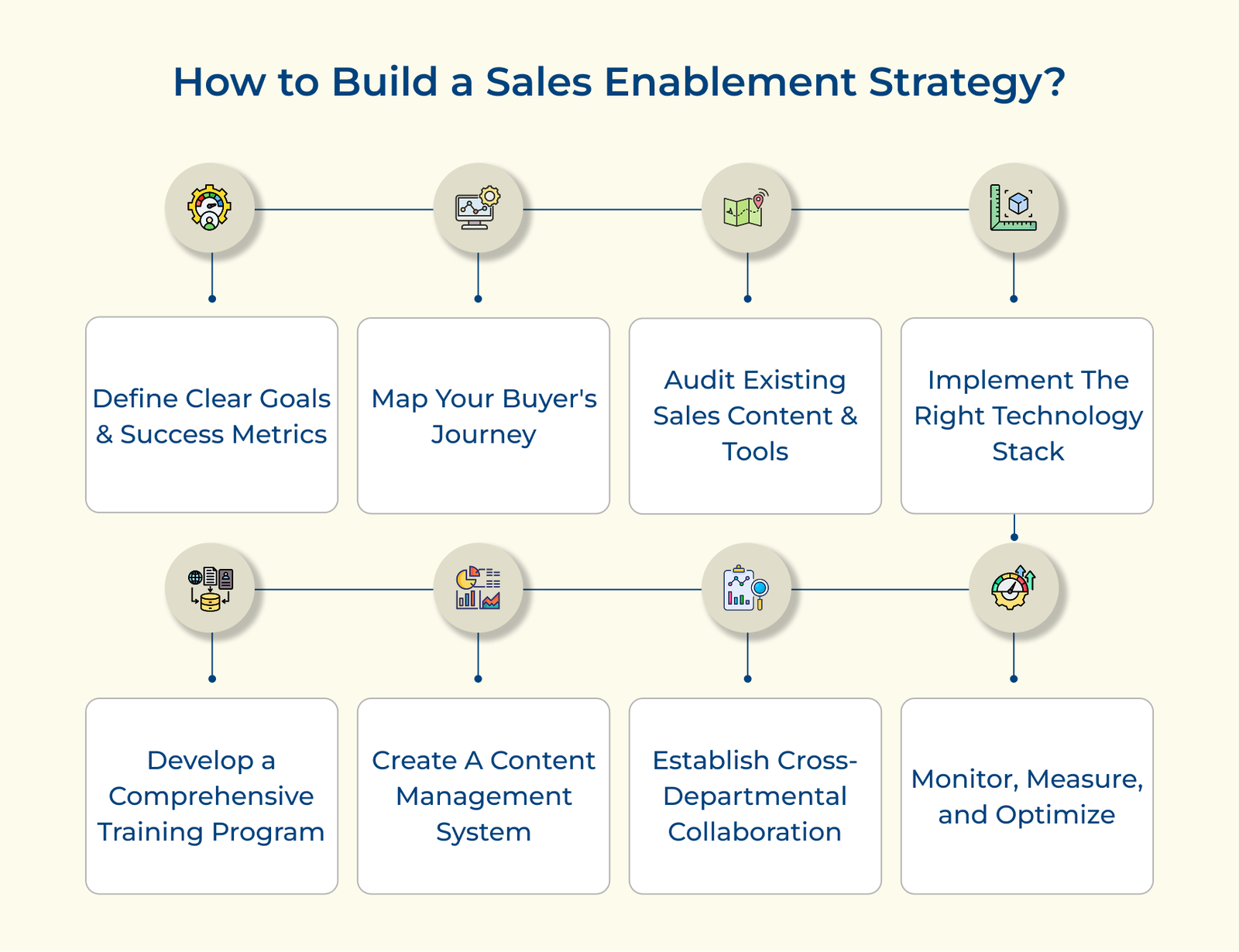
1. Define Clear Goals and Success Metrics
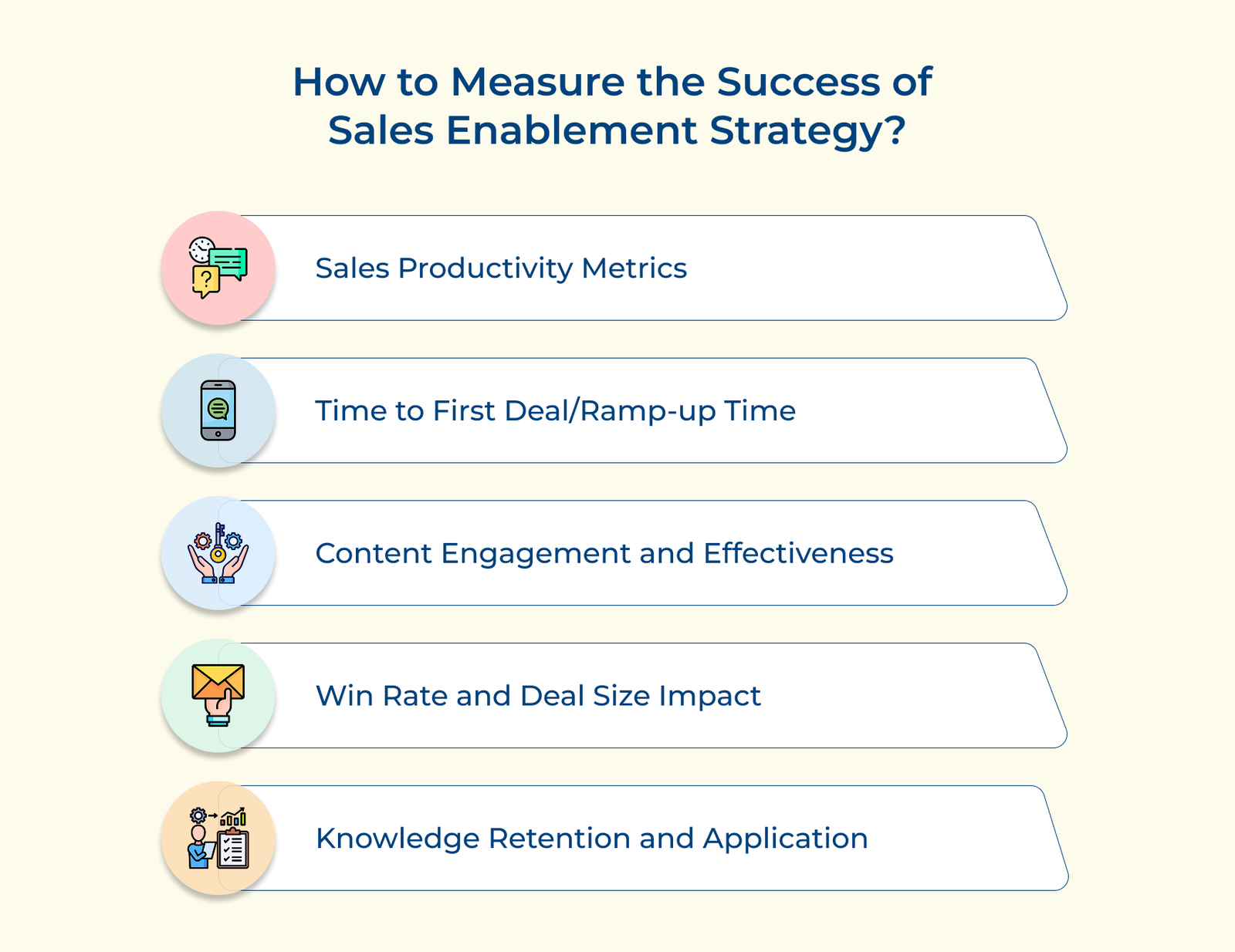
Teams risk losing focus and struggling to prove their impact without defined targets. Establishing SMART goals such as reducing sales cycle length, boosting win rates or increasing deal size ensures everyone understands what success looks like. Key performance indicators (KPIs) like content engagement, sales velocity and quota attainment track progress.
Let’s assume that a software company facing long sales cycles set a goal to reduce cycle time by 20% and increase deal closure rates. They identified bottlenecks, optimized their process and met their objectives within two quarters by tracking content usage.
Best practices:
- Involve both sales leaders and frontline reps in goal-setting to ensure alignment, balancing strategic objectives with everyday sales challenges.
- Develop a balanced scorecard that includes both leading indicators (e.g., sales activities) and lagging indicators (e.g., revenue) for a comprehensive view of performance.
2. Map Your Buyer’s Journey
Mapping the buyer’s journey helps sales teams anticipate everything about the potential customers, address pain points and provide relevant information that drives prospects toward purchase. Teams can better align their approach with customer expectations by creating detailed buyer personas and understanding their decision-making process.
A manufacturing company reworked its sales strategy after mapping the buyer journey and spotting something unexpected. Technical decision makers were stepping in much earlier than assumed. Once the team started creating content tailored to those early technical conversations, engagement picked up and deals moved through the pipeline faster.
Pro tips:
- Regularly update buyer journey maps based on customer feedback and sales team insights to ensure they reflect current market dynamics.
- Develop tailored content for each stage of the buyer’s journey, equipping sales teams with the right resources for every customer interaction.
3. Audit Existing Sales Content and Tools
Conducting a sales resource audit helps identify what’s effective, what’s missing and where improvements are needed. It ensures teams have the right tools and up-to-date content while eliminating redundancy.
The audit should assess content usage, tool effectiveness and gather feedback from sales reps to pinpoint gaps. The insight guides new content creation, tool upgrades and optimizes existing resources, ensuring customer-facing materials are aligned with sales goals.
Best practices:
- Set up a regular content review process with clear ownership to keep sales resources fresh and relevant.
- Create a simple feedback system for sales reps to flag outdated content or request new materials based on customer needs.
4. Implement the Right Technology Stack
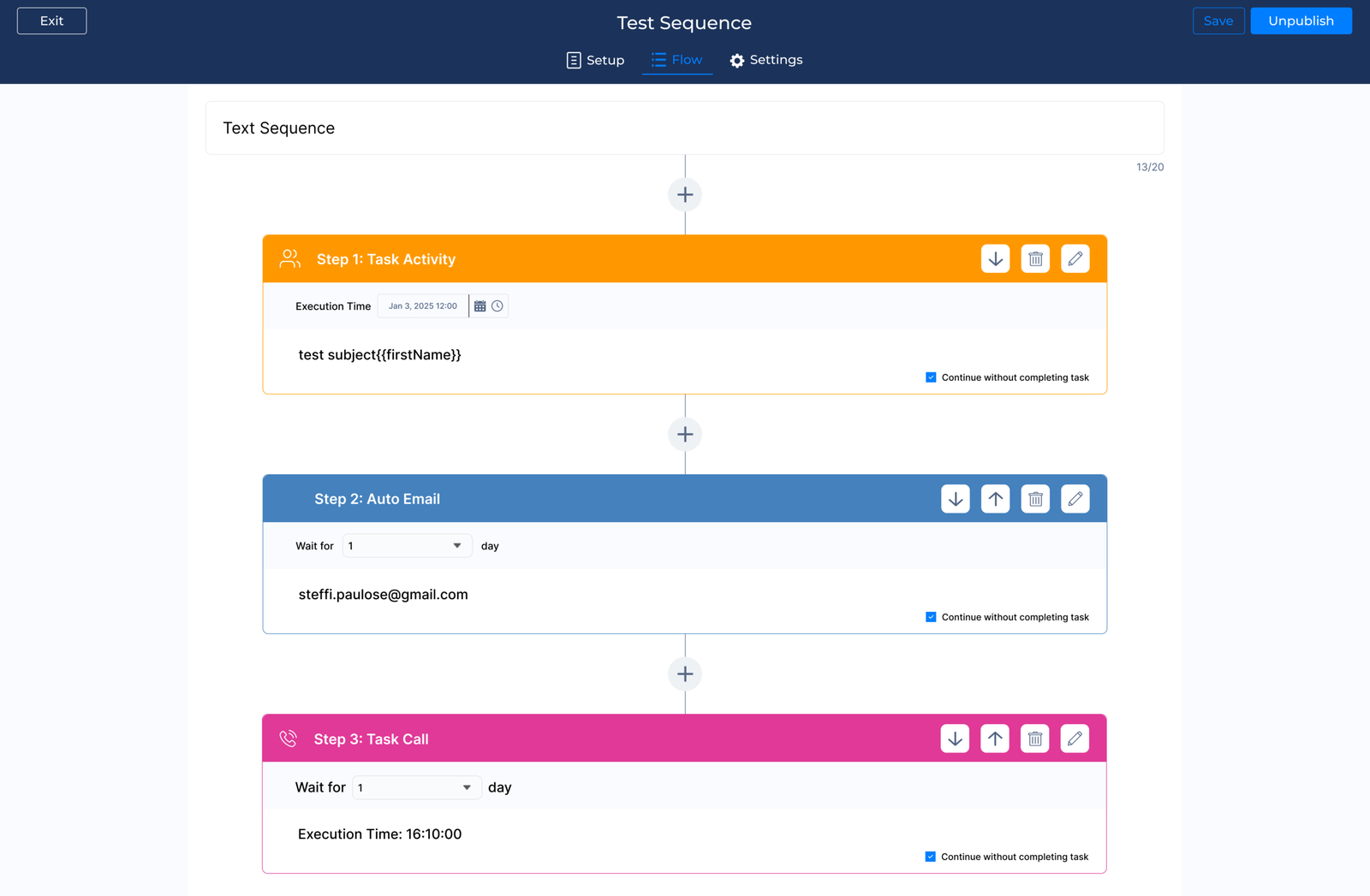
Choosing the right sales enablement technology is vital for scaling your strategy. Opt for tools that integrate seamlessly, boost efficiency and provide valuable insights without adding complexity. A smart addition is a conversational sales tool that blends automation, live chat, and CRM capabilities for real-time engagement. Prioritize solutions that address real sales challenges.
Imagine a healthcare tech company cutting its sales stack from seven tools down to three integrated platforms. The result was faster adoption, shorter training time, and a noticeable lift in day-to-day productivity.
Actionable tips:
- Begin with essential tools that address core needs, then expand based on proven ROI and user adoption.
- Provide thorough training and ongoing support with regular check-ins to resolve challenges.
5. Develop a Comprehensive Training Program
A robust training program should extend beyond onboarding, offering ongoing learning opportunities to keep reps informed on products, trends and techniques. Combining methods like online courses, role-play and coaching ensures continuous skill growth, while regular feedback aligns training with business needs.
Let’s consider that a telecom company implemented a microlearning program, delivering short, mobile-friendly training modules. Paired with weekly coaching, it boosted product knowledge retention and enhanced customer satisfaction.
Pro tips:
- Create personalized learning paths based on individual sales rep performance data and role requirements to ensure relevant training.
- Encourage peer learning by allowing top-performing sales reps to share best practices and real-world insights with their colleagues.
6. Create a Content Management System
A well-organized content management system is essential for quick access to the right resources. It should enable easy searchability, maintain version control and track content effectiveness. An organized system ensures teams always have the most relevant and impactful materials at their fingertips.
Let’s assume that a professional services firm implemented a tag-based system that allowed reps to quickly find case studies and proposals by industry, solution or client size. It cut search time by 60% and enhanced proposal quality with easy access to proven templates.
Best practices:
- Adopt a clear naming convention and metadata strategy to ensure content is easily searchable.
- Implement a content lifecycle process with regular reviews, updates and the removal of outdated materials.
7. Establish Cross-Departmental Collaboration
Effective sales enablement thrives on collaboration between sales, marketing, product and customer success teams. Without it, inconsistent messaging and missed opportunities can arise. Regular communication and shared metrics ensure alignment on strategies, driving continuous improvement.
Let’s consider that a SaaS company held bi-weekly alignment meetings across teams, resulting in better-targeted content, improved product positioning and higher win rates through consistent customer messaging.
How to implement:
- Create shared dashboards that encourage collaboration and mutual accountability across departments.
- Hold regular cross-functional sessions to tackle challenges and seize opportunities based on customer feedback.
8. Monitor, Measure and Optimize
Ongoing monitoring and optimization of your sales enablement strategies are key to sustained success. You can ensure continuous improvement by tracking performance metrics, gathering feedback and making data-driven adjustments. Regular reviews of both quantitative data and qualitative insights help refine the strategy, keeping it aligned with evolving market trends.
A financial services company introduced quarterly strategy reviews, analyzing content usage and sales data. They discovered that certain case studies drove higher conversions, refocusing content creation efforts and boosting win rates.
Actionable tips:
- Establish a regular cadence for reviewing performance metrics and gathering feedback from all stakeholders to ensure continuous improvement.
- Implement an agile optimization process that enables rapid adjustments based on performance insights and market shifts.
Top Sales Enablement Platforms
Following are the top sales enablement platforms on the market, giving you insights to make an informed decision and empower your team to reach new heights.
1. Veemo Sales