CRM Software for Manufacturing Companies

Convert your manufacturing business with best-in-class CRM software. Explore the benefits and features of Veemo’s manufacturing CRM software that enhance productivity and customer satisfaction.

No credit card required. Easy setup

CRM for Manufacturing

Trusted By Leading Brands

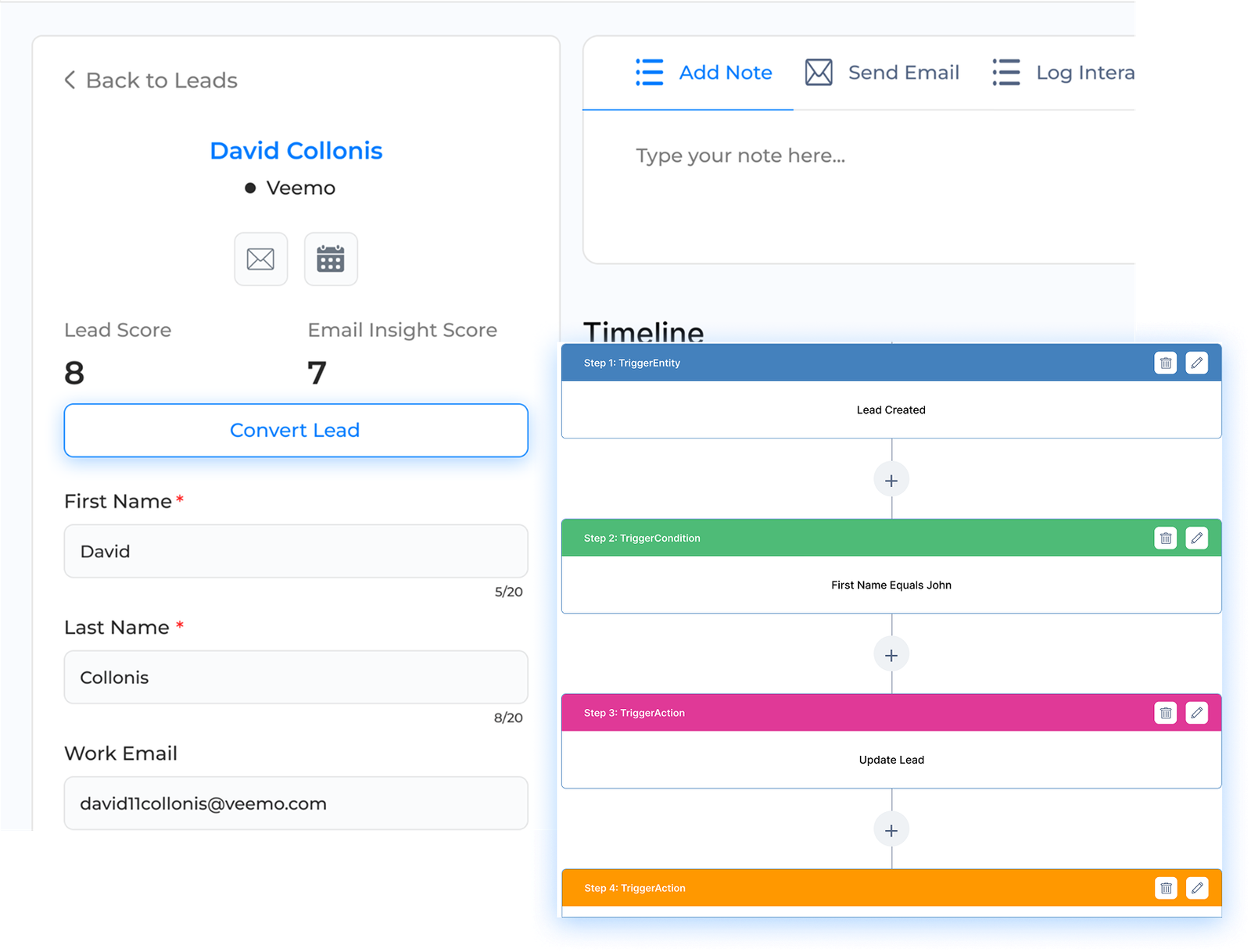
CRM for Manufacturing Dashboard 1

Streamline your Team’s Workflows

CRM software automates and organizes tasks for manufacturing teams to efficiently manage customer interactions along with internal processes. Reducing manual workload helps teams to focus on higher-value activities which leads to improved productivity and operational efficiency.

Get 360-degree Customer View

Manufacturing businesses gain a comprehensive view of each customer’s history, preferences and interactions with the help of a CRM platform. The holistic view allows businesses to personalize communications and enhance customer relationships which leads to improved satisfaction as well as loyalty over time.

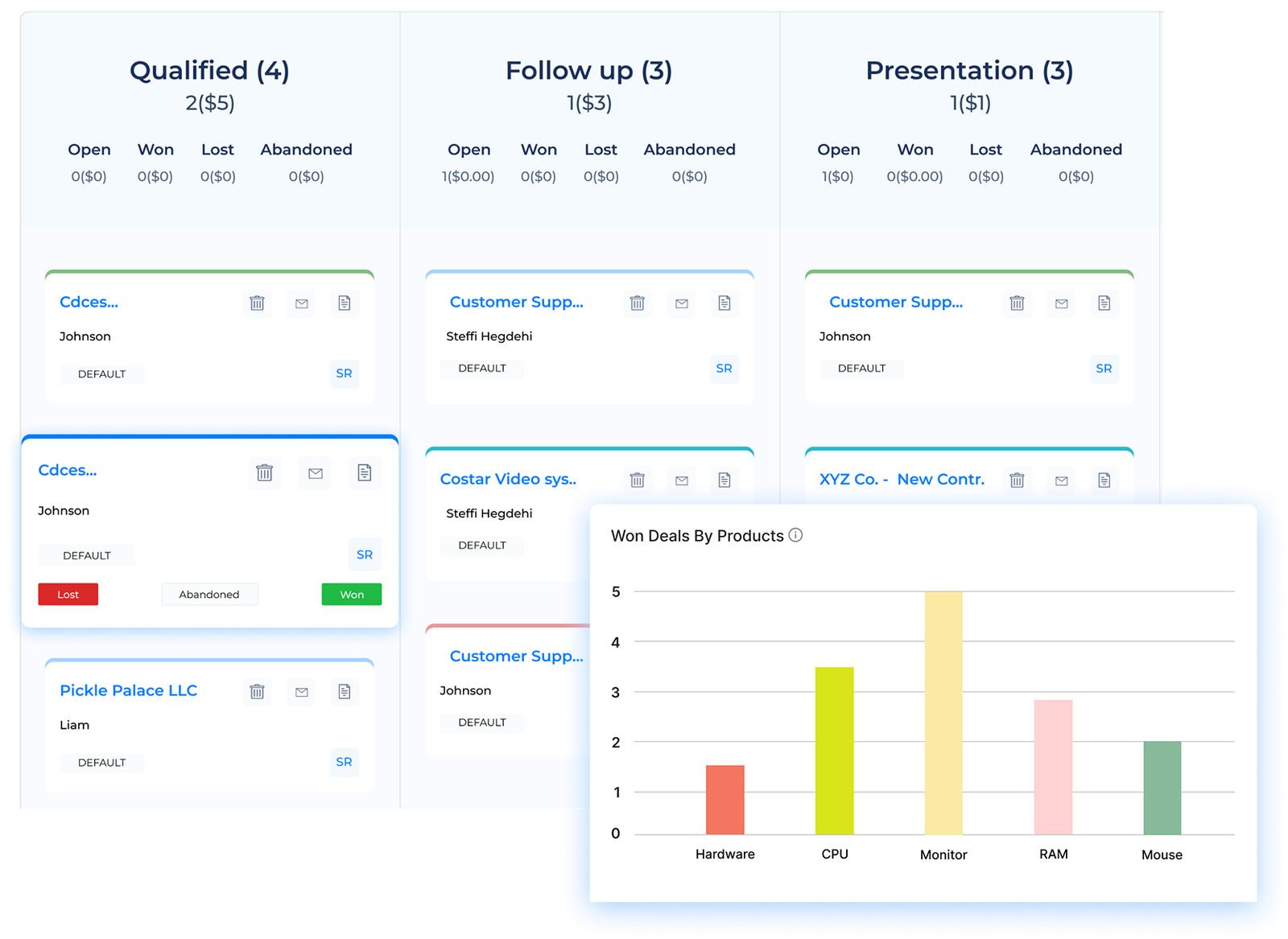
Clear Accountability on Deals Management

Transparent tracking of sales opportunities and deal progress is one of the best benefits of CRM software for manufacturing businesses. Accountability ensures that team members get complete insight into who is responsible for each stage of the sales process leading to collaboration and accelerating decision-making while reducing the risk of missed opportunities.

More Cohesive Sales and Marketing Efforts

Manufacturing CRM solutions enable alignment between sales and marketing teams to ensure that messaging is consistent as well as data-driven. Sharing customer insights and campaign performance helps both departments to work together more effectively. The approach optimizes sales and marketing strategies to drive higher conversion rates for manufacturing products.

CRM for Manufacturing Dashboard 2

Why Do Manufacturing Companies Need a CRM Platform?

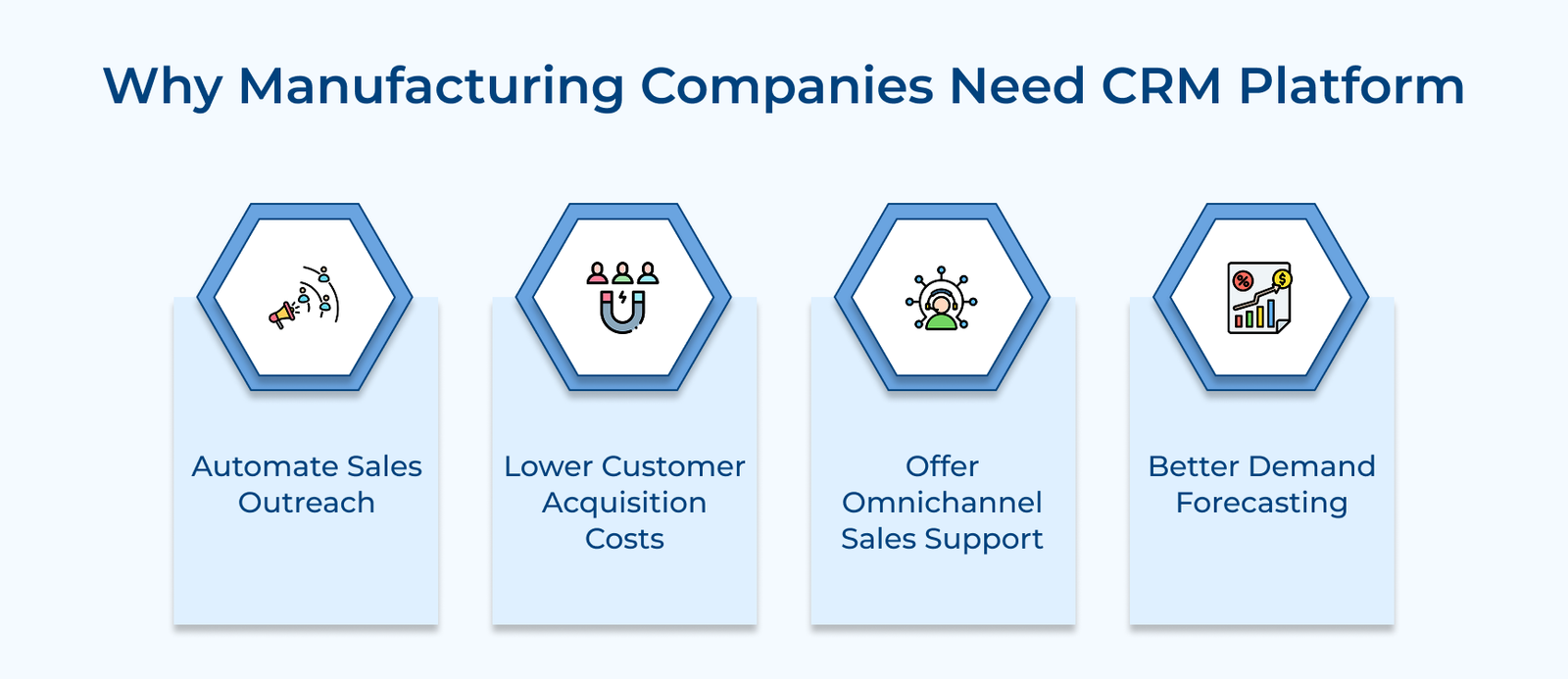
Why Manufacturing Companies Need CRM Platform

1. Automate Sales Outreach: One of the best advantages of CRM software for the manufacturing industry is its ability to automate sales outreach. Automated reminders, follow-ups and personalized messaging ensure that no potential customer is missed. The process allows sales teams to focus on nurturing relationships rather than just getting occupied with administrative tasks.

2. Lower Customer Acquisition Costs: CRM systems provide valuable insights into customer behavior and preferences for manufacturing companies to tailor their marketing strategies. Targeting the right audience with relevant messaging helps optimize their sales funnels and lower customer acquisition costs. The targeted approach makes sure that resources are used efficiently to increase the return on investment (ROI).

3. Offer Omnichannel Sales Support: Engage with customers across multiple channels like email, phone calls, SMS, etc. The Omnichannel sales support enhances the customer experience by providing consistent and responsive service, regardless of the channel the customer chooses. The process ensures that customers receive timely assistance and information leading to loyalty as well as satisfaction.

4. Better Demand Forecasting: Collecting and analyzing customer data within the CRM solution helps manufacturing companies forecast demand more accurately. Understanding purchasing trends or customer preferences allows brands to optimize product repositories and reduce waste which leads to making informed production decisions. The proactive approach leads to improved efficiency and better alignment with the market needs.

Modern CRM Solution for Manufacturing Sector for Better Administration

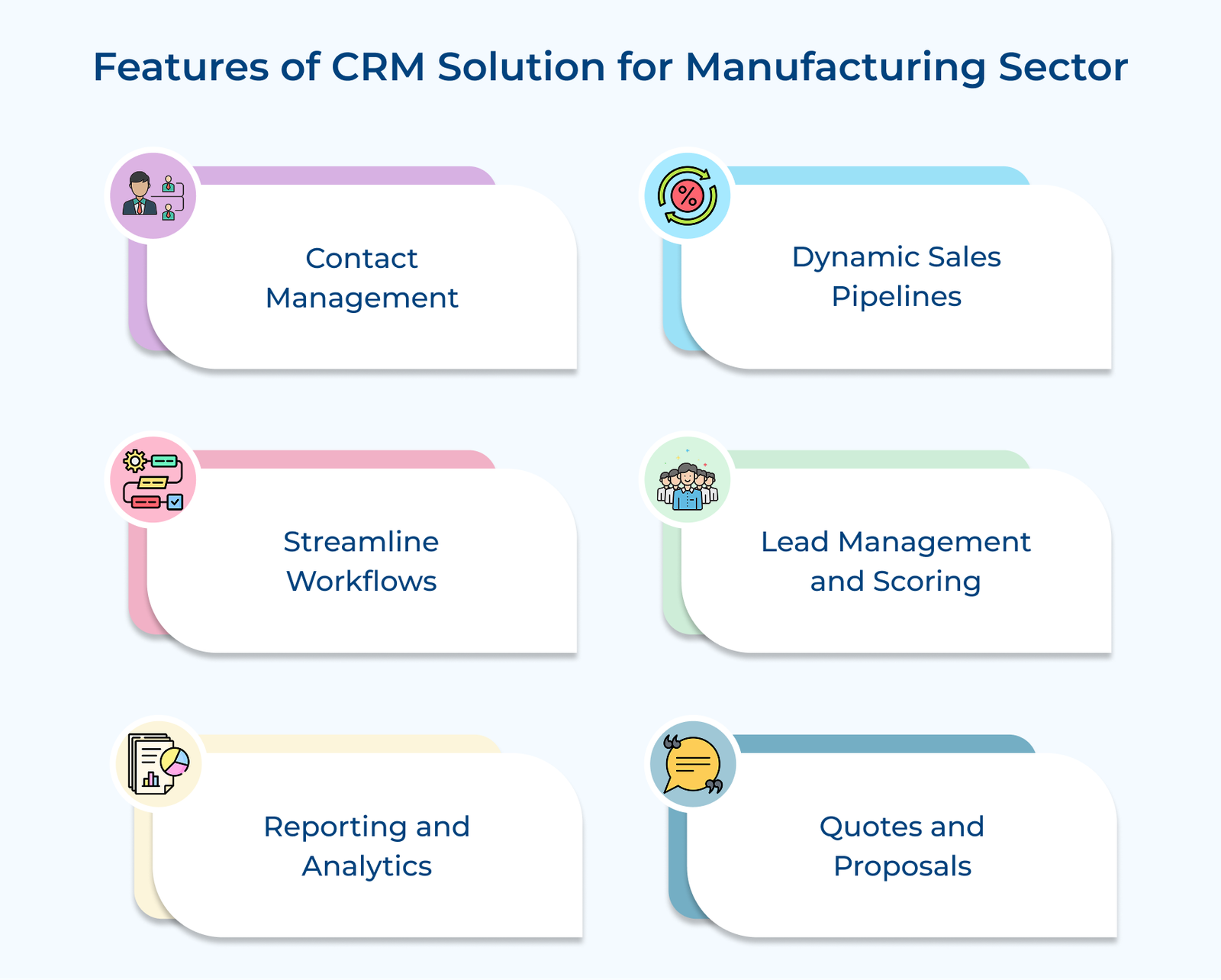
Features of CRM Solution for Manufacturing Sector

1. Contact Management
CRM solutions include a contact management feature for the manufacturing industry to keep track of all their contacts in one centralized location. The intuitive interface enables companies to store important information related to interactions, preferences and purchase history. Managers can gain insights into their client base for better relationships and to ensure timely follow-ups.

2. Dynamic Sales Pipelines
Top CRM software for manufacturing includes dynamic sales pipelines that are customizable to suit the specific stages of the sales process. The feature allows sales teams to track progress and prioritize deals based on their relevance or urgency. Enabling sales representatives to move deals smoothly through the pipeline helps in improving conversion rates along with timely delivery of products.

3. Streamline Workflows
Manufacturing businesses often include multiple tasks and processes so the CRM system helps streamline workflows by automating repetitive tasks such as data entry, follow-up reminders as well as document management. Workflow automation helps reduce manual input so that teams can focus on high-value activities such as closing deals and driving product innovation.

4. Lead Management and Scoring
Lead management and scoring capabilities allow manufacturing firms to effectively capture leads along with prioritizing them based on criteria. CRM tools for the manufacturing company enable users to classify leads based on various criteria such as engagement level or purchasing potential to make sure that the sales team focuses on the most valuable opportunities. The feature helps in optimizing resource allocation and improving overall sales efficiency.

5. Reporting and Analytics
Some of the best CRM solutions include analytics features for the manufacturing business to evaluate their sales performance and strategies to make data-driven decisions. Companies can access customizable dashboards to track KPIs such as conversion rates, sales trends and team performance. The data helps in making informed choices that drive growth and enhance productivity within the organization.

6. Quotes and Proposals
Creating accurate quotes is crucial for manufacturers based on the complexity and customization of products. Manufacturing CRM software can simplify this process by allowing users to generate professional quotes directly within the system. The feature ensures that customers make consistent, accurate and professional communications with clients leading to quicker sales turnaround times.

Read more: The feature ensures that customers make consistent, accurate and professional communications with clients leading to quicker sales turnaround times. For a look at how a CRM streamlines the sales process in a B2C environment, learn more about retail CRM.
How Veemo Sales Can Improve Manufacturing Operations

How Veemo Sales Improves Manufacturing Industry Operations

1. Multi-channel Lead Capture

Manufacturing sectors can get leads from various sources like web forms, SMS and emails. Veemo CRM platform offers multi-channel lead capture capabilities for manufacturing companies to integrate leads from different platforms into one unified database. The feature ensures that no potential customer is overlooked which leads to an increase in the chances of successful conversion.

2. Product Repository

A centralized product repository within Veemo’s CRM software allows manufacturing companies to easily store product information, stocks and pricing details. Sales teams can access up-to-date product information effortlessly which makes it easier to address customer inquiries and support the sales process efficiently.

3. Quote Management

Creating accurate quotes can be a time-consuming process for the manufacturing sales process. CRM solution for manufacturing businesses simplifies quote management by allowing sales professionals to generate customized quotes quickly and efficiently. The feature not only saves time but also enhances the professionalism of the sales process leading to trust with potential clients.

4. Workflow Automation

Manual processes can slow down sales operations so workflow features within manufacturing CRM help in automating repetitive work such as lead follow-ups, email responses and task assignments. The feature reduces the administrative burden on sales teams and allows them to focus on building relationships along with closing deals instead of getting lost in paperwork.

5. Automated Sales Sequences

Veemo’s CRM platform for the manufacturing company helps to standardize the sales approach through automated sales sequences. Creating custom sequences like email or SMs for different types of leads helps sales teams engage with prospects consistently and effectively. The structured approach ensures that each lead receives the required attention at every stage of the sales funnel.

6. Sales Forecasting & Planning

Understanding sales performance and market trends is crucial in the manufacturing sector. CRM includes robust sales forecasting and planning tools for a manufacturing company to assess their sales data along with predicting future performance accurately. The insight helps in making informed business decisions, optimizing inventory levels and aligning production with sales expectations.

Streamline Sales Management with Veemo Sales

Manufacturing Company Sales Management with Veemo Sales

1. Centralized Customer Information: Veemo is the best CRM platform for manufacturing businesses to serve as a single source of truth for all customer data. The repository includes purchase history, product preferences, service records and communication logs. The centralization allows sales teams to access comprehensive customer profiles to enable personalized interactions and more informed decision-making.

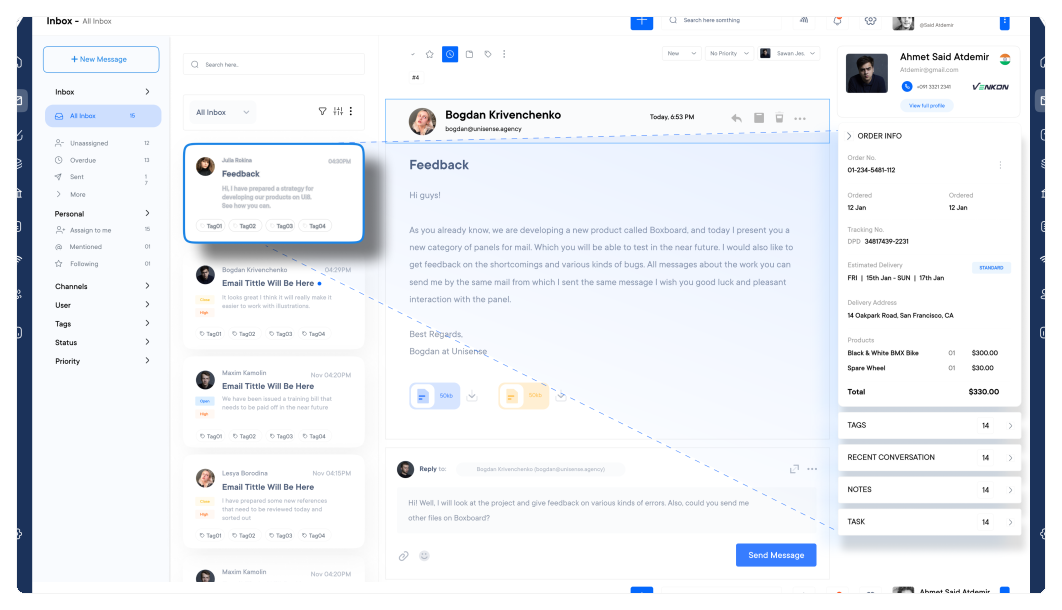
2. Sales Inbox: Sales inbox within the manufacturing CRM software consolidates all customer communications in one place. It organizes customer emails in one place to ensure that important messages don’t get lost and also allows sales representatives to respond promptly to inquiries, quotes or orders.

3. Task Management and Automation: Robust task management capabilities allow companies to create, assign and track tasks related to customer interactions, follow-ups as well as sales processes. Automation features with manufacturing CRM can trigger tasks based on specific events or timelines to ensure that potential leads get consistent follow-through leading to reduced manual workload.

4. Automated Meeting Scheduling: Scheduling feature that integrates with calendar applications to allow the customer to schedule meetings based on their time with the manufacturing team. The process reduces back-and-forth communications and minimizes scheduling conflicts leading to customer satisfaction.

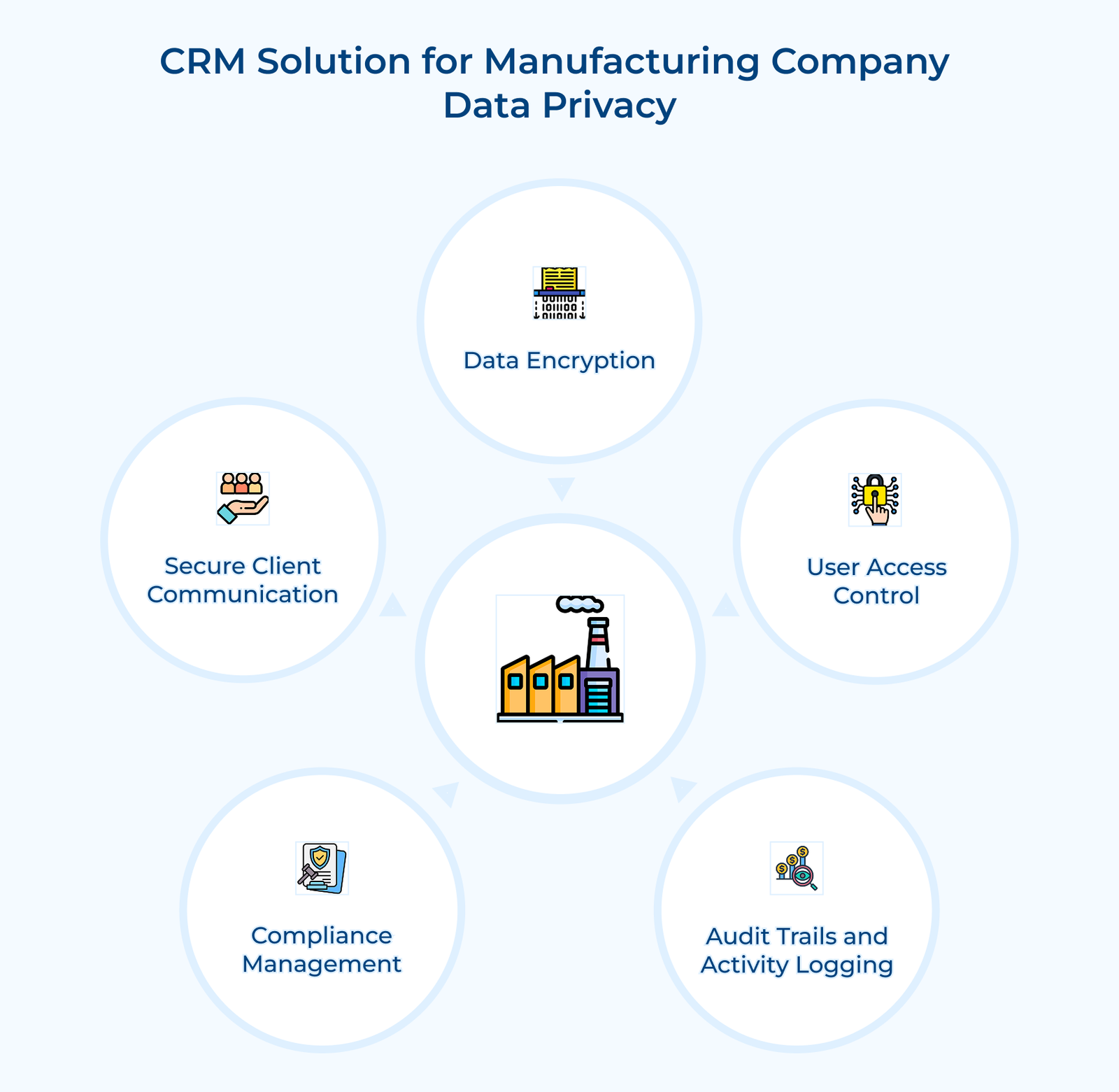
CRM Solution for Data Privacy and Confidentiality

CRM Solution for Manufacturing Company Data Privacy

1. Data Encryption

Top CRM software offers advanced encryption capabilities for the manufacturing industry to handle data both at rest and in transit. For Businesses that are dealing with proprietary product information, custom orders or sensitive pricing data, the encryption process is crucial. The feature protects confidential information from interception to maintain trust with clients and protect competitive advantages.

2. User Access Control

Granular control over user access rights is particularly important in companies, where different teams like sales, engineering or production may need varying levels of access to customer data. Role-based access controls feature ensures that manufacturing employees only see the information necessary for their specific functions which leads to a reduction in the risk of internal data leaks.

3. Audit Trails and Activity Logging

Manufacturing CRM solutions typically include comprehensive audit logging features that track all user activities within the system. The feature creates an auditable trail of who accessed what information and when within the organization. The capability is valuable for compliance with data protection regulations and also for investigating any potential security incidents.

4. Compliance Management

Some of the best CRM systems are designed with built-in features for the manufacturing business to comply with data protection regulations such as GDPR, CCPA or industry-specific standards. compliance tools are essential for managing consent or data retention policies when manufacturers deal with international clients or operate in multiple jurisdictions.

5. Secure Client Communication

Secure communication channels for interacting with clients are particularly important for companies when discussing custom designs, proprietary specifications or confidential project details. Secure messaging features within the manufacturing CRM tools make sure that sensitive communications remain protected.

You can rely on us

Let our specialists help you in every step to deliver an awesome customer service your customers deserve. Comes with 30 days money back guarantee.

Omnichannel Helpdesk and Ticketing System

Turn Every Support Issues into Personalized Conversations with Veemo’s Omnichannel Helpdesk and Ticketing System. Make customer happiness your top priority with a digital first customer experience (CX) approach

Radically new solutions for data

Sed ut perspiciatis unde omnis iste natus error sit voluptatem accusantium doloremque laudantium, totam rem aperiam, eaque ipsa quae ab illo inventore veritatis et quasi architecto beatae vitae dicta sunt explicabo.

Radically new solutions for data

Sed ut perspiciatis unde omnis iste natus error sit voluptatem accusantium doloremque laudantium, totam rem aperiam, eaque ipsa quae ab illo inventore veritatis et quasi architecto beatae vitae dicta sunt explicabo.

FAQs about CRM Software for Manufacturing Industry

A CRM platform enhances customer engagement by providing a 360-degree view of each client. The system tracks interactions, preferences and purchase history to enable personalized communication along with tailored product recommendations. The process leads to stronger relationships, improved customer satisfaction and increased loyalty in the manufacturing sector.

Yes, most of the top CRM software for the manufacturing industry integrates with supply chain management tools for real-time visibility into inventory levels, production schedules and delivery timelines. Companies can better coordinate with suppliers to manage stock levels efficiently and provide accurate delivery estimates to customers leading to improved overall supply chain performance.

Automation features for manufacturers include automated lead scoring, task assignment and follow-up reminders. The feature helps in automating order processing, generating quotes based on custom configurations and trigger notifications for reorder points. The automation streamlines operations to reduce manual errors and improves overall efficiency.

Yes, CRM systems analyze historical sales data, customer behavior and market trends to help with demand forecasting. Providing insights into buying patterns as well as seasonal fluctuations helps manufacturers optimize production schedules, manage inventory and align their supply chain with anticipated demand.

A central hub for information sharing between sales and production teams helps sales teams to input custom order requirements directly, which production can access in real time. The seamless communication between both teams helps in reducing errors and speeding up order fulfillment to ensure that customer expectations are accurately met.