Inside Sales Guide: Tools, Tips & KPIs
Unlock the potential of inside sales with strategies designed to optimize sales workflow. Learn about the key metrics and accelerate growth for lasting success!
No credit card required. Easy setup
Unlock the potential of inside sales with strategies designed to optimize sales workflow. Learn about the key metrics and accelerate growth for lasting success!
No credit card required. Easy setup
Streamline your process, close deals faster and build stronger customer relationships with inside sales that truly work!
Now reduce travel and accommodation expenses by empowering your sales teams to close deals remotely. Allocate the budget more effectively and focus those efforts where they can make the most impact.
The approach helps reps to engage with prospects across multiple regions without geographical constraints. Expand your market presence from anywhere now with just an internet connection.
Speed up the journey from lead generation to deal closure through instant communication and timely follow-ups. When prospects are engaged and nurtured in real time, the sales cycle becomes short, enabling the team to close deals faster.
Leverage the power of analytics to track performance, identify trends and optimize your sales strategies. The real-time insights being at the fingertips lets the team make smarter, more informed decisions that directly impact results.
Inside sales allow reps to stay agile and quickly adjust strategies to meet the ever-changing demands of the market. Be it responding to new trends, competitive shifts or customer feedback, the team can seize emerging opportunities.
Maximize efficiency by streamlining workflows and focusing on high-impact tasks. Inside sales eliminate downtime by automating routine activities, freeing your reps to prioritize what truly drives results—closing deals and building relationships that matter.
Field sales are becoming increasingly expensive to sustain. Rising travel costs, growing customer expectations and hours spent on the road leave reps with less time to engage prospects. Inside sales addresses these challenges through remote selling, using calls, video meetings and CRM data to connect with buyers faster.
This guide explores the key benefits of inside sales, how to implement an effective process, the challenges teams may encounter, and the tools that can help you build a more productive sales model.
Inside Sales refers to a sales approach where representatives conduct the majority of their sales activities remotely. It typically involves an office setting, using phone calls, emails, video conferencing and other digital communication tools. The approach contrasts with traditional outside sales, where salespeople meet clients face-to-face.
Inside sales works by leveraging technology to reach and engage potential customers efficiently. Sales representatives use customer relationship management (CRM) software to track leads, manage interactions and analyze data.
The process typically involves a series of touchpoints, including initial outreach, qualification calls, product demonstrations, proposal submissions and follow-ups. Reps use their product knowledge to build relationships, address concerns and close deals without the need for in-person meetings.
Key objectives:
We’ll explore the compelling benefits of adopting an inside sales strategy and how it can lead to increased profitability for the business.
1. Enhanced Team Productivity
Inside sales representatives can handle more customer interactions per day compared to field sales. They leverage technology to manage their time, schedule follow-ups and nurture leads efficiently. The approach allows for a higher volume of customer touchpoints, leading to increased sales opportunities.
2. Accelerated Sales Cycles
The remote nature of inside sales enables quicker response times to customer inquiries. Representatives can instantly access information, share digital resources and schedule virtual demonstrations. The immediacy helps move prospects through the sales funnel faster, reducing the time from initial contact to closing the deal.
3. Lower Customer Acquisition Costs
Inside sales significantly reduce travel expenses, accommodation costs and other overheads associated with field sales. The ability to reach a broader audience remotely also means businesses can expand their market reach without proportionally increasing costs, resulting in a lower cost per acquisition.
4. Enhanced Visibility and Analytics
Digital tools used in remote sales provide detailed insights into customer interactions, sales activities and performance metrics. The data-driven approach allows managers to track progress in real time, identify bottlenecks and make informed decisions to optimize the sales process.
5. Improved Revenue Forecasting
The wealth of data collected through inside sales enables more accurate revenue predictions. Businesses can forecast future sales with greater precision by analyzing historical data, conversion rates and pipeline metrics, aiding in strategic planning.
6. Better Sales and Marketing Alignment
Remote sales teams often work closely with marketing departments, sharing valuable customer insights. The collaboration leads to more targeted marketing campaigns, better-qualified leads and a smoother handoff between marketing and sales. The result is a more cohesive customer journey and improved conversion rates.
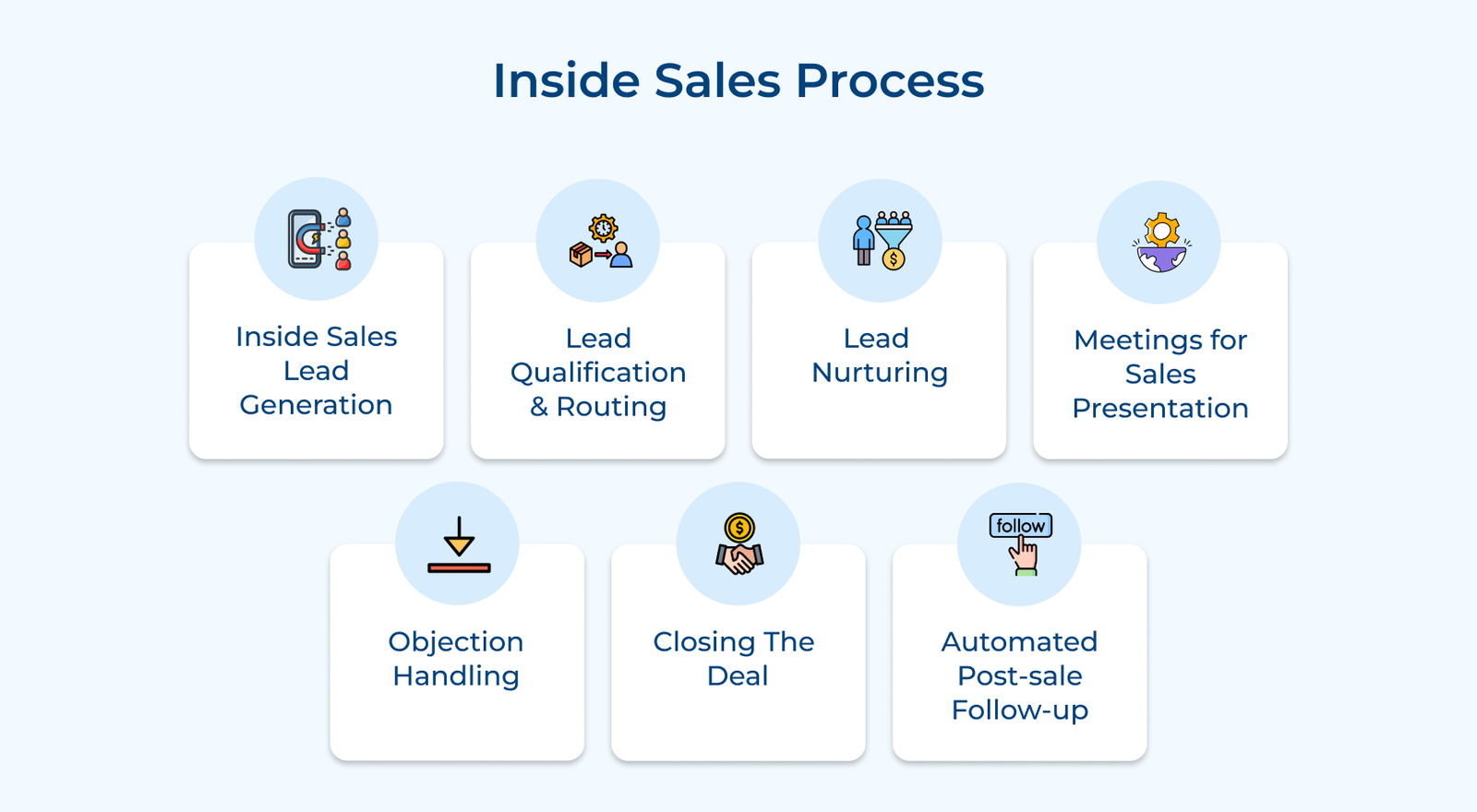
Let’s delve into the key stages of the inside sales process that can help businesses maximize their sales potential and drive success for their organization.
Lead generation sets the foundation for the inside sales process by identifying and attracting potential customers through inbound channels. The aim is to build a consistent pipeline of prospects who show genuine interest in the product or service.
A clear ideal customer profile helps sales teams focus their outreach on companies that match their target market. Tracking lead quality and conversion rates across channels also reveals which sources bring in the most promising prospects.
Once businesses generate leads, they need to assess each prospect’s potential value and readiness to buy using criteria such as budget, etc. Qualified leads are then assigned to sales reps based on factors like industry knowledge, location and product expertise, ensuring each prospect receives relevant attention.
A few routing rules keep the handoff efficient:
Not every qualified lead is ready to make a purchase immediately, which makes consistent nurturing essential to building trust and maintaining engagement over time. Targeted email campaigns, relevant content and timely follow-ups help businesses stay connected with prospects as their priorities evolve.
The key is to align each interaction with the prospect’s buying stage. Educational resources help address early questions, while case studies and product comparisons support more informed decisions later. A consistent, well-planned follow-up schedule keeps the conversation relevant without overwhelming potential buyers.
Once a lead shows strong interest, the sales process moves to a presentation, usually conducted over a phone or video call in inside sales. The presentation should address the prospect’s specific needs and challenges, clearly demonstrate how the offering solves their problems.
A few habits make remote presentations land better:
Prospects often raise concerns during the sales process and experienced remote sales professionals know how to address them effectively. The first step is to understand the concern, acknowledge the prospect’s perspective and provide a clear response that connects the product’s capabilities to their specific needs.
Most objections revolve around a few common issues, including price, timing and competitor comparisons. Recording these objections in your CRM helps identify recurring concerns, allowing the team to adjust the sales pitch to address prospects’ expectations more effectively.
Closing marks the final stage of the sales process, where a prospect makes the decision to purchase. Inside sales representatives can improve their chances of success by highlighting the value of the offer, introducing time-sensitive incentives and clarifying the next steps.
A few steps reduce late-stage drop-off:
The sales process continues even after a deal is closed, as consistent follow-up plays an important role in building lasting customer relationships. Automated onboarding emails, feedback surveys, and periodic check-ins help address customer concerns.
Track metrics such as repeat purchase rates, referral volume and customer satisfaction scores to assess the effectiveness of these efforts. These insights also help identify areas where businesses can improve the customer experience, product offerings and overall sales process.
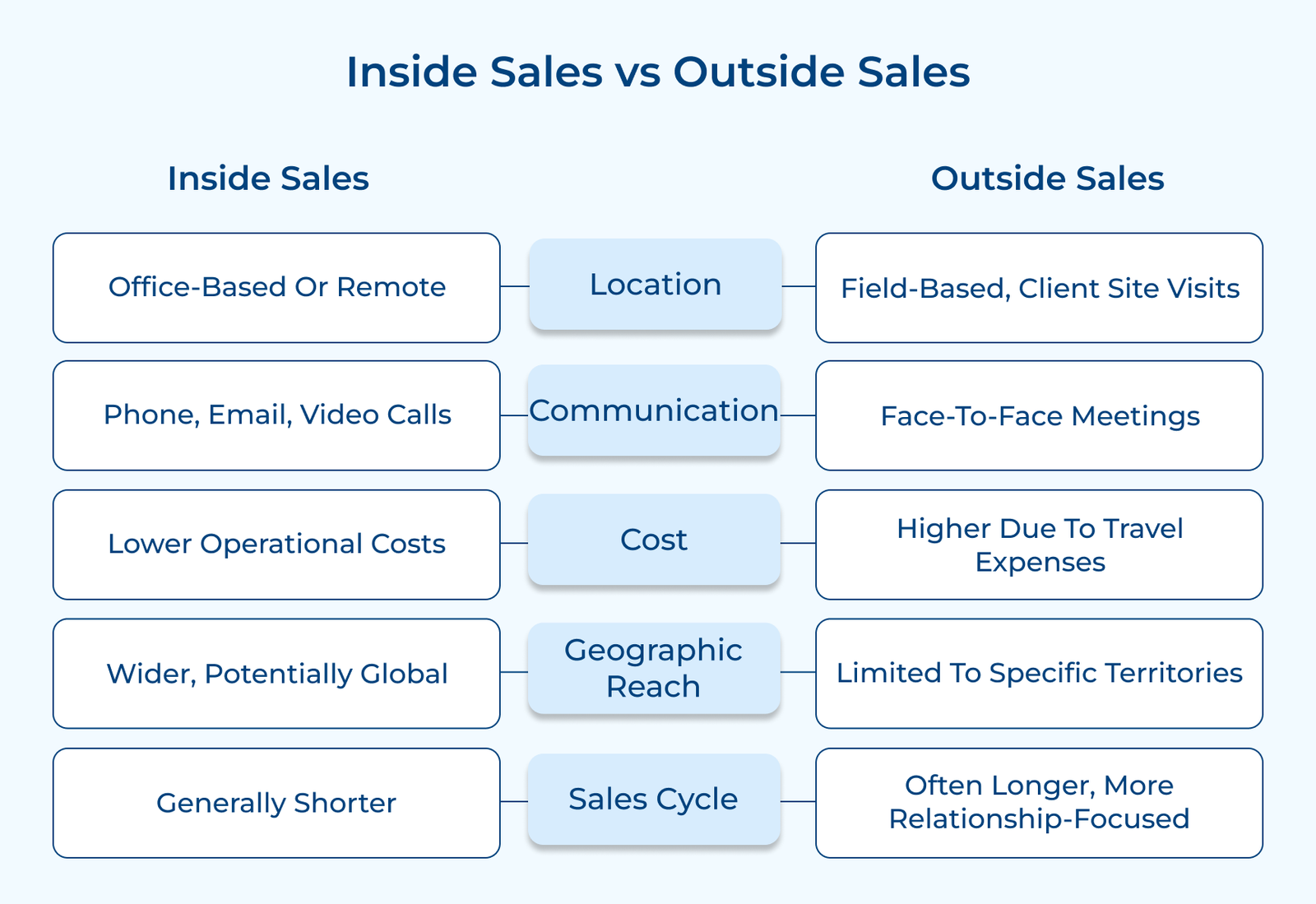
Check out the key distinctions of inside sales vs outside sales, uncover the advantages of each and help you determine which approach aligns best with the goals.
1. Location and Meeting Style
Inside Sales representatives work primarily from an office or remotely, conducting sales activities via phone, email and video conferencing. Outside Sales reps, travel to meet clients face-to-face at their locations or industry events. The fundamental difference impacts the nature of client interactions and relationship-building approaches.
2. Cost Efficiency
Remote Sales typically have lower operational costs due to reduced travel expenses and the ability to manage a larger number of accounts. Outside Sales, while potentially more expensive due to travel and entertainment costs, may be more effective for high-value, complex sales that benefit from in-person interactions.
3. Geographic Reach
Inside Sales can easily cover a broader geographic area, even global markets, without the limitations of travel time and expenses. Outside Sales are often restricted to specific territories or regions due to the need for physical presence, although it can lead to deeper local market knowledge.
4. Sales Cycle Length
Remote Sales generally have shorter sales cycles, as interactions are more frequent and easily scheduled. The approach is often more suitable for transactional or less complex sales. Outside sales may have longer cycles but can be more effective for building long-term relationships and closing larger, more complex deals.
5. Technology Utilization
Inside Sales relies heavily on technology tools such as CRM systems, video conferencing platforms and sales automation software. While Outside Sales also uses the tools, there’s a greater emphasis on in-person presentation skills and adapting to various meeting environments.
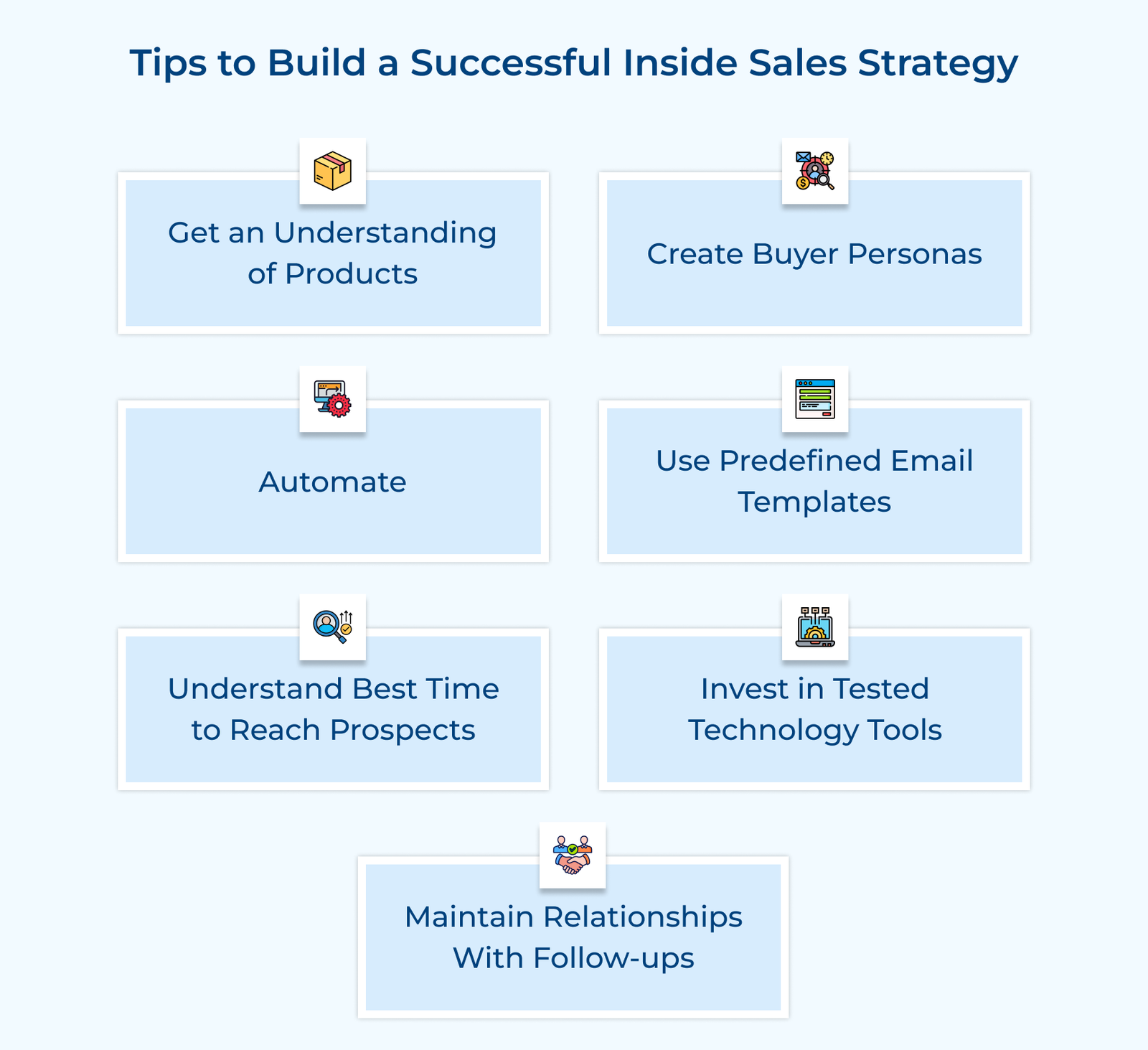
Ready to refine your approach? Let’s dive into the essential tips that will transform the inside sales strategy into a powerhouse for success.
Getting a thorough understanding of the products is crucial for building a successful inside sales strategy. In-depth product knowledge allows sales representatives to confidently address customer inquiries and overcome objections.
Understanding unique selling points helps differentiate the offerings from competitors, enabling reps to position products effectively. The ability to articulate product benefits clearly and concisely is essential for connecting features to customer needs.
Best practices:
Creating buyer personas is a crucial step in building a successful inside sales strategy. The fictional representations of ideal customers help sales teams understand their target audience’s needs, pain points and decision-making processes.
Start by analyzing existing customer data, conducting interviews and researching market trends. Gather information on demographics, behavior patterns, motivations and goals. Using personas allows sales teams to tailor their approach, messaging and solutions to specific customer types.
Best practices:
Automation is a crucial step in building a successful remote sales strategy, offering numerous benefits such as increased efficiency, improved lead quality and enhanced engagement. Sales teams can focus on high-value activities that drive revenue by automating repetitive tasks.
Key areas:
While automation streamlines processes, it’s essential to balance it with personalization. Tailoring automated communications to individual prospects ensures a human touch remains in the sales process, enhancing stronger relationships and higher conversion rates.
Best practices:
Incorporating predefined email templates into the inside sales strategy can significantly enhance efficiency and effectiveness. The advantages of using email templates include saving time, maintaining consistency in messaging and increasing the chances of conversion.
Focus on clarity, conciseness and a compelling call to action that drives engagement to create effective templates. Consider customization strategies like addressing the recipient by name, incorporating industry-specific jargon and referencing news related to their company to tailor the outreach.
Pro tips:
Timing is everything in sales outreach. Connecting with prospects at the right moment can significantly boost engagement and conversion rates. Understanding when the audience is most receptive to communication is vital for effective outreach. Consider analyzing data from previous interactions to determine optimal contact times.
Examine email open rates, response times and sales activity to identify patterns. Adapting to prospect preferences is essential. Each prospect may have different schedules or peak hours for communication. Sending surveys to gauge their preferred contact times can help tailor the approach for better results.
Pro tips:
Investing in highly tested technology tools is a crucial step in building a successful inside sales strategy. The tools streamline processes, enhance productivity and provide valuable insights into customer behavior. Essential tools for remote sales include CRM systems, sales engagement platforms, analytics software and communication tools like VoIP or video conferencing solutions.
When selecting appropriate tools, consider factors such as integration capabilities, scalability, user-friendliness and alignment with the specific sales processes. Look for solutions with proven track records and positive user reviews. It’s also important to assess the vendor’s reputation, support services and long-term viability.
Pro tips:
Building and maintaining relationships through regular follow-ups is crucial for a successful inside sales strategy. Consistent follow-ups demonstrate commitment, keep the company top-of-mind and provide opportunities to address prospects’ evolving needs.
The key is balancing persistence with respect for the prospect’s time, which means being consistent without becoming a nuisance. Tailor the approach based on the prospect’s preferences and engagement level, adjusting frequency.
Pro tips:
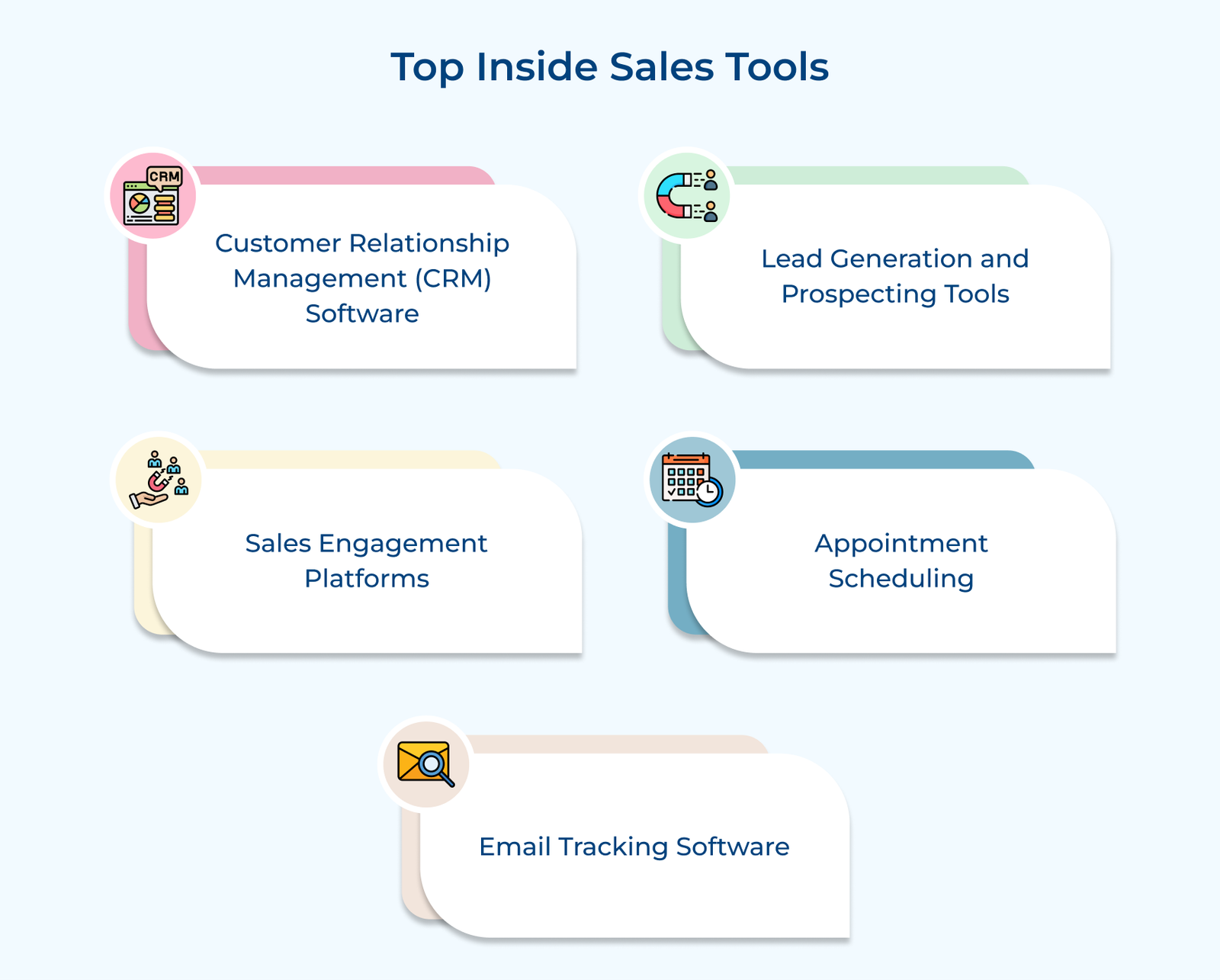
Following are the best inside sales tools that can elevate the sales strategy, enhance collaboration, and drive organizational success. Get ready to unlock the team’s full potential!
CRM systems are the backbone of inside sales operations. They centralized customer data, interactions and sales pipelines in one place. Popular options like Salesforce, HubSpot and Pipedrive allow sales teams to track leads, manage deals and analyze performance metrics.
The tools help sales teams identify and qualify potential customers. Platforms like ZoomInfo, LinkedIn Sales Navigator and Hunter.io provide access to vast databases of business contacts and decision-maker details. They often include features for building targeted prospect lists, verifying email addresses and enriching lead data.
Tools like Outreach, SalesLoft and Groove centralize and automate multi-channel sales communications. They allow reps to create personalized email sequences, track phone calls and manage social media interactions from a single interface. The platforms often integrate with CRMs and provide analytics to help optimize outreach strategies.
Scheduling tools like Calendly, ScheduleOnce and Chili Piper simplify the process of booking meetings with prospects. They eliminate the back-and-forth of finding mutually available times by allowing leads to self-schedule based on the sales rep’s availability.
Email tracking tools such as Yesware, MixMax and Mailtrack provide real-time notifications when prospects open emails, click links, or download attachments. The insights help sales reps gauge interest levels and effectively time follow-ups. Many email tracking solutions also offer templates, scheduling features and integration with CRMs to enhance email productivity.
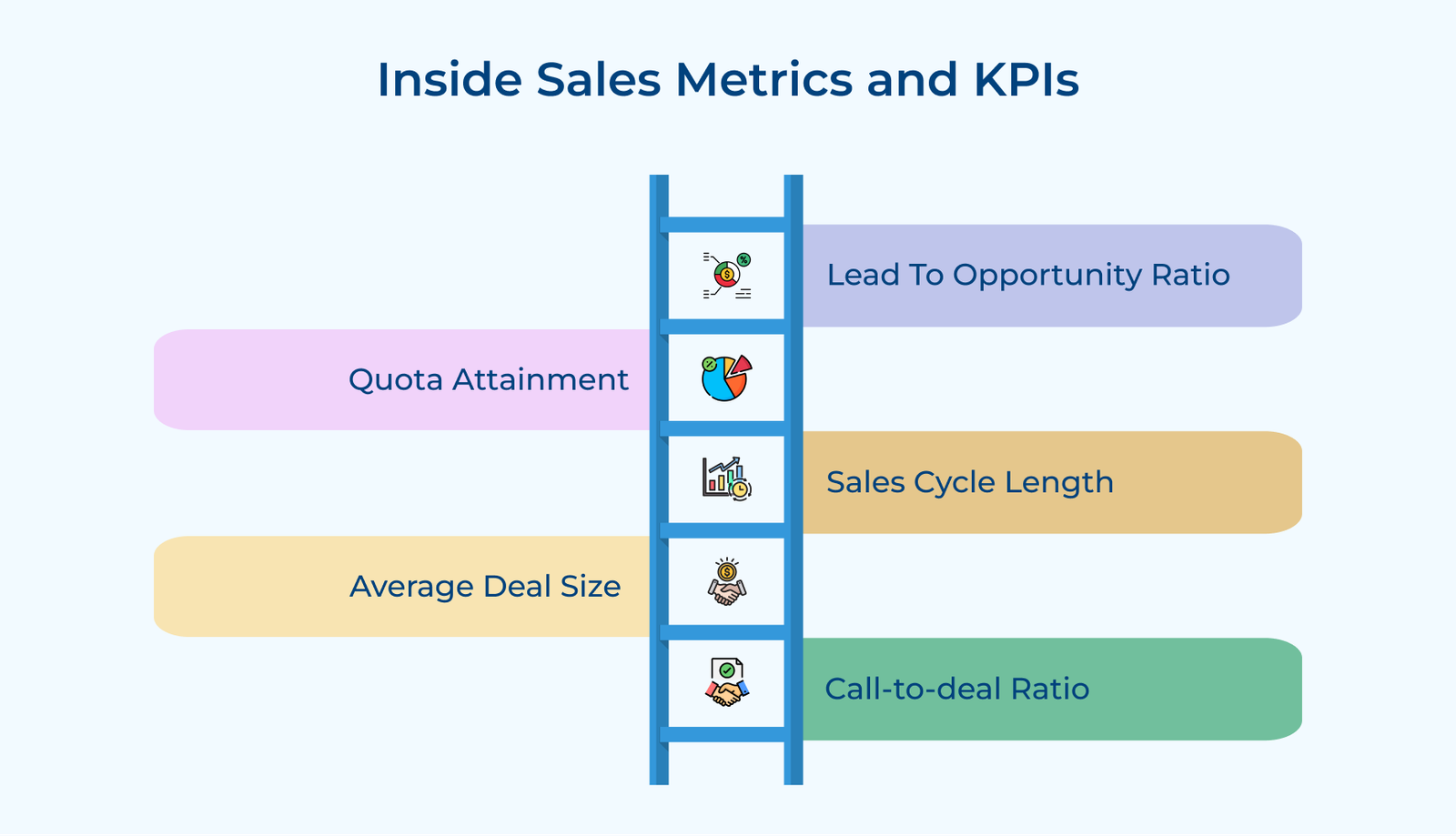
The following are the most important inside sales metrics and KPIs that can help you optimize your sales processes.
1. Lead to Opportunity Ratio
The metric measures how efficiently sales reps convert leads into viable opportunities. A higher ratio indicates better lead qualification and targeting. Focus on refining lead scoring, enhancing qualification processes and aligning marketing efforts with sales criteria to improve the metric.
2. Quota Attainment
The KPI shows the percentage of sales reps meeting or exceeding their assigned targets. It reflects overall team performance and individual effectiveness. Provide targeted coaching, optimize territory assignments and ensure realistic yet challenging goals to boost quota attainment.
3. Sales Cycle Length
The metric tracks the average time from initial contact to deal closure. Shorter cycles generally indicate more efficient processes and better-qualified leads. Streamline the sales process, provide effective sales enablement tools and focus on high-quality leads.
4. Average Deal Size
The average deal size measures the typical monetary value of closed deals. Larger deal sizes often correlate with higher revenue and more efficient resource utilization. Focus on upselling and cross-selling strategies, target higher-value prospects and enhance value proposition communication to increase average deal size.
5. Call to Deal Ratio
The metric shows how many calls, on average, are required to close a deal. It helps gauge the effectiveness of sales conversations and targeting. Enhance call quality through training, refine prospect targeting and optimize the sales pitch and follow-up strategies.
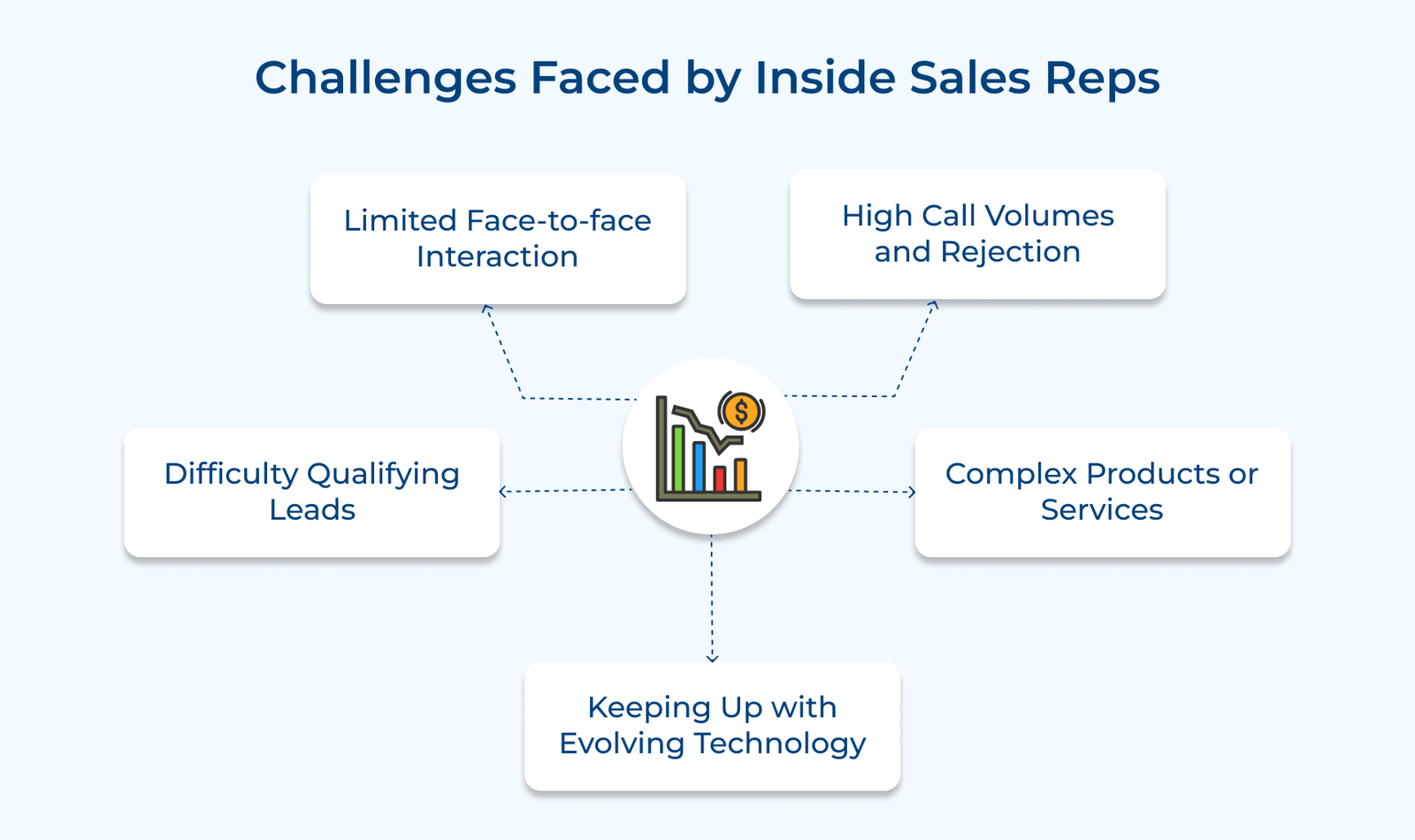
Check out the unique challenges faced by inside sales reps and get insights on how to tackle them head-on, ensuring their success in the vital role.
Inside sales reps lack the benefit of in-person meetings, which makes it harder to build rapport and read non-verbal cues. Without body language to guide them, conversations feel transactional and trust takes longer to build.
Remote sales often involve making numerous calls every day, and frequent rejection can lead to burnout and discouragement. Over time, the constant pressure from high call volumes wears down motivation and hurts overall team performance.
Without face-to-face interaction, it’s harder to accurately judge a prospect’s needs and real buying potential. Reps risk spending valuable time on poor-fit leads while genuinely promising opportunities receive far less attention than they deserve today.
Explaining intricate products or services without visual aids or in-person demonstrations is difficult. Prospects can struggle to grasp the value of a complex offering, which often slows decisions and raises the chance of costly misunderstandings.
Inside sales relies heavily on technology, and the tools reps use are constantly changing. Keeping up with new platforms and techniques on top of daily targets feels overwhelming and pulls valuable time away from selling.
Tackling these hurdles takes the right skills, habits, and tools, applied consistently across the team. Here are five practical solutions.
Inside sales combines technology with personalized communication, helping reps connect with more prospects without compromising the quality of each interaction. They can respond faster, manage a larger audience and adjust their approach to changing market needs.
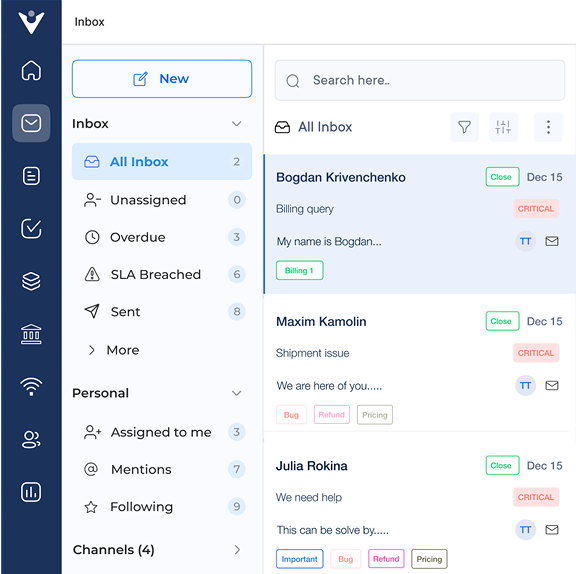
Ready to strengthen your inside sales approach? Explore how Veemo Sales supports inside sales teams with lead scoring, pipeline tracking, and automated follow-ups.
Inside sales involve selling products or services remotely, often through phone calls or email. Let’s assume that a software sales representative works from an office to close deals via video calls. Outside sales involve face-to-face interactions. An example would be a sales agent meeting clients at their locations to demonstrate products and negotiate deals in person.
Successful inside sales professionals combine strong communication, active listening, and relationship-building skills with a solid understanding of their products or services. They also need to be comfortable using technology and CRM systems.
Because remote reps often work independently to meet their targets, a few personal traits matter just as much:
Inside sales is prevalent across technology, telecommunications, software as a service (SaaS), pharmaceuticals, and financial services, among others. Businesses in these sectors can handle a high volume of leads without the travel expenses that come with outside sales.
Industries with quick sales cycles and a consultative selling approach often turn to inside sales for effective customer engagement. The model lets teams stay responsive while keeping the cost of each sale lower.
Inside sales professionals rely on a range of tools to facilitate their workflows and optimize sales performance. Communication tools like video conferencing software and chat applications are vital for building connections with potential clients.
Commonly used tools include: