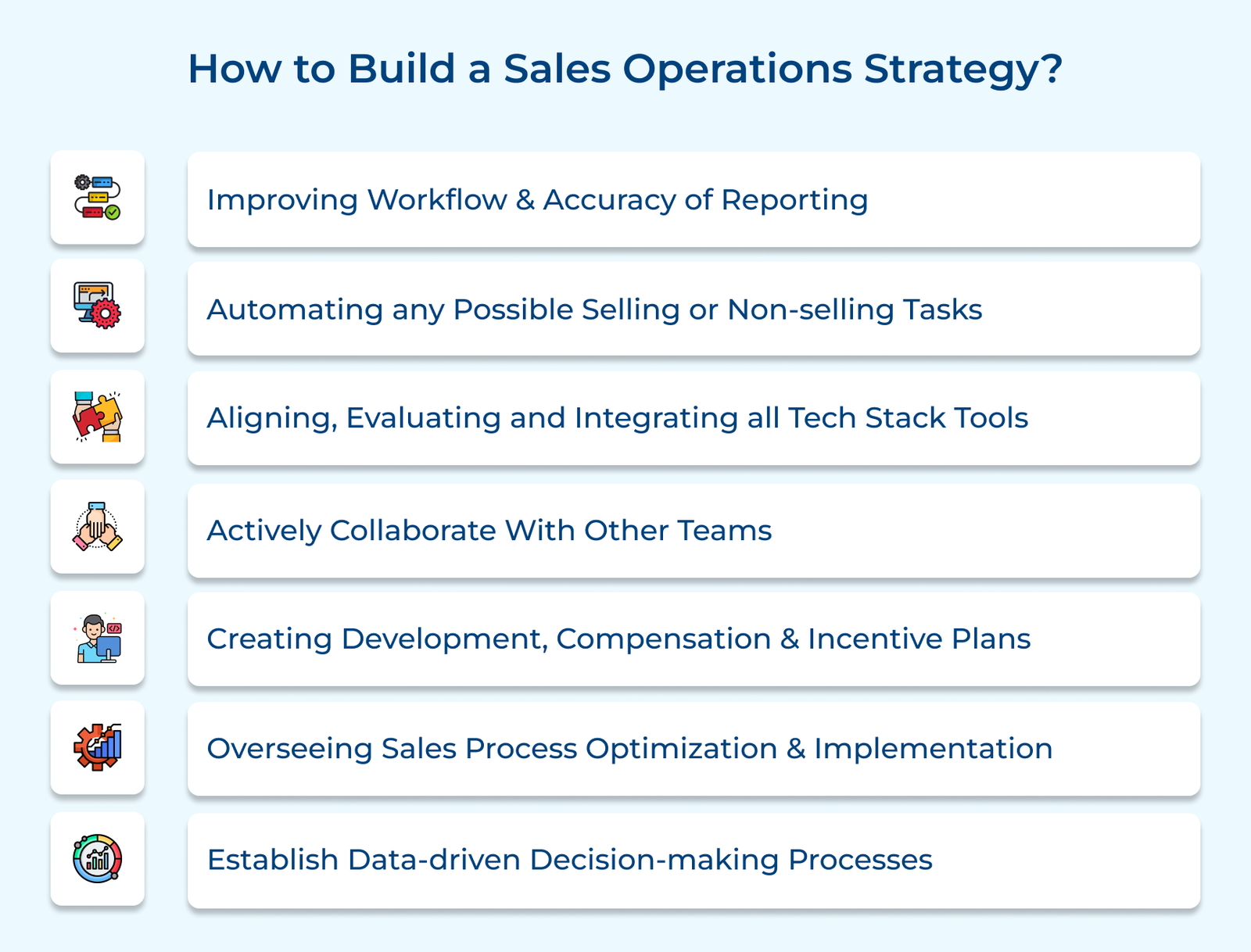
1. Improve Workflow and Accuracy of Reporting
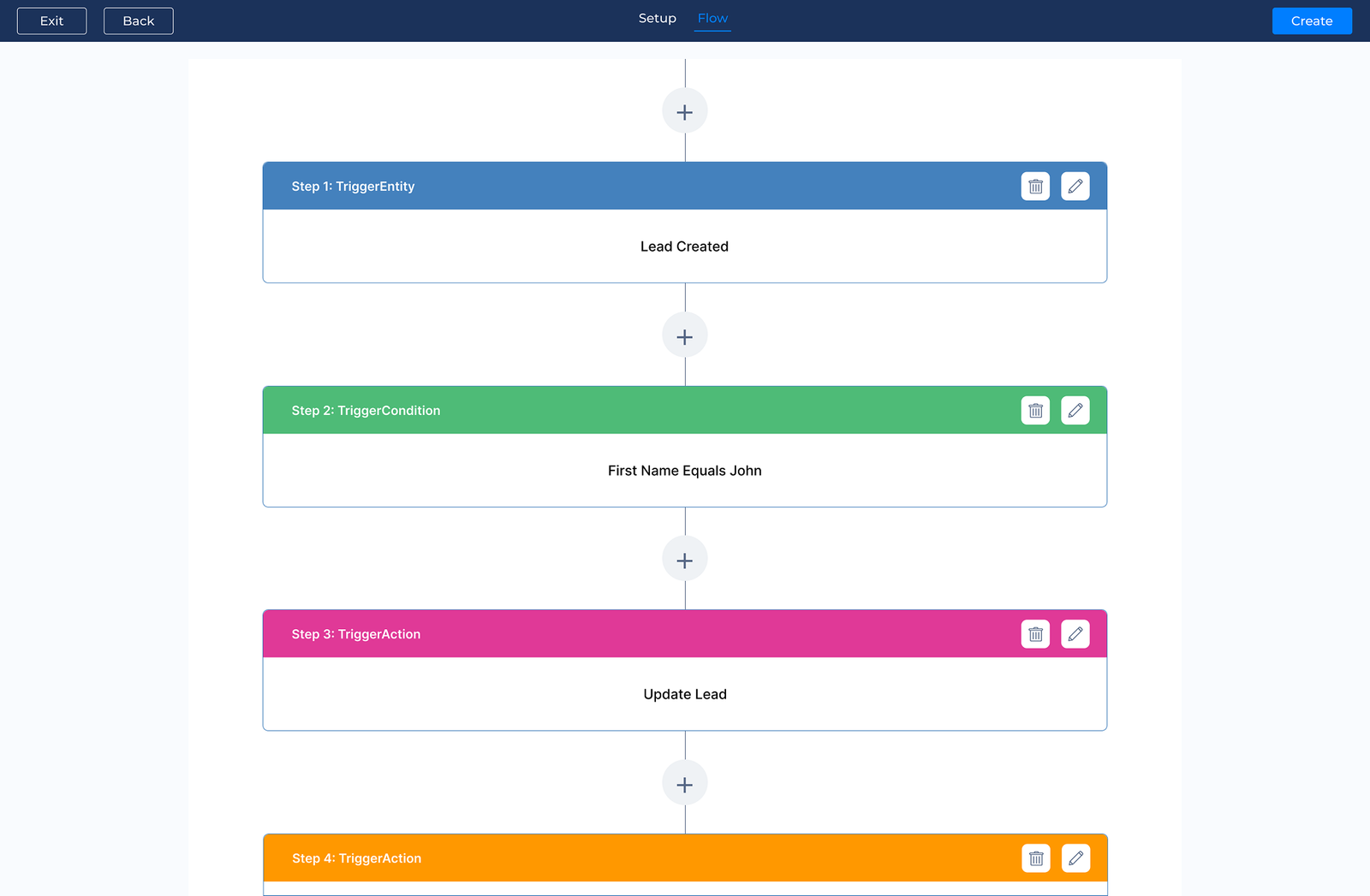
Improving workflow and accuracy of reporting is a crucial step in building an effective sales operations strategy. Begin by assessing current workflow processes, examining how data flows through the organization and identifying bottlenecks or inefficiencies.
Identify areas for improvement, focusing on processes that are time-consuming, error-prone or lack consistency. Implement streamlined reporting systems that automate data collection, standardize reporting formats and provide real-time insights to decision-makers.
Pro tips:
- Conduct regular audits of the reporting processes to ensure data accuracy and relevance.
- Invest in user-friendly reporting tools that integrate seamlessly with the existing systems.
- Provide comprehensive training to the team on new reporting systems and best practices.
2. Automate Selling and Non-Selling Tasks
Automating selling and non-selling tasks is a crucial step in building an effective sales ops strategy. Begin by evaluating current manual processes to identify bottlenecks and time-consuming activities. Identify tasks suitable for automation, such as data entry, lead scoring, email follow-ups and report generation.
Implement automation tools and software that integrate seamlessly with the existing tech stack to streamline the processes. The approach not only saves time but also reduces errors and frees up sales representatives to focus on high-value activities like building relationships. Automating repetitive tasks helps sales teams increase productivity, improve data accuracy and enhance efficiency.
Pro tips:
- Start small with pilot projects to demonstrate value and gain buy-in
- Provide thorough training to ensure team adoption and maximize tool utilization
- Continuously monitor and optimize automated processes for ongoing improvement
3. Align, Evaluate and Integrate Tech Stack Tools
Aligning, evaluating and integrating tech stack tools is a crucial step in building a robust sales operations strategy. Begin by conducting a comprehensive tech stack audit to identify all current tools and their functionalities. The process involves cataloging each tool, its purpose, user base and integration points within the sales ecosystem. Assess the effectiveness of each tool and identify any overlaps or redundancies.
Based on the analysis, develop a plan to streamline and optimize the tech stack. It may involve consolidating tools with similar functions, eliminating underutilized solutions or identifying gaps that require new technologies. Prioritize integration between tools to ensure seamless data flow and a unified user experience across the sales tech ecosystem.
Pro tips:
- Involve key stakeholders from sales, IT and leadership in the evaluation process
- Develop a phased implementation plan to minimize disruption to ongoing sales activities
- Establish clear metrics to measure the impact of tech stack changes on sales performance
4. Actively Collaborate with Other Teams
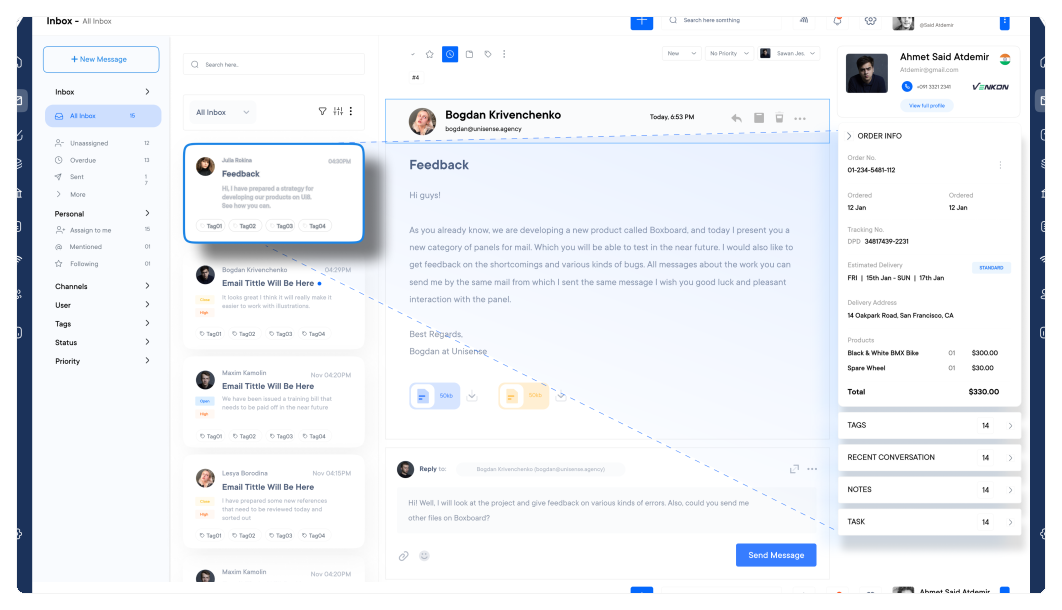
Actively collaborating with other teams is crucial in building an effective sales operations strategy. Begin by identifying key cross-functional relationships, such as marketing, finance and customer success. The teams possess valuable insights that can enhance the strategy’s effectiveness.
Establish regular communication channels through scheduled meetings, shared platforms and informal check-ins to ensure consistent information flow. Develop collaborative projects that align with common goals, enhancing a sense of shared ownership and leveraging diverse expertise.
Ways to implement:
- Create a cross-functional task force with clear roles and responsibilities
- Set up a shared dashboard to track joint KPIs and progress
- Implement a feedback loop to continuously improve collaborative efforts
5. Create Development, Compensation and Incentive Plans
Creating development, compensation and incentive plans is crucial for building an effective sales operations strategy. The plans attract top talent, motivate sales teams and drive performance. A well-designed compensation structure should balance base salary with performance-based incentives that align individual goals with company objectives.
Development plans focus on continuous learning and skill enhancement, ensuring sales representatives stay competitive in a dynamic market. Incentive programs, such as bonuses, commissions and non-monetary rewards, encourage desired behaviors. The plans should be transparent, achievable and adaptable to market changes. When implemented correctly, they enhance a culture of high performance, retention and engagement within the sales team. Regular review and adjustment of the plans ensure they remain effective which supports the sales strategy.
Pro tips:
- Conduct regular market research to ensure competitive compensation packages
- Implement a clear, metrics-based performance evaluation system
- Provide ongoing training and development opportunities aligned with company goals
6. Oversee Sales Process Optimization and Implementation
Creating development, compensation and incentive plans is crucial for building an effective sales operations strategy. The plans attract top talent, motivate sales teams and drive performance. A well-designed compensation structure should balance base salary with performance-based incentives which helps in aligning individual goals with company objectives.
When implemented correctly, they enhance a culture of high performance, retention and engagement within the sales team. Regular review and adjustment of the plans ensure they remain effective.
Pro tips:
- Conduct regular market research to ensure competitive compensation packages
- Implement a clear, metrics-based performance evaluation system
- Provide ongoing training and development opportunities aligned with company goals
7. Establish Data-Driven Decision-Making Processes
Establishing data-driven decision-making processes is crucial for building an effective Sales support operations process strategy. Implementing robust data collection methods can help organizations gather comprehensive information on sales activities, customer behaviors and market trends.
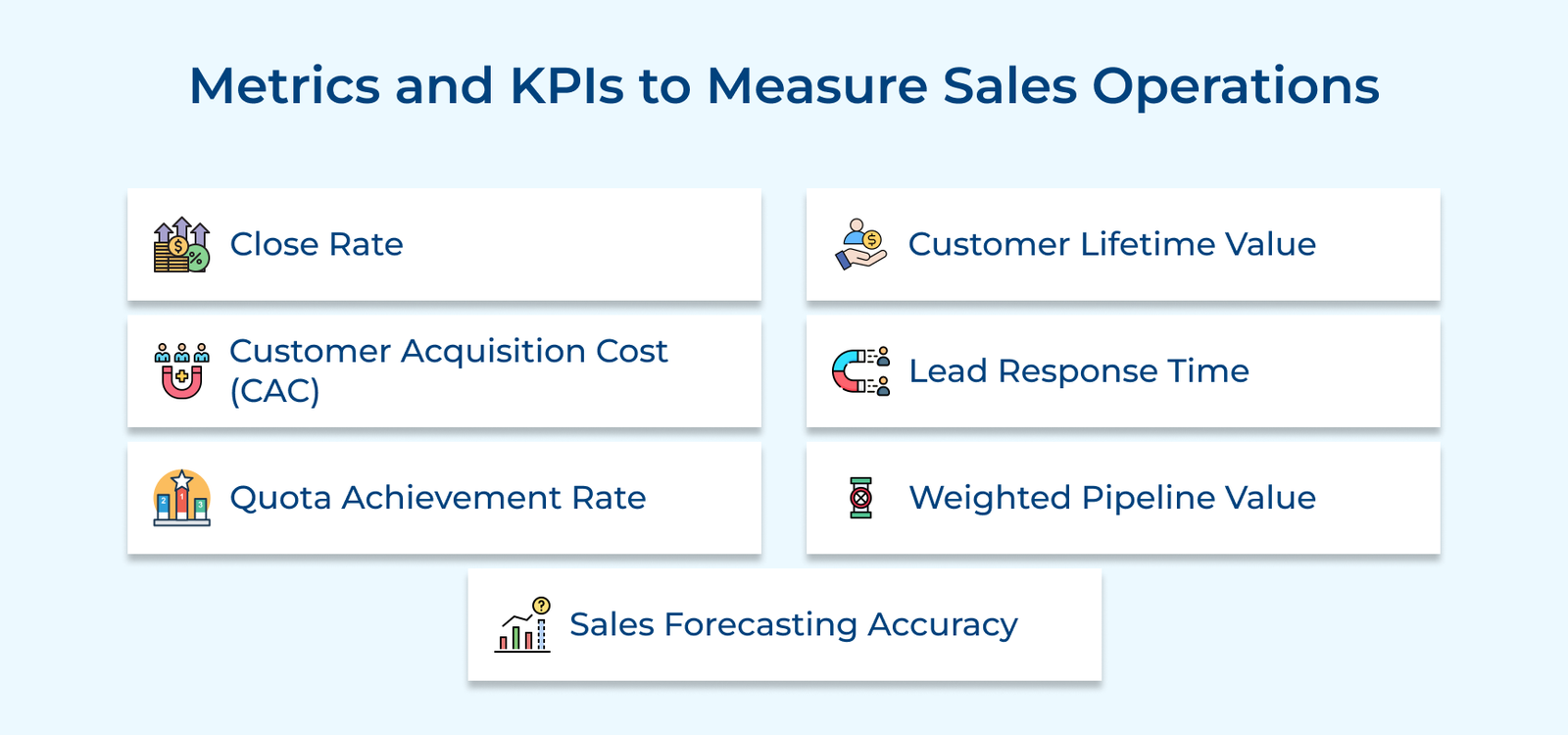
Developing key performance indicators (KPIs) allows teams to measure and track progress toward specific goals, ensuring alignment with business objectives. Creating data analysis and reporting frameworks enables the transformation of raw data into actionable insights, facilitating informed decision-making at all levels of the organization.
Pro tips:
- Invest in data quality management to ensure the accuracy and reliability of information
- Enhance a culture of data literacy through training and education programs
- Integrate data visualization tools to make complex information more accessible and understandable