What is Sales Messaging? Importance, Steps & Best Practices
Explore the sales messaging, what it is, why it’s crucial and how to craft messages that resonate. Learn about the key steps, mistakes and best practices for better customer engagement.

Explore the sales messaging, what it is, why it’s crucial and how to craft messages that resonate. Learn about the key steps, mistakes and best practices for better customer engagement.
Despite investing in modern tools, many B2B companies still face uneven sales performance and drawn-out sales cycles. So, what could be the key reason for this? Sales conversations often miss the mark. The sales reps improvise messaging, overlook key value points and fail to explain why their solution truly matters. As a result, prospects walk away confused or worse, choose a competitor with a weaker product but a clearer message.
A structured sales messaging framework can fix the issue. It gives your team clear language that speaks directly to customer challenges and connects your solution to real business outcomes. When reps know how to frame the value, conversations become relevant and more likely to convert.
Sales messaging refers to the purposeful language B2B companies use to explain how their solution helps solve real customer problems. It connects what your product does to what your buyer cares about, fixing pain points and making better decisions.
Good brand messaging isn’t about flashy words or vague promises. It’s about showing a deep understanding of your buyer’s world and guiding them through the decision process with clarity. It stays consistent across every conversation, email and pitch, so no matter who’s talking, the message lands.
Key objectives:
Check out the key aspects of B2B sales messaging that shape how conversations flow at each stage of the buying journey and how teams stay aligned across every customer touchpoint.
Key questions to consider:
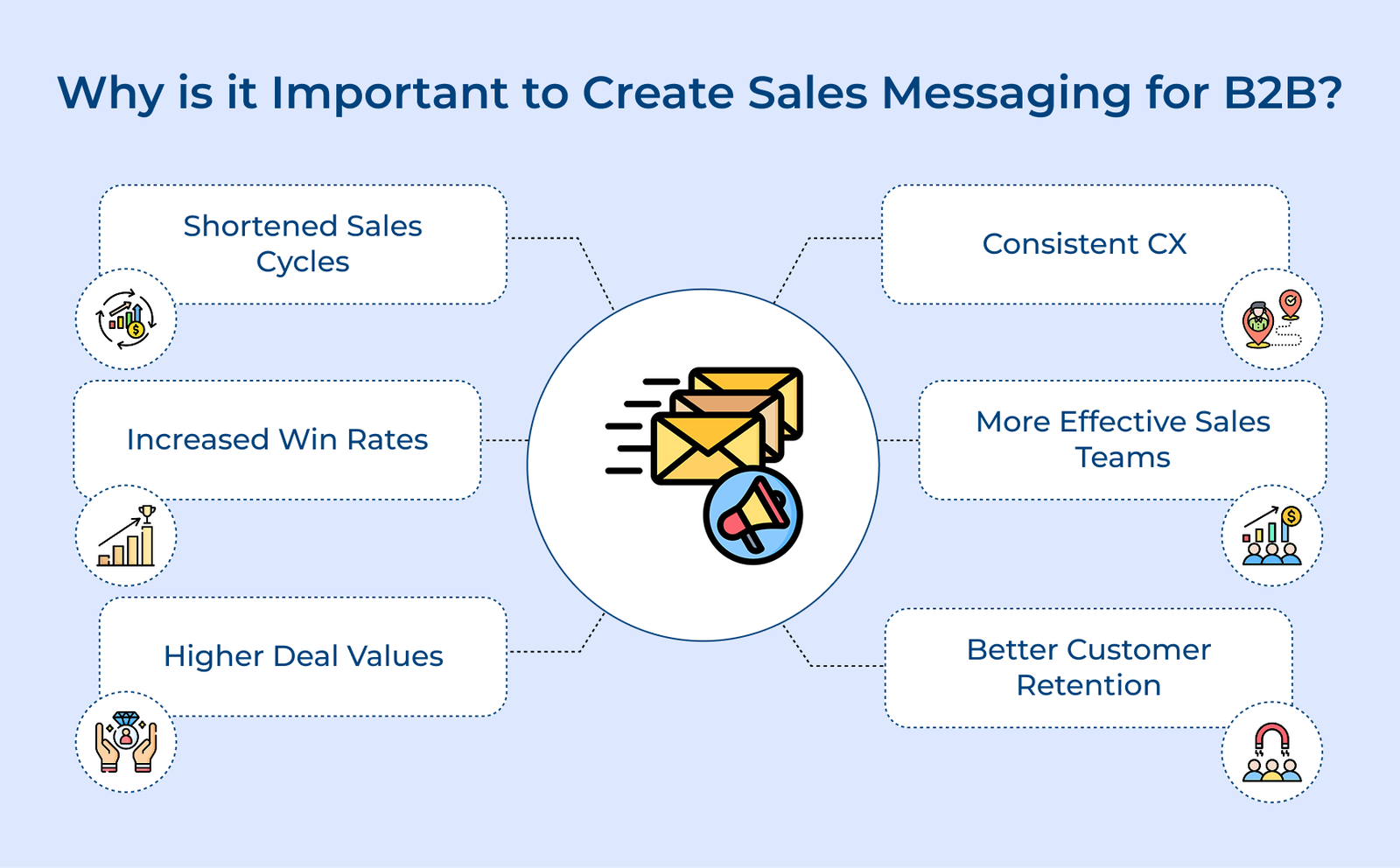
1. Shortened Sales Cycles
Good messaging helps buyers quickly see how your solution fits their needs. When there’s less confusion, decisions happen sooner and long, drawn-out back-and-forths become less common.
2. Increased Win Rates
When your message speaks directly to what buyers care about, you stand out. It’s not just about listing features, it’s about showing you understand what they’re trying to solve.
3. Higher Deal Values
Clear, value-focused messaging helps move the conversation away from price. When buyers see how your solution improves revenue or efficiency, they’re more willing to invest.
4. Consistent Customer Experience
When everyone shares the same message, from sales to support, buyers get a clear, reliable picture of what you offer. The consistency builds trust as they move through the process.
5. More Effective Sales Teams
A clear sales messaging framework gives your team confidence to engage prospects at all levels, including executives. Reps spend less time crafting messages and more time having meaningful conversations with clear, proven language that handles objections.
6. Better Customer Retention
When your message sets the right expectations, customers know what they’re getting and they’re more likely to be satisfied. It leads to renewals, referrals and long-term loyalty.
Below are the steps to develop your own sales messaging framework that not only captures attention but also drives results.
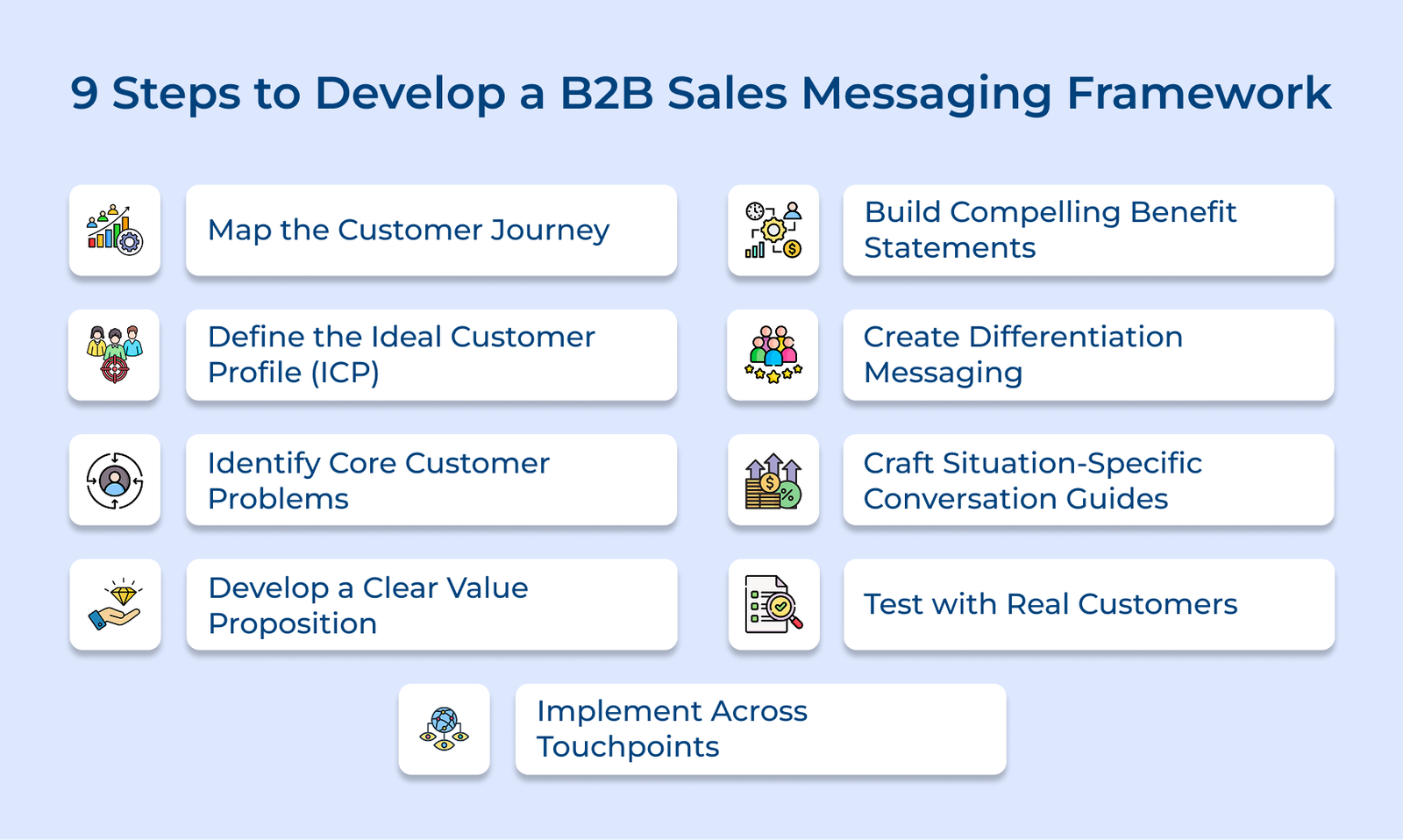
Before crafting any sales message, understand how your buyers buy. Mapping the customer journey helps you see each stage of the decision process, from the first sign of a problem to the moment your solution is in use. The view helps you meet buyers where they are, with the right message at the right time.
Understanding the distinct phases B2B buyers move through helps you deliver the right information at the right time. Gartner finds B2B buyers spend just 17% of their time with vendors, but 27% researching on their own. Knowing the stages helps you influence prospects even when you’re not directly engaged.
Key questions:
Use the questions as your guide. Messaging that answers them directly shows you understand the buyer’s world and that builds trust faster than any pitch.
Your ideal customer profile helps you focus your sales and messaging on the companies most likely to benefit from your solution. A clear ICP ensures you’re not wasting time chasing poor fits. Start by gathering key data that influences buying behavior and alignment with your offering, such as:
How do you know if your ICP is accurate enough? Ask yourself: “Can your sales team instantly recognize a perfect-fit company based on your ICP? Can marketing easily find and reach them? If not, you need to narrow it down.
Investing in a well-defined ICP improves marketing efficiency, reduces lead waste and boosts conversion rates. When you speak directly to the right audience, your messaging simply connects.
Understanding customer problems means stepping into their world and seeing challenges through their eyes. The shift in perspective lays the groundwork for conversations that focus on outcomes, not features. Here are three practical ways to uncover what truly matters to your buyers:
Instead of saying, “We offer automated reporting,” a data company might say, “We help you spot market opportunities before they disappear.” The small shift speaks to a bigger truth and gets buyers to lean in.
Your value proposition is the clear, focused statement that tells prospects exactly why your solution is the right choice. It connects their problems to the way you solve them and shows the results they can expect.
Craft a Concise Statement Addressing Primary Customer Needs
Skip the product pitch. Instead, speak directly to the real issues your prospects are facing. Frame your solution as the path from problem to outcome. Keep it simple, ideally under 30 words, so your team and your buyers can easily remember it.
Explain a Unique Approach to Solving Industry Problems
Your methodology for solving customer problems often matters more than what your solution does. Detail your distinctive approach to addressing industry challenges, be it through proprietary technology or innovative service delivery.
Link Solution Capabilities to Measurable Business Outcomes
Don’t just say you improve efficiency or save time. Say how much. Use specific numbers or clear outcomes, like faster turnaround, higher accuracy, or increased revenue. That’s what buyers care about: what they’ll get in return.
Benefit statements explain how your solution makes a real difference by translating features into outcomes that matter to decision-makers. Instead of listing what your product does, they show why it matters. Technical details don’t stand on their own. A feature like “real-time analytics” only becomes valuable when framed as: “spot trends early so you can act before competitors do.”
Key points:
Different people care about different things. A CFO wants to know how your solution saves money. A technical lead wants to know it won’t disrupt current systems. Tailoring benefit statements to each role makes your message land with everyone in the room.
Differentiation messaging helps prospects see clearly why your solution stands apart and why it’s worth their time, trust or budget. Buyers often compare similar-looking options. Your job is to make sure they don’t see you as just another name on the list.
Forrester Research shows that clear differentiation boosts win rates by 18% and deal values by 15%. Standing apart from competitors directly improves perception and performance.
Conversation guides help turn your messaging framework into a real, useful dialogue. They’re simple, adaptable tools that support your team during prospect conversations without sounding scripted.
Start with smart opening questions that reveal what really matters to the buyer, without jumping straight into a pitch. Good questions show you’re listening and help shift the discussion toward areas where your solution fits naturally.
Prepare for common objections; don’t just wing it. Gather real concerns customers have raised about price, rollout, or alternatives, and build honest, direct replies. The thoughtful responses help keep the conversation moving forward, even when prospects hesitate.
Below are the key differences between sales messaging and marketing messages. Let’s check them out in detail.
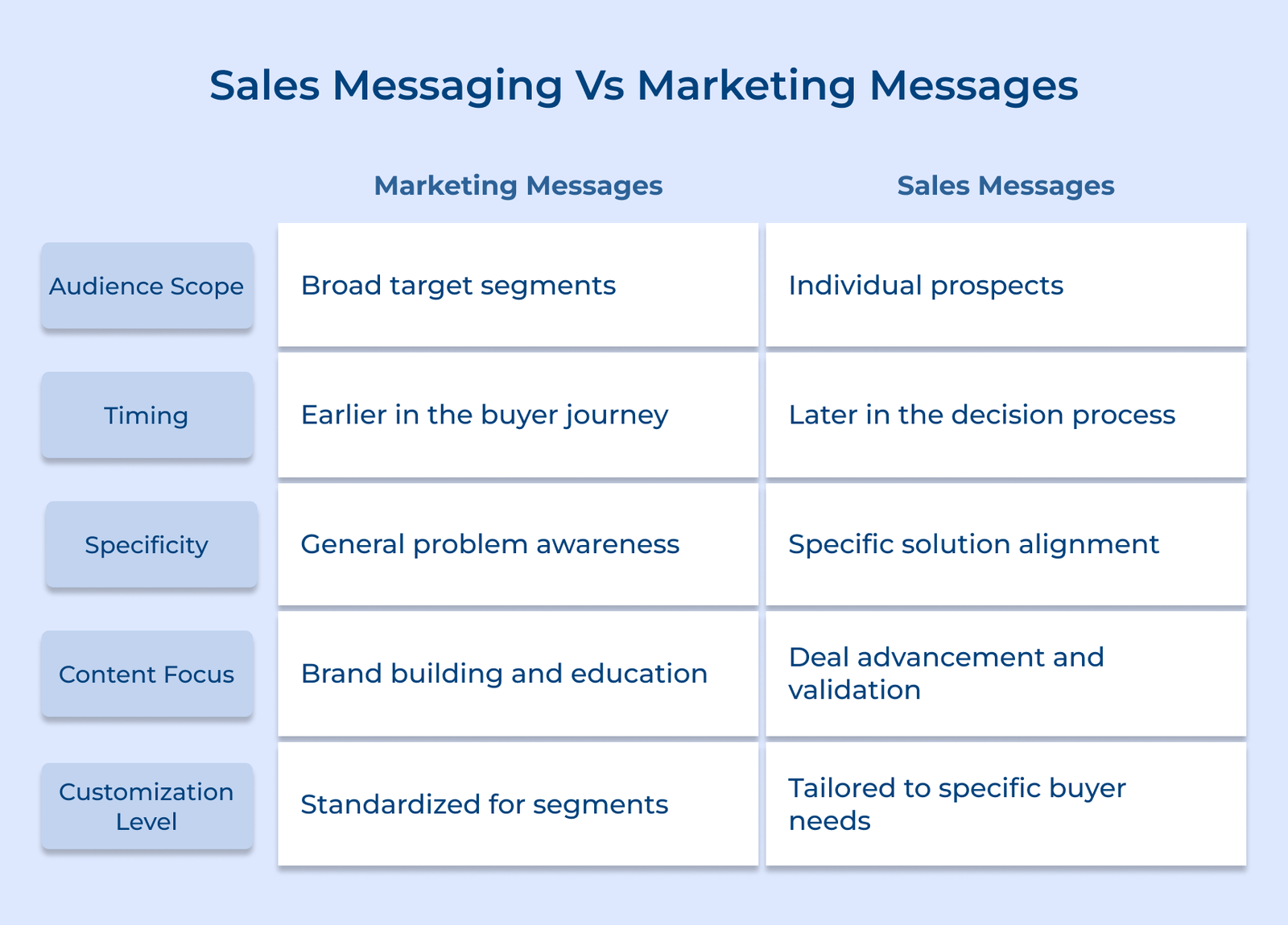
1. Audience Scope
Marketing messages speak to groups such as industry types, company sizes or job roles. They spark interest by addressing common challenges shared across a broader market.
Sales messages are one-to-one. They zoom in on specific individuals within a company, tailoring the message to their exact business goals, concerns and context.
2. Timing
Marketing messages appear early, when prospects are exploring problems and learning about options. They educate, build trust and position your company as worth a closer look.
Sales messages step in once there’s real interest. They guide prospects through evaluation, address concerns, and help teams justify a buying decision.
3. Specificity
Marketing messages deal in broader themes, like why the problem matters, what trends are at play and why your category exists.
Sales messages get specific. They tie your solution directly to the prospect’s needs, using examples, outcomes and proof points that speak to their exact situation.
4. Content focus
Marketing messages build awareness. They highlight who you are, what you stand for and why your approach matters across the industry.
Sales messages drive action. They answer tough questions, break down your capabilities and help buyers make a confident decision.
5. Customization Level
Marketing messages stay consistent. They’re crafted for repeat use across campaigns, channels and segments to maintain a clear voice.
Sales messages are personalized. They reflect what you’ve learned from conversations and research, making the message feel relevant to each buyer.
Check out the essentials of developing an effective sales messaging strategy that truly connects with your audience.
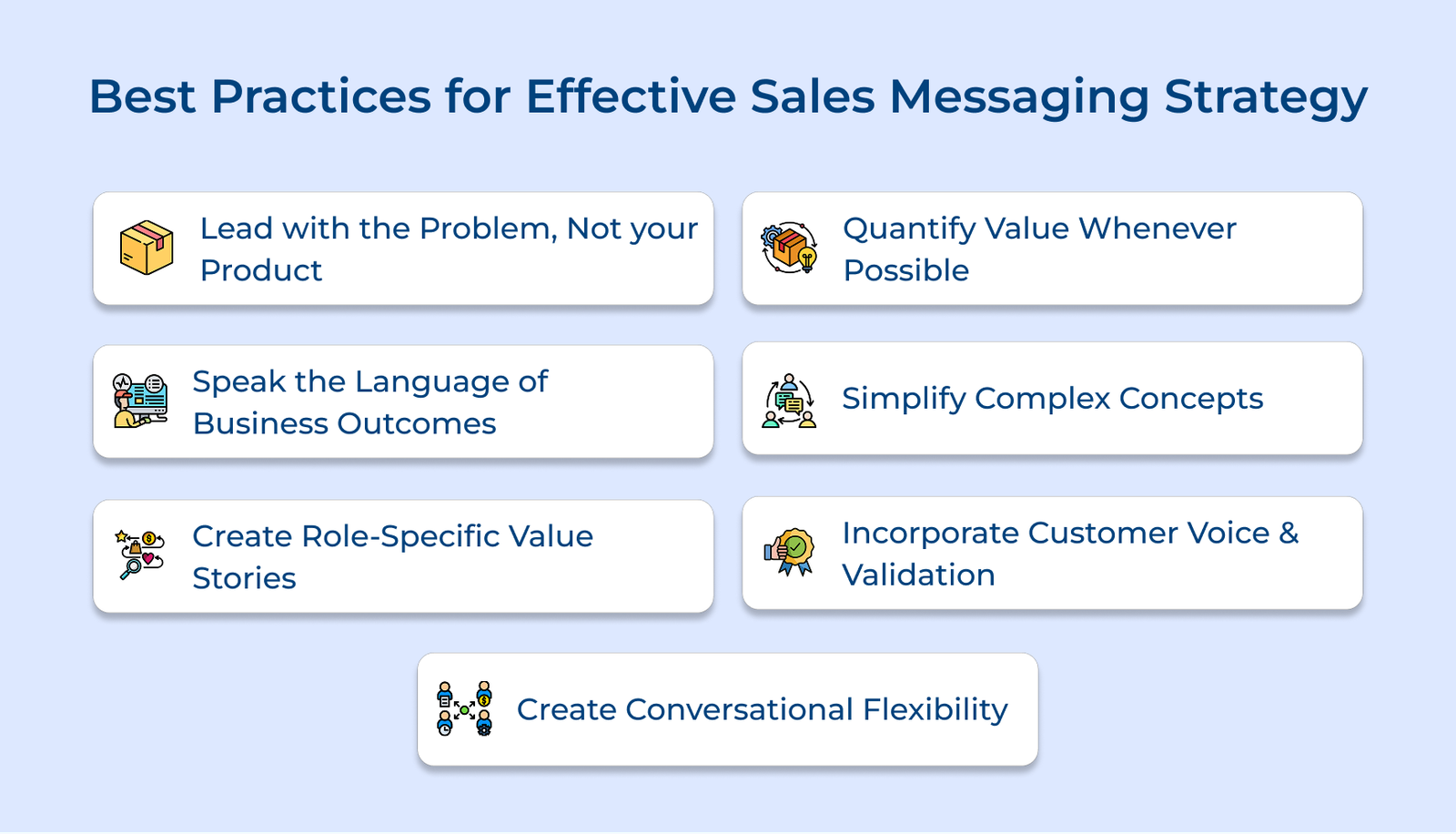
Nothing loses a buyer faster than leading with features. Don’t pitch, instead relate. Try: “We see a lot of teams struggling to manage remote work effectively.” When you describe their pain better than they can, you earn trust fast. It comes after they believe you understand what they’re dealing with.
Buyers don’t care how clever your product is. They care about what it does. Forget the jargon, say what changes. Instead of “AI-driven insights,” say: “Clients reduce customer churn by 15% in 90 days.” It’s what gets attention in the boardroom.
Not everyone in the deal cares about the same thing. IT cares about compatibility. Finance cares about cost and ROI. Tailor your message to each person. You’ll earn more trust and move deals forward faster when you talk about what they value.
“We save time” is vague. “We cut reporting time from 3 days to 4 hours” paints a picture. Number anchor your message in reality and help buyers imagine what success looks like for them. It’s when they start to care.
If you can’t explain your solution in plain language, you probably don’t understand it well enough. Skip the buzzwords and say what you mean. Clear beats clever every time.
Buyers trust other buyers more than your pitch. Share real quotes and outcomes: “We were unsure too, but within two months, productivity was up 22%.” The story sticks because it sounds like them.
Nobody likes a scripted pitch. Sales messaging should guide the conversation, not control it. Equip your team with key points they can adapt on the fly. Let them respond naturally. That’s how you keep things real and relevant.
Effective B2B sales messaging isn’t about listing features; it’s about showing prospects you understand their world. Speak to their problems, show real outcomes and tailor messages then your conversations start to matter.
Building a clear, strategic messaging framework takes effort, but it pays off. It helps your team stay aligned, makes your communication stronger at every step and builds trust over time. It’s what turns interest into action and prospects into long-term customers.

Start by understanding your customer’s real challenges. Focus on the outcomes they care about, not just what your product does. Keep your language simple, back up your claims with proof and tailor your message to each stakeholder. Most importantly, test what you say with real customers and adjust based on what you learn.
Sales messaging connects what you offer to what the customer needs. Done right, it helps you close deals faster, win more often and focus the conversation on value, not just price. It also keeps your whole team on the same page, setting clear expectations that match what your solution delivers.
Start with your buyer’s journey. Map out their problems, goals and decision points. Build a clear value statement, show how your solution helps and explain why it’s different. Create flexible messaging blocks that reps can adjust based on who they’re speaking to. Then test, refine and repeat.
Marketing speaks to a crowd. Sales speak to a person. Marketing content creates awareness and interest early in the journey. Sales messaging picks up when someone is ready to talk details, focusing on their situation, their questions and how your solution fits.
Check in quarterly to keep things fresh. Update more often if you launch new features, see drop-offs in win rates or face new competition. Keep a feedback loop open with your sales team. They’ll tell you what’s working and what isn’t.
Look at conversion rates across the funnel. Review why you win and lose deals. Ask prospects what stood out to them. Track changes in deal size, win rates and how long it takes to close. If your messaging is on point, the numbers will reflect it.
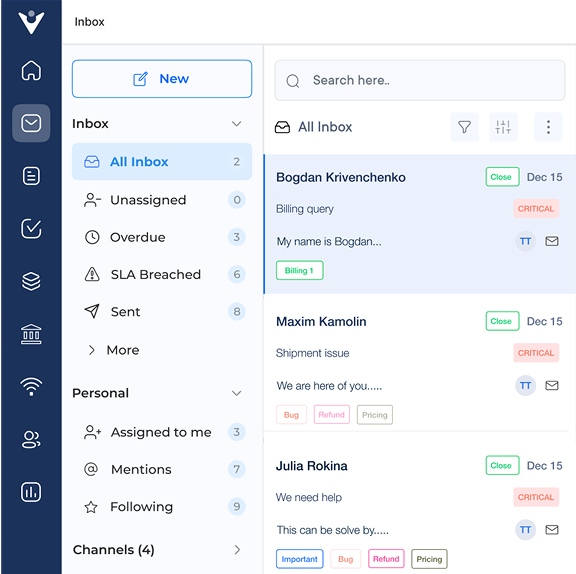
Grow Customer Relationships and stronger team collaboration with our range of products across the Conversational Engagement Suite.
Omnichannel Customer Support & Help Desk Software
AI Enabled Business Messaging and Chatbot Software
Sales Engagement & CRM Software
Call Center Software & Virtual Phone System
Product Marketing & Experience Platform
Customer Experience & Feedback Management Software

 Customer Value Management (CVM): Importance, Benefits & Steps
Scroll to top
Customer Value Management (CVM): Importance, Benefits & Steps
Scroll to top