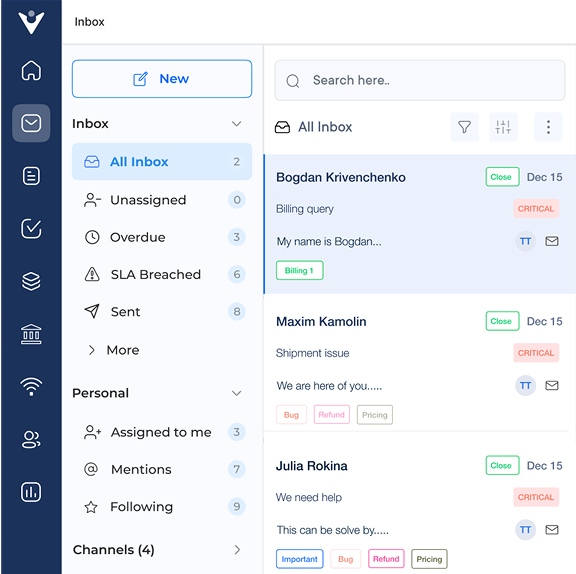
1. Create Personalized Communication
Creating personalized communication channels turns routine exchange into meaningful conversations that reflect each client’s specific needs and preferences. It is essential as B2B customers expect communication that addresses their specific challenges. Personalized messaging creates deeper connections through purchase history analysis.
Key phrases:
- “Based on your recent software implementation, we noticed potential integration opportunities.”
- “Your Q3 purchase patterns suggest you might benefit from our advanced analytics package.”
- “Since you expanded operations last quarter, here are scalability solutions we recommend.”
- “Your team’s usage data shows untapped features that could streamline your workflows.”
Multi-channel touchpoints require strategic platform coordination. So, how can you keep messaging consistent across channels while staying personally relevant? The key is creating unified customer profiles to guide every interaction across platforms.
Key touchpoints:
- LinkedIn professional networking
- Email automation sequences
- Video conferencing consultations
- Mobile app notifications
Automation enhances rather than replaces personal connection by delivering timely responses while maintaining human warmth and understanding. Smart automation can send behavior-based personal messages that still feel genuine, not mechanical.
2. Set Up Regular Feedback Systems
Collecting feedback regularly creates clear opportunities to understand customer stakeholders and shows you value their input. It is essential because B2B relationships rely on mutual understanding and collaborative problem-solving, not one-sided service.
Key questions:
- How well do our solutions address your main business challenges?
- What features would most improve your efficiency?
- How satisfied are you with our support team’s responsiveness and expertise?
- Which parts of our partnership bring the most value to your organization?
- What changes could make our collaboration work better for your goals?
The questions not only highlight where you can improve but also signal that stakeholder opinions matter in shaping decisions and services. Beyond questions, create multiple feedback touchpoints and clear processes for analyzing responses.
3. Promote Transparent Information-Sharing
Sharing information openly builds trust by keeping customer stakeholders informed about updates and involving them in decisions that affect them. The strategy becomes crucial for B2B engagement as clients need steady information to make informed operational decisions.
Transparency means sharing both good news and potential issues, along with how changes might affect their business. Stakeholders value honesty and advance notice far more than last-minute surprises or hearing news from other sources.
Pro tips:
- Schedule regular update calls, even when there’s nothing urgent. Steady communication strengthens relationships more than only talking during problems.
- Offer a customer portal with real-time updates on products and services, so stakeholders can check details whenever they need them.
4. Create Collaborative Product Development
Creating opportunities for collaborative product development turns customers into active partners who help shape solutions. It works especially well because stakeholders bring valuable industry experience and practical insight that can make products more effective.
Key industries:
- Technology industry: Software companies invite enterprise clients to beta test new features in real environments before launch.
- Manufacturing: Equipment makers form advisory boards of plant managers and engineers to suggest design improvements.
- Financial services: The fintech firms hold co-creation workshops where clients help develop payment tools and risk management tools tailored to their needs.
When stakeholders help design a product, it’s more likely to solve real problems instead of offering features that look good on paper but lack practical use. The shared process also builds a sense of ownership, making stakeholders more likely to support and promote the final product.
5. Offer Value-Driven Loyalty Programs
Value-driven loyalty programs give customer stakeholders rewards that genuinely help their business, not just short-term perks. It is necessary because B2B relationships need more meaningful rewards than discounts, as decisions involve multiple stakeholders.
Key approaches:
- Educational content and certifications: Offer industry-specific training and certifications to build customer skills. The benefits improve team capabilities and can help with career growth inside their organization.
- Exclusive access and early adoption: Offer priority access to new product features and beta testing opportunities that allow loyal customers to stay ahead of market trends. The approach positions your stakeholders as industry leaders while giving them competitive advantages through early adoption of innovative solutions.
- Revenue-sharing models: Create referral or co-selling programs where customers earn credits or commissions for bringing in new clients. It turns the relationship into a shared growth effort where both sides benefit.
Consider how a software company might reward its most engaged enterprise clients by offering free advanced training sessions for their IT teams while providing early access to new modules. The approach strengthens the customer relationship while improving their team’s expertise and operational efficiency within the existing platform.
6. Offer Proactive Customer Support
Proactive customer support means spotting and solving issues before they disrupt a stakeholder’s operations. The approach builds trust, while waiting for problems to arise often leads to frustration.
Proactive support works by analyzing customer data to identify potential challenges and automatically triggering appropriate interventions that address issues early. Your team can spot declining engagement and offer solutions while there’s still time to adjust.
Pro tips:
- Set up alerts for usual drops in usage so your team can investigate early.
- Hold regular check-ins with key stakeholders to review performance and explore ways to improve, even when things seem to be going well.
7. Strengthen Community and Networking
Building a customer community connects stakeholders while making your organization a trusted space for collaboration and knowledge sharing. The peer relationships often help solve problems that can’t be addressed in isolation.
Key questions:
- What challenges could peers help each other solve?
- Which topics would spark the most useful discussions?
- How can you facilitate meaningful connections without creating competitive conflicts?
- What formats will keep members engaged over time?
The questions help identify foundation elements that make communities thrive rather than exist as underutilized networking platforms. Here are four proven examples of community-building processes:
- Industry-specific user groups: Monthly virtual meetups for sharing challenges and solutions.
- Executive advisory councils: Quarterly forums for senior stakeholders to give input and network.
- Regional networking events: Local gatherings combining learning with structured networking.
- Online knowledge communities: Digital spaces for questions, expertise sharing and exclusive resources.
Customer Stakeholders Examples
Check out the companies that demonstrate different approaches to treating customers as genuine stakeholders rather than simple transaction sources.
Amazon
Amazon engages customer stakeholders through a strong feedback loop and personalized shipping experiences. Reviews, along with the ratings, are treated as one of the most valuable inputs, shaping product visibility and guiding improvements.
Recommendation systems adapt to each shopper’s behavior and stated preferences, making the experience feel uniquely tailored. The approach builds loyalty and repeat purchases, creating a cycle where satisfied customers help drive product discovery.
Puma
Puma engages client stakeholders by involving them in product design processes and brand storytelling initiatives that reflect their athletic aspirations. Exclusive member groups get early access to limited releases, share input on designs and join brand events.
The collaborative approach has strengthened brand authenticity and emotional connections. It has also generated valuable market insights that guide product innovation and help Puma compete against larger athletic wear brands.
Apple
Apple treats customer stakeholders as co-creators of their technology ecosystem by designing products that encourage deep integration and long-term commitment to their platform. The company builds stakeholder relationships through educational programs, community events and opportunities for feedback.
The stakeholder engagement model has generated exceptional customer retention rates and premium pricing power. It has also created a self-sustaining ecosystem where satisfied customers naturally advocate for Apple products in their networks.
Netflix
Netflix engages stakeholders through personalized content and interactive viewing that make subscribers feel like active participants in curation, not passive consumers. The platform uses viewing data to personalize recommendations and involve customers in rating or discovery.
The personalized stakeholder approach has greatly reduced churn and increased viewing engagement. It also provides Netflix with valuable content insights that guide original programming and international expansion.
Patagonia
Patagonia treats customer stakeholders as environmental partners by involving them in sustainability initiatives and brand activism that aligns with their values. The company invites customers to join environmental campaigns, use repair programs and buy less while using products longer.
The values-driven engagement has built a highly loyal customer base willing to pay premium prices. It has also fueled word-of-mouth marketing that attracts environmentally conscious, long-term brand advocates.
Challenges in Managing Stakeholder Relationships
Check out the challenges that often emerge from the complex nature of treating customers as genuine partners rather than simple revenue sources.