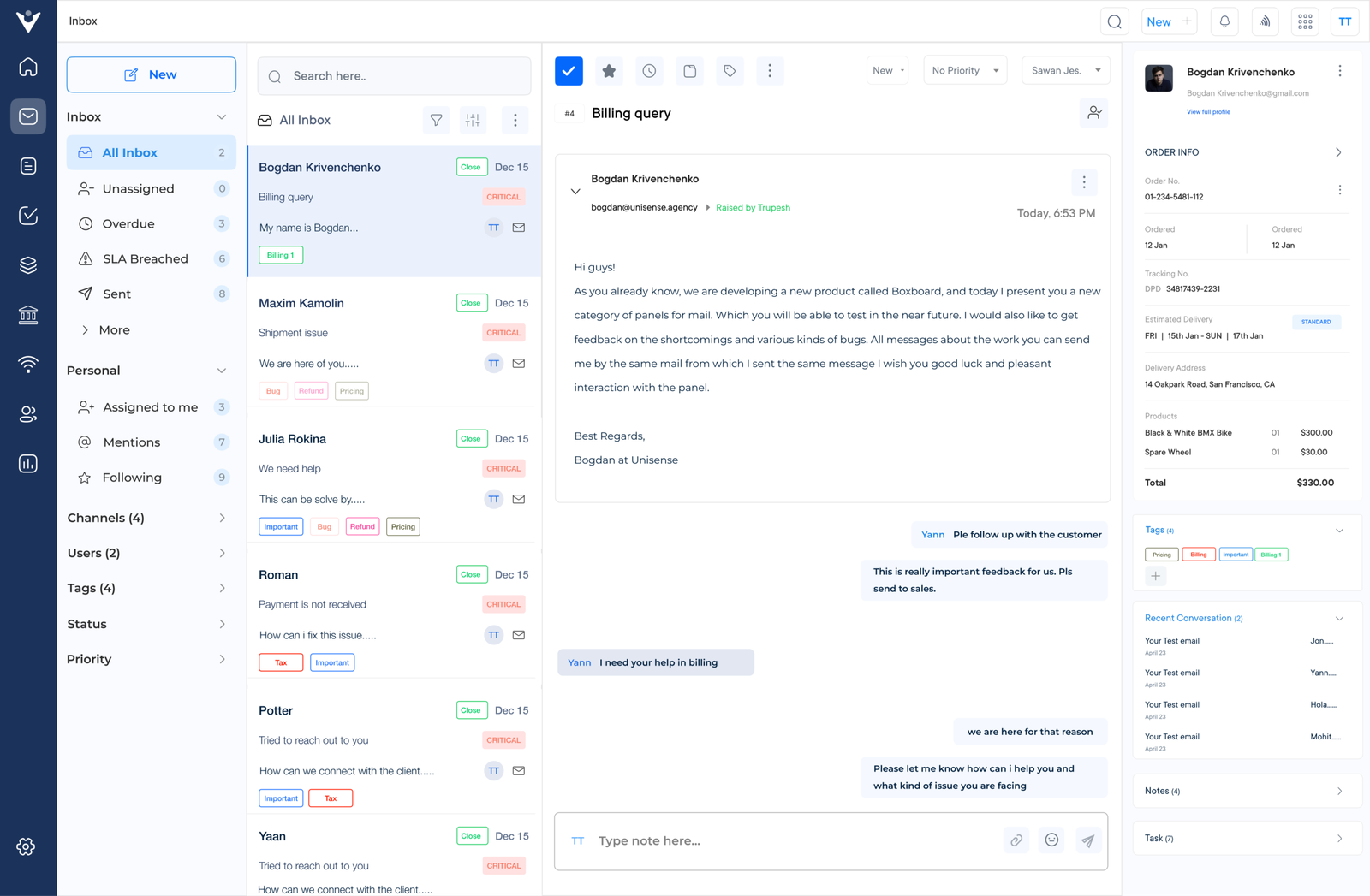
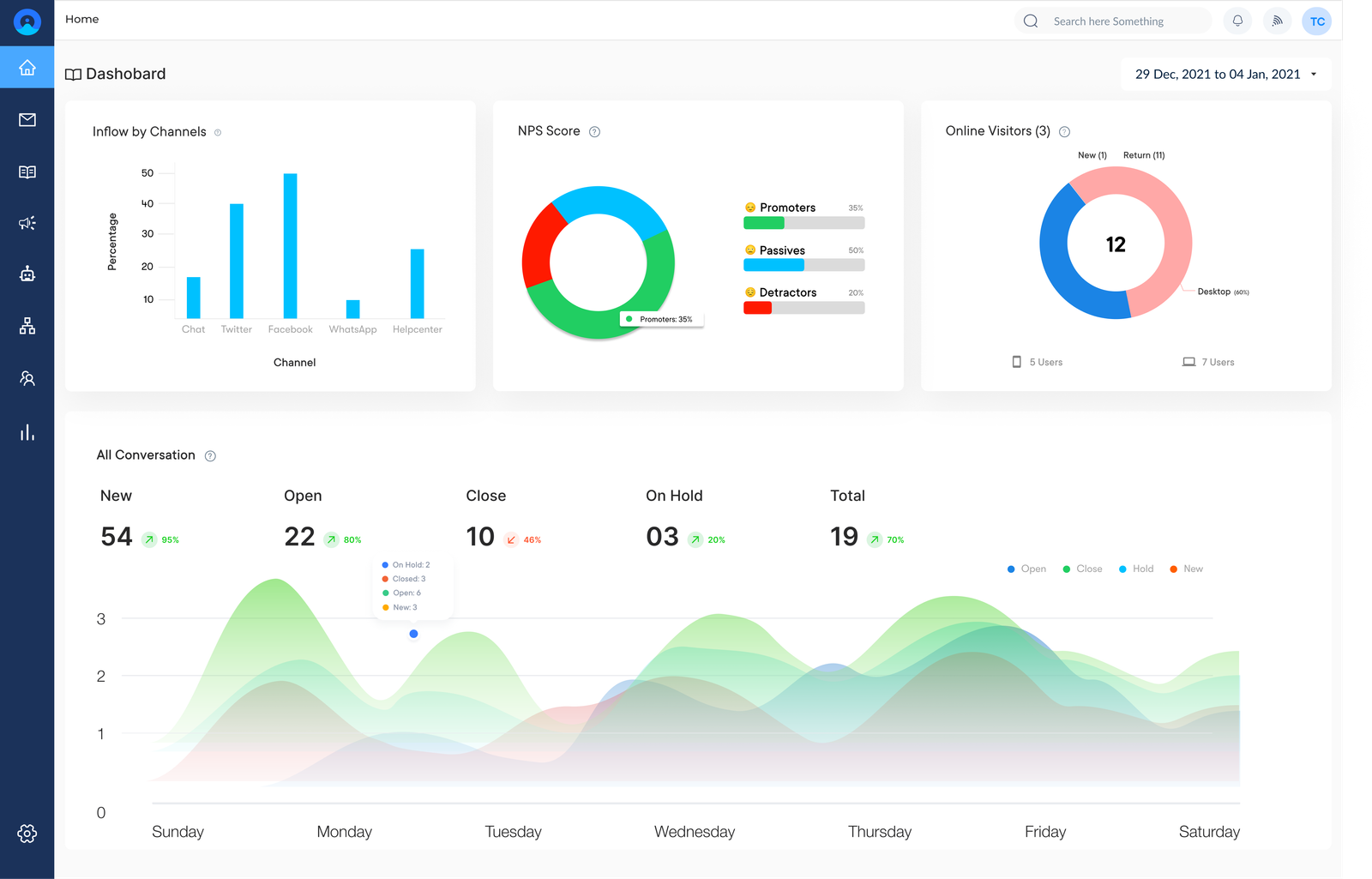
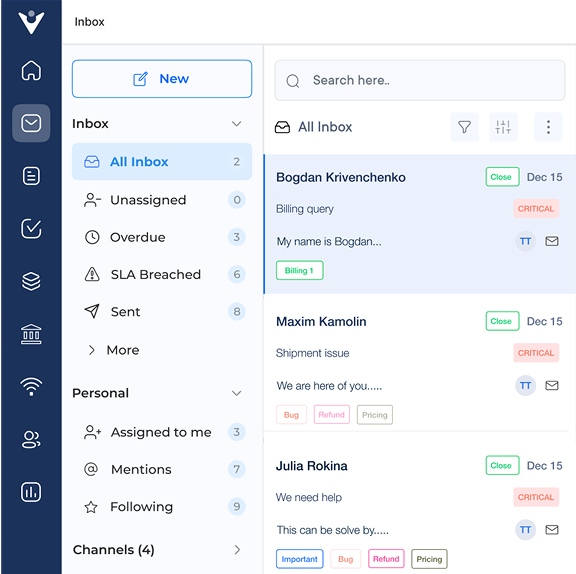
Omni24 is a customer engagement platform that brings live chat, ticketing and multi-channel communication into one place. It helps support teams manage conversations across email, chat and social media while organized through sprint-based workflows.
Key features:
- Real-time chat: Enables customers to connect instantly, helping teams resolve issues quickly within each sprint.
- Unified ticketing: Pulls in requests from email, chat and social media so teams can manage them in a single backlog.
- Smart automation: Handles routine tasks with auto-routing and responses, giving agents more time for complex issues.
- Insightful analytics: Tracks resolution speed, sprint progress and customer satisfaction to guide improvements.
- Built-in collaboration: Internal chat and shared customer history help teams make faster, better decisions together.
3. Trello
Trello turns customer support into simple, visual boards that make team progress easy to follow. Support teams can set up boards for different issue types and move requests through clear workflow stages. The drag-and-drop system makes it easy to prioritize tasks, track progress and collaborate without losing context.
4. Zendesk
Zendesk offers a solid ticketing system that adapts well to agile support workflows. Teams can organize requests into sprint backlogs while keeping a full history of customer interactions for context. Built-in collaboration tools help different teams work together on issues without losing track of conversations or important details.
5. RingCentral
RingCentral connects distributed support teams through integrated voice and video communication tools that support real-time collaboration during customer interactions. The tool supports instant messaging and screen sharing, allowing agents to work through complex issues together. Teams can conduct daily stand-ups and sprint planning sessions while maintaining seamless customer communication across all channels.
Agile Customer Support: The Examples
Check out the real-world examples that demonstrate how leading brands successfully implement agile methodologies to turn their customer service operations.
Amazon: Cross-Functional Support Sprints
Amazon organizes customer service representatives into cross-functional teams that include product specialists and logistics coordinators working together in two-week sprint cycles. Issues are prioritized by urgency, with constant feedback from warehouses and delivery partners.
The agile approach has reduced Amazon’s average customer issue resolution time by 40% while improving customer satisfaction scores significantly. It also helps Amazon adapt quickly to seasonal demand and new product launches without reducing service quality.
Spotify: User-Centric Support Sprints
Spotify structures its customer support around user journey sprints where teams focus on specific customer experience phases, like onboarding or subscription management. Support agents and product teams collaborate to fix recurring issues within sprint cycles instead of addressing them piecemeal.
The collaborative approach has helped Spotify reduce customer churn by 25% while increasing user engagement through proactive support interventions. The company can now roll out new features with immediate support readiness and faster user adoption rates.
Nike: Agile Omnichannel Support
Nike connects its online and in-store support teams through shared sprint backlogs as well as unified communication tools. Agents can view a customer’s full history across all channels and collaborate with inventory teams for complete solutions.
The approach has raised customer lifetime value by 30% and cut costs through higher first-contact resolution rates. It enables coordinated support for new product launches.
Airbnb: Community-Driven Agile Support
Airbnb uses agile methodologies to manage complex three-way customer relationships between hosts and guests through specialized support teams that work in focused sprints. The teams prioritize issues by community impact and collaborate closely with trust.
The agile framework has enabled Airbnb to scale its support operations globally while maintaining consistent service quality across different markets. The approach has improved host satisfaction by 35% while reducing guest complaint resolution time significantly.
Agile Customer Service: Turning the Way You Connect with Customers
Agile customer service shifts the focus from waiting for problems to show up to actively building strong customer relationships. Teams work together, share context, and act quickly, which leads to faster responses and a clearer understanding of what customers actually need. Regular feedback and small, ongoing improvements help service teams stay aligned with real expectations instead of assumptions.
Moving to an agile approach takes more than new tools. It calls for a change in how teams think and work every day. Organizations that commit to this mindset see more consistent customer trust and smoother operations, creating steady growth that comes from service quality, not empty promises.