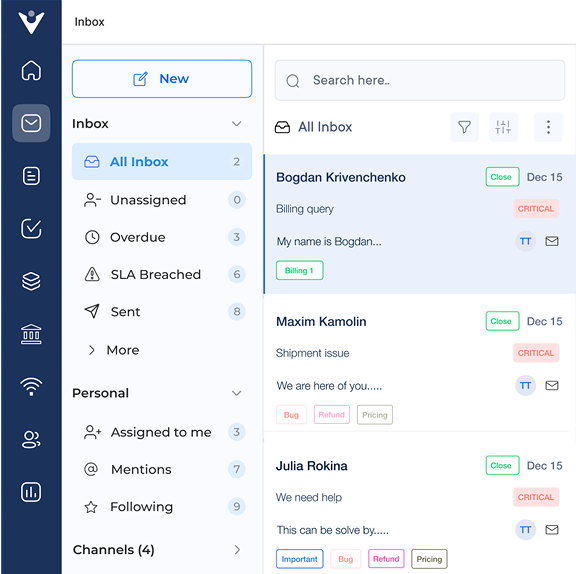
1. Develop Consistent Messaging Across Channels
Consistent messaging ensures every interaction tells the same story. When emails promise one thing and calls suggest another, prospects start questioning your reliability. Clear, aligned communication turns scattered touchpoints into a coherent experience that builds confidence.
Pro tips:
- Align verbal and written commitments: Follow up on conversations with emails that capture key points. It creates clarity and protects both sides from misunderstandings.
- Keep your team on the same page: Brief everyone involved so technical specialists or support staff don’t contradict what’s been explained. Conflicting information erodes trust fast.
- Match your personal brand to company values: Present yourself in a way that reflects your organization’s public stance. Misalignment makes prospects wonder which version is accurate.
2. Demonstrate Your Problem-Solving Capabilities
Problem-solving capability means showing prospects you’ve successfully navigated challenges identical to theirs before. Empty promises to “solve pain points” don’t compare to proof from your track record. Prospects trust salespeople who can prove they understand the specific obstacles standing in their way.
Use the strategy by treating every customer conversation as an opportunity to showcase relevant experience. Pull specific examples from your portfolio that mirror their industry or challenge. Show your thought process so they see your expertise, not just the solution.
Actionable tips:
- Maintain a library of mini case studies organized by problem type for quick access during discussions.
- Explain your approach in plain language. Avoid jargon that can obscure your skills and confuse prospects.
3. Leverage Social Proof Throughout Sales
Social proof shows that other smart people have already validated your solution through their purchasing decisions. We’re hardwired to feel safer following paths that others have successfully traveled before us. The strategy transforms abstract claims into tangible evidence that resonates because it comes from peers rather than salespeople.
Showcase Relevant Testimonials
Highlight feedback from customers similar to your prospect in size, industry or challenges. Seeing someone relatable vouch for your solution builds confidence faster than generic praise.
Display Certifications and Third-party Validations
Feature credentials from respected organizations that independently verify your solution. The endorsements act as trust shortcuts, especially when prospects can’t evaluate technical claims themselves.
Share Measurable Results
Use concrete metrics from past implementations to illustrate impact. Numbers like “reduced processing time by 40%” communicate results more effectively than vague statements about improvement.
4. Uncover and Address Past Bad Experiences
Explore where previous vendors or solutions fell short to prevent repeating mistakes that erode trust. Acknowledging past disappointments removes invisible barriers and shows you understand their concerns.
Key questions:
- What challenges did you face with prior vendors?
- What promises went unfulfilled?
- What would you do differently if restarting that relationship?
- What warning signs did you miss that became problems later?
- What’s your biggest fear about choosing another solution?
5. Calibrate Your Self-Orientation Appropriately
Self-orientation measures if your focus is on your own goals or the customer’s best interests during conversations. Focusing too much on quotas or appearances signals misalignment, causing prospects to pull back. Proper calibration means genuinely prioritizing their success even when it conflicts with your immediate commission.
Use the strategy by consistently redirecting conversations back to their desired outcomes rather than your product’s features. Listen more than you speak and ask questions that uncover their real goals instead of leading them toward your solution. When a fit isn’t perfect, say so openly and help them evaluate alternatives.
Best practices:
- Review the customer’s challenges for two minutes before each call to align your mindset.
- After calls, audit yourself by counting how many times you said “I” versus “you” to gauge whose interests dominated.
6. Practice Radical Transparency in Communication
Radical transparency means sharing information openly, including drawbacks, so prospects see you as a trusted advisor rather than a salesperson hiding details. Honesty shifts the relationship from adversarial to collaborative.
Build trust by revealing challenges upfront; hiding problems only creates bigger issues later. Every solution has limitations or tradeoffs that will eventually surface during implementation or use. When you’re the one who brings these issues to light first, you transform from a salesperson with something to hide into a trusted advisor who shoots straight.
Key ways:
- Highlight scenarios where your solution may underperform compared to competitors.
- Acknowledge implementation difficulties honestly, including learning curves or resource needs.
- Share obstacles previous customers faced, giving them realistic expectations about bumps in the road so they’re prepared rather than blindsided.
Sharing realistic timelines without overpromising speed proves you value their planning over your closing date. Rushed timelines create cascading problems when reality inevitably falls short of inflated promises. Honest timeframes allow customers to plan properly and trust that future commitments will be equally reliable.
Key examples:
- Implementation typically takes 8-12 weeks, depending on infrastructure and team availability.
- Initial results appear within the first quarter; full ROI is usually achieved by month six.
- Onboarding may require three team members contributing roughly 15 hours each.
7. Follow Through on Every Commitment
Following through means treating every promise as a binding contract, regardless of how small it seemed when you made it. Each kept promise deposits credibility into your account, while every missed commitment withdraws far more than you initially invested.
Key ways:
- Deliver materials on time: Use calendar reminders to stay ahead of deadlines.
- Respond promptly: Return calls and emails within your stated timeframe.
- Communicate delays: Notify customers before deadlines pass and provide a realistic update.
If overcommitted, alert the customer immediately and renegotiate. Honest communication about changes earns more trust than delivering late without warning.
Transform your Sales Approach with the Power of Trust
Trust isn’t optional in sales; it’s the cornerstone that turns prospects into customers and customers into loyal advocates. Applying the eight strategies shifts your focus from selling products to building lasting partnerships.
Start implementing one strategy this week and gradually layer in the others as they become natural habits. Remember that trust builds slowly through small, consistent actions but can crumble instantly through careless mistakes. Prioritizing trust over quick wins sets you apart in a crowded sales market.