Scaling Sales Team: Importance, Strategies & Challenges
Explore the importance of scaling sales teams along with its key strategies for sustainable growth. It highlights common challenges businesses face during the scaling process.

Explore the importance of scaling sales teams along with its key strategies for sustainable growth. It highlights common challenges businesses face during the scaling process.
Many B2B companies struggle when it comes to scaling sales teams because they treat it as just hiring more people, without building the systems needed to support real growth. When success depends on a few top performers instead of consistent processes, revenue becomes unpredictable and hard to sustain.
If there’s a lack of the right structure in place, even the best of the salespeople get overwhelmed, new hires flounder without direction and customer relationships suffer. Scaling sales effectively means turning individual effort into team-wide consistency. It takes clear processes, smart use of tools and a plan that helps everyone succeed, not just the top 5%. Let’s dive in to understand how to build strong, coordinated teams that grow revenue without sacrificing customer experience or team morale.
Sales team scaling in B2B refers to systematically growing your sales organization beyond individual performers to create a repeatable revenue machine. Think of it like shifting from a craftsperson making one item at a time to a well-run production line. You’re creating a structure that turns solid sales practices into repeatable outcomes.
Scaling works by first documenting what your best salespeople do, then creating systems that help average performers achieve similar results. You build standardized processes for lead qualification and customer conversations. Then you hire more people and train them using the proven methods so your revenue grows faster than your headcount costs.
Key objectives:
Below are the reasons why scaling your sales team is critical and how it can profoundly impact your success. Let’s check them out in detail.
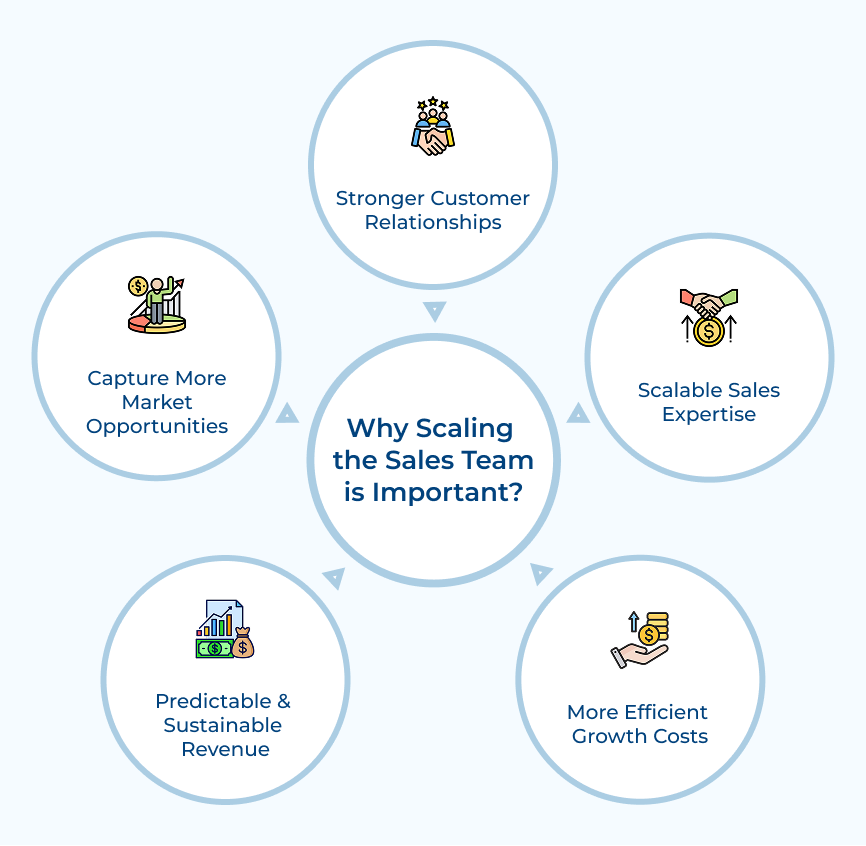
Revenue Becomes Predictable and Sustainable
When your sales engine isn’t tied to one or two star performers, your income stops swinging wildly. If someone takes a vacation or even leaves the company, your revenue stays on track. You can plan, make better financial decisions and build confidence with more people contributing consistently.
Market Opportunities Don’t Get Missed
A larger, well-organized team means you can handle more opportunities at once. Leads don’t sit ignored in someone’s inbox and warm prospects don’t go cold waiting for a follow-up. You’re able to move faster and close more business before competitors step in with more hands on deck with more hands on deck.
Customer Relationships Become Company Assets
When only one salesperson owns an account, the relationship often walks out the door with them. A scaled team changes that. Multiple people understand each customer’s needs, making the relationship stronger and harder to lose. It helps protect your revenue and makes it easier to expand existing accounts.
Expertise Gets Distributed and Amplified
Your top reps have strategies that work, but if they’re not shared, they go to waste. A scaled team turns individual knowledge into team-wide practice. Documented methods, shared tools and consistent training help new hires ramp up quickly, while experienced reps focus on high-value deals.
Growth Costs Become More Efficient
The first hire is always the most expensive, because you’re building the foundation. But once systems are in place, every new team member costs less to onboard and becomes productive faster. Tools like your CRM and training programs scale with the team, giving you more return for each dollar spent.
The following are the essential strategies to guide your scaling efforts and ensure sustainable growth.
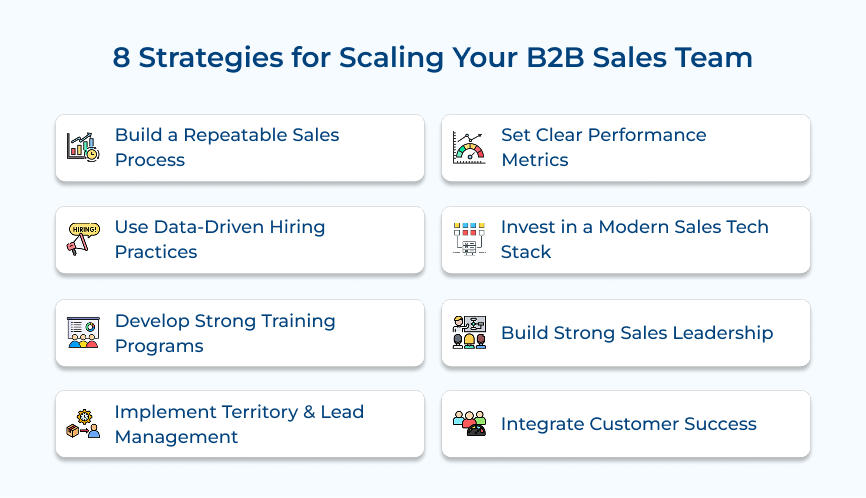
A repeatable sales process takes your team from relying on individual instincts to working as a coordinated, consistent unit. Without it, growth depends on finding “naturals”, people who somehow just get it, which isn’t scalable, predictable, or cost-effective.
Think of it like teaching someone to drive. You wouldn’t just toss them the keys and wish them luck. You’d show them the basics, give them a process and build their confidence step by step. Your sales team deserves the same clarity. That’s what a real process does: it removes guesswork and sets everyone up to succeed.
Hiring a sales team based on instinct or impressive resumes might feel right, but it often leads to missed targets and high turnover. A data-driven approach changes that by focusing on real traits and behaviors that lead to success in your sales environment.
Key questions:
The questions help you move beyond guesswork and start spotting real patterns. You might realize that persistence matters more than industry experience or that quick learners outperform fast talkers.
Good training turns potential into performance. Relying on “naturally gifted” salespeople doesn’t scale; structured development does. Without clear training paths, your team ends up guessing, learning slowly or repeating the same mistakes.
Key programs:
Think of these workshops like strength training. You can’t build a strong team with one-off training sessions. Just like going to the gym, consistency and feedback matter. Give your team a space to practice regularly, test out new skills and learn from each other, not just when something goes wrong, but as part of how they grow every week.
Territory and lead management keep your sales team focused, organized or working together, not stepping on each other’s toes. Without clear guidelines, reps waste time chasing the same prospects, creating tension internally and confusion for your customers.
The approach avoids confusion over who owns what and gives every customer a clear point of contact. Just as important, it creates space for reps to deepen their knowledge and become more effective in their assigned areas.
Performance metrics give you a clear picture of what’s working and what’s not, before small issues turn into lost revenue. Without them, it’s hard to tell the difference between a temporary dip and a deeper skill gap that needs coaching.
Key metrics:
A smart sales tech stack removes busywork and gives your team the sales intelligence tools they need to focus on what really drives revenue: talking to customers and closing deals. When your tools don’t talk to each other, your reps end up wasting hours on admin work instead of selling.
The questions protect you from wasting money on tools that sound impressive but go unused. Good tech solves real problems and gets adopted by your team. Bad tech sits idle while old habits persist. Take the case of a company that paid for a fancy sales intelligence tool but never trained the team. No one used it and reps went back to Googling leads manually. The problem wasn’t the software; it was the rollout.
Strong sales leadership turns individual performers into a unified team. Without experienced managers and a robust sales planning solution, even the best hiring and training efforts can fall apart. Scaling becomes chaotic when no one is guiding team development, addressing roadblocks or helping reps grow beyond the basics.
Think about it like this: would you rather have a sales manager who just checks if quotas are met or one who helps you improve your closing techniques? The difference between monitoring and coaching determines if your team grows stronger or just burns out from pressure without support.
Let’s check out the critical roles technology plays in scaling a sales team and how the tech-enabled strategies can pave the path to sustained success.
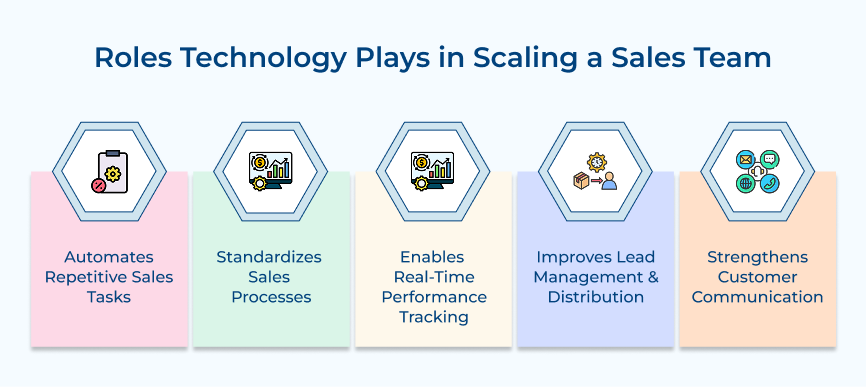
Automating tasks like logging calls or scheduling follow-ups means your salespeople can stop juggling spreadsheets and get back to what they’re hired to sell. Tools like CRM systems handle the admin so your team can focus on building real customer relationships.
Digital platforms ensure every salesperson follows the same proven methodology regardless of their experience level or personal preferences. Templates and guides make sure messaging stays consistent, helping newer team members close deals without guesswork.
Live dashboards and reports show which actions lead to results. You can spot patterns, fix weak points and copy what your best performers are doing before small issues grow into real problems.
Automated lead assignment means no more cherry-picking or missed follow-ups. Leads go to the right rep based on location or expertise, which keeps things fair and ensures prospects don’t slip through the cracks.
When emails, calls, and notes are all in one place, your team can pick up any conversation without missing a beat. Customers don’t have to repeat themselves and every touchpoint feels like a continuation, not a reset.
Below are the four global companies that demonstrate different approaches to building scalable B2B sales operations.
Amazon
Amazon Web Services grew by building teams that focus on specific industries like healthcare, finance and government. The teams include account managers who understand the technical rules, regulations and challenges unique to each field. Instead of offering one-size-fits-all solutions, they build tools tailored to each sector’s needs.
Airbnb
Airbnb for Business expanded by setting up account teams that work only with corporate clients. The teams help companies onboard easily, and they build tools that connect with corporate systems like travel bookings and expense tracking. It results in a steady stream of income from corporate travel programs, less dependent on tourism seasons and more predictable than weekend stays.
Nike
Nike’s sales teams grow by dividing its focus into two ways: region and sport. One team covers territory like North America or Europe, while another focuses on a specific sport, basketball, running, soccer, etc. Dedicated account managers work closely with major retailers, while product specialists make sure stores get the right gear for their customers. The setup gives Nike stronger relationships and better product fit, which keeps their gear in high demand and on the best shelves.
Puma
Puma uses a flexible structure. Some teams focus on regions, others manage key accounts like big sports leagues or global retailers. Each team understands its local market or customer inside and out. The mix helps Puma grow in new places while still giving close attention to big partnerships. It’s how they stay competitive even against bigger brands.
Scaling your B2B sales team with dedicated sales planning software turns unpredictable results into steady, reliable growth. Instead of relying on a few top performers, you build systems that help everyone succeed.
Getting there takes time. You need clear processes, the right tools and a steady hand. But companies that do it well don’t just grow, they become more resilient, less dependent on rare talent and better prepared to handle change.

Look for three clear signals that indicate readiness for scaling. First, your current salespeople consistently hit their quotas for at least three consecutive months, showing your sales process actually works. Second, you have more qualified leads than your team can handle effectively, meaning opportunities are slipping away. Third, your revenue growth has plateaued despite strong market demand, suggesting capacity constraints rather than market limitations are holding you back.
Start by writing down what your top reps do at each step of the sales process. Build training around those steps. Match new hires with experienced teammates for mentorship.
Run weekly coaching sessions focused on improving skills, not just checking quotas.
Set clear expectations so everyone knows what’s expected and when they should be up to speed.
Hiring too many people too quickly. Without systems, training and leadership in place, a big new team just creates confusion. Sales doesn’t scale on headcount alone; you need structure to support it.
Expect to spend the equivalent of 18 months of compensation before each new hire pays for themselves. It includes salary, benefits, tools, training and the time managers spend coaching.
Also, the budget for more lead generation and more salespeople needs more opportunities to work with.
Ideally, do both. Experienced reps can produce faster and guide newer hires. They cost more and may bring habits that don’t fit your style. Junior reps cost less and are easier to shape, but they take time to ramp up. A mix gives you immediate impact and long-term potential.
Make culture part of your onboarding, not just a slide deck. Let new hires listen in on real customer calls. Talk openly about how your values show up in everyday decisions. Hire carefully, prioritize alignment over resume highlights.
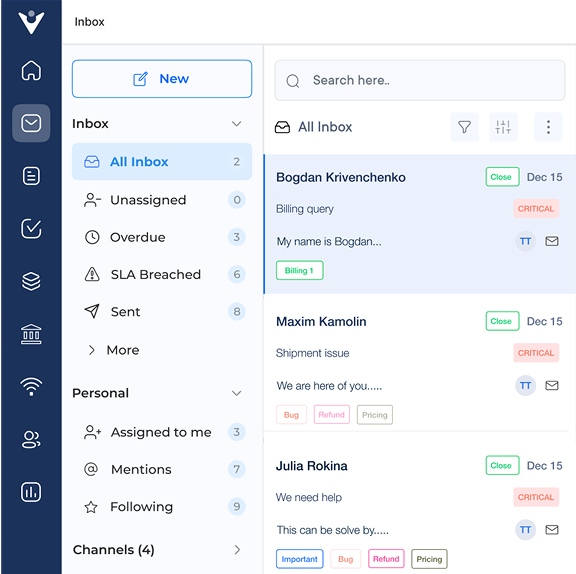
Grow Customer Relationships and stronger team collaboration with our range of products across the Conversational Engagement Suite.
Omnichannel Customer Support & Help Desk Software
AI Enabled Business Messaging and Chatbot Software
Sales Engagement & CRM Software
Call Center Software & Virtual Phone System
Product Marketing & Experience Platform
Customer Experience & Feedback Management Software
 Call Center Burnout: Differences, Signs & Tips in 2026
Scroll to top
Call Center Burnout: Differences, Signs & Tips in 2026
Scroll to top