What is Email Sequence? Steps, Examples and Best Practices
The blog explains what email sequences are, how they work and how to create effective sequences. It also explores clear steps, real examples and practical best practices.
The blog explains what email sequences are, how they work and how to create effective sequences. It also explores clear steps, real examples and practical best practices.
You put hours into finalising individual emails, yet consistency starts to fall apart as your list grows and conversations become harder to manage. You end up missing the follow-ups, timing feels off and people who showed interest slowly drift away because the response never arrives when it matters most.
Email sequences change that by putting your communication on a system that runs with intent, not guesswork, while still feeling relevant to each subscriber. Using effective email sequences can help you boost revenue by 40%.
Messages reach people at the right moment, build familiarity over time and move them closer to a decision without requiring you to manually track every interaction. Let’s dive in to find out how!
An email sequence refers to a series of automated emails sent to subscribers based on triggers or schedules. Each email works together to guide recipients along a planned journey. Businesses use sequences to build relationships and encourage action without manually sending every message.
You create a chain of emails that sends automatically when someone takes a specific action, like signing up or making a purchase. Messages go out at set intervals and the system tracks engagement, adjusting delivery to provide the most relevant content at the right moment.
Key objectives:
Let’s go through the key benefits that make the email sequences essential for modern marketing.
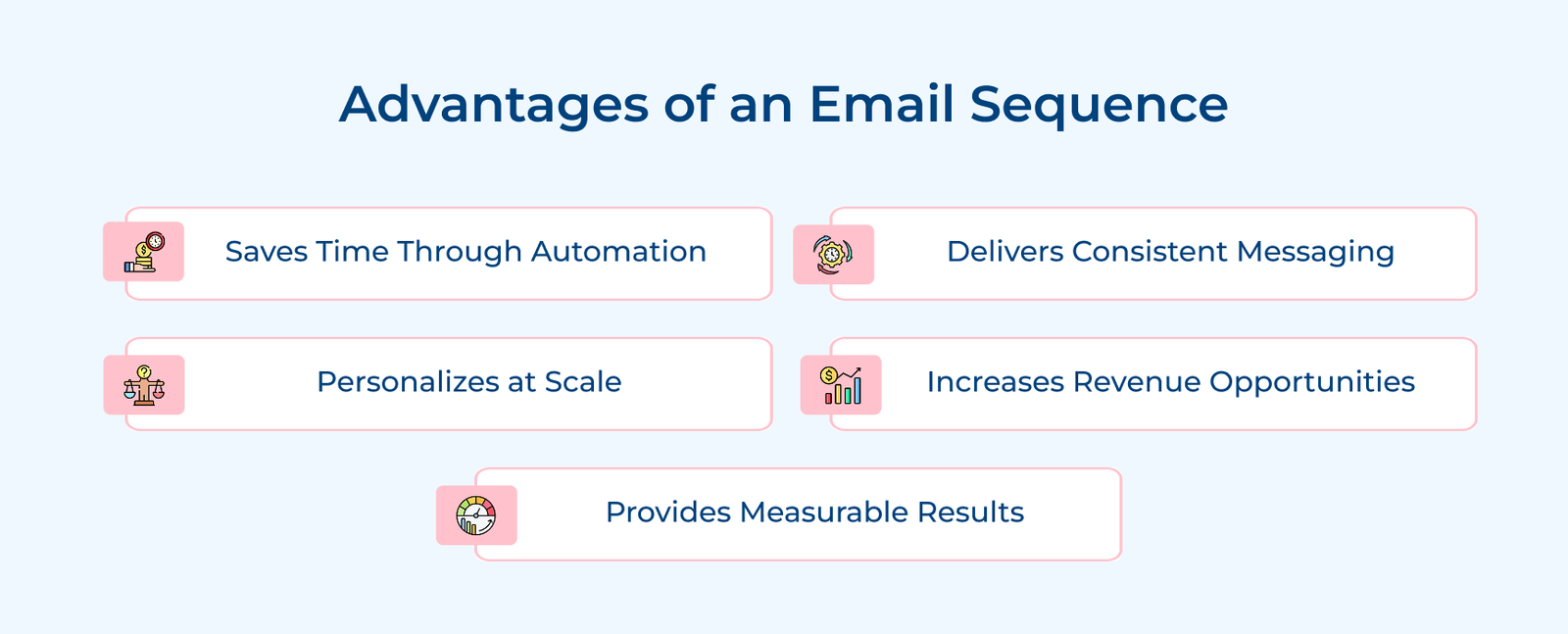
Saves Time Through Automation
Set up the email series once and it runs automatically for every new subscriber. It frees your team from repetitive tasks and lets them focus on strategy and creative work instead of sending individual messages.
Delivers Consistent Messaging
Every person receives the same carefully crafted experience regardless of when they join your list. It ensures your brand voice stays uniform and no subscriber misses critical information because someone forgot to send an email.
Personalizes at Scale
Content adjusts based on subscriber actions and preferences without manual effort. Someone who clicks on a topic gets relevant follow-ups, while others receive messages that match their interests.
Increases Revenue Opportunities
Automated sequences guide prospects through the buying journey with timely offers and information. Steady, strategic nurturing turns more leads into customers than one-off emails with inconsistent timing.
Provides Measurable Results
Track open rates, clicks and engagement for every email. Data shows where subscribers interact or drop off, helping you improve weak spots and optimize what already works.
The following are the distinctions that help you choose the right strategy for your specific business goals.
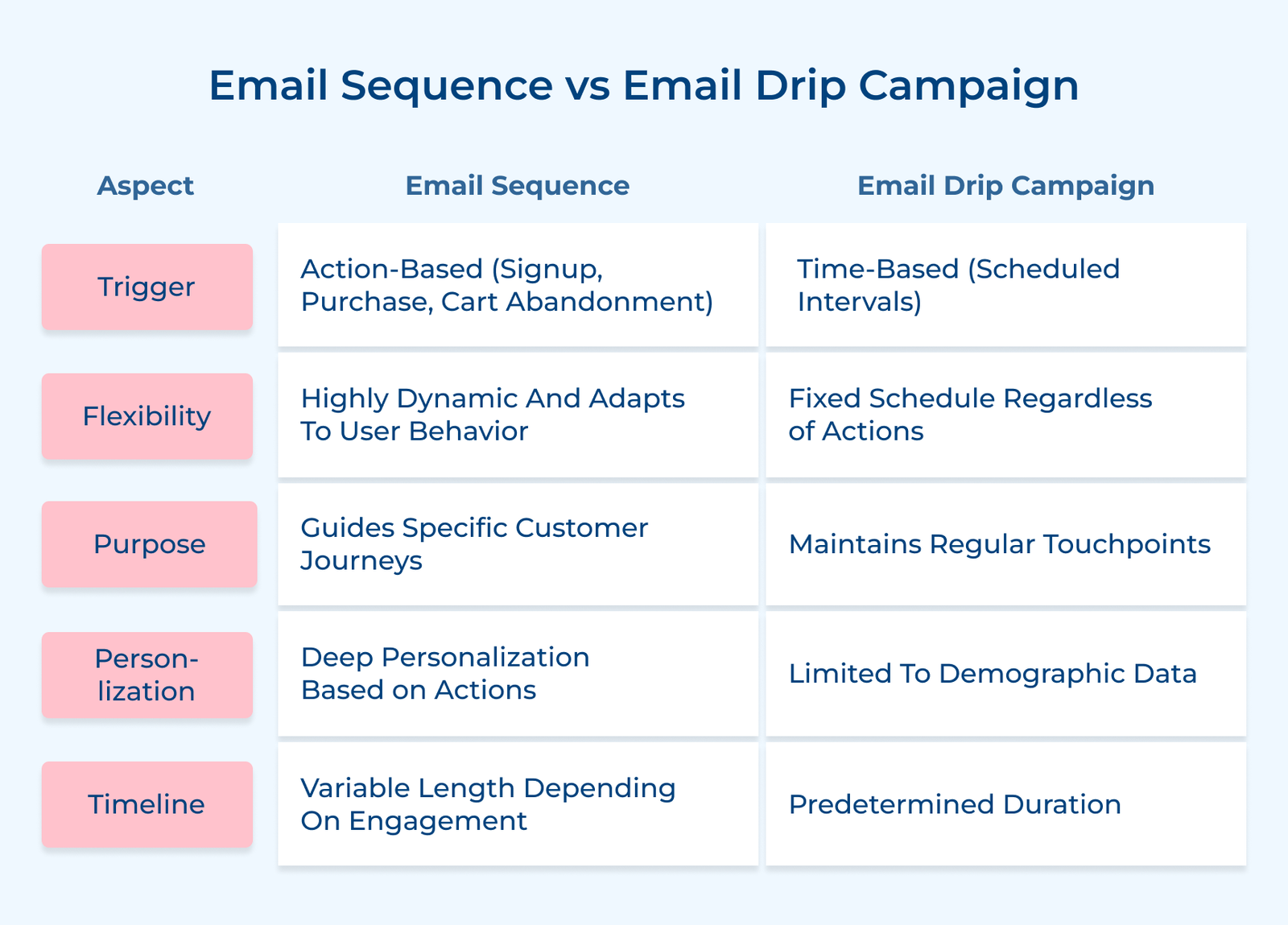
Trigger Mechanism
Email sequences activate when a subscriber takes a specific action, like downloading a guide or abandoning a cart. Timing feels natural because it responds to what they just did.
Drip email campaigns follow a fixed schedule. Everyone receives the second email on Thursday, regardless of their engagement with the first one.
Flexibility and Adaptation
Sequences change course based on how recipients interact with previous emails. If someone clicks on product A, then the next email focuses on product A details.
Drip campaigns maintain their predetermined path no matter what the recipient does. Email three goes out on day seven to everyone, even if earlier emails were ignored.
Primary Purpose
Sequences guide people through specific funnels, like onboarding new users or converting trial members to paid subscribers. Each email works toward one clear goal.
The email drip campaigns aim to maintain awareness over time. They deliver consistent educational content without pushing toward a single conversion.
Personalization Depth
Sequences use behavioral data to tailor content. A person who completes a purchase stops receiving sales emails and starts getting onboarding guidance.
Drip campaigns personalize using basic information like name or industry collected at signup. Everyone in the technology sector gets the same emails on the same schedule.
Timeline Structure
Sequences continue until they reach their logical conclusion or until the recipient takes the desired action. An abandoned cart sequence might send three emails over five days, then stop if the person completes their purchase.
Drip campaigns have a set beginning and end determined when you build them. A six-week series sends six emails over six weeks to everyone, regardless of engagement.
Check out the essential steps to develop compelling email sequences that captivate your readers and drive meaningful results for your business.
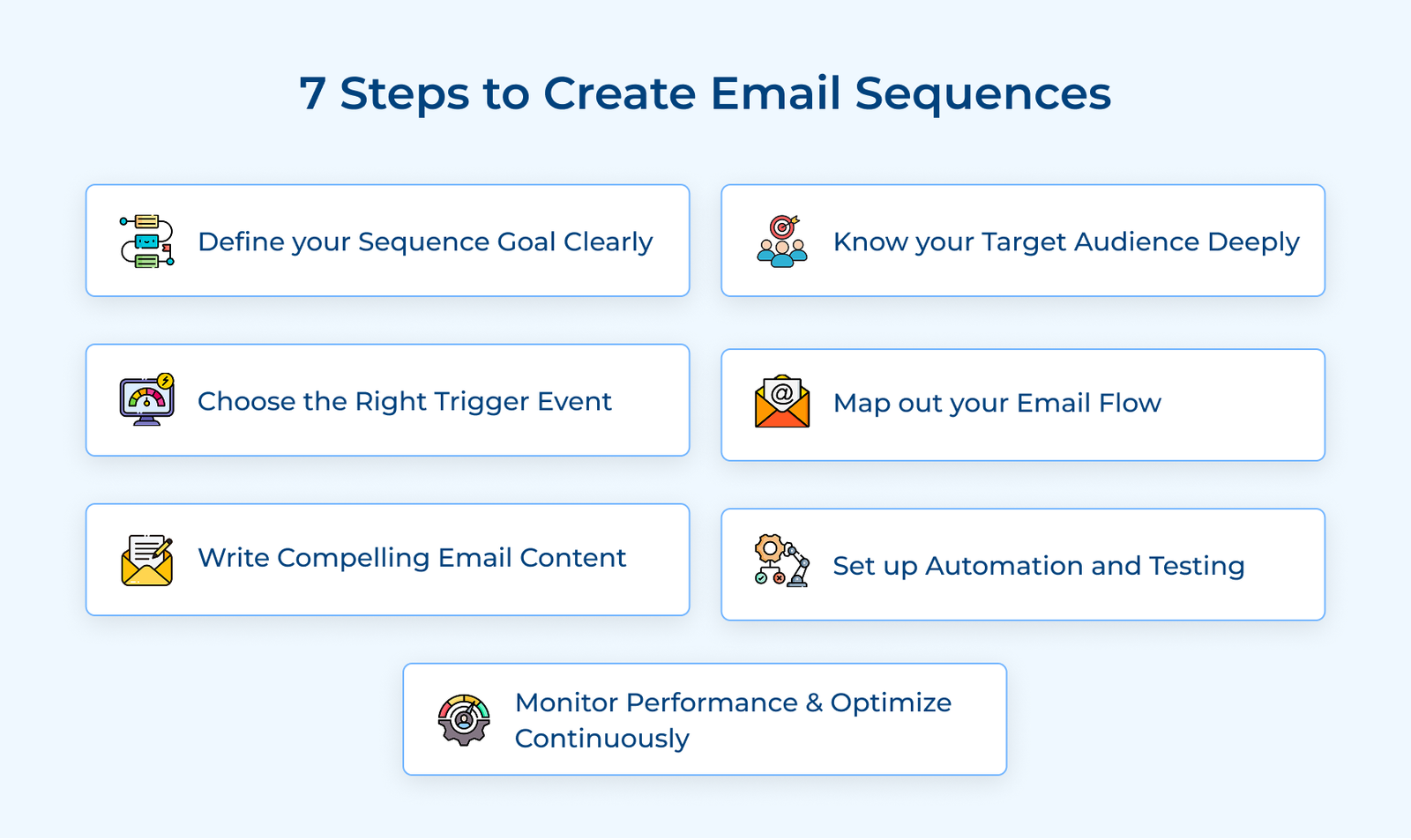
Every effective email sequence starts with a clear goal that shapes every message you send. Without it, even the best of the cold emails can feel scattered and fail to guide subscribers toward any meaningful outcome for your business.
Start by asking yourself what specific result you want the sequence to achieve for your business and your subscribers. Your goal should be specific enough to measure success and clear enough to guide your content choices.
Key examples:
Once you’ve defined your goal, you can build every element of your sequence around achieving that one outcome. The clarity prevents you from cramming multiple objectives into one sequence and diluting your message’s effectiveness.
Understanding who you’re writing to determines if your emails capture attention or get lost in crowded inboxes. Surface-level knowledge about demographics isn’t enough because you need to understand the motivations and obstacles that drive your audience’s decisions.
Key questions:
The questions reveal the emotional and practical factors that influence if someone will engage with your emails and take action. When you understand the elements, you can speak directly to their situation instead of making generic assumptions about what matters to them.
Use the insights to segment your list so different groups receive sequences tailored to their specific needs and readiness to buy. A first-time visitor needs different information than someone who’s browsed your pricing page three times this week.
The trigger event decides when your email sequence starts and shapes the context for every message that follows. Choosing poorly means your carefully crafted cold emails arrive at moments when they feel irrelevant or intrusive to the recipient.
Key factors:
Align your trigger with where someone is in their journey and what they need next. A guide download signals readiness for educational follow-up, while a purchase calls for onboarding support.
Key events:
After configuring your trigger, you need to verify that it activates correctly every single time the specified action occurs. Send test submissions through your system and confirm the first email arrives promptly with working links throughout.
The step involves planning the complete journey subscribers will take from the first message to your desired endpoint. Without proper mapping, your sequence might repeat information or miss critical steps that move people toward conversion.
Key approaches:
Consider a software company launching a trial user sequence where the goal is to convert free users to paid subscribers. Their sequence could span five emails over two weeks, starting with setup guidance, moving through features, pricing or testimonials and ending with a limited-time offer.
Planning transforms into actual words that land in inboxes and either capture attention or get deleted instantly. Strong content makes the difference between sequences that convert and sequences that just annoy people because every word needs to earn its place.
Key elements:
Remember that people skim emails rather than reading every word, so make your most important points impossible to miss. Use short paragraphs and clear language because complicated sentences force readers to work harder than they’re willing to invest.
Key approaches:
The pitfall is trying to accomplish too much in a single message by talking about five different features. It overwhelms readers and dilutes your message. So they end up remembering nothing and taking no action.
Setting up email automation turns your email ideas into a self-running system that works while you sleep and scales infinitely. The step involves using software to trigger and deliver your sequence automatically so you never manually send another welcome email.
Key ways:
Testing before launch catches broken links or formatting problems that would damage your credibility with real subscribers. Send the complete sequence to yourself using different email clients to verify everything displays correctly.
The following are the proven sequence types that solve specific challenges and move people toward meaningful actions.
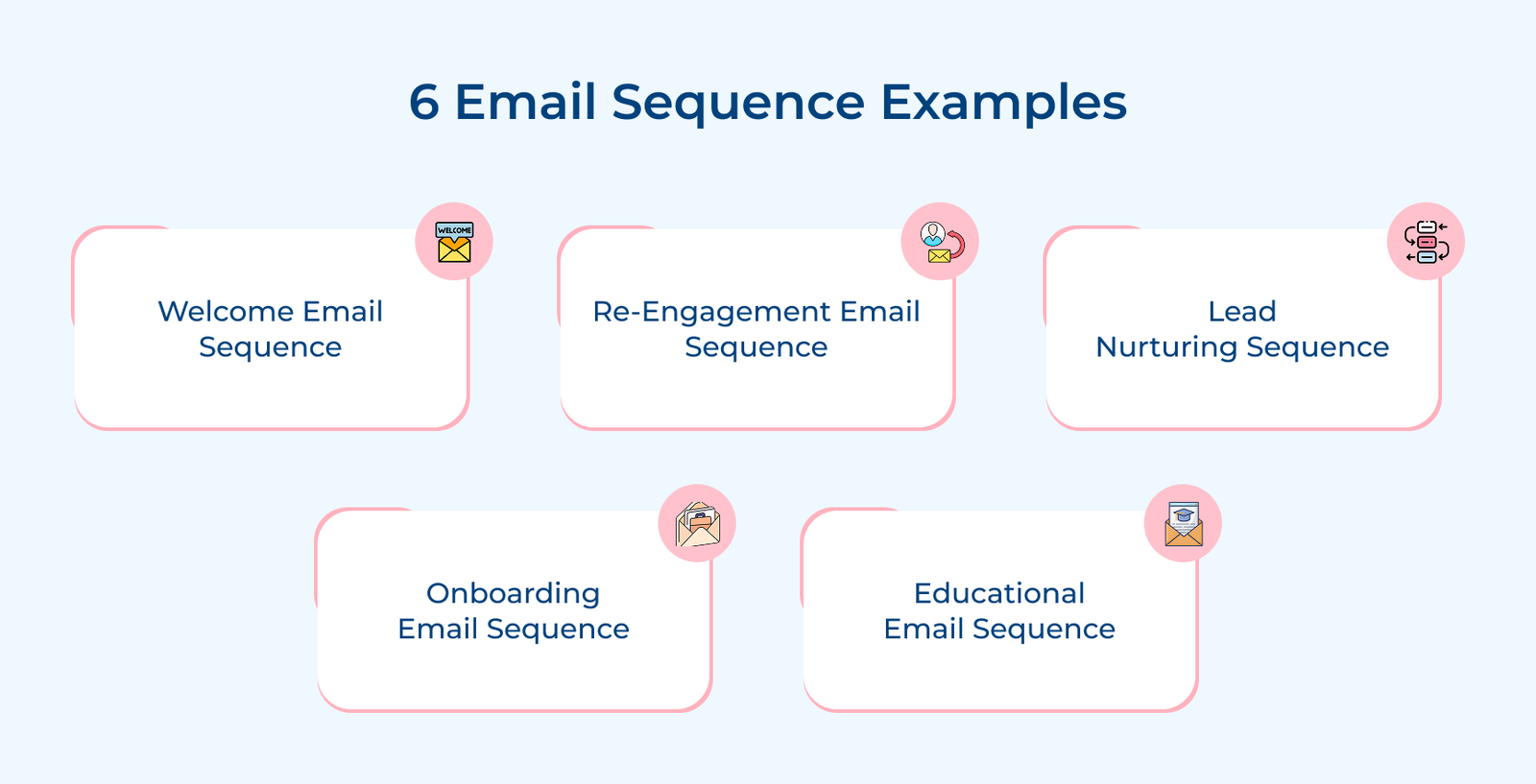
A welcome sequence introduces new subscribers immediately to your brand and builds the foundation for a lasting relationship. It matters for every business type because first impressions determine if someone stays engaged or hits unsubscribe before giving you a chance.
Key ways:
Key sequence:
The welcome sequence bridges the gap between someone barely knowing you exist and feeling comfortable opening future emails. Without the foundation, your promotional messages arrive at people who’ve forgotten why they signed up.
A re-engagement sequence targets subscribers who haven’t opened your emails or interacted with your business for an extended period. It works best for businesses with longer sales cycles or those selling products people don’t need frequently.
Key situations:
The sequences give dormant contacts one final chance before you remove them from your active list entirely. Cleaning out unengaged subscribers actually improves your deliverability because email providers notice when most recipients ignore your messages.
Key ways:
The goal is to reconnect with people who once cared enough to join while respecting that their interests change over time. A smaller engaged list always outperforms a massive list full of people who never open anything.
A lead nurturing sequence guides prospects who aren’t ready to buy by sharing valuable insights that build trust and credibility over time. Lead nurturing emails have 4-10 times more response rates compared to others. The approach works well for complex or high-ticket solutions where research and consideration take weeks or months.
Key example:
The nurturing sequence works by meeting prospects where they are mentally instead of demanding that they jump to purchase. Pushing too hard, too fast, just sends potential customers straight to competitors who seem more patient.
An onboarding sequence helps new customers get started with your product or service right after purchase. It is crucial for subscription businesses and companies selling software where customer success depends on proper setup.
Key situations:
Strong onboarding directly impacts retention rates because customers who achieve early wins are far less likely to cancel. The sequences reduce support tickets by proactively answering setup questions before customers get frustrated.
Key sequence:
The onboarding sequence transforms buyers into successful users who get enough value to stick around long-term. Without proper onboarding, many customers abandon products because they never figure out how to use them effectively.
Educational sequences deliver pure value through helpful content without asking for purchases or pushing promotional messages throughout the series. The approach works well for businesses in competitive markets where establishing thought leadership matters more than quick conversions.
Key sequence:
Educational sequences position you as someone worth paying because you’ve already helped people solve smaller problems for free. When subscribers eventually face bigger challenges, they remember who taught them valuable skills.
An abandoned cart sequence targets shoppers who added items to their cart but didn’t complete checkout. The approach is valuable for e-commerce businesses, where cart abandonment often reaches 70%.
Key scenarios:
The sequences recover revenue that would otherwise disappear because people genuinely forget or get distracted during shopping. A gentle reminder often provides the nudge needed to turn abandoned carts into sales without additional email marketing spend.
Key ways:
Cart abandonment sequences work because they meet shoppers at a moment when buying intent already exists. The difference between abandoned carts and completed orders often comes down to timing or small concerns that email can address.
A post-purchase sequence keeps customers engaged after they complete a transaction, encouraging repeat purchases and building loyalty. It works especially well for businesses with consumable or replenishable products.
Key sequence:
The post-purchase sequence ensures customers don’t forget about your brand the moment their first order arrives. Repeat customers cost far less to generate revenue from than constantly chasing new prospects.
Let’s go through the best practices that help you maximize engagement while respecting your subscribers’ attention.
Email sequences replace scattered emails with clear, intentional journeys that move subscribers toward real actions. Done well, they build trust and drive results without constant manual effort.
The difference between random emails and strategic sequences is having a clear plan that respects your audience’s time. Start with one sequence type that addresses your biggest business challenge and refine it based on real performance data before expanding further.

Email sequences save you time by automating repetitive communication while maintaining personal connections with each subscriber. They deliver consistent messages at the right moments and guide subscribers toward action more effectively than random emails.
Email sequences keep conversations going without manual effort. Every subscriber receives timely information based on their actions, so no one gets ignored or forgotten as your list grows.
The ideal number depends entirely on your goal and how much information someone needs to take action. Simple sequences like cart recovery might need only three emails, while complex onboarding could require ten messages spread across several weeks to properly guide new customers.
Start an email sequence immediately after someone takes a specific action that signals interest or readiness for your content. Common triggers include signing up for your list or making a purchase or abandoning their shopping cart or starting a free trial of your product.
Spacing depends on your audience’s decision timeline and how urgent your message feels to recipients. Abandoned cart sequences often send emails within hours, while educational sequences usually space messages three to seven days apart.
Grow Customer Relationships and stronger team collaboration with our range of products across the Conversational Engagement Suite.
Omnichannel Customer Support & Help Desk Software
AI Enabled Business Messaging and Chatbot Software
Sales Engagement & CRM Software
Call Center Software & Virtual Phone System
Product Marketing & Experience Platform
Customer Experience & Feedback Management Software
 Automated Follow-up Emails: Benefits, Steps & Best Practices
Scroll to top
Automated Follow-up Emails: Benefits, Steps & Best Practices
Scroll to top