Secure Live Chat Guide: Benefits, Steps & Tools
The blog explains secure live chat, its benefits, security practices and common risks. It also explores steps to protect customer conversations while delivering fast and reliable real-time support.
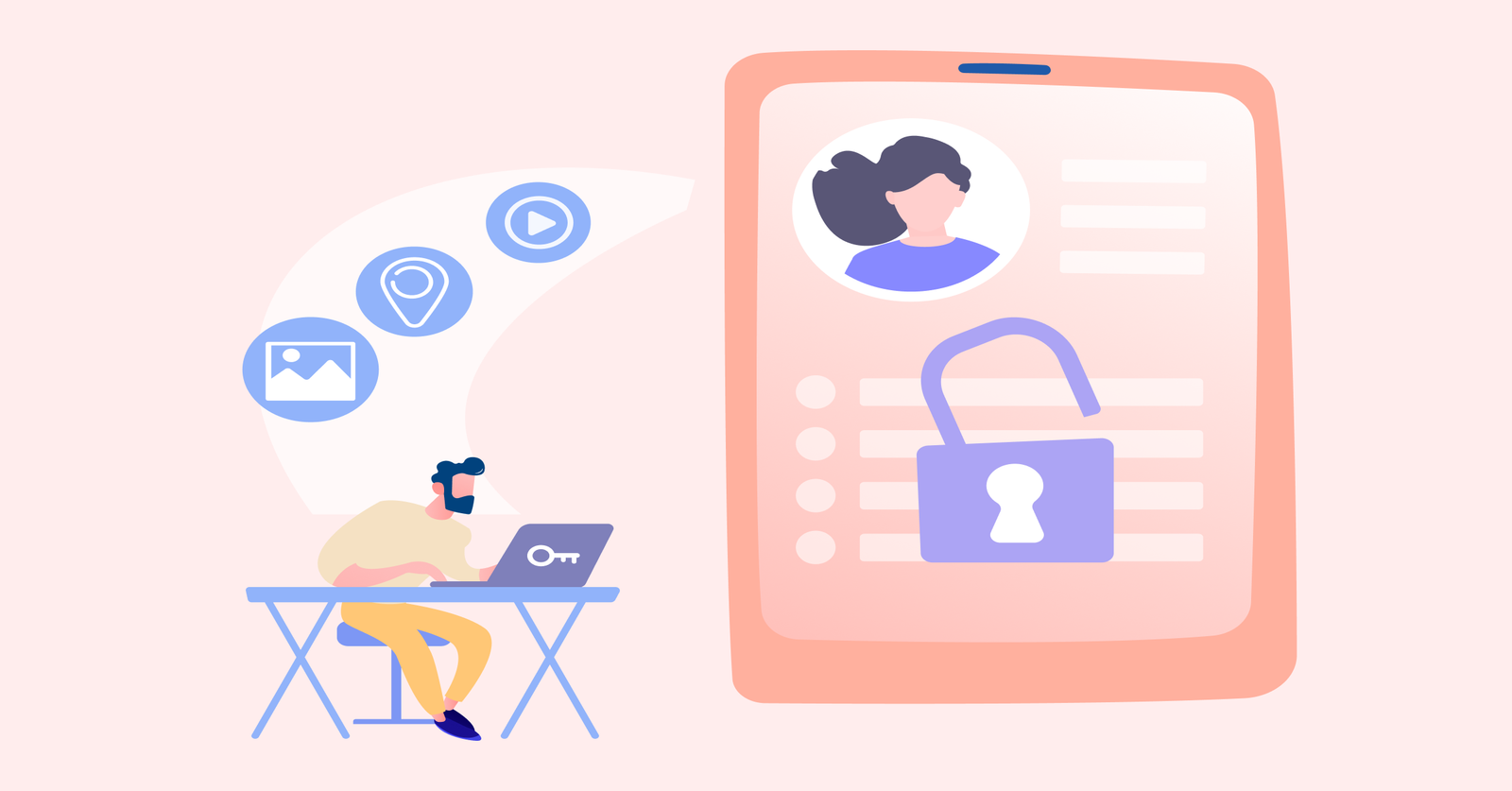
The blog explains secure live chat, its benefits, security practices and common risks. It also explores steps to protect customer conversations while delivering fast and reliable real-time support.
Imagine a customer typed their credit card number into your live chat. Somewhere in that exchange, an unencrypted packet travels through a server your team hasn’t audited in eight months. Risky situation , right?
Chat logs are the least scrutinized data store in most support stacks, yet they accumulate some of the most sensitive customer information a business handles. IBM’s Cost of a data breach report puts the average breach cost at $4.45 million, with customer-facing channels consistently flagged as underprotected entry points.
There are specific controls that prevent live chat from becoming that entry point – encryption standards, access management, and compliance requirements that hold up under scrutiny. Businesses that skip these controls don’t just face regulatory penalties. They lose customers who never announce their departure. Let’s dive to understand how you can secure live chat effectively.
A secure live chat refers to a real-time messaging system designed to protect customer conversations from unauthorized access. Strong encryption and strict security controls keep payment details, personal information and private discussions safe during customer support interactions. A well-secured system allows businesses to respond quickly while keeping sensitive data protected.
Customer trust can disappear quickly after a data leak. Secure chat reduces that risk by protecting conversations at every stage, from message transmission to storage. Privacy protection is not only a legal responsibility but also a visible sign that you respect customer information
Core objectives:
Let’s go through the key benefits of secure live chat and see how stronger protection improves daily support operations.
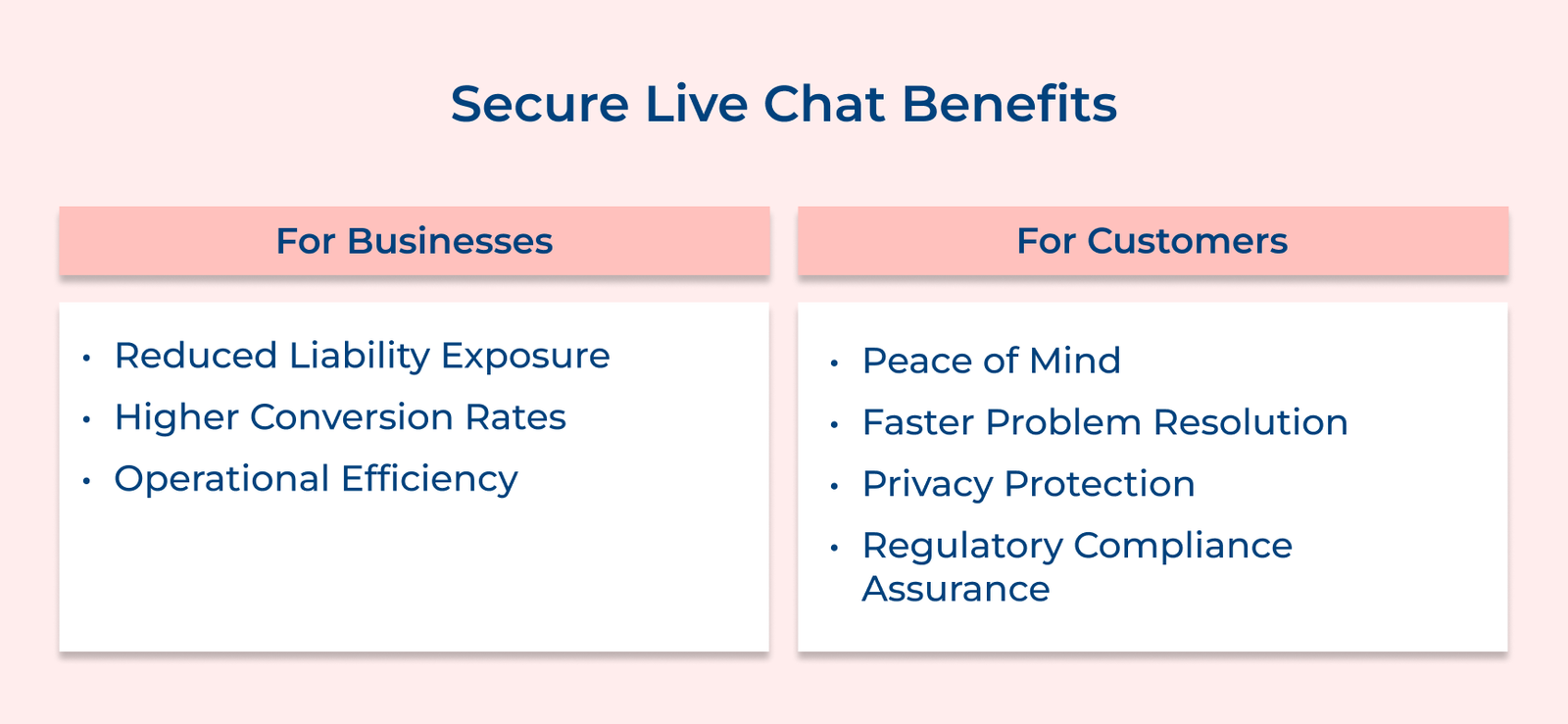
Reduced liability exposure: Strong encryption and controlled access lower the chances of data leaks that lead to legal claims or financial loss. Protected systems reduce exposure to regulatory fines and reputation damage. Secure handling of customer information protects both revenue and long-term credibility.
Higher conversion rates: Customers feel more comfortable sharing payment details in a protected chat environment. Visible security measures increase confidence during checkout or account updates. Greater confidence often leads to completed purchases and fewer abandoned transactions.
Operational efficiency: A secure and centralized chat system allows agents to collect sensitive information without switching channels. Fewer handoffs mean quicker resolutions and clearer communication. Teams spend less time managing risk and more time solving customer problems
Customers expect quick responses and strong privacy standards at the same time. Secure live chat meets both expectations and creates a safer support experience without slowing conversations down.
Peace of mind: Encrypted conversations reduce hesitation when customers need to share sensitive details. Clear security measures reassure them that account numbers, payment issues and personal data remain protected. Greater comfort leads to more open and productive conversations.
Faster problem resolution: Secure chat allows customers to explain issues clearly without masking important details. Direct and complete information helps agents diagnose problems quickly. Clear communication shortens resolution time and reduces back-and-forth messages.
Privacy protection: Conversations remain confidential between the customer and authorized team members. Medical inquiries or financial discussions remain confidential. Privacy matters especially for sensitive industries like healthcare or banking.
Regulatory compliance assurance: Many industries require strict data protection standards. A secure chat system demonstrates alignment with legal and professional requirements. Reliable compliance practices build confidence among clients who depend on responsible data handling.
Below are the most common live chat security issues that can expose customer data, compromise internal systems and quietly erode trust long before anyone notices something’s wrong.
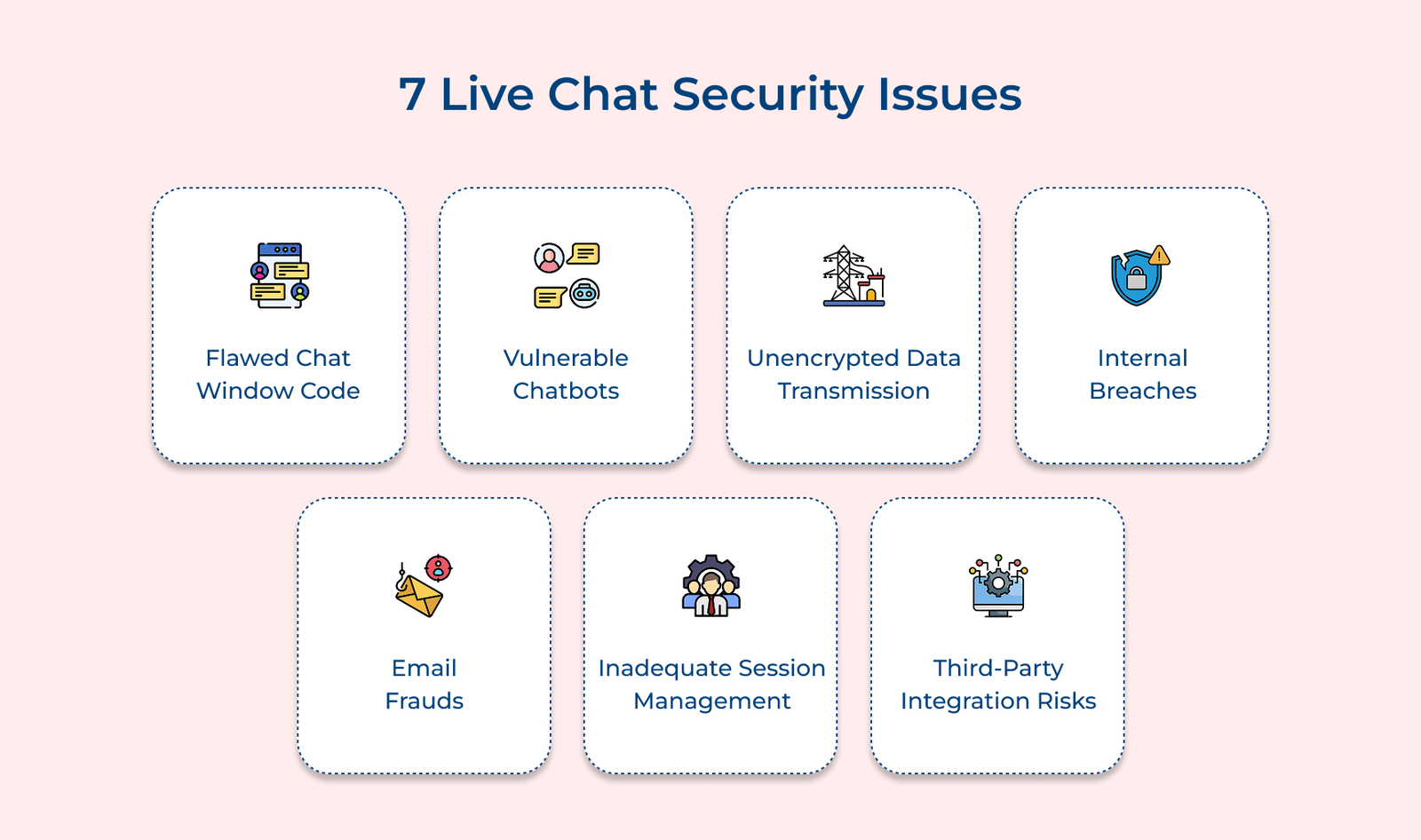
Weak or outdated chat widget code can create openings for attackers to inject harmful scripts into conversations. Skipped security reviews and unpatched libraries often leave known vulnerabilities exposed. Attackers can capture session details or redirect users to fake pages that look legitimate.
Lack of proper input validation makes the interface easier to manipulate. Cross-site scripting attacks exploit the gaps and interfere with normal communications. Customers may believe they are speaking with support while their information is being intercepted.
Pro tips:
Fixing issues only after they surface leaves unnecessary risk in place. Ongoing code reviews, security testing or automated vulnerability scans reduce exposure and protect customer conversations before problems escalate.
Chatbots handle large volumes of customer conversations, which makes them attractive targets for attackers. Stored chat histories without strong encryption or strict access controls create significant risk. A single breach can expose thousands of interactions along with valuable customer insights.
Chatbots that integrate with multiple systems create additional attack surfaces. Each connection point needs separate security measures that teams sometimes overlook. Compromised bots can also be manipulated to provide false information or collect data for malicious purposes.
Actionable tips:
Attackers sometimes use carefully crafted prompts to extract hidden details from bots. Poor configuration can allow system information or internal rules to surface in responses. Regular security testing, strict access controls and controlled training data reduce the risks.
Messages that travel between a customer’s browser and your server without encryption can be intercepted along the way. Public WiFi networks increase the risk because traffic is easier to monitor. Unprotected chat data is exposed to anyone watching the network stream.
Intercepted transmissions allow attackers to capture conversations in real time. Packet sniffing tools reveal credit card numbers, passwords and personal details when encryption is absent. Sensitive information becomes readable instead of protected.
Key ways:
Encryption protects data while it moves across networks. Transport Layer Security secures communication in transit and blocks casual interception. End-to-end encryption adds another layer by limiting decryption access strictly to intended participants.
Security risks do not always come from outside attackers. Employees with excessive access can expose customer conversations intentionally or through simple mistakes. Exported chat logs, forwarded transcripts or shared screenshots can all lead to data leaks. Internal controls must be just as strong as external defenses.
Insufficient access controls let employees view chats outside their department or role. A billing specialist shouldn’t access technical support conversations and vice versa. The unnecessary permissions create insider threat risks that external security measures can’t prevent.
Key signals:
Balanced access requires clear role-based permissions and routine access reviews. Immediate removal of credentials when someone changes roles or leaves the company reduces risk. Strong monitoring combined with limited access keeps internal data exposure under control.
Fraudsters often impersonate chat support teams through convincing phishing emails. The messages copy your branding, tone and layout to appear legitimate. Customers are urged to click links or share sensitive information, believing the request came from your company.
Chat transcripts sent through email create additional vulnerability points. Customers forward the emails to others or leave them in unsecured inboxes. Years later the messages might still contain sensitive details from the original conversation.
Key takeaways:
Email authentication standards such as Sender Policy Framework and DMARC reduce the risk of sender spoofing. Clear guidance encouraging customers to confirm requests through official website channels also lowers the success rate of phishing attempts.
Poor session management can expose active chat conversations to the wrong people. A customer might leave a chat open on a shared or public computer without logging out. The next person using that device could see the entire conversation history and continue the session.
Long-lasting session tokens create another risk. Attackers can capture the tokens and reuse them to impersonate real users. Support agents may believe they are assisting a legitimate customer while the conversation is actually controlled by someone else
Key ways:
What is the right session timeout for customer communication? The answer depends on the type of service and typical conversation length. Financial services often use short idle timeouts around five minutes, while ecommerce platforms may allow sessions to remain active for up to thirty minutes.
Live chat software often connects with tools such as CRM systems, payment gateways and analytics platforms through APIs. Each connection introduces another point that needs proper security checks. A trusted vendor can still become a weak link if their security practices fall short.
Pro tips:
Third-party breaches can affect your systems even when intentional security is strong. Customer communication remains safe only when every connected platform follows reliable security practices. Regular vendor reviews help confirm that partners maintain proper security standards. Clear contract terms should require immediate breach reporting and outline responsibility if a security incident occurs.
Below are the steps businesses can take to ensure their live chat systems stay secure, protect customer data and maintain safe communication during every conversation.
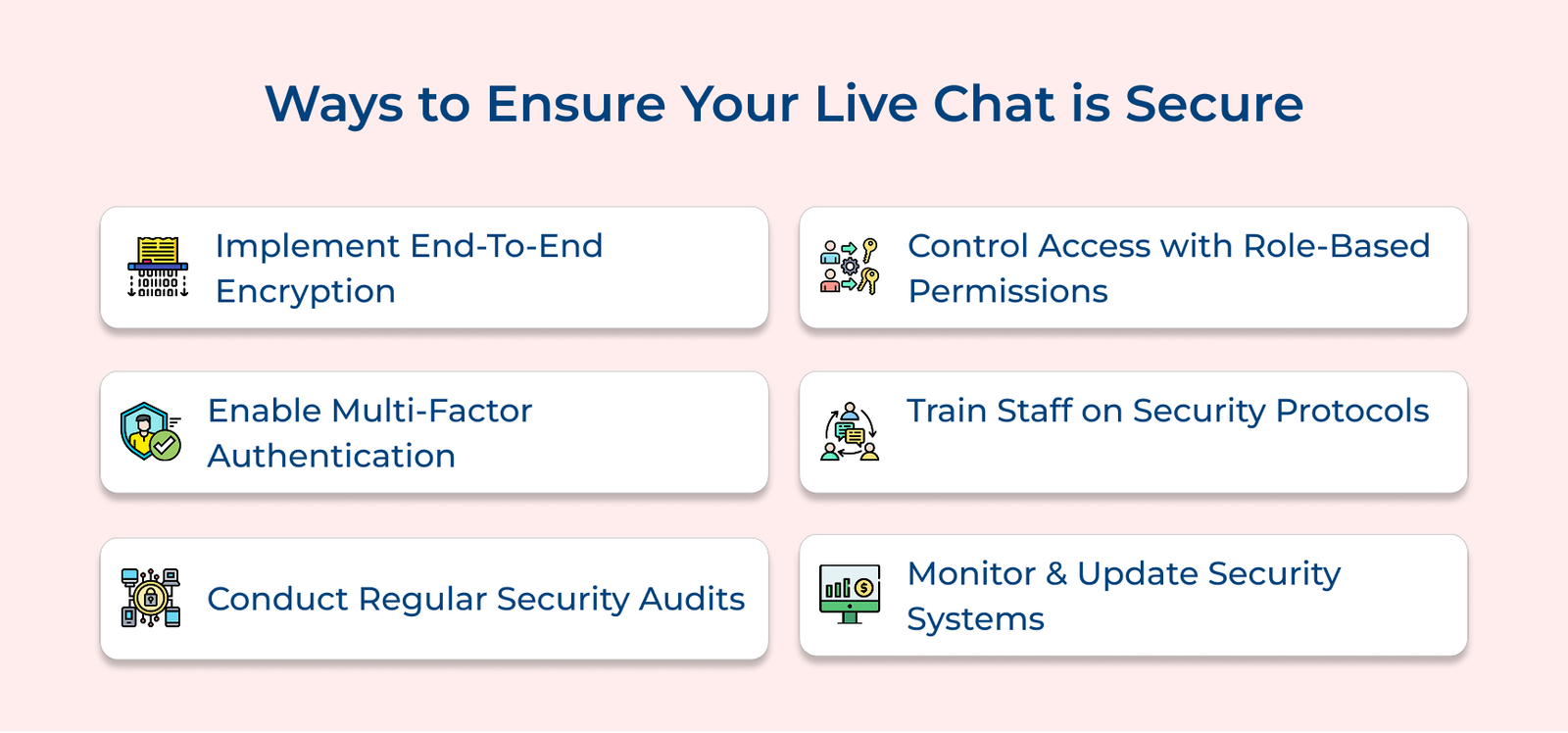
End-to-end encryption converts readable messages into coded data that only the sender and the receiver can understand. Protection begins the moment a customer sends a message and continues until it reaches your support agents. Anyone intercepting the data during transmission only sees unreadable characters instead of real information.
Strong encryption standards such as AES-256 protect sensitive communications and prevent unauthorized access. Customer details, account information and payment-related discussions stay protected throughout the interaction. Secure communication builds confidence when customers need to share private details.
Actionable tips:
Multi-factor authentication adds extra verification steps beyond a simple password. The approach requires something you know, like a password, plus something you have, like a phone. Stolen credentials alone cannot compromise accounts when multiple verification factors are required.
Key questions:
Agent accounts with higher access levels require stronger protection. A compromised administrator account could expose a large number of customer conversations. Time-based codes or biometric verification add a reliable layer of security even if someone discovers the correct password.
Security audits systematically examine your chat infrastructure for vulnerabilities and compliance gaps. Third-party assessors bring fresh perspectives that internal teams might miss. The reviews identify weaknesses before attackers exploit them in real customer communications.
Key factors:
Regular audits help detect risks that appear after software updates or configuration changes. Security teams may also run penetration tests that simulate real attack attempts. Audit records demonstrate responsible security practices if customers or regulators request proof of data protection.
Role-based permissions define what each team member can see and do inside your chat system. Different roles require different levels of access. A sales representative may only need customer inquiries, while a technical support agent may need troubleshooting history. Limiting access to essential tasks reduces the chance of sensitive data being exposed.
Clear permission structures also prevent a single user from controlling every part of the system. Supervisors may review conversations to monitor quality without receiving administrative privileges. The separation protects customer information and keeps responsibilities clearly defined.
Key elements:
Employees play a critical role in protecting customer communication. Regular security training helps teams recognize phishing attempts, suspicious requests and common social engineering tactics. Well-informed staff can identify risks early and prevent sensitive information from being exposed.
Training should include real situations that support agents may face during customer conversations. Clear guidance on handling sensitive data, verifying identities and reporting unusual activity keeps teams prepared. Regular refreshers help maintain awareness as new threats appear.
Key ways:
Let’s consider that an ecommerce company reduced security incidents by 60% after implementing monthly security workshops. Agents learned to spot fraudulent refund requests that previously resulted in data exposure. Customer trust improved as fewer conversations experienced suspicious activity.
Continuous monitoring helps detect unusual activity that may threaten customer communication. Security tools watch login behavior, data access and system activity to identify patterns that look suspicious. Early alerts allow teams to investigate and respond before a small issue becomes a larger security incident.
Regular software updates also play a critical role in protecting chat systems. Older versions of chat platforms may contain vulnerabilities that attackers already understand. Consistent patch management keeps systems updated and reduces exposure to known security risks.
Best practices:
Below are the essential secure live chat features that help protect customer conversations and ensure safe communication across messaging platforms.
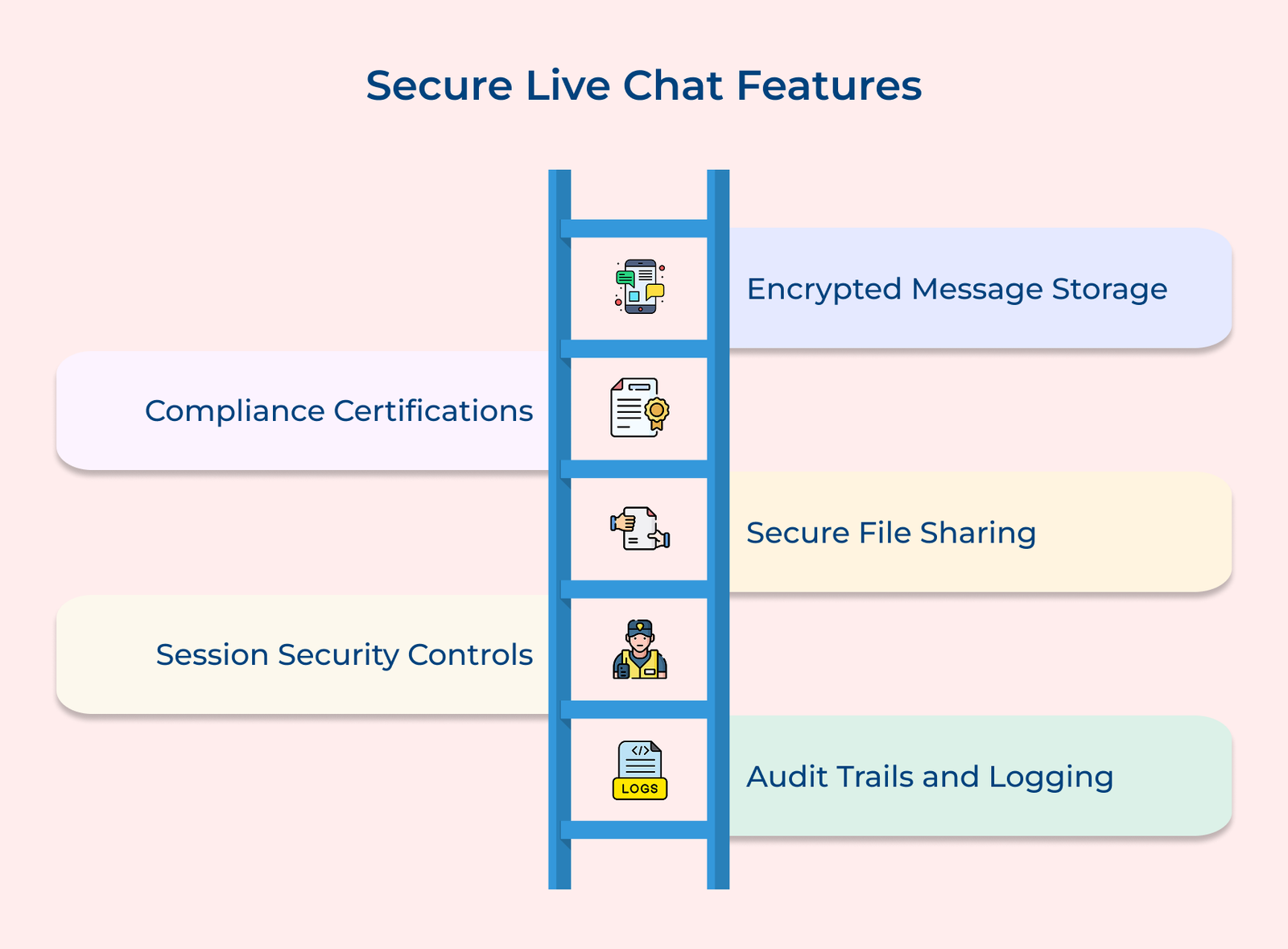
1. Encrypted Message Storage
Secure chat platforms protect stored conversations through encryption. Archived messages remain unreadable without the correct decryption keys. Access to the database alone does not reveal the content of customer discussions.
2. Compliance Certifications
Reputable platforms maintain certifications like SOC 2, General Data Protection Regulations (GDPR) compliance and industry-specific standards such as HIPAA or PCI DSS. Choosing certified platforms simplifies your own compliance efforts and reduces regulatory risk.
3. Secure File Sharing
Secure file transfer capabilities let customers safely share documents like contracts or identification without email vulnerabilities. The platform should scan uploads for malware and encrypt files during transmission or storage.
4. Session Security Controls
Advanced platforms include controls that protect active chat sessions. Configurable timeouts close inactive sessions automatically, while IP verification and device recognition help detect unusual login activity.
5. Audit Trails and Logging
Detailed logs record activity across the platform, including who accessed conversations and when actions occurred. The records support security investigations and help organizations review how customer data is handled.
Check out the secure live chat platforms that help businesses protect customer conversations and support safe communication while delivering reliable support experiences.
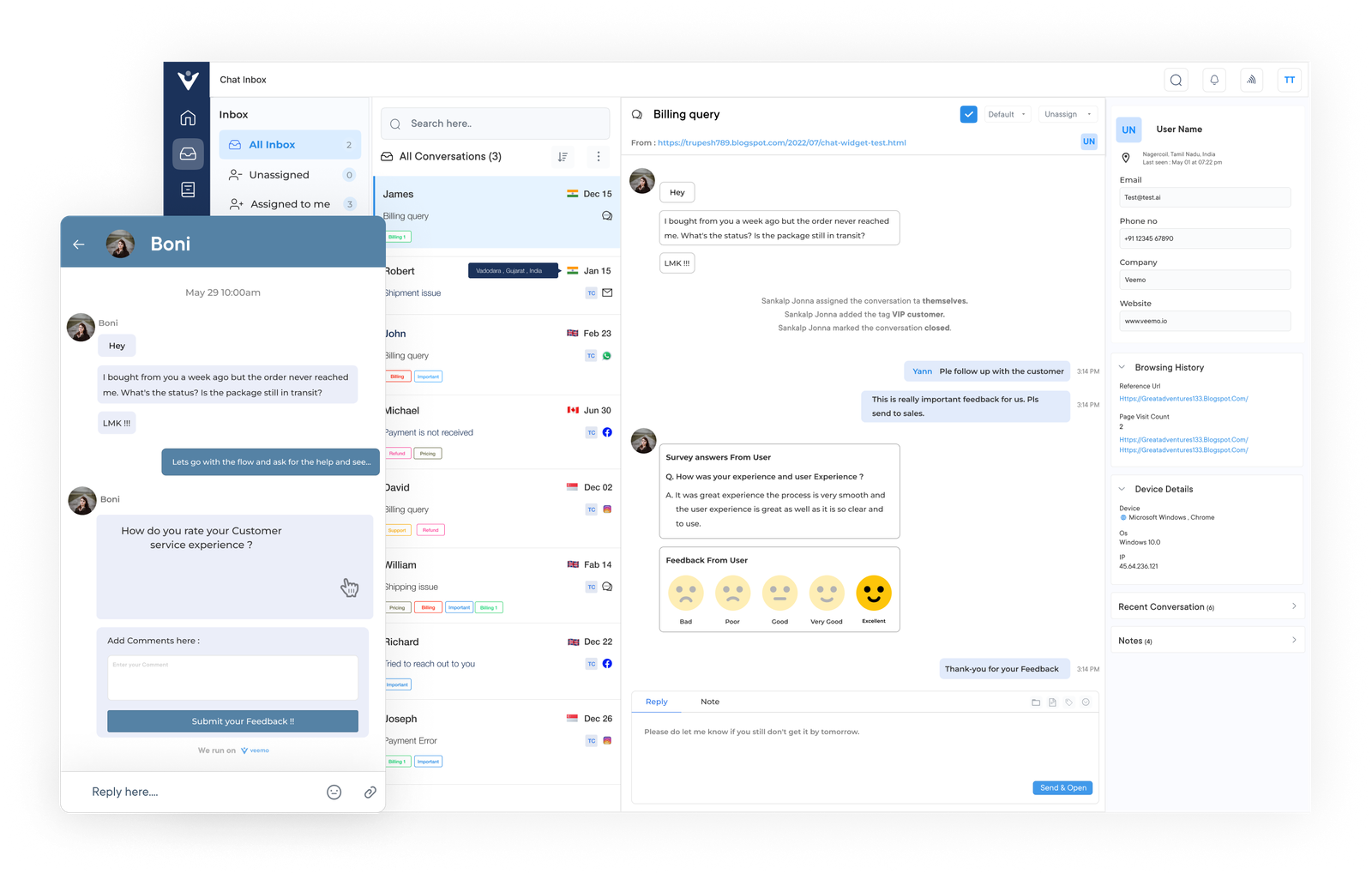
Veemo Chat provides secure customer communication along with practical tools that help support teams manage conversations efficiently. Strong encryption protects customer data while built-in features help teams respond quickly, organize inquiries and handle large volumes of messages with ease.
Key features:

Omni24 offers a customer communication platform that combines live chat with tools designed to keep conversations organized and secure. Multiple communication channels come together in one workspace, allowing teams to manage customer interactions while maintaining strong data protection.
Key features:
Zendesk Chat provides strong security controls designed for businesses that handle large volumes of customer conversations. Encryption protects communication, while compliance with standards such as GDPR and SOC 2 supports responsible data handling. Role-based permissions and detailed audit logs help teams track agent activity.
Intercom combines security with user-friendly features, including encrypted data storage and secure API integrations. The platform supports HIPAA compliance for healthcare businesses and provides comprehensive security documentation for enterprise clients requiring detailed vendor assessments.
LiveChat protects customer conversations through strong encryption and secure authentication options. Built-in session controls help prevent unauthorized access during active chats. Secure file sharing allows customers to send documents safely, while uploaded files are scanned to detect potential security threats before delivery.
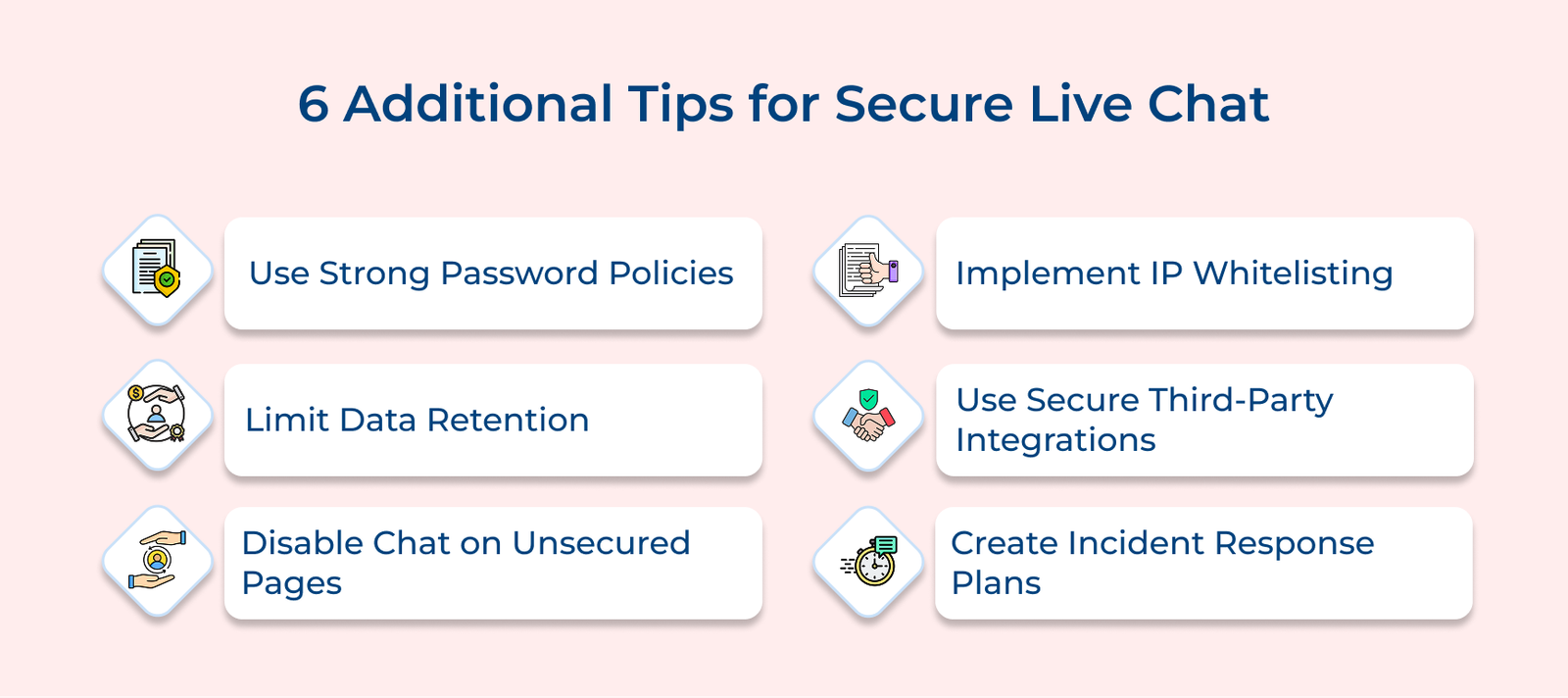
The following are the practical strategies to further strengthen your customer communication security. Let’s check them out in more detail.
Secure live chat allows businesses to communicate with customers quickly while protecting sensitive information shared during conversations. Safe communication builds confidence and helps customers feel comfortable asking questions or sharing account details.
Start by choosing platforms with robust encryption and compliance certifications that match your industry requirements. Combine secure technology with staff awareness and regular monitoring so every customer conversation remains protected.

Secure live chat protects sensitive customer information during conversations. Strong protection prevents unauthorized access. It helps businesses handle personal details while following data protection and privacy regulations.
Review encryption standards, security certifications and logging capabilities before selecting a provider. Reliable vendors also share clear security documentation and maintain a strong reputation for protecting customer communication.
Priority features include end-to-end encryption, role-based access controls, automatic session timeouts and comprehensive logging capabilities. The platform should offer compliance certifications relevant to your industry and secure file sharing with malware scanning.
Secure chat systems encrypt messages during transmission and storage so conversations remain private. Authentication checks confirm user identity, while monitoring systems watch for unusual activity and prevent unauthorized access.
Secure chat protects customer data while allowing teams to resolve questions quickly. Customers feel more comfortable sharing information, which leads to smoother support interactions and stronger confidence in your service.
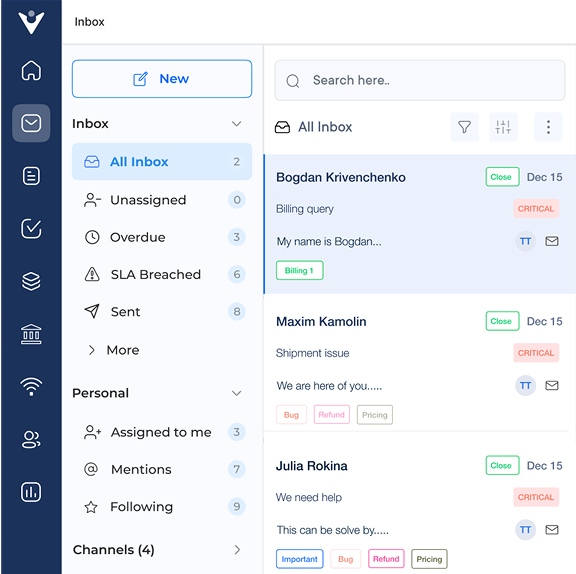
Grow Customer Relationships and stronger team collaboration with our range of products across the Conversational Engagement Suite.
Omnichannel Customer Support & Help Desk Software
AI Enabled Business Messaging and Chatbot Software
Sales Engagement & CRM Software
Call Center Software & Virtual Phone System
Product Marketing & Experience Platform
Customer Experience & Feedback Management Software

 Swarming vs Tiering Support: Which One’s Right For Your Business?
Scroll to top
Swarming vs Tiering Support: Which One’s Right For Your Business?
Scroll to top