What is Tacit Knowledge? Best Practices, Examples & Tools
The blog explains tacit knowledge and how it differs from other knowledge types. It explores why it matters in organizations and practical ways to apply experience-based insights effectively.

The blog explains tacit knowledge and how it differs from other knowledge types. It explores why it matters in organizations and practical ways to apply experience-based insights effectively.
Your most experienced employee just submitted their resignation. The team suddenly realizes that years of practical problem-solving and decision-making exist only in that person’s experience. No manual fully explains how they handle complex situations. It happens constantly because tacit knowledge lives only in people’s heads and resists documentation.
When experts leave, companies lose the judgment calls that separate good performance from exceptional results. The cost shows up in repeated mistakes and slower decisions. Understanding tacit knowledge helps organizations protect the expertise that keeps work running smoothly.
The guide explains this type of knowledge in detail and why it matters because 80% of an organization’s knowledge exists as tacit knowledge. You will also learn practical ways to capture and share insights that traditional training often misses.
Tacit knowledge is the unwritten expertise that lives in people’s heads. It’s the kind of know-how you can’t easily write down or transfer through a manual. Think of it as the difference between reading about riding a bike and actually knowing how to balance without thinking.
Tacit knowledge develops through hands-on experience and repeated practice. People build it while solving problems, learning from mistakes and improving their approach over time. Real understanding often grows from doing the work rather than only reading about it.
Key objectives:
The most valuable expertise in your company isn’t in your databases or documented procedures. Let’s understand why capturing tacit knowledge matters for businesses.
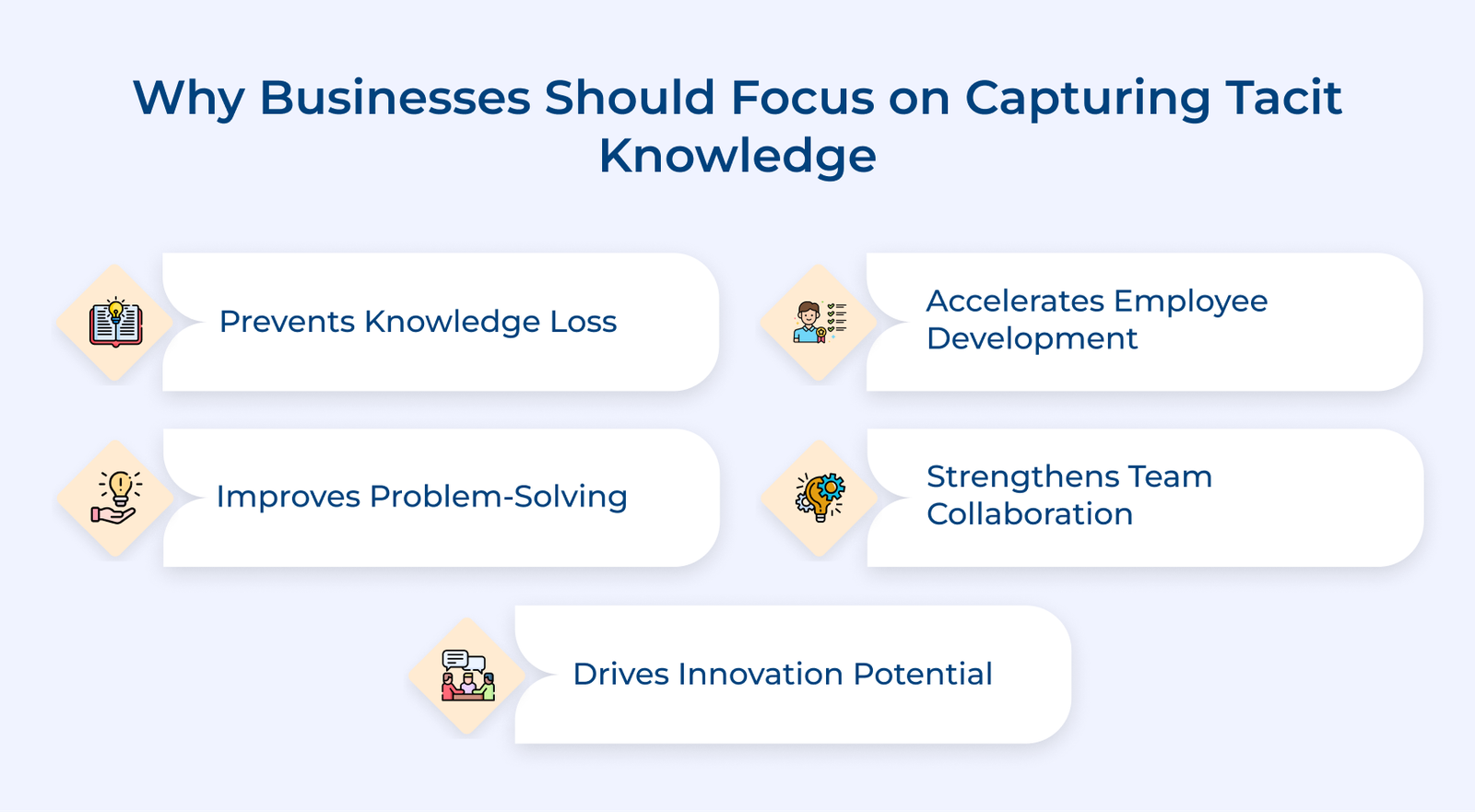
1. Prevents Knowledge Loss During Transitions
Experienced employees carry valuable lessons gained through years of solving real problems. When they leave, much of that understanding can disappear with them. Capturing tacit knowledge helps organizations retain those insights and avoid repeating past mistakes.
2. Accelerates Employee Development
New employees learn faster when they gain access to practical insights from experienced colleagues. Guidance based on real situations helps them understand challenges more quickly. It shortens the learning curve and builds confidence in their work.
3. Enhances Problem-solving Capabilities
Many business challenges do not have clear instructions or fixed procedures. Tacit knowledge helps people handle situations that require judgment and experience. Teams make better decisions when they understand the reasoning behind actions.
4. Builds Stronger Collaboration
Open sharing of experience encourages people to learn from one another. Teams begin to exchange ideas and insights instead of working in isolation. It strengthens cooperation and improves collective tacit knowledge across the organization.
5. Increases Innovation Potential
Breakthrough ideas often come from combining different experiences and perspectives in unexpected ways. Making tacit knowledge visible lets people connect dots they couldn’t see before. It turns isolated pockets of brilliance into fuel for organization-wide creativity.
Check out the key differences between tacit, explicit and implicit knowledge. Each type plays a unique role in how organizations turn experience into practical understanding.
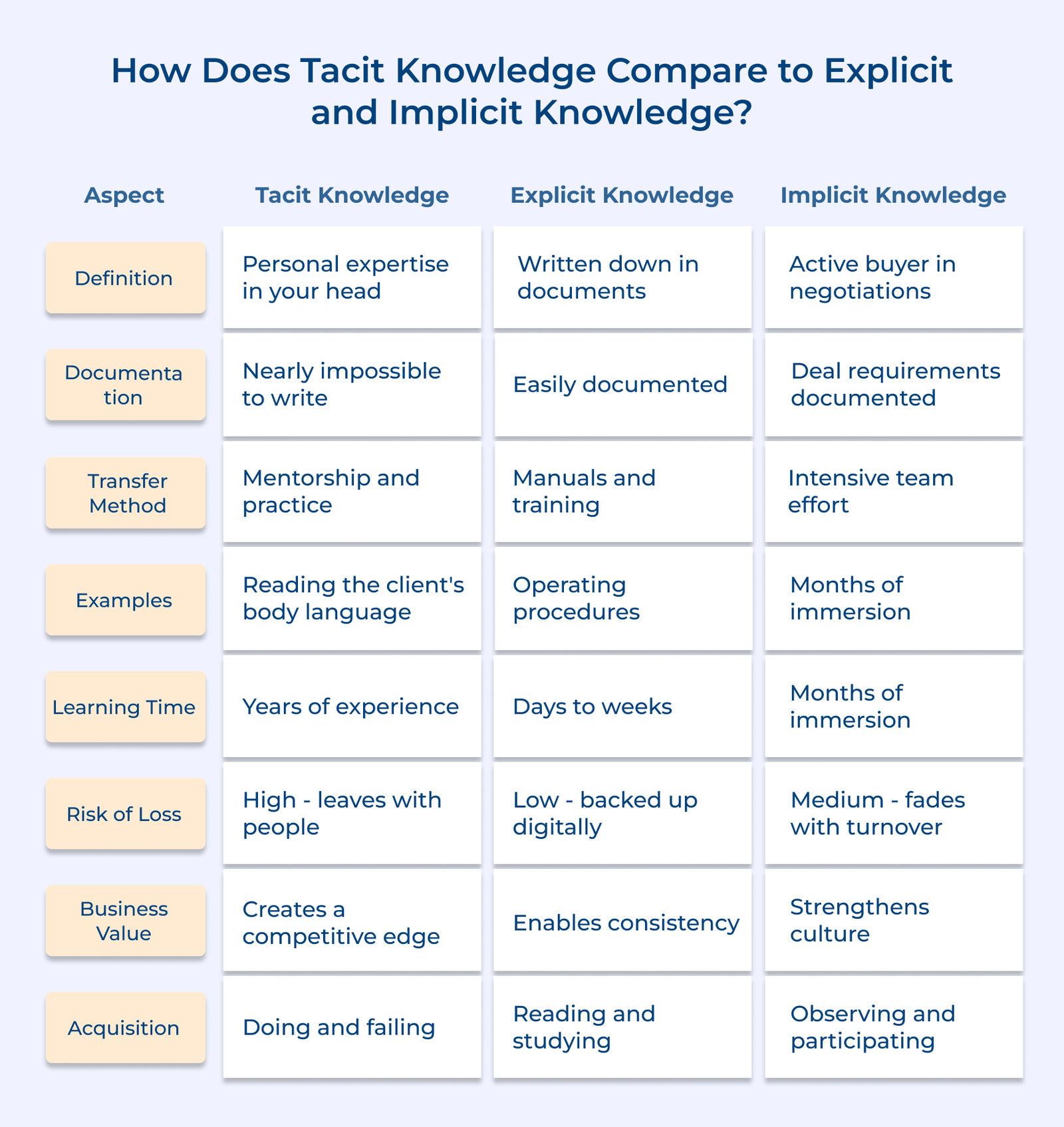
Tacit knowledge comes from personal experience and practical understanding developed over time. People rely on it during real situations, yet explaining it clearly to others can be difficult. Many professionals simply know what to do because they have done it many times before.
Key factors:
Explicit knowledge appears in documents, guides, databases and standard procedures. Employees can read it, study it and apply it step by step. Clear instructions make it easier to transfer across teams.
Implicit knowledge sits between the two as shared understanding within teams that nobody wrote down. It’s the cultural assumptions everyone operates under without questioning them. Both explicit and implicit knowledge are easier to transfer than tacit knowledge across your organization.
Explicit knowledge moves easily through written documents and structured training materials. Teams can store it in manuals, guides or digital knowledge bases where anyone can access the same information when needed.
Key ways:
Tacit knowledge usually requires direct interaction between people. Experienced professionals demonstrate their approach, while others learn through observation and repeated practice. Real situations help build the understanding that cannot always be written down.
Implicit knowledge grows when teams work together and develop shared habits. People follow the unwritten patterns without realizing they exist. New team members often learn them gradually through everyday collaboration.
Tacit knowledge helps professionals make quick judgments in situations that lack clear instructions. It’s what lets veterans sense problems before data confirms anything is wrong. The intuition becomes more valuable as situations grow more complex and ambiguous.
Pro tips:
Explicit knowledge supports decisions that follow clear rules or procedures. Teams rely on documented standards, policies and data when applying established processes. Structured guidance helps maintain accuracy and consistency.
Implicit knowledge shapes how teams interpret situations and set priorities. Shared understanding about company values and expectations helps people make decisions quickly without needing detailed instructions every time.
Tacit knowledge develops through experience, repetition and reflection on real situations. People build it gradually while working through challenges and learning from outcomes over time.
Key takeaways:
Explicit knowledge often comes from structured learning such as workshops, manuals or online training. Clear instructions allow people to understand concepts quickly and apply them with guidance.
Implicit knowledge absorbs gradually as you pick up cultural cues and workplace norms that nobody teaches directly. New employees learn when it’s okay to challenge ideas in meetings versus when to stay quiet. The time investment varies dramatically depending on what you’re trying to learn.
Tacit knowledge gives organizations an advantage through deep expertise that competitors cannot easily copy. Experience-based insights often shape how teams solve problems and deliver results.
Key types:
Explicit knowledge helps organizations standardize operations and maintain quality across different teams or locations. McDonald’s relies heavily on explicit knowledge to ensure a Big Mac tastes identical everywhere. It’s the foundation for growth without sacrificing what made you successful initially.
Implicit knowledge reduces confusion and speeds up collaboration. Teams that share a common understanding of priorities and expectations work together more effectively.
Tacit knowledge can disappear quickly when experienced employees leave an organization. You can’t back it up to a server or save it in cloud storage. Preserving it requires deliberate effort through mentoring relationships and storytelling about past experiences.
Key takeaways:
Explicit knowledge is easier to maintain because organizations can store and update it in documents, databases and knowledge systems. Regular updates help keep information accurate and useful.
Implicit knowledge may weaken when teams change or organizational culture shifts. Long-term employees often carry important context that new team members need time to understand. Organizations benefit from recognizing the differences and managing each type of knowledge carefully.
Check out the best practices businesses use to capture and apply tacit knowledge effectively. Shared experience and practical insights help teams retain valuable expertise.
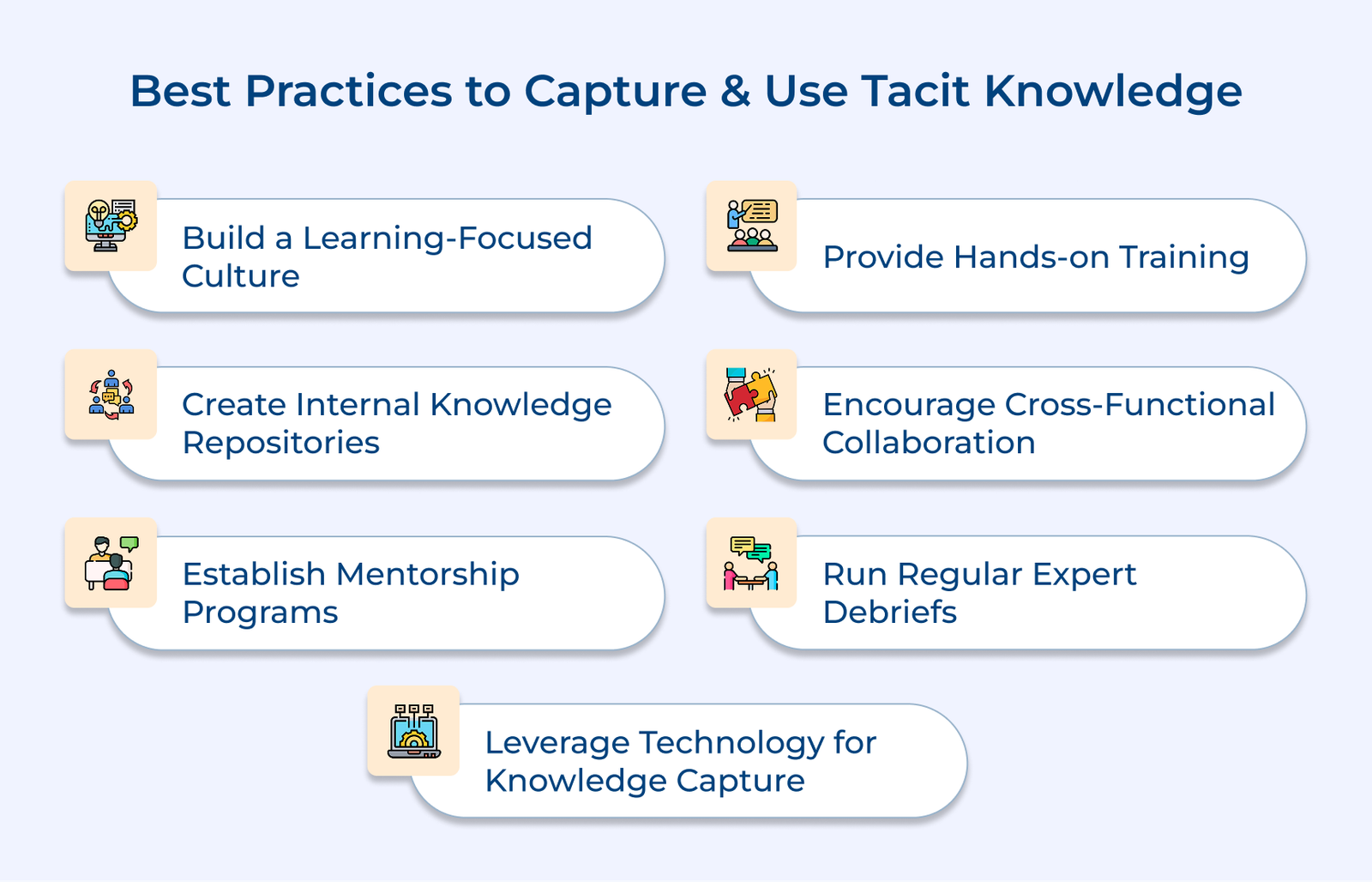
A workplace that values learning makes it easier for people to share their experiences and insights. Employees feel more comfortable asking questions and discussing challenges. The openness encourages practical knowledge to spread naturally across teams.
Key ways:
An internal knowledge repository helps organizations turn valuable experience into shared resources that everyone can access. Important insights remain available even when employees change roles or move on. Teams gain a reliable place to learn from past decisions and solutions.
Capturing knowledge works best when the context behind decisions is included. Practical insights become more useful when people understand the situation, the reasoning and the outcome. The approach helps others apply the knowledge more effectively.
Key elements:
Sales teams often benefit from this type of repository. Representatives can review how experienced colleagues handled specific customer objections or negotiations. Access to real examples helps them prepare for similar situations.
Mentorship creates a direct path for experienced employees to share their practical knowledge with others. Structured guidance helps newer team members learn from real situations and understand how experienced professionals approach challenges.
Strong mentorship programs work best when mentors and mentees are matched based on learning goals and skill development needs. Regular conversations with clear objectives help turn everyday experiences into valuable learning moments. Tracking progress keeps both people engaged in the process.
Pro tips:
Hands-on training helps employees build tacit knowledge through direct experience. It matters because reading about a skill creates awareness, but doing it builds the intuitive mastery that defines expertise. The muscle memory and judgment only come from repeated practice in real situations.
Use real projects as learning experiences
Real projects provide meaningful learning opportunities because they involve real outcomes and responsibilities. Assign projects that slightly stretch an employee’s abilities, while experienced colleagues remain available to guide them when needed.
Allow controlled experimentation where mistakes become teaching
Controlled experimentation allows employees to try different approaches within safe limits. Teams learn valuable lessons when mistakes are treated as opportunities to improve understanding and refine future decisions.
Cross-functional collaboration allows employees to learn from colleagues with different expertise and perspectives. Valuable insights often appear when people from separate teams discuss challenges and share their approaches.
Departments working in isolation rarely exchange experience. Regular interaction between teams helps knowledge move more freely and encourages people to learn how different parts of the organization operate.
Actionable tips:
Mixed-skill teams encourage people to explain how they approach problems. A product designer working with a customer service rep may discover how design choices affect customer questions and support workload. Regular knowledge exchange sessions work best with thoughtful timing.
Key strategies:
Expert debriefing sessions help organizations capture valuable insights from experienced employees. The conversations reveal how experts think through challenges and make important decisions in real situations.
Structured discussions encourage experts to reflect on recent work and explain the reasoning behind their actions. Recording the sessions allows others to learn from the experience and apply similar thinking when facing comparable challenges.
Best practices:
Technology helps organizations capture valuable experience and make it accessible to more people. Digital tools preserve insights that might otherwise disappear after conversations or individual problem-solving.
Key ways:
A cybersecurity team might record senior analysts explaining how they identify threats during real investigations. New analysts can watch the recordings and learn how experienced professionals recognize patterns in complex situations.
The following are five common examples that experienced professionals possess but struggle to teach.
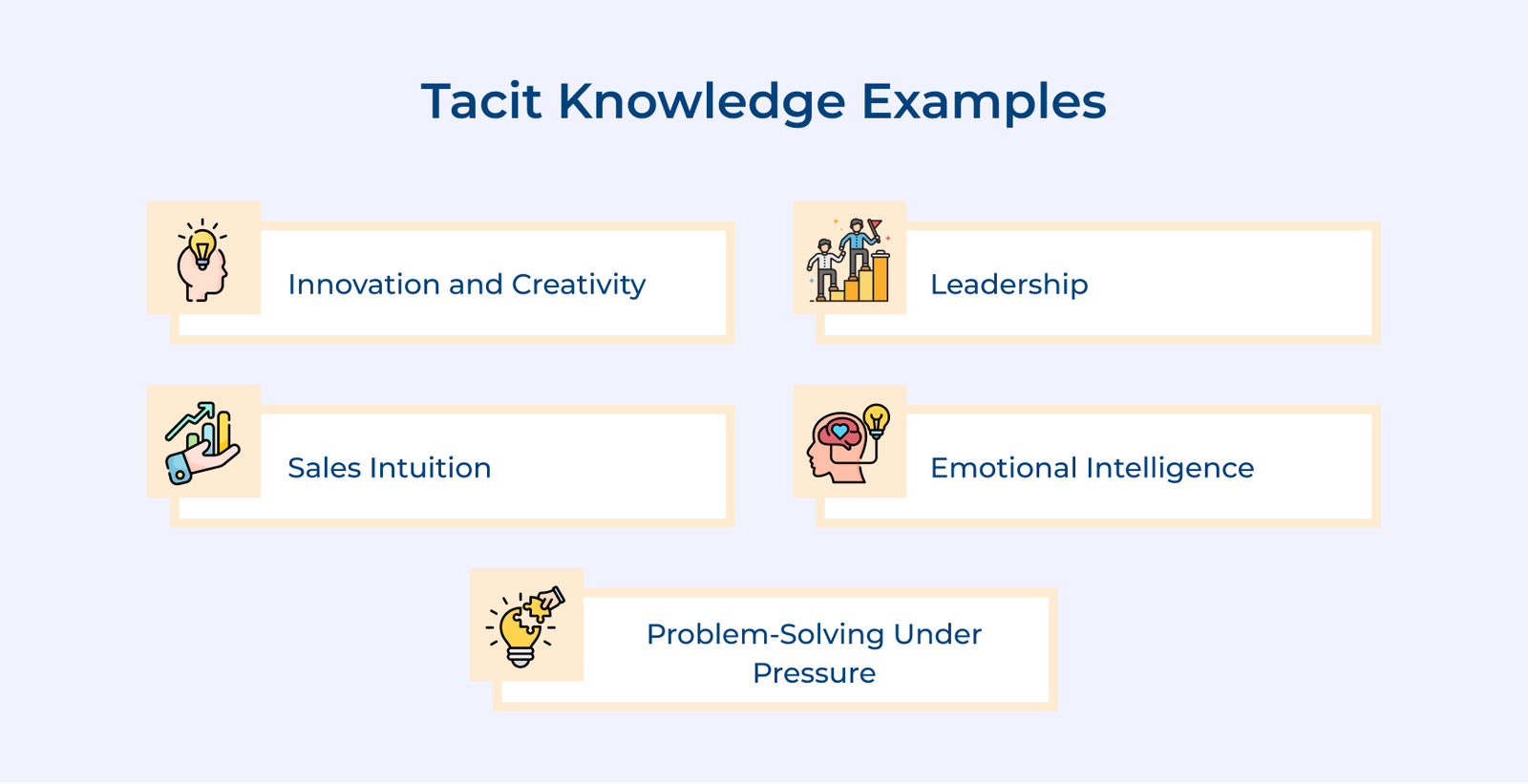
Innovation and Creativity
Creative problem-solving often grows from experience gathered across many projects. People begin to recognize patterns and connect ideas in unexpected ways. The insight rarely follows fixed rules because it develops through exploration and reflection.
Sales Intuition
Experienced sales professionals develop a sense of timing during conversations with customers. The reading of subtle client cues comes from thousands of conversations and missed opportunities. You can’t teach someone how to detect hesitation in a prospect’s voice.
Leadership
Effective leadership develops through working with different personalities and situations. Leaders learn how to encourage, guide and hold people accountable based on what the moment requires. Practical experience shapes the ability far more than theory alone.
Emotional Intelligence
Understanding emotions and group dynamics grows through years of interaction with people. Professionals gradually become better at noticing subtle signals such as tone, expressions and changes in energy during conversations.
Problem-solving Under Pressure
Staying calm during crises while making sound decisions comes from surviving similar high-stakes situations. Veterans know which problems need immediate action versus which resolve themselves with patience. The composure resists documentation completely.
Below are the four types that help preserve expertise your business can’t afford to lose. Let’s check them out in more detail.
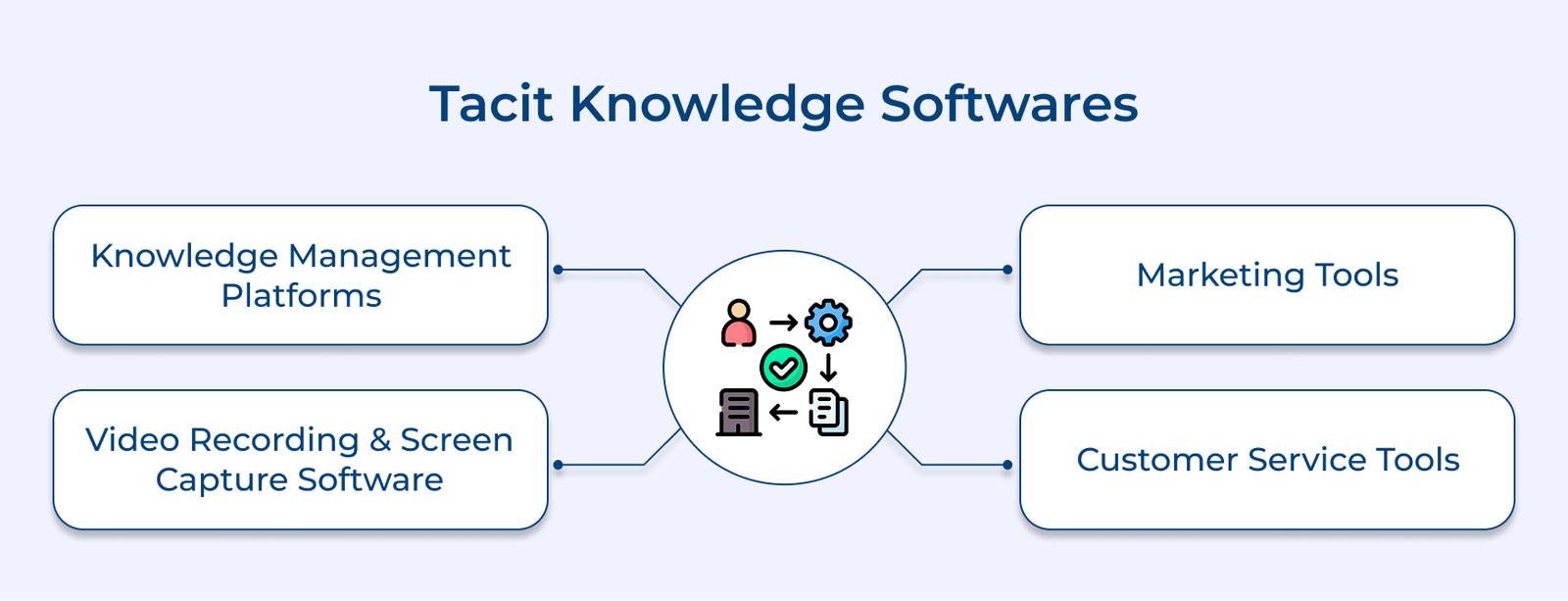
Knowledge management platforms such as Confluence provide a shared space where teams record lessons from real work experiences. The tools let experts share context-rich stories through wikis and collaborative pages. They turn scattered tribal knowledge into searchable organizational memory that everyone can access.
Video tools like Loom help teams capture expert demonstrations in a clear and practical format. Recording a developer solving a technical issue or a manager explaining a workflow allows others to see the steps and reasoning at the same time.
Marketing platforms like HubSpot help teams understand how customers respond to different campaigns and messages. Performance data highlights patterns in customer behavior and helps marketers refine their strategies using real results.
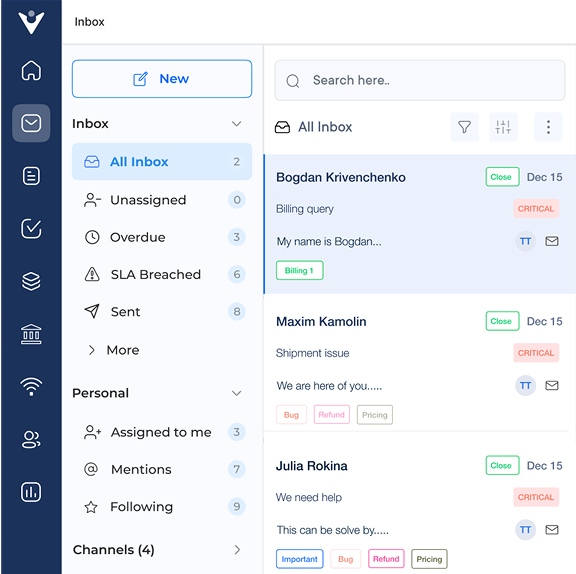
Help desk systems like Veemo Support record customer conversations and the solutions used to resolve issues. Support teams review previous cases to learn how experienced representatives handled complex situations and apply similar approaches when needed.
Tacit knowledge holds some of the most valuable insights inside an organization, yet it often exists only in individual experiences. Capturing that expertise helps teams learn from one another and retain important lessons over time.
Start small by implementing one or two practices that fit your culture and resources best. Whether through mentorship programs or simple video recordings, any effort to preserve tacit knowledge pays dividends. The expertise you capture today becomes the competitive advantage that separates you from competitors tomorrow.

Tacit knowledge often exists in the experience of skilled employees. When those individuals leave, valuable insights leave with them. Capturing the knowledge helps organizations avoid repeating mistakes and preserve important expertise.
Physical tacit knowledge involves skills such as coordination and movement learned through practice. Cerebral tacit knowledge relates to judgment and decision-making developed through experience. Physical skills are easier to demonstrate, while mental frameworks usually require explanation and discussion.
Tacit knowledge develops gradually through experience and reflection. People learn what works by applying ideas in real situations and observing outcomes. Principles usually emerge later when individuals try to explain their approach to others
Many people struggle to explain insights that feel intuitive. Valuable expertise may remain unspoken unless organizations create opportunities for discussion and learning. Remote work can also reduce casual interactions where knowledge naturally spreads.
Stories and real examples help communicate tacit knowledge effectively. Explaining the situation, the reasoning behind decisions and the results helps others understand the thinking process. Demonstrations combined with clear explanations also make complex insights easier to grasp.
Grow Customer Relationships and stronger team collaboration with our range of products across the Conversational Engagement Suite.
Omnichannel Customer Support & Help Desk Software
AI Enabled Business Messaging and Chatbot Software
Sales Engagement & CRM Software
Call Center Software & Virtual Phone System
Product Marketing & Experience Platform
Customer Experience & Feedback Management Software

 What is Customer Service Plan? Benefits, Steps & Challenges
Scroll to top
What is Customer Service Plan? Benefits, Steps & Challenges
Scroll to top