Customer Engagement vs Customer Satisfaction: How Do They Differ?
Explore the key differences between customer engagement vs customer satisfaction. Learn how each impacts loyalty and why businesses need both to build stronger customer relationships.

Explore the key differences between customer engagement vs customer satisfaction. Learn how each impacts loyalty and why businesses need both to build stronger customer relationships.
“Our satisfaction score looks great on paper, yet the customers are still leaving.” It is one of the most common blind spots in modern retention strategy.
Between 60 to 80% of customers say they are ‘satisfied’ or ‘very satisfied just before leaving. Let me explain, satisfaction tells you how a customer feels after a single interaction. It is the engagement that actually tells you how invested they are in coming back.
Businesses often end up treating them as the same metric. Still, they measure fundamentally different things and building a strategy around only one of them is where retention quietly breaks down.
Companies that conflate the two end up optimizing for survey scores while losing ground on the relationships that actually drive revenue. So, let’s dive in to understand the distinction of customer engagement vs customer satisfaction to understand what each one measures, how to track both accurately and what a balanced approach looks like in practice.
Customer engagement refers to how a business stays connected with its customers over time. It goes beyond simple transactions to build meaningful relationships. The goal is to create experiences that keep customers coming back and talking about your brand.
Engagement happens when businesses consistently connect with customers through personalized communication and valuable interactions. Every email reply and social media comment adds up. The touchpoints create emotional connections that transform casual buyers into loyal advocates who stick around.
Key objectives:
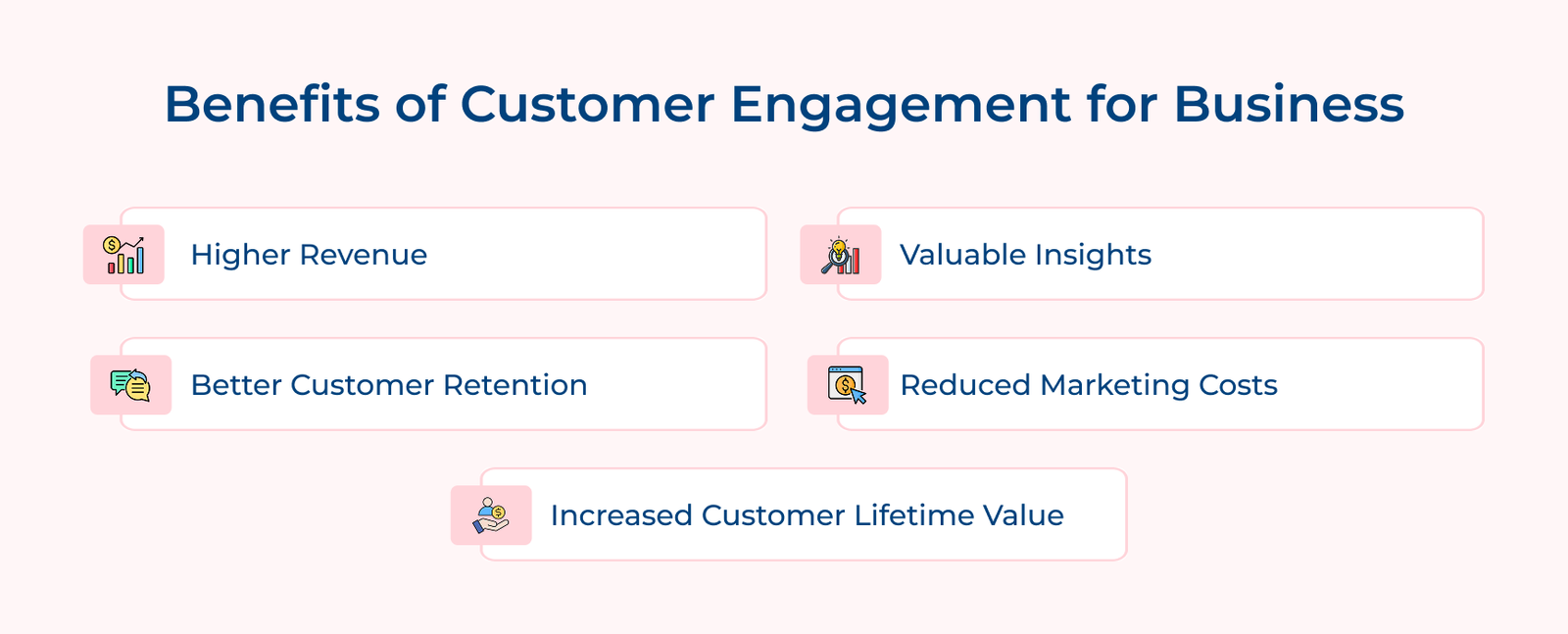
Let’s go through the key benefits of customer engagement for businesses and understand how consistent interactions can improve growth over time.
1. Higher Revenue
Engaged customers tend to spend more over time. Trust makes it easier for them to try new offerings and stay consistent with their purchases. The steady behavior makes revenue easier to predict.
2. Better Customer Retention
A strong connection keeps customers from looking elsewhere. Regular interaction reminds them why they chose you in the first place. Holding on to existing customers also costs much less than finding new ones.
3. Valuable Insights
Ongoing conversations give you a clear view of what customers actually want. Feedback becomes easier to gather and more honest. Decisions feel more informed instead of being based on assumptions.
4. Reduced Marketing Costs
Satisfied customers naturally talk about their experiences. Personal recommendations often carry more trust than paid promotions. It reduces the need to spend heavily on acquiring new customers.
5. Increased Customer Lifetime Value
Ongoing engagement extends how long customers stay with your business. They buy more frequently and explore your full product range. Each relationship becomes significantly more profitable over time.
Customer satisfaction refers to how people feel after interacting with your product or service. It reflects if their expectations were met and if the overall customer experience felt worth their time and money. The metric tells you if customers got what they paid for and if they’d choose you again.
Satisfied customers come back more often and share positive experiences with others. They’re less likely to complain or leave negative reviews that damage your reputation. High satisfaction scores directly correlate with business growth and long-term profitability.
Key factors:
The following are the four stages of customer engagement that show how relationships develop over time, from first interaction to long-term loyalty.
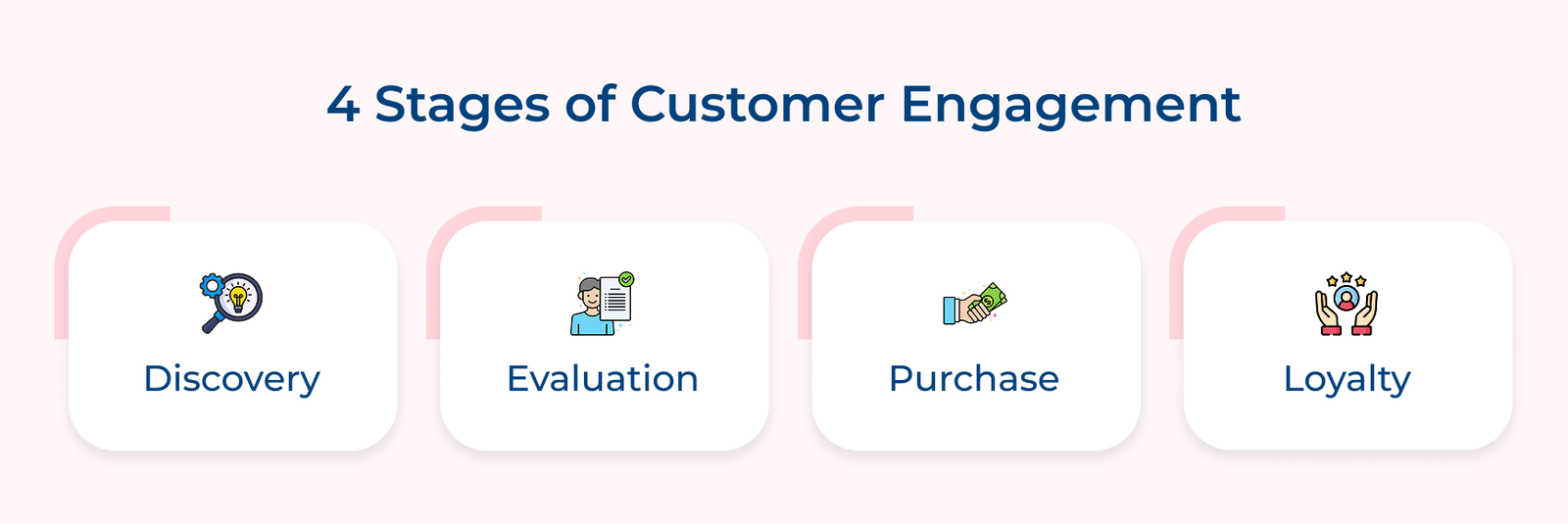
This is the stage where people come across your brand for the first time. It could be through an ad, a recommendation or a simple search. They are exploring and trying to understand what you offer, but there is no real commitment yet.
Key ways:
Early interactions matter more than they seem. A simple introduction makes it easier for someone to stay interested and take the next step. Clarity at this stage often decides if they continue exploring or lose interest quickly.
Customers now actively compare your offerings against competitors to find the best fit. They’re reading reviews and asking questions to reduce purchase risk. It requires patience as they weigh all options carefully before committing.
Trust becomes the deciding factor during evaluation when features look similar across brands. Transparent communication and social proof help tip the scales in your favor. Your job is to provide the information they need to choose confidently.
The customer decides to buy and completes their first transaction with your business. The moment marks the shift from prospect to actual customer. The experience during checkout significantly impacts their perception of your brand.
Pro tips:
A clean and easy purchase experience reassures them that they made the right choice. Small details here can make a big difference in how confident they feel after buying. Even minor friction at this stage can leave a lasting negative impression.
The trust is about people coming back again and again. Trust and a positive experience keep them connected over time. They also start sharing their experience with others, which brings in new customers naturally.
Retention efforts during this stage focus on maintaining satisfaction and deepening connections. Exclusive perks and personalized attention show customers you value their continued business. Loyal customers often become your most profitable segment over time.
Check out the key differences between customer satisfaction vs customer engagement to understand how they influence business performance.
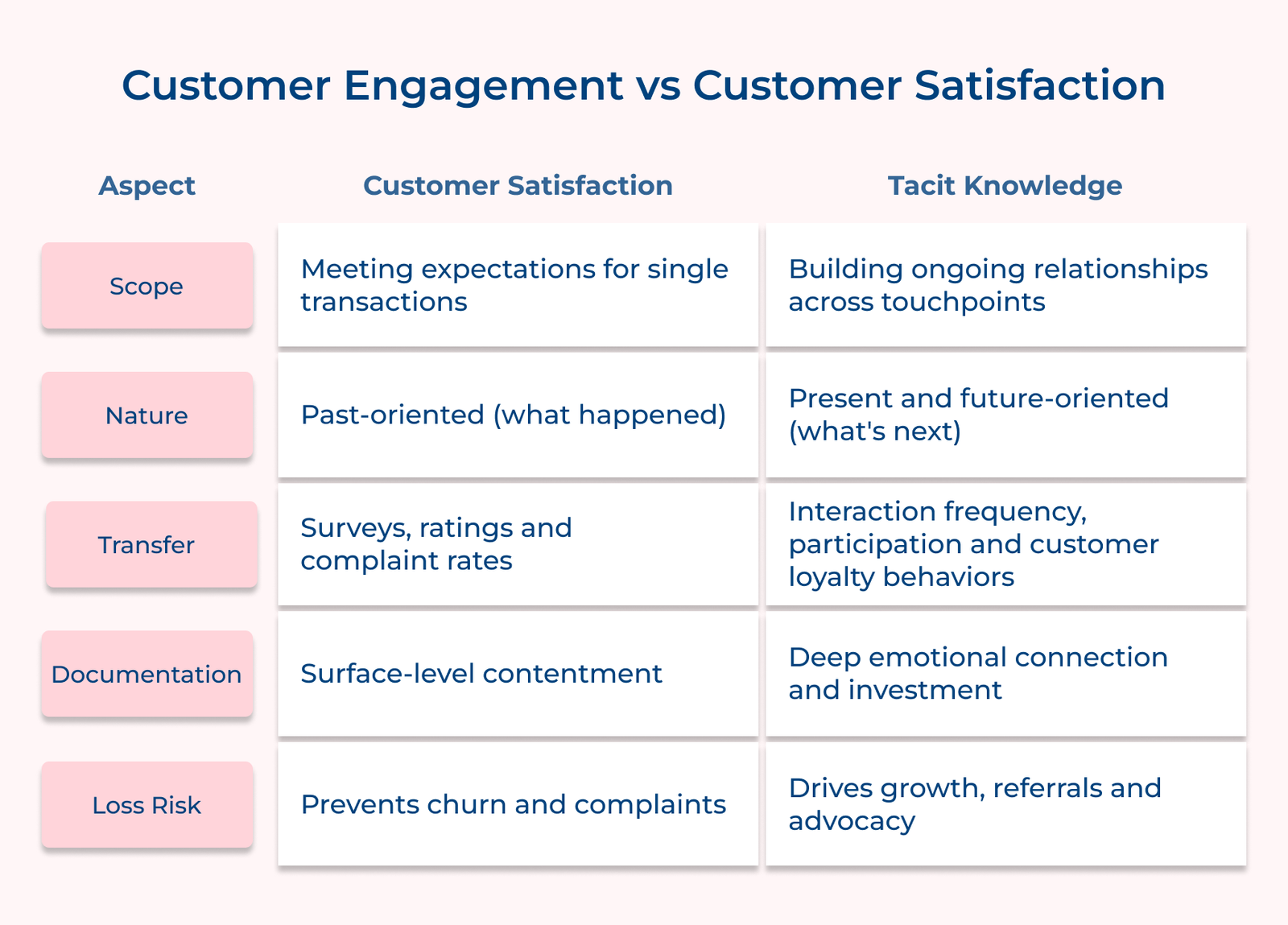
Customer satisfaction measures how customers feel immediately after a purchase or interaction. It looks at past experiences and checks if expectations were met. The focus stays on the moment and the specific transactions.
Customer engagement measures ongoing interactions and the strength of the relationship over time. It tracks how often customers connect with your brand and how involved they are beyond a single transaction.
Pro tips:
Customer satisfaction looks at past experiences to see if you delivered on promises. It measures if the customer feels their time and money were well spent. The assessment happens after the interaction ends.
Key questions:
Customer engagement focuses on current and future interactions, aiming to keep customers involved. It measures their willingness to continue the relationship and builds excitement for what comes next.
Actionable tips:
Customer satisfaction shows up in ratings and survey responses after a purchase or support interaction. Customers share contentment or disappointment based on the experience. The indicators are mostly passive and require prompting to collect.
Key takeaways:
Customer engagement shows through voluntary actions like social media interactions, forum participation or repeat visits. Customers actively seek your brand without reminders, demonstrating genuine interest and connection beyond satisfaction.
Best practices:
Customer satisfaction meets basic expectations, creating temporary neutral to positive feelings. The emotional response remains surface-level because customers received what they paid for. The feelings rarely extend beyond the immediate transaction.
Key questions:
Customer engagement builds deeper emotional bonds, connecting customers to your brand’s story. The relationships involve trust and affinity that go beyond individual purchases. Customers care about your success because they feel part of it.
Pro tips:
Customer satisfaction prevents negative outcomes like complaints and helps retain your existing customer base. It keeps people from actively exploring alternatives when their needs are met. The impact is protective, maintaining what you already have.
Let’s assume that an insurance company processes claims efficiently and earns high satisfaction scores. Customers stay because switching feels unnecessary, but the relationship lacks enthusiasm or growth potential.
Key ways:
Customer engagement creates positive outcomes like referrals and increased revenue through repeat purchases. Engaged customers actively seek ways to interact more frequently with your brand. The impact is growth-oriented, opening new opportunities and driving expansion.
Key takeaways:
Customer satisfaction comes from consistently delivering basic promises. Meeting expectations for quality and service typically earns acceptable scores. The standard focuses on doing what was advertised.
Key questions:
Customer engagement demands ongoing investment in creating value beyond the core product offering. You must continuously find new ways to connect and provide reasons for interaction. The bar rises constantly as you nurture deeper relationships.
Customer satisfaction produces passive loyalty. Customers stay because leaving feels unnecessary. They buy when the need arises, but rarely seek your brand actively. The relationship stays transactional without an emotional connection.
Key factors:
Customer engagement encourages active participation. Customers choose your brand even when easier alternatives exist. They initiate contact and seek opportunities to interact beyond purchases. The relationship becomes collaborative with genuine mutual investment.
Best practices:
Below are the strategies to enhance customer engagement and satisfaction. Let’s check them out in more detail.
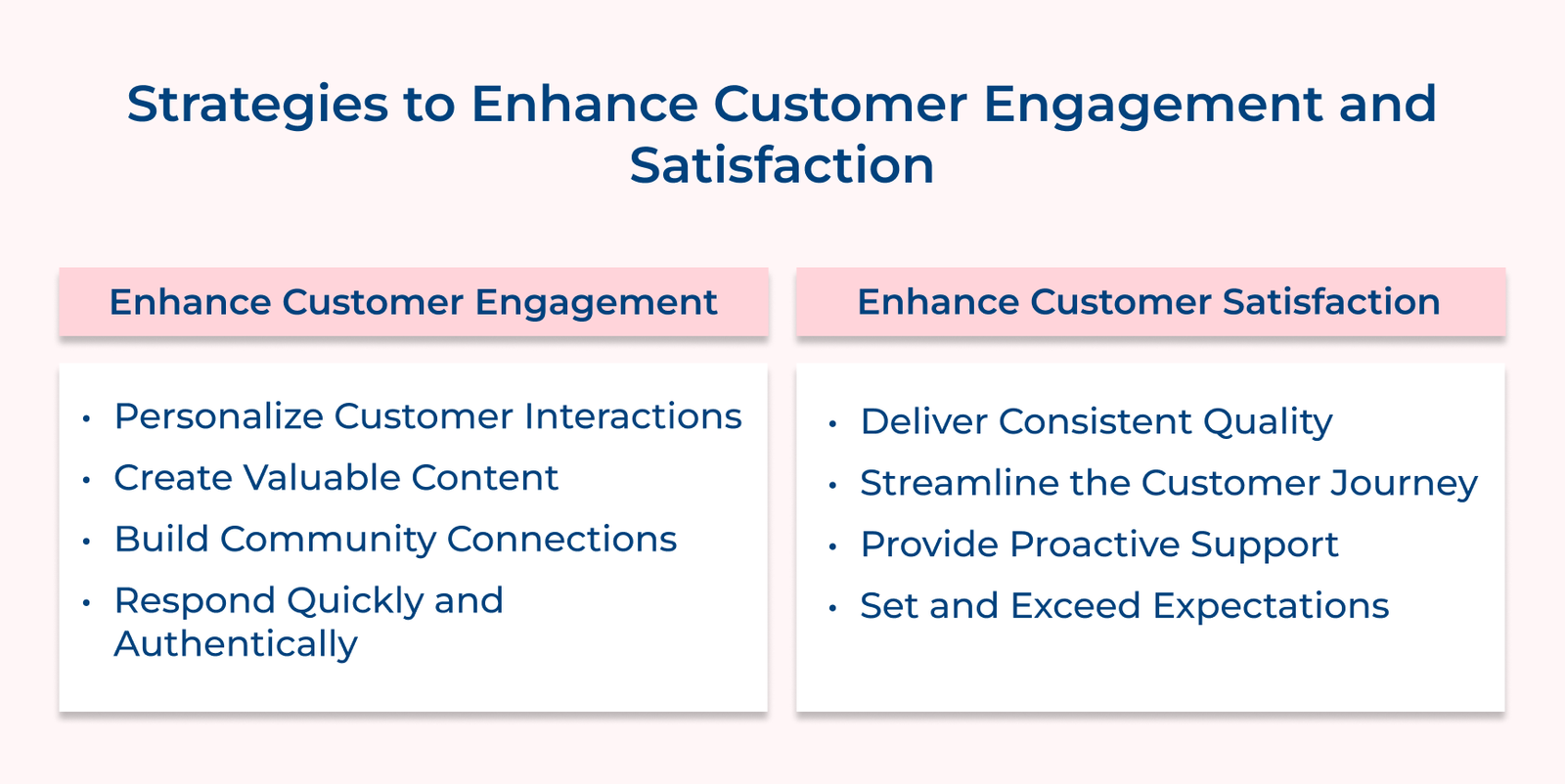
1. Personalize Customer Interactions
Engagement grows when you tailor communications to each customer’s preferences and past behavior. Use insights from their activity to deliver messages that feel relevant. Personalized outreach sparks real conversations, while generic messages get overlooked.
2. Create Valuable Content
Engagement strengthens when you consistently share content that informs, solves problems or entertains beyond selling products. Blogs, videos or guides that address real needs keep customers coming back. Value first naturally opens doors for sales.
3. Build Community Connections
Engagement deepens when customers connect through forums, groups or social media platforms. The communities create a sense of belonging that links emotionally to your brand. Encourage interaction and let customers become advocates.
4. Respond Quickly and Authentically
Engagement thrives when you reply promptly to comments and questions across all channels. Quick, genuine responses show that you listen and care about their input. Each interaction strengthens the relationship and builds trust.
1. Deliver Consistent Quality
Satisfaction comes when products and services perform exactly as promised every time. Reliability builds trust because customers know what to expect. Consistently meeting standards prevents disappointment and maintains positive feelings.
2. Streamline the Customer Journey
Satisfaction improves when buying and using your products feels simple and frustration-free. Remove unnecessary steps at checkout and make navigation intuitive across all platforms. A smooth experience shows respect for your customers’ time.
3. Provide Proactive Support
Satisfaction increases when problems are anticipated and addressed before customers need to complain. Share helpful tips after purchase and follow up to ensure everything works well. Proactive care signals genuine concern beyond the sale.
4. Set and Exceed Expectations
Satisfaction soars when you under-promise and over-deliver rather than creating unrealistic hopes. Be honest about capabilities and timelines, then surprise customers positively. Managing expectations properly prevents disappointment, while delighting creates loyalty.
Let’s go through the examples that highlight the difference between customer engagement and customer satisfaction, showing how each impacts long-term business success.
Nike
Nike engages customers through running apps and fitness communities that connect users daily. Members track workouts, share achievements and join challenges. The brand becomes part of their active lifestyle, extending beyond shoes.
Starbucks
Starbucks drives engagement with its rewards app, where customers earn stars and receive personalized offers. Gamified experiences encourage frequent visits, mobile ordering and trying seasonal drinks that create excitement.
Apple
Apple builds engagement through its seamless ecosystem across devices. Customers attend in-store classes and participate in creative online communities. The brand creates identity, belonging and loyalty that goes far beyond technology purchases.
Amazon
Amazon emphasizes satisfaction through fast, reliable delivery and hassle-free returns. Customers trust they will receive exactly what they ordered on time. A smooth, predictable experience prevents complaints and keeps business consistent.
Costco
Costco builds satisfaction with quality products at competitive prices and generous return policies. Members feel confident they get value and can return items easily. The approach reduces purchase anxiety and reinforces loyalty.
Toyota
Toyota delivers satisfaction through dependable vehicles that require minimal repairs over many years. Customers value reliability and low maintenance costs. Meeting the practical expectations consistently keeps buyers returning.
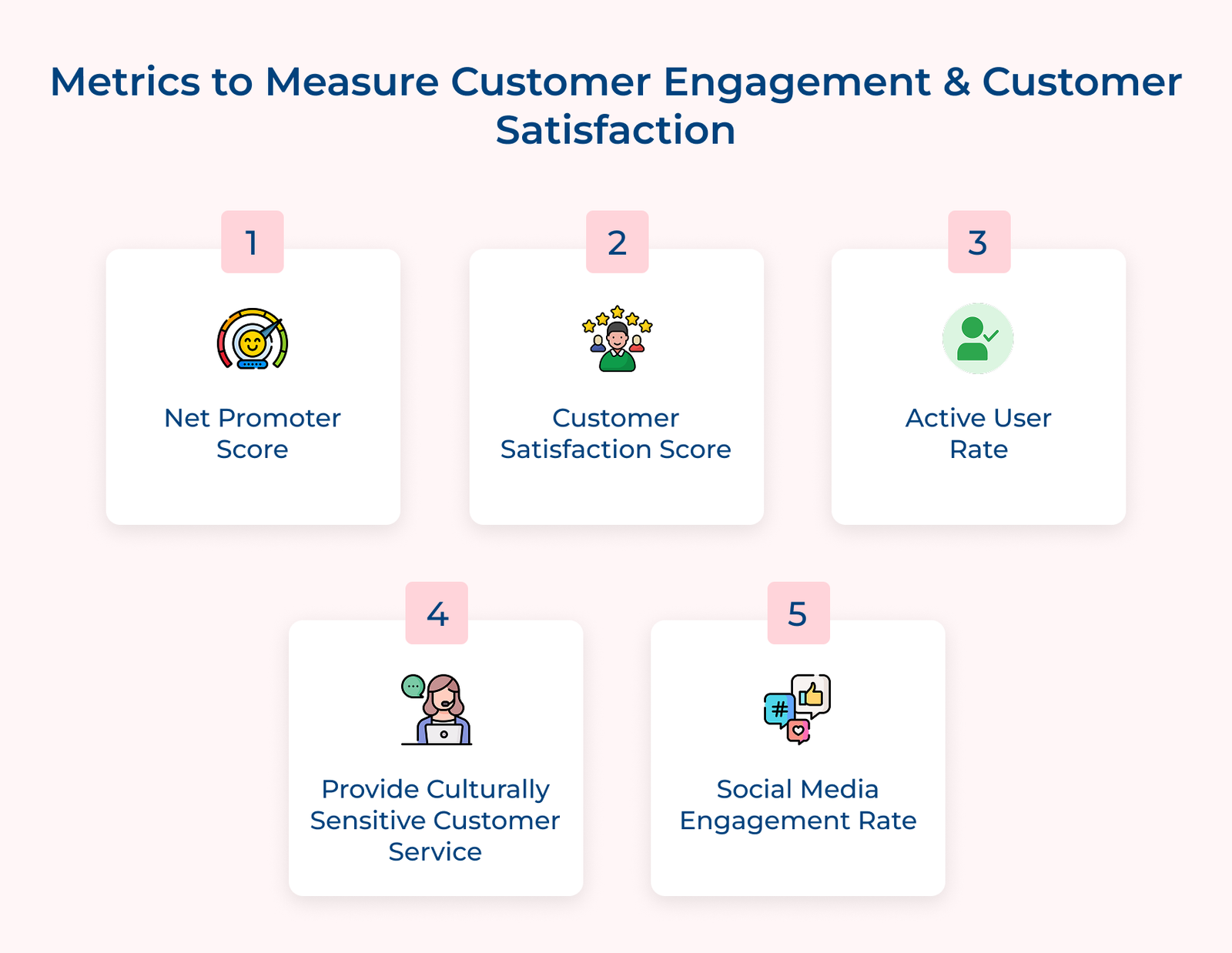
Check out the ways to measure customer engagement and satisfaction to understand how your audience interacts with your brand.
Key questions:
NPS measures both satisfaction and engagement by asking how likely customers are to recommend your brand. Promoters actively engage while detractors highlight areas needing attention. The single question reveals overall relationship health and predicts future growth.
CSAT measures satisfaction by having customers rate their experience after key interactions. The score shows if your expectations were met and helps pinpoint areas needing quick improvement.
The metric tracks how many customers consistently use your product or visit your platforms. High activity indicates strong engagement and ongoing relationship health. A drop in usage signals a need to re-engage customers before they disengage completely.
CLV connects satisfaction and engagement to revenue by calculating total earnings from a customer over time. Satisfied, engaged customers spend more and stay longer, directly linking experience to business profitability
The metric tracks likes and shares that demonstrate active participation with your brand content. High engagement rates show customers willingly interact beyond purchases or required communications. Monitor it to understand how compelling your content is to your audience.
Customer satisfaction keeps people from leaving, while engagement makes them actively choose your brand again and again. Both play important roles but serve distinct purposes in building lasting business success. Satisfaction lays the foundation and engagement becomes the engine that drives growth.
Focus on satisfaction to meet basic expectations and prevent customer loss through poor experiences. Then add engagement strategies that build emotional connections and encourage active participation. Combining both turns satisfied buyers into loyal advocates who support and promote your business.

Satisfaction acts as the foundation for engagement over time. Happy customers are more open to interacting and building deeper relationships. Engagement also strengthens satisfaction by creating emotional connections with your brand.
Both matter, but satisfaction comes first as the baseline for business success. Customers who feel disappointed cannot engage meaningfully. Once satisfaction is strong, focus on engagement to drive growth and advocacy.
Yes. Satisfaction only requires meeting expectations during specific transactions or interactions. A customer can be happy with a purchase, yet remain passive, leaving opportunities open for competitors.
Sustainable engagement rarely exists without satisfaction. Negative customer experiences eventually push customers away, even if they initially participate actively. Engagement without satisfaction is short-lived and can harm your reputation.
Meaningful, long-term engagement is impossible without satisfaction. Activity based on poor experiences creates critics rather than advocates. Temporary interactions quickly turn negative when the foundation of satisfaction is missing.
Grow Customer Relationships and stronger team collaboration with our range of products across the Conversational Engagement Suite.
Omnichannel Customer Support & Help Desk Software
AI Enabled Business Messaging and Chatbot Software
Sales Engagement & CRM Software
Call Center Software & Virtual Phone System
Product Marketing & Experience Platform
Customer Experience & Feedback Management Software

 What is Skills-based Routing? Benefits, Types & Strategies
Scroll to top
What is Skills-based Routing? Benefits, Types & Strategies
Scroll to top