How to Create a Customer Value Proposition? Components & Steps
Learn all you need to know about customer value proposition. Explore its benefits, plus simple steps to create one that clearly communicates your value and attracts the right customers.

Learn all you need to know about customer value proposition. Explore its benefits, plus simple steps to create one that clearly communicates your value and attracts the right customers.
Your product solves a real problem, yet the people who need it most keep scrolling past it. Why?
Markets have never been more crowded – the average buyer comes across hundreds of messages daily and attention has become the scarcest resource in any sales funnel. When your message fails to cut through that noise in the first few seconds, the opportunity is gone before the conversation even begins.
Brands with a strong value proposition enjoyed 76% growth over a decade. It makes it a must for you to know how to craft a customer value proposition that speaks directly to your target buyer, earns their attention and gives them a reason to stop and listen.
A customer value proposition refers to a clear statement that explains how your product solves a real problem. It tells people what they gain and why your product is worth their attention. A strong CVP connects what you offer to what your customers actually need. It removes confusion and gives people one clear reason to choose you instead of looking elsewhere.
Key objectives:
Let’s go through the key advantages of a customer value proposition and understand how it helps you attract the right customers.
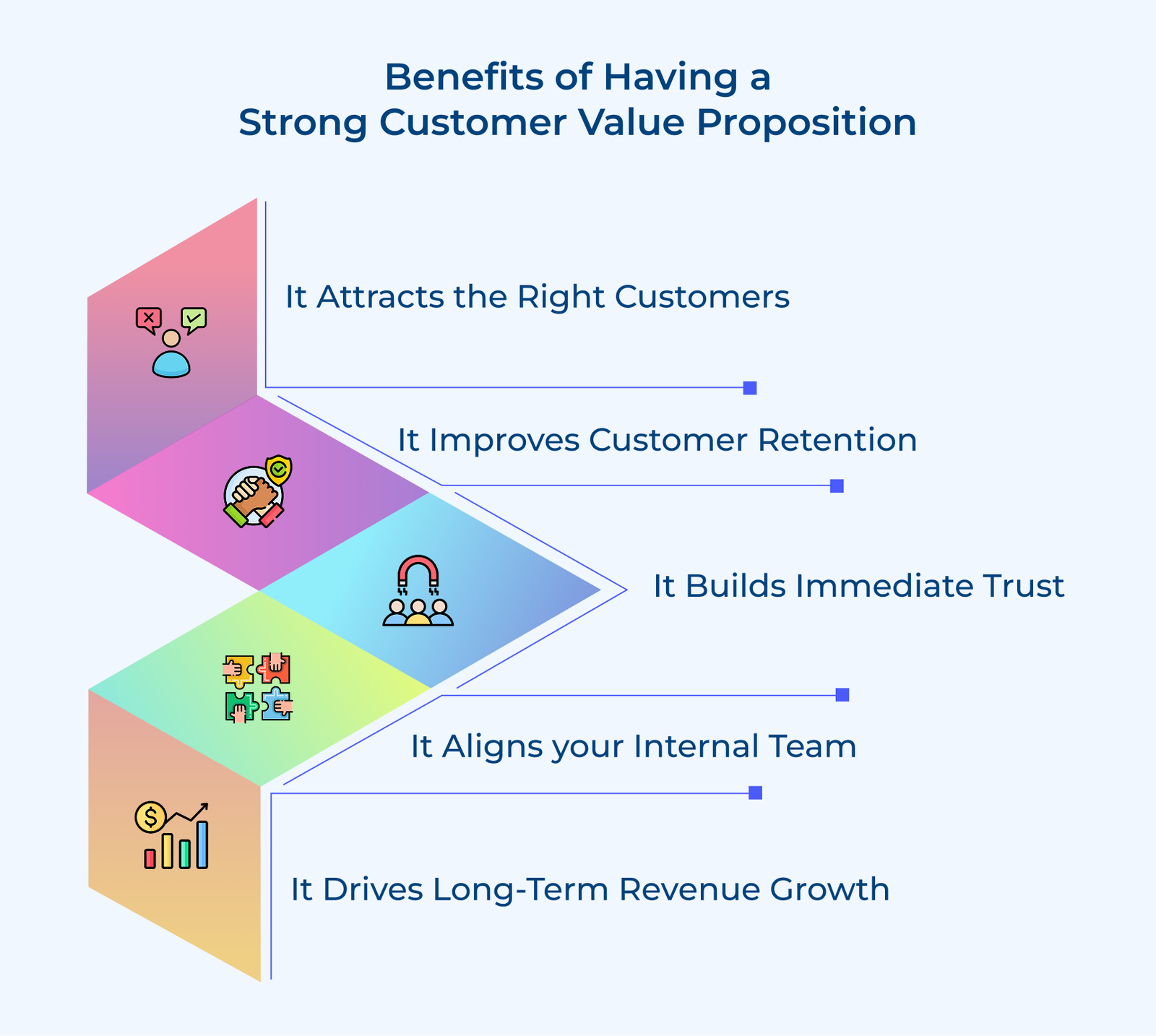
1. Attracts the Right Customers
A clear customer value proposition speaks to people who actually need your product. It draws in serious buyers and reduces the time spent on leads that go nowhere. It also makes your sales conversations more focused and easier to close.
2. Builds Immediate Trust
People don’t buy from businesses they don’t understand. A well-crafted CVP tells customers exactly what they’re getting and why it’s worth their money, which removes hesitation. It builds the kind of confidence that turns first-time visitors into paying customers.
3. Improves Customer Retention
Customers stay when their expectations match their experience. A strong CVP sets the right promise and helps you deliver on it, which keeps people coming back. It builds trust over time and turns satisfied customers into repeat buyers.
4. Aligns Your Internal Team
A strong CVP isn’t just for customers. It gives your sales, marketing and product teams a shared understanding of what the business stands for. When everyone is working from the same message, your communication stays consistent and your customer experience improves across every touchpoint.
5. Drives Long-term Revenue Growth
When your customer value proposition connects with the right people and keeps them loyal, the financial results compound over time. You spend less on acquisition, earn more from existing customers and build a reputation that brings new buyers in without always reaching for the ad budget.
The following are the elements of an effective customer value proposition. Let’s check them out in more detail.
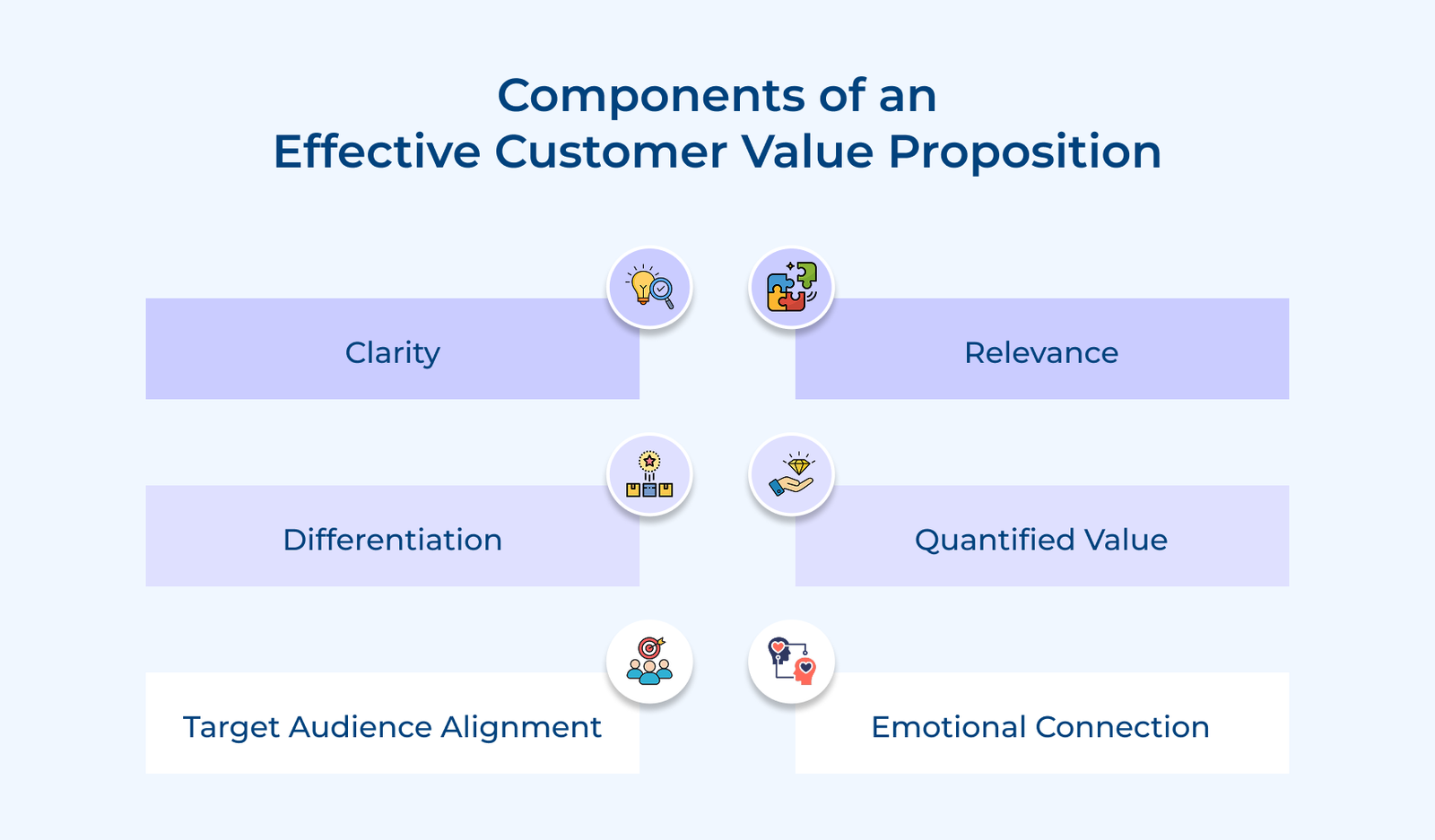
Your customer value proposition should explain what you offer in simple, direct language. If someone has to read it twice, the message is not clear enough. Think about it: can a person who knows nothing about your business understand your CVP in ten seconds? If not, simplify it.
Key ways:
Clear messaging also helps you attract the right people. A precise message makes it easier for the right audience to connect with you while others move on. Clarity does not mean sounding dull. You can be simple and still sound human and engaging. The goal is to be understood quickly and easily.
Relevance means your customer value proposition connects to something your customer is actually dealing with. A message aimed at everyone ends up connecting with no one. Start by paying attention to how customers talk about their problems.
Reviews, support conversations and social media comments reveal the exact words they use. Build your CVP around that language and it will feel more naturally relatable.
Key questions:
Many businesses focus too much on what their product does. Customers care about why it matters to them. Keep their problem at the center and your message will connect more easily. The shift makes your value feel clear and instantly relevant.
Differentiation is what sets your business apart from every other option in the market. Without it, your customer value proposition sounds like everyone else’s and gives customers no real reason to pay attention.
Try a simple check. Remove your company name from your CVP and replace it with a competitor. If it still fits, your message is too generic. Your CVP should clearly belong to you and no one else.
Pro tips:
Strong differentiation does not mean being unique. It means being clearly better or different in the one area that your customer cares about most. It makes your message easier to remember and easier to choose.
Saying your product is great is easy. Showing it with numbers builds confidence. Quantified value turns a simple claim into something people can trust. It gives customers a clear reason to believe what you are saying.
Numbers do something that words alone can’t. They give customers a way to measure what they’re getting before they spend a cent. Whether it’s time saved, money reduced or results improved, a specific figure makes your customer value proposition feel real and trustworthy.
Actionable tip:
Lack of data should not stop you. Start small and gather insights from early users. Track results, even rough ones and build from there. You do not need perfect numbers. Honest estimates based on real experience build more trust than polished claims with no proof behind them.
An effective value proposition that tries to speak to everyone ends up connecting with no one. The strongest CVPs focus on one clear type of customer, which makes the message feel more personal and relevant.
Key questions:
Knowing your audience shapes everything that follows. Your tone, messaging and communication style become more natural or consistent when you are clear about who you are speaking to.
Facts and features may explain your product, but emotions drive action. A strong CVP connects with how your customer wants to feel, not just what they get. The connection makes your message more memorable and easier to act on.
Think about the feeling your product creates. Relief, confidence, excitement or peace of mind. Build your message around that emotion so customers can see themselves in it. It makes your message feel more personal and easier to connect with.
Key takeaways:
Emotional connection isn’t about being dramatic or sentimental. It’s about showing your customer that you see them, understand their situation and genuinely care about helping them get to a better place. The connection is what turns a customer into someone who tells others about you.
Check out the essential steps to craft a CVP that speaks volumes, capturing your brand’s essence and ensuring your customers understand exactly why they should choose you.
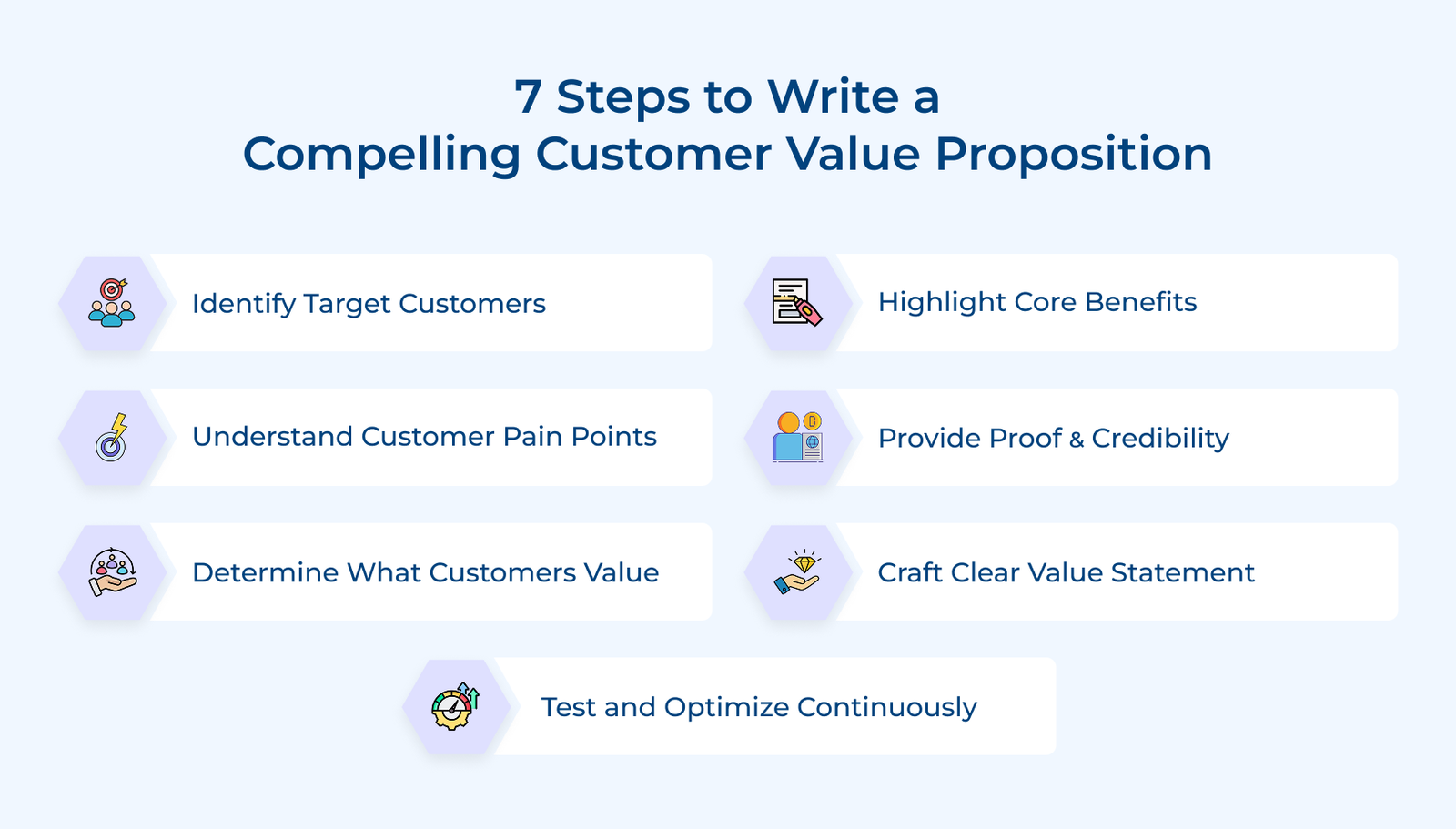
Knowing who you are writing for is the starting point of a strong customer value proposition. Without a clear picture of your customer, your message will feel broad and easy to ignore. A clear focus helps you speak in a way that feels relevant and meaningful.
A good CVP comes from understanding who needs your product the most. Focus on real people and real situations instead of trying to appeal to everyone. The clarity makes your message more direct and easier to connect with.
Pro tips:
Understanding what frustrates your customer gives your CVP real meaning. A customer value proposition without a clear problem sounds like a description and descriptions do not drive action. Once you know your customer, step into their situation.
Key questions:
The questions shift your focus away from your product and toward your customer. Clear answers help you write with purpose instead of guessing. Look for patterns in the responses. The pain point that shows up most often and creates the most difficulty is the one your CVP should focus on.
Knowing the problem is important, but understanding what your customer wants to achieve gives your CVP real direction. People care about outcomes, not just fixing an issue. It helps you position your product as a way to move them closer to their goal.
Start by listening to the language your customers use when they describe success. Be its time saving time, feeling less stressed or growing their business, the words they choose tell you exactly what to build your CVP message around.
Actionable tips:
Features explain what your product and services do. Benefits show why it matters. A strong customer value proposition focuses on what the customer gains, which is what grabs attention. It makes your message clearer and easier for customers to relate to.
Focus on the outcome your customer actually gets
Your customer is not buying a product. They are buying the result that the product creates for them. When your CVP speaks directly to that result, it connects with people on a level that a list of features never will.
Connect each benefit directly to a pain point
Every benefit you highlight should be the answer to a frustration your customer already has. When the benefit and the pain point are clearly linked, your customer value proposition feels less like a pitch and more like a solution that was built specifically for them.
Lead with the benefit that matters most
Highlight the benefit your customer cares about the most right at the start. A strong opening makes people more likely to keep reading and understand your value. It also helps your message stand out in a crowded market.
A value proposition without proof feels like a claim. People trust what they can see and verify. Real evidence builds confidence and makes your message more believable. It gives customers a reason to take you seriously and move forward.
Best practices:
Start small and be honest. Even one strong testimonial from an early customer or a modest result from a pilot test is enough to begin building credibility. The key is to use what you have and keep collecting as you grow.
This is where everything comes together into one simple message. A long or confusing customer value proposition will not hold attention, no matter how strong the research behind it is. A clear statement makes your value easy to grasp at a glance.
Key factors:
A customer value proposition is never truly finished. Markets shift, customer needs evolve and what worked six months ago may not be hitting the same way today. Treating your CVP as a living document is what keeps it relevant and effective over time.
Testing gives you real-world signals that no amount of internal brainstorming can replace. Running your CVP in front of actual customers through landing pages, emails or ads shows you exactly how people respond and where the message needs to be stronger.
Key takeaways:
Below are four examples that show exactly how a customer value proposition is done. Let’s check them out in more detail.
1. Nike — “Just Do It.”
Nike’s customer value proposition is built on performance and self-belief. It goes beyond selling products and focuses on helping people push their limits or stay consistent in their journey. It makes the brand feel more personal and inspiring to its audience.
Nike’s emotional connection with its audience through storytelling around personal perseverance encourages brand loyalty because customers feel aligned with its mission of empowerment. The emotional pull is what keeps people coming back, even when cheaper alternatives exist.
2. Spotify — “Music for Everyone.”
Spotify’s CVP focuses on a personalized and easy listening experience, with a free entry point as well as premium features that enhance how users enjoy music. The genius is in making the entry point free so millions of people experience the value before paying a cent.
Spotify shifted its proposition from simply streaming music to becoming a personalized music experience. It uses user data to build features like Discover Weekly and Spotify Wrapped that create genuine loyalty. Customers can get real fomo in even thinking about switching platforms.
3. Apple — “It Just Works.”
Apple’s value comes from simplicity and consistency. Its products work together smoothly, creating a connected experience across devices. It makes everyday use more seamless and reliable for customers.
Apple’s value lies in the seamless integration of hardware and software. It offers a user experience that competitors struggle to match, keeping customers deeply invested in staying within the Apple ecosystem.
A strong customer value proposition is not something you set once and forget. It is an ongoing commitment to truly understanding your customers and consistently delivering what they actually need from you every single time they show up.
When your CVP is clear and consistent, trust builds faster. Customers stay longer and share their experience with others without being asked. It creates steady growth without relying heavily on constant promotion.

A CVP in marketing is a clear statement that tells your target audience exactly why your product solves their problem better than anything else available. It connects what your business offers directly to what your customer genuinely needs.
A customer value proposition explains the overall value your business delivers. A USP focuses on one specific feature that sets your product apart. Together they work, but they serve two very different purposes in your strategy.
A CVP simply answers three things: the problem, the solution and the reason to choose you. It helps customers understand your value quickly. The clarity makes it easier for them to take action.
A good CVP is clear, specific and honest. It speaks directly to a real customer problem, explains the exact benefit they receive and gives them a strong reason to choose you with confidence.
A strong CVP attracts the right customers, builds trust and improves long-term retention. It gives your entire team a clear and shared understanding of what your business truly stands for or who it genuinely serves.

Grow Customer Relationships and stronger team collaboration with our range of products across the Conversational Engagement Suite.
Omnichannel Customer Support & Help Desk Software
AI Enabled Business Messaging and Chatbot Software
Sales Engagement & CRM Software
Call Center Software & Virtual Phone System
Product Marketing & Experience Platform
Customer Experience & Feedback Management Software

 A Guide on Sales Burnout: Benefits, Signs and Steps
Scroll to top
A Guide on Sales Burnout: Benefits, Signs and Steps
Scroll to top