Call Center Burnout: Differences, Signs & Tips in 2026
Call center burnout affects performance, morale and retention. The blog covers practical ways to reduce stress, support agents and build a healthier, more sustainable work environment.

Call center burnout affects performance, morale and retention. The blog covers practical ways to reduce stress, support agents and build a healthier, more sustainable work environment.
An agent who has taken their two-hundredth call of the week sounds fine on the surface. The words come out just right, the script seems on point and the ticket does get closed. But something critical is already gone and most call center leaders only notice when resignation letters start stacking up.
Turnover in contact centers averages 30–45% annually, making it one of the most expensive workforce problems in any service-driven business. Losing a trained agent costs roughly half of their annual salary when recruiting, onboarding and lost productivity are factored in together.
Below we’ll walk you through how call center burnout actually develops on the call center floor, which early signals leaders consistently miss and what structural responses reduce attrition before it compounds.
Call center burnout refers to a state of ongoing emotional and physical exhaustion caused by sustained pressure or high call volumes. It changes how an agent feels about the job, the team and their own ability to perform.
Call center fatigue happens after a long shift. The agent feels tired but recovers with rest and is ready to return the next day. Burnout runs deeper and builds over time. Rest alone does not fix it. The call center agents start losing interest in the work, feel disconnected from customers and question staying in the role.
Key factors:
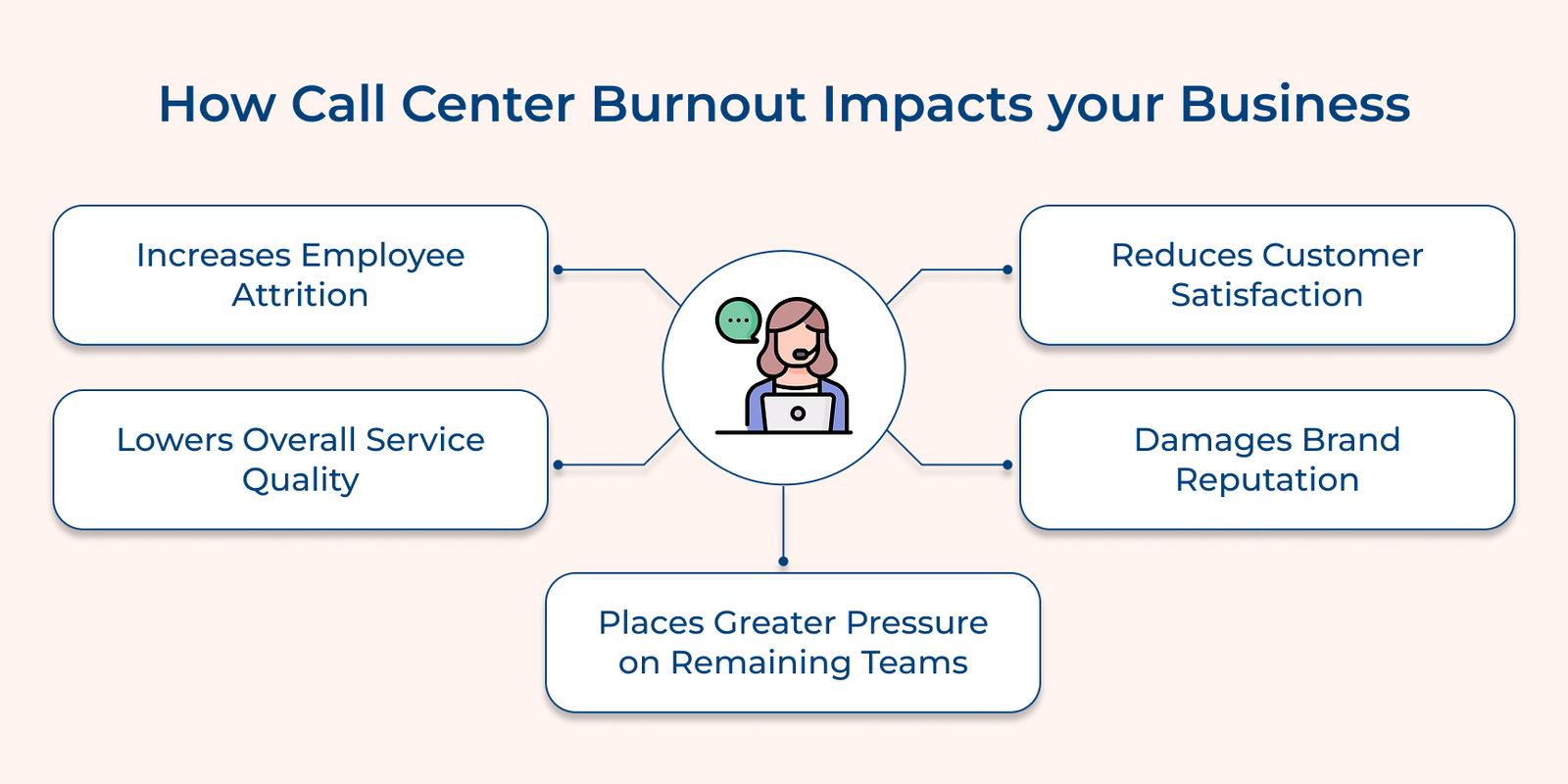
Let’s go through the key ways call center burnout affects your business, from agent performance to retention challenges.
1. Customer Satisfaction Takes a Direct Hit
Burned-out agents struggle to stay present and engaged during calls. Customers pick up on that disconnect quickly, which affects trust and overall experience. Even small lapses in tone or attention can leave a lasting negative impression.
2. Attrition Rates Climb at a Costly Pace
Replacing a single call center agent costs anywhere between 50% to 200% of their annual salary when you factor in recruiting and training. High contact center burnout means a high turnover rate and that creates a revolving door that drains budget as well as team morale simultaneously.
3. Quality of Work Drops Across the Board
Exhaustion makes it harder to stay focused and consistent. That drop in quality shows up in your QA scores, your escalation rates and eventually in your customer retention numbers. Over time, these patterns make it harder to maintain a reliable service standard.
4. Remaining Team Members Carry an Unfair Load
When burned-out call center agents quit or go on leave, the workload shifts onto whoever stays behind. That extra pressure accelerates call center burnout in previously healthy team members and the cycle repeats itself with damaging momentum.
5. Your Brand Reputation Suffers Silently
Unhappy customers do not always complain directly; they leave quietly and share their experience on review platforms. One consistently poor service pattern driven by agent burnout can chip away at years of brand-building efforts.
The following are the key signs of call center burnout that help you identify early warning signals and take action before it starts affecting performance.
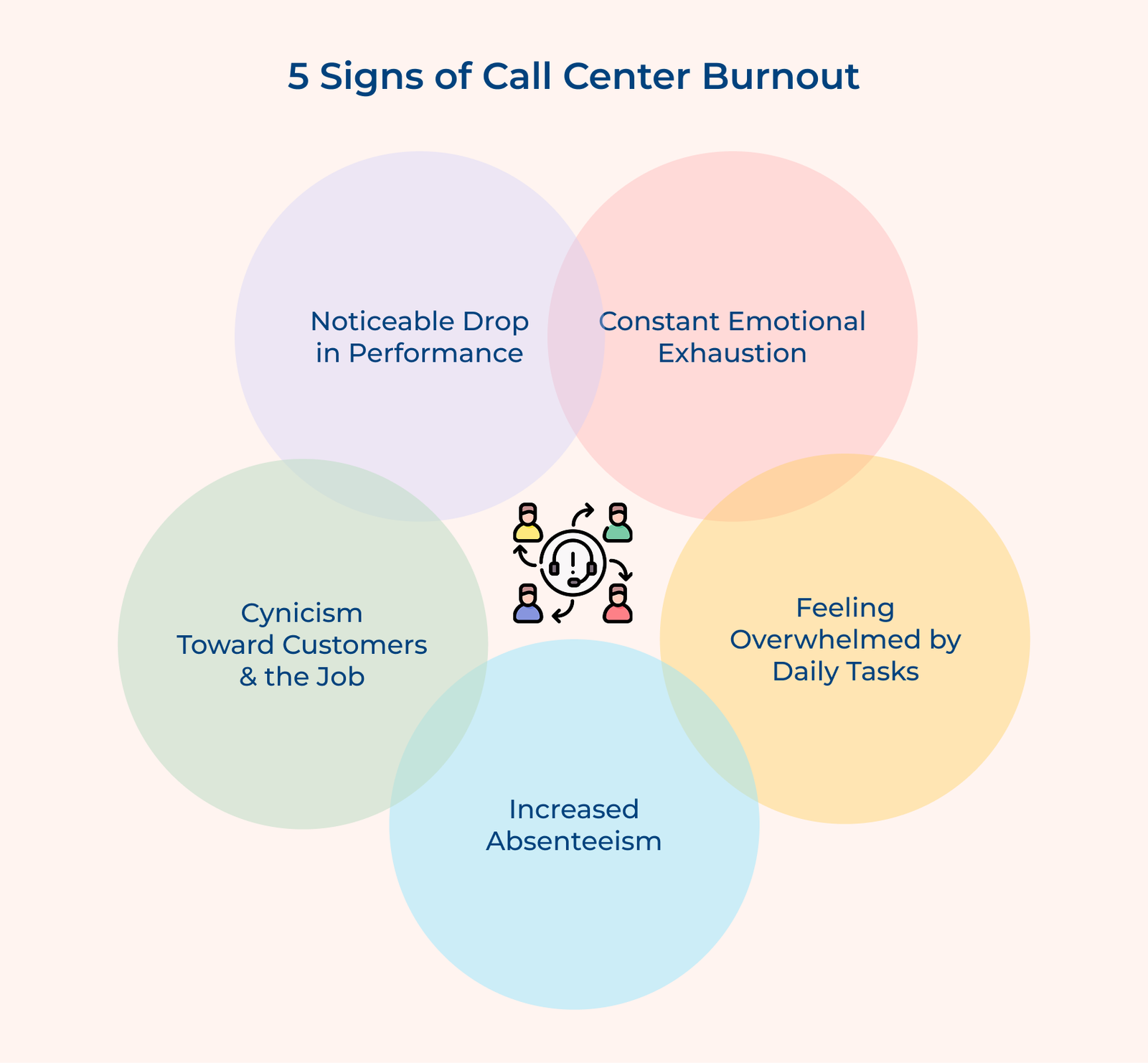
Emotional exhaustion shows up when an agent starts the day already drained and unmotivated. The feeling does not ease after breaks and slowly creates distance from the work and the team. Over time, it becomes harder for them to stay engaged even during simple interactions.
Key patterns:
A reliable agent begins missing targets, skipping follow-ups and struggling through calls that once felt easy. It reflects reduced mental capacity rather than a lack of effort or skill. The change often happens gradually and can go unnoticed until performance drops significantly.
Logging call notes or updating CRM fields starts feeling like an impossible mountain rather than a simple end-of-call routine. The workload itself has not changed, but the agent’s internal capacity to process and handle it has quietly collapsed under the weight of prolonged stress.
Key signs:
Burned-out agents begin taking more unplanned leave as their energy drops. Attendance becomes irregular and adds pressure on others who need to cover the workload. It often creates a ripple effect that strains the entire team.
A shift in attitude becomes visible when agents start reacting negatively to customers and internal processes. It affects both service quality and team environment. Over time, the negativity can influence others and impact overall team morale.
Key signals:
Below are the practical tips to help prevent contact center burnout, ensuring both personal fulfillment and professional success in the challenging industry.
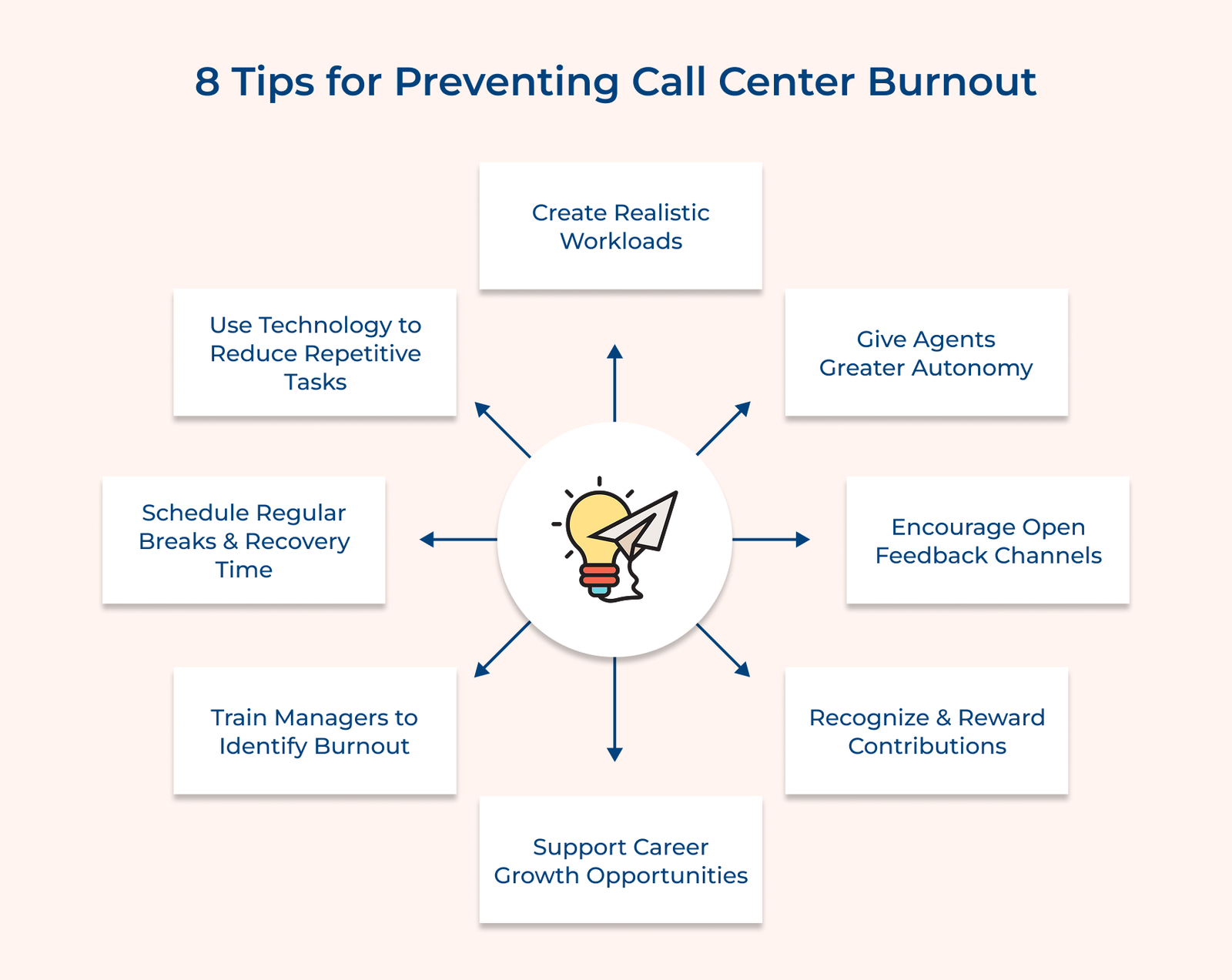
Unmanageable workloads are one of the main reasons agents burn out. Balanced workloads help agents stay consistent and remain in their roles significantly longer. They also make it easier for agents to maintain quality across every interaction.
Key ways:
Strict scripts and constant monitoring often make the calls feel robotic. Giving agents some control over how they handle conversations keeps them more involved and reduces burnout. Allow flexibility in how scripts are used during calls. Agents should have room to adjust language and tone based on the situation instead of following fixed lines.
Agents who can adapt conversations sound more natural and stay mentally engaged. Customers also respond better to interactions that feel real and not scripted. It creates a smoother experience for both sides during the call.
Pro tips:
Give agents the ability to resolve small issues on their own. Quick decisions reduce delays and make the interaction smoother for both sides. It also builds confidence and reduces dependency on constant approvals.
Key ways:
Agents who feel unheard often disengage quickly. Open feedback channels help managers understand issues early and respond before they grow. It creates a stronger connection between agents and leadership over time.
Start with structured weekly one-on-one check-ins with every agent. The sessions should focus on honest conversations and not just performance updates. A one on one should feel like a safe space where agents can speak openly. Regular check-ins give managers a clear view of stress levels and daily challenges.
Actionable tips:
Making feedback a two-way street separates managers who prevent contact center burnout from those who only react after the damage is done. When a telecom team leader started collecting agent feedback on scripts monthly, stress levels dropped and engagement improved within just a few weeks.
Key questions:
Act on feedback in a visible way. When agents see changes happening, they are more likely to continue sharing and stay engaged. It also builds trust that their input leads to real improvements on the floor.
Recognition plays a direct role in reducing burnout. Agents who feel noticed for their effort stay more connected to their work even during demanding periods. It also reinforces a sense of purpose and encourages them to stay consistent.
Celebrating small wins beyond just hitting metrics
Focusing only on numbers makes recognition feel limited. Acknowledging effort, like handling a difficult call with patience, helps build steady motivation that survives beyond the next target cycle.
Tie recognition to behavior and not just numbers
An agent who manages a difficult interaction calmly deserves credit even without perfect scores. Highlighting the right behavior encourages consistency in how work is done. It also sets a clear example for others on the team.
Make appreciation a regular part of daily work
Recognition does not need a formal setup to be effective. A quick acknowledgment during the day can have a stronger impact than delayed rewards. It helps agents feel valued in real time and keeps motivation steady.
Agents without a clear path forward often lose motivation long before they resign. Career growth is not an added benefit; it is one of the strongest ways to reduce burnout and improve retention.
Key questions:
The questions highlight gaps that often go unnoticed until disengagement becomes visible. Without clear answers, any growth effort feels incomplete to agents. A structured path gives agents a reason to stay committed during difficult periods. Clear progress builds confidence and strengthens long-term engagement.
Best practices:
Managers who miss early call center burnout signals often notice the problem only after performance drops or resignations begin. Early awareness is what keeps teams stable under pressure.
Most managers focus on targets and miss subtle behavior changes that appear much earlier. Call center burnout shows up in tone, energy and participation before it affects numbers. Noticing the early signs can help prevent deeper performance and retention issues later.
Key signs:
Managers often struggle to apply it in real time due to heavy workloads and constant operational pressure. Adding short burnout check-ins into existing meetings makes it easier to stay consistent without adding extra tasks.
Agents handling continuous back-to-back calls without pause are not being set up for success. When there’s no recovery time, performance drops and burnout builds faster than most teams realize. Over time, even small breaks can make a noticeable difference in focus and consistency.
Key methods:
Build buffer time into shift planning: Leaving small gaps in schedules gives agents space to reset during the day. Even short breaks between tasks help maintain focus and stability.
Repetitive tasks quietly drain agents more than most leaders realize. When tools handle routine work, agents can focus more on real conversations that require attention and judgment. The shift also helps improve both accuracy and overall job satisfaction.
Key features:
Does technology reduce burnout or simply shift pressure in a different form? The outcome depends on how it is used and whether it actually removes workload instead of adding complexity.
Key technologies:
Let’s go through the proven ways to address burnout head-on and rebuild a healthier floor culture.
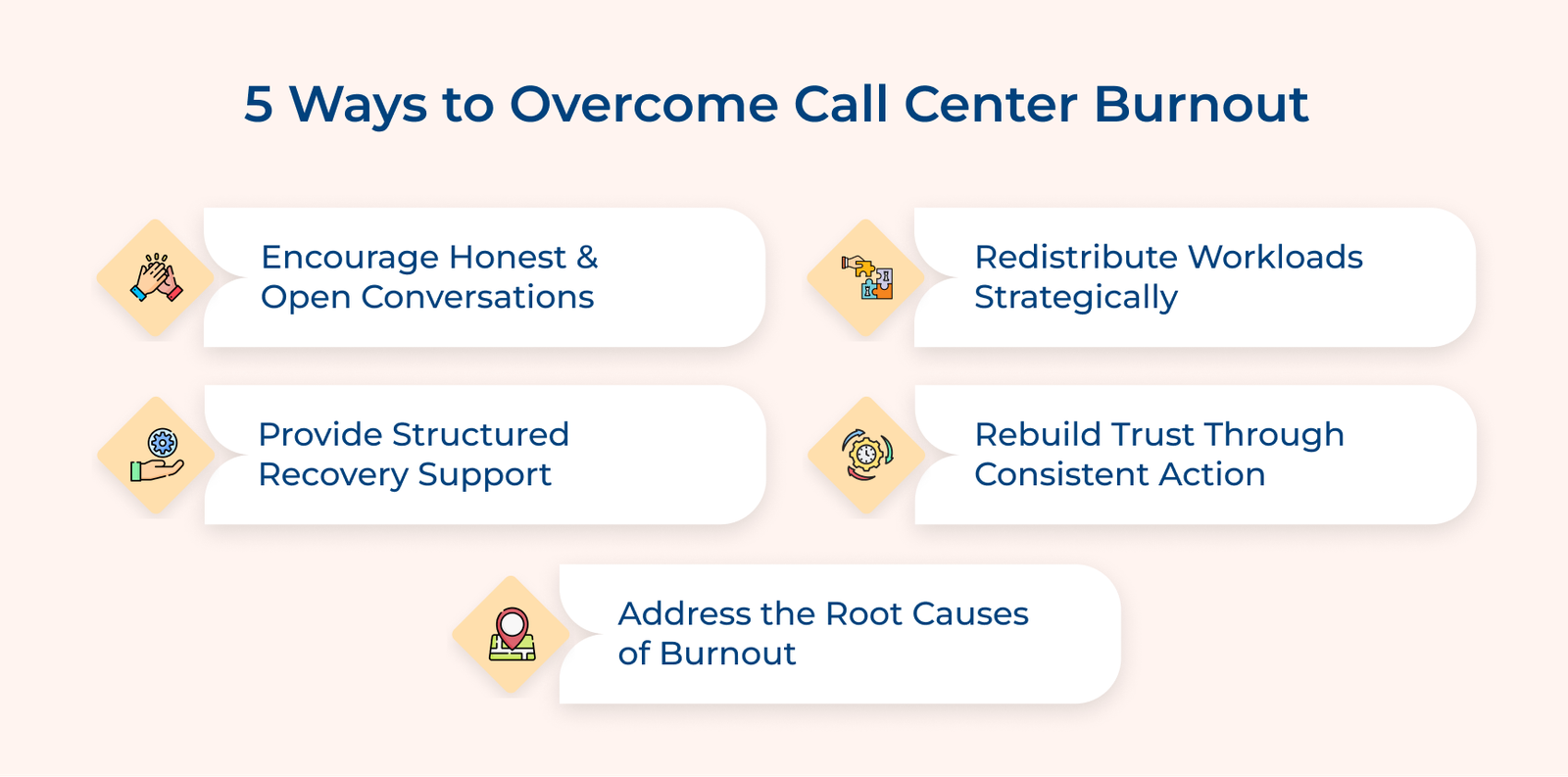
Have Honest Conversations Before Assumptions Take Over
Burned-out agents often stay silent even when they are struggling. The exhaustion makes it harder for them to speak up, which is why managers need to start the conversation early. Early check-ins can uncover issues before they affect performance or lead to resignation.
Temporarily Redistribute Workload with Intention
When an agent is visibly burned out, continuing to load them with the same call volume accelerates the damage rather than managing it. Temporarily redistributing their workload while they recover sends a clear signal that the organization values people over short-term productivity numbers.
Offer Structured Recovery Customer Service, Not Just Time Off
Time off alone does not always solve burnout. A clear return plan and gradual reintroduction of tasks make recovery more stable. It also helps agents ease back into their role without feeling overwhelmed.
Rebuild Trust Through Consistent and Visible Action
Burned-out agents have usually lost trust in the system long before burnout became visible to their manager. Rebuilding that trust requires visible changes in how work is managed day to day. Small, consistent improvements in daily operations help restore confidence over time.
Reassess the Root Cause Before Declaring Recovery
Returning an agent to work does not mean the issue is resolved. The conditions that led to burnout need to be reviewed carefully. Looking at workload patterns, team structure and management approach helps prevent the same problem from repeating.
Call center burnout does not resolve on its own. It builds quietly over time until strong agents leave and customer experience starts to decline. High-performing teams are not defined by aggressive targets alone. They are defined by leaders who pay attention to workload, customer service and agent wellbeing.
Building a burnout-resistant floor requires honest workload structures, managers trained to spot early signals and a culture where agents feel genuinely valued beyond their metrics. When the foundations are in place, burnout stops being an inevitable outcome and starts becoming a problem your floor is actually equipped to prevent.

Call centers combine high call volumes, emotional conversations and strict performance targets in one place. It leaves very little space for recovery during or between shifts, which makes burnout a regular pattern rather than an exception.
Emotional exhaustion is usually the first clear sign. It is often followed by lower call quality and a more negative or detached attitude toward customers and work. Over time, the shift becomes noticeable across both performance and team interactions.
Burned-out agents struggle to stay focused during complex customer interactions. It leads to longer handling times, lower resolution rates and inconsistent service quality across calls. The patterns also create extra pressure on the rest of the team handling similar workloads.
Continuous workload without enough recovery time is the most common trigger. When that overloading is combined with poor management support and zero career growth visibility, burnout moves from likely to inevitable.
Managers who track workload closely, hold regular one-on-one conversations and respond to feedback in a visible way reduce burnout risk significantly. Strong day-to-day leadership often decides how stable and engaged a team remains.
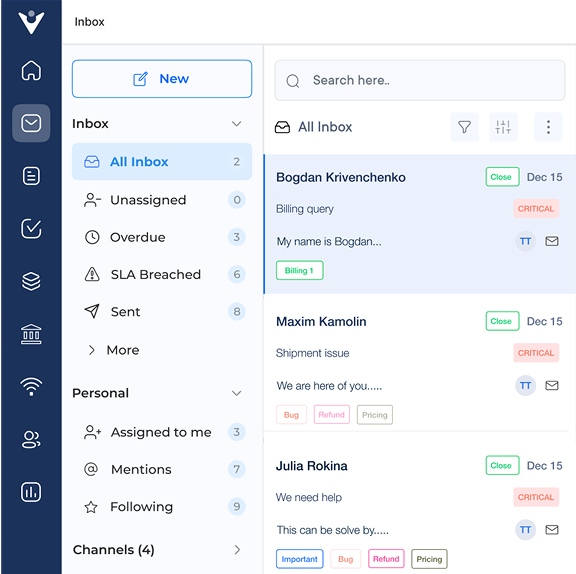
Grow Customer Relationships and stronger team collaboration with our range of products across the Conversational Engagement Suite.
Omnichannel Customer Support & Help Desk Software
AI Enabled Business Messaging and Chatbot Software
Sales Engagement & CRM Software
Call Center Software & Virtual Phone System
Product Marketing & Experience Platform
Customer Experience & Feedback Management Software

 What is Audience Engagement? Types, Strategies & Tips in 2026
Scroll to top
What is Audience Engagement? Types, Strategies & Tips in 2026
Scroll to top