Social Media Chatbots: Tips, Trends and Implementation
Discover how social media chatbots help businesses automate customer conversations, improve response times and increase engagement.
Discover how social media chatbots help businesses automate customer conversations, improve response times and increase engagement.
Ever notice your support team answering the same questions again and again? That repetition is often a sign it’s time to automate routine conversations. It is where social media chatbots come into the picture. They are AI-powered tools that manage customer conversations across platforms without requiring a human agent for every message.
Many businesses now use them to resolve up to 80% of routine queries in real time, giving support teams more time to handle complex issues. Below, we’ll understand how social chatbots work, where they add the most value and the role they play across customer support, engagement or sales.
Social media chatbots refer to AI-driven tools that interact with customers on platforms like Instagram, Facebook Messenger and WhatsApp. They answer questions, resolve common issues and keep conversations moving without requiring a human agent for every message.
Most of the chatbots use natural language processing to understand what customers are trying to say instead of relying only on specific keywords. It makes conversations feel more natural and helps deliver more accurate responses.
Key objectives:
Let’s go through the key benefits of social media AI chatbots and see how it helps businesses improve overall customer experience.
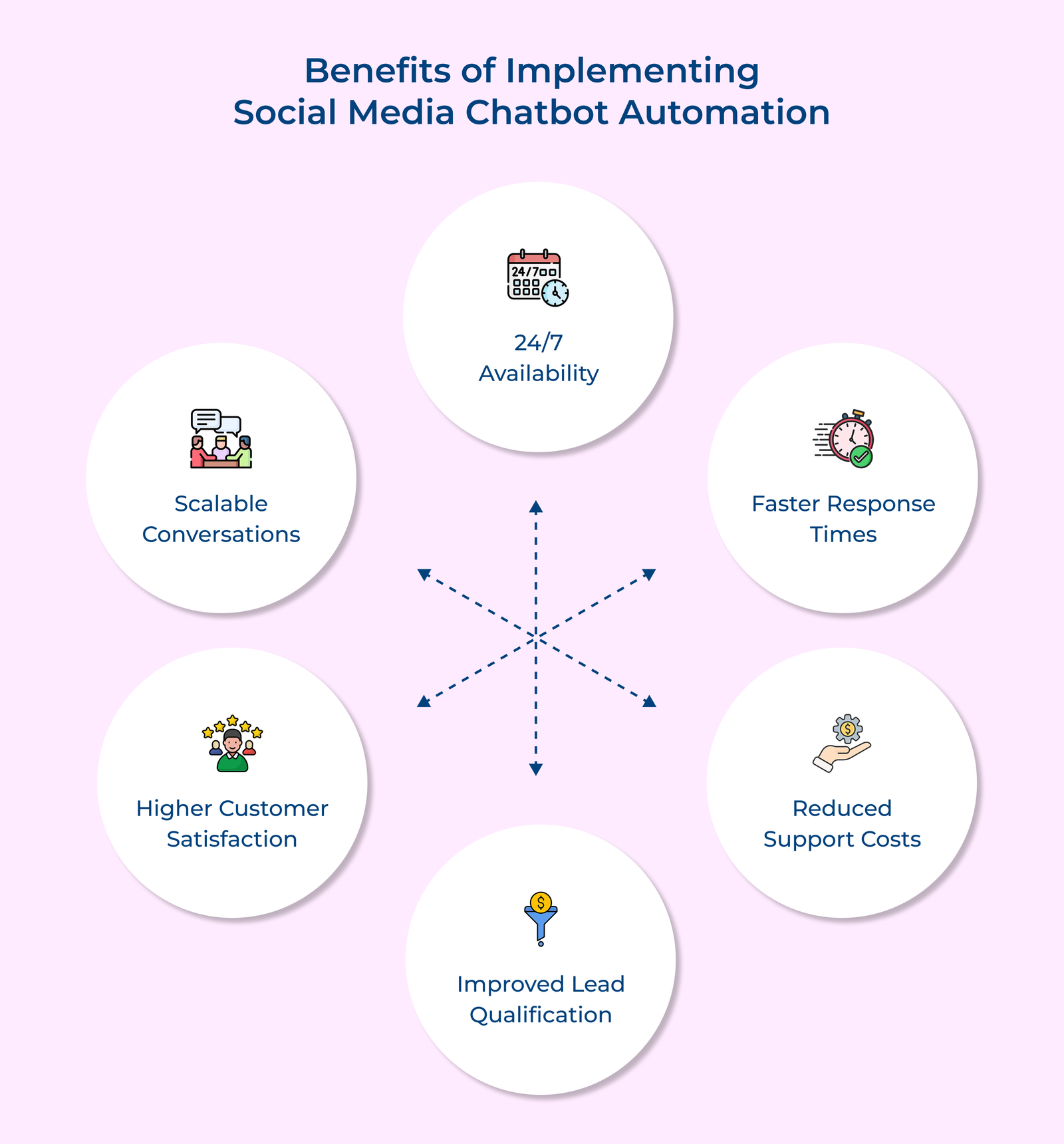
24/7 Availability
Probably the first benefit businesses notice after automation goes live, especially when customers reach out from different time zones. Social media chatbots provide quick and consistent responses at any hour. A customer messaging at 2 AM receives the same reliable support as someone reaching out in the afternoon and that consistency helps build trust over time.
Faster Response Times
Follow close behind, since nobody wants to wait 20 minutes for an answer to a simple question. Automation cuts that wait down to seconds, which matters most during peak hours when human queues normally back up.
Reduced Support Costs
Support costs decrease when routine questions no longer take up valuable agent time. Social chatbots handle repetitive conversations automatically, allowing support teams to focus on issues that need human attention.
Improved Lead Qualification
Not every customer who starts a conversation is ready to make a purchase. The chatbots ask qualifying questions early, helping businesses identify serious leads before involving the sales team.
Higher Customer Satisfaction
Customers appreciate quick, accurate responses that solve problems without unnecessary back and forth. Better support experiences encourage customers to return and continue engaging with the brand.
Scalable Conversations
Busy periods can generate hundreds of customer conversations at once. Well-built social media chatbots manage that volume without dropping quality, something manual teams can’t replicate.
The following are the practical social media chatbot tips that can help you improve customer conversations and get more value from your chatbot over time.
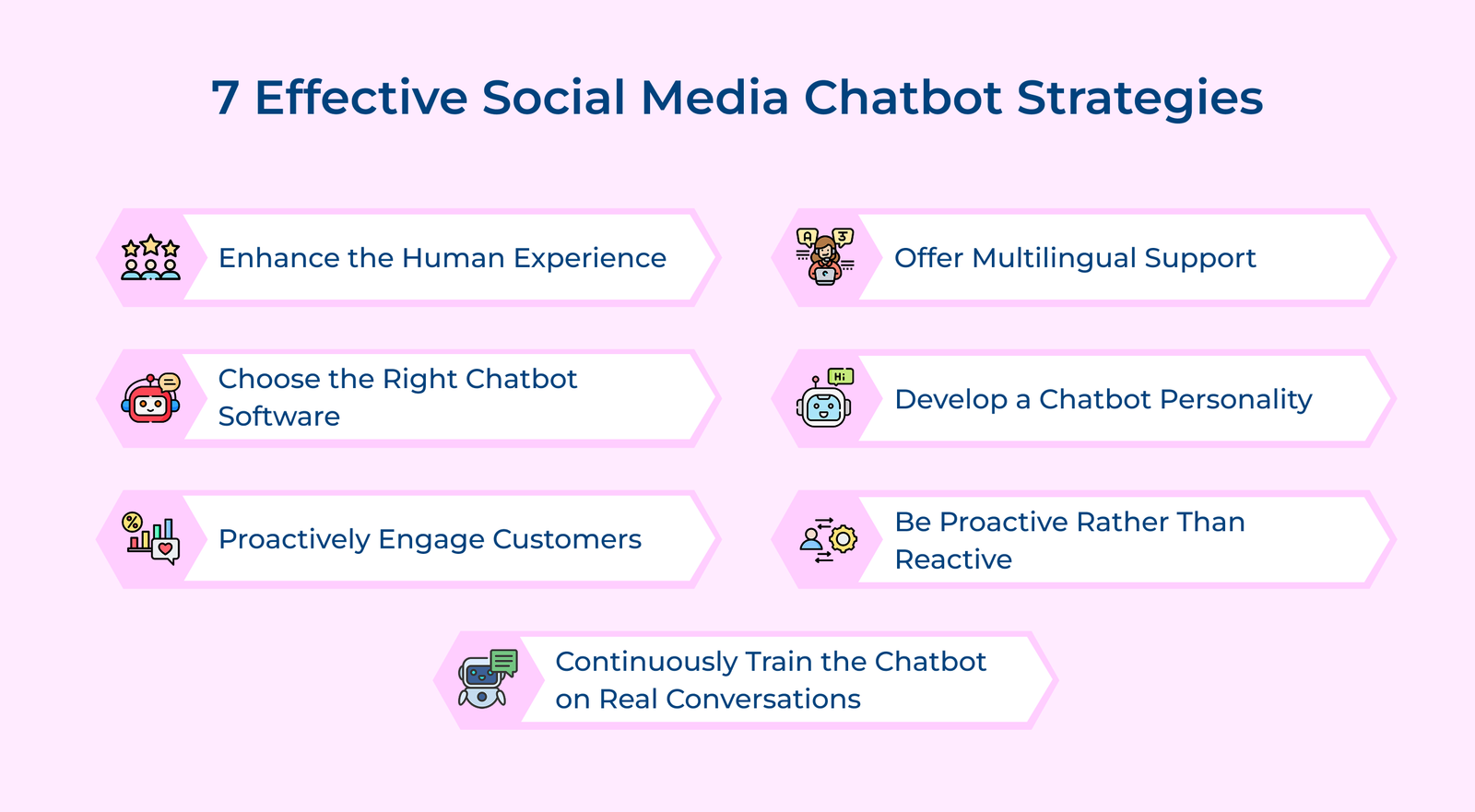
Making a chatbot feel human takes deliberate effort, not just good scripts or polished wording. Social media chatbots create better customer experiences when conversations feel natural, helpful and personal from the first message. Small details often separate a bot that customers simply use from one they genuinely enjoy interacting with.
Key ways:
Choosing the right software influences everything that follows. Social media chatbots deliver better results when the platform matches your business goals, integrates with your existing tools and supports future growth. A poor choice can limit what your chatbot is able to do from the start.
Key factors:
Waiting for customers to start every conversation means missing opportunities to help at the right time. The chatbots make proactive engagement possible by responding to customer actions instead of waiting for the first message. Timely conversations can improve the customer experience and encourage more conversions.
Send timely messages based on behavior
Behavioral triggers allow a chatbot to reach out when customer interest is highest, such as after repeated visits to the same product page. Reaching customers at the right moment can make a meaningful difference in purchase decisions.
Trigger conversations during high-intent moments
Cart abandonment and repeated product page visits often indicate strong buying intent. Social media chatbots can step in with helpful reminders, product details or relevant offers while interest is still high.
Language barriers can prevent businesses from connecting with potential customers. The chatbots help solve it by supporting conversations in multiple languages, making it easier to assist customers from different regions without increasing support resources.
How do you set it up in practice? Most chatbot platforms include built-in language detection, making multilingual support simple to implement. The chatbots can identify a customer’s preferred language and continue the conversation automatically.
Best practices:
Every chatbot has a personality, even if it was never intentionally planned. Social media chatbots create stronger customer connections when their tone stays consistent, natural and aligned with the brand. Small details in the way a chatbot communicates often make the difference between a forgettable interaction and a positive customer experience.
Dos:
Don’ts:
Reactive social media chatbots respond after a customer reports an issue. Proactive chatbots identify important moments early and reach out before small problems become bigger ones. The approach creates a smoother customer experience and helps reduce unnecessary support requests.
Key steps:
A logistics company reduced delivery-related complaints after sending customers updates before delays became a bigger concern. Proactive messaging may not prevent every complaint, but it helps customers stay informed and builds confidence throughout the experience.
A chatbot’s first version is rarely its best. Social media chatbots become more accurate over time when they learn from real customer conversations instead of relying only on initial setup. Real interactions uncover gaps that testing often misses, making regular training an important part of long-term performance.
Key areas:
Below are the best examples of social media chatbots that show how businesses use automation to improve customer support.
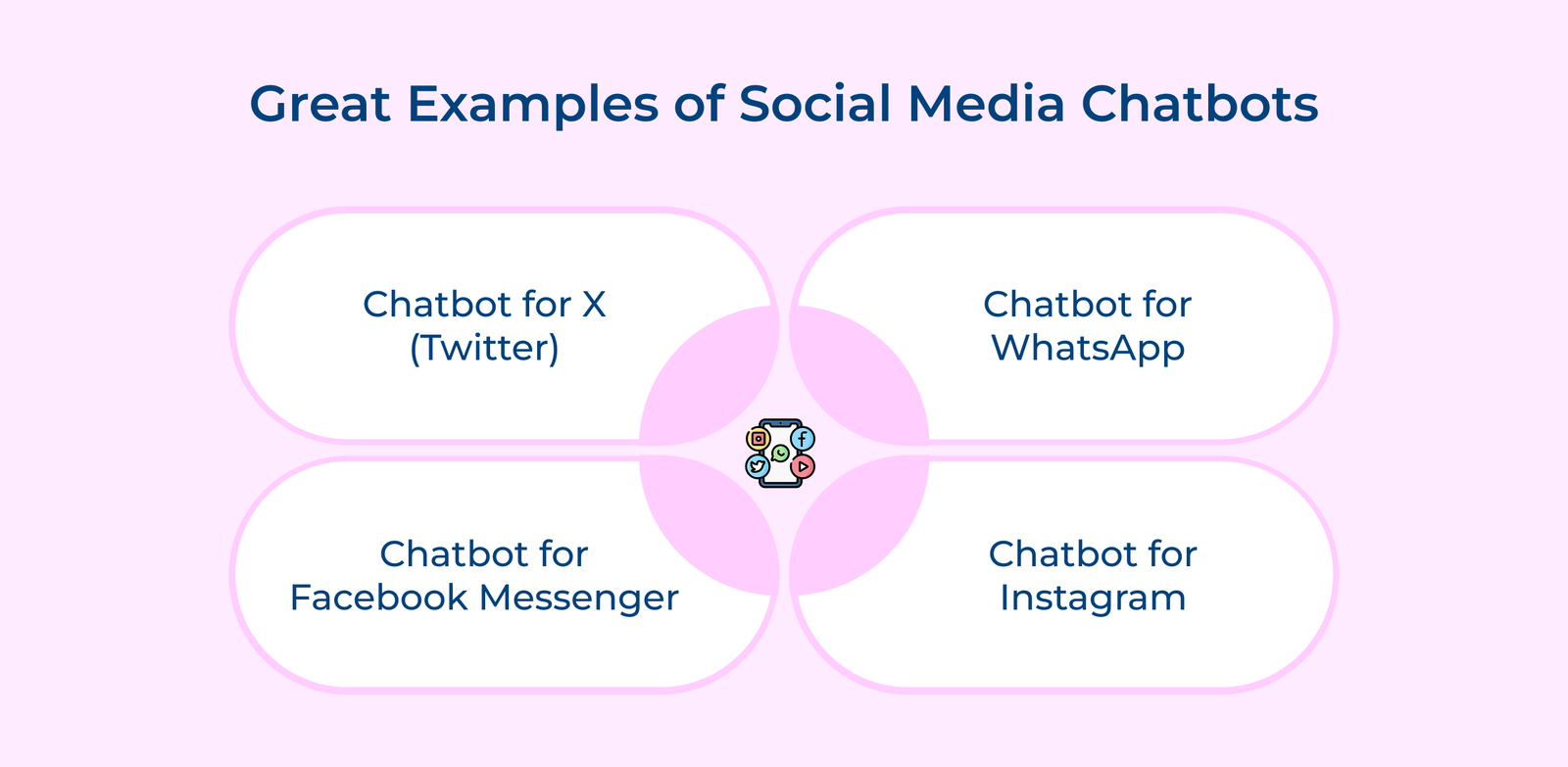
WhatsApp Business chatbots handle everything from order tracking to appointment booking inside an app customers already use every day. They enable businesses to automate up to 80% of their queries.
Chatbots on WhatsApp help businesses provide faster support, answer common questions and keep conversations simple. Customers can get updates without switching between different apps.
Pro tips:
Instagram social media chatbots work inside DMs, responding to comments, story replies and customer messages without leaving the app. It makes it easier for businesses to turn customer interest into conversations while people are actively browsing content.
What makes Instagram different from other platforms is how tightly commerce and content are woven together. A single post can trigger an entire buying conversation without the customer ever leaving the app.
Facebook Messenger chatbots are widely used for appointment booking, FAQs and order updates for local businesses. The chatbots on Messenger help businesses automate customer conversations while keeping support organized across a familiar platform.
Messenger offers flexible automation, strong CRM integrations and tools that make it suitable for businesses handling large numbers of customer conversations. It allows businesses to manage customer inquiries more efficiently while maintaining consistent support.
X chatbots help businesses manage public replies and direct message support, especially during service disruptions or periods of high customer activity. Social media chatbots on X make it easier to respond quickly when timely communication is important.
An airline uses an X chatbot to share real-time flight updates and respond to delay-related questions automatically. It reduces repetitive support requests and keeps customers informed. Customers receive timely information quickly, helping reduce uncertainty during travel disruptions.
Social media chatbots have evolved far beyond simple auto-replies. They now help businesses answer customer questions, recommend products and guide purchases across popular social platforms.
Key takeaways:

Chatbots answer common questions instantly, giving support teams more time to focus on complex customer issues. They also capture leads, stay available around the clock and help businesses respond faster across social platforms.
Social media chatbots handle routine queries well but struggle with emotionally complex or highly nuanced issues. They work best alongside human agents, not as a complete replacement, especially for sensitive support cases.
ManyChat and Chatfuel are popular choices for small businesses because they offer free plans with useful automation features. Both platforms are easy to set up and can grow with your business as conversation volume increases.
Choose a chatbot platform, identify the questions customers ask most often and build conversation flows around those topics. Test the chatbot with real users, then improve its responses regularly using customer feedback and conversation data.
Chatbots support marketing by qualifying leads, answering product questions and guiding customers toward purchase decisions. They also gather valuable behavioral data, helping brands refine messaging and targeting strategies over time.
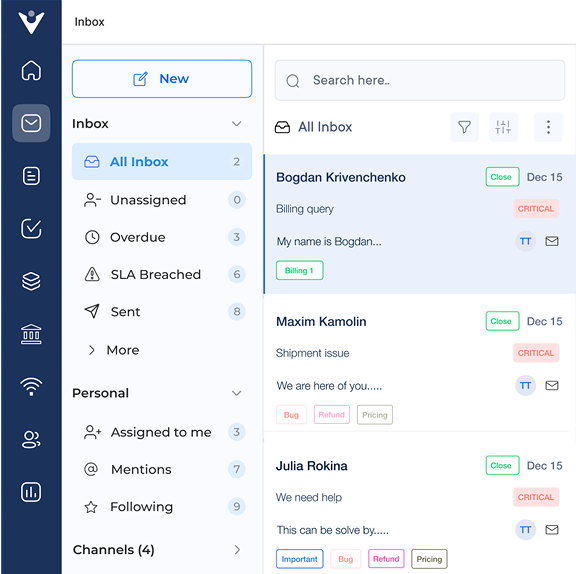
Grow Customer Relationships and stronger team collaboration with our range of products across the Conversational Engagement Suite.
Omnichannel Customer Support & Help Desk Software
AI Enabled Business Messaging and Chatbot Software
Sales Engagement & CRM Software
Call Center Software & Virtual Phone System
Product Marketing & Experience Platform
Customer Experience & Feedback Management Software

 What Is Outbound Lead Generation? The Complete Guide
Scroll to top