How to Build a B2B Outbound Sales Strategy?
A practical guide to building a B2B outbound sales strategy that drives pipeline growth through clear targeting. It also explores consistent outreach, smart follow-ups and data-backed improvements.
A practical guide to building a B2B outbound sales strategy that drives pipeline growth through clear targeting. It also explores consistent outreach, smart follow-ups and data-backed improvements.
Most sales teams aren’t failing because they’re lazy. The issue here is they’ve built their entire revenue engine around waiting. Waiting for an inbound form, a referral and someone to raise their hand. While they spend so much time waiting, the decision-maker who needs exactly what they offer is three clicks away from signing with a competitor who reached out first.
The shift happening right now is stark: companies that rely purely on inbound leads are finding those pipelines far less predictable than outbound-driven programs. Businesses rank outbound marketing at an average of 7.3 out of 10 in terms of importance.
When done well, outbound sales compound. Businesses with a structured outbound motion have significantly shorter sales cycles compared to teams without one. Let’s dive in to understand how!
A B2B outbound sales strategy refers to a proactive approach where companies initiate contact with potential business clients through targeted outreach. Sales teams identify and reach out to prospects who match their ideal customer profile rather than waiting for leads to come to them. The method relies on research-driven targeting and persistent follow-up to create new business opportunities.
Sales teams build lists of target companies that fit specific criteria like industry or company size. Representatives then reach out through cold calls, emails or LinkedIn messages to start conversations. The process involves multiple touchpoints to move prospects through the sales pipeline. Teams track responses and refine their approach based on what generates the best engagement rates.
Key objectives:
Let’s understand why outbound sales matters for growth, giving you control over and how consistently new revenue opportunities enter your pipeline.
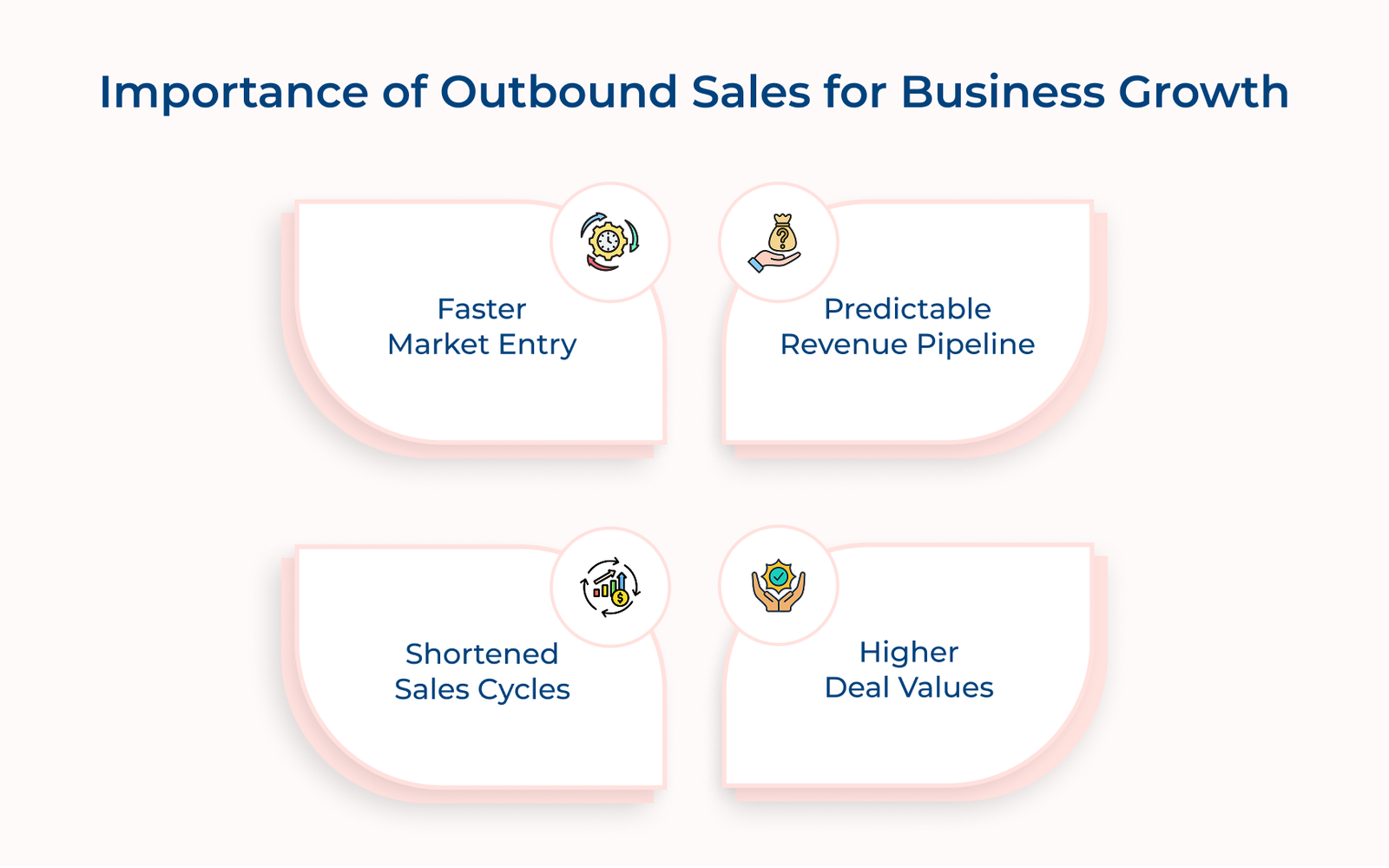
1. Faster Market Entry
Outbound sales help you step into new markets right away without waiting for brand awareness to catch up. Direct conversations reveal real demand fast and surface feedback you can act on immediately. Revenue starts flowing while others are still setting up campaigns.
2. Predictable Revenue Pipeline
Outbound gives you control over activity and outcomes. Daily outreach volumes and responses are visible and repeatable, which makes forecasting far more reliable. Planning hires feels less like guesswork and more like informed decision-making.
3. Higher Deal Values
Outbound teams can target enterprise clients and decision-makers who rarely respond to general marketing campaigns. The larger accounts require personalized outreach that only direct sales contact provides. The result is bigger contracts that significantly impact your bottom line.
4. Shortened Sales Cycles
Early outreach puts you on a buyer’s radar before formal research begins. You influence how they think about the problem rather than joining late-stage comparisons. Deals move faster because trust and context are already in place.
Check out seven proven strategies that can transform your outbound sales efforts and take your business to new heights.
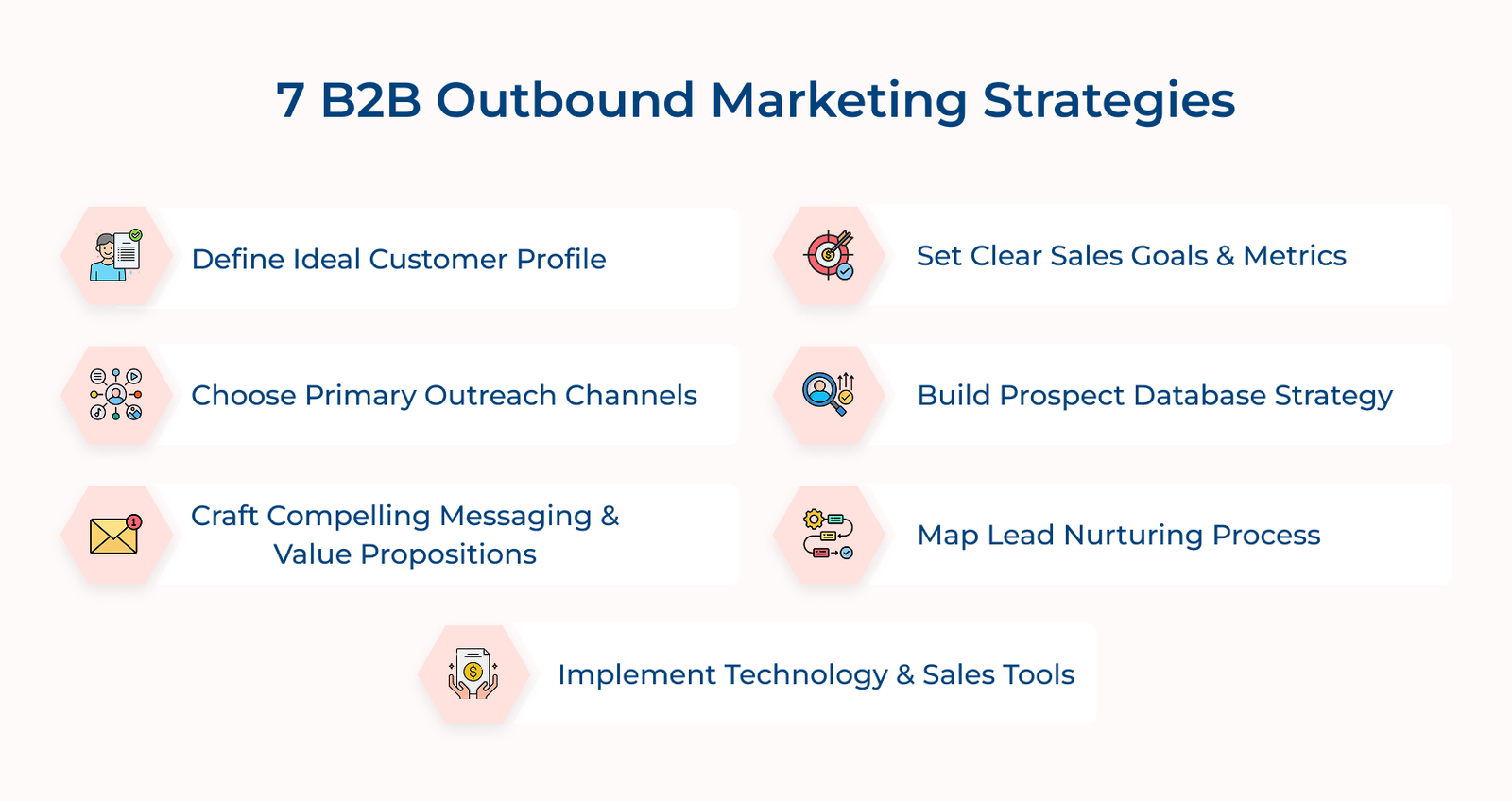
An ideal customer profile spells out which companies truly benefit from what you sell. The step matters because targeting everyone wastes resources, while focusing on the right prospects dramatically improves your conversion rates and deal quality.
The profile acts as a filter before outreach begins, guiding reps toward accounts that actually make sense. Firmographic signals like industry, size or growth stage help prioritize daily effort and keep attention on deals that can convert.
Pro tips:
Clear goals show your team what winning looks like and remove guesswork from daily work. Specific targets create ownership, while vague ambitions usually lead to inconsistent effort and missed expectations.
Actionable tips:
When reps know they need 15 meetings this month, they can work backwards to calculate exactly how many calls and emails they need to send daily. Key metrics provide the data you need to diagnose problems and optimize your outbound engine.
Pro tips:
Primary outreach channels are the communication methods your team uses to initiate contact with prospects who don’t know you yet. The step significantly impacts your strategy because different channels reach different buyers at different stages of their day and mindset.
Key factors:
Planned outreach beats random messages every time. Thoughtful sequencing keeps your name familiar without becoming noise. Spacing touches a few days apart over a couple of weeks gives prospects room to respond while keeping the conversation alive with useful context and clear next steps.
A prospect research process is how you learn enough about a potential customer to reach out with context, not guesses. The step is important because personalized outreach based on real research converts three to five times better than generic messaging.
Key methods:
The biggest pitfall is spending so much time gathering information that you never actually reach out. The sweet spot is five to ten minutes of research per prospect without sacrificing the volume you need to hit your activity targets.
Your messaging and value proposition articulate why prospects should care about your solution or what makes it different from alternatives. It matters because even perfectly targeted outreach fails if your message doesn’t resonate with the problems prospects actually face.
Strong messaging bridges the gap between what your product does and the business outcomes that matter to decision-makers. Generic feature lists bore prospects while compelling narratives about solving their challenges capture attention.
Best practices:
An easy way to build it is by listening closely to real sales conversations. Pay attention to the phrases prospects repeat when they explain their challenges. Test short message variations with small outreach batches and keep what earns replies.
Your lead nurturing strategy defines how you maintain relationships with prospects who aren’t ready to buy immediately but might convert later. Reps abandon promising leads after one or two attempts and miss revenue because most buyers need multiple touchpoints before they commit.
Key questions:
The questions help you follow the real buyer journey instead of guessing when to reach out. Spacing touchpoints based on your sales cycle prevents overwhelming prospects or disappearing for too long.
Sharing the right information at the right time keeps conversations productive. B2B businesses use the step by creating content libraries for each pipeline stage. When a prospect goes quiet, you have relevant case studies ready to send that add value.
Best practice:
Sales tools are software platforms that automate repetitive tasks and help your team execute outbound activities at scale. It is needed because manually tracking hundreds of prospects becomes impossible without systems that organize data and trigger next steps.
Key ways:
Consider integration capabilities when selecting tools because disconnected systems create data silos. Your sales stack should work together, where activities logged in your dialer automatically update your CRM and trigger the next email.
Key categories:
Let’s go through six approaches that consistently drive effective growth when implemented thoughtfully.
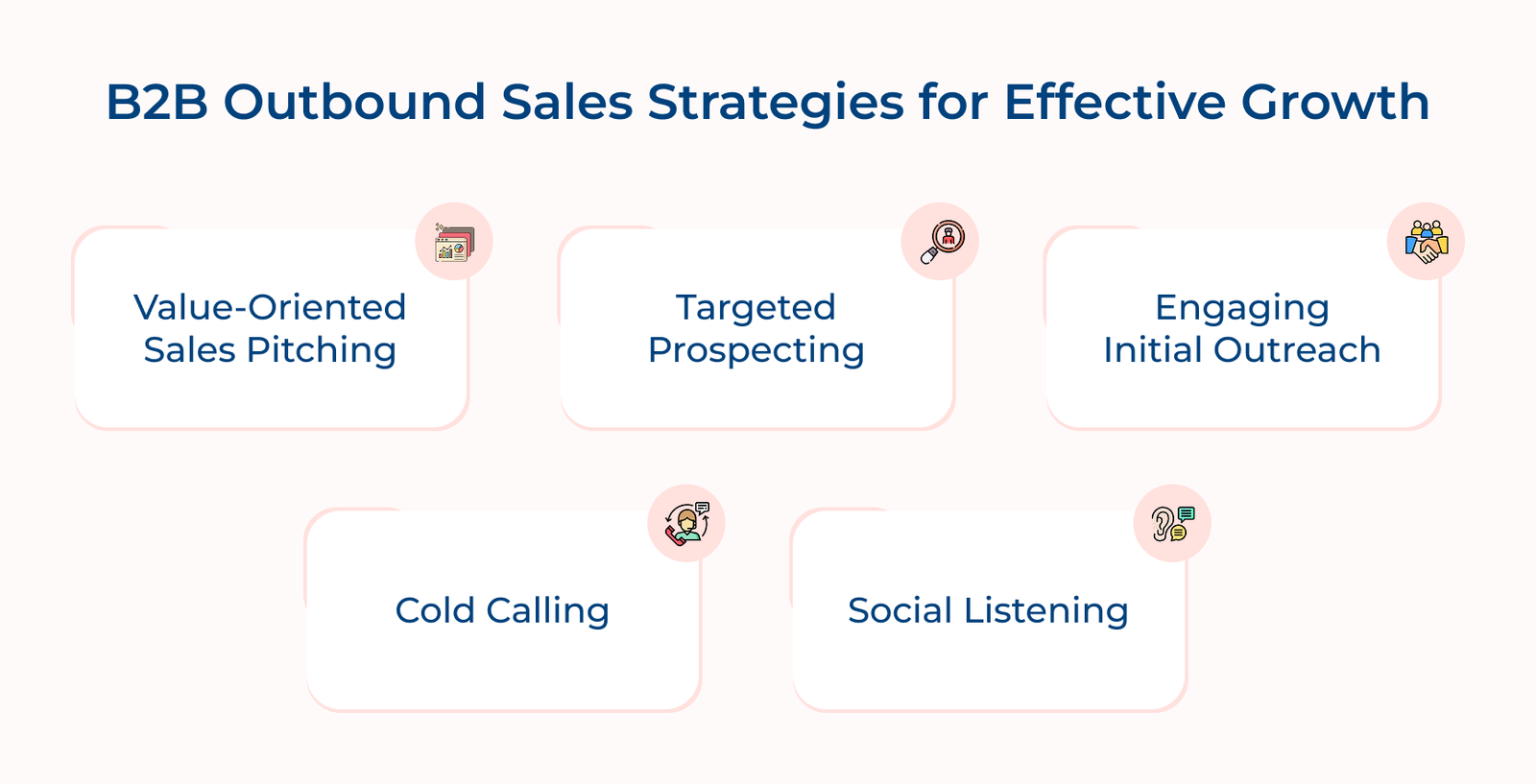
Value-oriented pitching centers on the tangible benefits your solution delivers rather than listing product features. The approach matters because decision-makers care about solving business problems and achieving measurable results instead of technical specifications.
Key elements:
The drawback is that it requires deep research into each prospect’s situation to customize your pitch effectively. Generic value propositions fall flat because sophisticated buyers can tell when you’re using templated messaging.
Key principles:
Targeted prospecting focuses your outreach on companies that closely match your ideal customer profile. Reaching the right audience improves response rates and shortens sales cycles. Broad outreach may create activity, but precision creates results.
Key questions:
You implement it by using data platforms to filter companies based on firmographics, then researching each one to verify fit. The challenge is that over-narrowing your criteria can limit your pipeline, while being too broad wastes time.
Engaging initial outreach captures attention in your first contact by personalizing messages and offering immediate value instead of generic introductions. The strategy drives growth because prospects receive hundreds of sales emails weekly and only respond to messages that feel relevant.
Key elements:
Cold calling means reaching out to prospects who haven’t yet shown interest and starting a live conversation. Phone calls still work because they create immediate dialogue. You can ask questions, clarify doubts and respond to objections on the spot.
Key questions:
You implement cold calling by blocking dedicated time for calls and using scripts as guides rather than word-for-word readings. The challenge is that cold calling requires thick skin because rejection rates are high.
A successful B2B outbound sales strategy using cold calling means treating gatekeepers respectfully because they control access to decision-makers. When you reach the right person, your first 15 seconds determine if they are going to hang up or engage further.
Social listening means paying attention to what prospects share and discuss on platforms such as LinkedIn. Posts, comments and discussions often reveal current priorities, challenges or buying signals. Timing improves when you engage during active conversations about relevant problems.
Key ways:
The importance of the approach is that it helps you reach prospects at the right moment when they’re thinking about the problem. The drawback is that social listening takes ongoing time investment.
Imagine you’re selling cybersecurity software and you notice a prospect posted on LinkedIn asking their network for security tool recommendations. You could comment with a helpful comparison of different approaches instead of immediately pitching your product.
Check out the B2B outbound sales strategy examples to see how different approaches work in real scenarios and how you can adapt them to strengthen your outreach efforts.
Amazon Web Services (AWS)
Amazon Web Services uses an account-focused outbound strategy for large enterprise clients. Sales teams identify high-value accounts and research their existing technology stack before reaching out. Outreach messages reference specific infrastructure gaps, migration goals, or compliance requirements.
The detailed preparation makes conversations more relevant from the start. Enterprise buyers respond better when sales reps clearly understand their environment and industry regulations. Careful targeting helped AWS strengthen its position as a leading cloud provider for large organizations.
Nike Business (Nike for Corporate and Team Sales)
Nike’s B2B team builds relationships with corporations, sports teams and educational institutions that purchase in bulk. Sales reps focus on understanding uniform needs, branding requirements and long-term apparel programs instead of pushing one-time orders.
The strategy impacts Nike’s business by creating long-term partnerships with organizations that make recurring bulk purchases rather than one-time transactions. The focus on customization has helped Nike secure multi-year contracts with major corporations, providing predictable revenue streams that complement their consumer business.
Spotify for Business (Background Music Service)
Spotify’s B2B outreach targets retail stores, restaurants and hospitality brands that need licensed background music. Sales reps combine cold calls with follow-up emails that share examples of how curated playlists influence in-store atmosphere and customer dwell time.
The impact on Spotify’s business has been valuable because the B2B segment provides steady subscription revenue from commercial clients who view background music as essential. Spotify has created a revenue stream more stable than consumer subscriptions by positioning its service as a business tool that drives customer engagement.
A strong B2B outbound sales strategy gives you control over who you target and when you start the conversation. High-value clients rarely appear on their own. Direct outreach puts you in front of decision makers who may not be actively searching but still have real needs.
The key is starting with one or two strategies that match your team’s strengths and your buyers’ preferences. Test your approach with small batches of prospects, measure what works and refine your sales process before scaling up to reach more potential customers consistently.

B2B and SaaS companies need outbound because waiting for inbound leads alone means missing high-value enterprise clients who never search online for solutions. Outbound allows you to approach ideal accounts directly and control your pipeline instead of waiting for opportunities to appear.
Inbound sales begin when prospects contact you after seeing your content or ads. Outbound sales start with your team reaching first. Inbound attracts people already searching for solutions, but outbound lets you target specific companies and decision-makers who match your ideal customer profile precisely.
Modern outbound uses multiple channels instead of a single tactic. Teams combine email, phone calls, LinkedIn outreach and short video messages. Personalization is stronger and social platforms help identify real-time buying signals.
An outbound marketing strategy for B2B is a structured plan to identify target companies and initiate contact. It includes research, tailored messaging, consistent follow-up and clear qualification steps that move prospects through the sales pipeline.
Track activity metrics like daily outreach volume and response rates to ensure your team maintains consistent effort that resonates with prospects. Monitor conversion rates at each pipeline stage from contacted to qualify to close because the numbers reveal where prospects drop off and which parts need improvement.

Grow Customer Relationships and stronger team collaboration with our range of products across the Conversational Engagement Suite.
Omnichannel Customer Support & Help Desk Software
AI Enabled Business Messaging and Chatbot Software
Sales Engagement & CRM Software
Call Center Software & Virtual Phone System
Product Marketing & Experience Platform
Customer Experience & Feedback Management Software

 How to Effectively Handle Complaints on Social Media?
Scroll to top
How to Effectively Handle Complaints on Social Media?
Scroll to top