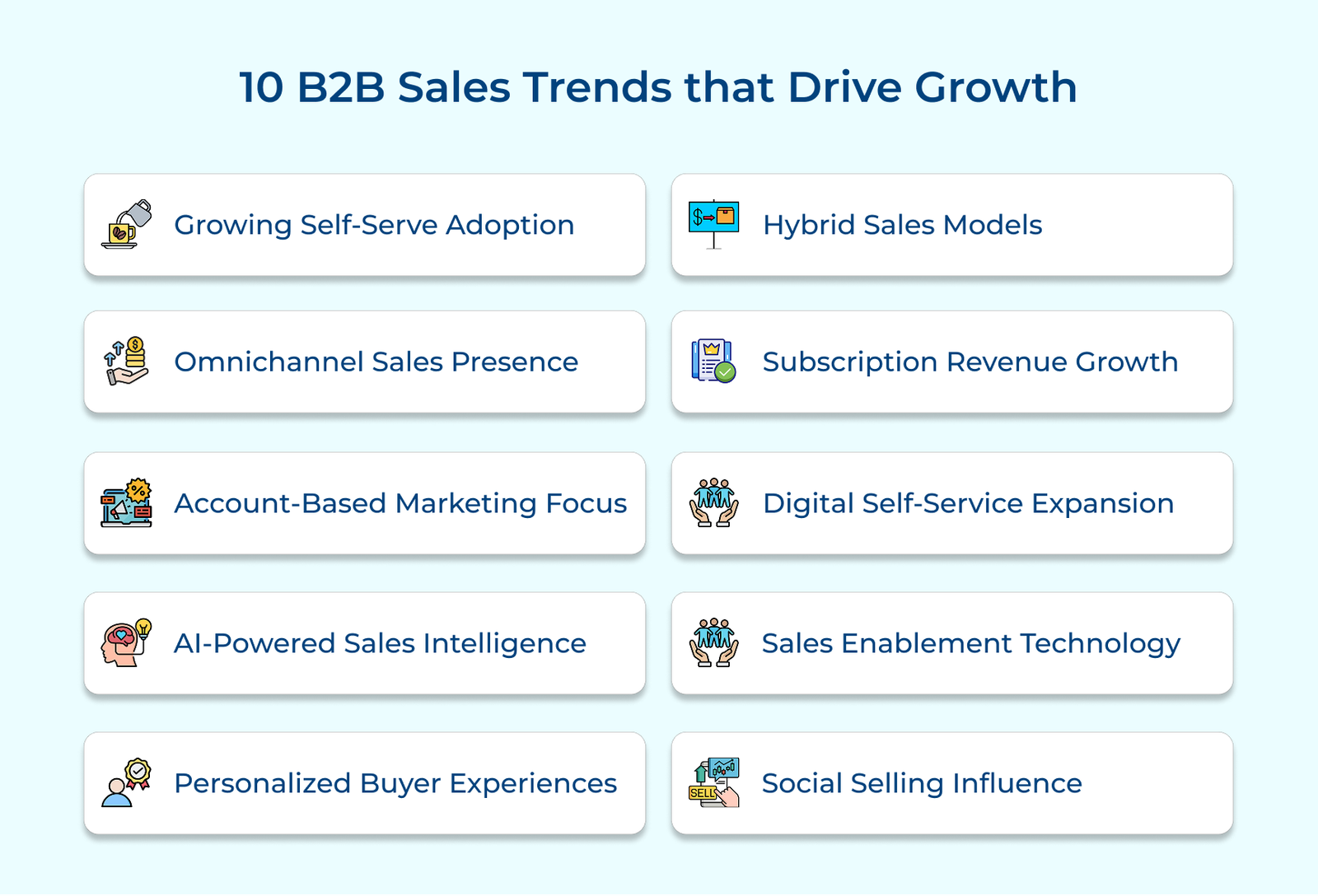
1. Self-Serve Adoption Continues to Grow
Self-serve adoption means giving business buyers the tools to research and buy on their own without waiting for a sales call. As more B2B buyers expect the same ease they get as consumers, the approach has become a must. Companies are meeting the need by building platforms with clear product details, upfront pricing and easy online checkout.
A mid-sized manufacturing company needs new project management software. Instead of contacting sales representatives from various vendors, their procurement team explores options on vendor websites. Similarly, a real estate company might search for the best real estate crm to manage their properties and clients. They explore features through demos, choose the right plan using clear pricing and complete the purchase with a company card. It is hassle-free without the need for back and forth.
Pro Tips:
- Make sure your self-serve option includes robust help resources, including video tutorials and live chat support for technical questions that might otherwise stall the buying process.
- Build analytics into your self-serve platform to understand where potential customers spend time or abandon the process so you can continuously optimize the buying journey.
2. Omnichannel Presence Makes or Breaks
Omnichannel presence in B2B sales means creating a unified experience across all customer touchpoints, be it digital or physical. 7 out of 10 shoppers use multiple channels in their shopping journey. The presence matters because today’s buyers expect a smooth, consistent experience. If things feel disjointed, they’ll move on without hesitation.
Seamless transitions between digital touchpoints
B2B buyers often start their research on one device and continue on another. They often switch between mobile, tablet and desktop platforms. A good omnichannel setup keeps everything connected. Customers can switch devices or channels without losing their place or repeating themselves.
Consistent messaging across all platforms
Omnichannel success requires unified messaging that maintains core value propositions across websites, email communications, sales presentations and customer service interactions. When your message stays consistent, no matter the platform or person, users trust you more because they get clear, steady answers at every step.
3. Account-Based Marketing Takes Center Stage
Account-Based Marketing (ABM) treats high-value target companies as markets of one with customized campaigns aimed at multiple stakeholders within those organizations. Generic marketing is losing impact. Focusing on the right accounts with tailored efforts leads to better conversion rates and stronger returns.
Hyper-targeted campaigns for key accounts
ABM strategies involve creating highly customized content and outreach specifically designed for individual target companies. The method speaks directly to each account’s unique challenges, using language and examples that matter to their industry, rather than broad messages that miss the mark.
Sales marketing alignment becomes crucial
Effective ABM requires seamless coordination between sales and marketing teams who must share account intelligence and collaborate on targeted approaches. Sales alignment keeps messaging consistent throughout the buyer’s journey. Marketing builds awareness and sales uses that momentum in conversations while working together instead of apart.
Personalized outreach at company level
ABM practitioners research organizational structures to identify all relevant stakeholders within target accounts, including decision-makers and influencers. They create multi-step engagement plans that tackle each role’s concerns. It is done while keeping a clear, consistent message about how their solution solves broader company problems.
4. AI-Powered Sales Intelligence Expands Rapidly
AI-powered sales intelligence uses machine learning algorithms to analyze customer data and provide actionable insights. As B2B sales teams deal with vast amounts of data, the technology helps spot important patterns that would be hard to catch by hand in today’s complex sales environment.
Let’s understand how the B2B Sales trend works:
- Predictive analytics looks at past sales data to forecast future customer actions and highlight prospects most likely to buy. It helps sales teams focus on the best opportunities instead of chasing unlikely leads.
- Automated lead scoring uses data from many sources to rank prospects without manual work. It helps sales reps focus on top opportunities while others are nurtured automatically.
- Natural language processing analyzes recorded sales calls to spot what works and where objections arise. It detects when prospects show interest or hesitation, helping managers coach reps and improve messaging.
- Intent data collection monitors online behavior across multiple platforms to identify when prospects are actively researching solutions. The digital body language reveals buying signals that would be invisible without AI-powered monitoring systems.
Despite its power, AI-powered sales intelligence often creates implementation difficulties as organizations struggle to integrate disparate data sources and ensure data quality. Many sales teams worry that automation will replace their relationship skills or lead to too much performance tracking.
5. Personalized Client Experiences Become Essential
Personalized client experiences in B2B sales involve tailoring every interaction to the specific needs and context of individual buyers. 80% of consumers are more likely to buy from brands that offer personalized experiences. The shift matters because business buyers now expect the same personal touch they get as consumers.
Content customization at scale is possible
Advanced content management systems now enable B2B sales teams to dynamically assemble personalized materials without individual redesign efforts. These platforms use ready-made content pieces tailored to each buyer’s needs. It helps teams address real concerns while staying on-brand and on-message.
Individual buyer journey mapping is important
Today’s B2B sales trend recognizes that each stakeholder follows a unique decision path rather than moving through standardized funnels. Modern CRM systems track each interaction so sales teams can share the right info at the right time instead of flooding buyers with details they’re not ready for.
6. Hybrid Sales Balances Remote In-Person
Hybrid sales combines virtual selling techniques with strategic in-person interactions to create flexible engagement models. The trend grew as companies realized that while most sales tasks work well remotely, some complex deals and key relationship moments still call for meeting in person.
Digital first physical when necessary
The prevailing B2B sales trend establishes digital engagement as the default approach for most interactions. As the discovery calls, demos and check-ins can now be done online, it saves travel costs. In-person meetings are usually saved for key moments or complex planning that benefits from working together in the same room.
Video conferencing remains sales cornerstone
High-quality video platforms continue serving as essential tools in the hybrid B2B sales trend. Sales teams now use tools like screen sharing, virtual whiteboards and live annotations to keep buyers engaged without the need to meet in person for routine updates.
Strategic travel for relationship building
The hybrid B2B sales trend focuses in-person visits on high-impact relationship opportunities rather than routine transactions. Sales teams pinpoint key moments like final decisions, kickoff meetings or annual reviews. It is because being there in person makes a bigger impact than a video call.
7. Subscription Revenue Models Gain Traction
Subscription revenue models in B2B sales transform one-time product purchases into ongoing service relationships with regular recurring payments. The shift matters because companies want steady, predictable revenue. Customers also prefer flexible payments with low upfront costs and access to ongoing product improvements. Let’s explore how the B2B sales trend works:
- Software firms led the way by moving from one-time licenses to subscriptions. Now, industries like manufacturing, logistics and services are doing the same. They are turning big upfront costs into manageable, ongoing expenses.
- Value-based subscription tiers let customers start small and add more as they need it. It lowers the upfront risk and makes it easier to grow the relationship over time.
- In subscription models, customer success teams play a key role by helping clients get ongoing value, boosting renewals and growth instead of just chasing new sales.
- Companies using the approach track more than just sales. They measure monthly recurring revenue, customer lifetime value, and retention to get a clear view of their subscription business health.
The subscription revenue model B2B sales trend represents a fundamental shift from transactional relationships to long-term partnerships. As more industries shift to a revenue model, companies need to focus on customer success and not just closing deals. It is to drive steady growth through renewals and expansions.
9. Sales Enablement Technology Transforms Teams
Sales enablement technology provides unified platforms, which is why choosing the best cloud-based crm is a great way to equip sales professionals with training, content and tools to engage buyers effectively. As sales grow more complex, teams need quick access to the right info and tools so they can stay consistent across all customer conversations.
- Centralized content systems let sales reps quickly find and tailor up-to-date materials without digging through folders or risking old, outdated files.
- AI tools analyze customer behavior or conversation patterns to suggest the right content and talking points for each stage of the buying process.
- Interactive tools let sales reps adjust presentations on the spot, responding to what the customer cares about instead of sticking to a fixed script that might miss key moments.
- Advanced dashboards show which content helps close deals and which training efforts lead to better results in the field.
The sales enablement technology B2B sales trend fundamentally changes how organizations equip their revenue teams for success. As these tools improve, the gap grows between companies using modern, connected sales strategies and those still relying on outdated methods without tech support.
10. Social Selling Influences Buying Decisions
Social selling leverages professional social networks to build relationships and establish authority with potential buyers before formal sales processes begin. The trend matters because business buyers now turn to social platforms to research long before talking to sales. It’s a chance to shape their thinking early on.
LinkedIn becomes primary prospecting channel
The modern B2B sales trend emphasizes LinkedIn as the predominant platform for identifying and engaging potential customers. Sales professionals systematically build industry-focused networks and participate in relevant groups where prospects congregate. Being active on these platforms lets sales teams spot buying signals and start conversations naturally when prospects show interest.
Social proof impacts purchasing confidence
Today’s B2B sales trend recognizes that buyers actively seek validation of vendor claims through peer recommendations and testimonials. Forward-thinking sales teams facilitate connections between prospects and satisfied customers through social platforms. They share real customer wins and encourage happy clients to talk about their experience in the professional circles where it matters most.
5 Challenges Businesses Face When Trying to Adopt Emerging B2B Sales Trends
Below are the essential features of business process automation software that can transform your organization and set you on the path to operational excellence.