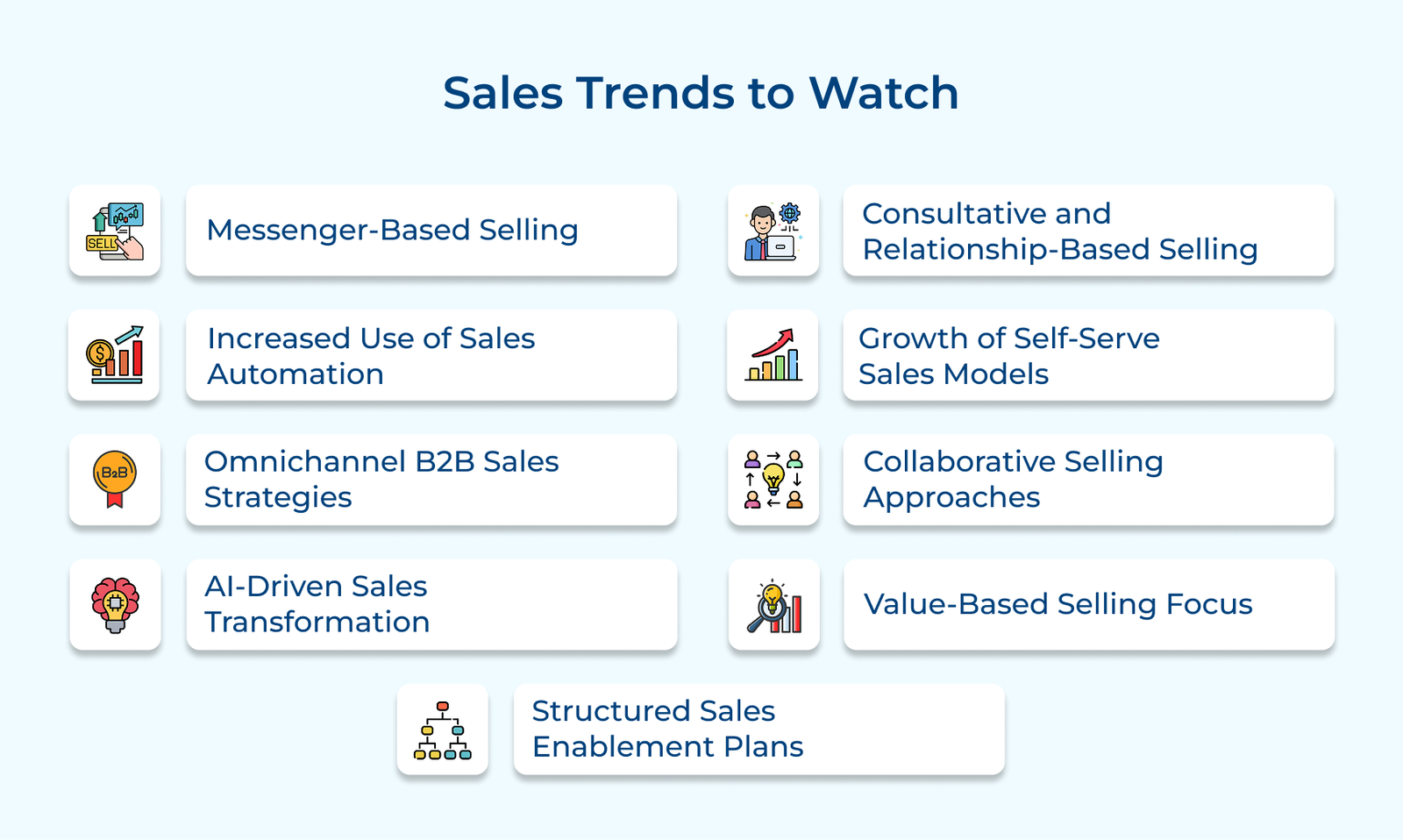
1. AI Automation Transforming Sales
Artificial intelligence is reshaping the sales trends of how sales teams find prospects and manage their sales pipelines by automating repetitive tasks. The technology is crucial as buyers now expect faster, more accurate responses throughout their purchase journey.
Key ways:
- Predictive sales analytics for prospecting: AI analyzes customer data to spot patterns that indicate purchase intent, helping sales teams focus on leads most likely to convert.
- Automated lead scoring and qualification: Machine learning scores leads by factors like company size and engagement, helping reps focus on high-potential opportunities.
- Intelligent pipeline management and forecasting: AI tools track deal progress and estimate closure probabilities, highlighting deals that need immediate attention.
Consider a software company that implemented AI-powered lead scoring and saw its conversion rates increase by 40% within six months. Their sales team could focus on high-quality prospects instead of manually reviewing hundreds of unqualified leads daily.
2. Personalized Experience at Scale
Personalization at scale delivers tailored experiences to thousands of customers using technology and data. Modern buyers expect messages that address their challenges, not generic sales pitches.
Key strategies:
- Dynamic content: Websites as well as emails adjust automatically based on visitor behavior and company profile.
- Behavioral triggers: Automated marketing campaigns respond to specific actions like downloads or page visits.
- Account-specific value: Sales materials emphasize benefits relevant to each prospect’s industry and needs.
- Optimized timing: AI predicts the best times to send emails or make calls for maximum engagement.
The main challenge with personalization involves managing data privacy while collecting enough information to create meaningful experiences. Companies succeed by being transparent about data use and relying on zero-party data that customers willingly share.
3. Omnichannel B2B Sales Strategy Integration
An omnichannel approach ensures smooth, connected experiences across all touchpoints, from website visits to in-person meetings. The approach becomes crucial as B2B buyers now use multiple sales channels during their market research and purchasing process.
Key benefits:
- Seamless channel transitions: Customers can switch between social media, email or phone without repeating information. Sales reps maintain full context across channels.
- Unified customer data: All interactions feed into a single accessible database, preventing duplicate outreach and ensuring consistent communication.
- Consistent brand messaging: Marketing, sales and service align across every touchpoint, reinforcing your value proposition.
4. Messenger Selling and Social Commerce
Messenger-based selling moves sales conversations to instant messaging platforms, letting buyers and sellers communicate in real time through familiar channels. Modern buyers prefer quick, informal interactions over formal calls.
Sales teams can use messaging platforms for casual, low-pressure conversations that build stronger relationships than traditional calls. The platforms allow reps to share documents and answer questions instantly while maintaining the personal touch that builds trust.
Pro tips:
- Respond within two hours to keep engagement momentum.
- Use short voice messages under 30 seconds to add personality and warmth.
5. Consultative Selling Over Traditional Selling
Consultative selling shifts sales reps from product sellers to trusted advisors who deeply understand client challenges and industry trends. This is the sales trends that matter a lot because today’s buyers already have access to product details online and look to sales conversations for clarity, context, and guidance rather than feature explanations.
Key factors:
- Industry expertise: Sales professionals specialize in sectors to provide actionable insights beyond their products.
- Problem-first conversations: Focus on understanding client challenges before introducing solutions.
- Educational content sharing: Share reports and best practices that help prospects succeed, regardless of immediate purchases.
- Long-term partnership mindset: Prioritize lasting relationships, staying engaged even after deals close.
- Strategic business advisory: Offer guidance on market trends and optimization opportunities relevant to the client.
How do you implement the consultative approach without extending your sales cycle unnecessarily? Start by dedicating the first meeting entirely to understanding challenges and save product discussions for follow-up conversations when you have context.
6. Self-Service Sales Options for Buyers
Self-service tools let buyers explore, compare and even purchase on their own. The approach becomes essential as modern B2B buyers prefer conducting research privately before engaging with sales representatives.
Online product configurators and pricing tools
Interactive configurators allow prospects to customize solutions and see real-time pricing without speaking to salespeople first. The tools reduce friction in the buying process while providing immediate gratification for price-conscious decision makers.
Digital catalogs and comparison features
Online catalogs enable buyers to compare products side-by-side and access detailed specifications at their convenience. The self-directed research helps prospects arrive at sales conversations with specific questions rather than general inquiries.
Automated ordering and reordering systems
Streamlined ordering platforms allow existing customers to purchase additional products or services without sales intervention. The systems reduce administrative burden on sales teams while ensuring customers can buy whenever they need solutions.
7. Team-Based Collaborative Selling
Collaborative selling brings together specialists from different departments to handle complex sales that demand varied expertise. The approach is increasingly important as most B2B deals involve multiple stakeholders who expect more than a single salesperson’s knowledge.
Key questions:
- Where do knowledge gaps exist in your current sales process?
- Which experts should join customer conversations?
- How will you manage schedules and communication across the team?
- What tools will keep collaboration smooth and organized?
The questions help identify the right team structure and prevent coordination challenges that could confuse prospects or delay decisions. Begin with one or two key experts for larger deals, then expand gradually as needed based on feedback and deal complexity.
8. Value-Based Selling Takes Center Stage
Value-based selling shifts the focus from product features or technical specifications. The approach is essential as buyers increasingly need to justify purchases to multiple stakeholders. The stakeholders care more about results than product capabilities.
Sales teams can implement value-based selling by quantifying the financial impact of their solutions and connecting features directly to measurable business benefits. Reps should use ROI calculators and case studies to show clear value for each prospect’s situation.
Pro tips:
- Always ask prospects about their current costs and challenges before presenting any solution to establish baseline metrics.
- Create customized ROI reports that show projected savings or revenue increases specific to each prospect’s business model.
9. Building a Complete Sales Enablement Plan
A sales enablement plan gives teams structured training, tools and resources to perform effectively. Done well, it creates consistent messaging and equips representatives to guide prospects through complex buying decisions.
Key benefits:
- Faster onboarding and productivity: Structured training and ready-to-use materials help new reps get up to speed quickly.
- Consistent messaging: All team members communicate value and handle objections with the same reliable approaches.
- Improved deal velocity and close rates: Well-equipped reps move deals forward faster while addressing concerns with confidence.
Creating an effective sales enablement plan requires identifying skill gaps and content needs, then developing training programs. Regular feedback sessions with sales teams help refine materials and ensure ongoing program effectiveness.
Key metrics:
- Time to productivity for new hires
- Content usage rates
- Sales cycle length reduction
- Overall quota attainment
Challenges Businesses Face While Implementing Sales Trends
Below are the common challenges businesses face, from adapting to new technologies to aligning teams. Let’s check them out in more detail.