CRM vs CDP: What Is The Difference?
Confused about CRM vs CDP? Discover the key differences, benefits and use cases of both platforms to understand how to choose the right tool for your business growth.
Confused about CRM vs CDP? Discover the key differences, benefits and use cases of both platforms to understand how to choose the right tool for your business growth.
Companies sit on piles of customer data, yet most of it stays scattered and unused. Marketing works with half the picture, sales guesses its way through incomplete profiles and leadership tries to make decisions without real clarity. That gap shows up fast in the form of missed chances, weaker customer relationships and competitors pulling ahead because they understand their data better.
Customer data only works when you can actually read it. That’s where the comparison between CRM vs CDPs becomes useful. These tools help bring order to the mess, turning random bits of information into insights you can act on. They help you see who your customers are, what they care about and how to reach them in a way that feels right. Let’s break down how each one works so you can pick the approach that makes the most sense for your business.
Customer Data Platform (CDP) collects and organizes customer data from multiple sources like websites, apps, emails or offline interactions. CDP integrates it into a single, accurate profile for each person. It cleans the data, removes duplicates and connects it to the right individual. CDP makes it easy to use for analysis, marketing and customer service while staying compliant with privacy rules.
The system creates unified customer profiles containing behavioral, demographic and transactional information. The profiles are stored in a constantly updated database. It connects with other tools through APIs, making the data easy to use across different platforms and channels for more relevant customer interactions.
Key goals:
Customer relationship management (CRM) is defined as a technology system that manages an organization’s interactions with its customers or prospects. A CRM helps companies improve customer relationships, streamline processes and boost profitability by centralizing user data. It enables communication across sales, marketing and customer service teams.
CRM systems work by collecting customer data from multiple touchpoints. It includes website visits, phone calls, emails, social media interactions and purchase history. The system organizes this information into a unified database. The system offers tools to analyze data, automate routine tasks like follow-up emails, track sales progress and manage customer service requests.
Modern CRMs connect with other business tools and use artificial intelligence to offer insights. It helps teams focus on the tasks that matter most for keeping customers happy and improving results.
Primary objectives:
Let’s explore the essential differences between a CDP vs CRM so you can understand what each one actually brings to the table.
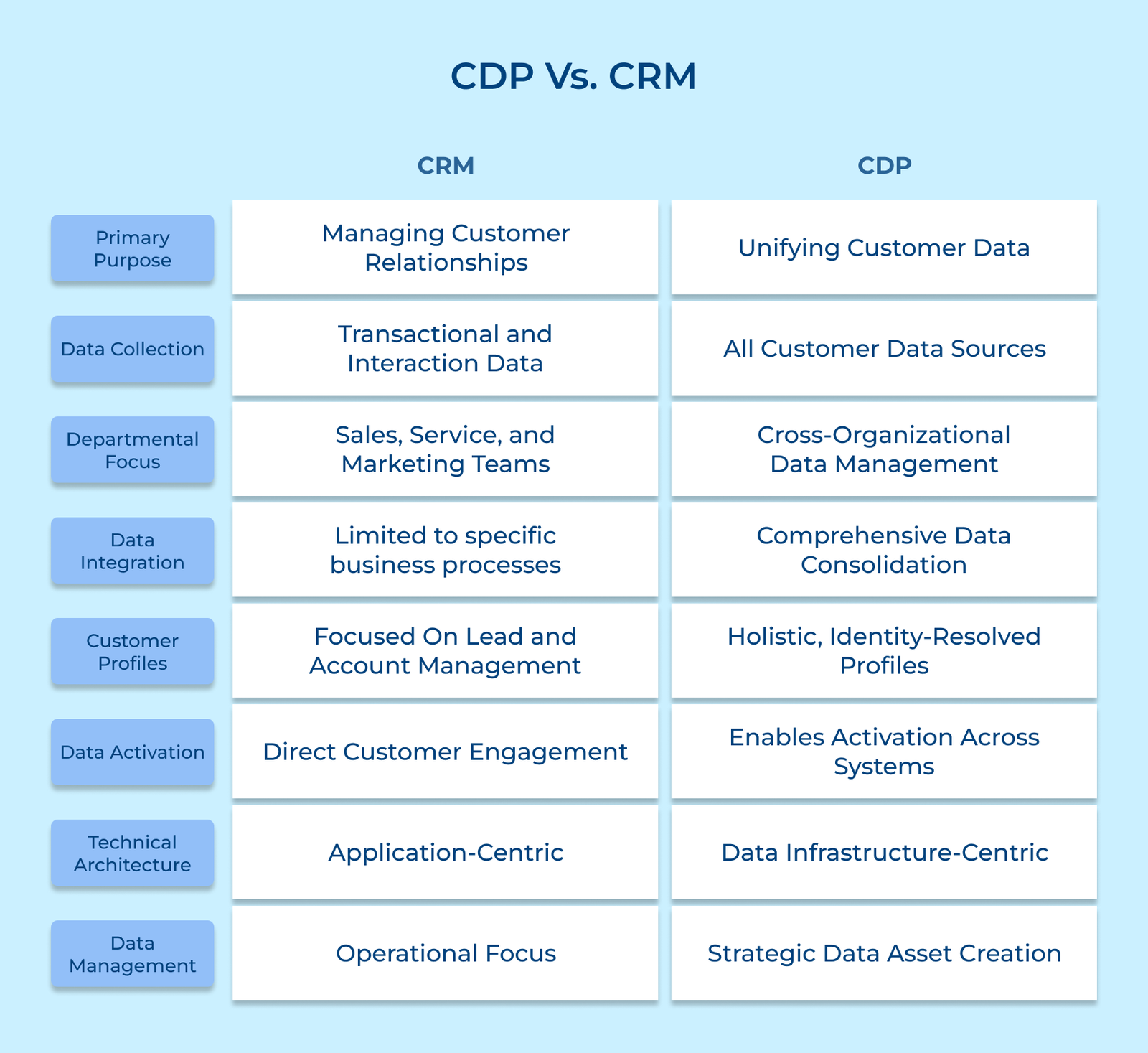
Customer Relationship Management (CRM) is primarily a tool for tracking sales and customer interactions. It helps businesses manage leads, monitor sales pipelines and keep a record of customer communications, with a strong focus on supporting the sales process.
Customer Data Platforms (CDPs) collect and combine data from different sources to create a complete view of how people interact with a business across all channels. Unlike CRMs, CDPs aim to provide a 360-degree understanding of customer behaviors and experiences.
Imagine you’re running a growing business. The CRM is like your trusty sales assistant, meticulously tracking every customer call, meeting and potential deal. CDP collects data from your website, app and offline sources, combining it to give a clear view of each user’s behavior.
Key Takeaways
Customer Relationship Management (CRM) primarily collects data through direct interactions like sales calls, email communications and customer service encounters. The systems depend on manual input, with sales and support teams entering details about customer interactions into a structured database.
Customer Data Platforms (CDPs) take a dramatically different approach, automatically harvesting data from an incredibly diverse range of sources. CDPs automatically gather data from websites, apps, social media, marketing tools and sales systems to build a detailed, up-to-date customer profile without needing any manual work.
Picture two different ways of collecting seashells on a beach. CRM is like carefully picking up each shell by hand, examining it closely and placing it in a specific bucket. You’re hands-on with each piece. A CDP, by contrast, pulls in data from everywhere your customers interact and no extra effort is needed.
Key Takeaways:
Customer Relationship Management (CRM) systems are built mainly for sales and support teams. They help track leads, manage deals and keep a record of every customer interaction. Teams that work directly with customers, CRMs provide the tools needed to stay organized and focused on building strong relationships.
Customer Data Platforms (CDPs) are strategically oriented towards marketing and analytics teams, offering a comprehensive platform that transforms raw data into actionable insights. Beyond the scope of CRMs, CDPs help professionals focus on managing direct interactions. CDPs also help teams see the bigger picture by tracking user behavior across channels, grouping similar customers and tailoring communications based on real data.
Key Takeaways:
Customer Relationship Management (CRM) typically handles structured, transactional data with predefined formats and limited flexibility. These systems use fixed templates to capture specific business interactions, making sure data is entered consistently and follows a standard process across sales as well as customer service.
Customer Data Platforms (CDPs) are advanced data processors that transcend traditional data management boundaries. They can bring together both organized and messy data, using smart processes to clean, match, improve it. It turns raw information into clear, useful insights about customers.
Key Takeaways:
Customer Relationship Management (CRM) traditionally integrates with specific business tools like email platforms, basic marketing automation systems and customer service software. The platforms connect mainly with key tools that support sales, customer service and keeping the system focused on tracking interactions while managing sales efficiently.
Customer Data Platforms (CDPs) are built to connect with almost any data source across a company’s technology. They gather information from complex systems, specialized marketing tools and various digital platforms to create a complete data view.
Consider the example of a retail company where a CRM connects with an email tool and basic sales tracking software. CDP pulls data from multiple sources at the same time, including your website, mobile app, in-store systems, social media, support channels and even IoT devices.
Key Takeaways:
Customer relationship management (CRM) reporting focuses primarily on sales performance, pipeline management and direct customer interaction tracking. The reports are usually straightforward and organized, showing sales stages. It also shows how each representative is performing, conversion rates and key user engagement metrics that help drive sales.
Customer data platforms (CDPs) generate multi-dimensional analytics that transcend traditional reporting boundaries. They use detailed data to group customers, predict behavior and analyze cross-channel performance. It offers a complete picture of customer journeys, preferences and likely next steps.
Take a clothing brand as an example here. The CRM report shows how many jackets a salesperson sold last month. The CDP reveals customer purchase patterns, predicts future buying behaviors and suggests personalized marketing strategies across multiple channels.
Key Takeaways
Customer Relationship Management (CRM) personalizes interactions using communication history along with basic customer profiles, mainly focusing on sales and service contacts. The platforms rely on manually recorded touchpoints, past purchases and direct communication logs. It offers a straightforward view of customer relationships and interaction patterns.
CDPs build detailed profiles by combining behavior, demographics and context from multiple sources to better understand each customer. They combine complex data to create a clear picture of preferences, allowing for smarter and more adaptable personalization.
A clothing retailer’s CRM might remember a customer’s past purchase of blue shirts. The CDP understands the customer’s full journey: browsing habits, social media interactions, seasonal preferences and predicted future interests.
Key Takeaways:
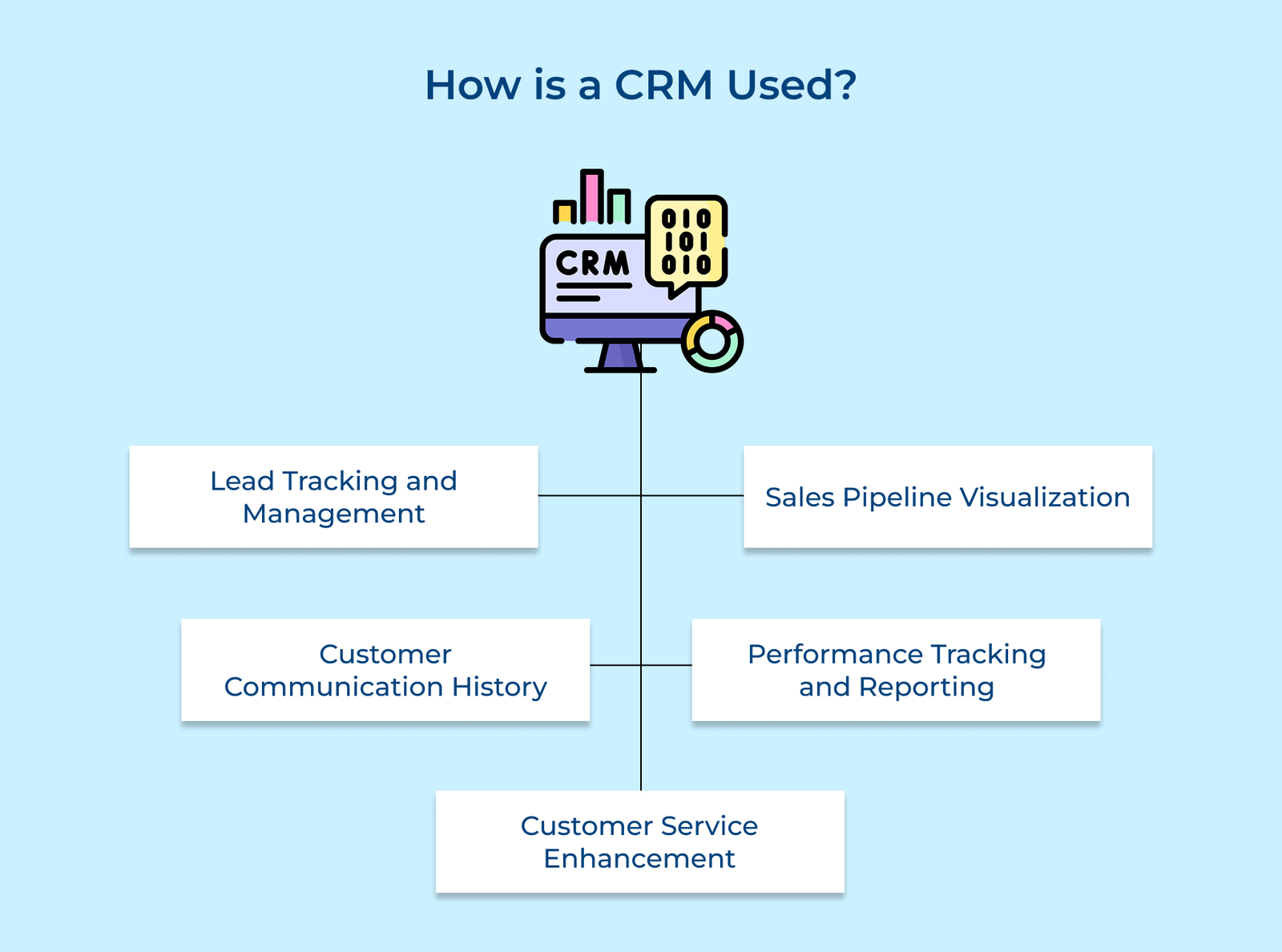
Let’s go through the key functions of CRM systems and get insights on how you can effectively leverage it to elevate your business operations.
1. Lead Tracking and Management
Sales teams use CRMs as their ultimate hunting ground for potential customers. The system carefully records every detail about potential leads, following their path from first contact to final sale. It’s like having an assistant that keeps track of every conversation, follow-up and opportunity with perfect accuracy.
2. Sales Pipeline Visualization
CRMs transform the abstract concept of sales progress into a tangible visual journey. Sales pipeline visualization breaks down the entire sales process into clear stages, allowing managers to see exactly where each potential deal stands. The visual representation helps teams prioritize efforts, spot bottlenecks and allocate resources strategically for maximum conversion potential.
3. Customer Communication History
Every interaction becomes a valuable piece of institutional memory when stored in a CRM. The platform creates a comprehensive timeline of customer communications, ensuring that no important detail falls through the cracks. Sales representatives can quickly access past conversations, understand preferences and deliver more personalized, informed service.
4. Performance Tracking and Reporting
CRMs transform raw sales data into meaningful insights about team and individual performance. They produce detailed reports that show important metrics, monitor individual performance and give a clear view of how well sales are doing overall. Managers can easily identify top performers, understand team dynamics and make data-driven decisions.
5. Customer Service Enhancement
CRMs extend their value by improving customer service processes. They help support teams track issues, monitor how quickly problems are resolved and keep a complete record of customer interactions. The approach ensures that every customer feels heard, valued and receives consistent, high-quality support across different touchpoints.
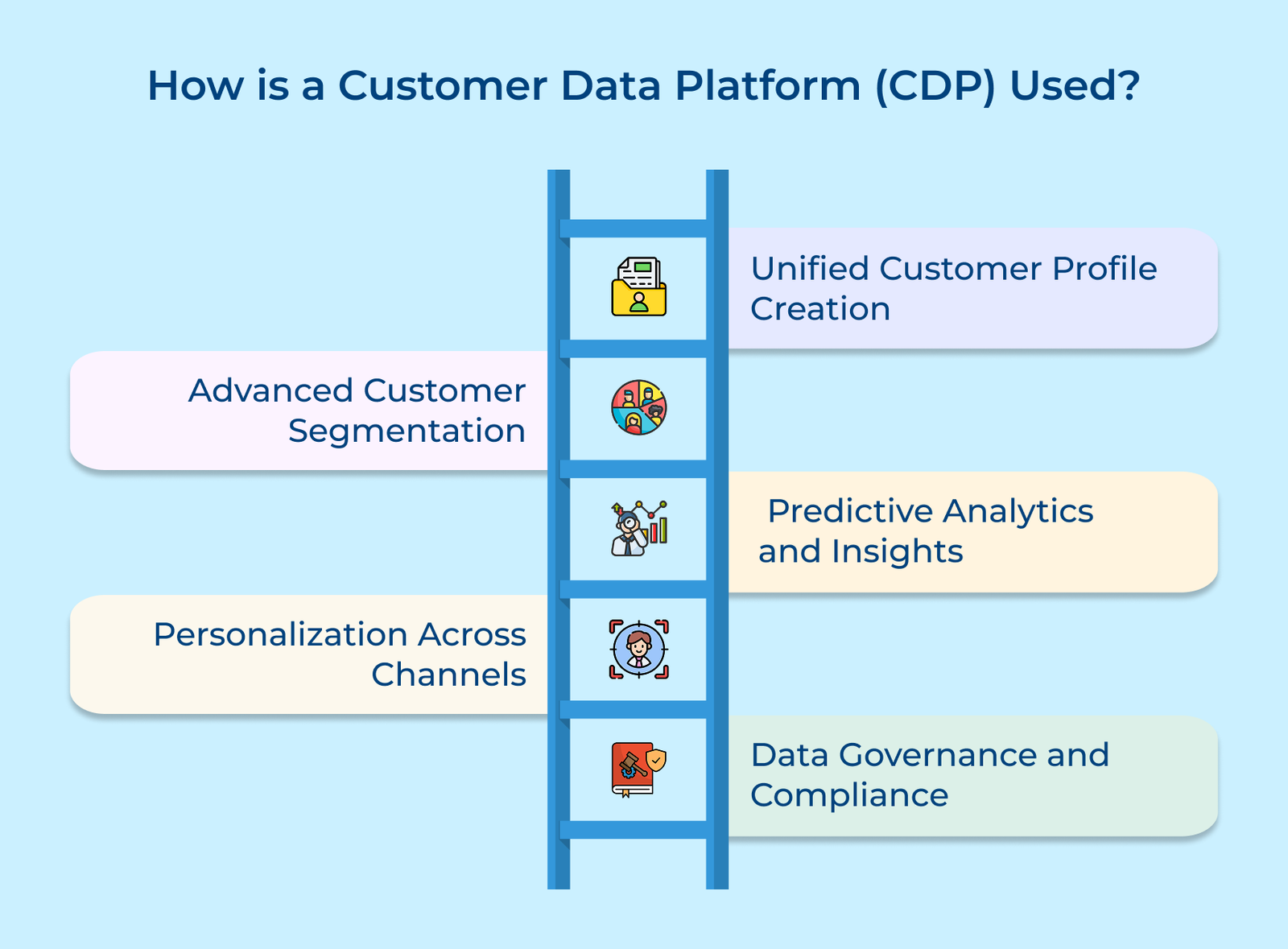
Below are the ways a customer data platform is used to optimize marketing strategies, enhance customer retention and lead to increased revenue.
1. Unified Customer Profile Creation
CDPs excel at creating 360-degree customer profiles by aggregating data from multiple sources. They seamlessly blend information from websites, mobile apps, social media and offline interactions. The broader view helps businesses understand customers on a deeper level, going beyond purchases to uncover habits, patterns and preferences.
2. Advanced Customer Segmentation
The platforms become powerful segmentation engines that go far beyond traditional demographic categorizations. CDPs study behavior, purchase history and interaction data to group customers into meaningful, detailed segments. Marketers can design hyper-targeted campaigns that speak directly to specific customer groups with unprecedented precision.
3. Predictive Analytics and Insights
CDPs transform historical data into forward-looking intelligence. Examining interactions over time, they can spot patterns, anticipate future behavior, identify who might leave and catch early signs of shifting trends. The predictive capability allows businesses to proactively design strategies that anticipate customer needs before they even arise.
4. Personalization Across Channels
The platforms help businesses understand what customers want across different channels. CDP makes it possible to offer a consistent, personalized experience. People browse websites, use apps and interact on social media. The result is a seamless and highly personalized customer journey.
5. Data Governance and Compliance
CDPs play a crucial role in managing data privacy and regulatory compliance. They help businesses maintain clean, organized and legally compliant customer data ecosystems. CDPs help businesses use customer data effectively while making sure privacy and security are properly maintained.
Explore the differences between CRP vs CRM, helping you navigate through the complexities to make an informed decision that aligns with your business goals.
Key questions to consider:
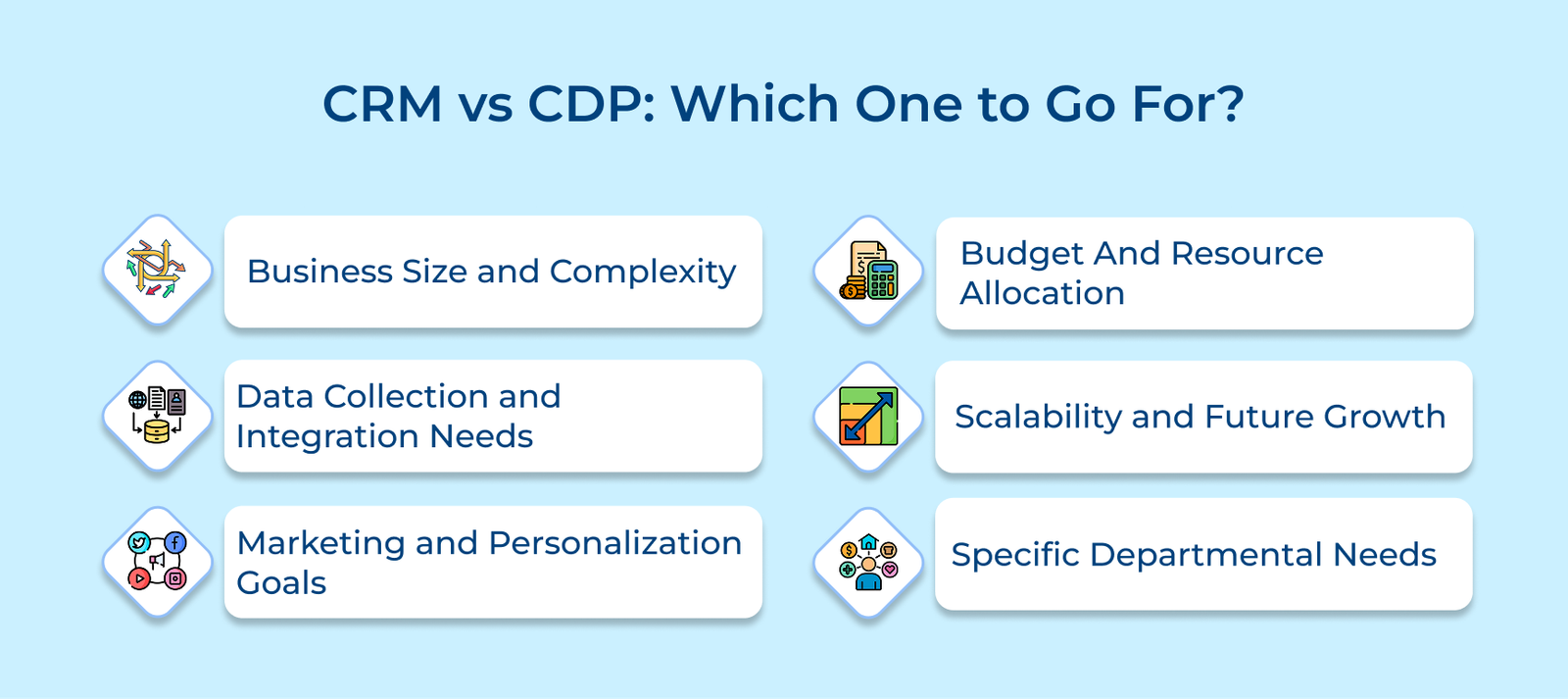
Small businesses with straightforward sales processes typically benefit from CRMs. The platforms provide focused tools for tracking customer interactions and managing sales pipelines. They make managing customer relationships easier, giving smaller teams what they need without burdening them with complicated data tasks.
You should be informed where your data comes from and how you need to use it. CRMs are best for handling organized data from direct customer interactions. CDPs are better suited for pulling together data from many sources, like websites, apps, social media and in-person activity. The right choice depends on how complex your data needs are.
CDP could be a better fit if your main goal is to tailor marketing to each customer. The platforms excel at creating comprehensive customer profiles and enabling sophisticated segmentation. CRMs are more suited to sales-driven personalization and direct customer communication tracking.
CRMs are generally more budget-friendly and easier to implement for smaller businesses. They require less technical expertise and provide immediate value for sales teams. CDPs often cost more, but they give you powerful tools to handle complex data and improve how you understand to reach your customers.
Consider what you want your business to achieve in the long run. CRMs grow linearly with your sales team, adding more users and fields as you expand. CDPs are designed for exponential scalability, adapting to increasingly complex data environments. Your choice should align with your anticipated business growth and technological evolution.
Identify the primary users of the platform within your organization. Sales and customer service teams usually lean toward CRMs because they focus on day-to-day customer interactions. Marketing and analytics teams benefit more from CDPs’ comprehensive data insights. Some businesses opt for both platforms to meet diverse departmental requirements.
Understanding CRM and CDP helps you see how each tool shapes the way a business connects with its customers. They aren’t competing systems. They simply shine light on different parts of the customer journey. A CRM tracks everyday sales conversations. A CDP pulls together behavior from multiple touchpoints to show the bigger picture.
Most teams don’t pick one over the other. They use both because it gives them a clearer, more honest view of their audience. What this really means is that smart use of data now defines how well a brand understands its customers. A small team might lean on a CRM to stay on top of leads and conversations. A larger company might rely on a CDP to study patterns across channels.
Knowing how each tool works helps you make better decisions and turn scattered information into something you can actually act on. It opens the door to more relevant, thoughtful customer experiences.

CRMs primarily collect data through direct interactions like sales calls, customer service encounters and manual data entry by team members. They focus on structured, transactional information captured during specific business interactions. CDPs automatically gather data from websites, apps, social media and sales systems to build a complete customer profile.
A Customer Relationship Management (CRM) platform is a specialized software system designed to help businesses manage and analyze interactions throughout the customer lifecycle. It’s a central hub for sales teams to track leads, manage pipelines, log communications and support better customer interactions.
CRM (Customer Relationship Management) focuses on managing direct customer interactions and sales processes. CDP (Customer Data Platform) creates comprehensive customer profiles by aggregating data from multiple sources. DMP mainly handles anonymous audience data to help with broad audience targeting and advertising.
Customer Data Platforms transform raw data into sophisticated customer insights by creating multi-dimensional profiles. They blend behavioral, demographic and contextual data from various touchpoints to enable hyper-personalized marketing experiences. CDPs help businesses learn what each client prefers, anticipate their actions, and tailor marketing across various channels.
Businesses should choose a CDP when they need to bring together customer data from many sources, build complete profiles and deliver personalized experiences. It’s particularly valuable for organizations with complex customer journeys, multiple marketing channels and a desire to create more intelligent, data-driven marketing approaches.
CRMs and CDPs can be complementary technologies when integrated effectively. While CRMs focus on direct customer interactions, CDPs provide a broader view of customer data. Using both platforms together will help businesses pair detailed interaction records from CRMs with the broad data insights from CDPs, giving a fuller picture of their customers and improving engagement.
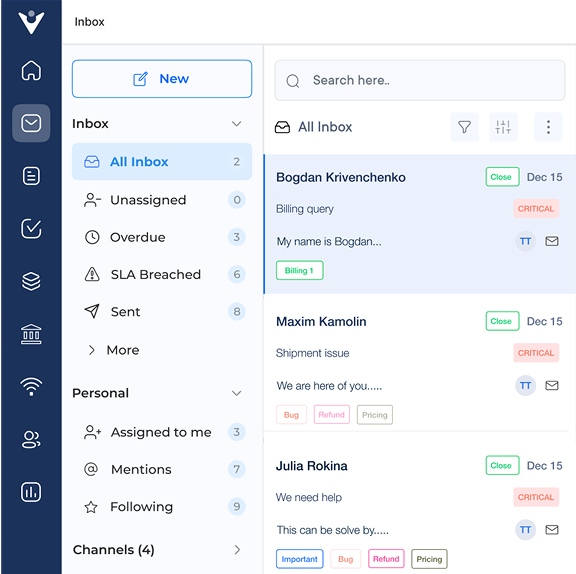
Grow Customer Relationships and stronger team collaboration with our range of products across the Conversational Engagement Suite.
Omnichannel Customer Support & Help Desk Software
AI Enabled Business Messaging and Chatbot Software
Sales Engagement & CRM Software
Call Center Software & Virtual Phone System
Product Marketing & Experience Platform
Customer Experience & Feedback Management Software

 Sales Collaboration: Strategies, Use Cases & Challenges
Scroll to top
Sales Collaboration: Strategies, Use Cases & Challenges
Scroll to top