1. Understand Your Customer Base Inside Out
Understanding your customer base is the cornerstone of a successful customer-first strategy. Deep customers enable businesses to create targeted solutions and meaningful experiences that align with customer needs.
Start by developing detailed buyer personas through demographic data, behavior patterns and direct customer feedback. Market research, surveys and focus groups help pain points, while analyzing purchase patterns reveals trends. It enables businesses to refine product offerings, marketing strategies and resource allocation.
Best practices:
- Regularly update personas with insights from quarterly customer interviews, keeping track of emerging trends.
- Use a centralized data system to analyze customer data monthly, identifying new needs and optimizing strategies.
2. Map Every Step of the Customer Journey
Journey mapping provides a visual overview of customer interactions, highlighting areas for improvement and opportunities for better engagement. It helps identify service gaps, streamline processes and ensure consistency across all touchpoints while uncovering hidden pain points.
Begin by identifying all customer touchpoints, from brand awareness to post-purchase support. It includes website visits, social media, phone calls and in-store experiences. Mapping the journeys reveals common paths, successful conversion routes and friction points, allowing businesses to optimize the customer experience.
Pro tips:
- Form cross-functional teams to review and update journey maps quarterly, incorporating customer feedback.
- Use journey mapping software to visualize paths and share insights across teams for improved alignment.
3. Collect and Analyze Customer Feedback
Customer feedback is essential for understanding satisfaction, expectations and improvement opportunities. Regular feedback collection keeps businesses in tune with customer needs, adapts to preferences and enhances trust by showing customers they’re heard.
Multi-channel feedback systems capture customer opinions through email surveys, phone calls and social media. The approach ensures easy access to feedback across all touchpoints. Regular surveys offer structured insights, while social media monitoring and review analysis provide real-time sentiment, creating a complete picture of customer satisfaction.
Actionable tips:
- Create a dedicated feedback analysis team to review trends and develop action plans weekly.
- Use automated sentiment analysis tools to track feedback across channels and generate monthly leadership reports.
4. Train Teams in a Customer-First Mindset
Team training is key to embedding customer-first principles into daily operations. A well-trained team ensures consistent, high-quality experiences at every touchpoint, enhancing a customer-centric culture that empowers employees to prioritize customer satisfaction.
Training programs should cover customer service skills, product knowledge and problem-solving techniques. The programs include role-playing exercises, case studies and real-world scenarios to prepare teams for various customer interactions. Ongoing workshops and refresher courses ensure teams stay updated on best practices.
Best practices:
- Hold monthly training sessions combining theory with hands-on exercises, using real customer feedback.
- Launch a peer recognition program, allowing team members to nominate colleagues for outstanding service, with quarterly rewards.
5. Create Clear Customer Service Standards
Clear service standards establish a framework for consistent, high-quality customer interactions. The guidelines help ensure all team members understand expectations, maintain uniform service levels and provide measurable metrics for performance evaluation. Response time expectations define clear timeframes for addressing customer inquiries across channels, phone calls, emails and social media.
Service quality standards set communication, professionalism and problem-resolution guidelines to ensure consistent service delivery. Problem resolution frameworks outline step-by-step procedures, including escalation paths and solution templates, ensuring efficient issue resolution without compromising customer satisfaction.
Pro tips:
- Create a comprehensive service standards manual with real-world examples, updated quarterly based on team and customer feedback.
- Implement a tiered response system to prioritizes urgent issues and allocate resources effectively across customer requests.
6. Implement Right Technology and Tools
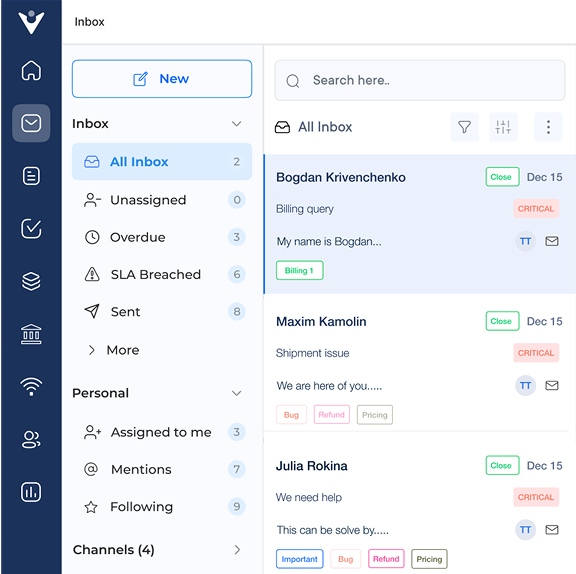
Modern technology solutions optimize customer service by streamlining operations and enabling personalized experiences. The right tools help businesses manage relationships, track interactions and gain insights.
CRM systems should align with business needs, integrating customer history, preferences and interaction data for seamless services across all touchpoints. Implementing the systems involves data migration, team training and workflow customization. Support software boosts team efficiency, while analytics platforms provide valuable customer insights, creating a unified system for managing service effectiveness.
Actionable tips:
- Conduct vendor evaluations every two years to ensure tools align with evolving business needs and explore emerging technologies.
- Provide monthly training sessions and create detailed documentation to maximize tool utilization across the team.
7. Measure Customer Satisfaction and Loyalty
Measuring satisfaction and loyalty offers valuable insights into the success of customer-first strategies. Regular tracking highlights trends, tracks improvement and identifies areas for attention, guiding strategic decisions.
Metrics like NPS and CSAT provide direct feedback on customer satisfaction, helping pinpoint specific areas for improvement. Retention and lifetime value metrics assess the effectiveness of loyalty programs and the long-term financial impact of customer relationships, allowing businesses to optimize their retention strategies.
Pro tips:
- Hold monthly dashboard reviews with leadership to analyze key metrics and develop action plans.
- Set up automated alerts to flag significant changes in satisfaction scores, enabling quick responses to emerging issues.
8. Develop a Proactive Customer Support System
Proactive support anticipates customer needs and resolves issues before they escalate, improving satisfaction. 87% of customers appreciate proactive solutions, boosting satisfaction and loyalty. Businesses reduce support costs and enhance the customer experience by addressing potential problems early.
Predictive analytics helps identify emerging issues by analyzing customer behavior, product usage and support trends. Early warning systems allow businesses to reach out with solutions before customers even notice a problem. Self-service options like knowledge bases and AI-powered chatbots offer 24/7 support, enabling quick problem resolution during high-demand periods.
Actionable tips:
- Update knowledge base content monthly based on customer feedback and usage patterns.
- Use AI-driven analytics to predict issues and create automated notifications for support teams.
9. Continuously Improve Based on Insights
Continuous improvement keeps customer service strategies effective and aligned with changing market dynamics. Businesses stay competitive, enhance service quality and reinforce their commitment to satisfaction by regularly assessing performance.
The process involves reviewing customer feedback, analyzing satisfaction metrics and evaluating team effectiveness to drive data-informed improvements. Adapting strategies to evolving customer preferences ensures businesses remain relevant, integrating new technologies and methods to maintain excellence.
Best practices:
- Hold quarterly strategy reviews to assess performance, identify opportunities and create action plans.
- Implement a customer feedback loop that channels insights to relevant teams and tracks the execution of improvements.
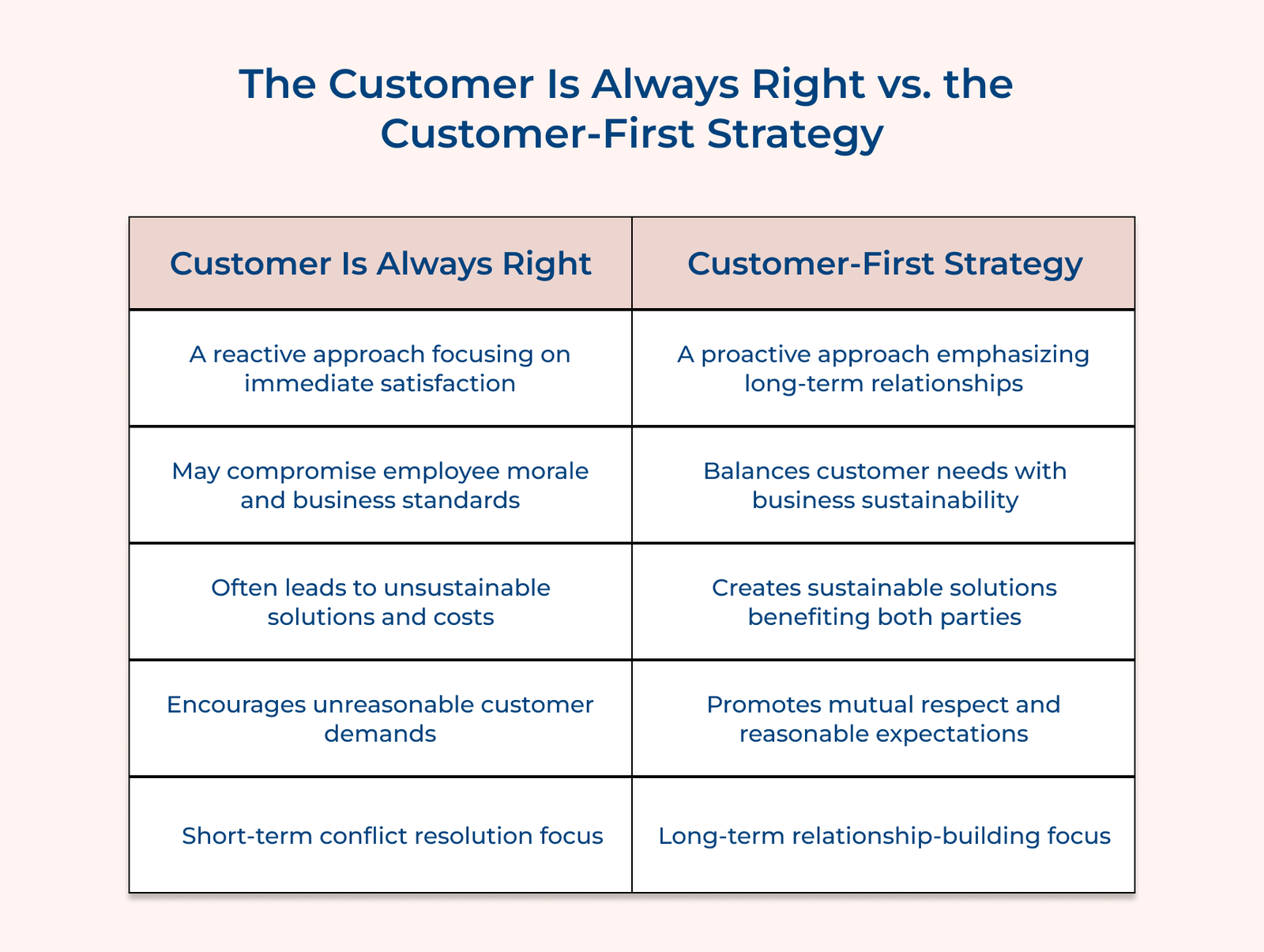
The Customer Is Always Right vs. the Customer-First Strategy
The traditional “customer is always right” mindset and modern customer-first strategy represent two distinct approaches to customer service. Let’s explore them in more detail: