Customer Satisfaction Survey Guide: Question, Steps & Examples
The blog explains what a customer satisfaction survey is and how to design effective questions. It also explores ways to analyze responses and turn feedback into meaningful improvements.

The blog explains what a customer satisfaction survey is and how to design effective questions. It also explores ways to analyze responses and turn feedback into meaningful improvements.
Is your business treating customer feedback as a box-checking exercise? Because many do. They send a survey after a purchase, glance at the star rating and move on. The result is a growing gap between what companies think customers experience and what customers actually feel. That gap has a price tag. 80% of CEOs believe they have superior customer experience, yet only 8% of their customers agree.
The disconnect isn’t malicious; it’s structural. Customers rarely complain directly. All they do is simply stop returning, stop recommending and occasionally leave a three-word review that explains nothing. The signals exist, but without the right questions asked at the right moments, they dissolve into noise.
Customer satisfaction surveys, done with intention, close that gap by. It turns quiet exits and unspoken frustrations into a clear picture of what needs to change and what deserves more investment.
A customer satisfaction survey refers to a simple way to ask customers how they feel about their experience with your product or service. It collects direct feedback through clear, focused questions. Instead of guessing what customers think, you hear it straight from them. Responses highlight what’s working, what feels frustrating and what needs attention.
Customer satisfaction score (CSAT) is a specific metric that typically asks customers to rate their satisfaction on a numbered scale. The score is calculated by dividing satisfied customers by total respondents and multiplying by 100. It gives companies a clear percentage that reflects overall customer happiness.
Key types:
Let’s go through the key benefits of customer satisfaction surveys and see how consistent feedback helps you make smarter business decisions.
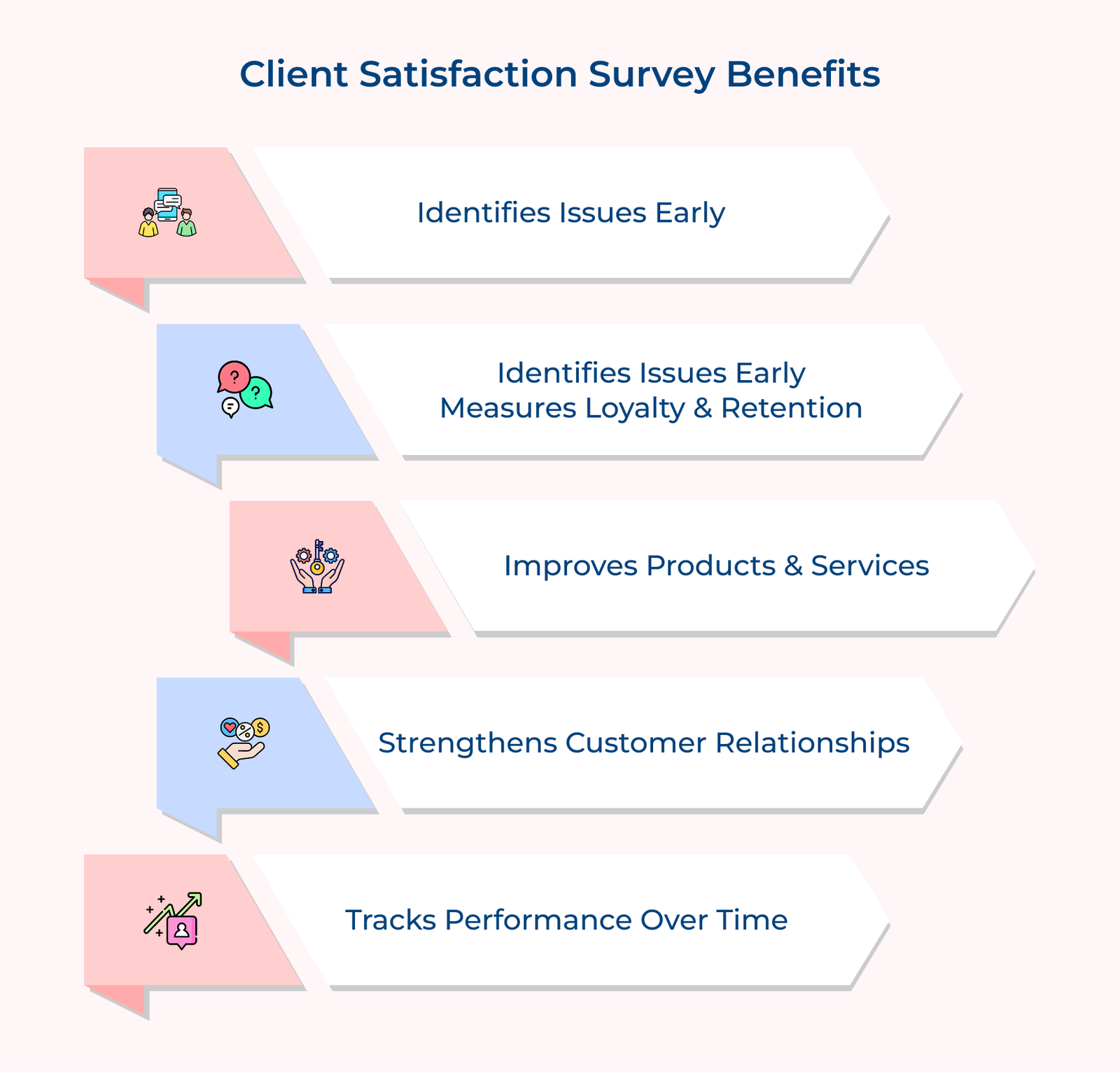
1. Identify Problems Before They Escalate
Surveys uncover issues customers might not mention directly. Unhappy experiences are flagged before they simply leave for a competitor. The early warning system helps you fix problems while you still have the chance to retain valuable customers.
2. Measure Customer Loyalty and Retention
The surveys help you understand which customers are likely to stick around and which ones might be at risk of leaving. You can spot patterns in satisfaction levels that predict future behavior. The insight lets you focus retention efforts where they matter most.
3. Improve Products and Services With Real Insights
Direct input shows what customers love and what needs improvement. Instead of guessing what improvements to make, you have data-driven priorities. The targeted approach saves time and resources while delivering changes customers actually want.
4. Build Stronger Customer Relationships
When you ask for feedback, customers feel heard and valued by your company. The simple act of seeking their opinion demonstrates that you care about their experience. The emotional connection often translates into increased loyalty even before you make any changes.
5. Track Performance Over Time
Regular surveys create a historical record of how customer sentiment changes as your business evolves. Monitoring trends shows which initiatives succeed, helping you make informed decisions based on actual feedback rather than assumptions.
The following is a collection of survey questions organized by category to help you gather the feedback that matters most.
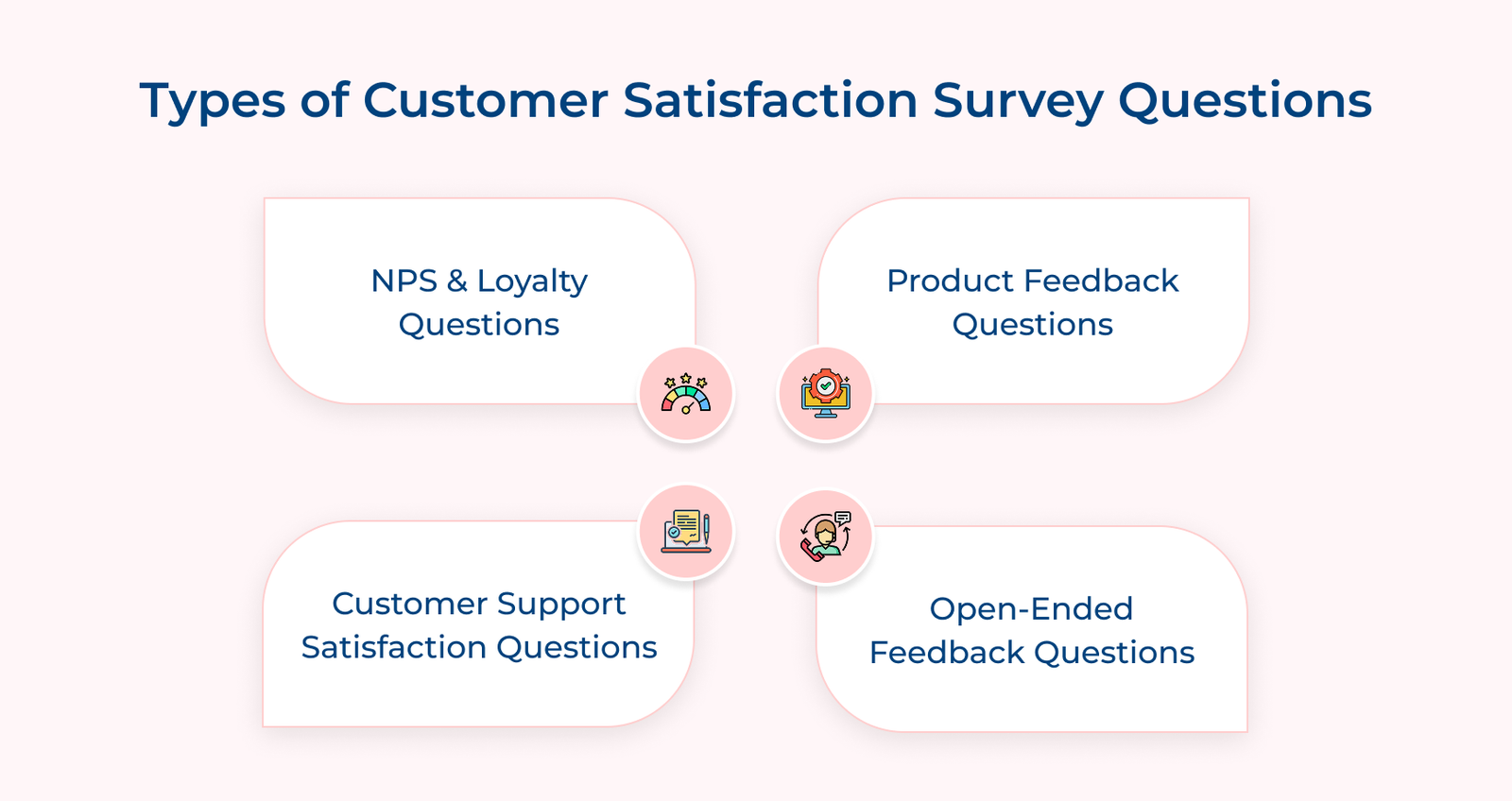
The questions measure how likely customers are to recommend you and reveal the strength of their emotional connection to your brand. They help you spot loyal supporters and understand what keeps them coming back.
Key questions:
Loyalty questions go beyond satisfaction. Customers who recommend you openly share their positive experiences with others. Their support often brings new business through genuine word of mouth and long-term trust.
Product feedback questions focus on how customers experience what you sell. Responses show which features deliver real value and which parts cause frustration. Clear answers help you see your product from the customer’s point of view instead of relying on internal assumptions.
Essential questions:
Product feedback transforms assumptions into certainty about what customers actually value. The gap between what you think matters and what customers prioritize can surprise you in ways that reshape your entire development roadmap.
Support interactions often shape how customers see your entire company. A single conversation can strengthen trust or damage it. The questions focus on the clarity, speed and effectiveness of your support team.
Key questions:
Support experiences create lasting impressions that outlive the actual problem being solved. A customer who receives exceptional help during a crisis often becomes more loyal than someone who never encountered any issues.
Open-ended questions allow customers to speak freely in their own words. No rating scales or fixed options limit what they can share. Responses often reveal details, emotions and specific examples that structured questions fail to capture.
Core questions:
Open-ended responses require more effort to analyze, but they capture nuances that multiple-choice questions miss entirely. Customers often reveal pain points or desires you never considered when designing your original survey questions.
Each industry has its own expectations, processes and pressure points. Generic surveys often miss the details that matter most. Tailored questions help you capture feedback that reflects real-day-to-day experiences within your field.
B2B (Business-to-Business)
B2B relationships usually involve longer sales cycles, multiple decision makers and ongoing collaboration. Feedback should reflect that complexity and focus on partnership, reliability or long-term value.
Key questions:
Business partnerships require consistent effort from both sides. Feedback should reveal how customers view your role. Clear answers show if you are seen as a dependable partner or simply another supplier.
SaaS (Software as a Service)
SaaS success depends on continuous value delivery and seamless user experiences across updates. The questions focus on usability and the ongoing relationship of customers with the platform.
Key questions:
SaaS customers evaluate you continuously rather than just at the point of purchase. Every login and every feature interaction becomes a micro-moment where they decide if they want to renew or explore alternatives.
Ecommerce
Ecommerce customers judge you on the entire journey from browsing to delivery and beyond. The questions cover the unique aspects of online shopping experiences that brick-and-mortar surveys wouldn’t address.
Key questions:
Online shopping removes the ability to touch and examine products before buying. Your website as well as your fulfillment process, must compensate by building trust through accurate descriptions and reliable delivery that exceeds expectations.
Financial Service
Financial services rely on trust and clarity. Customers share sensitive information and expect accuracy, security or guidance they can rely on. The survey questions address security concerns and the clarity of complex financial processes.
Essential questions:
Financial relationships carry emotional weight because money represents security and future possibilities for your customers. Questions must acknowledge the gravity while assessing both practical functionality and the peace of mind you provide.
Below are the seven essential steps to building surveys that enlighten and empower your business decisions.
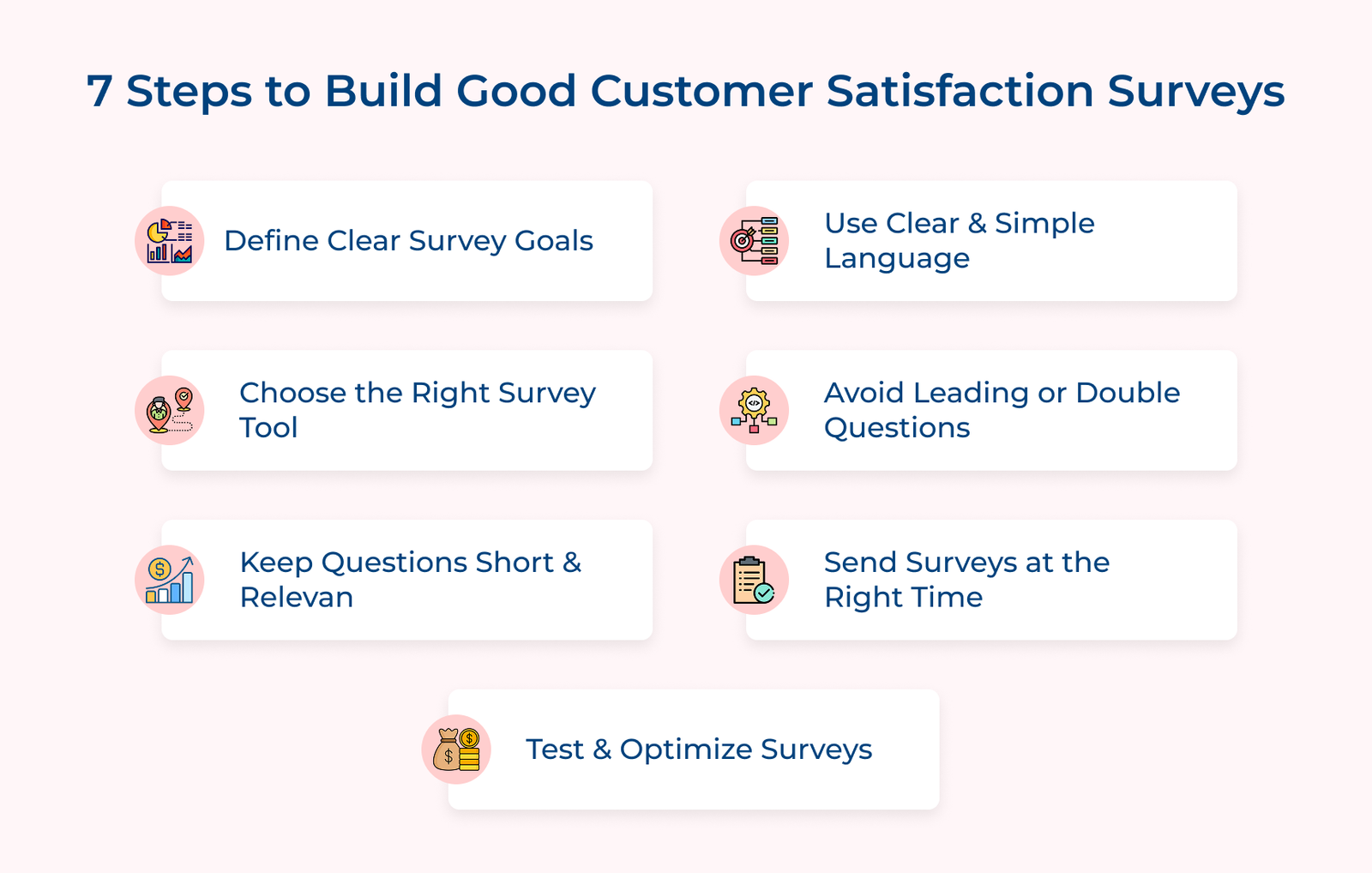
Clear goals keep your survey focused and useful. Collecting random feedback might look productive, but it rarely leads to real improvements. A customer satisfaction survey should answer specific questions that guide decisions and fix actual problems.
Start by deciding what you truly want to measure. Pick metrics that connect directly to customer experience and business outcomes. The metrics shape your questions and keep the survey structured.
Key metrics:
Once you know what metrics matter most, the next crucial element is determining which customer segments to target with your survey. Different customer groups have different experiences with your business based on how long they’ve been customers or which products they use.
Key questions:
Now that you understand your metrics and audience, it’s time to align survey objectives with business priorities. Your survey goals should directly support broader company initiatives like reducing churn or improving a specific product feature that leadership has identified as critical.
The survey tool you choose shapes how smoothly you can design surveys and review results. A mismatch between your needs and your tool’s capabilities leads to potentially abandoned survey projects that never launch.
Key factors:
A good platform grows with your needs as response volumes increase and analysis becomes more detailed. Changing systems later can disrupt data continuity and require additional training.
Key tools:
Long surveys discourage participation and reduce response quality. Every extra question increases mental effort and raises the chances that respondents will skip questions or abandon the survey entirely.
Limit Your Survey to a Maximum of Ten Questions
Survey fatigue appears quickly when questions feel repetitive or unnecessary. Most customers are comfortable spending three to five minutes sharing feedback. Short surveys respect their time and often lead to more thoughtful responses.
Focus Only on Truly Actionable Feedback Areas
Include questions only when you are prepared to act on the answers. Requesting opinions about areas that will not change creates frustration and lowers trust if customers see no visible improvements later.
Remove Any Redundant or Overlapping Questions
Review your survey carefully and eliminate questions that ask the same thing in slightly different ways. Similar wording can confuse respondents and take up space that could be used to gather new insights.
Complex wording makes it harder for customers to understand what you want them to evaluate. Misunderstood questions lead to unreliable answers because respondents may interpret them differently than you intended.
Clear language respects your customers’ time and makes surveys easier to complete. Simple wording also reduces unintentional influence from technical or persuasive terms that can shape responses.
Best practices:
Two-part and leading questions damage data quality because they confuse respondents or steer them toward a preferred answer. When one question covers multiple topics, you cannot tell which part influenced the response. Leading phrasing also pressures customers to agree with a positive assumption instead of sharing their honest view.
Key takeaways:
Consider a problematic example: “How satisfied are you with our friendly customer service and fast response times?” The question commits two sins at once. It asks about two separate things while also using leading language that suggests the service is already friendly and fast.
Survey timing affects response quality and completion rates. Customers provide more thoughtful feedback when the experience is recent and when they have the mental space to respond. Poor timing leads to rushed answers or ignored requests.
Actionable tips:
Timing considerations go beyond just picking the right moment in the customer journey and extend to practical scheduling factors. You need to think about when during the day or week your customers are most likely to engage with your request for feedback.
Key factors:
Testing helps you catch problems before sending your survey to a large audience. Confusing wording, broken skip logic or unclear instructions can weaken your results. Early testing protects response quality and saves time later
Key ways:
Refinement requires acting on what you learn during testing. Remove weak questions, simplify unclear wording and adjust structure where needed. Focused improvements based on pilot data strengthen your survey before full release.
Below are the real-world examples that demonstrate how leading companies gather feedback and turn it into competitive advantages.
Uber
Uber uses a two-way rating system after every ride. Drivers and passengers rate each other on a five-star scale through the mobile app within moments of trip completion. Riders can also answer short follow-up questions about cleanliness and route experience
Immediate feedback helps Uber monitor service quality and identify patterns that require attention. Consistent low ratings trigger review processes, while strong ratings reinforce reliable performance across cities.
Airbnb
Airbnb sends detailed satisfaction surveys to both hosts and guests after each checkout is complete. The survey asks about cleanliness and accuracy of listing descriptions, along with communication quality between the two parties involved in the booking.
Dual-feedback highlights gaps between expectations and reality while building trust through transparent reviews that future users can read. The system has become central to how the platform maintains quality because it empowers the community to self-regulate rather than requiring Airbnb to personally inspect every property.
Apple
Apple sends short email surveys after support calls and in-store visits to Apple Store Genius Bars, asking customers to rate their satisfaction. Questions focus on issue resolution and the clarity of the support interaction.
The targeted surveys help Apple identify training needs and maintain service consistency across locations. Feedback informs performance reviews and improvements in support documentation.
Amazon
Amazon uses a simple post-purchase email survey that asks customers to rate their overall experience and provide feedback on delivery speed or product condition. The surveys appear automatically after the estimated delivery window has passed to ensure customers have actually received and examined their orders.
The systematic approach gives Amazon massive amounts of data about logistics performance and seller reliability across millions of daily transactions worldwide. The company uses the feedback to decide which sellers receive better visibility and which delivery methods require improvement or further investment.
Customer satisfaction surveys replace assumptions with clear evidence about what customers actually experience. The questions you ask today influence the improvements you prioritize tomorrow, highlighting strengths to maintain and gaps that need attention.
Start with short surveys that respect your customers’ time and show that their input matters. Act consistently on the feedback you collect so customers see real changes. Continuous listening and visible improvements create a cycle where customer input shapes how your business grows.

Measure customer satisfaction through structured surveys that ask customers to rate their experiences using standardized metrics such as CSAT or NPS. Send surveys after key moments like purchases or support interactions so feedback reflects recent and accurate impressions.
Customer satisfaction surveys give you direct access to honest opinions that customers might not voluntarily share through other channels like social media. The insights help you identify problems early and make data-driven decisions about where to invest resources rather than relying on assumptions about what customers want.
Review response patterns to identify strengths to maintain and weaknesses that require attention. Share findings with relevant teams so support, sales and product groups can act on specific issues raised by customers.
Develop a clear action plan that prioritizes the most frequent or impactful concerns. Follow up with customers who reported issues and communicate improvements so they see that their feedback led to real changes.
Select questions that connect directly to goals and areas you can realistically improve. Focus on topics tied to measurable outcomes rather than curiosity-driven questions that will not influence decisions.
Ask customers to evaluate specific parts of their experience such as product quality, ease of use or support responsiveness, using clear language. Combine rating scale questions for measurable data with open-ended questions that allow customers to explain their perspective in detail.
Grow Customer Relationships and stronger team collaboration with our range of products across the Conversational Engagement Suite.
Omnichannel Customer Support & Help Desk Software
AI Enabled Business Messaging and Chatbot Software
Sales Engagement & CRM Software
Call Center Software & Virtual Phone System
Product Marketing & Experience Platform
Customer Experience & Feedback Management Software

 What is Customer Feedback Analysis?
Scroll to top
What is Customer Feedback Analysis?
Scroll to top