How to Create a Customer Success Plan: 8 Key Steps
A customer success plan outlines clear steps to onboard customers, track goals and drive long-term value. It helps businesses improve retention, satisfaction and growth through proactive support.
A customer success plan outlines clear steps to onboard customers, track goals and drive long-term value. It helps businesses improve retention, satisfaction and growth through proactive support.
Most businesses lose customers the same way – gradually through a series of small gaps between what was promised and what was actually delivered. Sales closes the deal with confidence, but the experience that follows feels disconnected. The customers are left to figure things out on their own until frustration quietly becomes a decision to leave.
The gap rarely comes from a bad product or a team that isn’t trying. It comes from the absence of a deliberate structure that guides customers from the moment they sign to the moment they see real value and keeps them there. A customer success plan is a structure that companies build to stop reacting to churn after it happens and start making the conditions for it to disappear.
Below, we’ll go through how to build that plan, the elements that make it work, a clear path to putting it in place and examples from companies that have turned customer success from a support function into one of their strongest retention engines.
A customer success plan refers to a clear, written plan that explains how you will help a customer achieve their desired outcomes. It connects their goals to specific actions, timelines and responsibilities. The plan serves as a shared roadmap between the company and customer throughout their relationship.
The plan starts by identifying what the customer wants to accomplish and why they bought your product. Then it breaks down the journey into clear steps with timelines and responsibilities. Regular check-ins track progress and adjust the approach based on what’s actually happening.
Key purposes:
Let’s go through the key reasons a customer success plan helps reduce churn and keep customers seeing real value from your product.
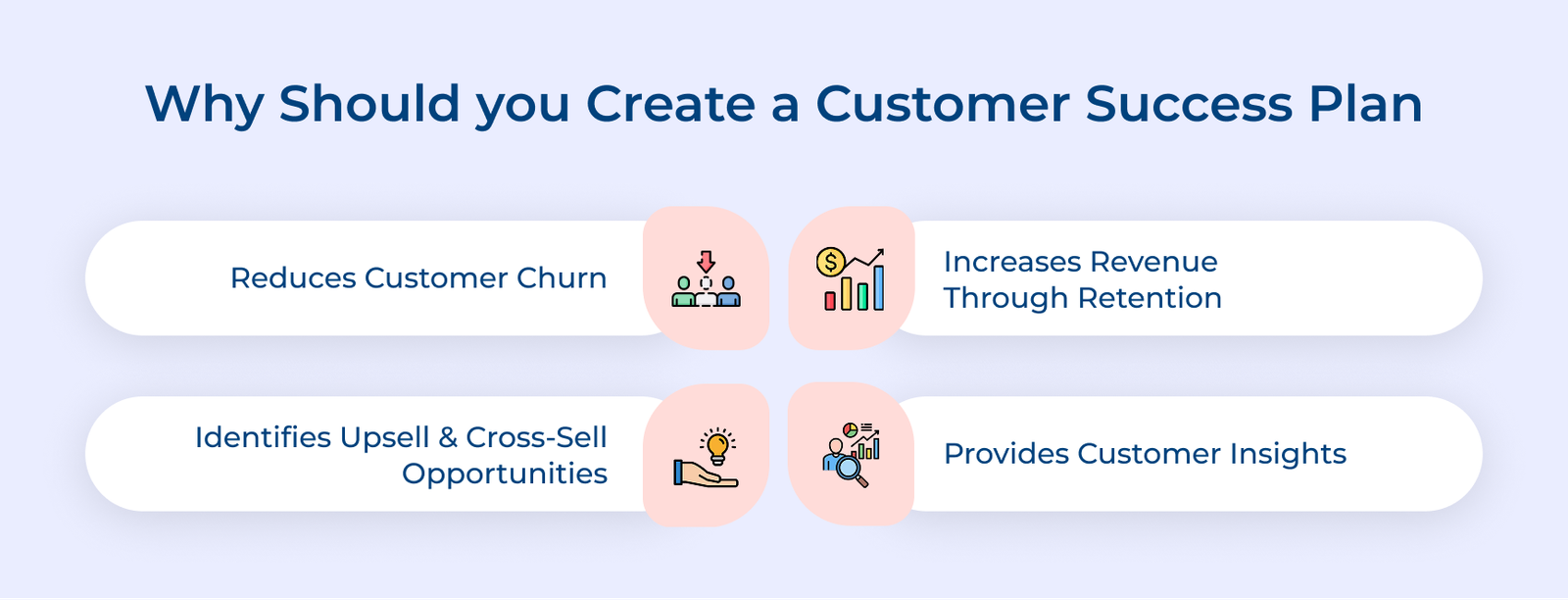
Reduce Customer Churn
A clear plan helps you spot warning signs early. Engagement drops, missed milestones and low product usage all become visible when progress is tracked consistently. Conversations happen sooner. Issues get resolved before they turn into cancellations. Customers who see steady involvement in their progress are less likely to leave.
Increase Revenue Through Customer Retention
Keeping existing customers costs significantly less than acquiring new ones and retained customers spend more over time. Your success plan builds loyalty by proving value at every stage. Happy customers who achieve their goals naturally want to continue the relationship.
Identify Sales Opportunities Via Cross-selling and Upselling
Regular reviews highlight growth moments. A customer hiring more staff, entering new markets or facing new challenges may need additional features or services. Context from the success plan helps you recommend the right expansion at the right time. Suggestions feel relevant because they connect directly to stated goals.
Provide Insights About Customers
Tracking customer journeys in an organized way reveals patterns. You begin to see what drives strong results and where friction appears. The insights improve product decisions and refine onboarding. Over time, you understand which customer types need what kind of support.
Strengthen Customer Relationships
The collaborative nature of creating or following a plan builds trust between your team and the customer’s team. Regular communication becomes natural rather than forced. Customers start to view your team as invested in their outcomes, not just in closing tickets.
Improve Internal Team Alignment
Everyone from sales to support understands the customer’s goals and can contribute meaningfully to achieving them. The plan eliminates confusion about priorities and responsibilities. Teams collaborate more effectively because everyone understands what success looks like for that customer.
Let’s go through the key differences in purpose, timing and impact so you can understand how each supports the customer journey.
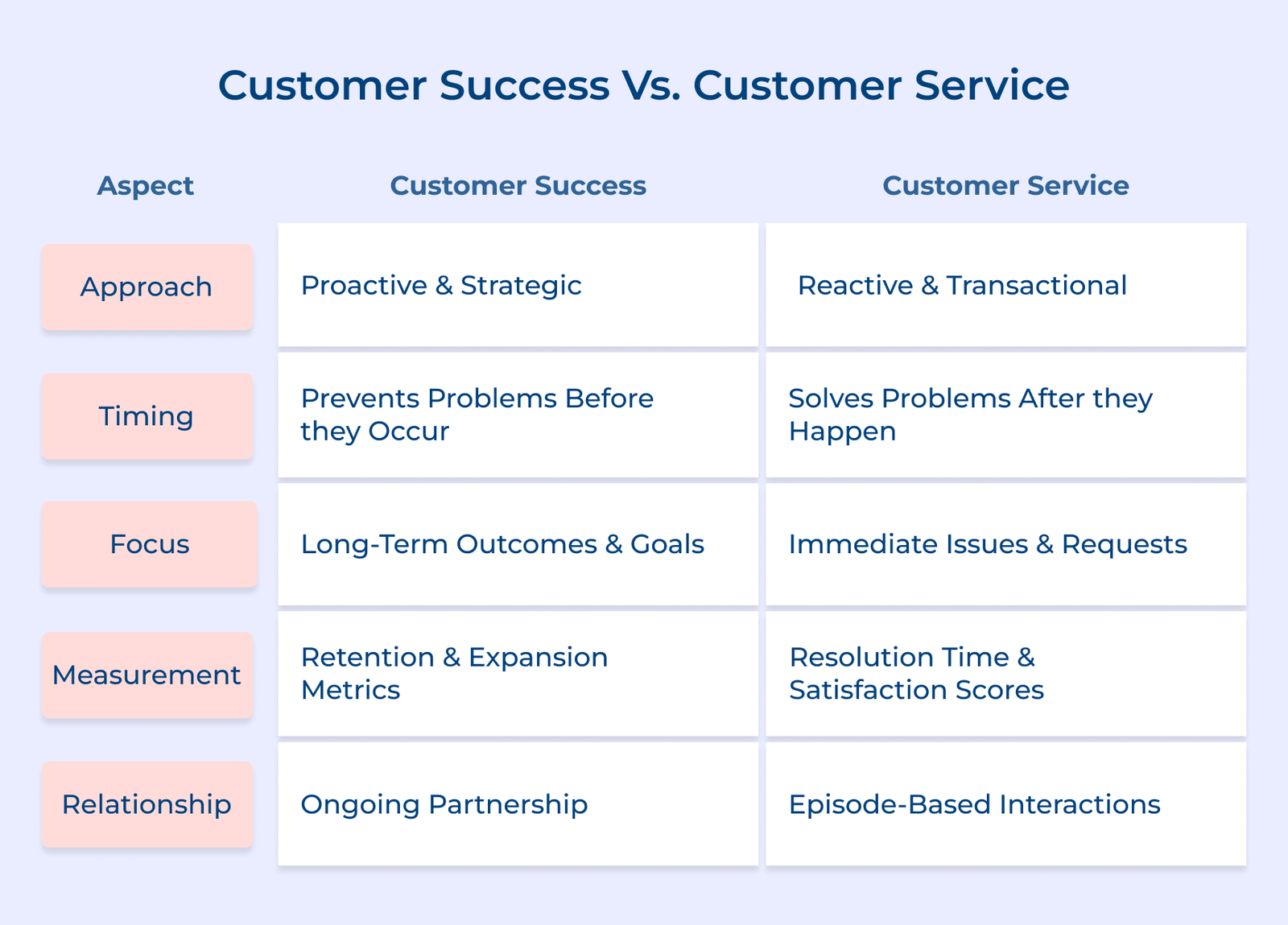
Proactive vs Reactive Approach
Customer success teams check in regularly to make sure they’re on track and getting value from the product. They anticipate needs and address potential roadblocks before customers even realize there’s an issue.
Customer service waits for customers to come to them with questions or problems that need immediate attention. The team responds to inbound requests and works to resolve whatever issue prompted the customer to make contact.
Strategic vs Transactional Focus
Customer success looks at the bigger picture. Teams understand each customer’s business goals and connect product usage to outcomes that matter over time. Relationships and results are the priority. Customer success teams use it to guide decisions, recommend improvements and ensure every interaction contributes to the customer’s long-term success.
Customer service handles individual tickets or calls with the goal of resolving that specific issue quickly and effectively. Once the problem is solved, that particular interaction is complete regardless of the bigger picture.
Preventing vs Solving Problems
Customer success monitors data and usage patterns to identify customers who might be struggling or not adopting key features. They intervene early with training or guidance to prevent frustration and ensure customers stay on a path to success.
Customer service responds when something has already gone wrong or when a customer has a specific question they can’t answer. The team fixes bugs, explains features and troubleshoots issues that are actively blocking the customer right now.
Relationship Building vs Issue Resolution
Customer success managers build ongoing relationships with their assigned accounts and become trusted advisors who understand the customer’s business. They schedule regular check-ins and maintain ongoing dialogue regardless of whether problems exist.
Customer service interactions are typically brief and focused solely on the matter at hand without continuity between contacts. Different agents may handle subsequent requests from the same customer since the goal is efficient resolution rather than relationship depth.
Check out the core elements that work together to create a framework that guides your team and keeps customers moving forward.
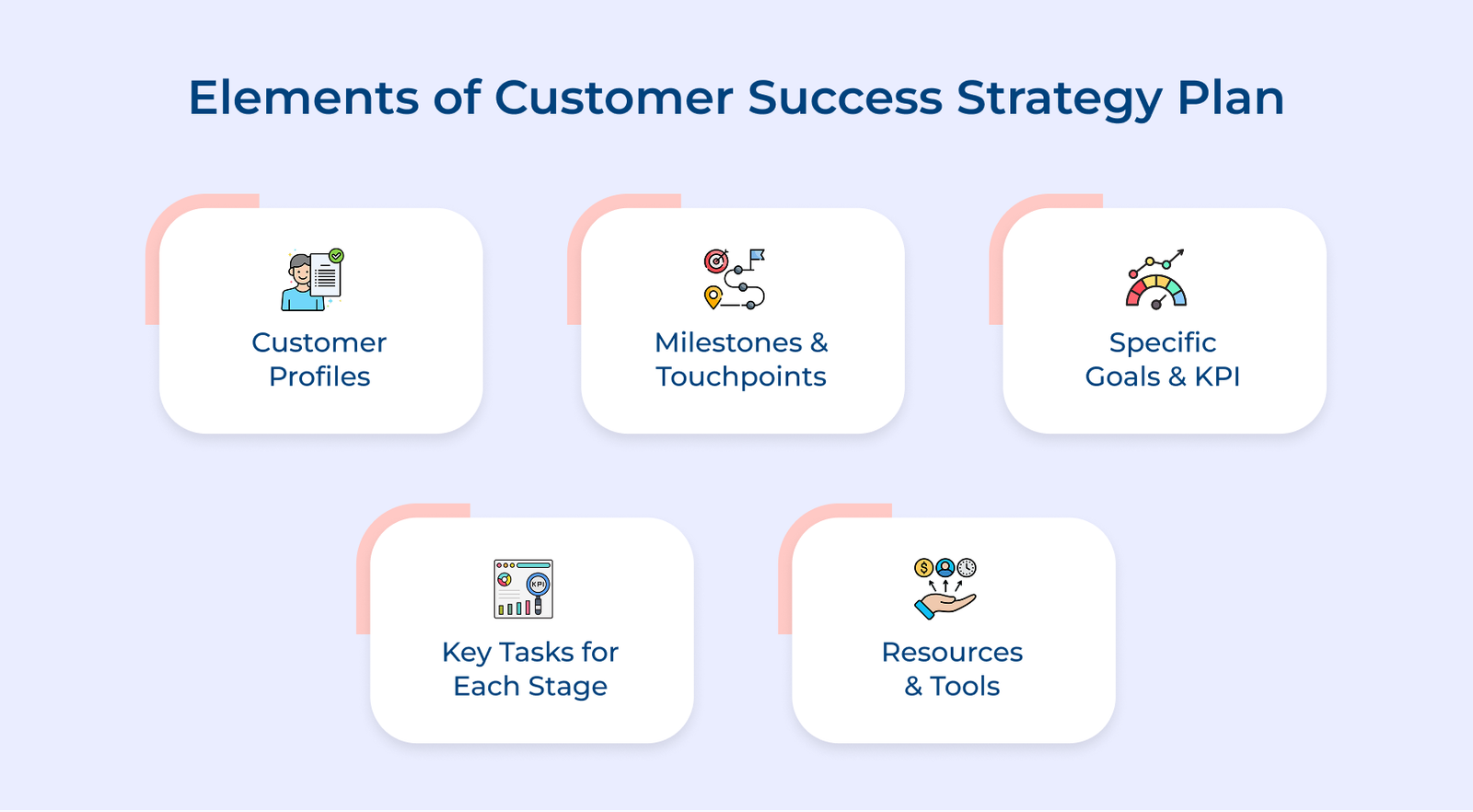
Understanding who your customers are is the foundation of everything else in your success strategy. You need detailed profiles that go beyond basic demographics to capture goals, challenges, and how they prefer to work.
Pro tips:
Strong customer profiles allow your team to offer guidance that is relevant and actionable. Every conversation becomes more meaningful because it addresses the customer’s actual situation instead of generic advice. Understanding your customers turns routine interactions into opportunities to build trust and drive outcomes.
Your strategy works best when you define specific moments to engage with customers throughout their journey. The touchpoints aren’t random but strategically placed where customers typically need guidance or where the risk of disengagement increases.
Key points:
Each milestone represents an opportunity to reinforce value and course-correct if the customer is drifting off track. Regular touchpoints create a steady rhythm in the relationship and prevent customers from feeling overlooked between major moments.
Your strategy must include measurable objectives that tell you if your customer success efforts are actually working. Vague aspirations like “make customers happy” don’t give your team direction or help you improve over time.
Clear metrics drive accountability and continuous improvement across your organization. You need both leading indicators that predict future outcomes and lagging indicators that measure actual results like retention rates.
Breaking the customer journey into clear stages with defined responsibilities keeps your team focused on what drives progress. Each stage, from onboarding to renewal, has specific objectives and tasks designed to move customers forward.
Detailed task lists eliminate confusion about who does what and when something should happen in the customer lifecycle. Your team knows exactly which actions to take at each stage rather than making it up as they go.
A strong strategy outlines the resources your team can use to help customers succeed and defines when to deploy them. It includes educational content, technical support, dedicated specialists and technology that makes customer interactions smoother.
Actionable tips:
Knowing your resource inventory prevents over-promising and helps you scale your success function as you grow. The right tools amplify your team’s effectiveness and let them focus on high-impact relationship building.
Check out the key steps given below to make sure your client success plan actually drives retention, expansion and long-term growth.
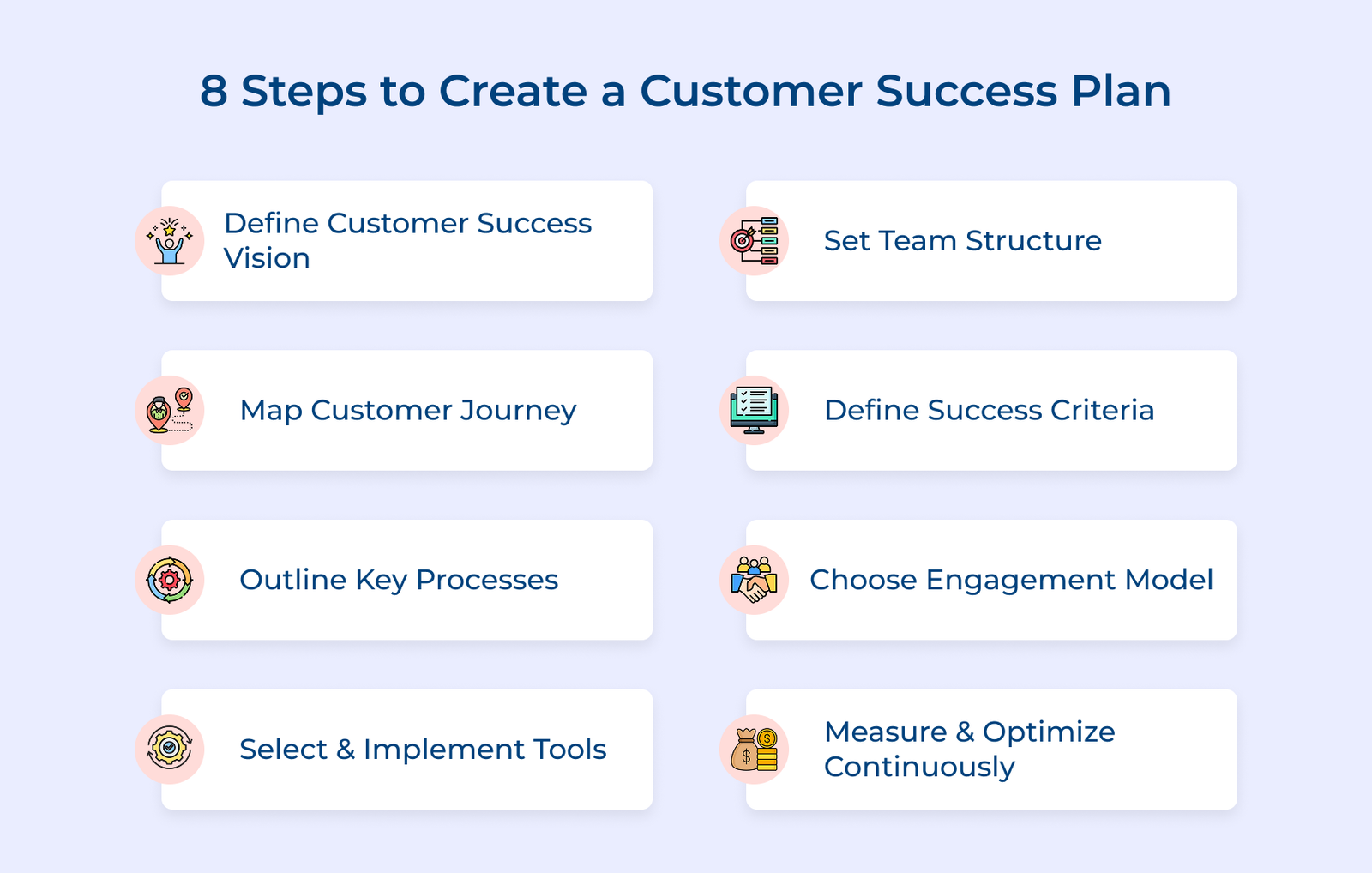
A clear vision sets the direction for your entire customer success operation. It shows what success looks like for both your customers and your team. Without it, decisions become inconsistent, resources are wasted and customers may feel confused.
Key ways:
The most important consideration is connecting the vision directly to revenue and retention. Executives need to see how customer success efforts impact business outcomes, justify resources and support headcount. Avoid the pitfall of a vision that sounds impressive but does not translate into daily actions. Test your statement with frontline team members to ensure they understand the behaviors it requires and can apply it consistently.
The step defines who does what within your customer success function and how accountability flows through the organization. The right structure ensures customers get consistent experiences and prevents critical tasks from falling through the cracks.
Key roles:
Team structure should align with the size of your customer base and the complexity of your product. A simple solution with thousands of small accounts needs different coverage than a complex offering serving a handful of enterprise clients. Getting the structure right early prevents costly reorganizations and sets the stage for scalable growth. It shapes how your team collaborates and how customers experience your company at every stage of their journey.
The step visualizes every interaction or milestone a customer experiences from initial purchase through renewal and beyond. Without a journey map, you’re operating blind and can’t identify where customers struggle or where your team should focus.
Key stages:
Success criteria set clear benchmarks that show if a customer is progressing well through each stage of their journey. They help your team recognize achievements and identify when to step in before issues grow.
Metrics should be observable and actionable, not abstract ideas like “customer happiness” that are hard to measure. Each stage requires its own criteria because onboarding, adoption and renewal have different priorities.
Pro tips:
Documenting how your team handles recurring scenarios and critical moments ensures customers receive consistent, high-quality support no matter who they speak with. Clear processes eliminate guesswork and keep everyone aligned.
Key ways:
Your engagement model defines how much personal attention each customer segment receives based on their value and the complexity of their needs. Allocating resources strategically ensures your team focuses where it can make the biggest impact.
High-value accounts get dedicated managers, while smaller or lower-touch customers benefit from scaled approaches like automated emails and in-app guidance. The segmentation lets you serve more customers effectively without reducing attention for your most important relationships.
Key takeaways:
Equipping your team with the right technology helps automate repetitive tasks and uncovers insights that are hard to see manually. Good tools amplify your team’s effectiveness, letting them focus on building relationships instead of administrative work.
Key factors:
Investing in the wrong tools wastes money and creates frustration when your interfaces are clunky or when features are missing. Start with core needs and add specialized tools as your operation grows or requirements become clearer.
Key tools:
The step ensures your customer success plan evolves based on real results rather than staying static as your business changes. Regular measurement reveals what’s working and what needs adjustment before small problems become major failures.
Continuous optimization turns your customer success team into a learning organization that gets better over time through data-driven refinement. You’ll identify successful patterns to replicate and problematic trends to address before they impact revenue or retention rates.
Actionable tips:
The following are the best practices that help you avoid common mistakes and accelerate your path to building a customer success function.
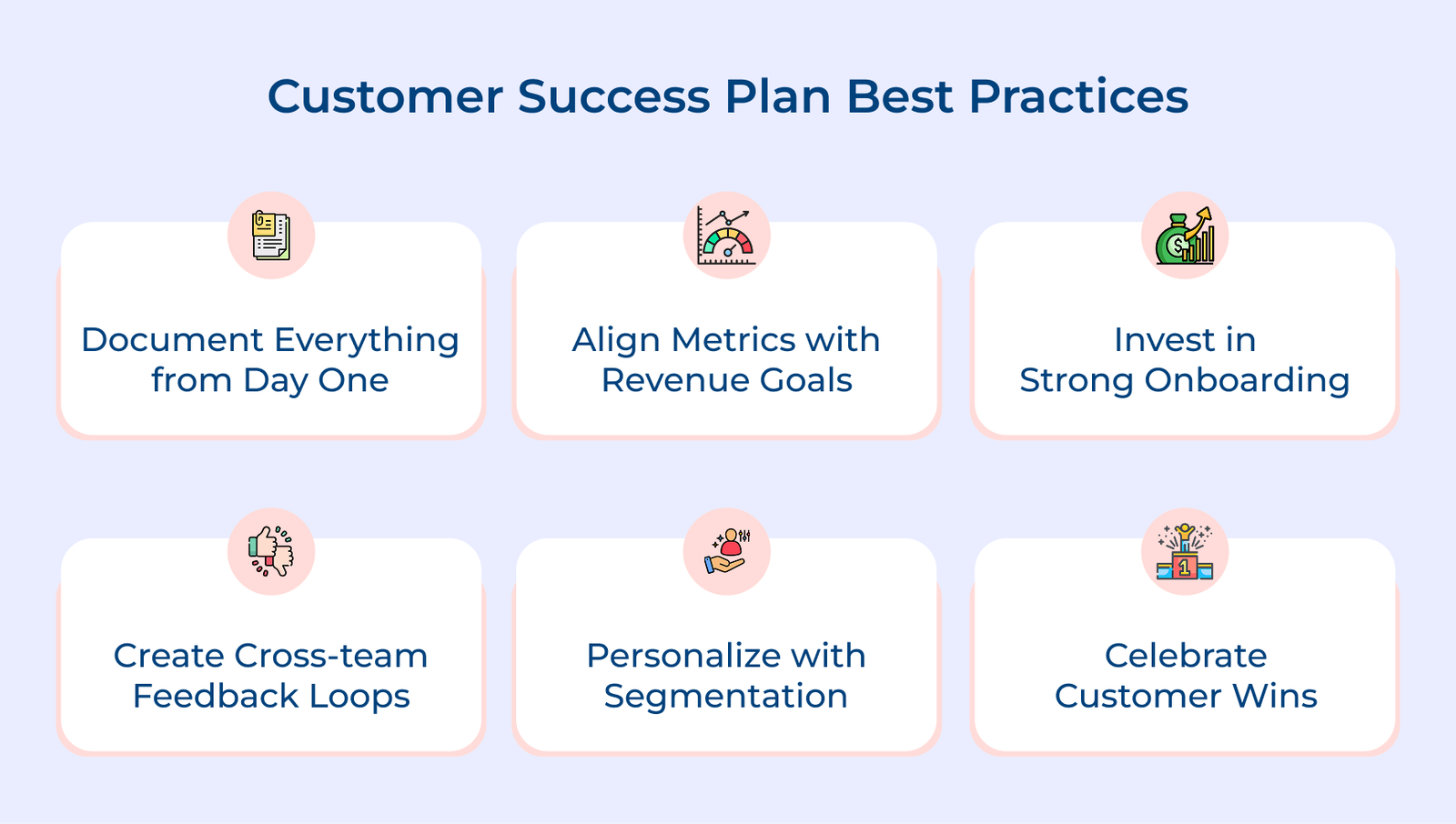
Document Everything from Day One
Write down processes, workflows and decision criteria even when the team is small. Documentation preserves institutional knowledge and makes onboarding new team members faster as you scale.
Align Customer Success Metrics With Revenue Goals
Track metrics that directly connect to business outcomes like net revenue retention and expansion rather than vanity metrics. Linking success metrics to company performance ensures executive support and secures the resources needed to grow.
Invest Heavily in Onboarding Excellence
The first 30 to 90 days determine if your customers will succeed long-term or churn early in the relationship. Dedicate significant resources to getting customers live quickly and achieving early wins that build momentum.
Create Feedback Loops Between Teams
Establish regular communication channels where customer success shares insights with product, sales and marketing. The insights guide better decisions and help the company build products customers actually want to use.
Personalize at Scale with Segmentation
Group customers by shared characteristics and needs to deliver relevant experiences without treating everyone identically. Smart segmentation allows personalized support for thousands of customers without overextending the team.
Celebrate Customer Wins Publicly
Highlight success stories and recognize team members who drive exceptional outcomes. Public acknowledgment reinforces desired behaviors and reminds the organization why customer success drives real business value.
Let’s go through the examples that show different approaches that work across various industries and customer types.
Amazon Web Services (AWS)
AWS provides enterprise customers with dedicated technical account managers who offer proactive architecture reviews and optimization guides. The managers help customers adopt new services strategically and resolve complex issues before they disrupt operations.
The approach has strengthened AWS’s position in the enterprise cloud market by reducing customer frustration during migrations and expansions. Customers stay longer and spend more because they feel supported in navigating the platform’s vast array of services.
Apple
Apple offers personalized setup sessions at retail stores and online, helping new customers transfer data as well as learn device features. Engagement continues through free workshops called Today at Apple, which teach advanced capabilities beyond basic usage.
The hands-on support builds strong loyalty and encourages customers to remain within Apple’s ecosystem across multiple devices. Customers who fully understand their devices gain more value and often become enthusiastic advocates, recommending Apple to others.
Spotify
Spotify uses data-driven personalization to create customized playlists like Discover Weekly, helping users discover music that matches their tastes. The platform surfaces features and content based on listening patterns, reducing the need for users to explore manually.
The tech-touch success model keeps users engaged daily and reduces churn by continuously showing value through relevant recommendations. Users develop stronger habits on the platform because it consistently delivers experiences tailored to their preferences.
Below are the customer success plan templates that save time and ensure you don’t overlook critical elements when building your plans.
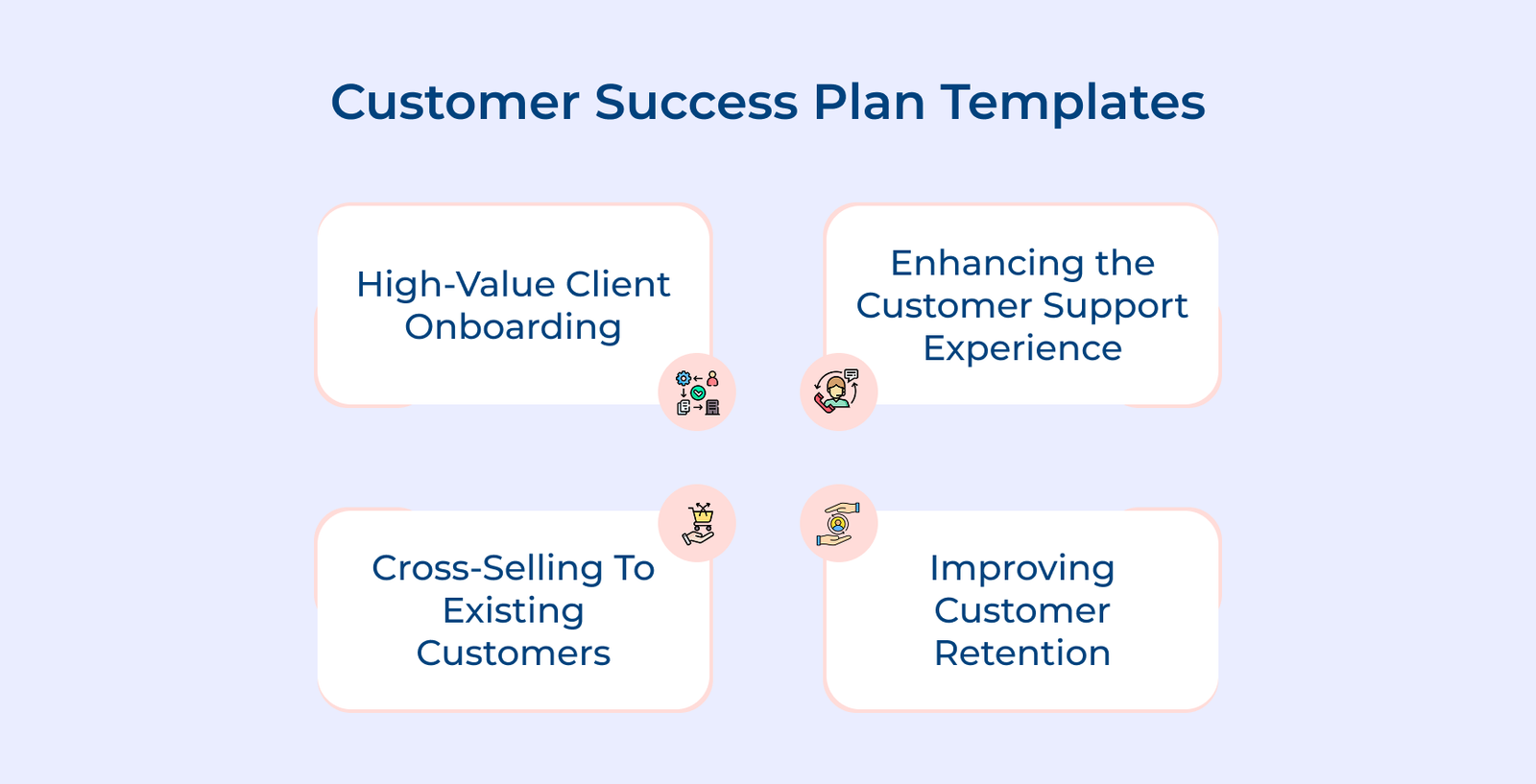
Objective: Complete solution implementation within 60 days and help the client achieve their first major win. Establish a strong foundation for a long-term partnership through executive alignment and user adoption.
KPIs: Track percentage of planned features activated, active users versus total licenses purchased and time to first value. Monitor executive sponsor engagement and completion rates of training sessions across the client’s team.
Key components:
Objective: Reduce customer effort required to resolve issues and improve satisfaction scores across all support channels. Turn support from reactive problem-solving into proactive guidance that prevents issues before they occur.
KPIs: Average response time and resolution time for support tickets across different priority levels and channels. Customer satisfaction scores, first contact resolution rate and percentage of issues resolved through self-service resources.
Key factors:
Objective: Identify at-risk customers early and take action to address their concerns before they consider leaving. Increase renewal rates by consistently demonstrating value and strengthening relationships throughout the contract period.
KPIs: Customer health scores, product usage frequency and engagement with customer success touchpoints. Renewal rate by segment, churn rate with categorized reasons and net promoter score trends over time.
Key components:
Objective: Spot natural expansion opportunities where additional products or premium features solve current customer problems. Increase revenue from existing accounts by showing clear value connections between customer needs and available offerings.
KPIs: Expansion revenue as a percentage of total revenue, average account growth rate and number of products per customer. Time from initial purchase to first expansion, cross-sell acceptance rate and customer lifetime value by cohort.
Key factors:
A thoughtfully designed customer success plan changes how you work with customers and lays the foundation for long-term relationships that drive growth. Each element, from vision to metrics, connects to create predictable outcomes and satisfied customers.
Choose a template that addresses your most pressing business challenge and tailor it to your situation. The effort invested now in structured customer success translates into higher retention, increased expansion revenue and customers who actively advocate for your business.

Higher churn becomes almost inevitable when no clear plan exists. Problems stay hidden until customers are already frustrated and ready to leave. Teams react to issues instead of preventing them. Expansion opportunities slip through the cracks and inconsistent experiences slowly erode trust.
A clear plan strengthens retention and increases expansion revenue while lowering the cost of replacing lost customers. Teams work with structure instead of guesswork. Customers reach meaningful outcomes faster, which builds loyalty and encourages referrals.
Every plan needs customer profiles, journey maps with defined touchpoints, success criteria for each stage and clear processes. Include engagement models that match service levels to customer value, the right tools to scale your efforts and metrics for continuous improvement.
Retention and renewal rates reveal long-term impact. Net revenue retention shows growth within existing accounts. Customer health scores and time to value highlight early progress. Feature adoption, support ticket patterns and net promoter score help spot risks.
Review your plan quarterly to assess what’s working and adjust based on customer feedback along with the business results. Make minor tweaks monthly when you spot friction points and conduct a comprehensive annual review to align with evolving company strategy.
Grow Customer Relationships and stronger team collaboration with our range of products across the Conversational Engagement Suite.
Omnichannel Customer Support & Help Desk Software
AI Enabled Business Messaging and Chatbot Software
Sales Engagement & CRM Software
Call Center Software & Virtual Phone System
Product Marketing & Experience Platform
Customer Experience & Feedback Management Software

 What are the Pros and Cons of Live Chat?
Scroll to top
What are the Pros and Cons of Live Chat?
Scroll to top