Enterprise Customer Experience (CX): Benefits, Best Practices & Challenges
Enterprise customer experience is about how clients feel at every touchpoint. Explore what it really means along with the practical ways to improve it.

Enterprise customer experience is about how clients feel at every touchpoint. Explore what it really means along with the practical ways to improve it.
Enterprises today aren’t just competing on products or price. They’re competing on how well they treat their customers. Enterprises that excel in customer experience see 41% faster revenue growth and 49% faster profit growth. When experiences fall short, the impact is immediate – lost revenue, declining loyalty, and a reputation that’s hard to rebuild.
Every poor interaction is an open door for competitors who make things easier and more intuitive. Even with significant investments, many enterprises continue to experience rising support tickets, lower satisfaction scores and declining retention.
The good news is that enterprise customer experience problems aren’t unsolvable. Every stage of the customer lifecycle is more than just a step. It’s an opportunity to build trust and keep the connection alive. Let’s go through some real examples of how companies make the most of these moments to strengthen relationships and keep customers loyal.
Enterprise customer experience refers to the complete journey that business clients have while interacting with your company. It includes every touchpoint, right from the initial discovery through ongoing support and renewal conversations. It’s the overall impression your enterprise clients build from every interaction they have with your company, no matter the department or channel.
Enterprise CX is about how sales and support teams work together to handle client interactions without friction. It means tracking long decision cycles, understanding the priorities of different stakeholders and using connected systems so the client’s experience stays consistent across the entire relationship.
Key objectives:
Let’s go through the key benefits of delivering a great enterprise customer experience from both customer and enterprise perspectives.
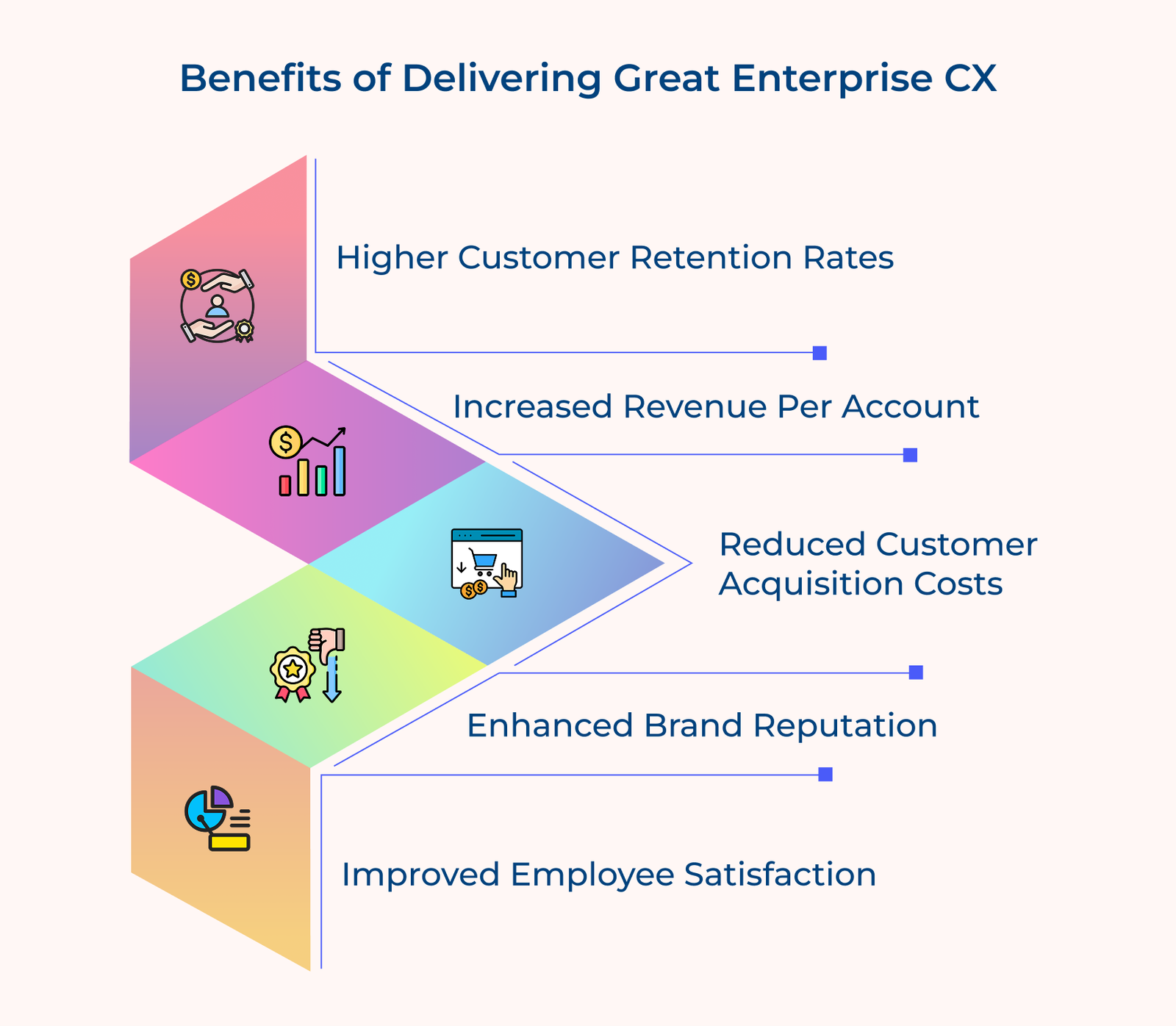
Higher customer retention rates
Great enterprise CX dramatically reduces churn by building deeper emotional connections with client organizations. When the clients feel valued and understood, they remain loyal even when competitors offer lower prices or flashier features.
Increased revenue per account
Strong customer relationships naturally lead to expanded business opportunities within existing accounts. As the satisfied enterprise clients trust your recommendations, they become more receptive to additional services that solve their evolving business challenges.
Reduced customer acquisition costs
When the enterprise customers are truly happy with you, they’ll naturally tell about you to others. They can refer you directly or by sharing their experience in a case study. When endorsement like these comes from a respected business leader, it works better than any ad and can save you a lot on marketing.
Enhanced brand reputation
Enterprise clients often set the standard in their industries and become the benchmarks others look to. Just think that when large organizations publicly endorse your company through testimonials or partnerships, it will elevate your market credibility, isn’t it? It will eventually help you attract similar high-value prospects.
Improved employee satisfaction
Teams that work with satisfied enterprise customers experience less stress and greater job fulfillment. Positive client relationships create collaborative environments where both your staff and client teams can focus on innovation rather than worry about damage control.
Explore the practical tips that can transform how your enterprises engage with the clients, drive loyalty and eventually long-term success.
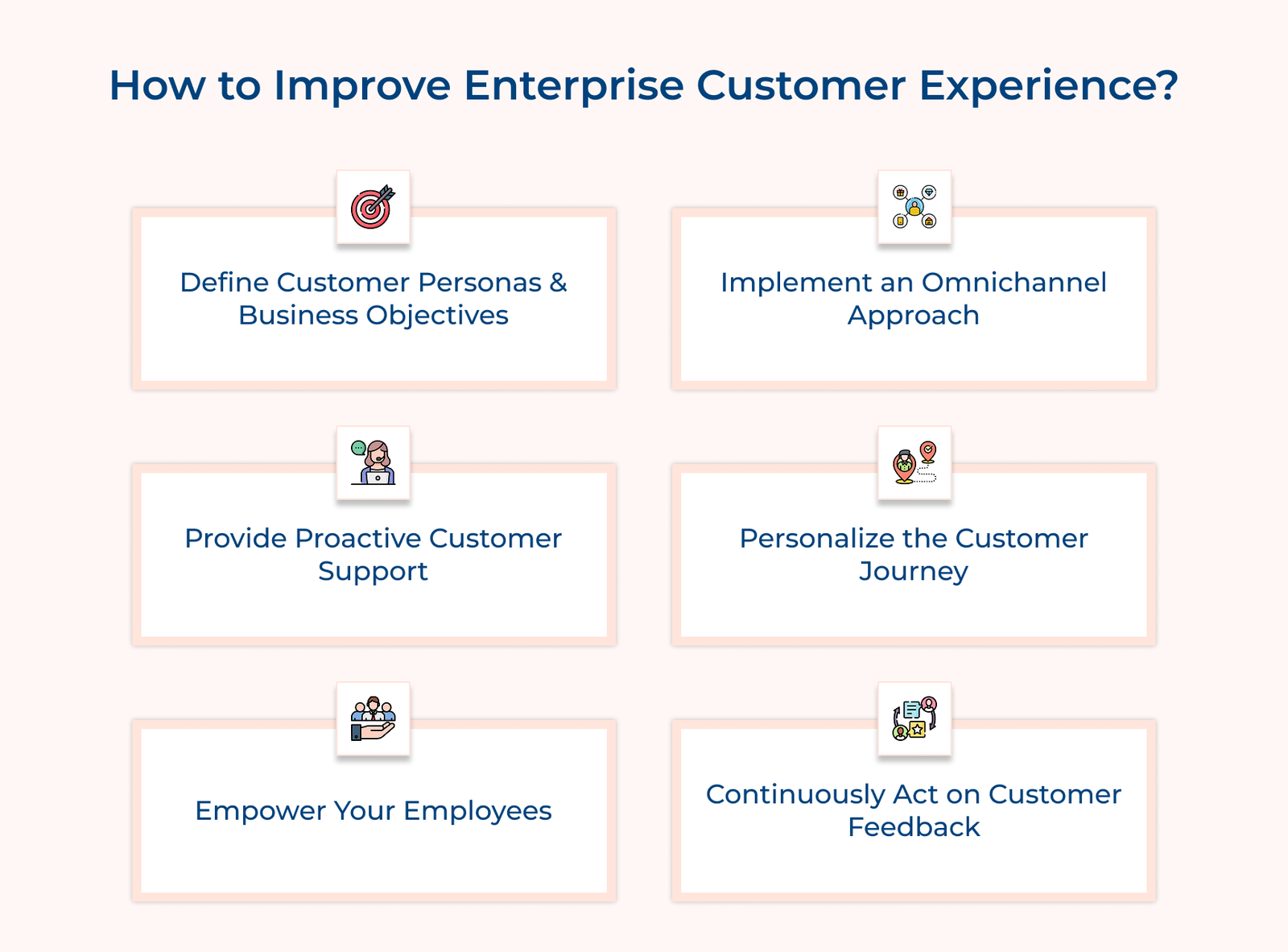
The first step to deliver a better customer experience is to know your customers well. It’s not just about their age or location. You must understand what they prefer, what frustrates them and where they face problems.
Customer surveys, data and feedback tools give you the raw insights about who your customers are. Turning those insights into clear personas makes it easier to design strategies that match what they really need.
Best practices:
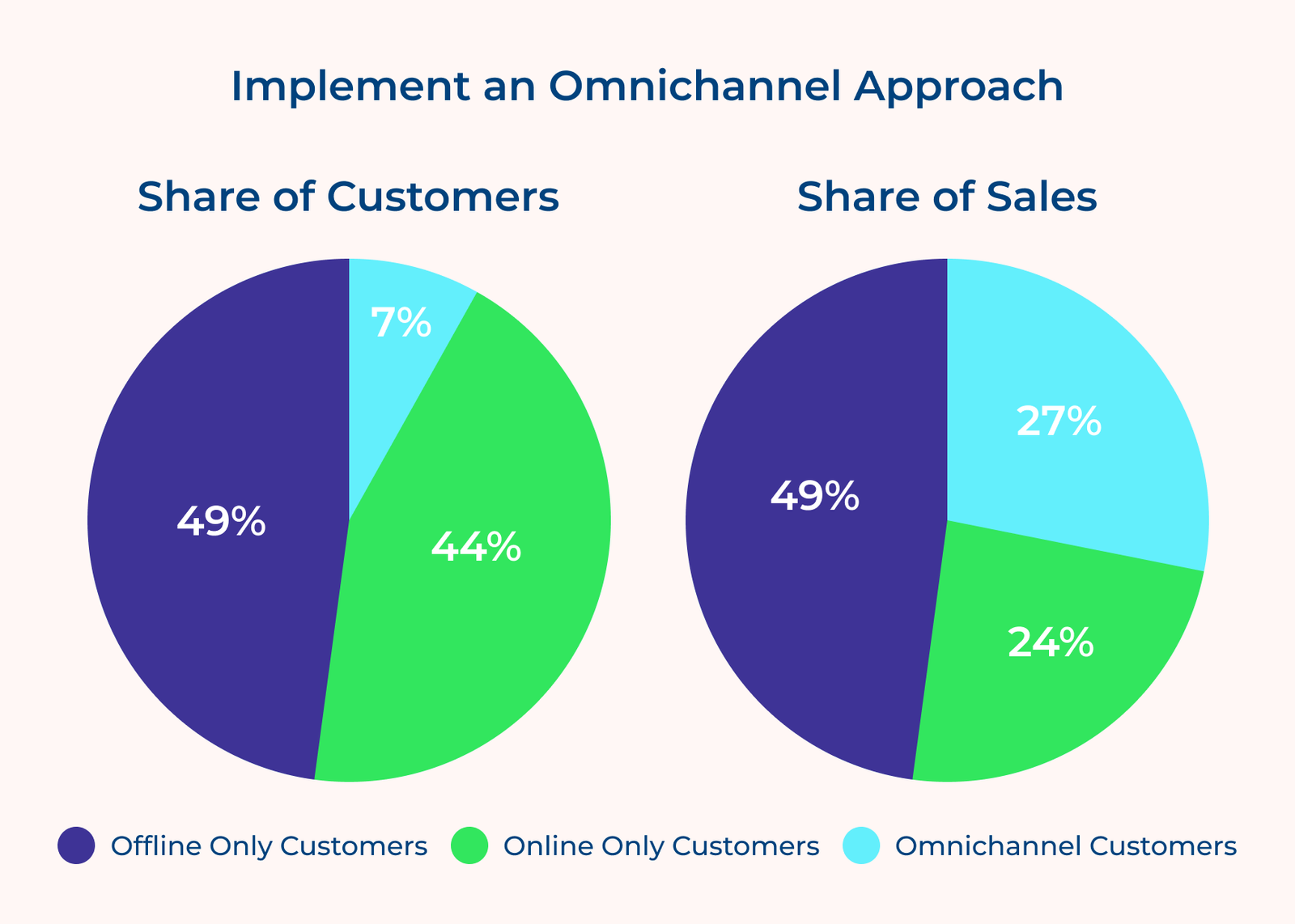
Businesses that follow an omnichannel approach deliver a consistent and integrated customer experience across all touchpoints. Their customers have the option to interact with their brand through various channels such as websites, messaging and mobile apps. Irrespective of the channel they choose, the experience they get remains consistent.
Enterprise clients often involve multiple stakeholders. As a result, each of them might prefer different communication methods all throughout their journey. Their procurement team might prefer email updates, while technical teams would want direct phone access. Providing a unified experience across the different platforms prevents information silos and reduces client frustration.
Best practices:
Don’t wait for customers to run into problems before you act. You should be able to anticipate what they’ll need and step in early with the solutions. It can be done through various means, such as setting up automated alerts, providing self-service resources and reaching out to customers with relevant information or offers.
In enterprise setups, even a small disruption can throw off entire workflows. It is recommended that you not wait for problems to surface. When businesses keep an eye on things like usage patterns and system performance, they are able to spot trouble early. The issues must be fixed before they impact the client’s experience.
Best practices:
Modern customers want to feel valued by the brand they engage with. It is where personalizing their journey can help fulfill these expectations. You can use customer data to customise the marketing communications, offers and recommendations they get. Things like past purchases or browsing behavior should also be considered to make the experience as personalized as possible.
Personalization is not just limited to marketing activities. Things like customer service interactions, product recommendations and even website experiences can be tweaked as per the preferences of individuals.
Best practices:
When you have employees who are satisfied, motivated and empowered, they are more likely to provide excellent service to customers. The leaders should shoulder the responsibility to promote a customer-centric culture. Provide the right resources to employees, facilitating open communication and reward the employees who provide a top-notch service.
The empowered employees can make real-time decisions that save enterprise clients valuable time during critical business situations. Giving your team members the authority to resolve issues without extensive approval processes means they can respond to urgent client needs immediately.
Best practices:
Set up simple ways to hear from your customers at key moments like after they buy, when they reach out for support, or through short surveys. The goal here shouldn’t be to just gather the feedback but to act on it quickly. The customers should be able to see their input shaping real improvements.
Businesses must analyze the feedback they get with an open mind. Identify areas where improvements can be made and take prompt action to address any issues raised by customers. Not only does it reflect that you value customer feedback, but it also allows you to make improvements backed by data.
Best practices:
Having a customer-centric culture is extremely significant if you want to improve the enterprise customer experience you provide. It involves aligning all aspects of your business, from leadership and strategy to processes, around the needs of your customers.
Start by making customer experience a priority at every level of the organization and empowering employees to make decisions that prioritize customer satisfaction. When you are embedding a customer-centric mindset into the DNA of your enterprise, delivering a superior experience will become a core value for your business.
Best practices:
Let’s understand how AI is transforming enterprise customer experience by analyzing user behavior and helping businesses deliver more personalized support at every stage of the journey.
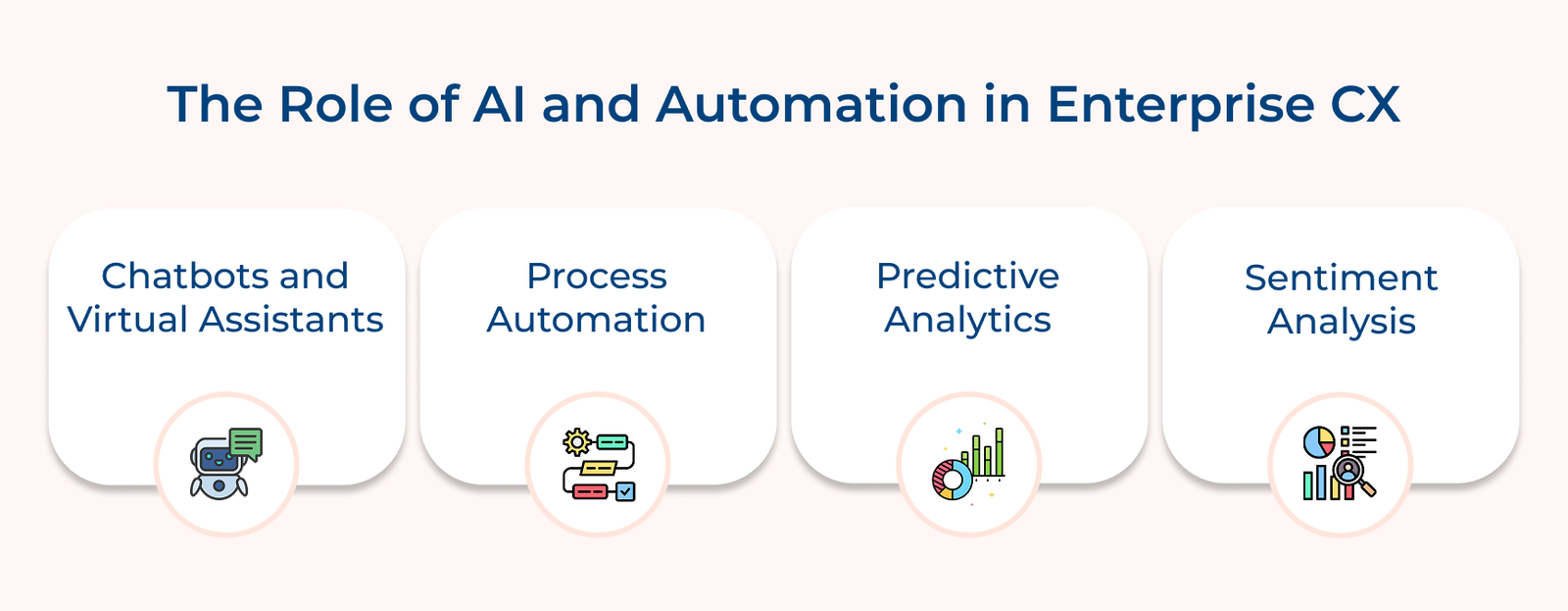
AI-powered chatbots and virtual assistants have become one of the most crucial tools for managing customer interactions. These tools help in handling routine customer inquiries, provide real-time support and even complete transactions. When these tasks are taken care of with automation, enterprises can improve response times, reduce costs and deliver consistent support across various channels.
Automation can be quite handy for businesses to streamline and automate their internal processes. It eventually leads to a better overall customer experience. Automating time-consuming tasks such as data entry, invoice processing and order fulfillment means the enterprises can focus their resources on more valuable customer interactions. It will increase the efficiency, reduce errors and improve the response times, ultimately benefiting the customer.
AI and automation let businesses spot what’s likely to happen before it does. When they study the past behavior and usage patterns, algorithms can flag risks like churn, highlight buying preferences, or even surface issues customers might face down the line. The data obtained is helpful for multiple things like resolving issues before they arise, refining their offerings and making interactions feel more personal.
Understanding how your customers feel is key to improving their experience. AI-powered sentiment analysis can scan reviews, surveys and social media posts to uncover the emotions behind the words. It helps businesses spot recurring issues, detect shifts in sentiment and address problems before they escalate. All of it comes together to make the customer experience more effective.
Check out the common challenges in delivering exceptional enterprise CX and along with the strategies to overcome them.
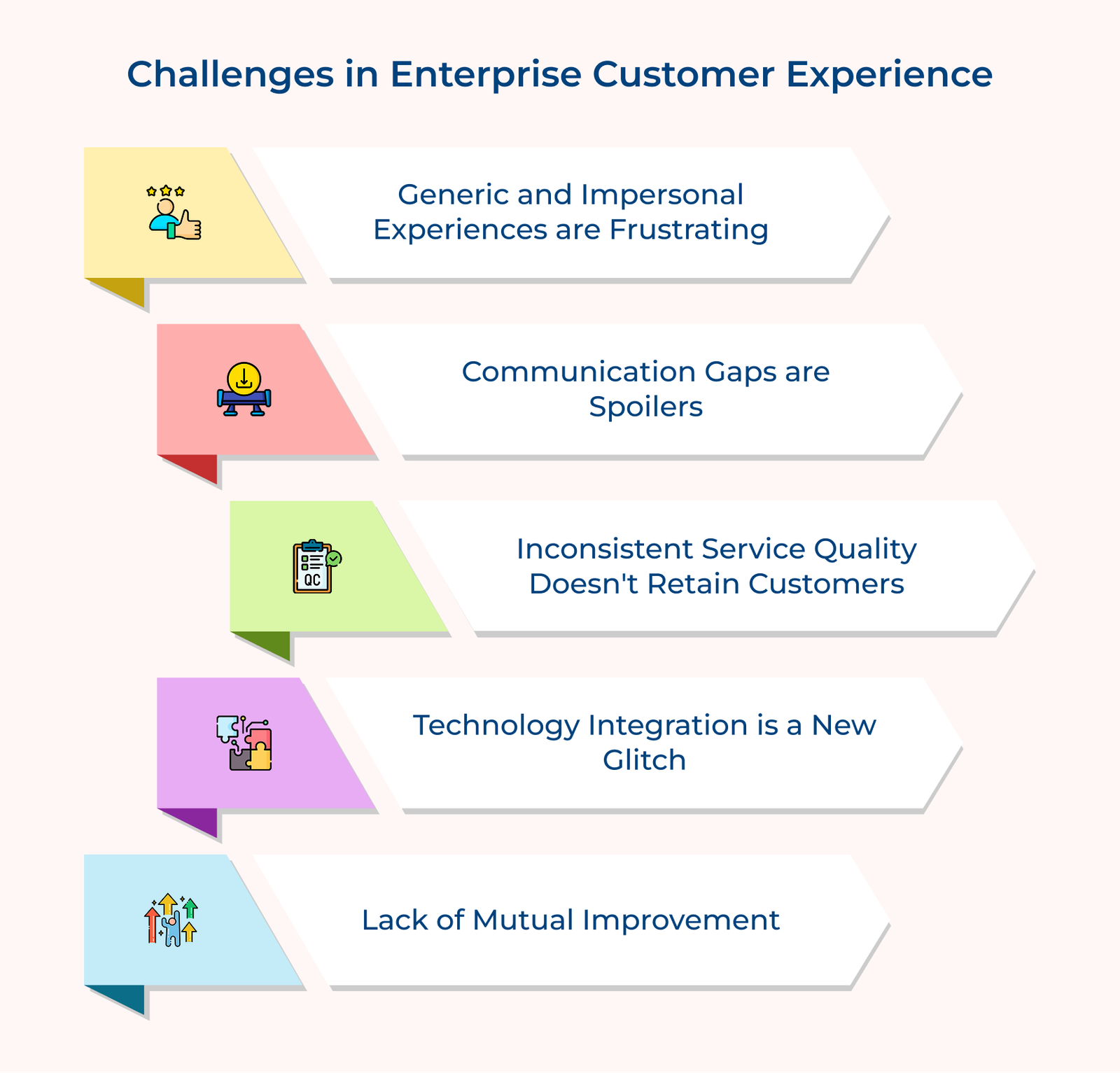
Enterprise clients now expect personalized interactions. It must be done in such a way that they acknowledge their unique needs and industry challenges. If the companies make the blunder of delivering one-size-fits-all solutions, it just shows a lack of understanding of specific client needs. Generic experiences will make enterprise customers feel like just another account number rather than valued strategic partners.
When internal teams aren’t on the same page, enterprise clients get mixed messages throughout their experience. Sales might end up promising what implementation can’t deliver. The result? Trust breaks down fast. In some instances, these gaps can even be bigger because multiple stakeholders rely on consistent, accurate information to move forward.
Enterprise clients come into contact with various departments throughout their customer journey. What they expect is top-quality service standards across all touchpoints. If the quality of support they get from different representatives varies, it usually undermines their confidence in further engaging with the enterprise.
The modern enterprise clients are using complex technology stacks. They expect these to integrate smoothly with your solutions. If they face any kind of problem during the integration, it will hamper their operations and even create delays. These need to be taken care of well because technical compatibility issues often become deal-breakers that can even damage long-term relationships.
Enterprise relationships work best when both sides focus on improving how they work together, not just completing transactions. When improvement isn’t a shared effort, relationships can stall and clients start looking elsewhere for solutions that actually meet their changing needs. It becomes even more critical as markets shift and client expectations evolve.
Strategies you should use to overcome the challenges:
Owing to the rise of digital transformation initiatives, it has become increasingly important for enterprises to focus on CX and leverage technology to enhance their customer processes. Not only does it result in improved customer satisfaction, but it also has a significant impact on the return on investment (ROI) for the organization.
When businesses leverage automation for their routine tasks, it also helps in reducing costs and keeping operations running smoothly. At the same time, AI-powered analytics helps you spot patterns and trends you can act on. Eventually, you make smarter decisions to deliver a better experience and achieve better results.

A positive customer experience is crucial for businesses to thrive in the highly competitive market. It not only helps in attracting new customers but also in retaining the existing ones. When your customers are satisfied with the experience they get, they are more likely to become loyal advocates for your brand. As a result, it will give you increased customer retention, higher revenue and improved overall business performance.
Enterprise CX primarily focuses on B2B interactions, whereas traditional customer experience commonly refers to B2C interactions. B2B interactions often consist of complex sales cycles, longer-term partnerships and multiple decision-makers. So the enterprise customer experience requires different strategies and approaches that are to meet the unique expectations of business customers.
Data plays a significant role in understanding customer behaviors and pain points. Analyzing customer data gives companies a complete picture of the customer journey, optimizes touchpoints and gives personalized experiences. The information helps companies deliver relevant and timely interactions, which eventually improves the CX.
Employee engagement plays a significant role in delivering outstanding CX. Engaged employees are more likely to provide exceptional customer service and go the extra mile to exceed the expectations of customers. Companies can improve their employee engagement by providing proper training, empowering employees to make decisions and rewarding exceptional performance.
Measuring CX is essential to understanding which areas can be improved and tracking the impact of strategies. Customer satisfaction scores, Net Promoter Score (NPS) and customer lifetime value are some of the common KPIs used to measure the CX. Collecting feedback through surveys and keeping an eye on social media reveals what customers really think in real-time.
Technology plays a significant role in enhancing enterprise customer experience. Companies use customer relationship management (CRM) systems to manage customer interactions, automate processes and gain valuable insights into customer preferences. Implementing analytics and data-driven solutions also enables businesses to deliver personalized experiences to customers.

Grow Customer Relationships and stronger team collaboration with our range of products across the Conversational Engagement Suite.
Omnichannel Customer Support & Help Desk Software
AI Enabled Business Messaging and Chatbot Software
Sales Engagement & CRM Software
Call Center Software & Virtual Phone System
Product Marketing & Experience Platform
Customer Experience & Feedback Management Software

 Customer Service Culture: Benefits, Examples & Best Practices
Scroll to top
Customer Service Culture: Benefits, Examples & Best Practices
Scroll to top