What is Healthcare CRM? Benefits, Features & Tools
Learn how healthcare CRM helps manage patient data, improve communication and streamline operations. It also enhances patient experience through the right features, tools and data-driven insights.
Learn how healthcare CRM helps manage patient data, improve communication and streamline operations. It also enhances patient experience through the right features, tools and data-driven insights.
A patient leaves your clinic and the next interaction they have with your practice is a bill. There’s no follow-up, no check-in, no reminder but just silence until the next appointment which they might not even book.
User retention in the healthcare industry has quietly become a scheduling and communication problem more than a clinical one. Studies show that 69% of patients who switch providers do so because they seek better services, not because of dissatisfaction with the actual patient care.
We’ve broken down how a healthcare CRM closes that gap – what it actually does, which features move the needle and how to evaluate platforms against the real operational pressures your team faces. Everything ties back to one outcome: building a consistent patient experience through smarter customer analysis.
A healthcare CRM refers to a system that helps providers manage patient relationships, improve communication and handle administrative tasks more efficiently. It is built around how patients move through care, including appointments, follow-ups and coordination between teams.
A healthcare CRM brings together data from systems like EHRs, billing tools and patient portals to create one complete patient profile. The shared view helps care teams track interactions, plan next steps and stay on top of follow-ups without missing important moments.
Once data is connected, the system uses automation to send the right communication at the right time. Patients receive reminders, follow-ups and updates based on their care journey, without teams needing to manage everything manually.
Key elements:
Let’s go through the key benefits of Healthcare CRM and how it helps create a more consistent, reliable care experience.
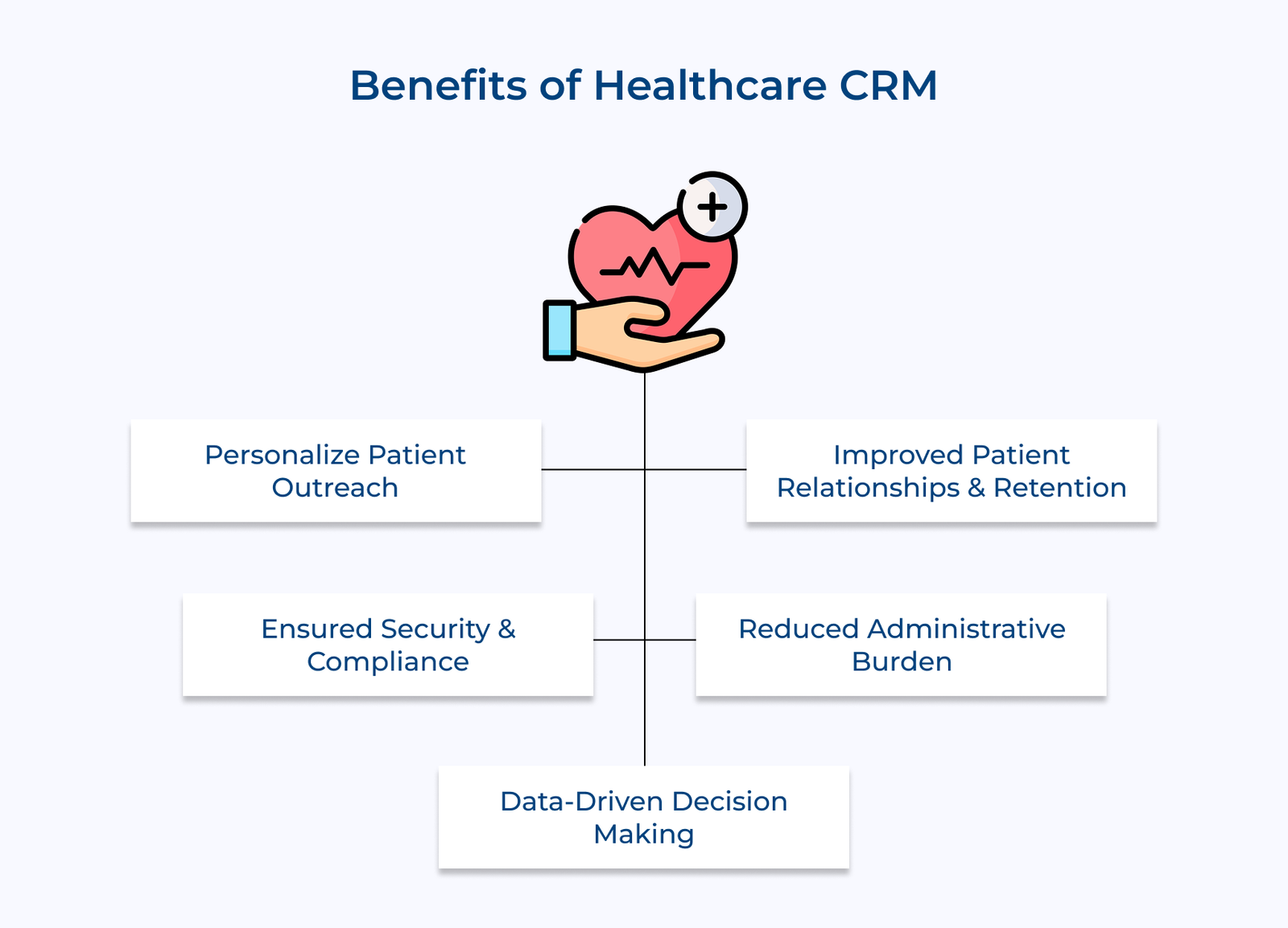
1. Personalize Patient Outreach
Many healthcare providers still send the same message to every patient, which limits real patient engagement. A healthcare CRM groups patients based on diagnosis, visit medical history and risk level so communication feels relevant to their current stage of care.
2. Improved Patient Relationships and Retention
Strong patient relationships depend on consistent and thoughtful communication between visits. A customer relationship management system helps maintain that consistency with timely reminders, check-ins and updates that keep patients connected over time.
3. Ensured Security and Compliance
Patient data needs to be handled with care and accuracy. A healthcare CRM includes secure data storage, controlled access or clear activity records so patient information stays protected and properly managed.
4. Reduced Administrative Burden
Front desk staff in most clinics spend a significant portion of their day on tasks like appointment confirmations and follow-up calls that a healthcare CRM can handle automatically. It frees your clinical and administrative teams to focus on higher-value work, like in-person patient support or complex care planning.
5. Data-driven Decision Making
A healthcare CRM helps you understand patterns in patient behavior. It becomes easier to see where patients drop off, which actions lead to appointments and what needs improvement in your overall process.
The following are the key healthcare CRM software options compared across features to help you understand which platform fits your needs and workflows best.
|
Software |
Pricing |
Key Features |
| Veemo | Starts at $49/user/month |
|
| Omni24 | Starts at $29/user/month |
|
| Salesforce Health Cloud | Starts at $300/user/month |
|
| Zoho CRM | Starts at $20/user/month |
|
| Bitrix24 | Free plan available; paid starts at $49/month |
|
| LeadSquared | Starts at $25/user/month |
|
| Creatio CRM | Starts at $25/user/month |
|
| HubSpot CRM | Free plan available; paid starts at $45/month |
|
Below are the seven features that separate a basic contact tool from a clinically intelligent patient management system.
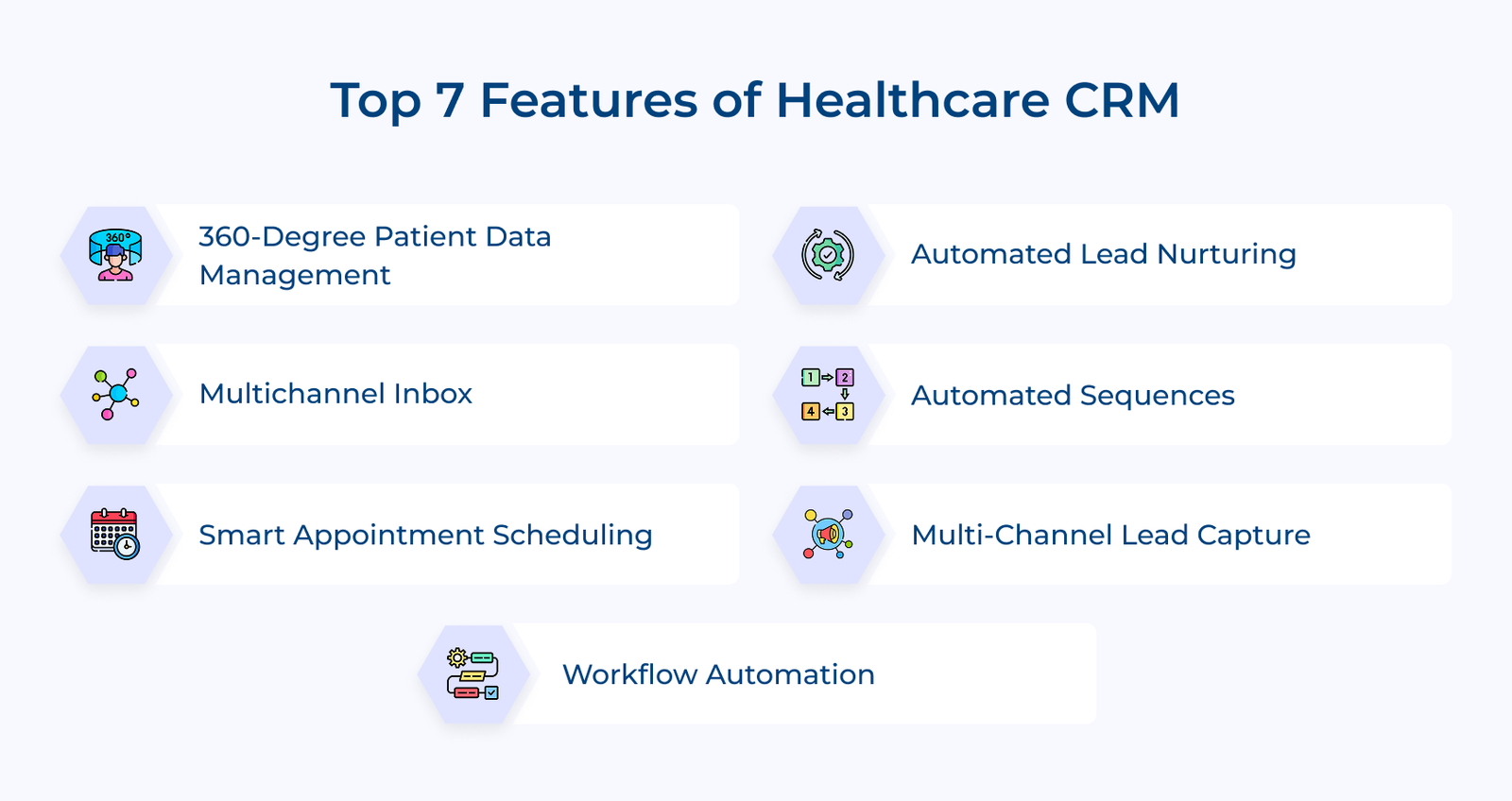
Care gaps happen when information is missing or hard to access. A healthcare CRM brings visit history, medications and communication logs into a single unified profile accessible across departments.
Pro tips:
When everyone works from the same data layer, care decisions become faster and more accurate. The single source of truth eliminates the back-and-forth between systems that slows down clinical and administrative workflows.
Patients use different ways to communicate, such as SMS, email or WhatsApp and expecting them all to use one channel is unrealistic for any care setting. A multichannel inbox brings all conversations into one place, so nothing gets missed.
The unified inbox maintains a full conversation thread per patient, so any team member has complete context without asking patients to repeat themselves. It reduces response times and builds consistent communication that patients actually remember.
Manual booking often leads to errors and missed appointments. A smart scheduling feature syncs provider availability in real time and lets patients self-book through their preferred channel.
Key questions:
When scheduling is automated, your staff shifts from reactive booking to proactive care management. The healthcare CRM also identifies cancellation patterns and triggers re-engagement workflows before a slot goes empty.
A lead is someone who has shown interest but has not yet converted into an active patient. Automated nurturing ensures every inquiry receives a timely and relevant follow-up based on the specific service they showed interest in.
Key takeaways:
Automated sequences are pre-configured communication flows that trigger based on specific patient actions or time intervals in the care journey. Be it a post-discharge check-in or a chronic care follow-up, the CRM executes these touchpoints without anyone on your team remembering to send them.
Key questions:
The real power of sequences is creating a reliable care rhythm for every patient segment, regardless of workload. You define the logic once and the system ensures every patient moves through the right communication pathway consistently.
Patients discover providers through Google searches, social media or referral portals and each entry point needs to be captured as well as tracked properly. A healthcare CRM captures leads from all sources into one pipeline, so no potential patient is lost.
Pro tips:
Once every lead source is connected, your team gains visibility into which channels are actually driving patient conversions. The attribution data allows healthcare marketers to make evidence-based decisions about where to invest outreach efforts.
Workflow automation in the best healthcare CRM orchestrates entire operational processes like patient onboarding and referral management without manual handholding. When a new patient fills an intake form, a well-configured workflow can trigger document collection and assign a care coordinator within minutes.
Teams get the best results when they first identify where delays and errors occur most. Once those friction points are visible, building automation rules around them delivers immediate and measurable improvement in turnaround times.
Check out the best healthcare CRM platforms that can revolutionize patient management and secure a healthier future for your practice.
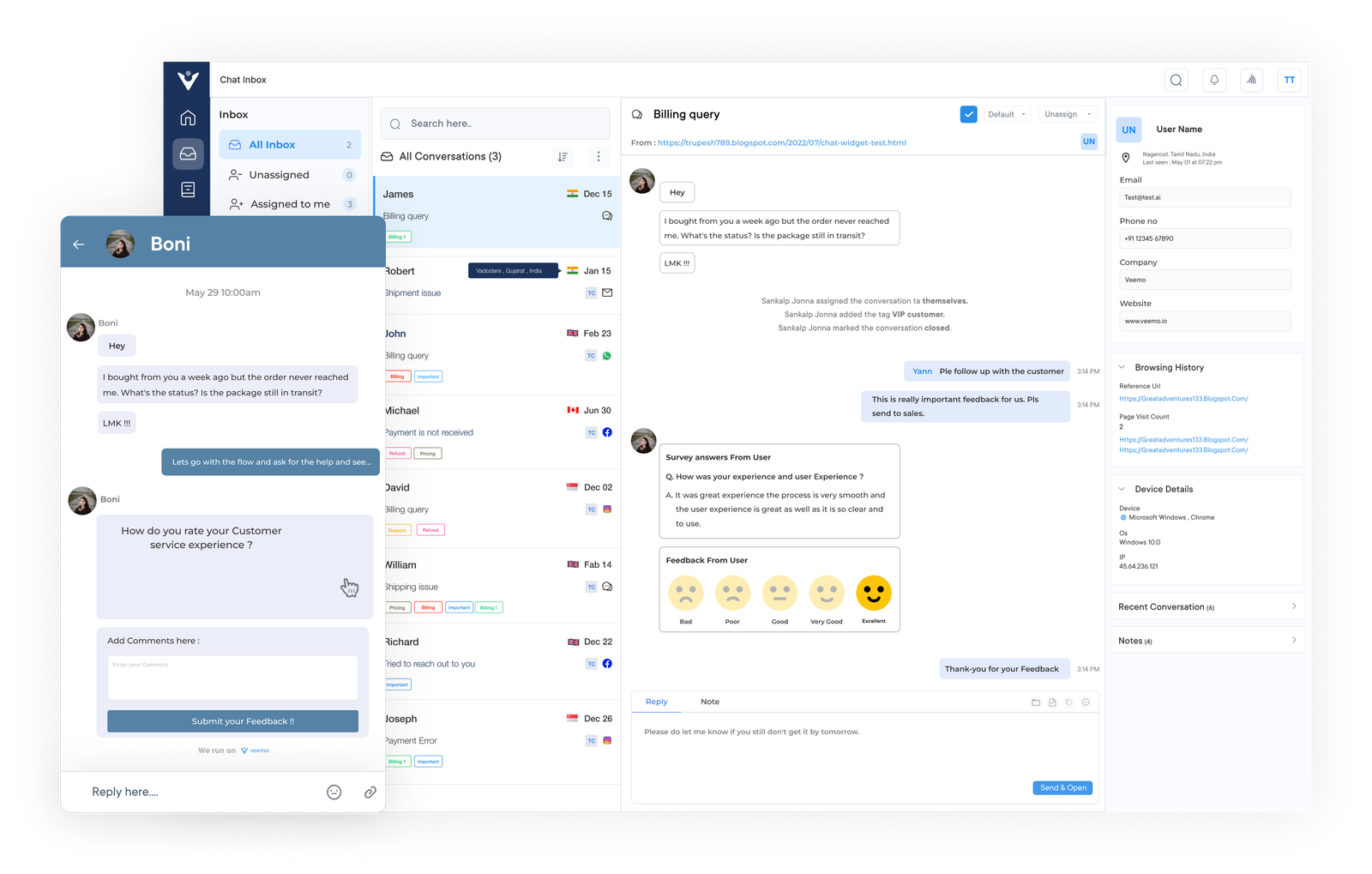
Veemo brings sales, marketing and support into one connected system designed for healthcare teams. All patient interactions live in one place, which makes it easier to track conversations and respond without switching between tools.
Many healthcare teams lose patients between touchpoints because their systems do not connect. Information gets scattered and teams lack full context. Veemo directly solves the issue by keeping every interaction in a single thread that anyone on the team can access and continue without losing history.
Key features:
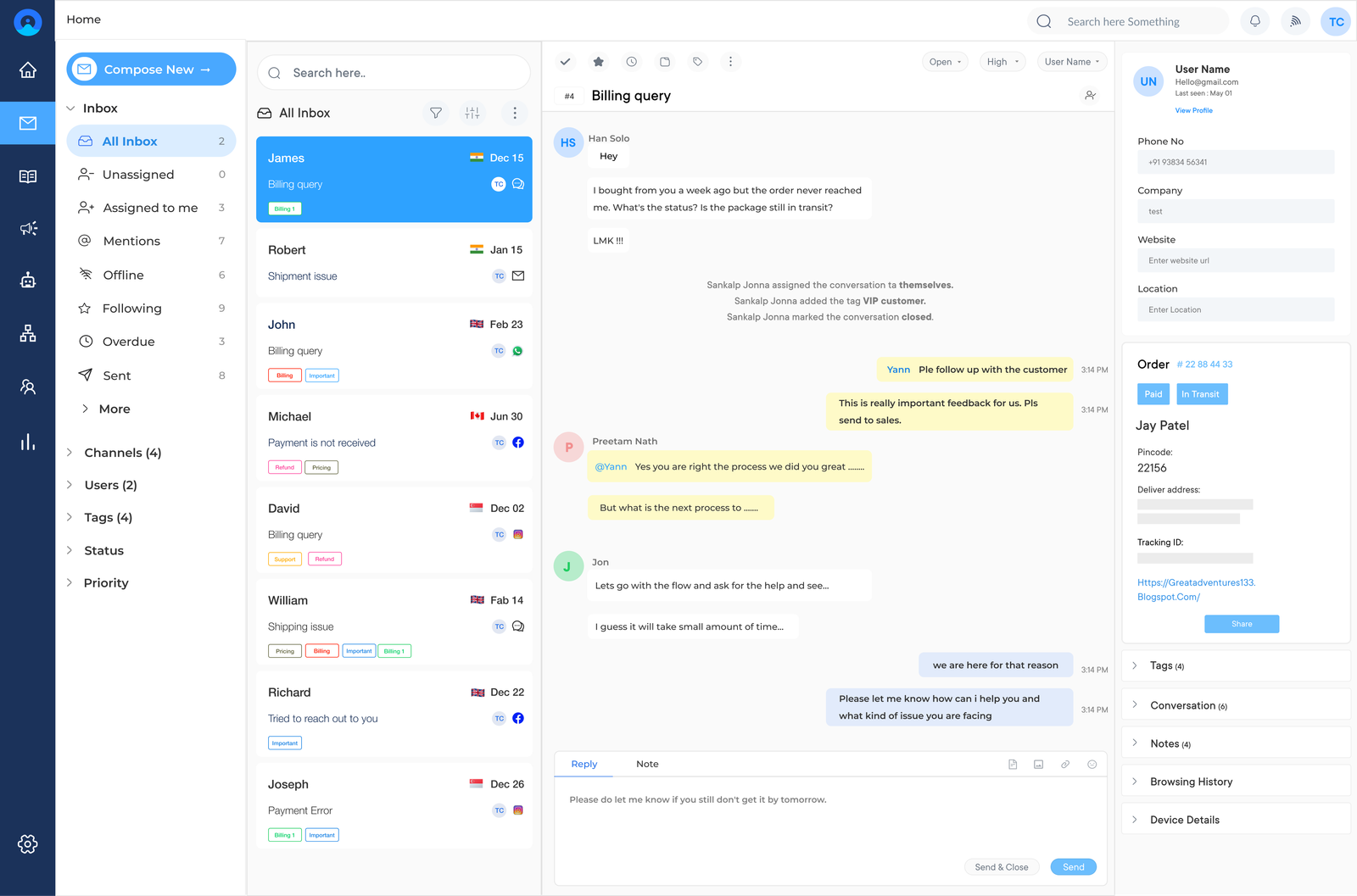
Omni24 is an omnichannel conversational CRM that brings patient sales and support interactions into one platform. It helps healthcare teams manage communication across channels without switching between multiple tools.
Patient queries go unanswered when conversations are spread across WhatsApp, email and live chat. Omni24 solves it by bringing everything into one inbox and directing each query to the right team member so nothing gets missed.
Key features:
Salesforce Health Cloud is designed for healthcare environments that need to manage complex patient journeys. It brings together data from electronic health records, wearables and care teams into one continuous patient record.
What sets Salesforce apart is its ability to support both clinical care coordination and commercial healthcare operations on the same platform. Its real USP is the combination of care gap identification, risk stratification and intelligent automation that most standalone healthcare tools simply cannot match.
Zoho CRM works well for healthcare teams looking for a flexible and cost-effective system. Clinics and mid-size hospitals can shape it around their own patient workflows without adding unnecessary complexity.
Zoho’s canvas-based interface lets healthcare administrators redesign the CRM layout to match clinical workflows without writing a single line of code. Its AI assistant Zia helps highlight follow-ups and unusual patterns so teams can prioritize their outreach better.
Bitrix24 combines healthcare CRM, telephony and team collaboration in one place. It helps smaller healthcare providers manage patient interactions and internal coordination without juggling multiple platforms.
The built-in calling and contact center features are particularly valuable for healthcare practices that rely heavily on inbound call volume for appointment bookings. The free plan with unlimited users makes it a practical starting option.
HubSpot CRM is commonly used by teams focused on patient acquisition. It tracks how a potential patient moves from first interaction to booking, giving clear visibility into the process. The tool makes it easier to identify where prospects drop off and improve conversion rates.
HubSpot’s strength lies in its native marketing automation. The healthcare teams can run condition-specific email campaigns and track engagement at the individual patient level. Its seamless integration with website chat, landing pages and ad platforms makes it the most complete top-of-funnel tool for patient acquisition teams.
LeadSquared is designed for handling large volumes of patient inquiries. It is widely used by hospital chains and diagnostics networks that need to manage the full journey from inquiry to appointment.
What makes LeadSquared stand out is its field force automation, which tracks on-ground healthcare representatives in real time and assigns leads based on proximity as well as availability. The dual-layer automation is a significant operational advantage for large hospital networks running both digital and field-based patient outreach simultaneously.
Creatio CRM is a process-first platform that allows healthcare organizations to build and modify complex patient management workflows without depending on developer resources. Teams can design and adjust patient processes directly using its no-code tools.
Creatio stands out by bringing marketing, sales or service workflows into one shared patient journey that clinical and administrative teams can use. Healthcare teams that need more flexibility than standard CRMs provide can use Creatio to design workflows that align closely with their care delivery model.
Let’s go through the key factors that help you filter the options and make a decision that fits your needs.
1. EHR and System Integration Capability
A healthcare CRM that does not connect with your existing EHR creates gaps in information and extra work for your team. Check if the platform supports direct integration before making a decision.
2. HIPAA Compliance and Data Security
Patient data handled outside a compliant environment exposes your organization to serious legal and financial consequences. Ensure the CRM offers role-based access controls, end-to-end encryption and full audit trail documentation as non-negotiable baseline features.
3. Workflow Customization Flexibility
Care processes differ across organizations. A rigid system can slow teams down. Choose a CRM that lets you adjust workflows to match how your team actually works without needing constant technical support.
4. Ease of Adoption for Clinical Teams
A powerful healthcare CRM that your care coordinators find difficult to use will never deliver its full value, regardless of its feature set. Look for intuitive interfaces, role-specific dashboards and responsive onboarding support that reduces the learning curve for clinical staff.
5. Scalability Across Care Settings
Your CRM should support growth as your organization expands. It should handle higher patient volumes and new services without slowing down or becoming difficult to manage. A system that scales well prevents the need for frequent platform changes as you grow.
Managing patient relationships at scale needs a system that keeps track of every interaction and ensures follow-ups happen on time. Veemo’s Healthcare CRM helps care teams stay organized and deliver consistent patient experiences across each touchpoint.
Patient experience often depends on what happens between visits. Gaps in communication lead to drop-offs. Veemo connects patient data and automates outreach so teams can stay in touch and respond before patients lose engagement.

Healthcare CRMs help teams stay consistent with patient follow-ups so between visits fewer people drop off between visits. They also give care teams a unified data view that reduces administrative burden and supports more personalized, timely patient outreach.
Start with a clear look at how patients move through your current system and where communication breaks down. Focus on tools that connect smoothly with your EHR, meet compliance requirements and support the kind of follow-up and communication your care team actually needs day to day.
An EHR is used for clinical records such as medical history, diagnoses and treatment plans. A healthcare CRM focuses on communication and relationships, covering patient outreach, reminders or ongoing engagement outside appointments.
Healthcare CRMs usually fall into three groups. Operational CRMs handle day-to-day workflows and follow-ups. Analytical CRMs help make sense of patient data and trends. Collaborative CRMs make it easier for teams to stay aligned on patient communication. Many systems combine the functions in one platform.
Patient expectations have shifted significantly. People now expect clear, timely communication from their healthcare providers. A CRM helps teams keep up with those expectations while handling large patient volumes, without adding more pressure on staff.
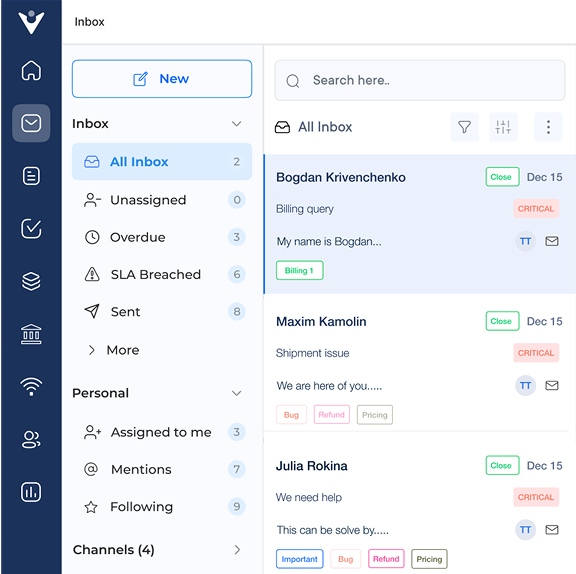
Grow Customer Relationships and stronger team collaboration with our range of products across the Conversational Engagement Suite.
Omnichannel Customer Support & Help Desk Software
AI Enabled Business Messaging and Chatbot Software
Sales Engagement & CRM Software
Call Center Software & Virtual Phone System
Product Marketing & Experience Platform
Customer Experience & Feedback Management Software

 What is Sales Growth? Definition and How to Calculate
Scroll to top
What is Sales Growth? Definition and How to Calculate
Scroll to top