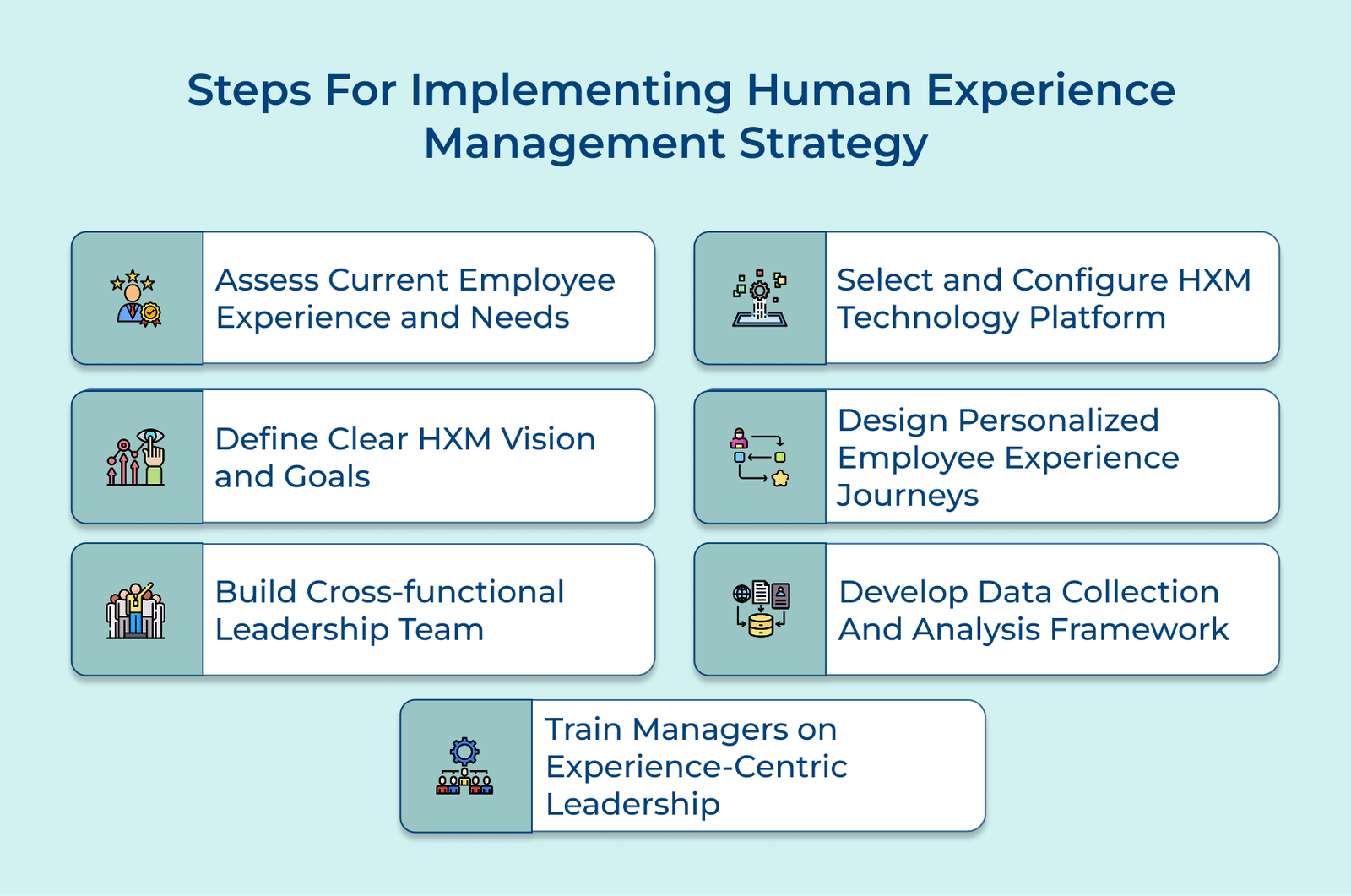
1. Assess Current Employee Experience and Needs
Before you can improve the employee experience, you need a clear picture of where things stand. The first step lays the groundwork for building a meaningful human experience management (HXM) strategy.
Start by asking your team what’s working and what’s not. Use a mix of anonymous surveys, one-on-one conversations and group discussions to gather honest feedback. Focus on practical topics like daily work experience, communication quality, career development and team dynamics.
Pro tips:
- Hold feedback sessions during mid-morning when people are more focused and energized.
- Create a safe space for honest feedback by having external facilitators conduct sensitive discussions about workplace issues.
2. Define Clear HXM Vision and Goals
Before making any changes, you need a shared understanding of what you’re working toward. A clear, specific vision keeps your HXM efforts focused and helps everyone. From leadership to frontline employees, everyone can see how their roles contribute to a better workplace.
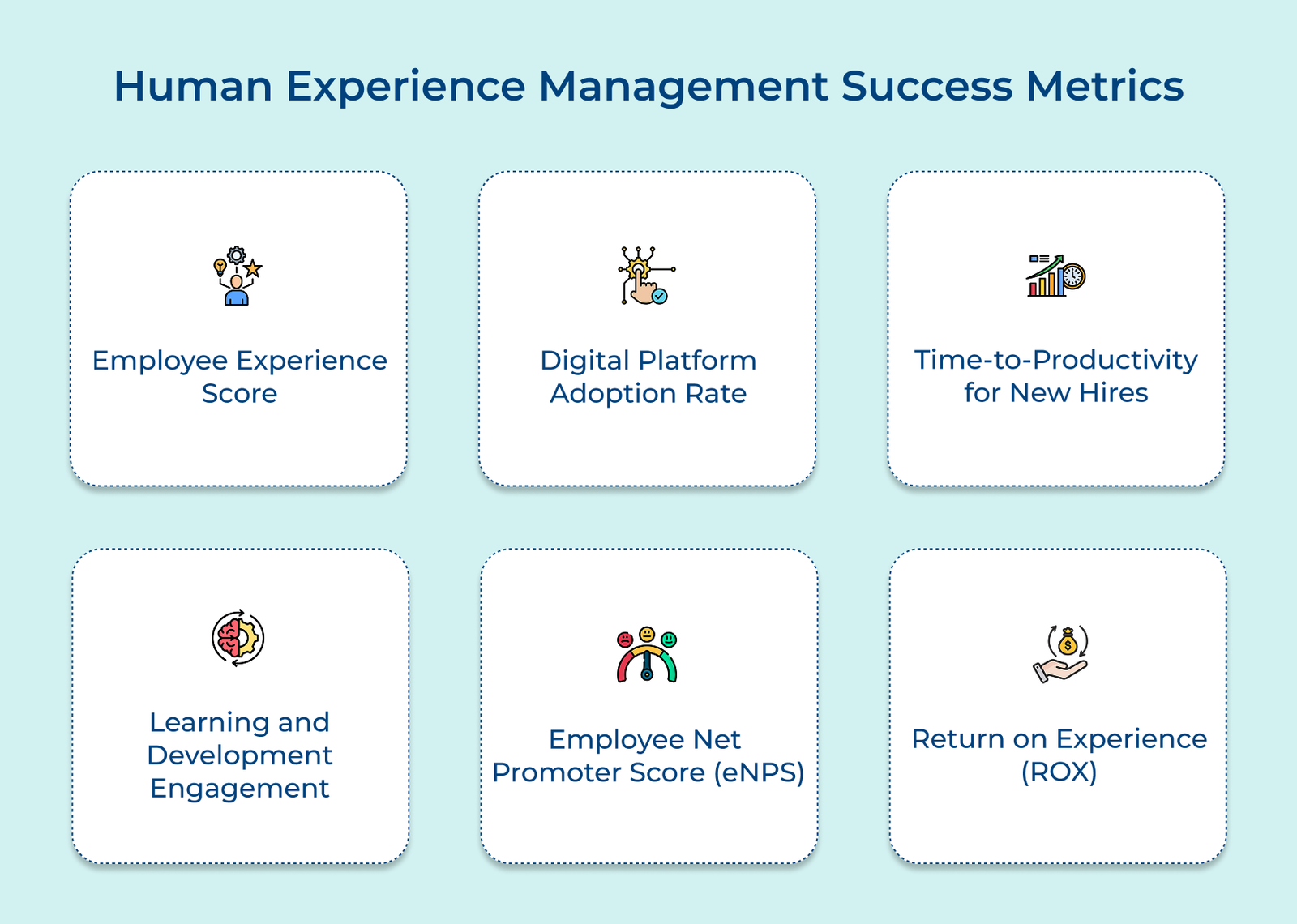
Define measurable goals. Use concrete metrics to track your progress, like employee retention rates, feedback scores or participation in learning programs. Plan your rollout in phases and give yourself some breathing room to adjust as you go.
Actionable tips:
- Host sessions where leaders describe what a better workplace could look like using examples, not vague ideals.
- Set short, 90-day targets that let teams see progress without losing sight of the bigger picture.
3. Build a Cross-functional Implementation Leadership Team
A successful HXM rollout depends on having the right people at the table. Bring together a team from different departments like HR, IT, operations and more, so you’re not solving problems in isolation. The variety of perspectives helps you spot blind spots and design better solutions that work across the organization.
Clear communication keeps the project moving and helps everyone stay focused. Set up regular check-ins, like weekly team huddles, monthly progress reviews and a shared communication space (Slack, Teams, etc.) for day-to-day updates.
Best practices:
- Rotate who leads each session and ask them to share a simple idea that could improve the employee experience.
- Match someone with technical skills, like a systems lead with someone focused on people, like HR or L&D.
4. Select and Configure HXM Technology Platform
Your choice of technology will shape how well your human experience strategy works in practice. A good platform should do two things: fit well with current systems and make it easier to personalize as well as improve the employee experience.
Start by identifying what your team needs, what’s missing today and what could be better. Then compare a few options side by side, looking closely at features like ease of use, flexibility and how well they integrate with your current tools. Don’t get distracted by extras you’ll never use, focus on what will solve real problems.
Key takeaways:
- Try out “day in the life” walkthroughs using the new system. It helps catch confusing features or roadblocks before a full launch.
- Choose early adopters from different teams to become go-to guides. They can answer questions and help others adjust to the new tools more quickly.
5. Design Personalized Employee Experience Journeys
No two employees experience the workplace in the same way. That’s why a one-size-fits-all approach doesn’t work. Instead, focus on shaping key moments in the employee journey, from onboarding to development, to reflect the needs of different roles, departments and career stages.
Start by mapping typical employee paths through the organization. Identify key moments that matter, like a new hire’s first week, a team lead’s performance review or a remote employee’s check-in cycle. Use these maps to find where personalization can have the most impact, be it adjusting feedback styles, support systems or development plans.
Pro tips:
- Spend a few hours seeing the day through their eyes to understand what works and what gets in the way.
- Align touchpoints with natural rhythms of the workday so they feel helpful, not disruptive.
6. Develop Data Collection and Analysis Framework
You need to know what’s really happening on the ground to improve employee experience. A solid data framework helps you track what matters, see patterns over time and make better decisions based on real insight, not guesswork.
Start by choosing a small set of metrics that reflect the actual quality of employee experience. Go beyond just engagement scores. Include qualitative feedback like open-ended survey responses or notes from check-ins that capture what numbers alone can’t. Make sure your metrics line up with the specific goals of your HXM strategy.
Actionable tips:
- Once a month, gather teams to walk through the latest trends and talk about what they mean or what to do next.
- Include short employee stories or quotes in your reports to bring the data to life and remind people what it’s about.
7. Train Managers on Experience-Centric Leadership
Managers shape most of the day-to-day employee experience, so helping them lead with empathy and awareness is essential. Leadership training shouldn’t just focus on performance metrics or business outcomes. It should help managers understand how their behavior, communication and decisions affect the people they lead.
The training builds emotional intelligence and practical awareness. Leaders learn to recognize early signs of disengagement, hold more meaningful one-on-one conversations and make small changes that improve the team’s day-to-day experience. The best programs combine basic concepts with hands-on practice through real-world case studies and roleplay.
Key takeaways:
- Shadow managers who consistently create positive team environments. Pay attention to how they listen, give feedback and set the tone in meetings.
- Bring managers together to talk through common challenges, swap ideas and learn from each other’s experiences.
Human Experience Management Examples
Below are some prominent companies that have implemented HXM strategies to create meaningful experiences for their employees. Let’s check them out in detail.
Amazon
Amazon puts employee development at the center of its workplace strategy. Through its “career choice program”, warehouse workers can access education and job training for roles both inside as well as outside the company.
The “Day One” mindset encourages ongoing learning and curiosity. Amazon also uses data along with the internal feedback to tailor development plans and improve daily work experiences. The efforts have led to stronger internal talent pipelines and better retention in areas where experience-focused initiatives are in place.
Apple
Employee experience at Apple starts with shared purpose and creativity. New hires, no matter their job, are trained in design thinking and how to connect their work to customer impact.
The company offers health and wellness programs. It also provides flexible work options, giving employees space to grow both personally and professionally. The clear focus on thoughtful experiences has helped Apple stay a top choice for talent and maintain a highly committed workforce.
Nike
Nike’s culture is rooted in action and that shows in how they support their teams. They offer tailored growth plans, fitness-oriented wellness support and regular workshops that invite employees to help shape the future of the company.
The programs help people stay engaged and give them a say in Nike’s direction. As a result, employees feel more connected to their work and it shows in both product innovation as well as team loyalty.
Zappos
Zappos has built its workplace around trust, autonomy and culture. Their self-managed team model gives employees more ownership over their work and the company puts serious effort into hiring people who fit well with its values.
Their well-known “Culture Book” gathers stories from employees every year and peer recognition is a regular part of life at Zappos. The focus on meaningful connections at work has fueled both team morale and customer satisfaction.
Proven Best Practices for Human Experience Management
Check out the key practices that successful organizations implement to enhance positive workplace experiences and drive engagement.