9 Effective Lead Generation Best Practices for 2026
Explore the top lead generation best practices, offering strategies to attract, qualify and convert prospects. It also offers ways to boost sales and build a strong pipeline for growth.

Explore the top lead generation best practices, offering strategies to attract, qualify and convert prospects. It also offers ways to boost sales and build a strong pipeline for growth.
Many businesses struggle to turn interest into action. Even with significant marketing spend, converting the right leads often remains out of reach due to outdated tactics, unclear targeting, and a lack of meaningful connection with potential customers.
Businesses must rethink how leads are attracted and engaged to move past the roadblocks. We will be going through strategies that offer practical ways to improve lead quality, build stronger relationships and create a system that brings in steady, measurable results. These methods aren’t one-size-fits-all as they can be adapted to suit different industries, goals and customer journeys.
Lead generation refers to the strategic process of finding people who might genuinely need what your business offers and then starting conversations that could grow into lasting customer relationships. It’s less about chasing everyone and more about attracting the right people by offering them something useful, interesting or relevant. Think of it as setting the stage for a connection, not a hard sell.
The process often begins when someone shows interest by downloading a guide, signing up for updates or filling out a form. It’s about staying in touch—sharing helpful information, answering questions and building trust over time. Instead of pushing a product, you guide them until they’re ready to make a choice that works for them.
Key principles:
Let’s go through the unique benefits of lead generation best practices that can revolutionize your business operations.
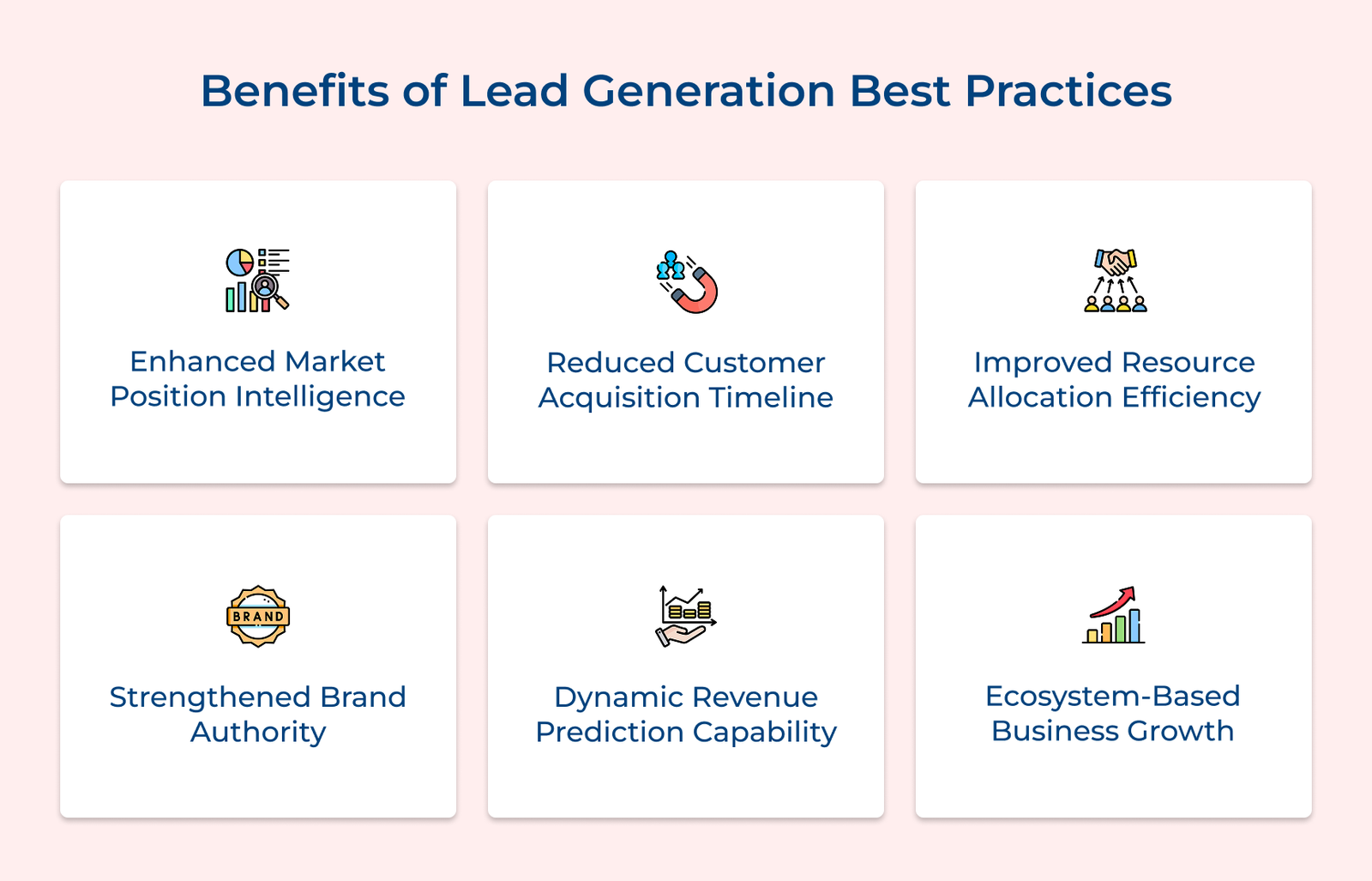
1. Enhanced Market Position Intelligence
You’ll start to notice clear patterns like what people like, what they ignore and where they drop off by tracking how people interact with your brand. It helps you spot opportunities others might overlook and shows you where you truly stand against your competitors.
2. Reduced Customer Acquisition Timeline
You can cut down the time it takes for someone to go from “just browsing” to deciding, with smart tools in place to qualify leads and guide them through the buying process. It’s all about reaching out when it matters most.
3. Improved Resource Allocation Efficiency
Instead of trying to win over everyone, you can focus on the people who are most likely to become customers. It means your team spends time guessing and more time building relationships with people who are already interested.
4. Strengthened Brand Authority
When you keep showing up with helpful content and honest communication, people start to see you as a reliable voice in your space. The trust makes it easier for them to choose you over others.
5. Dynamic Revenue Prediction Capability
You’ll have better tools to track how leads behave and how likely they are to convert. It means you can plan more confidently, knowing what kind of revenue to expect and adjust your approach if things change.
6. Ecosystem-Based Business Growth
When you treat people well and deliver value, they tend to tell others. Over time, your happy customers can become a steady source of new business, reducing the need to constantly spend money chasing fresh leads.
Below are some essential practices that every business should adopt to attract and retain customers effectively.
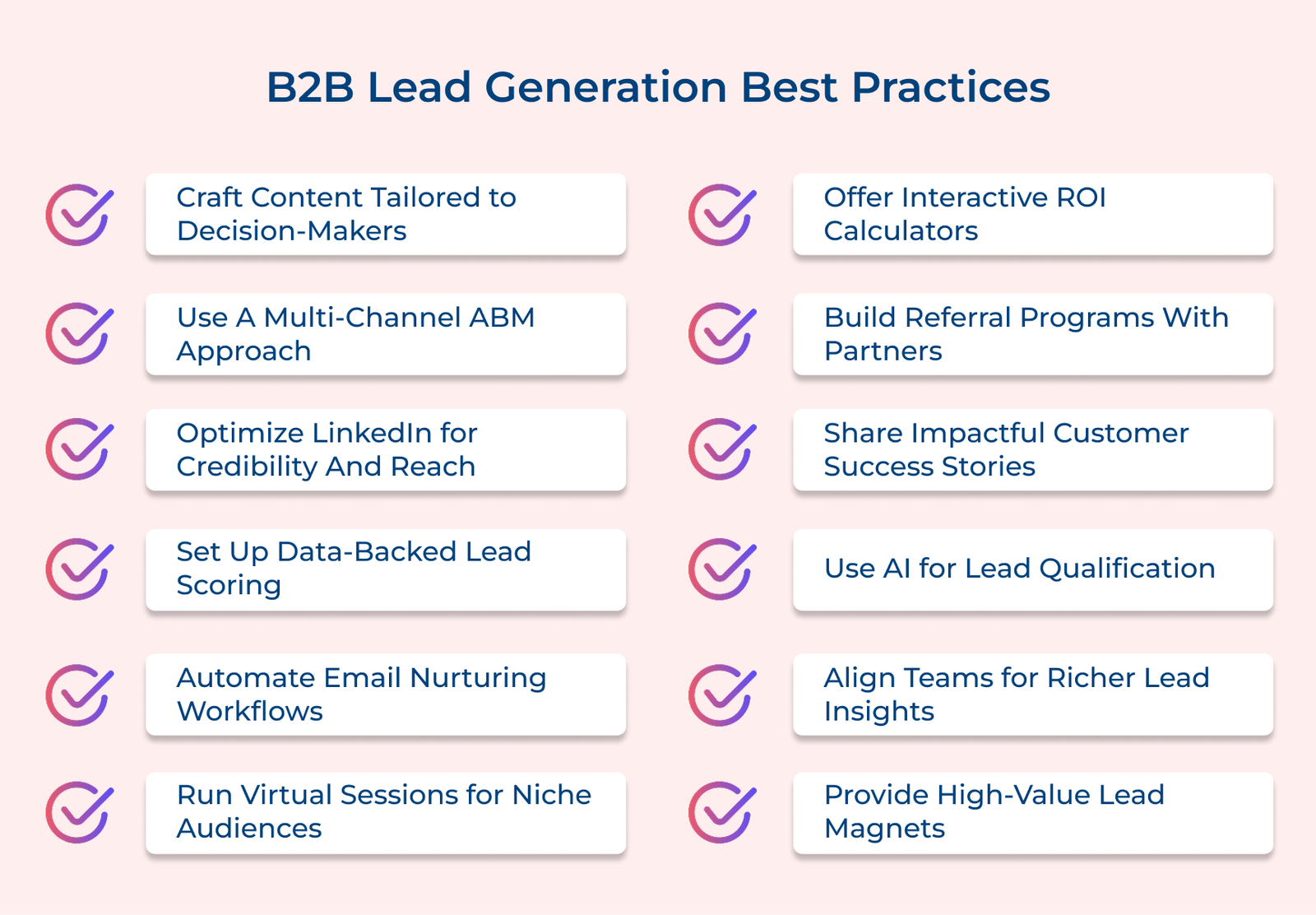
Not everyone in a company is looking for the same thing. A CFO might be focused on cutting costs, while a CTO is likely thinking about system compatibility and scalability. Hyper-targeted content means creating specific materials that speak directly to each role’s challenges and goals, not just generic industry info.
Start by mapping out the key decision-makers in the companies you’re targeting. Build dedicated content areas just for them. Think tailored case studies, white papers that speak their language and how-to guides that help them do their job better.
Pro tips:
Account-based marketing (ABM) is all about narrowing your focus. Instead of casting a wide net, it zeroes in on specific companies and the decision-makers within them. Coordinate your outreach across different channels like LinkedIn, email, direct mail and your website, so everything feels tailored to those high-value prospects.
Start by defining exactly who you want to reach. Once you’ve identified your top targets, build campaigns that speak directly to them. It could mean personalized email sequences, ads they’ll see on LinkedIn or even custom landing pages made just for their team.
Actionable tips:
Data-driven lead scoring takes the guesswork out of B2B prospecting. Instead of relying on hunches, it uses real actions like what someone clicks, downloads or visits to help you spot which leads are most likely to buy. Design a scoring matrix that assigns point values to different interactions like website visits, content downloads and email engagement.
Let’s assume that a software company tracks points across interactions. When someone from a manufacturing company’s IT team hit 100 points by reading product guides, signing up for webinars and browsing pricing, the system pinged sales to reach out right away. It led to faster, warmer conversations and a shorter path to closing.
Best practices:
Email nurturing sequences are structured paths that keep potential buyers engaged as they learn about your products and move closer to a decision. Instead of blasting the same message to everyone, the approach delivers the right info at the right time based on what your leads care about.
Let’s consider that a software company sets up a 12-week email track for IT managers considering cloud migration. It starts with plain-language content about why clouds matter. Then come how-to guides and, finally, case studies of companies that made the switch. The pace and topics changed depending on how recipients engaged—clicks, downloads and replies shaped what came next.
Key takeaways:
Virtual learning sessions are a practical way to share expertise and connect with prospects on a deeper level. Instead of delivering a one-way pitch, the sessions create space for useful, two-way conversations. You build credibility and open the door to more meaningful sales conversations by showing how your solution works in practice, through demos, live Q&As or customer stories.
Keep sessions focused and interactive to make them valuable. Let participants ask questions, offer breakout discussions for specific roles or topics and include voices beyond your own, like satisfied customers or partners who can speak honestly about their experience. It turns passive viewers into engaged prospects and gives you direct insights into what matters to them.
Pro tips:
Strategic partnership referrals open the door to high-quality leads by tapping into existing trust between a prospect and a business they already rely on. Instead of chasing cold leads, you’re gaining introductions from partners who understand your value and can vouch for it.
Build a structured program that outlines how referrals are shared, what incentives are involved and how both parties benefit. Offer tools that make it easy for your partners to refer clients, like a simple referral portal or ready-made co-branded content. Most importantly, keep the relationship active through regular check-ins and shared wins.
Actionable tips:
AI-driven lead qualification helps sales teams focus their time and energy where it matters most on prospects who are actually ready to buy. AI systems, which are a type of lead qualification tool, can spot buying signals faster than manual methods by analyzing how people interact with your website, emails and content, along with key company data.
The real value comes from the system’s ability to learn and adapt. As more data flows in, the AI refines what it considers a strong lead, which means the process keeps getting better. Instead of chasing every name on a list, your team works smarter, following up with people who are already showing serious intent.
Best practices:
Cross-department lead enrichment helps teams move beyond surface-level prospect data by tapping into collective knowledge across your organization. Instead of relying solely on marketing or sales notes, the approach brings together insights from product, support and even customer success teams.
Each department sees the prospect through a different lens—sales capture goals, support flags, recurring concerns and product teams notice patterns in feature interest. When the data is pooled into one centralized system, it creates a fuller picture of each lead’s needs, expectations and buying triggers.
Key takeaways:
Value-based lead magnets cut through the noise by offering something genuinely helpful—content that addresses real, pressing challenges your prospects face in their day-to-day work. Instead of offering another bland whitepaper, focus on tools and resources that give immediate, practical value.
The key to making the lead magnets effective is relevance and specificity. Tightly align each asset with a pain point in your target audience’s workflow. Make sure the content is easy to use and doesn’t feel like a sales pitch. When prospects see you understand their world and have practical ways to help, they’re more likely to engage.
Pro tips:
Check out some major brands that have successfully implemented lead-generation strategies to transform their business growth and customer relationships.
Amazon
Amazon turned lead generation into science by using real-time data to make shopping feel personal. Every product you view, search you make or item you add to your wishlist feeds into a recommendation engine that quietly nudges you toward your next purchase.
The Prime membership, meanwhile, does double duty: it locks in loyalty and gives Amazon a clear picture of who’s likely to spend more, more often. The systems help Amazon reduce marketing waste and focus efforts where they’re most likely to pay off.
Zappos
Zappos took a different route to earn loyalty by putting people first. Their lead generation strategy isn’t driven by algorithms but by conversations and long-term relationships. Every chat with a customer service rep is an opportunity to learn, respond and build trust.
The VIP rewards program makes customers feel seen and appreciated, not just sold to. The human approach turns shoppers into loyal fans who keep coming back and tell others to do the same.
Nike
Nike blended tech and lifestyle through its Nike+ apps, turning users’ fitness routines into an ongoing dialogue. They created a lead generation system where every run, fit or walk reveals more about the customer’s preferences by offering personalized workout plans and community features in exchange for data. The insight powers tailored product drops and exclusive offers, making the lead gen process feel more like a training partnership than a sales pitch.
Spotify
Spotify’s freemium model turns passive listening into a treasure trove of insight. Every song skipped, every playlist created, every genre explored feeds into a system that gets smarter over time. Spotify knows when to step in with an offer—usually just when the user’s most engaged. It’s not about the hard sell, but about showing clear value at the right moment, making the upgrade to Premium feel like the next natural step.
Let’s go through the essential metrics that help evaluate the effectiveness of your lead generation strategies.
Key questions:
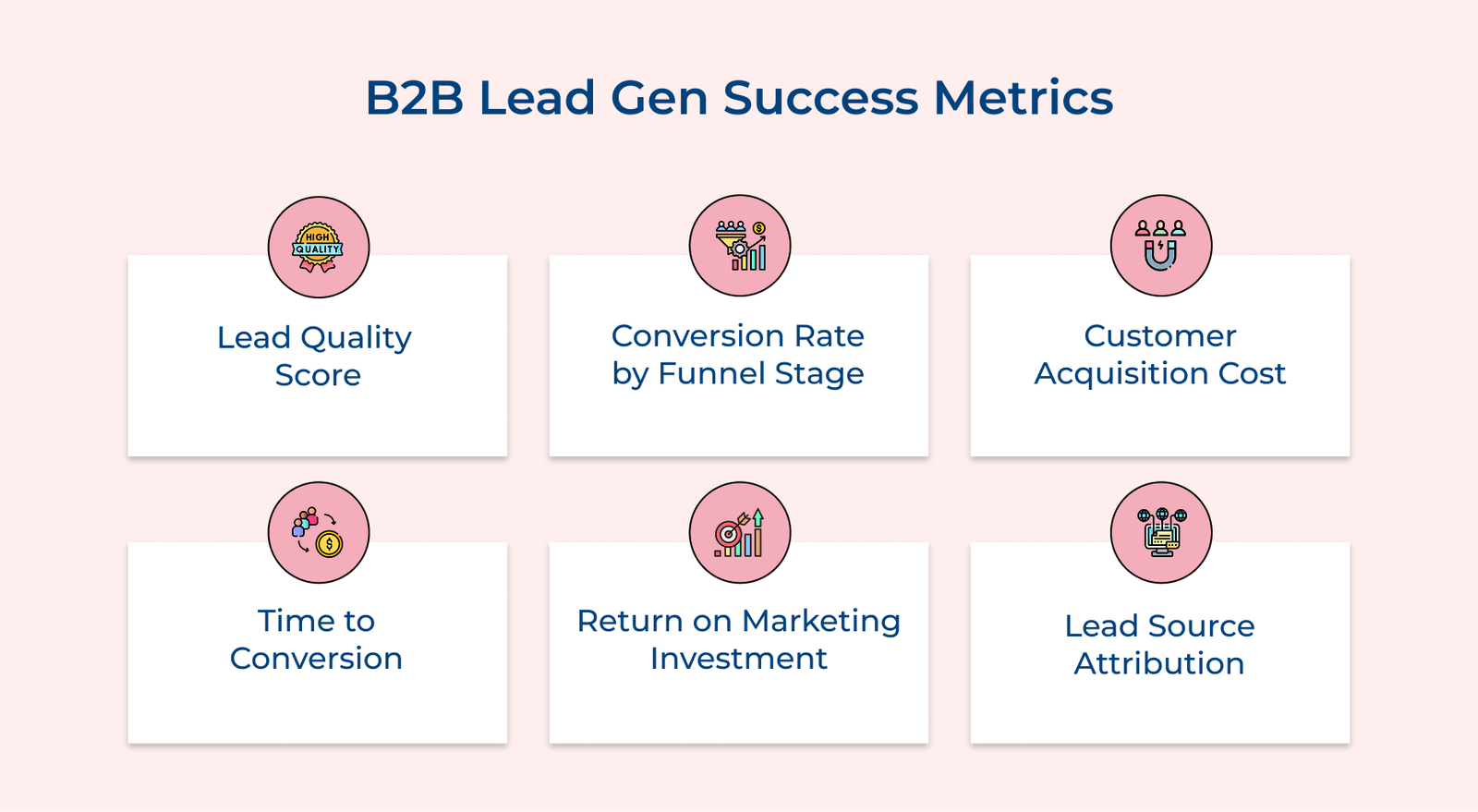
The metric tells you how closely a lead matches your ideal customer. It looks at things like company size, industry, job role and how they’ve interacted with your content. A strong scoring system lets you focus on leads that are worth pursuing, not just ones that fill your pipeline.
Break down how many leads move from one stage to the next, like from initial interest to a meeting or from proposal to close. It helps you spot where things slow down or fall apart, so you can fix weak spots and keep deals moving.
Add up all costs– marketing, sales, software, lead capture tools and divide it by the number of customers you’ve gained. It shows how much it really costs to land a new customer and whether you’re spending efficiently or burning a budget.
Track how long it takes for a lead to go from first touch to closed deal. If it’s taking too long, your follow-up might need tightening or the leads aren’t ready to buy. Knowing it helps you streamline your process and set better expectations.
Compare how much you spend on marketing to how much revenue those efforts bring in. It’s the clearest way to see what’s working and what’s not. The goal isn’t just more leads, it’s more of the right ones, for less spending.
Figure out where your best leads are coming from—LinkedIn ads, organic search, email, referrals and which channels are just noise. Good attribution lets you double down on what works and cut what doesn’t.
Effective lead generation is what fuels steady business growth. It’s not just about finding names for your contact list—it’s about identifying the right people, understanding their needs and starting real conversations that lead to real opportunities. When done well, it creates a reliable stream of qualified prospects who are more likely to turn into loyal customers.
Getting it right means finding the right balance between smart tools, thoughtful communication and clear insight into what your potential customers care about. The market changes and so do people’s priorities, so your approach to lead generation needs to evolve too. Businesses that stay focused on delivering value at every step and treat leads like people, not just numbers, are the ones that build relationships that last!

Small businesses grow strongest by staying close to their communities. Start by understanding who your customers are—what they need, what they care about and how you can help. Create helpful, locally relevant content that speaks to their daily challenges and show up where they spend time, whether that’s on local social media pages or community events.
Make your website easy to navigate and genuinely helpful. Guide visitors with clear prompts, like where to sign up, buy or learn more and offer something worthwhile in return, whether it’s a small discount, early access to a sale or a helpful resource. Use exit-intent popups and follow-up emails for visitors who leave items in their cart.
Focus on being genuinely helpful by sharing clear, well-researched content that solves real problems—think detailed case studies, how-to guides and reports that reflect what your audience is dealing with. Use platforms like LinkedIn to start real conversations, show up at industry events where your buyers are and tailor your outreach to specific companies.
Social media platforms work best when you treat each platform on its terms—use LinkedIn to share insights, Instagram to highlight your story visually and Twitter to join timely discussions. Instead of posting the same thing everywhere, create content that fits the tone and audience of each space.
Begin by organizing your email list into clear segments based on what people care about, then send them content that speaks directly to those interests. Use automated sequences to welcome new subscribers, follow up based on their actions and reconnect with inactive ones. Keep your messages useful and to the point, with clear next steps. Test subject lines, timing and layouts often to see what works and adjust as you go.
Grow Customer Relationships and stronger team collaboration with our range of products across the Conversational Engagement Suite.
Omnichannel Customer Support & Help Desk Software
AI Enabled Business Messaging and Chatbot Software
Sales Engagement & CRM Software
Call Center Software & Virtual Phone System
Product Marketing & Experience Platform
Customer Experience & Feedback Management Software
 Customer Satisfaction vs Customer Loyalty: What’s the Difference?
Scroll to top
Customer Satisfaction vs Customer Loyalty: What’s the Difference?
Scroll to top