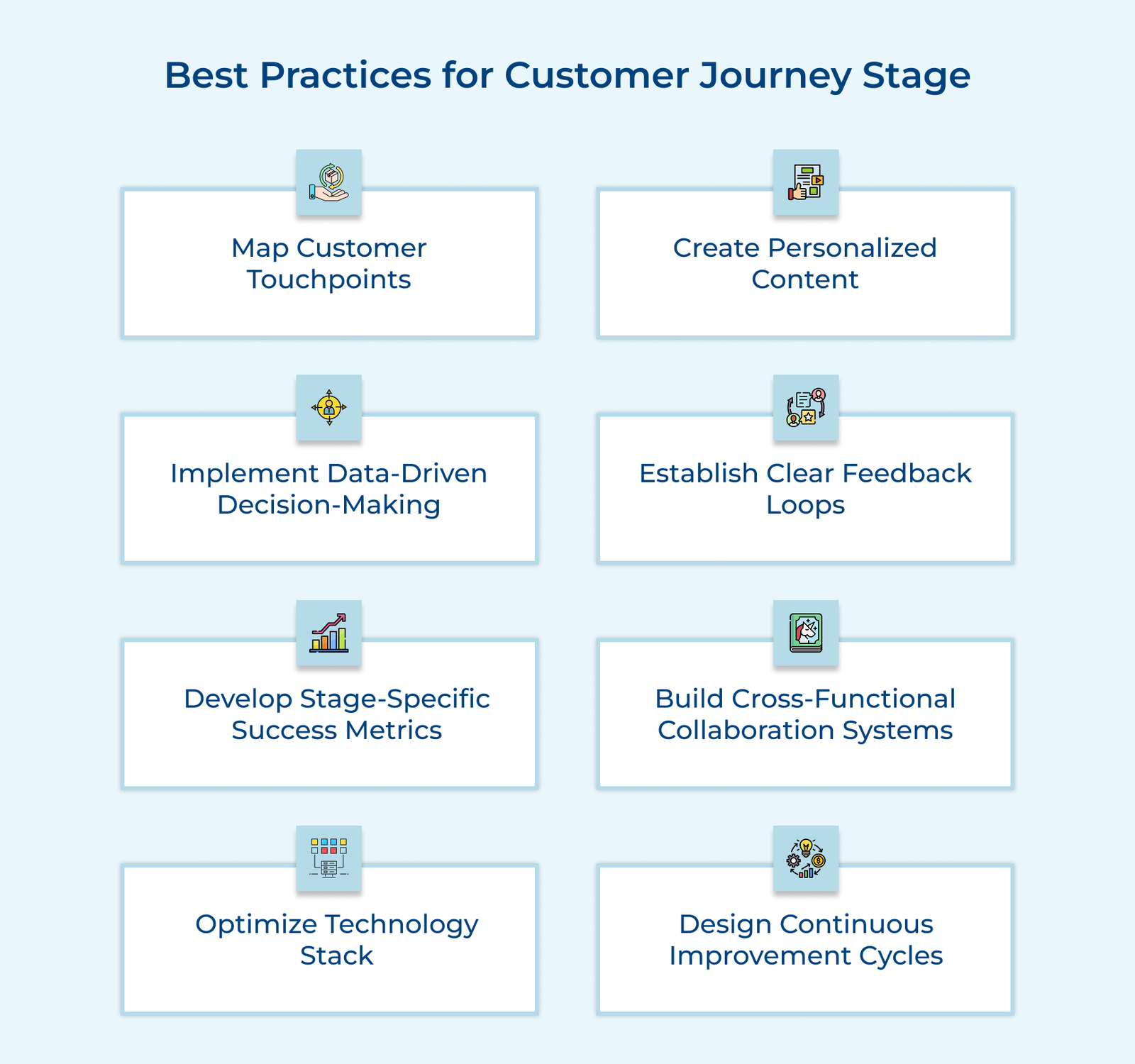
1. Map Customer Touchpoints Across All Channels
Touchpoint mapping helps businesses pinpoint every interaction between customers and their brands. The complete view ensures no opportunity is overlooked and creates smoother experiences across all channels. It also uncovers gaps, disconnects and areas to improve customer engagement.
Effective touchpoint mapping begins by documenting every way customers interact with your brand. It includes digital touchpoints like website visits, email and social media engagement. Physical interactions such as sales meetings, product demos and support calls are also included.
Pro Tips:
- Regularly talk to customers about their interaction preferences and pain points to uncover overlooked touchpoints. Understanding their behavior patterns helps optimize channel strategy and allocate resources effectively.
- Use journey mapping software to visualize and track touchpoints in real-time. It helps you pinpoint the most effective channels at each stage. Customers might experience friction as they move between different touchpoints, which mapping helps.
2. Create Personalized Content for Each Stage
Personalized content speaks directly to the needs, concerns and questions customers have at each stage. 60% of consumers become regular customers after having a personalized shopping experience. The targeted approach ensures your content resonates with customers based on their current understanding level and decision-making.
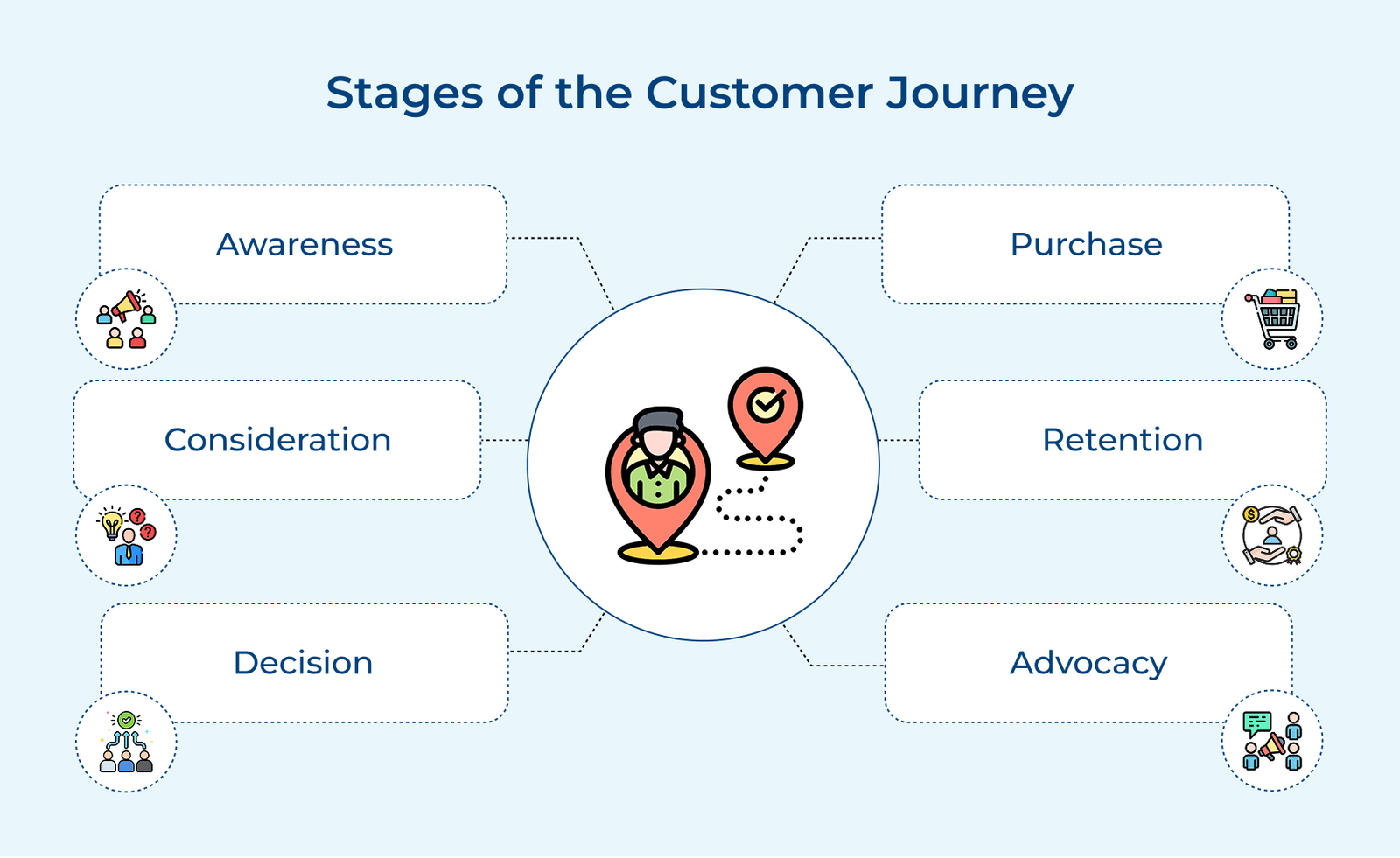
You can start by creating detailed buyer personas and aligning content with their needs at every stage. At the awareness stage, create educational blog posts about industry challenges. The consideration stage involves developing detailed comparison guides and case studies. Continuously refine your content strategy based on client feedback and engagement to keep it relevant.
Pro Tips:
- Create content clusters that link related materials in various formats to cater to different learning styles. It builds a helpful resource library that customers can explore based on their needs.
- Use a gradual collection of customer information through progressive profiling to improve your personalization strategy. The approach allows you to offer relevant content without bombarding customers with information requests.
3. Implement Data-Driven Decision-Making Processes
Data-driven decision-making helps businesses understand customer behavior, preferences and pain points through clear analysis. The approach eliminates the guesswork in optimizing the entire customer journey by providing insights into what works and what needs improvement. It allows teams to make informed choices about resources and strategy.
The implementation journey begins with setting up tracking systems to monitor key metrics at each journey stage. Identify important data points like engagement rates, conversion metrics and customer feedback. Build dashboards to visualize the data and set regular reviews to identify areas of improvement.
Pro Tips:
- Set up automated alerts for significant changes in key metrics, allowing quick responses to emerging trends or issues. The approach helps key journey optimization on track.
- Hold cross-functional data review sessions where teams can share insights and work together on solutions. It ensures that all viewpoints are considered when making strategic decisions.
4. Establish Clear Communication Feedback Loops
Feedback loops establish clear channels to gather and act on customer input throughout their journey. The approach captures valuable insights into experiences, preferences and pain points. Well-designed feedback loops help spot issues early and allow quick adjustments to boost customer satisfaction.
Setting up feedback loops means offering several ways for customers to share their thoughts including surveys, chat support and regular check-ins. Each touch point should have a clear process for collecting, analyzing and acting on feedback. Teams should have clear guidelines for responding to feedback and knowing the right actions to take based on what the customer says.
Pro Tips:
- Combine anonymous surveys with direct conversations to uncover honest feedback that customers might hesitate to share openly. The balanced approach provides deeper insights into their true experiences.
- Look for patterns in casual comments during regular interactions. Sometimes the most valuable feedback comes from unscripted moments.
5. Develop Stage-Specific Success Metrics
Stage-specific metrics offer clear insights into how each part of the customer journey performs. The focused measurements help teams see where customers are thriving and where they need help. Tracking metrics at each stage enables areas of improvement and makes adjustments that will have the greatest impact.
Implementing stage-specific metrics requires identifying key actions that signal success at each stage. Awareness can be achieved by tracking, measuring content and brand recognition. Consideration happens by tracking resource downloads and demo requests. In the decision stage, monitoring proposal acceptance rates and sales velocity is done. Each metric should align with stage-specific goals.
Pro Tips:
- Track the time customers spend in each stage against their eventual lifetime value. Hidden patterns often emerge when you connect these seemingly unrelated data points.
- Challenge traditional success metrics by talking to your most loyal customers. Their journey might reveal unexpected indicators of long-term success.
6. Build Cross-Functional Team Collaboration Systems
Cross-functional collaboration brings together the strengths of every department to improve the customer journey. At times marketing, sales and product teams work together to provide customers with a consistent experience, messaging and support. The unified approach prevents the silos that often lead to disjointed customer experiences.
Building strong collaboration begins with setting shared goals and clear communication between teams. You might hold weekly stand-ups where sales share customer feedback with product teams or marketing updates on customer success with teams. Regular knowledge-sharing sessions ensure teams understand how their work influences different stages of the customer journey.
Pro Tips:
- Place team members from different departments next to each other in shared spaces. Physical proximity naturally sparks conversations that lead to journey improvements.
- Turn customer feedback sessions into problem-solving workshops where different teams pitch solutions together. Fresh perspectives often spark innovative ideas.
7. Optimize Technology Stack for Journey Management
Optimized technology stack connects all customer interactions into a smooth experience. The right tools help teams track, manage and improve customer journeys while automating repetitive tasks. The integration ensures consistency across touchpoints and provides valuable insights for ongoing improvement.
Begin by auditing your current tools to spot gaps or redundancies. Choose solutions that work well together and bring clear benefits to both customers and teams. Your tech stack should support key tasks like managing customer data, automating communication and performance tracking while remaining user-friendly for your team.
Pro Tips:
- Shadow your front-line teams for a day to spot tech-related friction points. Real-world observations reveal improvement opportunities no dashboard can show.
- Let your power users experiment with new tool features before rolling them out widely. Their discoveries often lead to unexpected productivity gains.
8. Design Continuous Improvement Review Cycles
Continuous improvement cycles provide a structured way to assess and refine the customer journey. Regular reviews help businesses stay responsive to changing customer needs, spot emerging trends and address issues before they affect satisfaction. Without these cycles, companies risk falling behind and missing opportunities to improve customer experience.
Implementation involves setting up a schedule for regular reviews at various levels. Daily check-ins address immediate issues. Monthly reviews examine broader trends. Quarterly deep dives look at long-term patterns and annual reviews reassess the overall journey. Each session should have clear goals, discussion points and action items to drive meaningful results.
Pro Tips:
- Block out “improvement thinking time” in your calendar just like you schedule meetings. Dedicated reflection periods often yield insights that busy work days might miss.
- Rotate team members who lead review sessions each cycle. Different perspectives at the helm naturally bring fresh approaches to problem-solving.
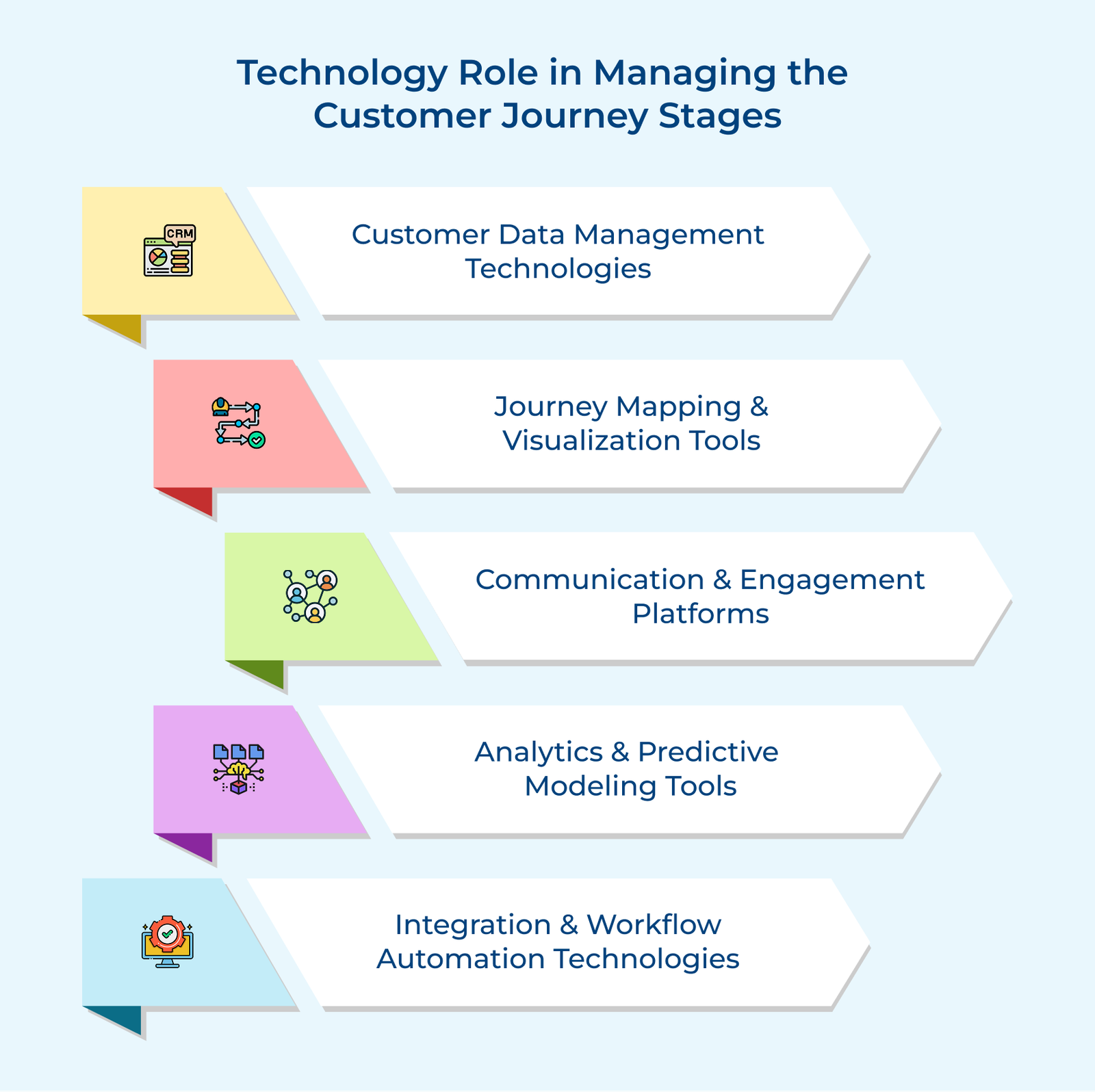
Role of Technology in Managing the Customer Journey Stages
Let’s go through the different technologies that play crucial roles in managing and optimizing the client journey stages.