1. Focus
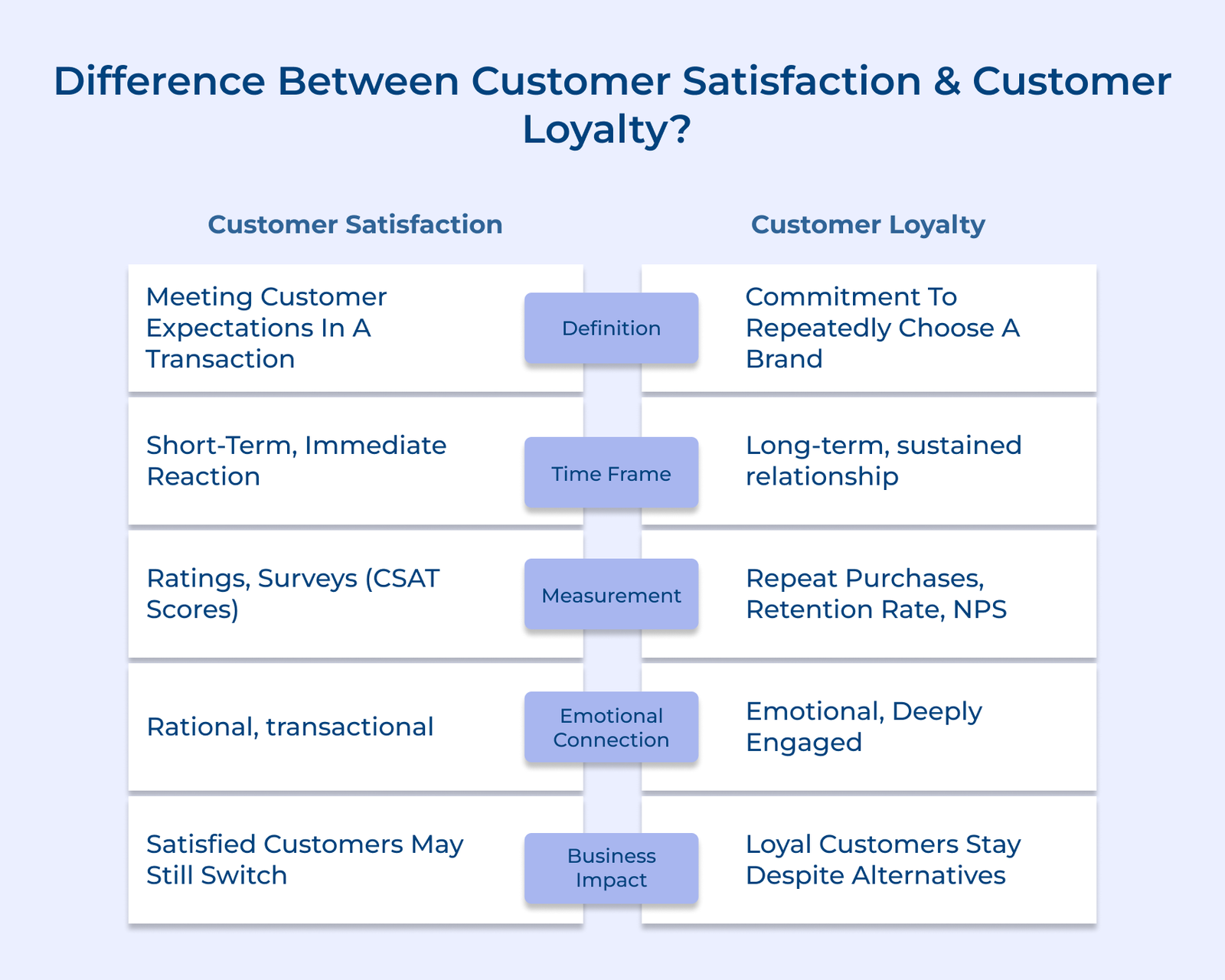
When it comes to customer satisfaction and customer loyalty, the key difference lies in the focus of each concept. Customer satisfaction is about meeting expectations and ensuring happiness with provided offerings. It is a short-term measure of how well a business is meeting customer needs.
Customer loyalty focuses on creating a strong emotional connection between the customer and the brand. It is about building trust and creating repeat business through a positive customer experience. Loyalty is when customers keep returning to a brand despite competition offering similar products.
Key takeaways:
- Customer loyalty is essential as it leads to repeat business, referrals and increased revenue. Focusing on customer loyalty helps businesses build a loyal customer base that will support the brand in the long run.
- Loyal customers forgive errors due to their strong brand loyalty overshadowing minor issues. Focusing on customer loyalty is vital for business success.
2. Behavior
Behavior is a key difference between customer satisfaction and customer loyalty. Customer satisfaction involves meeting needs, while loyalty builds lasting relationships.
A satisfied customer’s positive experience may not always result in repeat business or referrals. A loyal customer repeats purchases, recommends the business and engages on social media.
Key takeaways:
- Building customer loyalty through positive behavior can lead to long-term success and profitability. Loyal customers are more likely to overlook occasional service issues and continue to support the business.
- Understanding the behavior of satisfied customers is crucial for businesses to convert them into loyal customers. Businesses can personalize experiences by analyzing behaviors and preferences to encourage loyalty.
3. Measurement
Customer satisfaction is gauged through surveys, feedback and ratings from those who used a product or service. It is a more immediate and transactional measure of how happy a customer is with their experience.
Customer loyalty is a more long-term measure of a customer’s commitment to a brand. The loyalty of a customer can be measured by repeat purchases, referrals and customer lifetime value.
Key takeaways:
- Understanding customer satisfaction is vital for immediate needs, while customer loyalty builds a strong, supportive customer base.
- Businesses should focus on both customer satisfaction and customer loyalty metrics. They provide insights into customer behavior and can help drive business growth in the long run.
4. Impact on Business
The key difference between customer satisfaction and customer loyalty lies in their impact on business. Customer satisfaction is crucial for attracting new customers and retaining existing ones. Happy customers are more likely to make repeat purchases and refer others to the business.
Customer loyalty is even more essential as loyal customers make repeat purchases and tend to spend more money. It provides valuable feedback and acts as a brand ambassador for the business.
Key takeaways:
- Customer loyalty is essential for long-term success and sustainability. Businesses that prioritize customer relationships and loyalty are more likely to thrive.
- Prioritizing customer loyalty boosts profits, cuts marketing expenses and enhances industry competitiveness. Customer loyalty is the key to achieving sustainable growth and success in the long run.
5. Relationship Depth
Relationship depth is the key difference between customer satisfaction and customer loyalty. Customer satisfaction focuses on the transactional aspect of the relationship. It is about meeting customers’ current needs and expectations with the product or service offered.
Customer loyalty goes beyond the transaction and looks at how well a business can maintain a strong emotional connection with customers.
Key takeaways:
- Customer loyalty is essential for long-term success. Creating emotional connections with customers can boost repeat business and customer lifetime value.
- Customer satisfaction is a starting point, but businesses need to focus on building customer loyalty to truly thrive. Building customer relationships and prioritizing their needs creates a loyal base for long-term support.
6. Challenges
One challenge in achieving customer satisfaction is meeting evolving customer expectations. Businesses must continually adapt their offerings to keep customers satisfied.
Building customer loyalty requires consistent quality, exceptional customer service and personalized experiences. It can be challenging as businesses must invest time and resources in building relationships with customers to enhance loyalty.
Key takeaways:
- Creating customer loyalty entails forming strong connections amidst market changes and competition.
- Businesses that prioritize customer loyalty over mere satisfaction are more likely to withstand challenges.
How to Improve Customer Loyalty and Satisfaction
Let’s explore actionable strategies that can help you improve customer loyalty and satisfaction, ultimately driving success for your business.