Multichannel Selling Guide: Advantages, Challenges & Tips
Multichannel selling explains how using multiple sales channels helps reach more buyers. It improves engagement, overcomes channel-specific challenges and drives consistent revenue growth.

Multichannel selling explains how using multiple sales channels helps reach more buyers. It improves engagement, overcomes channel-specific challenges and drives consistent revenue growth.
Most sellers don’t realize how exposed they are until a single platform decision cuts their revenue in half. A policy update, an algorithm shift or even a change in buyer habits on one platform shouldn’t have the power to stall an entire business. Yet for sellers dependent on one channel, that’s exactly the risk they carry every day.
70% of shoppers use multiple channels in their shopping journey, meaning buyers are already spread across channels, whether the sellers are or not. It makes it paramount for businesses to have an extensive knowledge of multichannel selling. Let’s dive in to understand how to choose the right channels and implement systems that turn complexity into profitable growth opportunities.
Multichannel selling refers to the practice of offering your products through multiple independent sales channels at the same time. Businesses leverage different platforms like online marketplaces, social media, physical stores and their own websites to connect with customers. The approach helps companies maximize their reach and meet buyers wherever they prefer to shop.
Multichannel focuses on presence across platforms. Omnichannel goes a step further by connecting those platforms into one unified experience where customer data and interactions move smoothly between touchpoints.
Key objectives:
Let’s check out the main sales channels involved in multichannel selling and understand how each one contributes to overall growth.
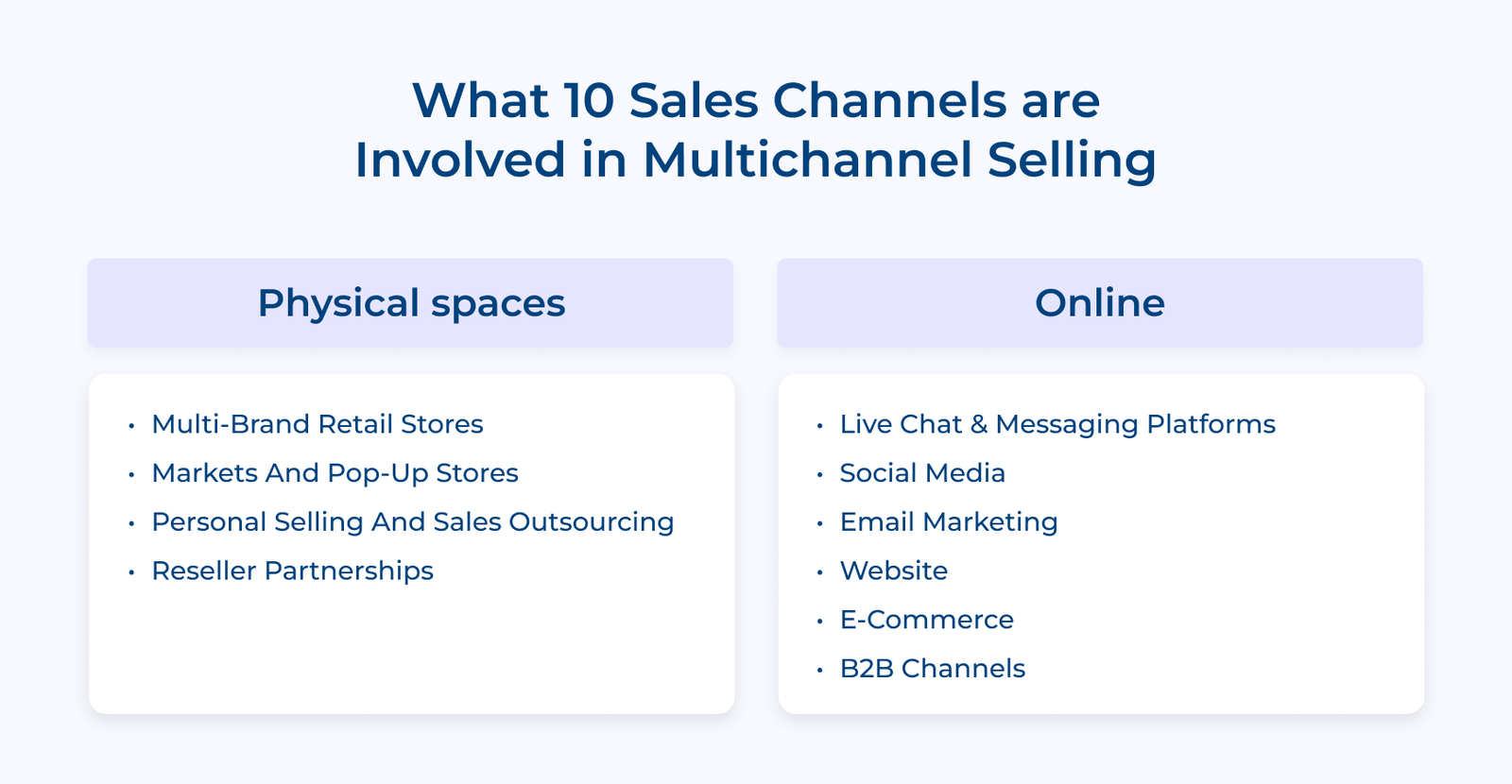
Multi-brand retail stores place your products alongside complementary brands in established retail spaces. Customers compare multiple options in person while your products benefit from the store’s existing foot traffic.
Businesses typically negotiate shelf space through wholesale or consignment agreements and coordinate inventory with the retailer’s system. It suits products that customers prefer to see, touch or try before making a purchase.
Farmers’ markets, craft fairs, and pop-up spaces create direct opportunities for interaction with customers. They help you test new areas without committing to a permanent location. They also give you real-time insight into customer preferences and buying behavior.
Key elements:
Pop-up stores also create urgency since they are temporary. Immediate feedback from customers helps refine pricing, messaging and product positioning. Operating costs remain lower than those of long-term retail leases.
Personal selling relies on direct conversations between a sales representative and a potential buyer. The approach works particularly well for complex or high-value items that require detailed explanations.
Key factors:
Sales outsourcing shifts the responsibility to external agencies or independent representatives who sell on your behalf. The professionals handle prospecting, presentations and closing. Strong relationship skills are essential in this channel. Higher price points are often easier to justify when customers receive personal attention and tailored guidance.
Reseller partnerships involve third-party businesses that buy your products and sell them through their own operations. Resellers manage their own marketing and customer service while you focus on product development.
Key elements:
Resellers help expand market presence without requiring you to handle every customer interaction directly. Growth becomes faster since you are not building an entire sales infrastructure from scratch.
Live chat on websites and messaging apps such as WhatsApp allows real-time conversations with customers. Quick answers often remove the hesitation that stops someone from completing a purchase.
Actionable tips:
The platforms bridge the gap between online convenience and in-person service quality. Customers appreciate the instant support while businesses convert more browsers into buyers through timely assistance.
Social media platforms such as Instagram, Facebook or TikTok act as both discovery and direct sales channels. Products appear in posts, stories or live sessions and customers can purchase directly within the app.
Key strategies:
Instagram shopping lets fashion brands create visual catalogs where users tap images to see prices and buy instantly. The social proof from likes and comments reduces purchase hesitation. Social algorithms favor authentic engagement over hard selling. Brands that share valuable content alongside promotional posts build stronger customer relationships and higher conversion rates.
Email marketing delivers targeted messages directly to subscribers. Product suggestions, updates and exclusive offers reach customers in a space they check daily.
Key metrics:
Automated sequences guide customers through welcome emails, abandoned cart reminders and post-purchase follow-ups. Email serves as a more personal communication channel compared to public social platforms. The channel excels at retaining existing customers and encouraging repeat purchases through loyalty programs. The cost per message remains incredibly low compared to paid advertising channels.
Your company website serves as the home base for your online presence and brand story. Visitors explore product data, read testimonials and make purchases through integrated shopping carts.
Key features:
E-commerce platforms such as Shopify or WooCommerce manage the technical side, while you control design, messaging and customer experience. Customer data and relationships remain in your hands without third-party limitations.
Marketplaces such as Amazon, eBay and Etsy bring together millions of sellers in one digital roof. Your products appear alongside competitors while gaining exposure to high traffic and building in customer trust.
Key considerations:
Business-to-business platforms and wholesale networks connect you with companies buying in bulk for resale or operational use. The channels involve longer sales cycles but typically generate larger order values.
Key characteristics:
LinkedIn serves as a powerful B2B discovery tool where companies research suppliers and verify credibility through recommendations. Professional networks replace traditional cold calling with warm introductions and content marketing.
The following are the key benefits that make multichannel selling worthwhile for growing companies.
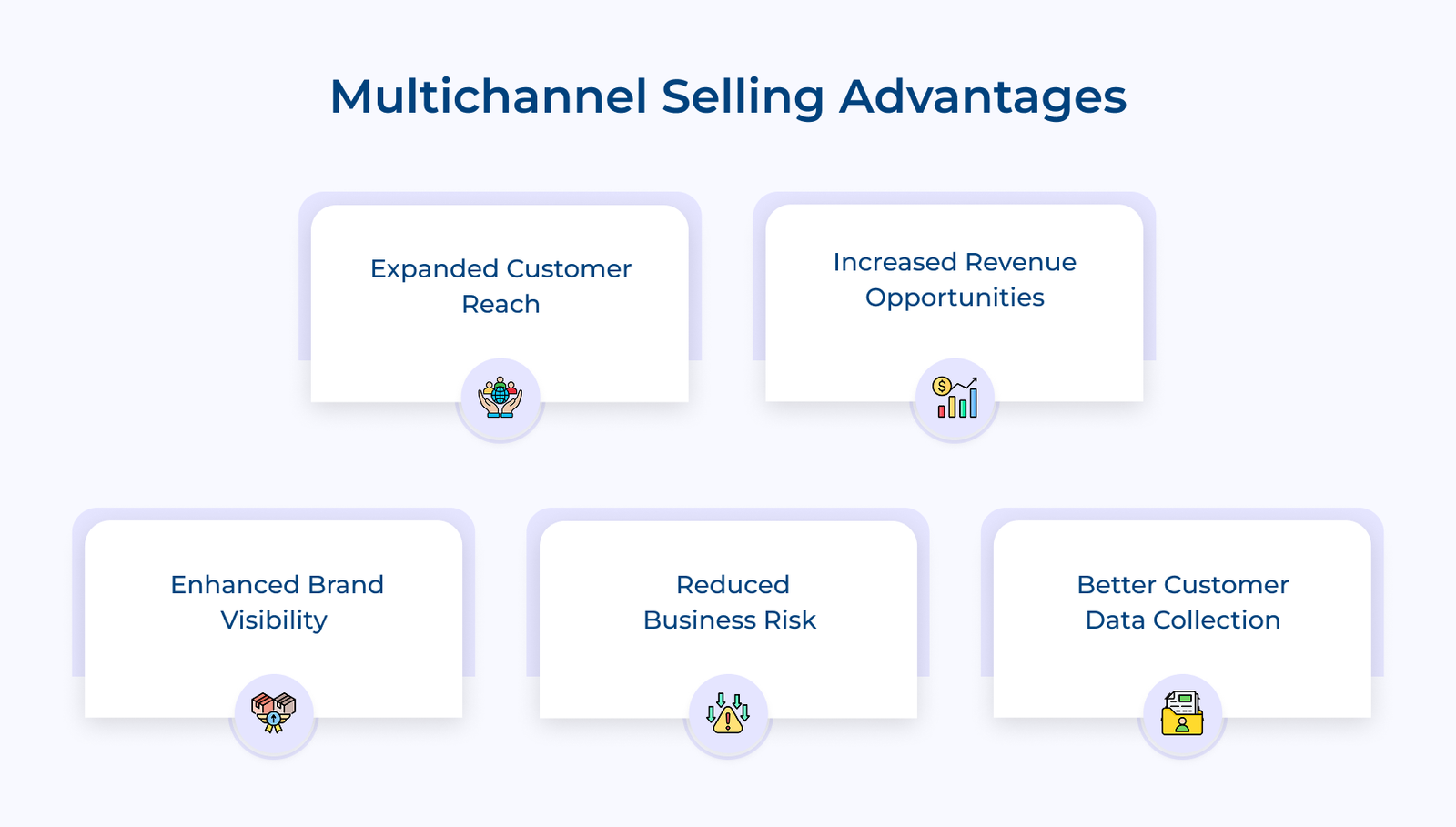
1. Expanded Customer Reach
Customers shop in different places depending on their habits and comfort levels. Multi-channel selling keeps your products visible wherever they prefer to browse and make purchase decisions. Greater presence simply means more chances to be discovered
2. Increased Revenue Opportunities
More sales channels create more opportunities for customers to discover and buy your products. Each platform functions as an additional revenue stream that contributes to your overall sales performance.
3. Stronger Brand Visibility
Your brand gains recognition when customers encounter it across multiple touchpoints throughout their day. The repeated exposure builds familiarity and positions your business as trustworthy in the market.
4. Reduced Business Risk
Depending on one platform can create sudden challenges if traffic drops or policies change. Multiple channels provide stability when one source underperforms. Revenue becomes more balanced and predictable.
5. Deeper Customer Insights
Every channel reveals different patterns in customer behavior. Combined data shows how people discover, compare and purchase your products. Clear insights help improve pricing, messaging and overall strategy.
Check out the main challenges businesses face when managing multiple sales channels at the same time.
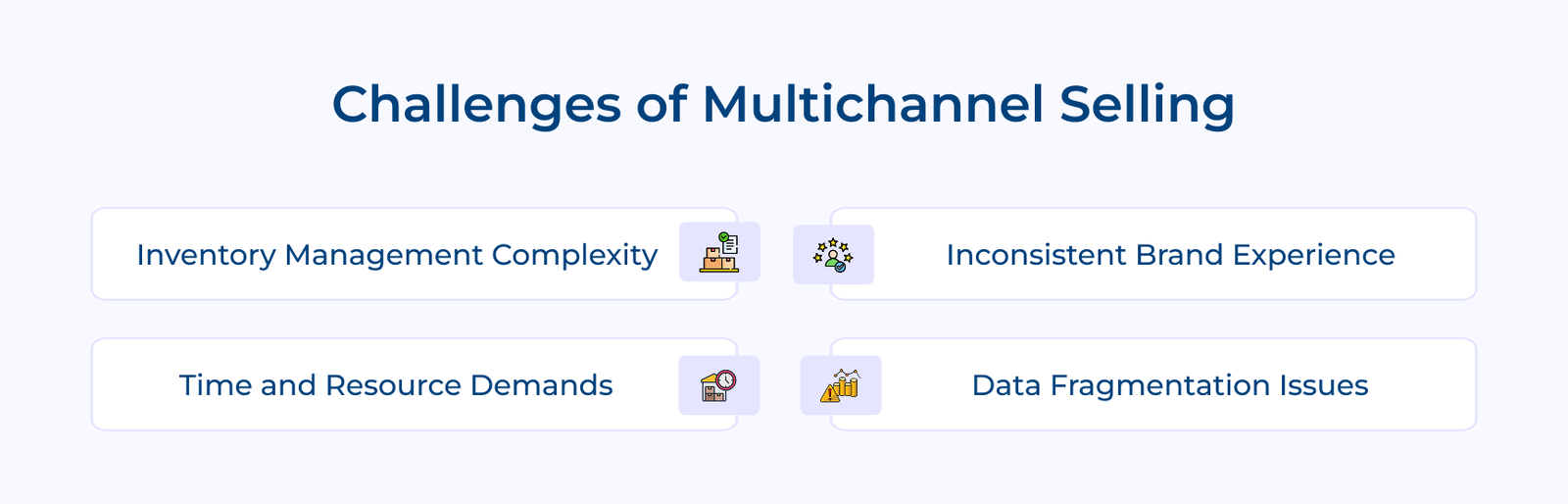
1. Inventory Management Complexity
Managing stock across several platforms quickly becomes complicated. One channel may oversell while another still shows unsold inventory. Fulfillment mistakes lead to delays, cancellations and frustrated customers. Clear systems and real-time tracking become essential as you scale
2. Inconsistent Brand Experience
Each sales channel has different formatting requirements and customer interaction styles that affect presentation. Maintaining cohesive brand messaging and quality standards across diverse platforms requires constant attention and adaptation efforts.
3. Time and Resource Demands
Multiple channels mean multiple dashboards, listings and customer conversations. Updates, pricing changes and support requests demand ongoing attention. Small teams often feel stretched thin trying to maintain strong performance everywhere at once.
4. Data Fragmentation Issues
Customer information and sales data are scattered across separate platforms that don’t communicate with each other naturally. The fragmentation makes it difficult to understand overall business performance or create unified customer profiles.
Key solutions:
Let’s check out the essential tips to boost your multichannel selling game and transform your business into a customer-engagement powerhouse
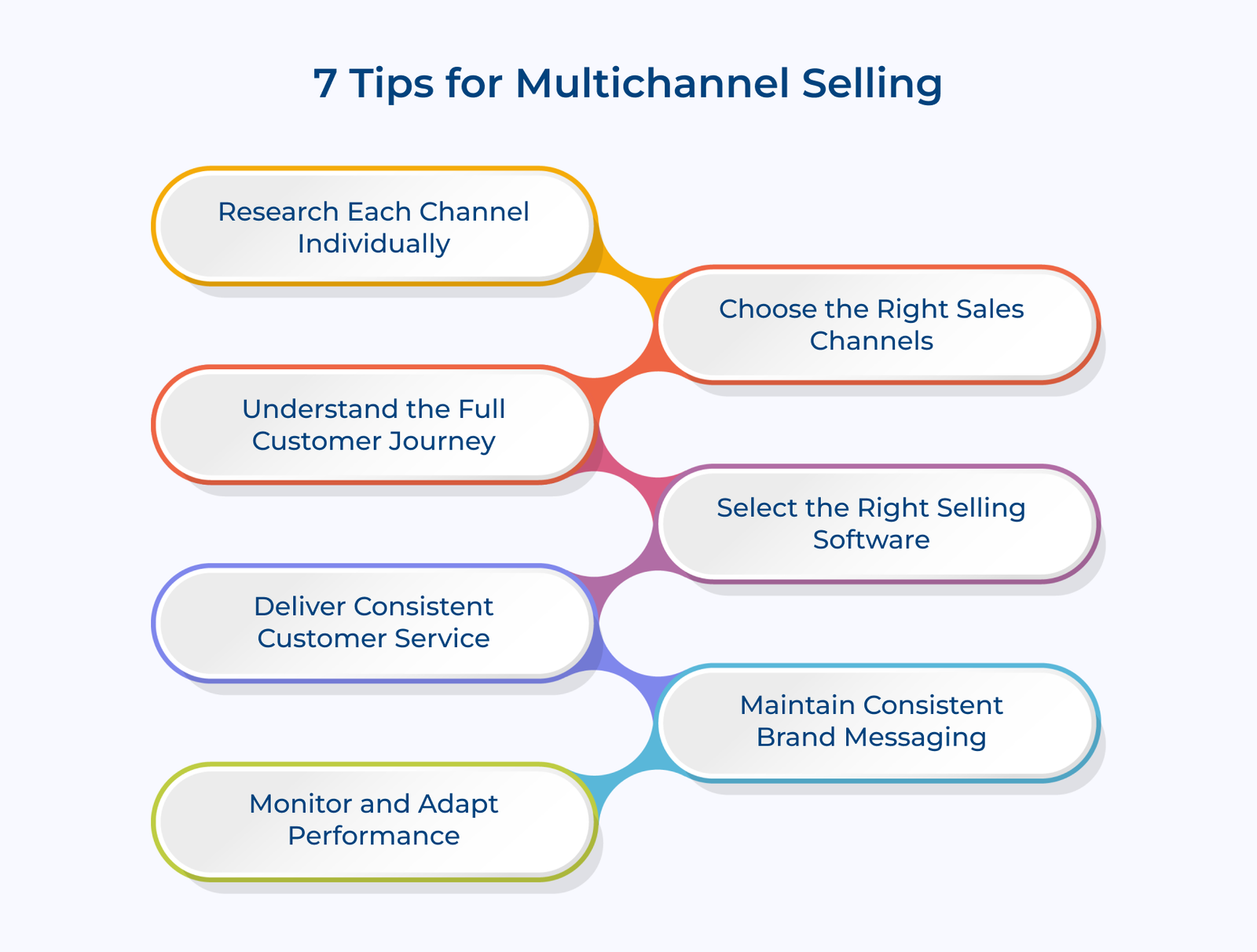
Each platform operates differently. Careful research helps you avoid investing time and money in channels that do not suit your business model. A clear understanding up front saves costly adjustments later.
Key approaches:
Choosing the right channels requires a lot of focus that businesses give. Limited resources work better when directed toward platforms that can deliver steady returns. Trying to be everywhere often weakens performance rather than improving it.
Key questions:
Answering the questions honestly helps you avoid investing in channels that look promising but don’t align with your capabilities. A gap between your capabilities and a channel’s demands often leads to poor customer experiences.
Start with two or three channels where you can deliver excellent experiences and prove profitability first. Once operations run smoothly and generate consistent returns, you can confidently expand to additional platforms without overwhelming your team.
Customers rarely buy the first time they see your product. They move across platforms, compare options, read reviews and return later to complete the purchase. A clear understanding of the journey helps you improve every interaction along the way.
Map All Touchpoints
List every place where customers interact with your brand, from first discovery to post-purchase communication. The mapping reveals gaps in your coverage and opportunities to guide customers more effectively toward purchasing decisions.
Identify Discovery Channels
Determine which channels generate the most new customer awareness through analytics tools and customer surveys. Some platforms excel at introducing your brand, while others work better for customers already familiar with what you offer.
Track Conversion Paths
Follow the specific routes customers take before completing transactions to understand which channel combinations work best. Many customers discover products on social media but prefer purchasing through your website or a trusted marketplace.
Managing several sales channels without the right software quickly turns into endless manual updates and messy spreadsheets. Centralized technology keeps operations organized and reduces costly mistakes.
Strong multi-channel selling tools connect the sales platforms with inventory tracking and order fulfillment in one system. Stock levels stay accurate across every channel and duplicate data entry disappears. Orders flow smoothly from purchase to shipment without confusion.
Pro tips:
Customer service shapes how people remember your brand. One poor interaction can outweigh several positive ones. Consistent support across every channel protects trust and encourages repeat purchases.
Each platform comes with its own expectations around response speed and communication style. Your team needs to adjust tone and detail while keeping core service standards consistent.
Key approaches:
Customers should recognize your brand instantly, no matter if they see it on Instagram or inside a retail store. Conflicting messages about pricing, benefits or values create confusion and reduce trust. Clear and steady communication builds credibility over time.
Key takeaways:
Strong brand recognition grows when customers repeatedly see the same tone, visuals and key promises. Familiarity increases confidence. Strong brand consistency requires documented standards that everyone on your team can reference and follow reliably.
Key components:
Brand consistency isn’t about rigid uniformity but rather maintaining recognizable elements while adapting appropriately to each platform’s format. The balance ensures customers always know they’re interacting with your business, regardless of the specific touchpoint.
Performance tracking shows which channels actually contribute to profit and which ones consume time without meaningful returns. Clear data prevents guesswork and supports smarter decisions.
Create dashboards that highlight essential metrics such as conversion rates, customer acquisition costs and profit margins for each channel. Regular weekly or monthly reviews help detect trends early and correct course before issues escalate.
Actionable tips:
Below are the examples that show how strategic channel selection creates competitive advantages in crowded markets.
Walmart
Walmart runs thousands of physical stores alongside a strong e-commerce website and mobile app. Customers can shop in-store, order online for curbside pickup, schedule home delivery or buy from third-party sellers on its marketplace.
The mix of channels helped Walmart transition from a traditional retailer into an omnichannel competitor against Amazon and Target. Customers now choose between in-store shopping, same-day delivery or pickup options that blend digital convenience with physical store accessibility.
Amazon
Amazon started as an online marketplace but now includes physical stores like Whole Foods and Amazon Fresh locations. The company operates Amazon Go convenience stores, sells through voice commerce via Alexa devices and runs a massive third-party seller marketplace.
Diversifying beyond pure e-commerce strengthened Amazon’s market dominance by capturing customers who still prefer physical shopping experiences. The physical presence also supports faster delivery capabilities and provides convenient return locations that reduce friction in the customer journey.
Nike
Nike sells through branded retail stores, its official website, mobile apps and retail partners with sporting goods retailers like Foot Locker. The brand also operates on major marketplaces, maintains outlet stores for discounted inventory and uses social media platforms for direct purchasing.
The multichannel presence gave Nike greater control over brand presentation while reaching different customer segments effectively. Direct-to-consumer channels improved profit margins while retail partnerships maintained broad market accessibility and visibility in high-traffic shopping areas.
Sephora
Sephora operates standalone beauty stores, as an e-commerce site and a mobile app. Shop-in-shop locations inside department stores increase accessibility. Virtual try-on tools and influencer collaborations as digital engagement layers.
Multi-channel selling transformed Sephora into a beauty destination rather than just another retailer in a crowded market. Customers engage through in-store consultations, online tutorials, virtual tools and social proof that collectively build loyalty.
Multichannel selling gives your business access to customers you might never reach through a single platform alone. Showing up in the places people already shop increases sales opportunities and strengthens long-term stability.
Start small by mastering two or three channels before expanding further into new territories. The right tools and consistent execution transform complexity into a competitive advantage that drives sustainable growth for your business.

Multichannel selling allows your business to reach customers across the platforms they already use. The approach increases revenue opportunities while protecting you from over-reliance on any single channel that could change policies or lose popularity.
A clothing brand runs Instagram ads, sends email newsletters or publishes YouTube videos while selling products on its website and Amazon. Marketing efforts guide customers to different purchase options based on convenience and trust preferences.
Platforms such as Shopify, ChannelAdvisor and Sellbrite connect multiple sales channels through one dashboard. Inventory syncs automatically, orders are processed in one place and reporting becomes easier to manage.
Marketing must adapt messaging for each platform’s audience while maintaining a consistent brand identity and coordinating campaigns across channels. It requires understanding how customers move between platforms and tailoring content to match where they are in the buying journey.
Centralized inventory systems prevent stock mismatches. Documented brand guidelines keep messaging consistent. Start with a small number of channels and refine operations before expanding. Regular performance reviews help improve channel selection and overall efficiency.

Grow Customer Relationships and stronger team collaboration with our range of products across the Conversational Engagement Suite.
Omnichannel Customer Support & Help Desk Software
AI Enabled Business Messaging and Chatbot Software
Sales Engagement & CRM Software
Call Center Software & Virtual Phone System
Product Marketing & Experience Platform
Customer Experience & Feedback Management Software

 What is Proactive Sales? 7 Top Strategies to Close More Sales
Scroll to top
What is Proactive Sales? 7 Top Strategies to Close More Sales
Scroll to top