1. Strategic Communication
Strategic communication is about choosing the right approach for the moment instead of repeating the same pitch everywhere. A line that works on a phone call might sound stiff or confusing in an email. The sales development representative succeeds when they know how to adjust their message based on the channel and the person they’re speaking to.
Pro tips:
- Practice for each channel: Record yourself delivering the same idea over email and phone. Compare the pacing, tone and clarity to see what needs to change for each form.
- Study how buyers talk: Read posts and discussions from people in your target roles so you can use language that feels natural to them.
- Seek broad feedback: Ask teammates to review your outreach across different channels and point out where your message misses the mark.
Imagine an SDR reaching out to a busy CFO about accounting software. On a cold call, they get straight to ROI numbers within thirty seconds because the CFO only has two minutes. In an email to the same person, they lead with a relevant case study link because the CFO can read it later when they have focused time.
2. Personalized Outreach at Scale
Personalized outreach at scale means making each message feel genuine without spending half your day digging through a prospect’s profile. People ignore generic outreach, but they respond when it feels like you understand their world even briefly.
The trick is to build a quick research routine. Spend three to five minutes finding one or two details that actually matter to that specific prospect. Check their recent LinkedIn posts or company news and reference something they clearly care about, rather than relying on generic compliments.
Key examples:
- Company growth: Mention a recent expansion or new market move and connect it to a challenge growth often creates.
- Role-based challenges: Highlight a problem common in their exact role so they know you understand their day-to-day pressures.
- Recent milestone: Congratulate them on a work anniversary or promotion you saw on LinkedIn and transition naturally into why you’re reaching out now.
- Trigger events: Bring up a funding round or leadership shift and explain why it makes it a good moment to talk.
The key is making personalization feel effortless rather than creepy or overly researched. You want prospects thinking “this person gets my situation” instead of “this person spent way too much time stalking my profile.” Find the balance between showing you did homework and keeping things natural.
3. Active Listening During Discovery
Active listening means giving prospects your full attention instead of planning your next line. SDRs rely on it because real insight comes from what prospects say when they feel heard, not when they’re rushed.
You use active listening by shutting off the voice in your head that’s preparing your next question. Instead, focus completely on their words and notice when their energy changes or when they pause before answering something. The moments tell you where the real pain lives and where you should dig deeper with thoughtful follow-ups.
Actionable tips:
- After they finish speaking, pause for a couple of seconds. It shows you’re thinking rather than jumping in with a script.
- Summarize what you heard in your own words and ask if you got it right. It prevents miscommunication and signals that you’re genuinely paying attention.
4. Consultative Interviewing
Consultative interviewing is about asking questions that help prospects see their situation more clearly, not just filling out a checklist. SDRs learn it by staying curious and focusing on why things happen, how problems show up day-to-day or what prevents progress, instead of rattling through surface-level questions.
Key questions:
- “What prompted you to look into it now?”
- “How does the problem affect your day-to-day work?”
- “Who else feels the impact of the issue?”
- “What have you already tried and why didn’t it work?”
- “What happens if you don’t solve this in the next six months?”
The questions force prospects to think critically about their situation instead of giving rehearsed answers. When you ask why they’re looking now instead of six months ago, they reveal urgency. When you ask what they’ve tried before, they tell you about failed solutions and show you exactly what not to repeat.
5. Multi-Touch Relationship Building
Multi-touch relationship building is simply staying in touch with prospects over time instead of expecting them to say “yes” after one call. SDRs get good at it by planning a mix of follow-ups and noticing which ones actually spark interest.
Staying Visible Without Being Pushy
The key is timing. Reach out often enough to stay on their radar but not so often that you become noise. Maybe you call on Monday, send something useful on Thursday and engage with a LinkedIn post the week after.
Sharing Things that Actually Help
Think about what would genuinely help your prospect do their job better today, even if they never buy from you. Send them a competitor comparison chart or introduce them to someone in your network who could help with an unrelated challenge.
Building Trust Until the Timing is Right
Most prospects aren’t ready to buy the first time you reach out because their timing doesn’t align with yours yet. You become the person they think of first when the problem finally becomes urgent by being consistently helpful over weeks or months.
6. Emotional Intelligence and Self-Awareness
Emotional intelligence is about noticing how a conversation feels, not just what’s being said and managing your reactions so they don’t derail the call. Prospects can sense irritation, pressure or impatience immediately and it changes how openly they’ll talk to you.
Key ways:
- Record your calls and listen for moments when your tone shifts. Figure out what triggered it so you can catch it earlier next time.
- Track your energy levels throughout the day. If you know when you’re sharpest, schedule your tougher calls during those windows.
- Ask teammates for blunt feedback during role-plays. Sometimes others notice emotional habits you don’t.
When you feel yourself getting irritated after a string of rejections, step away instead of powering through. A short reset protects the tone of your next call. Prospects respond best when you’re calm, clear and genuinely present.
7. Empathy in Every Interaction
Empathy means actually caring about what your prospects are dealing with, not acting like you care so you can hit a number. People can feel the difference immediately.
You build empathy by picturing the situation on the other side of the call. If someone sounds stressed or rushed, you acknowledge it and offer to reconnect later instead of plowing ahead with your agenda.
Best practices:
- Before each call, take ten seconds to imagine the kind of day the person might be having. Then decide how you can make the interruption worth their time.
- When someone shares a frustration, respond to the emotion before you respond to the problem. Let them know you heard them as a human being, not just a name on your list.
8. Research and Pattern Recognition
Pattern recognition means digging into your prospects and spotting the traits that actually predict if they’ll buy. The skill is crucial for the sales development representatives because it keeps you focused on people who might genuinely move forward instead of wasting time on long shots.
Best practices:
- Industry context: Instead of relying on job titles, you learn which industries feel the pain your product solves and which ones don’t have the urgency or budget.
- Company stage clues: Recognizing that a startup with ten employees has completely different needs and buying processes than an enterprise with ten thousand people.
- Buying signals: Spotting trigger events like funding announcements or new executive hires that indicate a company might be more open to change than before.
- Deal history patterns: You study your past wins as well as losses to see which types of companies move fast and which ones stall. History helps you predict what’s worth pursuing.
- Competitor attention: Noticing when prospects engage with your competitors on social media, which tells you they’re actively looking for solutions in your category.
The best SDRs constantly refine their ideal customer profile based on real data from their calls rather than assumptions. They track why deals fall apart and adjust their targeting to avoid similar prospects, which makes every month more efficient than the last.
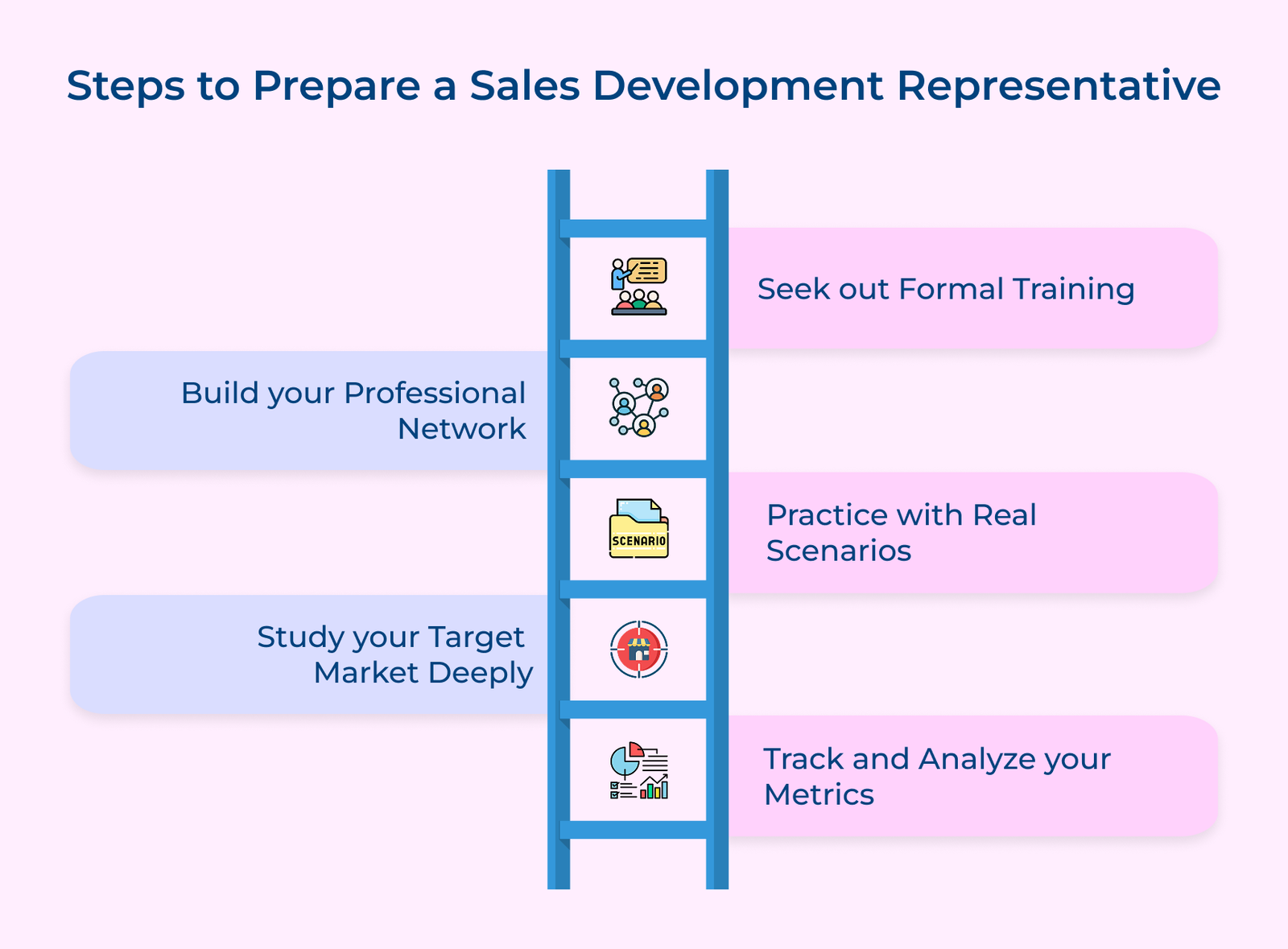
How to Prepare a Sales Development Representative? 6 Steps
Check out the six steps that show exactly how to prepare a sales development representative so they can ramp up faster and confidently handle real conversations from day one.