1. Revenue Goals
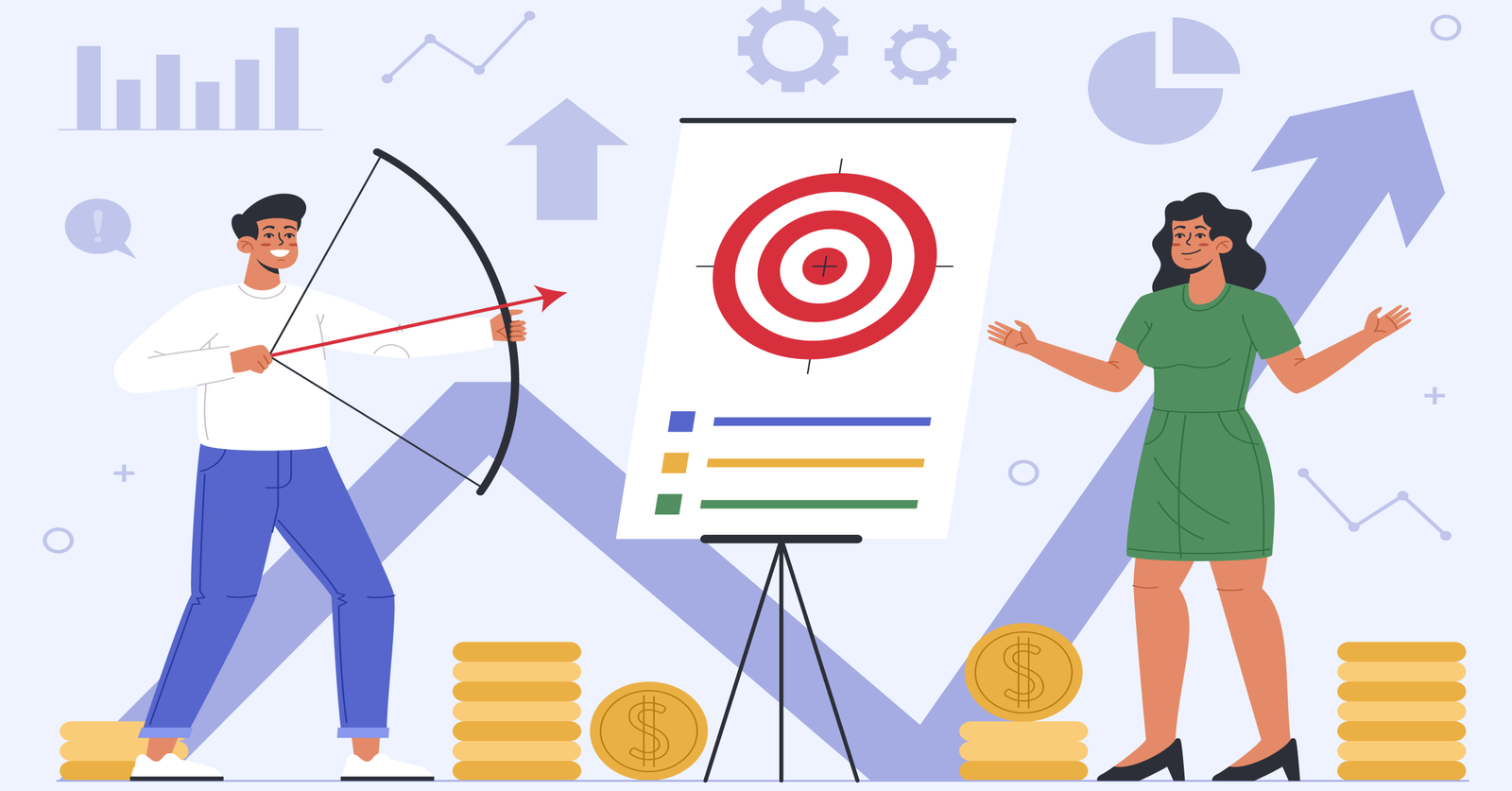
Revenue goals establish specific financial targets that your sales team must achieve within defined timeframes to drive business growth. Core objectives guide daily sales work and help keep your company on track with investor expectations or market needs.
Revenue goals focus on end results, which works best for businesses with steady sales cycles and solid past data. If you have two or more years of sales history, these goals help keep growth on track and build trust with shareholders.
Three Examples:
- Increase annual recurring revenue from $2.4 million to $3.6 million.
- Generate $150,000 in monthly subscription revenue by the end of Q2 2026.
- Achieve 40% year-over-year revenue growth across all product lines by fiscal year-end.
How do you actually hit these revenue targets? Start by breaking down annual numbers into monthly quotas for each sales rep. Prioritize high-value prospects and upsell current customers. Review progress monthly and adjust quickly if you’re falling behind.
2. Acquire New Customers
Customer acquisition goals focus on expanding your client base by converting prospects into paying customers within specific timeframes. A growth-focused goal helps your business avoid overdependence on existing accounts and build steady, long-term revenue.
Startups and growing companies should focus on gaining new customers to build a foothold or earn trust. Fast-growing SaaS businesses particularly benefit from these targets.
Three Examples:
- Sign 24 new enterprise customers with contracts exceeding $50,000 annually by Q4 2026
- Acquire 120 new small business clients through digital marketing channels during 2026
- Convert 15% of qualified leads into paying customers each month throughout the year
Pro Tips:
- Create detailed ideal customer profiles that help your team focus on prospects most likely to convert quickly.
- Develop standardized onboarding processes that reduce friction and speed up the sales cycle significantly.
3. Increase Unit Sales Goals
Unit sales goals track the specific number of products or services sold rather than focusing solely on revenue dollars. The approach shows which products are most popular, helps manage inventory and reveals what customers care about most.
Examples:
- Sell 500 software licenses across all pricing tiers by the end of Q3 2026.
- Move 1,200 units of premium service packages to existing customers during the fiscal year.
- Achieve 300 monthly subscriptions for the new product line by December 2026.
4. Lower Customer Acquisition Cost
Customer acquisition cost goals focus on reducing the money spent to convert each prospect into a paying customer. B2B companies with high marketing costs or long sales cycles should prioritize efficiency goals to improve profitability and resource use.
Questions to Consider:
- Which marketing channels deliver the highest quality leads at the lowest cost per conversion?
- How can we streamline our sales process to reduce the time and resources needed per deal?
- What automation tools could eliminate manual tasks that increase our cost per customer acquisition?
The questions help identify specific areas where your team can optimize spending while maintaining lead quality. Knowing which channels work saves money by cutting spend on poor-performing marketing. Streamlining processes lowers labor costs per sale.
Example of goals:
- Reduce customer acquisition cost from $1,500 to $1,000 per client by implementing marketing automation tools.
- Lower cost per lead by 30% through improved targeting and content marketing strategies by Q2 2026.
5. Improve Net Promoter Score (NPS)
Net Promoter Score goals track customer satisfaction, loyalty, making them vital for service and subscription businesses. These goals help spot risks of losing customers, encourage growth through referrals and positive feedback.
Three Examples:
- Increase overall NPS from 45 to 65 by implementing quarterly customer feedback surveys and response protocols.
- Achieve an NPS of 70 or higher among enterprise clients by focusing on dedicated account management.
- Improve product-specific NPS scores from 35 to 55 through enhanced onboarding and customer success initiatives.
Calculate the score by asking customers how likely they are to recommend your business on a scale from zero to ten. Count responses of nine or ten as promoters and scores from zero to six as detractors. Subtract the percentage of detractors from promoters to arrive at your final NPS.
Businesses can calculate the score by acting on the issues customers point out. Track recurring problems, follow up consistently and make sure nothing slips through the cracks. Equip your team to spot and resolve concerns early, before small frustrations turn into negative experiences that drag the score down.
6. Improve Average Win Rate
Win rate goals focus on conversion efficiency by measuring the percentage of qualified opportunities that close successfully. B2B companies with long sales cycles and large deals should focus on these goals to maximize sales impact.
Win Rate = (Number of Deals Won ÷ Total Number of Opportunities) × 100
Examples:
- Increase win rate from 22% to 35% by improving qualification processes and sales presentation quality.
- Achieve a 45% win rate for enterprise deals by implementing better discovery techniques and competitive positioning.
Focus the qualification process on prospects who show real buying intent and have budget authority. Strengthen sales training so the team can handle objections with confidence and hold meaningful conversations with decision-makers.
7. Improve Customer Lifetime Value
Customer Lifetime Value goals focus on maximizing the total revenue generated from each client relationship over time. This metric reveals which customer segments offer the most value, guiding resource and retention efforts.
Example calculation: If your average customer pays $500 monthly for 24 months with a 15% gross margin then your CLV equals $1,800. The calculation helps you determine how much you can afford to spend on acquisition while maintaining profitability targets.
Pro tips:
- Create tiered service packages that encourage customers to upgrade naturally as their needs grow and expand.
- Implement regular check-ins and success reviews that identify upselling opportunities before competitors can steal your accounts.
8. Reduce Sales Cycle Goals
Sales cycle goals aim to shorten the time between initial contact and deal closure, which directly impacts revenue velocity. Shortening the sales cycle lets your team close more deals, improves cash flow and forecasting.
Example calculation: Track deals from first contact to signature, then calculate the average across all closed deals. If your current average is 85 days and you want to reduce it to 65 days, then you need a 24% improvement.
Best practices:
- Standardize your discovery process to identify decision-makers and budget authority early in conversations to avoid delays.
- Create urgency through limited-time incentives or seasonal promotions that encourage prospects to move faster through your pipeline.
9. Improve Lead Generation
Lead generation goals focus on creating a consistent flow of qualified prospects to fuel your sales pipeline effectively. The activity-based goal keeps your team consistently generating leads and helps build steady revenue to support long-term growth.
Example Calculation: If you need 100 new customers annually with a 20% conversion rate then you need 500 qualified leads. Divide this by twelve months to get your monthly target of approximately 42 leads per month consistently.
Formula: Required Leads = (Revenue Goal ÷ Average Deal Size) ÷ Conversion Rate
How do you actually generate these leads consistently? Focus on creating valuable content that attracts your ideal customers naturally. What channels work best? Test multiple approaches including social media and email campaigns to find your sweet spot.
10. Reduce Customer Churn
Customer churn goals focus on retaining existing clients by reducing the percentage who cancel or don’t renew their contracts. Subscription and service businesses should focus on retention goals, since keeping existing customers costs far less than finding new ones.
Examples:
- Reduce monthly churn rate from 8% to 5% by implementing proactive customer success outreach programs.
- Decrease annual contract non-renewals from 15% to 8% through improved onboarding and quarterly business reviews.
Pro Tip: Create early warning systems that identify at-risk customers through usage patterns and engagement metrics. It’s more effective to step in early than to try saving a customer who’s already decided to leave.
11. Increase Customer Upsells
Customer upsell goals focus on expanding revenue from existing clients by selling additional products or higher-tier services. B2B companies with multiple products or services should focus on expansion goals, since existing customers are more likely to buy again.
Examples:
- Generate 30% of total revenue from upsells and cross-sells to existing customers during 2026.
- Increase average contract value by 25% through strategic account expansion initiatives and premium service offerings.
How to Achieve: Map out natural upgrade paths based on customer usage patterns and business growth stages. Train your account team to spot expansion opportunities during check-ins and frame upgrades as solutions to changing needs.
12. Sales Activities: Email Marketing
Email marketing goals are activity-based targets that support revenue by keeping in touch with prospects and customers. Tech and B2B service companies should set clear targets to stay connected turning relationships into sales.
Example sales goals:
- Achieve a 25% email open rate and 5% click-through rate across all sales outreach campaigns.
- Generate 15 qualified leads monthly from targeted email sequences sent to prospects in different pipeline stages.
Calculation Example: Track total emails sent versus responses received then calculate your response rate percentage. If you send 1,000 emails and receive 50 responses then your response rate equals 5% which becomes your baseline for improvement.
How to Track your Sales Goals?
Think of tracking sales goals like monitoring your health – regular check-ups reveal problems early and keep you on track toward your targets.