Social Media Consumer Behavior Guide: How Does It Work?
Learn how social media consumer behavior shapes buying decisions, brand trust and engagement patterns. Learn about the effective strategies businesses can use to influence customer actions.

Learn how social media consumer behavior shapes buying decisions, brand trust and engagement patterns. Learn about the effective strategies businesses can use to influence customer actions.
Most businesses post regularly on social media but struggle to understand what actually influences customer decisions. People discover products, compare brands, read reviews, watch creators and make purchase decisions within a few minutes of scrolling.
Businesses that fail to understand these behaviors often lose attention and sales without realizing why. Social media consumer behavior refers to how people discover, evaluate and purchase products through social platforms. More than 55% of consumers have purchased a product discovered directly on social media, making platform behavior one of the most underleveraged growth levers in business today.
Below we’ll dive into the key factors shaping consumer decisions from social proof and influencer impact to data signals. Brands that understand social media users’ behavior make smarter decisions and build loyalty that compounds over time.
Social media consumer behavior refers to how people discover, evaluate, interact with and purchase products through platforms like Instagram or LinkedIn. It includes every action users take online, including scrolling, saving posts, watching videos, reading comments, clicking links and sharing content with others.
Most purchase decisions start with passive scrolling, where content triggers an emotional or rational response that pulls the user toward a brand. That single moment of attention sets off a chain of micro-decisions, including profile visits, review checks and peer opinions before any purchase happens.
Once that interest is sparked, platforms use algorithmic reinforcement to keep serving relevant content to that user. Brands that understand the cycle build touchpoints at every stage, like awareness, consideration and decision, rather than just posting and hoping.
Key objectives:
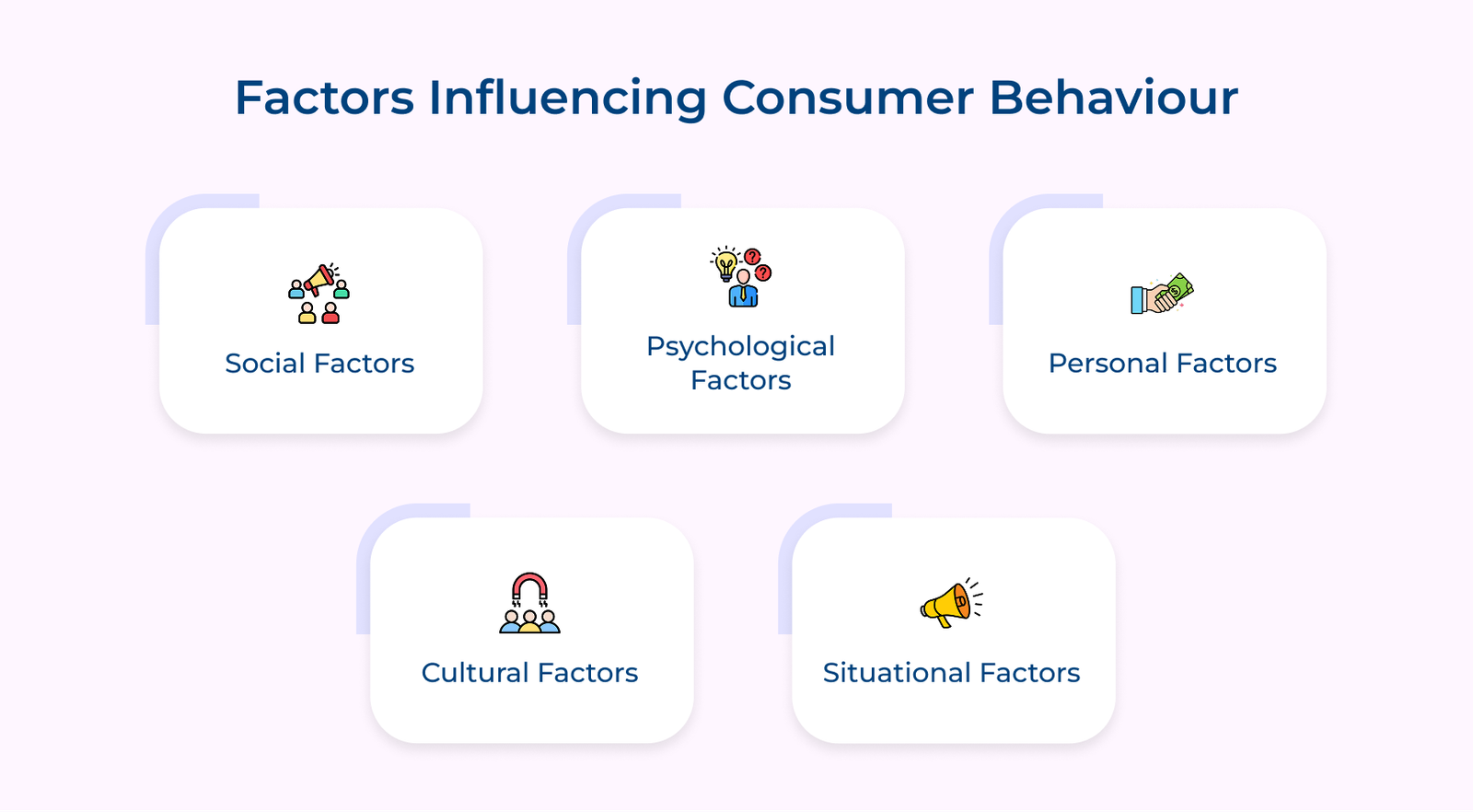
Multiple psychological, social and platform-driven factors shape consumer decisions on social media. Let’s go through the biggest influences affecting how audiences choose brands.
1. Social Factors
People around us have always shaped buying decisions and social media consumer behavior has made that influence faster. When someone sees a trusted peer, creator or community member endorsing a product, it carries far more weight than any brand-led ad ever could.
2. Psychological Factors
Emotions and personal perceptions strongly influence social media decisions. Curiosity, excitement, fear of missing out, trust and social validation all affect how people react to content while scrolling through feeds. Some users stop because a product solves a problem they relate to. Others engage because the content matches their identity, lifestyle or aspirations.
3. Personal Factors
Age, income, lifestyle and life stage all filter how a person interacts with social content or what they consider worth buying. A 24-year-old freelancer and a 45-year-old parent may see the same ad but respond to completely different triggers within it.
4. Cultural Factors
Culture influences what people find relatable, acceptable, entertaining or trustworthy online. Language, traditions, values, humor and social norms all affect how audiences respond to content across different regions. Brands that understand cultural context usually create content that feels more natural and relevant to the audience they are trying to reach.
5. Situational Factors
Where someone is, what device they’re using and what mood they’re in at the moment of exposure all shape how they respond to content. A flash sale notification hits differently at 11 PM on a Friday than it does on a Monday morning commute.
Social media shapes how people discover products and make buying decisions. Check out the key ways social platforms influence modern consumer behavior online.
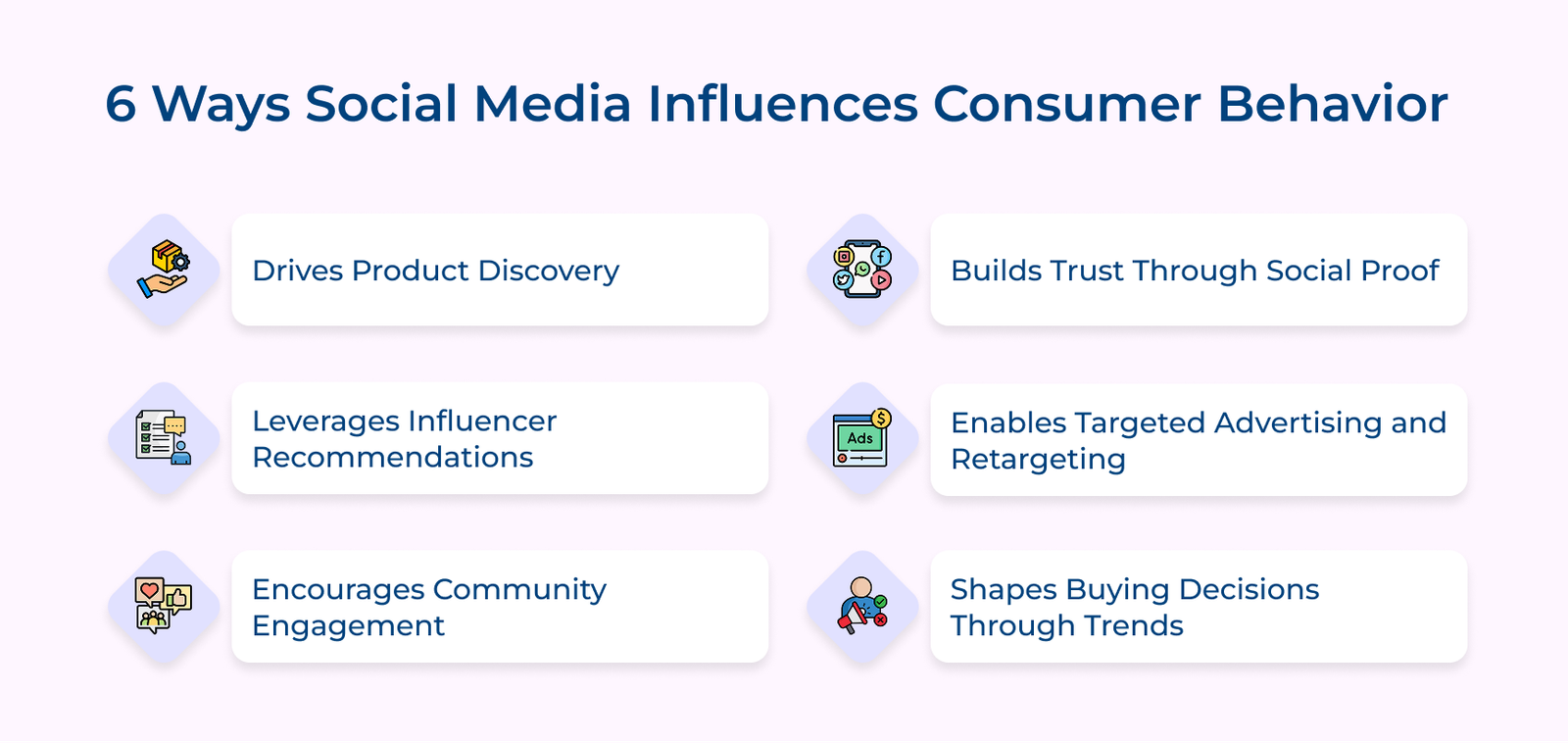
Consumers no longer discover products only through search engines or direct recommendations. A short video, tagged story, creator mention or trending post can introduce a brand to someone who was not actively looking to buy anything moments earlier.
The shift has significantly changed social media consumer behavior. Many businesses still use social media platforms mainly as a discovery platform. Brands that perform well understand how to create content that blends naturally into feeds instead of feeling like obvious advertisements.
Pro tips:
So what makes some brands easier to discover than others? Relevance plays a major role. Content that matches how people naturally use each platform tends to perform much better with both audiences and platform algorithms. A tutorial that performs well on Pinterest may feel completely out of place on LinkedIn because audiences interact differently on each platform.
No marketing copy in the world hits as hard as a genuine customer review under a product post. Social media consumer behavior has evolved from simple star ratings to a full ecosystem of comments, reposts, UGC and community validation that consumers actively seek before spending.
Buyers now do their own due diligence directly on social platforms. They scroll through comments, look for unsponsored opinions and check if real people are actually using the product, all before visiting a website.
Actionable tips:
So why does social proof work so well? People naturally feel more confident when they see others having positive experiences with the same product. Recommendations from customers feel less promotional and more trustworthy than messages coming directly from a brand.
Key ways:
Businesses that actively collect and showcase social proof through reposts, testimonials and community highlights build stronger audience trust over time. The customer interactions continue influencing new buyers long after the original post was published.
Influencer marketing works because audiences trust the creators they follow regularly. People pay attention to recommendations from creators they relate to, learn from or interact with often. That trust makes influencer recommendations feel far more personal than traditional brand advertising.
Why do influencers influence buying decisions so effectively? Followers usually connect with creators as individuals rather than businesses. That personal connection makes product recommendations feel more genuine and believable.
Key ways:
Imagine a scenario where a D2C skincare brand partners with a dermatologist who has 80,000 followers. That creator’s audience already trusts their skin advice, so a product recommendation lands as expert validation rather than a sponsored post. So what should businesses look at before choosing an influencer? Audience quality matters far more than follower count alone.
Best practices:
Businesses that see the best ROI from influencer partnerships usually build long-term relationships with creators. The collaborations feel more genuine than treating creators like temporary promotion channels for a single campaign.
Social media platforms collect large amounts of behavioral data through clicks, searches, views, engagement and browsing activity. Businesses use the signals to reach people who are already more likely to be interested in a product or service. The approach has changed social media consumer behavior significantly.
So how does behavioral retargeting work in real situations? Someone visits a product page, spends time looking at an item and leaves without making a purchase. Later, that same person sees an advertisement for the exact product while scrolling through social media marketing. Retargeting keeps the product visible after the initial interest instead of letting the interaction disappear.
Pro tips:
Retargeting works because it focuses on people who already showed some level of interest. The advertisement feels more relevant because it continues an existing interaction instead of interrupting someone with a completely unrelated message.
Brand-owned communities on social media, whether Facebook Groups, LinkedIn communities, or Discord servers, have become powerful buying environments. Peers talking openly about products inside the spaces creates an organic influence that no ad budget can manufacture.
Why are peer conversations so influential? Recommendations from community members usually feel more genuine because they come from personal experience instead of promotional intent.
Key ways:
Brands that participate consistently in these communities build much deeper relationships with their audience. Answering questions acknowledging feedback and sharing insights help businesses become part of the conversation instead of just promoting products from the outside.
Consumers make decisions faster when something feels culturally relevant or time-sensitive. Trends on social media create a bandwagon effect where participation feels urgent and sitting out feels like missing something important.
How should businesses approach trends without looking opportunistic? The key is selectivity; jumping on every trend dilutes brand identity. The most effective brands filter trends through the lens of their audience’s values and only participate when there’s a genuine fit.
Best practices:
A good example is how many B2B software companies adapted to content trends on LinkedIn through founder stories, employee experiences and behind-the-scenes content. The posts often generated much stronger engagement than traditional feature-focused promotional content.
The following are the key tips to influence consumer behaviour on social media. Let’s check them out in more detail.
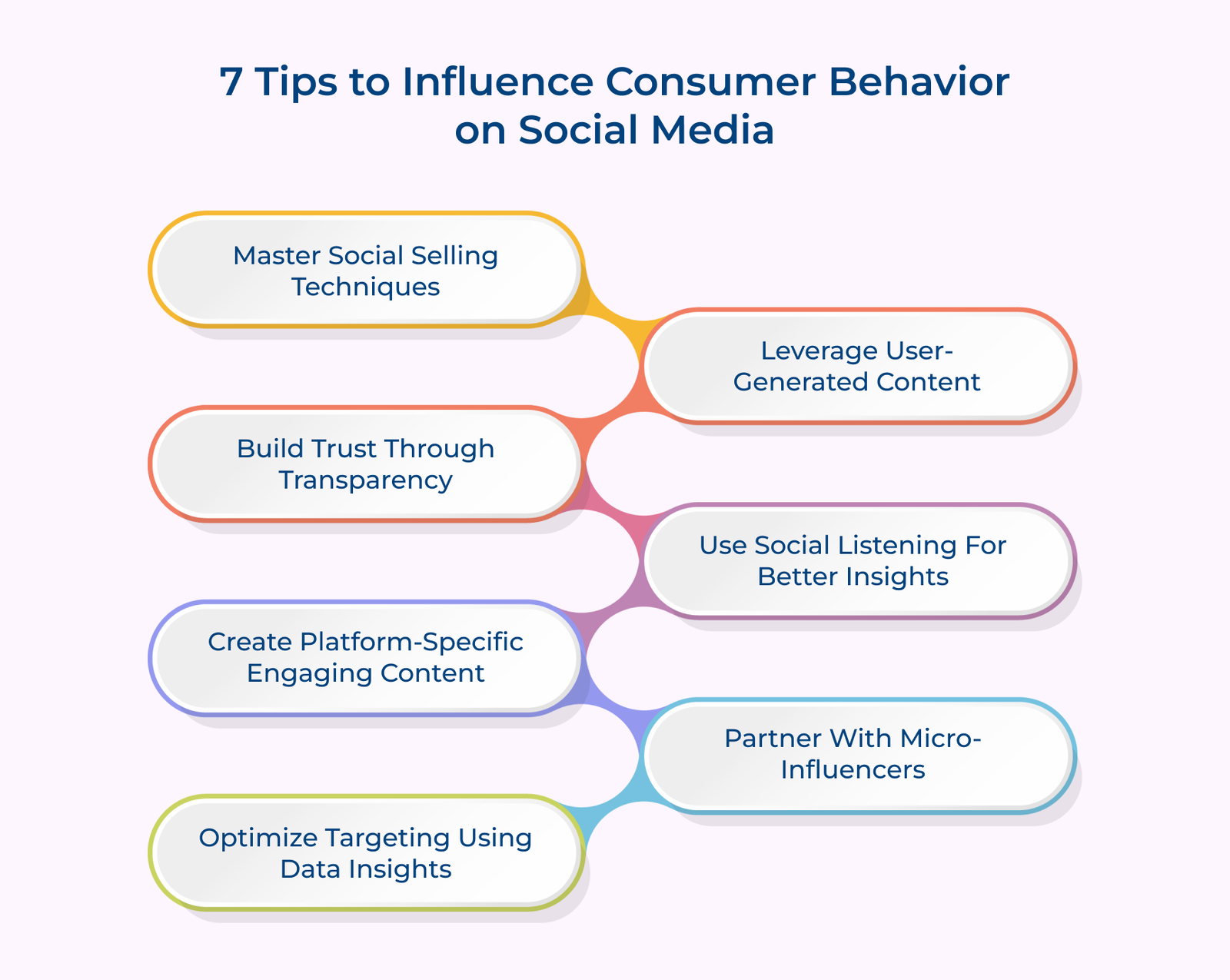
Social selling is about building trust and real relationships before trying to sell anything. Brands that lead with value, instead of a pitch, consistently see stronger purchase intent and longer customer lifetime value.
Key ways:
User-generated content has become one of the strongest trust signals on social media. Real customer photos, reviews, videos and experiences often influence buying decisions more effectively than polished brand campaigns because they feel genuine.
So what makes UGC genuinely influential in driving consumer behaviour? Seeing someone with similar interests, problems or lifestyles using a product removes uncertainty much faster than a traditional advertisement. Recommendations from everyday users often feel more believable because they come from personal experience.
Key types:
Implementing UGC effectively means building a system, not just reposting randomly. Brands should create a dedicated collection process using branded hashtags. They should actively encourage customers to share at key post-purchase touchpoints like thank-you emails or packaging inserts.
Transparency has become a major influence on how consumers judge brands online. People pay close attention to how businesses respond to criticism, explain mistakes and communicate openly on social media.
Key questions:
Brands that use transparency as a social media consumer behaviour strategy create a psychological safety net for their buyers. When a consumer sees a brand openly handling criticism or admitting a limitation, it signals integrity and integrity converts hesitant buyers into confident ones.
Pro tips:
Social listening helps businesses understand what audiences are actually saying online about products, brands, competitors, and industry trends. Brands that treat social listening as a core business intelligence tool, rather than a reactive damage-control measure, consistently make smarter content and product decisions.
Track Brand Mentions Beyond Direct Tags
Most brands only monitor direct tags, but a significant volume of consumer conversations happens without any official mention. Tracking untagged brand references gives a far more honest picture of how consumers actually perceive and discuss a product in their own words.
Monitor Competitor Conversations to Identify Market Gaps
Customer complaints about competitors often reveal unmet expectations and recurring frustrations in the market. The discussions can highlight opportunities for businesses to improve their own products, communication or customer experience. Repeated complaints around the same issue usually signal a gap that consumers actively want solved.
Turn Customer Pain Points into Better Content
Social listening can strengthen content strategy because it reveals the exact words and phrases consumers use when describing their problems and experiences. Content that reflects audience language usually feels more relatable, useful and easier to connect with.
Content that captures attention quickly is usually built around how people naturally consume content on each platform. Audiences interact differently across social networks, which means the same content format rarely performs equally well everywhere.
Understanding platform behavior is a major part of social media consumer behavior. Every platform has its own content language. What works as a LinkedIn carousel falls flat as an Instagram Reel because audience mindset and consumption speed are fundamentally different.
Key formats:
Actionable tips:
What does effective implementation actually look like? Format decisions must happen before creative execution, not after. Brands that ask “which platform is this built for?” before producing anything will always create more relevant content.
Key questions:
Micro-influencer marketing delivers a strong ROI for brands targeting specific audience segments. The advantage is not reach; it’s the existing trust a niche creator has already built with their community. It plays a major role in social media consumer behavior because people are more likely to trust recommendations from creators they interact with regularly and relate to personally.
Let’s assume that an influencer with 15,000 engaged niche followers will outperform one with 500,000 passive ones. Engagement rate reveals if an audience is genuinely listening or scrolling past.
Key ways:
How should businesses identify the right creators? Audience alignment and creator values matter much more than reach alone. Businesses should pay attention to what creators consistently talk about outside sponsored partnerships.
Key takeaways:
Data signals are the behavioral actions people leave behind while interacting with content online. Views, saves, shares, watch time, clicks, profile visits or comments all reveal what audiences pay attention to and what interests them most. Understanding the patterns is a major part of analyzing social media consumer behavior because audience actions often reveal intent more clearly than direct feedback or survey responses.
Key ways:
The challenge with data signals is rarely access to information. Consistency in reviewing and acting on the insights matters much more. Businesses that regularly connect audience behavior data to their content strategy usually adapt faster to changing consumer interests and platform trends.
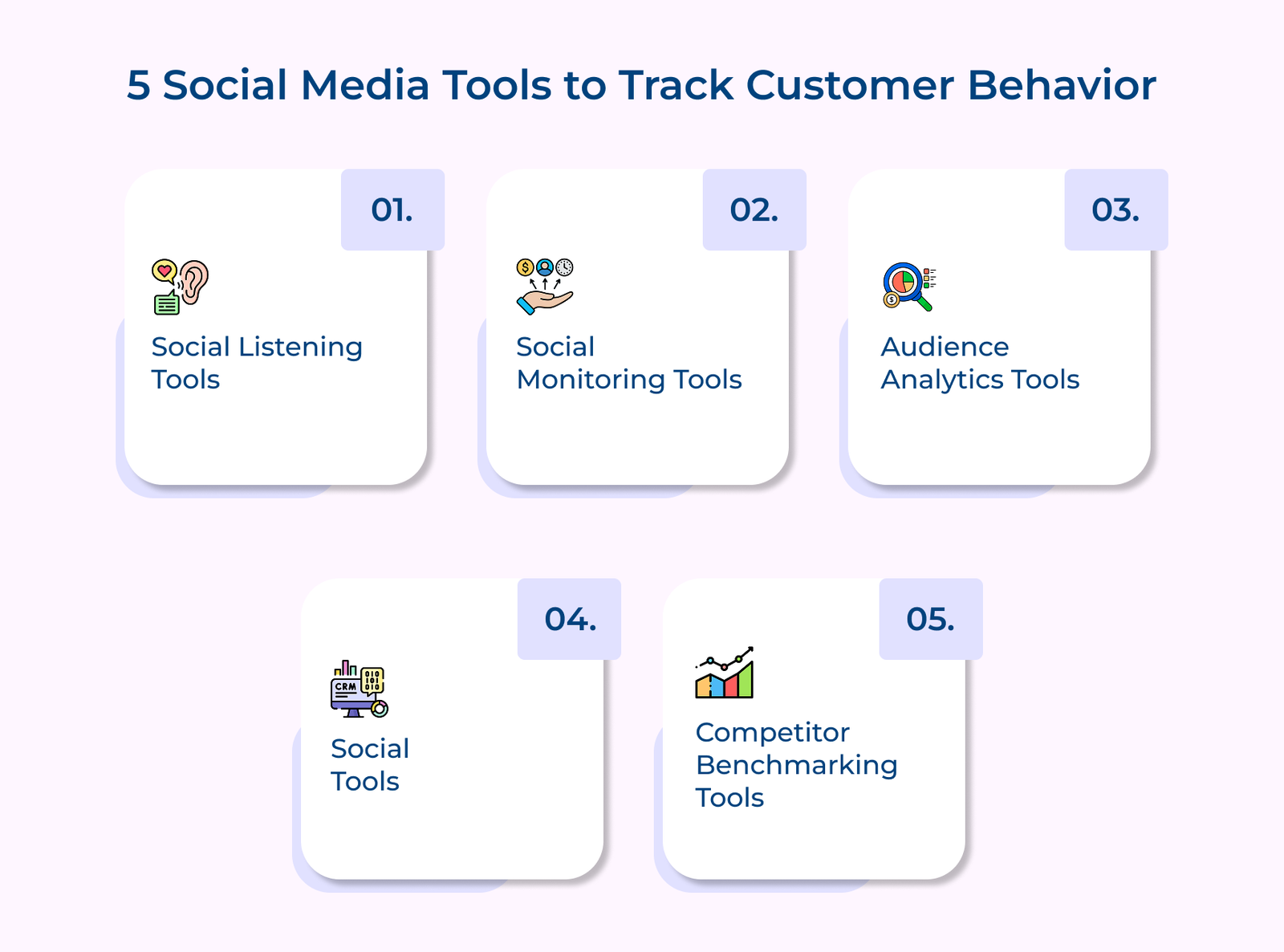
Check out five tool categories that give businesses the infrastructure to turn raw social activity into real purchasing intelligence.
1. Social Listening Tools
Social listening tools like Brandwatch and Sprout Social help businesses track conversations happening across forums, communities and comment sections. Most of the honest customer opinions appear in places where brands are never directly tagged.
One of the biggest advantages of social listening is identifying sentiment changes early. A sudden increase in negative conversations around a product feature gives businesses the chance to respond before the issue spreads further and starts influencing broader social media consumer behavior.
2. Social Monitoring Tools
Social monitoring tools focus on tracking direct mentions, comments, tags and customer interactions that require quick responses. They help businesses manage real-time communication and prevent customer concerns from being ignored publicly.
The main difference between monitoring and listening is focus. Monitoring helps businesses react quickly to immediate interactions, while listening focuses more on understanding broader audience conversations and patterns over time.
3. Audience Analytics Tools
Audience analytics tools like Audiense help businesses understand audience behavior far beyond basic demographics. The tools reveal which content formats generate engagement, which audiences interact most often and which users show stronger purchase intent. The insight makes it much easier to understand social media consumer behavior practically and measurably.
Knowing that a specific segment saves product posts but never clicks through tells a brand exactly where the conversion barrier sits. That is far more actionable than overall engagement rate alone.
4. Social CRM Tools
Social CRM tools like HubSpot connect social interactions directly to the customer journey. Businesses can track how someone moves from social engagement to website visits, inquiries and eventually purchases. It gives businesses a much clearer understanding of social media consumer behavior across different stages of the buying process.
When a prospect engages with product posts and then visits a pricing page, a social CRM captures that entire sequence. Sales teams working from this behavioral timeline consistently convert at higher rates than those using cold contact data alone.
5. Competitor Benchmarking Tools
Tools like Similarweb or Rival IQ help businesses understand what content and strategies perform well within their industry. Studying competitor performance often removes a large amount of guesswork from content and audience strategy.
One of the most valuable features of the tools is audience overlap analysis. Businesses can identify what type of content attracts competitor audiences and use those insights to improve their own targeting and positioning decisions.
Social media consumer behavior now influences how people discover products, build trust, compare brands and make purchase decisions online. Businesses that understand the patterns create content and experiences that feel more relevant to the people they are trying to reach.
Key takeaways:
Ready to apply the insights practically? Start with one platform where your audience spends the most time and study how people interact with your content there. Pay attention to what gets saved, shared, discussed and ignored. Brands that treat social media as a behavioral intelligence channel, not just a content distribution platform, will always stay closer to what their customers actually want.

Social media has shortened the path between discovering a product and deciding to buy it. A single scrolling session. A well-timed post, a peer review in the comments or a creator recommendation can move a consumer from completely unaware to ready-to-purchase faster than any traditional channel ever could.
Social commerce is becoming a major part of online shopping as more platforms allow users to discover and purchase products without leaving the app. Short form video, AI-driven recommendations, creator-led shopping and community based buying decisions are also changing how consumers interact with brands online.
Social proof helps reduce uncertainty during the buying process. Reviews, customer photos, testimonials, comments and creator recommendations reassure potential buyers that other people have already had positive experiences with the product.
Social media builds loyalty when brands show up consistently, not just to sell but to engage, respond and add value beyond the product. Consumers who feel genuinely heard and recognized by a brand on social platforms develop a stronger emotional connection that outlasts any single transaction.
User-generated content feels more trustworthy because it comes from real customer experiences instead of carefully produced brand messaging. Product photos, reviews, unboxing videos and customer stories help potential buyers understand how a product performs in everyday situations. People often trust user-generated content more because it feels honest, relatable and less promotional than traditional advertising.

Grow Customer Relationships and stronger team collaboration with our range of products across the Conversational Engagement Suite.
Omnichannel Customer Support & Help Desk Software
AI Enabled Business Messaging and Chatbot Software
Sales Engagement & CRM Software
Call Center Software & Virtual Phone System
Product Marketing & Experience Platform
Customer Experience & Feedback Management Software

 What are Sales Goals? Importance, Key Steps & Examples
Scroll to top
What are Sales Goals? Importance, Key Steps & Examples
Scroll to top