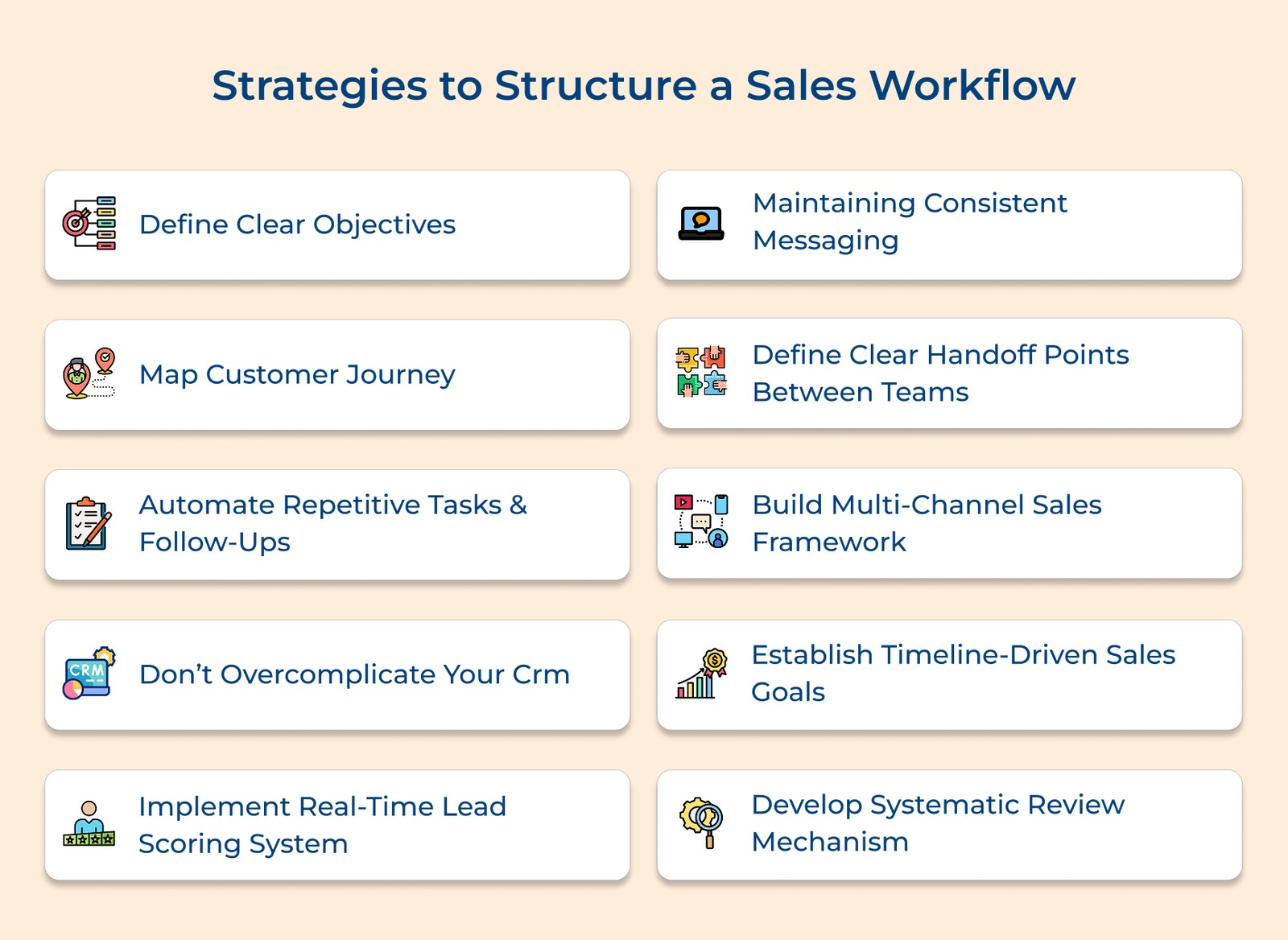
1. Define Clear Objectives
Clear goals give your sales workflow purpose. Without them, your team is essentially working without a map so the efforts get scattered and it’s hard to tell what’s working. Well-defined objectives bring focus, keep everyone aligned and help you track real progress.
Setting goals like “bring in $500,000 in new revenue this quarter” or “maintain a 25% close rate from qualified leads” gives your team something concrete to aim for. The goals should be based on what your data tells you, like past performance, market shifts and what your team is realistically capable of.
But it’s not just about big-picture goals. Each stage of your sales process should have specific metrics, like how fast reps respond to potential customers, how many get qualified or what your average deal size looks like. It helps you spot where things slow down or fall through and make improvements before issues pile up.
Pro tips:
- Break big goals into smaller weekly or monthly targets. It makes progress easier to track and helps keep the team motivated.
- Run your goals through the SMART filter (Specific, Measurable, Achievable, Relevant, Time-bound). If they don’t check all the boxes, tweak them until they do.
2. Map Customer Journey Through Sales Funnel
Mapping the customer journey gives you a clear, step-by-step view of how buyers actually move through your sales process. It’s not just about tracking steps, it’s about understanding what your prospects are thinking and feeling along the way. It helps your team meet them where they are, answer the right questions at the right time and move deals forward with more confidence.
Start by documenting every touchpoint from the first website visit to post-sale check-ins. Let’s consider that a B2B tech company might map out key moments like the discovery call, demo, proposal and contract review, with specific goals for each step. Knowing what should happen at each point keeps everyone aligned and helps reps stay focused on what matters most to the customer.
Actionable tips:
- Talk to your best customers about their buying experience and use that insight to fine-tune your process.
- Review lost deals to see where things fell apart and patch up those points in your journey.
3. Automate Repetitive Tasks and Follow-ups
Sales automation software takes the busywork off your team’s plate so they can focus on what matters like building relationships and closing deals. Instead of chasing follow-ups or doing repetitive data entry, your reps can spend their time on meaningful conversations that move deals forward. Automated email sequences and timely reminders help keep communication flowing naturally.
Let’s assume there’s a prospect who downloaded a pricing sheet or attended a demo. The system will send a tailored follow-up and there’ll be no need to keep track manually. It ensures that prospects don’t slip through the cracks and keeps your team looking responsive. Automating data entry and reporting also means less time filling out forms.
Best practices:
- Sync your calendar with your automation tool so follow-ups are tied directly to meeting outcomes.
- Review your sequences regularly. What worked six months ago might feel out of sync today. Keep it fresh and relevant.
4. Don’t Overcomplicate Your CRM
A well-organized CRM keeps your sales process running smoothly without turning into a cluttered mess. The simpler your system, the more likely your team is to actually use it and use it well. Instead of stuffing it with endless fields, stick to what really matters: the information that helps close deals.
Set up your CRM with only the essentials. It means fields tied to real sales actions like a deal stage, last contact date and buying timeline. It cuts down on busy work and helps your team stay focused. Clean data is just as important as useful data. Regular maintenance like removing duplicates, updating stale info and using consistent formatting keeps everything accurate. A clean CRM means faster decisions and fewer missed opportunities.
Key takeaways:
- Block out time each month to tidy up your CRM. It’s like cleaning your desk —small effort, big payoff.
- Use color tags or labels for quick reference during calls (e.g., red for urgent follow-ups, green for warm leads).
5. Automate Repetitive Tasks and Follow-ups
Sales automation takes the repetitive stuff off your team’s plate so they can focus on what moves deals forward like talking to people. You cut down on errors, keep communication on track and make the whole process more efficient without losing the personal touch by automating tasks like follow-ups, data entry or reporting.
Email sequences and reminders can be set to go out based on actions a prospect takes, like attending a demo or missing a call. It keeps the conversation going without needing someone to remember every little detail. Automated data updates and performance tracking also mean less time filling out forms as well as more time selling.
Key takeaways:
- Sync your calendar with your sales tools so follow-ups happen automatically after meetings.
- Review your automation flows regularly. What was working six months ago might not fit today’s buyer behavior.
6. Don’t Overcomplicate Your CRM
A clean, focused CRM keeps your sales process running smoothly. When your system is easy to use and only tracks what truly matters, reps will spend less time clicking around and more time selling. Cluttered CRMs slow everything down, so stick to essential fields and drop the extras that no one uses.
Keep records tidy with regular cleanups, standardized formats and simple workflows. Accurate data not only helps build stronger relationships with customers but it also leads to better forecasting and more confident decision-making. When your team trusts the info in your CRM, they actually use it.
Pro tips:
- Block time once a month for data cleanup, where you remove duplicates, fix formats and clear out junk.
- Use color tags or labels to visually organize calls, meetings and deal stages so you can get context at a glance.
7. Implement Real-time Lead Scoring System
Real-time lead scoring helps your team stop guessing and start focusing. Reps know exactly who’s ready for a conversation and who needs more time by ranking prospects based on their behavior like visiting key pages, opening emails or downloading content. It keeps the pipeline moving and prevents quality leads from slipping through the cracks.
Good scoring systems are built on actual customer behavior, not guesses. Use data from your most successful deals to shape the rules. Don’t let it go stale; review and adjust regularly as patterns shift.
Actionable tips:
- Review top-converting leads each quarter to update your scoring logic.
- Set clear score thresholds that automatically trigger actions like a call from a rep or a personalized email to keep momentum strong.
8. Maintain Consistent Messaging Across Customer Interactions
A consistent message makes your sales process clearer and more effective. When every interaction, from email to calls, communicates the same core value, it’s easier for prospects to see how your solution fits their needs. It builds trust and keeps the sales conversation focused.
Using standard email templates and proposal formats helps your team stay sharp without starting from scratch every time. Reps can move faster while staying aligned with a shared library of messages that can be tailored to each situation. Clear value statements and a defined tone of voice are especially important when more than one person is talking to a prospect. They keep the conversation seamless, no matter who’s speaking.
Best practices:
- Listen to winning sales calls to spot language that clicks with customers.
- Keep a shared list of effective responses to common objections so no one has to reinvent the wheel.
9. Define Clear Handoff Points Between Teams
Smooth handoffs between teams are critical moments in the sales process. They signal how well your teams work together and how well your prospects are being supported. Clear handoff steps reduce confusion, prevent dropped leads and keep momentum going as buyers move through the pipeline. Setting up detailed transfer checklists helps clarify who’s responsible for what during each transition.
If marketing passes a lead to sales or sales hands off a customer to an account manager, every transition must include notes, contact history and clear next steps. It ensures everyone stays informed and no one has to guess what happened last or what to do next. Ongoing communication is just as important. Regular check-ins, shared dashboards and open feedback channels keep everyone in sync as well as allow quick adjustments when things aren’t working.
Key takeaways:
- Run monthly team workshops to uncover where handoffs are breaking down.
- Use a shared dashboard that shows the live status of every lead moving between teams.
10. Build Multi-channel Engagement Sales Framework
Modern buyers don’t stick to one channel. They bounce between email, social media, calls and face-to-face conversations. That’s why your sales workflow needs to meet them wherever they are. A well-coordinated multi-channel strategy helps you stay connected without repeating yourself or missing a beat.
Each channel plays a different role. Emails are great for sharing details and follow-ups. Phone calls build trust and move deals along. Social media can open doors and keep your brand top of mind. In-person meetings or video calls help close complex deals. The trick is knowing when to use what and how to tie it all together without overwhelming the prospect.
Pro tips:
- Look at how your best customers engaged with you, then apply that mix to new leads.
- Analyze last quarter’s wins to find which channel combos closed deals the fastest.
11. Develop a Systematic Deal Review Mechanism
Regular deal reviews are like pit stops in your sales process. They give you a chance to refuel, check for problems and make sure each opportunity is still on track. Instead of waiting until the last minute to fix issues, the checkpoints let you spot risks early and make smarter decisions about where to focus your time.
The meetings work best when they follow a consistent structure. The goal isn’t to micromanage but it’s to move deals forward with purpose while keeping the bigger pipeline picture in view.
Key takeaways:
- Switch up who leads the review—it brings in new thinking and keeps meetings from going stale.
- Tackle your most uncertain deals first—they’re the ones that need attention before it’s too late.
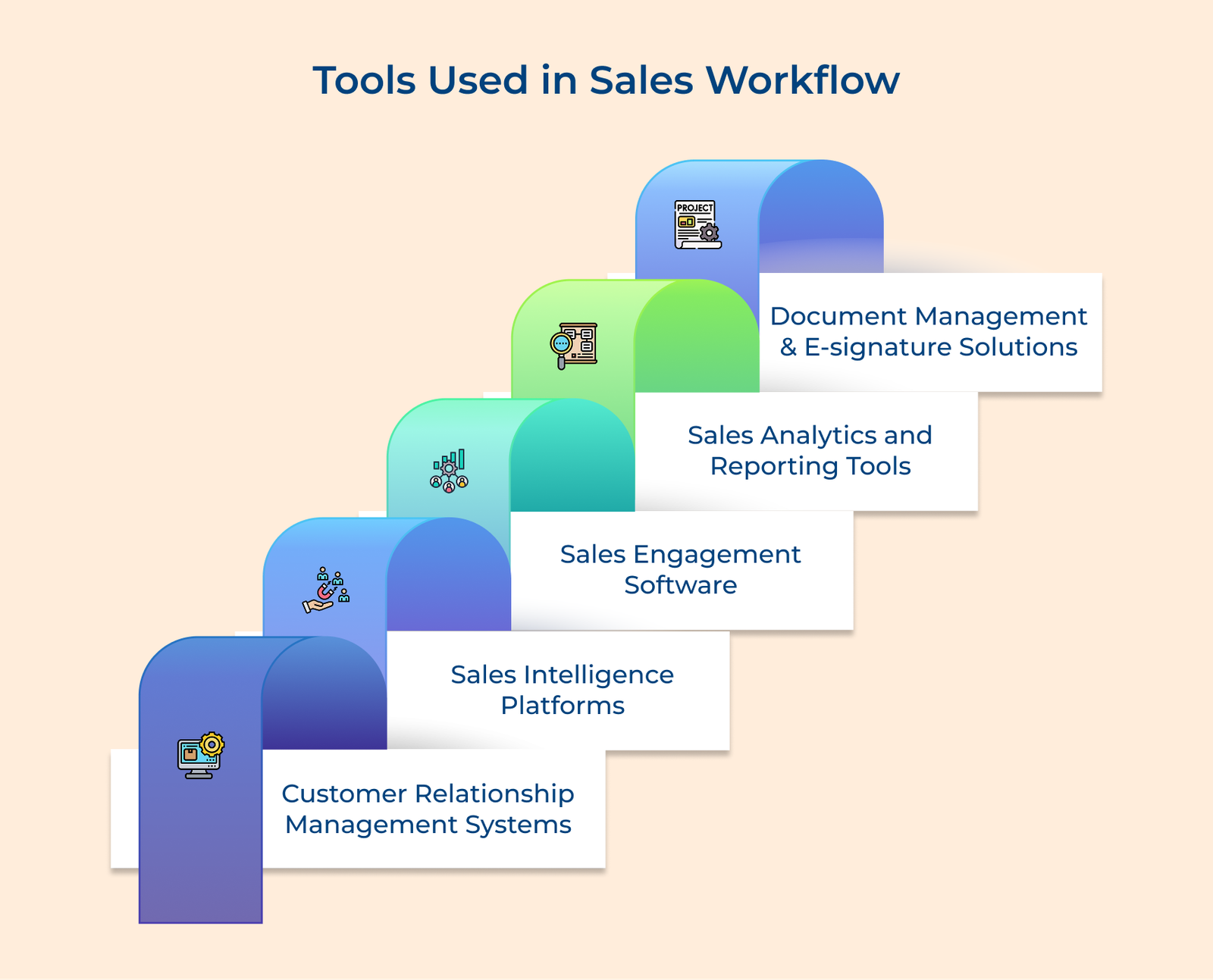
Tools Used in Sales Workflow Process
Let’s go through the essential tools that can elevate your sales workflow and boost your team’s performance to new heights.