Social Media Management Checklist: 8 Essential Strategies
The blog outlines some essential social media management checklists. It covers planning, content creation, scheduling, engagement, analytics and optimization to streamline your efforts.

The blog outlines some essential social media management checklists. It covers planning, content creation, scheduling, engagement, analytics and optimization to streamline your efforts.
Managing social media can feel like a never-ending scramble, posts forgotten, comments missed and hours spent without clear results. Without a plan, you’re left reacting instead of building. Important messages slip through, content becomes inconsistent and the pressure to keep up across platforms wears you down.
That’s where a simple, structured social media management checklist makes all the difference. 71% of users who had positive experiences with a company on social media are likely to recommend them to others. You can stay focused with daily, weekly and monthly tasks laid out clearly. It helps you post consistently, respond to your audience and track progress so your time on social media finally leads somewhere useful.
A social media management checklist refers to a roadmap for staying grounded when things get busy. Instead of guessing what to post or when to reply, you’ve got a clear plan. It turns the daily scramble into a steady rhythm, helping you post on time, respond quickly and stay consistent across every platform.
Without a checklist, it’s easy to lose track, posts get skipped, messages go unanswered and your online presence starts to slip. A simple list of tasks makes it easier to show up regularly, keep your tone consistent and connect with your audience in a way that feels human.
Key objectives:
Let’s go through a simple checklist that can transform your entire social media approach from chaotic to strategic.
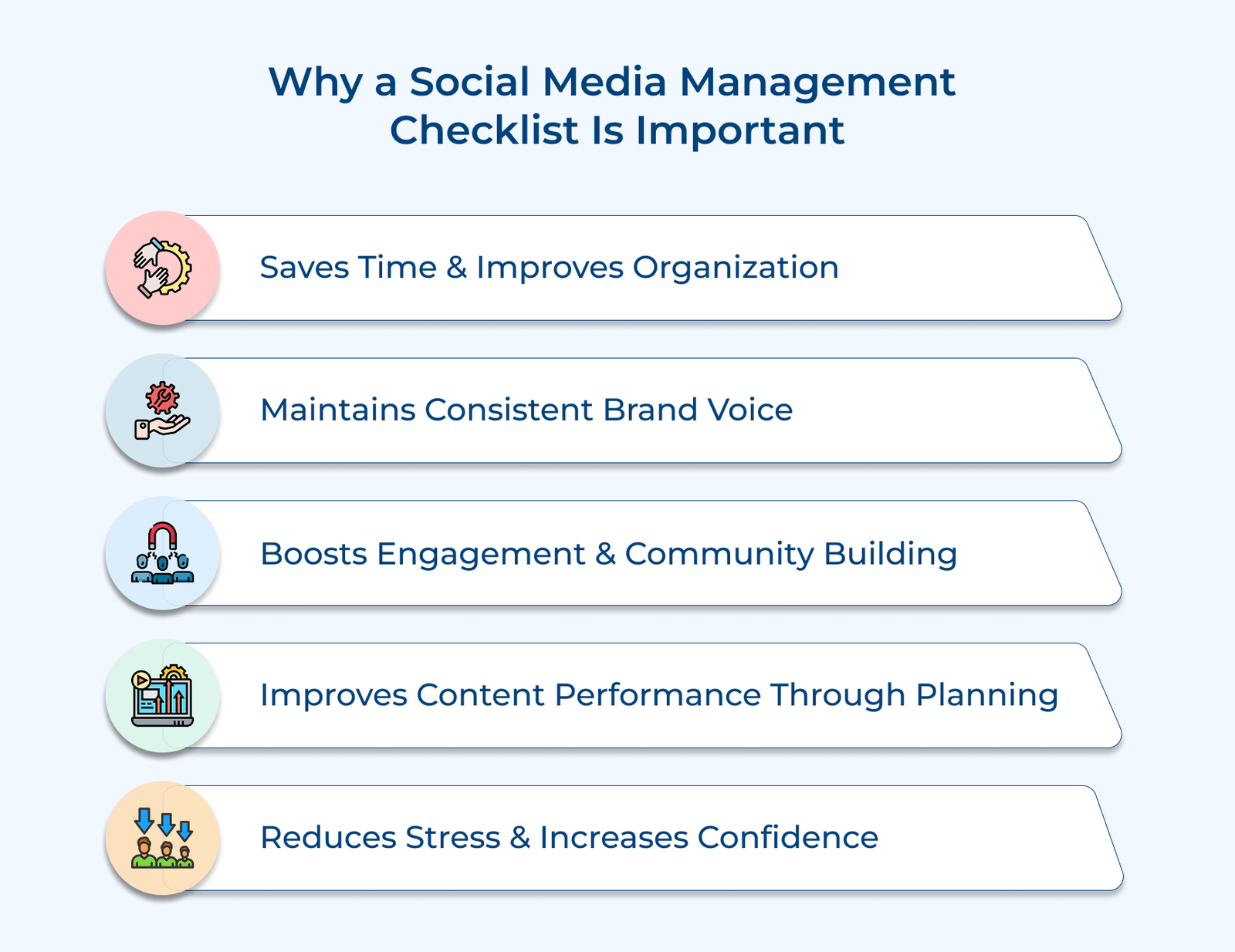
1. Time Efficiency and Better Organization
No more last-minute scrambling for post ideas. A checklist helps you plan, batch your work and free up time for everything else your business needs.
2. Consistent Brand Voice Across All Platforms
Your tone and message stay the same, no matter if someone finds you on Instagram or LinkedIn. The consistency builds familiarity and people trust what feels familiar.
3. Improved Engagement and Community Building
Replying to comments, answering DMs and the small things matter. A checklist makes sure you don’t forget to engage, which turns followers into real supporters.
4. Better Content Performance through Strategic Planning
Posting when your audience is online and sharing things they care about makes a huge difference. Planning gives you space to be strategic.
5. Reduced Stress and Increased Confidence
When you know what you’re posting and why, it’s easier to hit “publish” without second-guessing. Mental clarity means less stress and more energy to run your business.
Check out the critical components every business must include to dominate their social media strategy and engage their audience effectively.
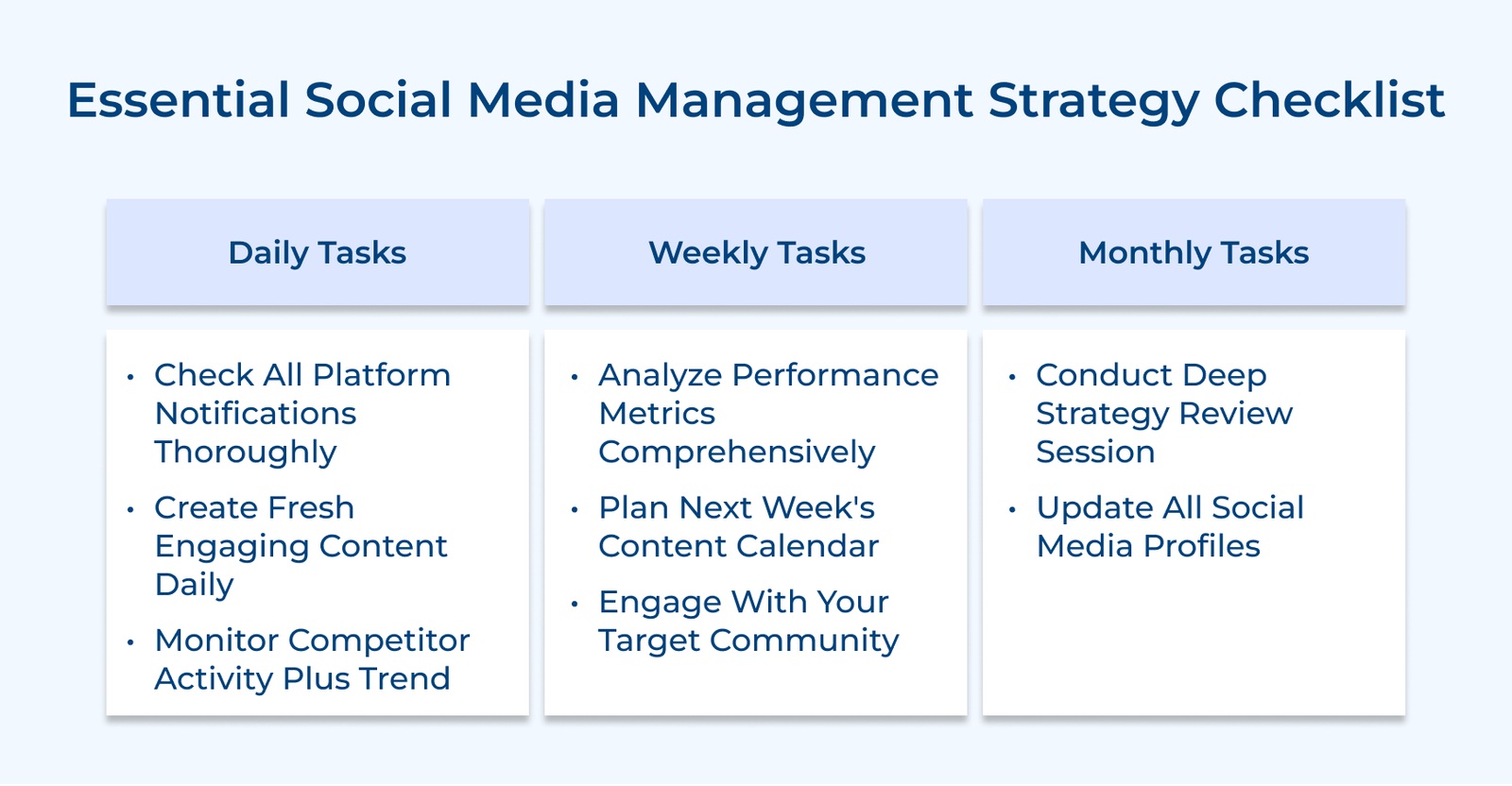
Start your day by reviewing social media notifications just like checking your inbox. It’s the easiest way to catch important messages, respond on time and show people that you’re paying attention.
Key points:
Set aside a fixed time each morning. Start with the platform that brings in the most engagement or leads, then move on to others. The habit keeps your communication timely and your followers engaged.
Daily content keeps your brand visible and active. It doesn’t need to be fancy, just useful, interesting, or relatable. Engaging content is 81% more effective at grabbing people’s attention than static content.
Pro tips:
Use a scheduling tool and post when your audience is most active to increase reach. Even one good post a day adds up to a strong, consistent presence over time.
Spending a few minutes a day checking what others in your space are posting can spark ideas. It also highlights gaps and shows you what’s working.
Key questions:
Think of your metrics as feedback, not just numbers on a screen. They tell you what’s working, what’s being ignored and where to adjust. A quick weekly review helps you make better content decisions instead of just guessing.
Key metrics:
The real question is, are you just collecting numbers or using them to improve? Think of metrics like a GPS for your content strategy. They don’t just tell you where you’ve been but guide you toward more effective posting decisions.
Planning saves time and gives your content purpose. A simple weekly content plan helps you post regularly without rushing to think of something last-minute.
Pick a Weekly Theme
Weekly theme planning connects your content to relevant moments that your audience already cares about. Consider holidays, industry conferences, seasonal changes, or trending topics that align naturally with your brand message and values without forcing connections.
Balance Your Content Types
Strategic content balance prevents your social media from becoming a constant sales pitch while still driving business goals. Aim for educational content that solves problems, behind-the-scenes glimpses that build connection and promotional posts that showcase your offerings when followers are most receptive.
Prepare Backup Content for Unexpected Opportunities
Having reserve content ready allows you to capitalize on trending moments or fill gaps when planned posts don’t feel appropriate. Create evergreen posts, inspirational quotes or user-generated content that works regardless of timing while maintaining your authentic brand voice.
Posting content is only half the job. Real connections happen when you take time to interact with others, especially in spaces where your ideal audience already hangs out.
Why does community engagement matter more than just posting great content? Because social media rewards participation over perfection. When you consistently show up in conversations that matter to your audience, you become part of their trusted network rather than just another brand in their feed.
Every month, take a step back and ask: Is all the effort helping the business? A strategy review helps you stop doing what isn’t working and double down on what is. It’s a reset button that keeps you on track.
Key strategists:
Including these diverse voices ensures your review considers both creative and analytical perspectives while addressing real customer needs. Each person brings unique insights that prevent blind spots in your social media strategy development process.
The objectives work synergistically with your social media management checklist by providing the strategic framework that guides your daily and weekly tactical decisions. Think of your checklist as the detailed roadmap, while your monthly review ensures you’re still traveling toward the right destination.
Outdated profiles confuse people. Be it a wrong phone number or an old description, small details can lead to missed opportunities. A quick monthly check keeps your profiles accurate and trustworthy.
Key elements:
Think of your profile as your storefront sign. A fresh, accurate one helps people trust you and encourages them to take the next step.
Below are the best practices as the golden rules that separate successful social media managers from those who struggle with inconsistent results and overwhelming daily tasks.
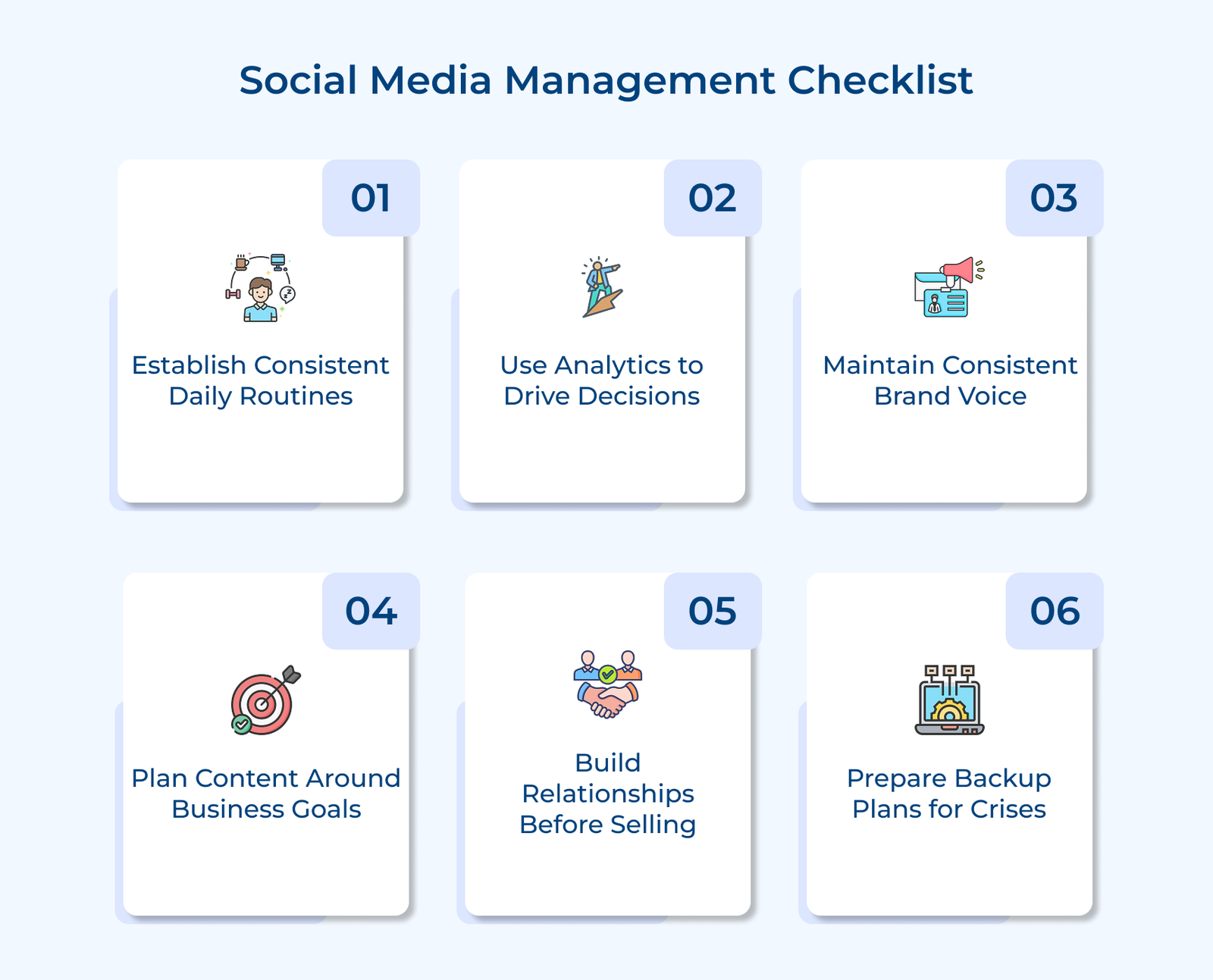
1. Establish Consistent Daily Routines that Stick
You don’t need to be online all day; you just need to show up consistently. Block out specific times each day to check messages, post content and reply to comments. The routines will help you stay active without feeling overwhelmed.
2. Use Analytics to Guide Every Strategic Decision
Instead of guessing what works or copying others blindly, let your metrics tell the story. Look at which posts got people to engage, click or share. Use that info to shape your content choices, post timing and platform focus. It’s less stressful and more effective.
3. Maintain Brand Voice Consistency Across all Platforms
No matter if a user finds you on Twitter or LinkedIn, your brand should sound like you. Set a clear tone and stick to it, friendly, helpful, serious, quirky, whatever suits your brand best. It builds recognition and trust across every platform.
4. Plan Content Themes Around Business Goals
Don’t post just to stay “active.” Every post should have a reason’s launching a product, teaching something useful or answering common questions. Let your bigger business goals shape what goes into your content calendar.
5. Build Authentic Relationships Before Selling Anything
People scroll past salesy posts, but they pay attention to those who help them, listen and show up consistently. Build real relationships by being useful, honest and human. Selling becomes much easier once people trust you.
6. Create Backup Plans for Unexpected Situations
Sometimes, the world shifts and your planned posts no longer feel right. Have backup content ready: timeless tips, FAQs or customer stories that always work. When things go wrong, know who on your team handles communication so you can respond quickly and professionally.
Check out the successful brands that have implemented structured social media checklists to achieve consistent results and build stronger connections with their audiences.
Starbucks Coffee Company
Starbucks runs social media like clockwork. Every day, they reply to customer tags within two hours, repost photos from fans enjoying their drinks, promote seasonal favorites that match local weather and highlight nearby events through regional store accounts.
The consistent routine doesn’t just keep them active; it turns unhappy customers into loyal fans and everyday posts into community-building moments. It results in millions of new followers, stronger store traffic and a brand that feels personal even at a global scale.
Nike Athletic Brand
Nike’s social team isn’t just promoting products; they’re telling stories. Each day, they share real stories from athletes, react to live sports moments, post motivational content during peak gym hours and stay ready to respond fast to praise as well as problems.
The structured rhythm helps Nike stay relevant and human, making them feel like part of their audience’s fitness journey, not just a brand trying to sell shoes. It’s a big reason why they see some of the strongest engagement in the industry.
Wendy’s Fast Food Chain
Wendy’s plays a different game, especially on Twitter. Their team actively scans for trending conversations, cracks sharp comebacks, shares casual behind-the-scenes content and keeps their cheeky tone fun but respectful.
Their bold social media checklist approach has generated millions of viral interactions and free media coverage worth far more than traditional advertising budgets. The strategy has particularly resonated with younger demographics. It resulted in increased sales among millennials and Gen Z customers who appreciate authentic brand personalities over corporate messaging.
Glossier Beauty Brand
Glossier doesn’t just post; they listen. Every day, they reshare customer selfies, reply personally to beauty questions and post clean, calming visuals that match their brand’s look. Most importantly, they make space for a wide range of voices and skin types.
Customers don’t just buy from Glossier, they become part of the brand. The connection has powered their growth far more effectively than traditional ads ever could.
Dollar Shave Club Personal Care
Dollar Shave Club keeps it light and it works. Their daily checklist includes funny videos, quick replies to customer questions, relatable grooming memes and a steady stream of posts that feel more like entertainment than social media marketing.
Their entertainment-focused checklist approach transformed a simple razor subscription into a lifestyle brand that customers genuinely enjoy following and sharing with friends. The strategy has generated significant word-of-mouth marketing while building a community of subscribers who actively promote the brand through social sharing and referrals.
Think of your social media management checklist like stacking bricks, daily tasks form the base, weekly plans keep things steady and monthly reviews help you see the bigger picture. When each layer supports the next, what once felt chaotic starts to feel doable.
Real progress happens when you follow a clear routine instead of winging it every day. A well-structured checklist keeps you focused, helps you stay consistent and turns social media from a time drain into something that supports your business goals.

Anyone who manages social media accounts can benefit. It includes small business owners balancing a lot at once, freelancers handling multiple clients, social media marketing teams running ad campaigns and even big companies trying to keep things consistent across teams. No matter if you’re growing a brand or just trying to stay organized, a checklist helps.
Start by setting clear response-time goals and having ready-to-go replies for common questions. Make sure trickier issues are passed to the right team and check all the mentions daily. Keep a record of repeat questions too; it can highlight ways to improve your product or service.
Look at what’s working by checking your post performance, likes, comments, shares and saves. See what your audience reacts to most, try new formats like short videos or photo sets and don’t be afraid to ask them what they want to see more of. Regular check-ins on what you’re posting and what others in your space are doing help keep your content fresh.
Once a month is a good rule of thumb, especially if your goals or content are shifting. If you’re launching something new or see a major change in what’s working, make bigger changes quarterly. Weekly tweaks based on what you’re learning day-to-day can also help keep you on track.
Tools like Hootsuite or Buffer help you plan posts. Sprout Social is useful if you’re juggling lots of accounts. Google Analytics can show you what’s working when it comes to clicks and traffic. Platform insights like Instagram or LinkedIn analytics also help. Just remember: tools help, but real, personal replies still matter most.
Keep track of follower growth and if the social media is sending more people to your website. Read customer messages to see if your tone is resonating. Set aside time each week to review and, once a month, step back and ask: Is it helping me reach my bigger goals?
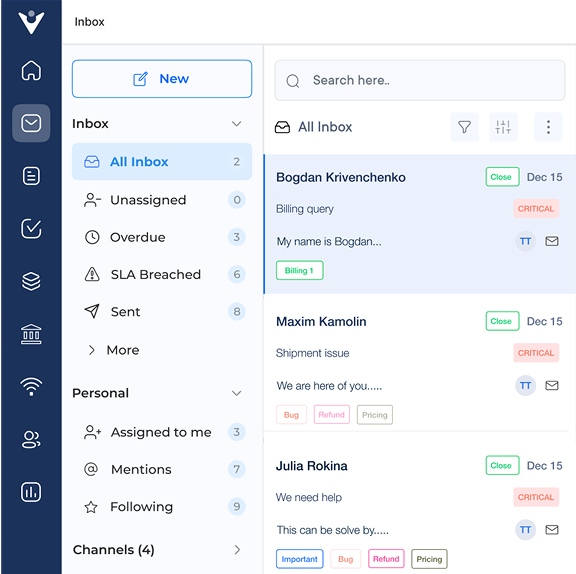
Grow Customer Relationships and stronger team collaboration with our range of products across the Conversational Engagement Suite.
Omnichannel Customer Support & Help Desk Software
AI Enabled Business Messaging and Chatbot Software
Sales Engagement & CRM Software
Call Center Software & Virtual Phone System
Product Marketing & Experience Platform
Customer Experience & Feedback Management Software

 B2B vs B2C Sales: Differences and Similarities
Scroll to top
B2B vs B2C Sales: Differences and Similarities
Scroll to top