Omnichannel Messaging Platform: Buyer’s Guide: 2026
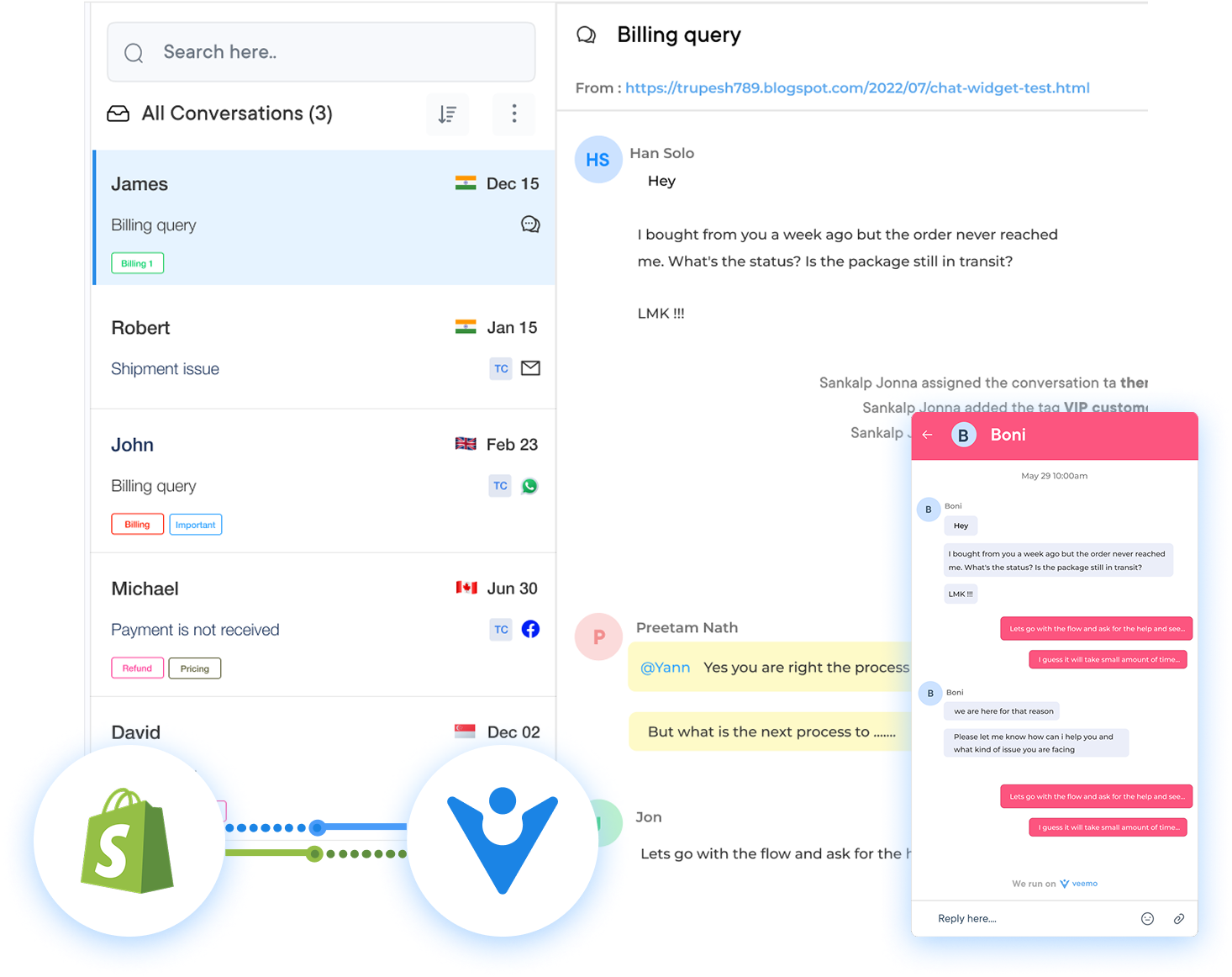
Scale your marketing, sales and support with Veemo’s omnichannel messaging solution. Built for scalability as well as team collaboration.
No credit card required. Easy setup
Scale your marketing, sales and support with Veemo’s omnichannel messaging solution. Built for scalability as well as team collaboration.
No credit card required. Easy setup
Discover how conversational AI and communication automation aid your daily business processes
Seamlessly integrate with various communication channels. Allows you to reach your customers through their preferred channels, ensuring that messages reach wherever they prefer.
Look for a solution that offers personalization features such as dynamic content insertion, segmentation and behavioral targeting. Enables you to tailor messages to individual customers.
Automation and workflow capabilities streamline communication and reduce manual effort. Look for triggered messaging and scheduling options that keep conversations relevant.
Real-time data on key metrics like delivery rates, open rates, click-through rates and conversions. Make data-driven decisions and optimize your campaigns with the best insights.
Customer conversations, when scattered across chat, email, social and SMS slow down support teams as well as frustrate buyers. This fragmented messaging leads to lost revenue opportunities. The right solution for this is an omnichannel messaging platform that centralizes customer conversations from multiple channels into a single inbox for seamless communication
Walk through the guide to explore core capabilities, benefits and use cases, helping you evaluate the best omnichannel messaging platform for your business
Omnichannel messaging platform is a comprehensive software solution that allows organizations to manage and coordinate customer interactions across diverse communication channels from a centralized platform. It ensures consistent messaging, maintains conversation context regardless of the channel used, and provides a unified view of customer interactions.
Key objectives:
Selecting the right omnichannel messaging platform can be a daunting task with so many tools available. Consider the criteria below to choose the right solution for your business:
1. Channel Integrations
A comprehensive omnichannel messaging solution should seamlessly integrate with various communication channels. It should allow you to reach your customers through their preferred channels, ensuring that your messages reach them wherever they are.
2. Personalization Capabilities
Personalization is key in engaging customers and improving brand’s visibility. Look for a solution that offers advanced personalization features, such as dynamic content insertion, segmentation, and behavioral targeting. This will enable you to tailor your messages to individual customers, increasing the effectiveness of your communications.
3. Vendor Reliability and Support
Research the vendor’s track record, uptime guarantees and responsiveness of their own support team before committing long-term. A dependable vendor helps in reducing onboarding friction considerably and makes sure issues get resolved quickly once your messaging campaigns are live.
4. Total Cost of Ownership
Look beyond the subscription price to evaluate implementation costs, training time and pricing as your message volume grows. A seemingly affordable plan can become expensive quickly in the future once add-ons and scaling costs are factored.
5. Scalability
As your business grows, so do your messaging needs. Choose a solution that can scale with your business, accommodating higher message volumes and increasing customer demand. Look for options that offer flexible pricing plans or pay-as-you-go models to ensure that you can easily adapt to changing requirements.
6. Security and Compliance
When dealing with customer data & sensitive information, security should be a top priority. Choose a solution that offers robust security measures, such as encryption and data protection protocols. Additionally, ensure that the solution is compliant with relevant privacy regulations, such as GDPR or CCPA.
7. Ease of Adoption
Consider how quickly your team can learn and start using the platform without affecting ongoing campaigns. A steep learning curve often slows adoption, especially for teams without dedicated technical support available internally.
Customers expect to be able to interact with a brand through different platforms. A right omnichannel messaging software engages with customers to provide personalized communication. Let’s explore some of the top tools.
Best omnichannel messaging software for small to medium businesses
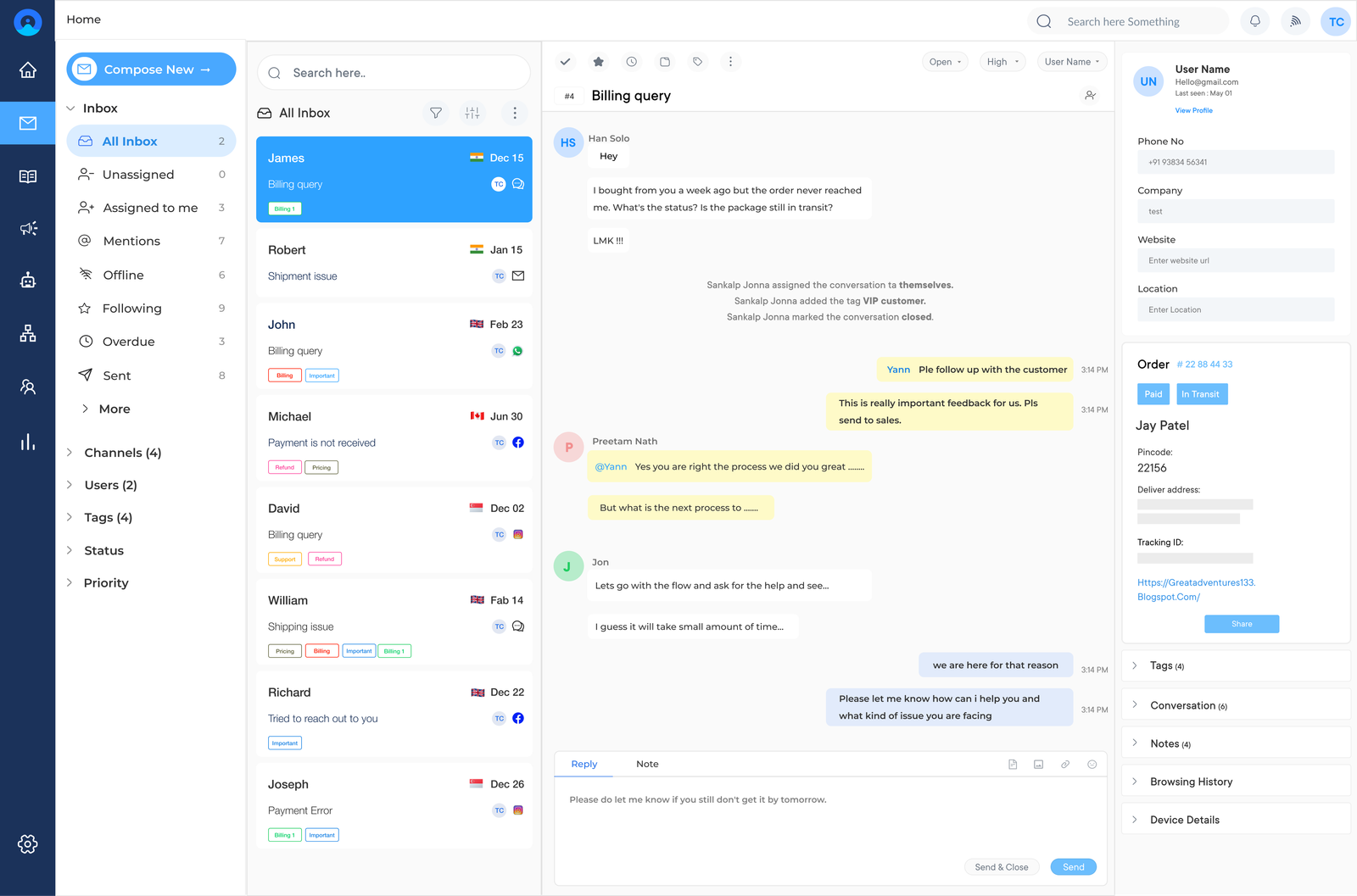
Veemo Chat is one of the best omnichannel business messaging platforms, offering AI-powered tools to communicate with customers seamlessly across every channel. It enhances customer engagement, streamlines support operations and delivers valuable insights for businesses of every size.
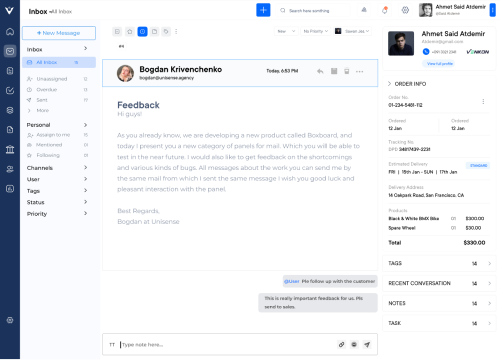
Unified customer conversations from email, chat and social media into one shared inbox, letting AI handle routine interactions so that agents can focus on complex ones. Intelligent routing, combined with contextual customer data, ensures every conversation gets personalized attention, regardless of the channel customers prefer.
Key features:
Pricing: Veemo Chat’s Growth plan starts at $29/user/month and the Team plan is priced at $59 with advanced features. The Enterprise plan is priced at $129 /user/month for large enterprises. It also offers a 14-day free trial.
Top omnichannel messaging platform to deliver superior CX
Omni24 is an AI-powered customer engagement platform that combines support, sales, and marketing into one unified suite for effective omnichannel messaging. It unifies all customer data in one place, giving every team the same customer context and powering AI automation across the entire customer journey.
Omni24’s omnichannel messaging enables businesses to streamline communications across departments, from resolving support tickets to running targeted marketing campaigns. Automated campaigns and personalization ensure customers receive relevant messages keeping communication consistent across every department.
Key features:
Pricing: Omni24’s pricing starts from $29/month. The software’s pricing depends on factors like the number of users, the level of features required, and the scale of customer support. Omni24 also offers a 14-day free trial to help you determine if the offerings suit your business needs.
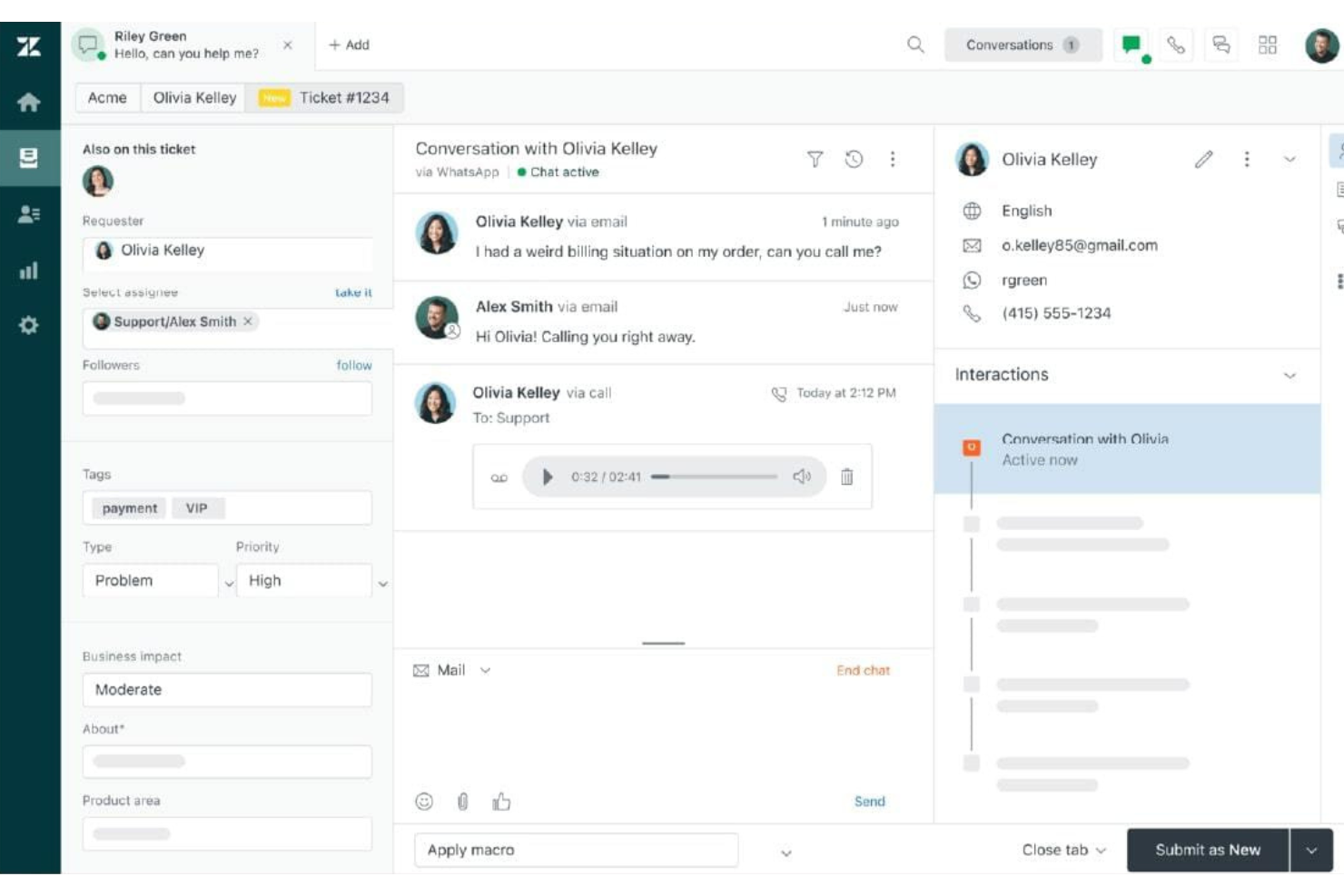
Zendesk is one of the leading customer service software that offers a unified inbox that brings together customer queries from various channels such as email, chat, phone, and social media.
The robust ticketing and routing capabilities ensure every customer query is assigned to the appropriate agent to streamline workflow. It also maximizes the customer service teams’ efficiency. The software offers integrations with other popular business tools such as CRM systems and productivity tools, to leverage their existing tech stack for a more streamlined workflow.
LivePerson’s platform provides a centralized dashboard where customer interactions can be managed effectively, ensuring a smooth communication process. It uses artificial intelligence algorithms to analyze customer queries and automatically route them to the most suitable agent, enhancing their overall experience as well as build customer loyalty.
Businesses can create and deploy chatbots across multiple channels with AI as well as machine learning capabilities to respond to customer queries in a human-like manner. The platform also offers real-time reporting to track customer interactions, monitor agent performance, and gain valuable customer insights.
MessageBird is a popular communication platform that allows businesses to connect with their customers seamlessly across channels. It ensures a truly integrated and consistent user experience. The platform routes messages to the right agent, ensuring they are delivered through the most optimal channels.
The key feature that sets MessageBird apart is advanced API capabilities. Businesses can automate and streamline their communication processes with easy integration into existing systems. It operates on a global infrastructure to provide reliable message delivery across multiple countries and time zones.
Twilio is a cloud-based communications platform that provides omnichannel messaging solutions through APIs. It allows businesses to integrate messaging channels such as SMS, WhatsApp and Facebook Messenger directly into applications.
Businesses use Twilio to build custom messaging workflows from appointment reminders to two-factor authentication. Twillow follows pay-as-you-go pricing model makes it particularly appealing for developers building highly customized omnichannel messaging experiences.
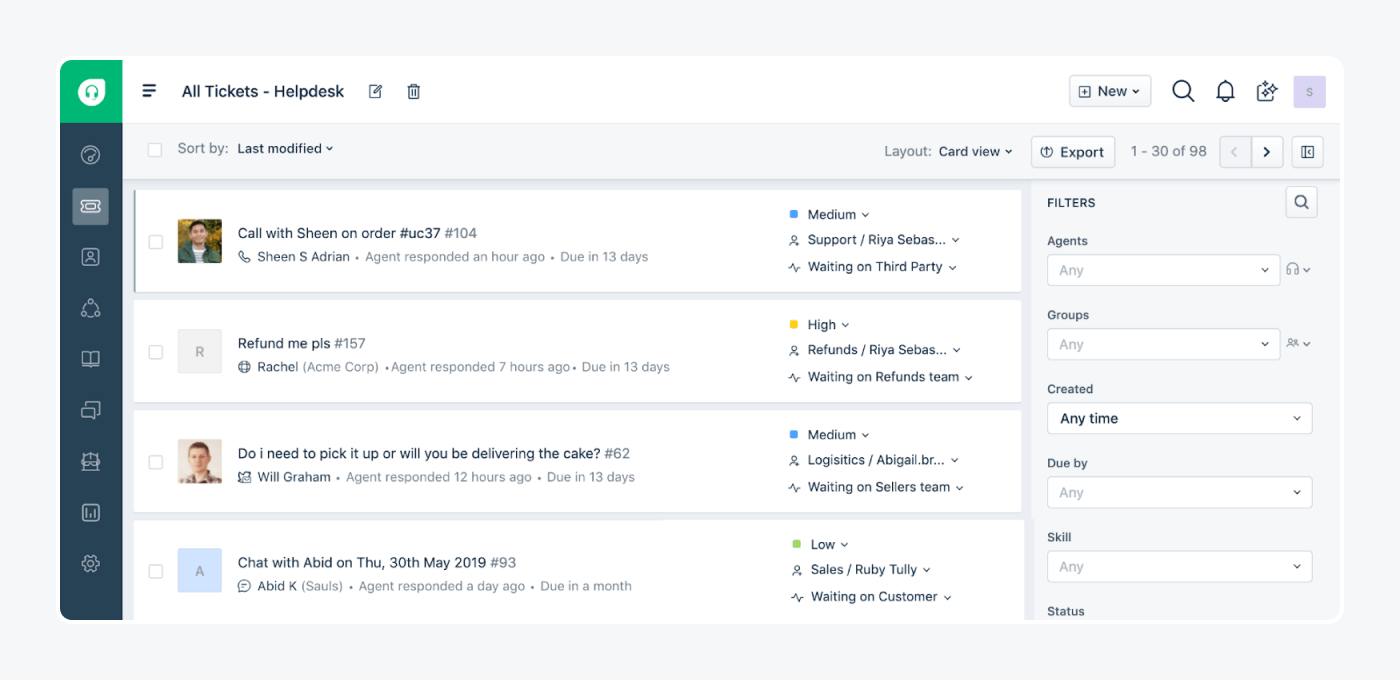
Freshdesk is a comprehensive customer support platform offering omnichannel messaging capabilities with traditional help desk features. The platform enables businesses to communicate with customers through email, chat, messaging apps and social media from one dashboard.
Freshdesk’s AI-powered chatbots and automation handle routine inquiries so make sure agents can focus on complex issues requiring human judgment. It combines inbox and detailed automation rules to keep teams organized as message volume grows across multiple channels and departments.
Intercom is an omnichannel customer messaging platform built specifically for SaaS and online businesses looking for conversation-driven engagement. It offers live chat, email and in-app messaging into one system to initiate real-time customer communication.
The platform’s messaging campaigns and conversational bots guide users through onboarding, answer product questions and nurture leads. Its advanced targeting based on user behavior helps teams deliver relevant messages at the right moment in the customer journey.
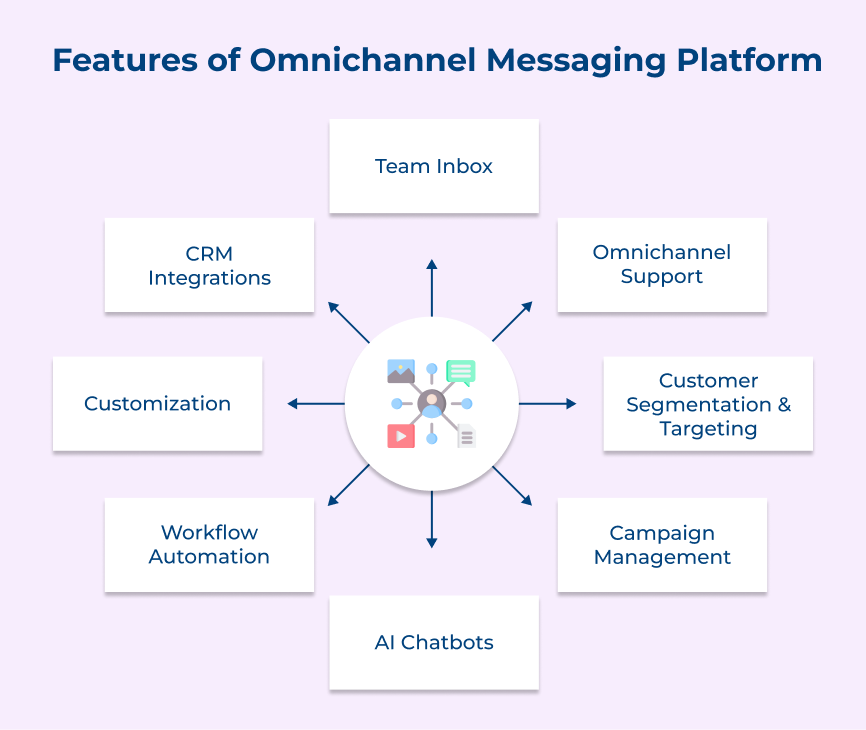
An omnichannel messaging platform enables businesses to communicate with their customers across multiple channels for a consistent experience. Let’s explore the features in detail:
A team inbox allows businesses to centralize all customer messages and inquiries in one place. It provides a unified view of customer communications, ensuring that no messages or requests are missed. Businesses can efficiently collaborate on customer conversations, leading to faster response times and improved customer satisfaction.
An omnichannel messaging platform offer consistent experience by supporting various communication channels to engage with customers. Customers can start a conversation on one channel and seamlessly switch to another without any disruption.
Effective communication requires understanding your customers and tailoring messages based on their preferences. An omnichannel messaging solution enables businesses to segment their customer base and create personalized marketing campaigns. By targeting specific customer segments with relevant content, businesses can enhance engagement and drive conversions.
An omnichannel messaging platform provides tools for creating as well as managing marketing campaigns. Businesses can design personalized campaigns across different channels, schedule messages, track campaign performance, and analyze results. It allows businesses to optimize marketing strategies and provides targeted messages that resonate with customers.
An omnichannel messaging software with chatbot feature enables businesses to automate responses to common queries, provide instant support, as well as gather customer data. AI chatbots can handle routine tasks, freeing up human agents to focus on more complex inquiries, and improving overall efficiency.
Workflow automation can automate tasks such as routing messages, assigning conversations to specific team members, and sending predefined responses. This not only saves time but also ensures that messages are delivered to the right person at the right time, improving productivity and customer service.
An omnichannel messaging platform allows businesses to customize their communication channels to align with their brand identity. Businesses get to create a professional appearance across all customer interactions. Customization helps build trust and strengthens brand loyalty.
Integrating an omnichannel messaging platform with a Customer Relationship Management (CRM) system provides businesses with a comprehensive view of their customers. It also facilitates data synchronization between the messaging platform and CRM, ensuring accurate customer records.
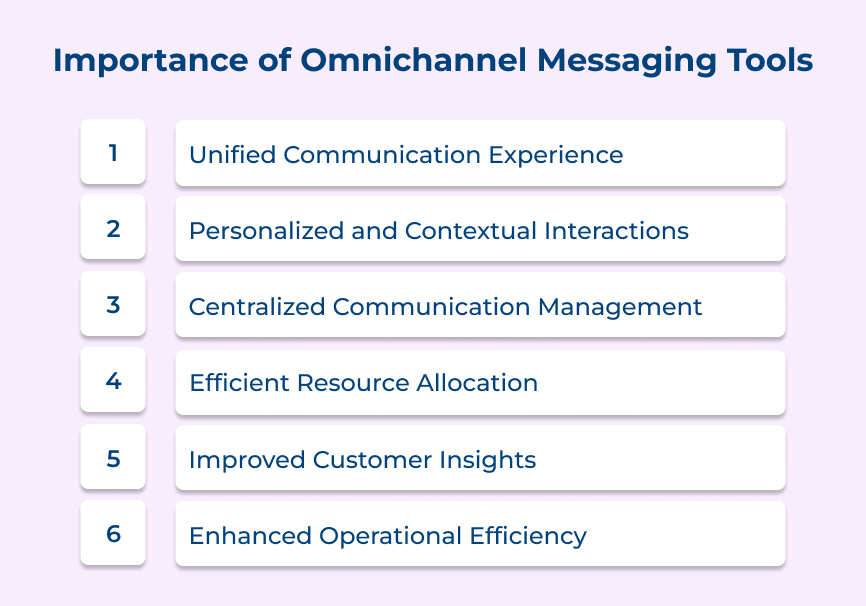
We will explore why an omnichannel messaging platform is important from both the customer and business perspectives.
Unified Communication Experience
Customers are increasingly using multiple channels to engage with businesses and can switch between these channels seamlessly, without having to repeat their queries. It saves time & frustration as customers can continue their conversation with the business without any delays.
Personalized and Contextual Interactions
Another significant advantage of an omnichannel messaging platform for customers is the ability to receive personalized and context-aware interactions. Businesses gather information about customers’ preferences, which can then be utilized to tailor messages and offers, creating a more personalized experience.
Centralized Communication Management
Businesses get to consolidate all customer interactions into a single platform instead of having to manage multiple communication channels separately. This centralized approach enable businesses to track and respond to customer queries more efficiently. It also provides businesses with a comprehensive view of their customer interactions, facilitating better decision-making and strategic planning.
Efficient Resource Allocation
Identify the most productive channels and allocate resources accordingly by analyzing the effectiveness of different channels. The businesses are ensured to yield best results as they are investing their time, effort, and budget in the channels. It also helps optimize staffing levels and skill sets as businesses can identify which channels require more specialized expertise.
Improved Customer Insights
An omnichannel messaging platform provides businesses with a deep understanding of their customers’ preferences, behavior patterns, and pain points. The information can be used to create targeted marketing campaigns, develop new features, as well as refine overall customer experience strategies based on real customer feedback.
Enhanced Operational Efficiency
Omnichannel platforms streamline workflows by consolidating conversations from different channels into a single interface. It reduces the time and effort required to manage multiple communication tools, allowing support teams to respond more efficiently to customer inquiries.
An omnichannel messaging platform unifies customer conversations across channels into a single interface for consistent experiences. It helps businesses streamline communication and improve engagement across every touchpoint.
Try Veemo chat with a free demo or explore how it fits your workflow. Learn how unified messaging improves customer experience in one unified workspace. Omnichannel messaging is essential for delivering scalable customer communication.
Yes, small and mid-sized businesses benefit significantly from implementing omnichannel messaging software across customer communication efforts. This gives them capabilities that once required a larger team and budget to achieve consistently. Key benefits included:
Most omnichannel messaging solutions provide intuitive interfaces and easy-to-use features requiring minimal technical knowledge to operate. Many software providers offer comprehensive training and customer support to help businesses navigate the platform successfully.
Some solutions even include templates and drag-and-drop editors to simplify daily operations further. This accessibility ensures teams can start delivering value quickly without requiring extensive onboarding time or dedicated technical staff.
Well known SaaS tools implement robust security measures to protect confidential customer data & sensitive business information. They employ encryption technologies, secure data storage practices, and compliance with industry regulations, such as GDPR. It’s essential to choose a trusted software provider & ensure they have proper security measures in place.
Proper implementation depends significantly on the software provider chosen and your specific operational requirements. This makes preparation and planning essential before committing to a long-term decision. Some key implementation factors include:
Follow some best practices & strategies to make the most of omnichannel messaging software. Ensure that you have a clear understanding of your target audience and their preferred communication channels. This will help you prioritize channels and resources.
Personalize your messages based on customer preferences and previous interactions to provide a tailored experience. Regularly monitor & analyze customer data to identify trends & optimize your messaging strategies accordingly.
The level of customization depends on the specific SaaS Service Desk software the business chooses. Some solutions offer extensive customization options, allowing businesses to tailor the software to the business’s unique needs. Others may have more limited customization capabilities. It’s important to evaluate the business requirements and choose a solution with the right level of customization for their needs.