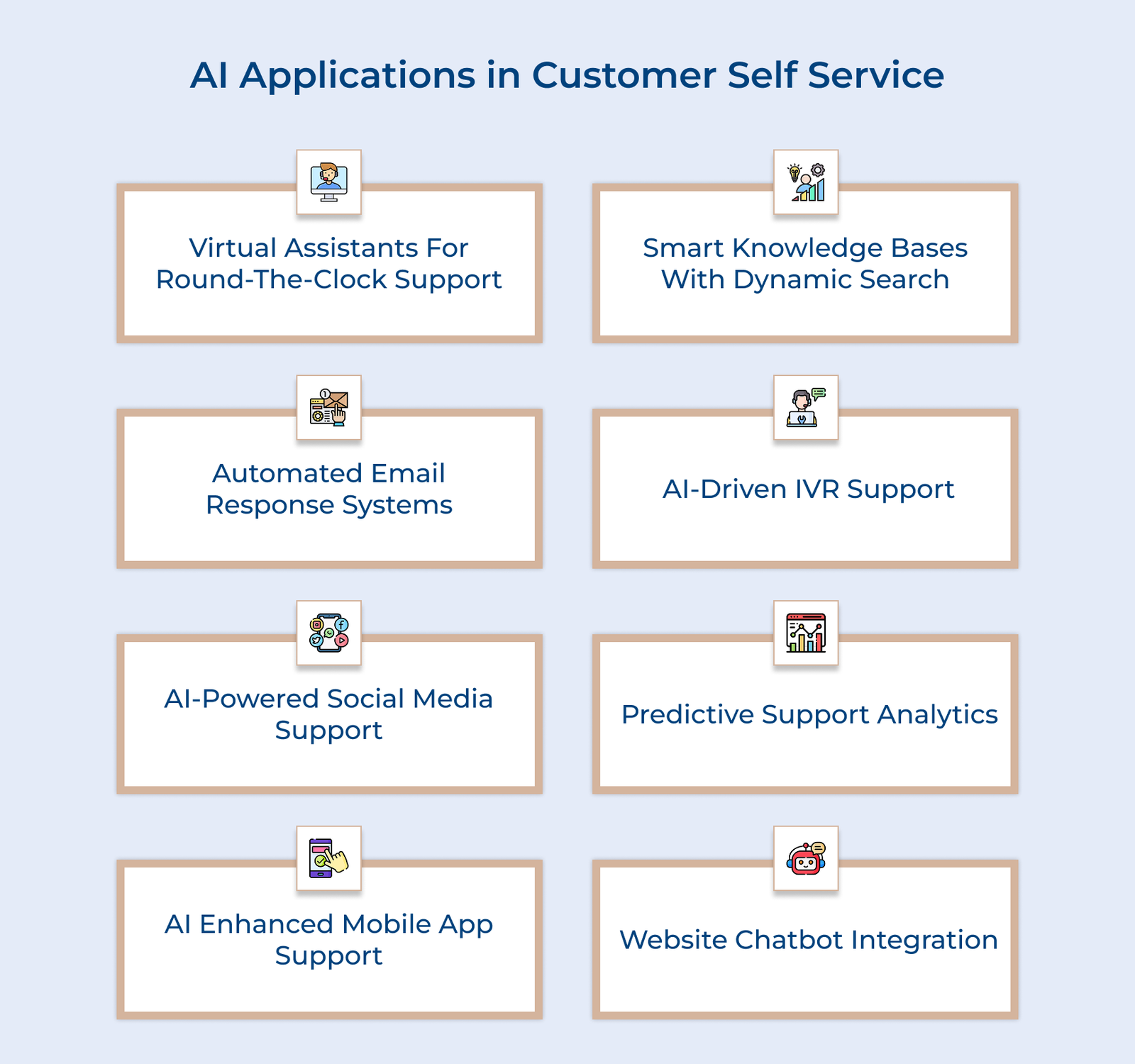
1. Virtual Assistants for Round-the-Clock Customer Support
Virtual assistants play a key role in modern customer support, offering round-the-clock help without relying on human availability. They allow customers to get quick answers – no waiting, no business hours.
Natural Language Processing (NLP) forms the foundation of virtual assistants. They’re built to follow conversations, catch context and deliver answers that feel natural. Machine learning adds another layer. The systems learn from past conversations, getting better over time.
Pro tips:
- Include terms and phrases specific to your industry so it understands your customers better.
- Use customer feedback to refine scripts and response flows. Don’t let it go stale.
2. Smart Knowledge Base with Dynamic Search
An AI-powered knowledge base changes how customers find help. Instead of digging through a static list of articles, users get quick, relevant answers tailored to what they’re actually looking for.
The systems don’t just wait for search terms; they analyze real-time behavior and context. Based on past searches, common issues and current queries, the system recommends articles that fit the situation. It learns what works, what doesn’t and improves over time.
Actionable tips:
- Use short, focused sections so the AI can scan and serve answers more accurately.
- Let users rate articles or mark them as helpful, then use that input to improve future suggestions.
3. Automated Email Response Management System
Managing high volumes of customer emails is tough but AI-powered email systems are changing the game. The tools help businesses sort, understand and respond to emails more accurately, without losing the personal touch.
How it works:
- Initial processing: AI uses natural language processing to read incoming emails, identifying what the customer wants and deciding how urgent the request is.
- Pattern recognition: The system figures out which responses work best and builds a smart response library by analyzing past conversations.
- Response generation: Once it knows the topic, the system creates a tailored response by combining templates with customer-specific details.
- Priority management: The AI ranks by urgency, using clues like keywords, issue type and customer history. Urgent emails are flagged so they don’t fall through the cracks.
4. Interactive Voice Response with AI
AI has reshaped traditional interactive voice response (IVR) systems, turning clunky menu-driven calls into natural, efficient conversations. Instead of pressing buttons or repeating options, callers can now speak normally and the system actually understands them.
Natural speech understanding capabilities
Modern AI-powered IVR doesn’t just hear, it understands. It can recognize different accents, speech patterns and phrasing, so callers don’t have to follow strict prompts. It makes interactions feel more human and less like talking to a machine.
Contextual response generation system
Unlike old systems that reset with every question, AI IVRs keep track of the conversation. They can handle multi-part questions, recall past interactions and adjust responses based on what the caller needs right now. It means fewer repeated explanations and faster answers.
Smart routing and escalation process
If a call needs human help, the AI doesn’t just forward it; it passes along the full context. Agents get a summary of the conversation and the caller’s history, so they can pick up right where the IVR left off.
5. AI-Powered Social Media Support System
Businesses need a reliable way to keep up with customers who are turning to social media for support more than ever. AI in customer self-service helps teams manage large volumes of messages, spot issues early and respond quickly, without losing the human touch.
Using past conversations and the context of each post, the AI suggests replies that match the situation. It doesn’t just provide stock answers; it considers tone, urgency and issue type, giving agents a strong starting point for helpful, relevant responses. When someone tweets about a login issue, the system recognizes the problem, tags it as technical and suggests troubleshooting steps.
Actionable tips:
- Train your team on real examples across platforms to recognize different tones, styles, and cultural nuances.
- Set rules for escalating posts that show signs of high frustration, sensitive topics, or public visibility.
6. Predictive Customer Support Analytics Platform
AI is changing customer service from a reactive process into one that anticipates problems before they happen. AI can help support teams step in early by analyzing patterns in behavior and service history. Machine learning algorithms look at how customers use products, what questions they ask and how often they reach out for help.
The system uses the data to predict what a customer might need next. It can automatically offer help articles, suggest steps to fix a known problem, or alert a support agent to check in, often before the customer even reaches out. When the system detects a customer repeatedly visiting the same help documentation pages, it recognizes it as a pattern indicating potential confusion.
Best practices:
- Build models that account for seasonal trends or event-based behavior changes.
- Use customer feedback to improve your predictions and ensure your system stays accurate over time.
7. AI-Enhanced Mobile App Support Features
AI in mobile app support is revolutionizing how businesses assist users directly within their apps. Instead of relying on traditional help systems, AI enables seamless, proactive support that understands what users need and delivers assistance at the right time.
How it works:
- Smart troubleshooting: AI continuously observes user behavior and interaction patterns within the app. If it detects any difficulty or confusion, it offers relevant solutions or guides tailored to the user’s current issue, helping resolve problems before users have to search for answers.
- Visual recognition: When users submit images, screenshots or error messages, AI quickly analyzes the visuals to identify issues. It eliminates the need for long explanations, speeding up the resolution process by providing exact, visual-based solutions.
- Personalized support: AI adapts to individual users by tracking their preferences, usage habits and technical skill level. It ensures the support experience feels tailored, offering just the right level of assistance at the right time.
- Real-time assistance: AI can step in the moment a user gets stuck, offering guidance right inside the app. With prompts, tooltips, or interactive walkthroughs, it shows people exactly what to do next so they can keep moving without frustration.
8. Chatbot Integration for Website Support
AI chatbots on websites have reshaped how businesses offer last, reliable customer support. Acting as the first line of help, the bots deliver quick answers, guide users through common issues and stay available 24/7 – all without adding strain to support teams.
Contextual understanding powers conversations
Modern chatbots don’t just respond, they remember. They track previous messages, understand intent and keep the conversation flowing naturally. It means customers don’t have to repeat themselves and the chatbot can offer more relevant, helpful responses as the conversation goes on.
Breaking language barriers effectively
AI chatbots now offer accurate support in multiple languages, with more than just word-for-word translation. They’re designed to understand the tone, phrasing and cultural context behind the language, allowing companies to support global users effectively without separate regional teams.
Smart problem-solving through automation
Instead of sending users to a long help article, these bots can walk customers through solutions directly. They adapt in real time based on user input by asking follow-up questions, offering options and helping troubleshoot without overwhelming the user. It’s like having a support rep built right into your website.
AI Self-Service Best Practices
Check out the key best practices that organizations should follow to successfully deploy and maintain an effective AI self service system.