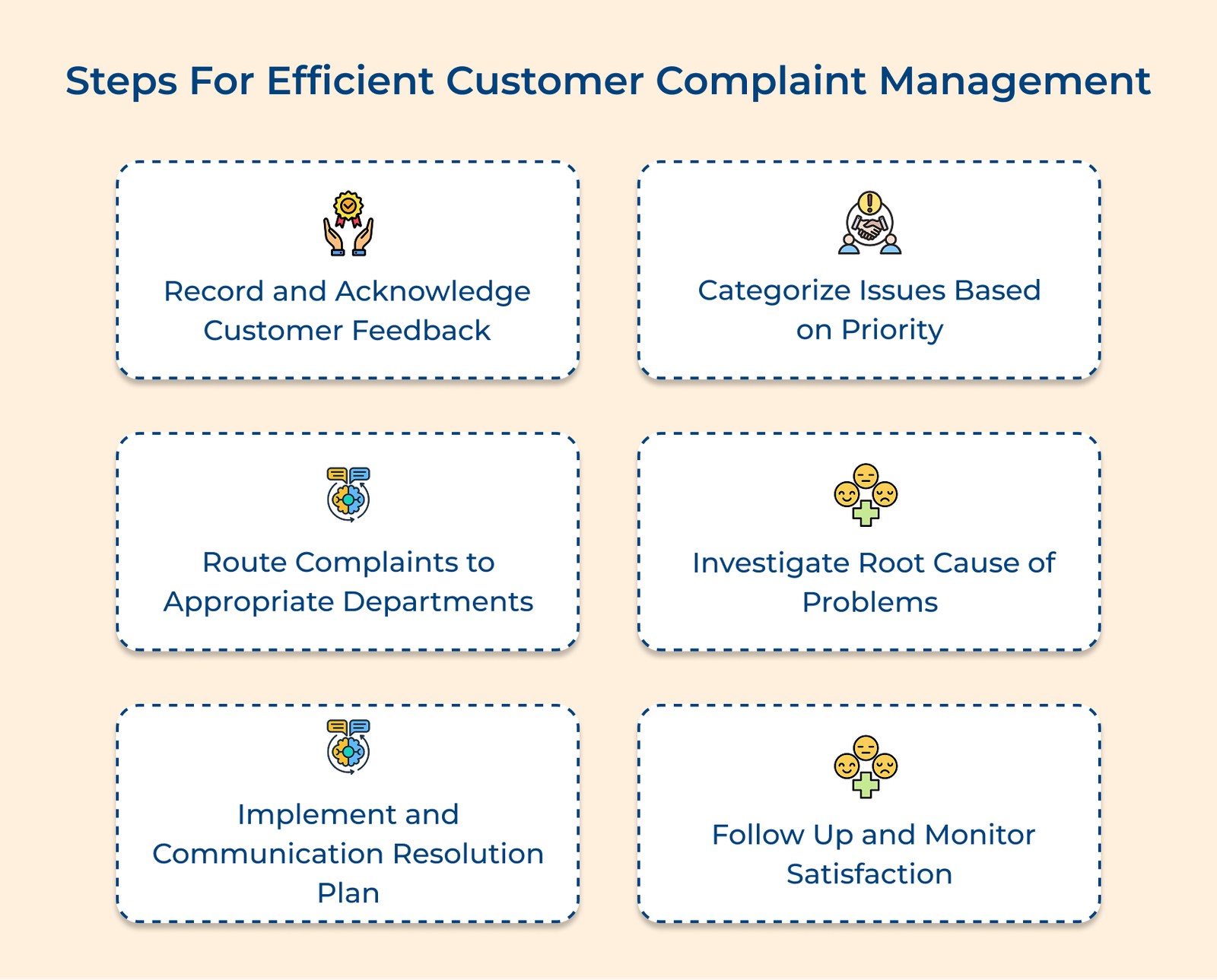
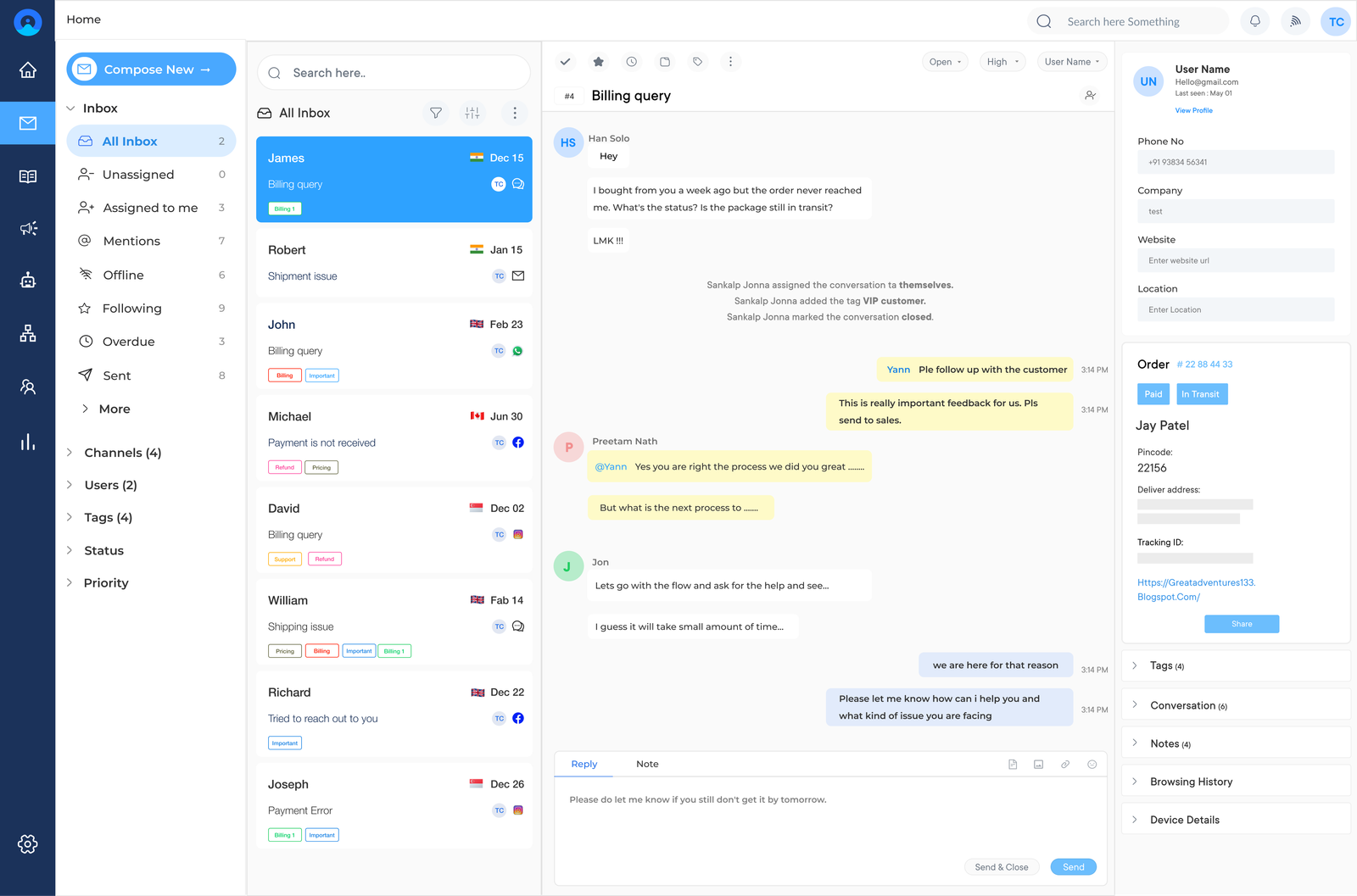
1. Record and Acknowledge Customer Complaint
The first step sets the tone for everything that follows. It’s not just about collecting the details but making sure the customer feels heard and taken seriously.
Implementation steps:
- Let the customer explain what went wrong and don’t interrupt. A calm, attentive conversation shows you’re paying attention, not just going through the motions.
- Use a consistent format to note the date, contact info and a clear description of the problem. It helps avoid miscommunication and ensures your team has the full picture.
- Follow up with a brief message confirming receipt within minutes or hours, not days. Include a reference number, outline what happens next and share a rough timeline.
- Make sure the complaint is stored in a place where all relevant team members can find it easily. It avoids dropped handoffs and keeps the resolution process on track.
Let’s assume that a customer reports a faulty laptop charger. The support rep asks for the purchase date, model number and describes the issue clearly in the system. The customer is given a reference number (TKT2024021) and receives an email outlining the next steps within the hour.
2. Categorize Issues Based on Priority
Once a complaint is recorded, the next step is to sort it out. Categorization helps your team avoid chaos by organizing incoming issues so they can respond with the right level of urgency.
Assess Urgency and Impact
Not every complaint is equal. Some affect one person, others point to bigger risks. Consider the following questions:
- Does this raise safety or legal concerns?
- How many customers are affected?
- Is there a risk of financial loss or public backlash?
Using the criteria, assign a priority level. Urgent matters need immediate attention. Others can follow a standard timeline.
Group Complaints by Type
Think of it like labeling folders: product issues, billing errors, service delays, staff behavior, etc. It helps route them to the right teams faster and spot recurring problems over time.
Determine Required Response Time Frames
Not everything needs to be fixed in an hour, but customers need to know when they can expect a response. Setting standard response timelines keeps things consistent and manageable:
- Critical: respond within 1–2 hours
- High-priority: same business day
- Standard issues: within 24–48 hours
- Suggestions or feedback: grouped for weekly review
3. Route Complaints to Appropriate Departments
Routing complaints effectively ensures that each issue is assigned to the team best equipped to resolve it, while maintaining clear ownership from start to finish. A structured approach avoids confusion, prevents complaints from being lost between departments and connects customers directly with people who understand the issue.
Key questions:
1. Which departments have the expertise for the issue?
The question determines if the complaint should go to technical support, product teams, customer service or someone in management. Consider that bugs or downtime go to IT, while billing concerns belong with finance. Sending issues to the right teams means they’re handled by people with the right knowledge and tools.
2. What resources are needed for resolution?
Some complaints need access to transaction history or internal systems, while others may require lab testing or cross-team collaboration. Knowing what’s needed helps route the complaint to where those resources are available.
3. Who has the authority to implement solutions?
If the resolution involves refunds, exceptions or contract changes, the complaint needs to go to someone who can approve them. Understanding what level of authority is required helps avoid unnecessary escalations later.
4. Investigate the Root Cause of Problems
Investigation is the backbone of resolving customer complaints effectively. It goes beyond quick fixes and looks into the real reasons behind customer dissatisfaction. Businesses can prevent the same issues from happening again by digging into the root causes instead of just reacting to symptoms.
The process strengthens the entire complaint-handling system and builds trust by showing that problems are taken seriously. During the investigation phase, teams gather detailed information from customer feedback, internal systems and employee input. The goal is to spot patterns, uncover breakdowns in service or operations and understand what’s truly driving complaints.
Best practices:
- Use a standard investigation checklist to make sure every case is reviewed thoroughly and consistently.
- Hold regular meetings to go over findings and spot broader service issues that need attention.
5. Implement and Communicate the Resolution Plan
Implementation and communication are where resolution efforts become visible to the customer. It is the point in the complaint process where identified solutions are carried out and teams must follow a structured plan. A strong implementation doesn’t just patch the immediate problem; it aims to fix the root cause and prevent similar complaints in the future.
Teams define exact steps, set timelines and assign responsibility for each part of the solution. The details are shared with both internal teams and the customer to keep everyone aligned. If a software bug breaks payment processing, the company might first put in a quick workaround to keep transactions running. Then they’d release a patch, follow up with a permanent fix and keep customers in the loop with clear updates on timelines.
Actionable tips:
- Use straightforward communication templates that are easy to personalize while keeping messages consistent.
- Set clear checkpoints during implementation to track progress and ensure the fix is working as planned.
6. Follow Up and Monitor Satisfaction
The follow-up and monitoring stage is where you confirm if your resolution efforts worked. It’s not enough to close a ticket and move on. The phase ensures that the issue stays resolved and that the customer feels heard. Without it, you risk repeating mistakes, losing trust and missing out on feedback that could make your service better.
Survey Customers About the Resolution Experience
After resolving a complaint, send a short, specific survey to ask how the customer felt about the process. Focus on clarity of communication, if the solution worked and how satisfied they are overall. The insight helps you spot weak points in how issues are being handled and where your team can improve.
Track Long-Term Complaint Patterns Regularly
Don’t just look at complaints one by one, analyze them over time. Patterns in issue types, times of year or affected services can reveal deeper problems that need fixing. The regular review helps you get ahead of issues before they become bigger.
Measure Customer Satisfaction Post-Resolution
Follow up later to see how things are going. Keep an eye on if the customer stays engaged with your product or service and if new complaints pop up. It gives you a clearer picture of how well your complaint handling builds long-term trust.
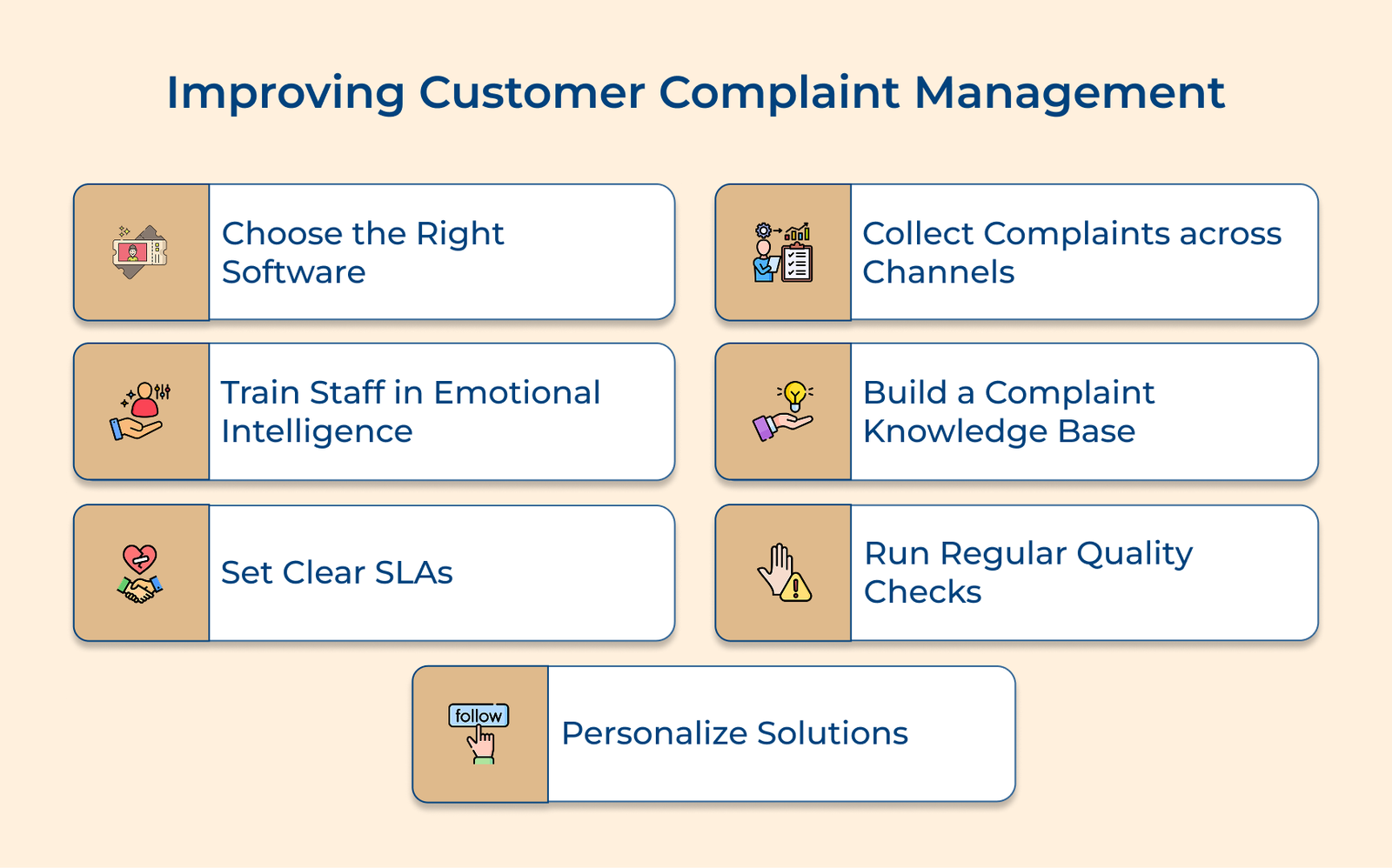
Strategies for Improving Customer Complaint Management Systems
Below are some actionable strategies to refine your complaint management strategy and ensure your customers feel valued.