12 Best Sales Tracking Software Tools for Businesses in 2026
Discover the best sales tracking software designed to boost productivity, streamline your pipeline and close more deals.
No credit card required. Easy setup

Trusted By Leading Brands


Discover the best sales tracking software designed to boost productivity, streamline your pipeline and close more deals.
No credit card required. Easy setup
Master your sales pipeline and boost profits with powerful sales tracking software! Gain real-time insights, streamline processes and close more deals with ease.

Access live sales data for informed decisions. Real-time analytics help organizations adapt swiftly, stay agile and outperform competitors.
Tracking sales performance has never been easier! Teams can effortlessly evaluate their achievements against established targets. They can identify improvement areas with comprehensive reporting
Simplify your workflow with automated tracking to ease data collection and updates. The software reduces errors, freeing teams to focus on strategic planning and execution.
Businesses can customize their sales dashboards to showcase the metrics that matter most to them. The tailored experience provides a personalized overview of the sales landscape

Sales teams can miss valuable opportunities when customer conversations, follow-ups and pipeline updates remain scattered across different systems. Without a consolidated view of customer data across sales, marketing and service, teams may overlook promising deals.
The best sales tracking software helps businesses monitor deal progress, manage follow-ups and keep pipeline data organized. Let us explore the best solutions to help sales teams prioritize opportunities, identify stalled deals and maintain a clear view of every active prospect.
Sales tracking software refers to a digital tool designed to help businesses monitor, manage and optimize their sales processes. It provides a centralized platform for tracking customer interactions, sales activities and performance metrics throughout the sales cycle.
The software enables sales teams to efficiently manage leads, opportunities and customer data while offering insights to improve sales strategies.
Key objectives:
Discover the comparison of the best sales tracking tools to boost sales performance and achieve business goals.
| Software | Pricing |
Plan/Free Trial | Key Sales Tracking Features |
| Veemo Sales | $29/user/month | 14-days free trial |
|
| Zendesk Sell | From $19/user/month | 14-days free trial |
|
| NetSuite CRM | Custom pricing | Demo available |
|
| FreeAgent CRM | From $25/user/month | 14-days free trial |
|
| HubSpot Sales Hub | Free plan available; Paid from $45/month |
Free plan; 14-days trial for paid |
|
| Pipedrive | From $14.90/user/month | 14-days free trial |
|
| Zoho CRM | Free plan available; Paid from $14/user/month |
15-days free trial |
|
| Freshsales | Free plan available; Paid from $15/user/month |
21-days free trial |
|
| Close | From $29/user/month | 14-days free trial |
|
| EngageBay | Free plan available; Paid from $11.99/user/month |
Free plan; 14-days trial for paid |
|
Let’s explore the key features of sales tracking solution that make it an indispensable solution for sales teams:

A visual representation of the sales pipeline allows teams to quickly assess the status of deals at various stages. The feature typically presents a clear, intuitive view of prospects moving through the sales funnel, from initial contact to closure. Managers can easily identify bottlenecks, prioritize high-value opportunities and make data-driven decisions to optimize the process.
Email tracking gives sales teams a clearer view of how prospects respond to their messages throughout the sales process. Salespeople can monitor email opens, link clicks and attachment downloads to identify signs of interest and understand which messages encourage further engagement.
The insights help salespeople prioritize follow-ups, identify prospects who need more attention and adjust their next message based on the recipient’s actions. They can then approach sales conversations with better context and focus their efforts on leads who show genuine interest in the offering.
Accurate sales forecasts help businesses plan budgets, allocate resources and prepare for changes in demand. Sales tracking software uses historical sales data along with the current pipeline activity to estimate future revenue, giving teams a clearer picture of expected performance.
The insights help companies set achievable targets, manage inventory and make informed financial decisions. The teams can identify potential shortfalls early and adjust their plans before missed targets or unexpected demand create problems.
Accurate sales forecasting is essential for business planning and resource allocation. Sales tracking software often includes forecasting tools that use historical data and current pipeline information to predict future sales performance. Companies can set realistic goals, manage inventory and make informed financial decisions.
Efficient contact management is fundamental to successful sales operations. Sales teams can access customer information, interaction history and relevant documents in a centralized database. Advanced contact management systems may also include social media integration and relationship mapping capabilities, providing a more holistic view of customer relationships.
Businesses must measure their performance across the entire sales cycle. It makes comprehensive reporting and analytics significantly crucial. Teams can generate customizable reports on key metrics such as conversion rates, average deal size and sales cycle length.
Sales data helps organizations set realistic targets, identify gaps in performance and refine their strategies based on actual results. Teams can use these insights to make better decisions and reduce guesswork when planning their next steps.
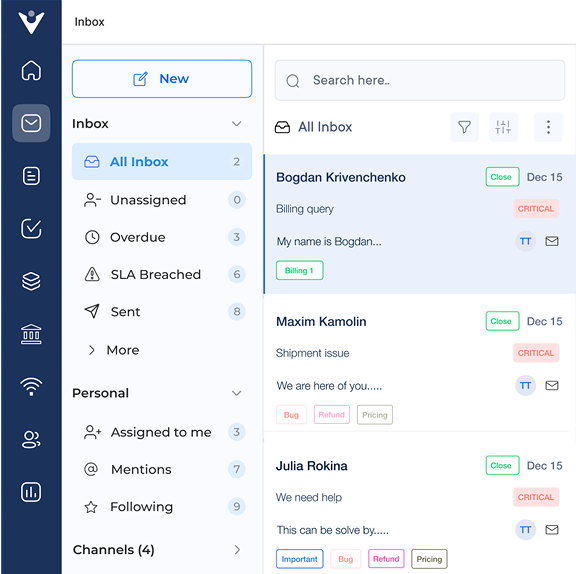
A sales inbox feature integrates email communication directly within the sales tracking platform. Sales professionals can manage all their customer interactions in one place, reducing the need to switch between multiple applications. The feature often includes features like email templates, scheduling tools and the ability to log emails automatically to the appropriate customer records.
Investing in the right sales tracking software is non-negotiable if businesses want to take their sales game to the next level.
Best sales tracking software for effective lead management

Veemo Sales is an AI-powered sales engagement and CRM platform that helps teams track deals, manage pipelines and measure sales performance. It brings sales activity, automation, and analytics into one workspace, allowing managers to see where their teams need support.
Veemo Sales helps businesses monitor leads, customer interactions and deal progress throughout the pipeline. The clear display of metrics on its dashboards helps managers identify delays, understand where opportunities are being lost and take action before deals go cold.
Key features:
Pricing: The Growth plan costs $29/user/month with 3 inboxes, 1 knowledge base and omnichannel support. The Team plan is $69/user/month with 10 inboxes, 3 knowledge bases and a support widget. The Enterprise plan is $129/user/month with unlimited inboxes, a client portal and advanced asset management. Visit Veemo’s pricing page for more details.
Robust sales tracking solution for customer engagement

Zendesk Sell is a leading sales tracking software designed to streamline and optimize the sales process. The cloud-based platform offers a comprehensive suite of tools to manage leads, track customer interactions and analyze sales performance.
Key attributes of Zendesk Sell include customizable sales pipelines, advanced reporting, email tracking and mobile accessibility. The USP is the tight integration with Zendesk’s support ecosystem, allowing for a seamless flow of information between sales and customer service teams.
Seamless sales tracking tool for Sales Activity Automation

NetSuite CRM is a comprehensive cloud-based platform that integrates customer relationship management with enterprise resource planning (ERP) functionalities. It serves as a unified solution for managing sales, marketing and customer service processes, providing real-time visibility into customer interactions.
The platform offers advanced sales force automation, marketing automation, customer support tools and robust analytics. Its USP is the seamless integration with NetSuite’s ERP system, offering end-to-end business management capabilities from lead generation to order fulfillment and financial reporting.
Comprehensive sales tracking platform for advanced reporting capabilities

FreeAgent CRM is a powerful sales tracking software designed to streamline sales processes and boost team productivity. The cloud-based platform offers a comprehensive suite of tools for managing customer relationships, tracking leads and monitoring sales performance in real-time.
Essential features of FreeAgent CRM include customizable dashboards, automated workflow management and advanced reporting capabilities. The platform’s unique selling point lies in its intuitive interface and seamless integration with popular business tools, making it easy for sales teams to use effectively.
Seamless sales tracking software for customer interaction history

HubSpot Sales Hub is a comprehensive sales software platform designed to streamline and optimize sales processes. The platform integrates seamlessly with HubSpot’s marketing and customer service hubs, providing a unified customer relationship management (CRM) solution.
HubSpot Sales Hub consists of contact management, email tracking, meeting scheduling and sales automation. Its USP lies in its user-friendly interface, powerful analytics and ability to scale with businesses of all sizes. The platform’s AI-powered tools offer predictive lead scoring and personalized content offers.

Pipedrive is a cloud-based sales tracking tool designed to streamline the sales process for businesses of all sizes. The platform offers a user-friendly interface that visualizes the sales pipeline. Teams can manage leads, track customer interactions and close deals more effectively.
The solution offers customizable pipelines, email integration, activity reminders and robust reporting tools. Its unique selling point is its intuitive, visual approach to sales management, which helps sales teams prioritize actions and focus on high-value opportunities.

Zoho CRM is a comprehensive sales tracking software designed to streamline customer relationship management. It offers a user-friendly interface accessible via web and mobile platforms. Businesses can manage leads, contacts and deals efficiently. The cloud-based solution integrates seamlessly with other Zoho applications and third-party tools.
Key attributes include contact management, sales pipeline visualization and customizable workflows. Zoho CRM’s USP is its AI-powered assistant, Zia, which provides actionable insights and automates routine tasks. The platform also offers robust reporting and analytics capabilities.

Freshsales is a comprehensive CRM and sales tracking software tailored for small businesses.
It offers an intuitive platform that combines contact management, deal tracking and communication tools in one unified interface, streamlining sales processes.
The primary capabilities of Freshsales include AI-powered lead scoring, built-in phone and email, a visual sales pipeline and customizable reporting. Its USP is the seamless integration of marketing, sales and customer support functions, providing a 360-degree view of customer interactions.

Salesdash is a cutting-edge sales tracking platform designed specifically for small businesses. The cloud-based platform offers a user-friendly interface that streamlines sales processes. Teams can manage leads, track progress and analyze performance effortlessly.
The primary attributes of Salesdash are real-time pipeline visualization, customizable reporting and seamless integration with popular CRM tools. Its USP is its AI-powered forecasting capability, which provides accurate sales predictions to help businesses make informed decisions.

Keap is a comprehensive sales and marketing automation platform designed for small businesses. The platform integrates customer relationship management (CRM), email marketing and e-commerce tools into a single interface.
The all-in-one solution streamlines sales processes and enhances customer engagement. The software offers contact management, lead scoring, automated follow-ups and customizable sales pipelines. Keap’s unique selling proposition lies in its ability to automate repetitive tasks, allowing businesses to focus on growth.

Close is a powerful CRM platform designed specifically for sales teams, offering comprehensive sales tracking capabilities. It integrates communication, lead management and analytics in one intuitive interface, streamlining the sales process from prospecting to closing deals.
Close’s key attributes are email tracking, built-in calling, pipeline management and customizable reporting. Its USP is its focus on efficiency, with automated follow-ups and a user-friendly interface that minimizes data entry, allowing salespeople to spend more time selling.

EngageBay is an all-in-one marketing, sales and customer service platform designed to streamline business operations. The platform offers robust sales tracking capabilities, making it an ideal choice for companies seeking to optimize their processes and boost revenue. The platform offers lead scoring, pipeline management and real-time analytics.
EngageBay’s unique selling proposition lies in its comprehensive suite of tools that integrate marketing automation, CRM and help desk functionalities. Businesses can manage their entire customer lifecycle from a single dashboard.
Let’s delve deeper into the essential considerations when selecting the right sales tracking solution for the business.

Begin by thoroughly evaluating the organization’s specific requirements. Consider factors such as the size of the sales team, the complexity of the sales process and the industry-specific needs. Identify pain points in the current system and determine which features would address the issues.
The effectiveness of a sales tracking solution largely depends on user adoption. Look for a platform with an intuitive, user-friendly interface that the team can quickly adapt to. A clean, well-organized dashboard and easy navigation are essential for the team. Consider solutions that offer customizable views, allowing users to tailor the interface to their preferences and workflow.
The sales tracking solution should seamlessly integrate with the existing tech stack. Check for compatibility with the current CRM, marketing automation tools, email platforms and other essential software. Robust integration capabilities ensure smooth data flow across systems, preventing data silos and improving efficiency.
Choose a solution that can be customized to fit the unique sales process and grow with the business. Look for features like custom fields, adjustable sales pipelines and the ability to create personalized reports. Ensure the platform can handle an increasing volume of data and users as the company expands, without compromising performance.
Mobile access is crucial for businesses to make an impact. Select a solution that offers a robust mobile app or responsive web design. The sales team can update information, access customer data and track their performance on the go. It enhances productivity and ensures real-time data accuracy.
Advanced reporting and analytics capabilities are essential for deriving actionable insights from the sales data. Look for a solution that offers customizable reports, data visualization tools and predictive analytics. The ability to create dashboards that display KPIs at a glance can significantly improve decision-making and strategy formulation.
Consider the level of customer support and training resources offered by the solution provider. Look for vendors that provide comprehensive onboarding, ongoing technical support and regular updates. A knowledge base, video tutorials and responsive customer service can make a significant difference in the successful implementation of the software.
Check out the key benefits of using a sales tracking platform to understand how it can transform your sales process and give your business a competitive edge.

1. Improved Sales Pipeline Visibility
One of the biggest benefits of sales tracking software is the ability to have a clear view of the sales pipeline. Sales teams can track every stage of the sales process, identify bottlenecks and prioritize leads effectively. The better visibility allows sales teams to focus on opportunities with the highest potential for conversion, leading to increased sales revenue.
2. Enhanced Sales Forecasting
Sales tracking solution provides valuable insights into past sales performance and current trends, making it easier to forecast future sales accurately. Businesses can make more informed decisions and set realistic sales targets by analyzing historical data. It not only helps in planning resources effectively but also in improving business performance.
3. Data-Driven Decision Making
Sales tracking software enables businesses to analyze a vast amount of data related to sales activities, customer interactions and revenue generation. Businesses can make data-driven decisions, optimize sales strategies and identify areas for improvement with access to the data.
4. Increased Sales Team Accountability
Sales tracking tool allows sales managers to monitor and track the performance of individual sales team members. Setting clear goals, tracking progress and providing real-time feedback helps sales teams to stay accountable to achieve their targets. It leads to a more productive and efficient sales team overall.
5. Streamlined Sales Processes
Businesses can automate repetitive tasks, standardize sales processes and ensure consistency across the sales team with sales tracking software. The feature not only saves time but also eliminates errors, reduces manual work and improves efficiency. Businesses can focus on building relationships with customers and closing deals effectively by streamlining sales processes.
6. Improved Sales Operations Efficiency
A sales tracking platform helps businesses streamline their sales operations by providing a centralized platform for managing leads, contacts and sales data. It improves communication within the sales team, reduces data silos and allows for better collaboration.
Effective sales tracking helps teams spot stalled deals, understand pipeline performance and make informed decisions before missed targets become a problem. Veemo Sales brings sales data into one place, giving teams a clear view of deal progress, team performance, and areas that need attention.
Ready to bring clarity to the sales pipeline? Explore how Veemo Sales can help teams close deals faster and hit targets consistently.
Sales tracking systems include features such as lead management, pipeline tracking, sales forecasting, analytics and integrations with CRM platforms. The systems help businesses keep track of their sales activities, identify trends and make data-driven decisions. Companies can optimize their sales processes and increase efficiency by utilizing sales tracking systems.
Sales tracking software works by collecting and organizing data on sales activities. The data can include information on leads, contacts, opportunities and closed deals. The software can then generate reports and analytics to help businesses make informed decisions about their sales strategies.
Most sales tracking solution programs are designed to be user-friendly and intuitive. They typically offer a range of features and tools that are easy to navigate. Many software providers also offer training to help businesses get up and running quickly.
Sales tracking software helps small businesses manage their sales activities, keep customer information organized and understand what drives their results. Teams can adjust their approach using reliable data instead of scattered spreadsheets or time-consuming manual updates.
Access to real-time sales data also helps teams prioritize leads, monitor progress toward targets and make informed decisions at every stage of the sales cycle. Small businesses get greater control over their sales operations while improving team productivity and building a more consistent path to growth.
Sales tracking software pricing depends on the provider, available features, and team size. Most vendors offer tiered plans with different capabilities to support teams as their requirements and operations grow.
Businesses must research different options carefully to choose a program that genuinely fits their budget and long-term growth plans without overspending.
Sales tracking software integrates with other business tools to keep data consistent across departments and reduce repetitive tasks. These connections limit manual data entry, giving sales teams more time to follow up with prospects, manage deals and focus on activities that contribute to revenue.
Common integrations include CRM systems, email marketing platforms, and accounting software. So check that the solution works with your existing tools before choosing one that fits your team’s workflow.
Grow Customer Relationships and stronger team collaboration with our range of products across the Conversational Engagement Suite.
Omnichannel Customer Support & Help Desk Software
AI Enabled Business Messaging and Chatbot Software
Sales Engagement & CRM Software
Call Center Software & Virtual Phone System
Product Marketing & Experience Platform
Customer Experience & Feedback Management Software