Lead Management

Lead Management Guide: Importance, Best Practices & Tools

Explore our lead management guide to understand its importance and the top tools to optimize the sales process. Learn how to efficiently manage leads and increase conversions.

No credit card required. Easy setup

Lead Management

Trusted by Leading Brands

Convert Prospects into Customers with Effective Lead Management

Turn prospects into loyal customers with powerful lead management strategies! Discover how to streamline your sales process, nurture leads and boost conversions with proven techniques for effective lead management.

Lead Capture

Centralize leads from a variety of sources, ensuring no potential opportunity slips through the cracks. The streamlined process enhances the team’s ability to act swiftly and maximize every opportunity to engage prospects before they lose interest.

Segmentation

Categorize leads based on specific criteria such as behavior, demographics, industry or buying intent for highly targeted sales efforts. Empower the sales teams to tailor their approach, ensuring each lead receives offers that resonate with their preferences.

Automated Nurturing

Teams can use automated workflows to engage and nurture leads with timely, personalized follow-ups. Automation reduces manual work and ensures consistent communication throughout the buyer’s journey.

Lead Scoring

Assign scores to leads based on their engagement level, behaviors and potential to convert. Let the sales team focus their attention and resources on the most promising opportunities.

Tracking & Analytics

Teams can monitor every interaction a lead has with the company, from emails opened to content downloaded, giving them a comprehensive view of lead activity. Teams can adjust tactics, identify what’s working and eventually improve the effectiveness of their lead management process.

CRM Integration

Leads are seamlessly synced with the CRM system, ensuring all data is centrally managed for easy access and real-time updates. Teams can now maintain a unified view of all customer interactions, creating a smoother and more efficient sales pipeline.

Companies face a persistent challenge: efficiently managing and converting leads into loyal customers. Inconsistent follow-ups and lack of personalization can frustrate prospects, causing them to turn to competitors. Enter the lead management process—a systematic approach to capturing, tracking and nurturing leads throughout the sales cycle.

Businesses can transform their operations, boost customer satisfaction and drive growth by implementing effective prospect management practices. Explores the benefits, process, best practices and real-world use cases to revolutionize your sales approach.

What is Lead Management?

Lead management refers to a systematic process of capturing, tracking and nurturing potential customers (leads) through the sales funnel until they become paying clients. It involves identifying, qualifying and prioritizing leads to maximize conversion rates. The teams utilize AI-powered tools to analyze conversations, extract insights and personalize interactions. Businesses can easily prioritize high-potential leads, deliver timely responses and maintain consistent engagement across multiple touchpoints.

Key objectives:

  • Lead qualification: Assess and categorize leads based on their likelihood to convert. Sales teams can focus on the most promising prospects.
  • Nurturing: Develop and implement strategies to maintain relationships with leads who aren’t ready to buy. It keeps them engaged until they’re prepared to make a purchase.
  • Conversion optimization: Streamline the process of turning leads into customers by identifying and addressing bottlenecks in the sales funnel.
  • Data-driven decision-making: Analyze lead data to inform marketing and sales strategies, improving performance.
  • Customer relationship management: Enhance long-term relationships with leads and customers to encourage repeat business.

Importance of Lead Management Strategy

Let us explore why an effective lead management process is essential for achieving sales success and how it can transform your sales strategy.

Importance of Lead Management

1. Improved Lead Quality
Lead management systems help businesses qualify and prioritize leads more effectively. Companies can focus their efforts on the most promising prospects by scoring leads based on criteria like engagement level, demographics and behavior. The system results in higher-quality leads being passed to the sales team.

2. Enhanced Customer Understanding
Effective prospect management involves tracking interactions across multiple touchpoints. It provides valuable insights into customer preferences, pain points and buying behaviors. The comprehensive view allows businesses to tailor their approach, creating more personalized experiences for potential customers. Better understanding leads to more effective communication and stronger customer relationships.

3. Increased Conversion Rates
Lead management systems help guide prospects through the sales funnel more effectively by nurturing leads through personalized content and timely follow-ups. It keeps leads warm and moves them closer to a purchasing decision. Businesses often see significant improvements in conversion rates, turning more leads into paying customers.

4. Streamlined Sales Process
Prospect management automates many time-consuming tasks, such as lead scoring, follow-up scheduling and content delivery. The automation frees up sales and marketing teams to focus on high-value activities like building relationships. The streamlined process reduces manual errors, ensures consistent follow-up and helps teams work more efficiently.

5. Better ROI on Marketing Efforts
Businesses can track the effectiveness of their marketing campaigns more accurately with robust lead management services. Companies can identify which channels and tactics are generating the most valuable leads by linking leads to specific marketing initiatives. The insight allows for more informed decision-making in allocating marketing budgets, resulting in a higher return on investment for marketing efforts.

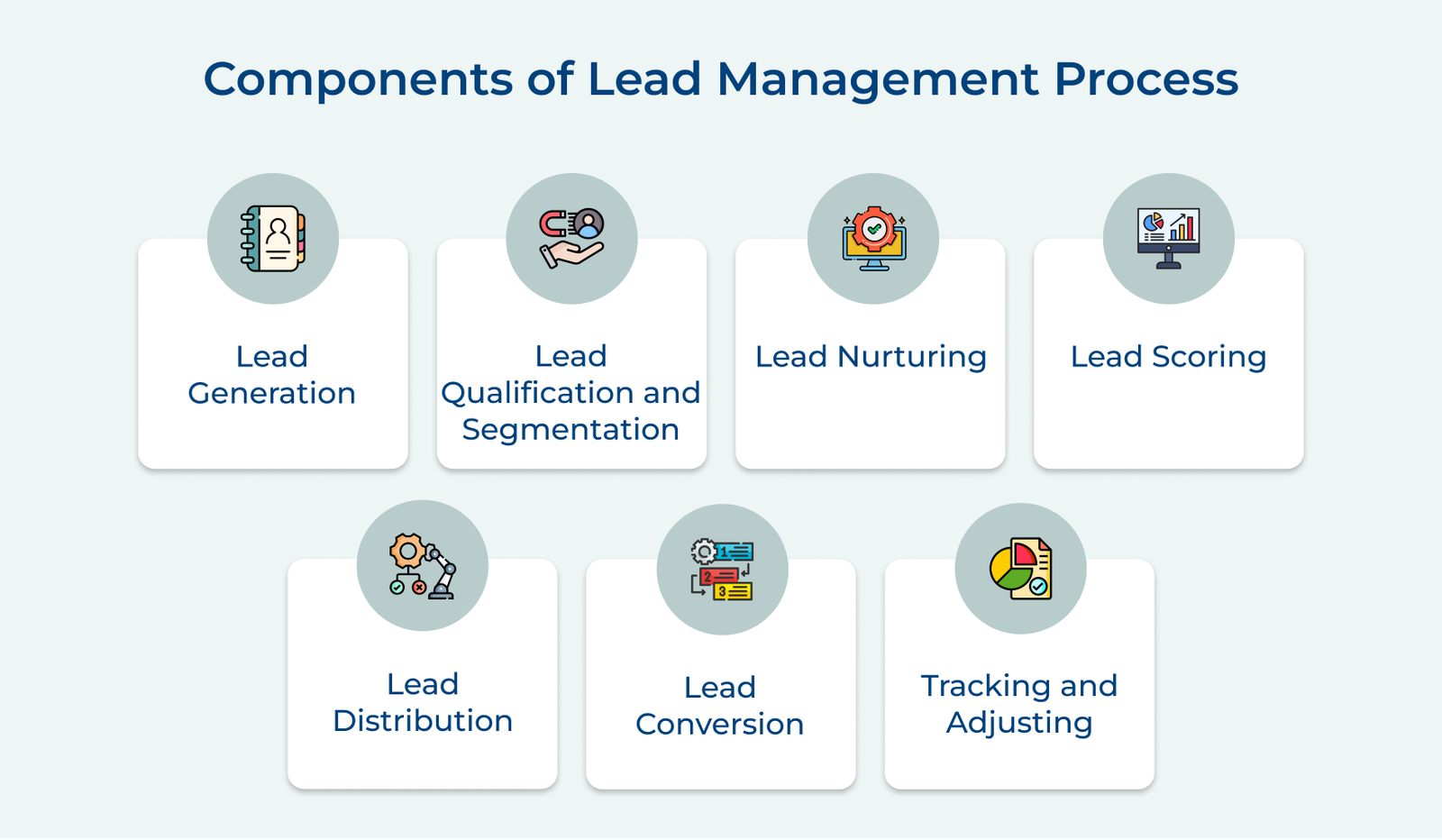
7 Key Components of Lead Management Process

Understanding the key components that form the foundation of an effective lead management process is crucial.

Components of Lead Management Process

1. Lead Generation

Lead generation involves attracting potential customers to the business through various marketing channels and initiatives. Effective lead-generation strategies may include content marketing, social media campaigns, SEO, pay-per-click advertising and email marketing.

The goal is to capture the interest of the target audience and encourage them to provide their contact information, usually in exchange for valuable content. The initial interaction marks the beginning of the lead management journey, setting the stage for future engagement and potential conversion.

2. Lead Qualification and Segmentation

Lead qualification and segmentation follow closely behind generation, serving as a vital filter to ensure efficient resource allocation. It involves evaluating leads based on predetermined criteria to determine their likelihood of becoming customers. Qualification may consider factors such as budget, authority, need and timeline (often referred to as BANT criteria).

Segmentation involves categorizing leads into distinct groups based on shared characteristics, behaviors, or preferences. Businesses can focus their resources on the most promising prospects by effectively qualifying and segmenting leads.

3. Lead Nurturing

The component involves delivering relevant, valuable content and information to leads at the right time, guiding them toward a purchase decision. Nurturing campaigns often utilize email marketing, personalized content and targeted messaging to address pain points.

The goal is to maintain engagement, build trust and position the brand as the go-to solution when the lead is ready to make a purchase. Effective lead nurturing can significantly improve conversion rates and shorten sales cycles.

4. Lead Scoring

The process involves assigning numerical values to various lead attributes, such as demographic information, engagement with marketing materials and website interactions. The resulting score provides a quantitative measure of a lead’s quality and buying intent.

Sales teams can focus their efforts on the most promising leads, increasing efficiency. Lead scoring models need regular review and adjustment based on real-world results to accurately reflect high-value lead characteristics for the business.

5. Lead Distribution

Lead distribution is the process of assigning qualified leads to the appropriate sales representatives or teams. An effective distribution system ensures that leads are quickly routed to the right person based on factors such as expertise, territory, or workload. The component is crucial for maintaining a smooth transition from marketing to sales and maximizing the chances of conversion.

Automated lead distribution systems can significantly improve response times and ensure fair allocation of leads among sales team members. The goal is to get the right leads to the right salespeople at the right time, facilitating prompt follow-up.

6. Lead Conversion

Converting leads into customers is the ultimate goal of the lead management process. The stage focuses on moving qualified leads through the final stages of the sales funnel and closing deals. Successful conversion often requires a combination of personalized communication, addressing customer needs and overcoming objections.

Sales teams may employ various techniques such as product demonstrations, tailored proposals and negotiation strategies to seal the deal. It’s important to note that the groundwork is laid in earlier stages of the client management process – particularly in lead nurturing and scoring.

7. Tracking and Adjusting

Tracking and adjusting is the final, ongoing component that ensures the continuous improvement of the lead management process. It involves monitoring KPIs such as conversion rates, lead quality and return on investment for various marketing channels.

Regular adjustments to lead scoring models, nurturing campaigns and distribution processes are essential to adapt to changing market conditions. The iterative approach allows organizations to refine their client management process over time.

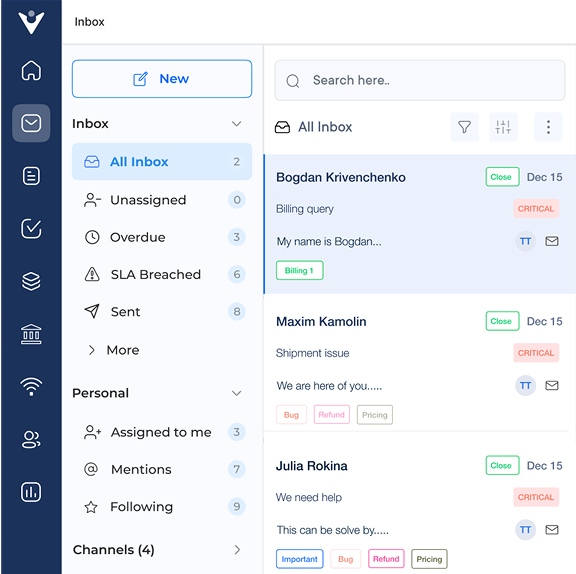
Omnichannel Helpdesk and Ticketing System

Turn Every Support Issues into Personalized Conversations with Veemo’s Omnichannel Helpdesk and Ticketing System. Make customer happiness your top priority with a digital first customer experience (CX) approach

Radically new solutions for data

Sed ut perspiciatis unde omnis iste natus error sit voluptatem accusantium doloremque laudantium, totam rem aperiam, eaque ipsa quae ab illo inventore veritatis et quasi architecto beatae vitae dicta sunt explicabo.

Radically new solutions for data

Sed ut perspiciatis unde omnis iste natus error sit voluptatem accusantium doloremque laudantium, totam rem aperiam, eaque ipsa quae ab illo inventore veritatis et quasi architecto beatae vitae dicta sunt explicabo.

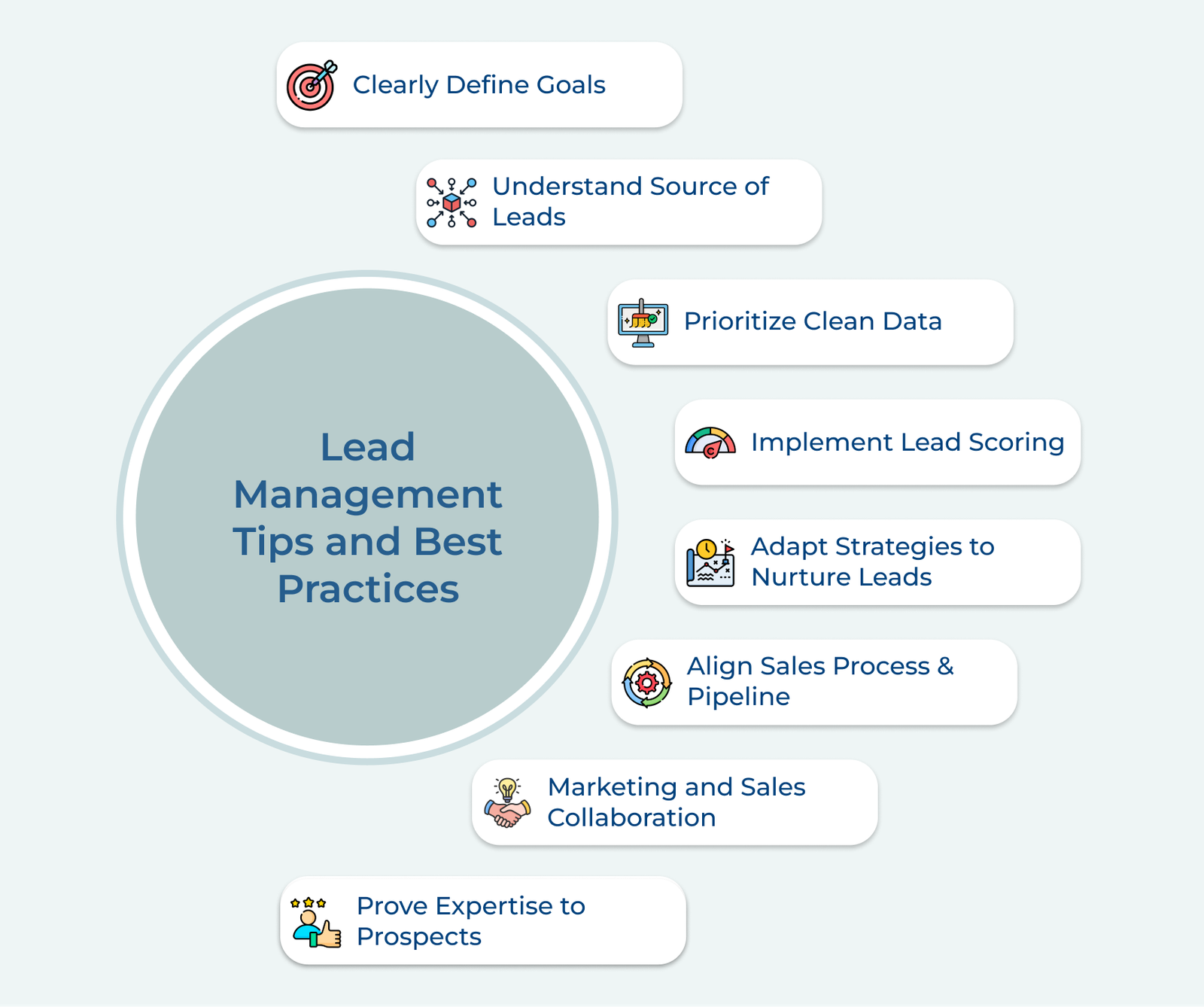
9 Effective Lead Management Best Practices

Implementing effective lead management best practices can significantly enhance your ability to capture, nurture and convert leads into loyal customers.

Lead Management Tips and Best Practices

1. Clearly Define the Business Goals

Clearly defining the business goals is a crucial lead management best practice. It provides direction, focuses efforts and enables measurement of success. Businesses create a clear roadmap for the client management strategy by setting specific.

They can track progress and make data-driven decisions. Aligning the goals with the business strategy ensures that the efforts contribute directly to the company’s growth and success.

Pro tips:

  • Use the SMART framework (Specific, Measurable, Achievable, Relevant, Time-bound) to set clear, actionable objectives for the client management process.
  • Regularly adjust the goals based on performance data and changing market conditions to maintain relevance.
  • Communicate the goals clearly to all team members involved in the lead management process. It ensures everyone understands their role in achieving the objectives.

2. Understand the Source of the Leads

Understanding the source of the leads is a crucial best practice in client management.
It involves identifying the various channels through which potential customers discover and engage with the business. The channels may include organic search, paid advertising, social media, email marketing, referrals and offline events.

Let’s assume that if businesses find that leads from social media campaigns convert at a higher rate, they might allocate more budget to the initiatives. Conversely, if leads from a particular paid advertising platform consistently underperform, they may need to reassess their strategy or explore alternative channels.

Pro tips:

  • Implement UTM parameters in all digital marketing campaigns to accurately track lead sources.
  • Use a CRM system to centralize lead data and automate source attribution for comprehensive analysis.
  • Conduct regular performance reviews of each lead source, adjusting the marketing mix accordingly to maximize ROI.

3. Prioritize Clean Data

Prioritizing clean data is a critical lead management best practice that ensures accuracy, efficiency and effectiveness in the sales efforts. Businesses can make more informed decisions, improve targeting and enhance client management performance by maintaining high-quality data.

Implementing data validation processes is essential to verify the accuracy and completeness of lead information at the point of entry. It may include using form validation, email verification tools and data standardization techniques. Regularly removing duplicate or outdated entries helps maintain a streamlined database, preventing confusion and wasted resources on irrelevant leads.

Pro tips:

  • Establish a regular data cleansing schedule to systematically review and update the lead database.
  • Implement automated data enrichment tools to supplement and verify lead information from reliable third-party sources.
  • Train the team on data entry best practices and create a company-wide data governance policy to ensure consistency.

4. Implement Successful Lead Scoring

Implementing successful lead scoring is a crucial lead management best practice that helps prioritize and qualify potential customers. Define criteria for lead quality based on factors like demographics, behavior and engagement. Consider attributes such as company size, industry, job title, website visits, content downloads and email interactions.

Assign point values to the different lead attributes, weighted according to their importance in predicting sales readiness. Businesses can create a robust lead-scoring system that helps the team focus on the most promising leads by following the steps.

Pro tips:

  • Collaborate with sales and marketing teams to align scoring criteria with business goals.
  • Regularly adjust the scoring model based on performance data and changing market conditions.
  • Integrate the lead scoring system with the CRM and marketing automation tools for seamless workflow.

5. Adapt Key Strategies to Nurture the Leads

Lead nurturing is a critical aspect of lead management that focuses on building relationships with potential customers throughout their buying journey. Develop personalized content tailored to different lead segments based on their interests and position in the sales funnel to effectively nurture leads.

Create automated nurturing workflows to deliver timely and targeted communications to leads. The workflows can include email sequences, social media interactions and personalized recommendations based on lead actions. Automation helps maintain consistent communication without overwhelming the team’s resources.

Pro tips:

  • Use lead scoring to prioritize high-potential leads and customize nurturing efforts.
  • Implement A/B testing for nurturing content to optimize engagement and conversion rates.
  • Regularly analyze nurturing campaign metrics to refine strategies and improve results.

6. Align the Sales Process with the Pipeline

Aligning the sales process with the pipeline is crucial for effective lead management. Map out the stages of the sales, from initial contact to closing the deal. Define clear handoff points between marketing and sales to ensure a smooth transition of leads.

Businesses create a more efficient and effective prospect management system by aligning their sales process with their pipeline. The alignment enables better resource allocation, improves communication between departments and leads to higher conversion rates.

Pro tips:

  • Use CRM software to track leads through each stage of the pipeline
  • Implement lead scoring to prioritize high-potential prospects
  • Regularly optimize the process based on data and team feedback

7. Enhance Collaboration Between Marketing and Sales

Enhance collaboration between marketing and sales as lead management best practice by establishing regular communication channels. The synergy enhances the customer journey and improves business performance. Regular meetings, shared dashboards and collaborative tools facilitate open dialogue exchange between teams.

Developing a common language for lead qualification and shared KPIs aligns both departments’ efforts toward unified objectives. The alignment ensures a seamless handoff of qualified leads and a more efficient sales process.

Pro tips:

  • Create a joint task force with representatives from both teams to oversee integration efforts.
  • Implement a shared CRM system to track lead progress and facilitate data-driven decision-making.
  • Establish a feedback loop for sales to provide insights on lead quality, helping marketing refine its strategies.

8. Prove the Expertise to the Prospects

Proving the expertise to prospects is crucial for effective lead management. Businesses build trust, making prospects more likely to engage with the brand by demonstrating their knowledge and capabilities.

Create valuable, industry-specific content that addresses the target audience’s pain points and challenges. Include blog posts, whitepapers, or videos that offer insights and solutions. Offer educational resources and thought leadership through webinars, e-books, or workshops to position the business as an authority in the field.

Pro tips:

  • Develop a content calendar to consistently produce and distribute relevant, high-quality content.
  • Implement a customer feedback system to gather testimonials and case study material.
  • Leverage social media and email marketing to promote educational resources.

9. Evaluate the Right Software for the Lead Management

Choosing the right software for lead management is crucial for business success. It streamlines the process of capturing, nurturing and converting leads, improving sales efficiency. Effective prospect management software centralizes data, automates follow-ups, and provides valuable insights into lead behavior.

Use cases include tracking lead sources, prioritizing high-potential leads and personalizing communication. The software can significantly impact sales performance, customer satisfaction and revenue growth.

Actionable tips:

  • Define the specific lead management needs and goals before selecting software.
  • Ensure the chosen software integrates seamlessly with the existing CRM and marketing tools.
  • Train the team thoroughly on the new system and establish clear processes for consistent usage.
The role of AI and Automation in Sales Engagement

Businesses can create more meaningful interactions, streamline workflows and achieve consistent, scalable growth. Let’s dive into how these tools are reshaping the sales engagement landscape.

Role of AI and Automation in Sales Engagement

1. Intelligent Lead Scoring and Prioritization
AI algorithms analyze vast amounts of data to score and prioritize leads based on their conversion likelihood. AI can identify high-potential leads by considering factors such as demographics, behavior, engagement history and purchase intent.

2. Personalized Content and Recommendations
AI-driven systems can analyze individual lead preferences, behaviors and interactions to generate personalized product recommendations. The customization enhances the relevance of communications, improving engagement rates and nurturing leads more effectively through the sales funnel.

3. Automated Multichannel Communication
Automation tools can execute communication across multiple channels, including email, social media, SMS and chatbots. The systems can trigger timely, relevant messages based on predefined rules or lead actions. It ensures consistent and timely engagement without overwhelming the sales team.

4. Predictive Analytics for Lead Behavior
AI can analyze historical data and current trends to predict lead behavior, such as the likelihood of conversion, potential churn, or optimal times for engagement. The foresight allows businesses to proactively address lead needs and concerns, improving the chances of successful conversion.

5. Chatbots and Virtual Assistants for Instant Engagement
AI-powered chatbots and virtual assistants provide instant, 24/7 engagement with leads.
The tools can answer FAQs, qualify leads, schedule appointments and even initiate the sales process. They enhance the lead experience while freeing up human resources for more complex interactions by providing immediate responses and basic support.

5 Best Lead Management Software

Choosing the right lead management software can make or break your sales process. Check out the best lead management software options, each designed to help you stay organized, close deals faster and manage leads more effectively.

1. Veemo Sales

Best lead management software for enhanced customer journey

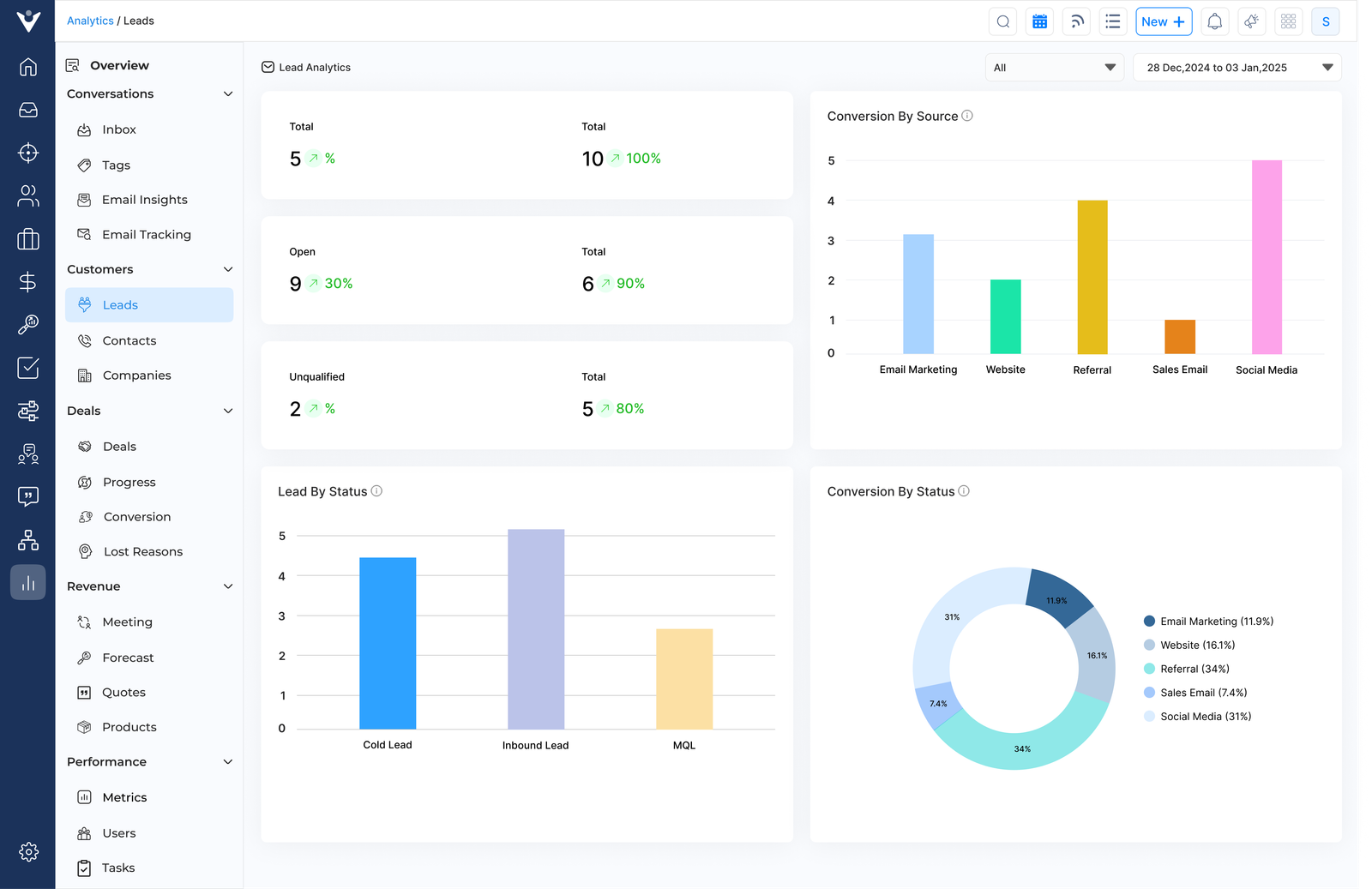
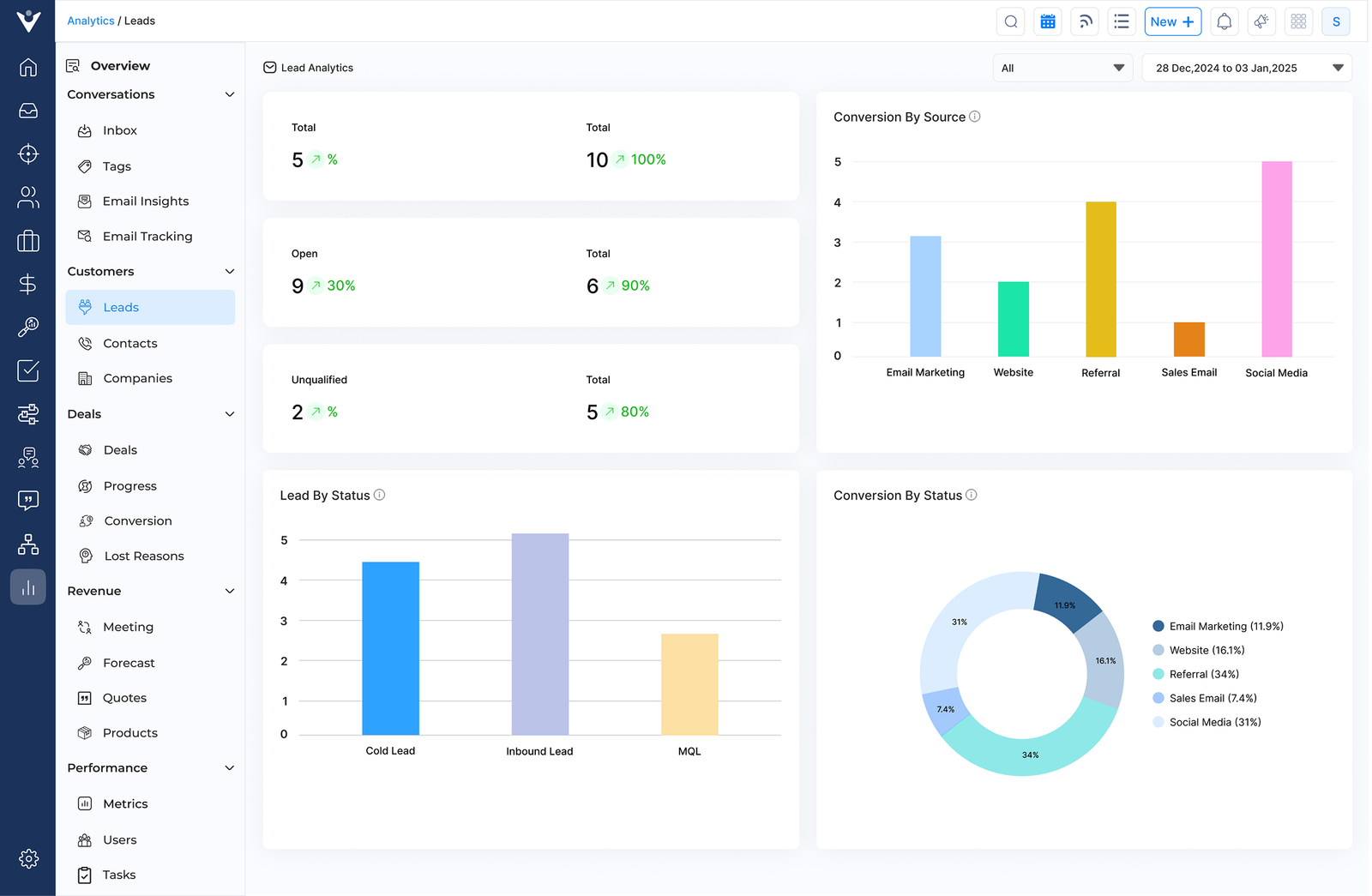
Veemo Sales Analytics Leads

Veemo Sales is an omnichannel CRM software solution with robust lead management capabilities, designed to streamline sales processes and enhance customer relationships. The platform offers a unified approach to managing leads, contacts and sales opportunities. Veemo Sales provides sales teams with the tools they need to effectively capture, nurture and convert prospects into loyal customers.

Key features:

  • Automated lead capture and scoring: Veemo Sales employs AI-driven algorithms to automatically capture leads from various sources. Scores are assigned based on customizable criteria, helping teams prioritize high-potential prospects.
  • Customizable sales pipeline visualization: The platform offers a visual representation of the sales pipeline. Users can easily track deal progress, identify bottlenecks and forecast revenue with greater accuracy.
  • Integrated email marketing and communication tools: Veemo Sales includes built-in email marketing capabilities and communication tracking. It enables seamless execution and monitoring of lead nurturing campaigns directly within the CRM.
  • Advanced reporting and analytics dashboard: The software provides comprehensive reporting features and an intuitive analytics dashboard. It offers real-time insights into sales performance, lead conversion rates and team productivity.
  • Mobile accessibility and cross-platform synchronization: Veemo Sales offers full mobile functionality and real-time synchronization across devices. Sales teams can access and update crucial information on the go.

Pricing: There are four different plans ranging from $29 to $129. Visit Veemo’s pricing page for more insights.

2. Hubspot

HubSpot, as a lead management software, offers a comprehensive platform that integrates marketing, sales and customer service functionalities. It provides tools for capturing, nurturing and converting leads throughout the entire customer lifecycle.

HubSpot consists of an intuitive interface, robust automation capabilities and detailed analytics. The unique selling proposition lies in its all-in-one approach, offering seamless marketing automation and customer service tools.

3. Zendesk

Zendesk, primarily known for its customer service solutions, also offers robust lead management capabilities through its Zendesk Sell platform. The versatile software integrates seamlessly with Zendesk’s suite of products.

The essential attributes of Zendesk Sell include automated lead scoring, customizable sales pipelines and advanced analytics. The USP lies in its ability to unify sales and support data, offering a 360-degree view of customer interactions. The integration enables businesses to deliver personalized experiences throughout the entire customer journey.

4. Pipedrive

Pipedrive is a user-friendly prospect management software designed to streamline sales processes and boost productivity. The platform offers a visually intuitive interface that allows sales teams to track and manage leads through customizable pipelines.

The solution offers automated lead scoring, email integration and robust reporting tools. The unique selling proposition lies in its simplicity and focus on activity-based selling, encouraging users to take consistent action on leads. Pipedrive’s mobile app and AI-powered sales assistant further enhance its value for sales professionals on the go.

5. Zoho

Zoho offers a comprehensive solution for businesses to capture, nurture and convert leads efficiently. The platform integrates seamlessly with various marketing channels, providing a centralized hub for managing leads. Zoho’s prospect management tools are part of its broader CRM ecosystem.

Zoho’s key attributes are automated lead scoring, customizable workflows and advanced analytics. The unique selling proposition lies in its versatility and scalability, catering to businesses of all sizes. Zoho stands out for its user-friendly interface, extensive integration capabilities and affordable pricing. It makes it an attractive option for companies seeking a robust yet accessible lead management solution.

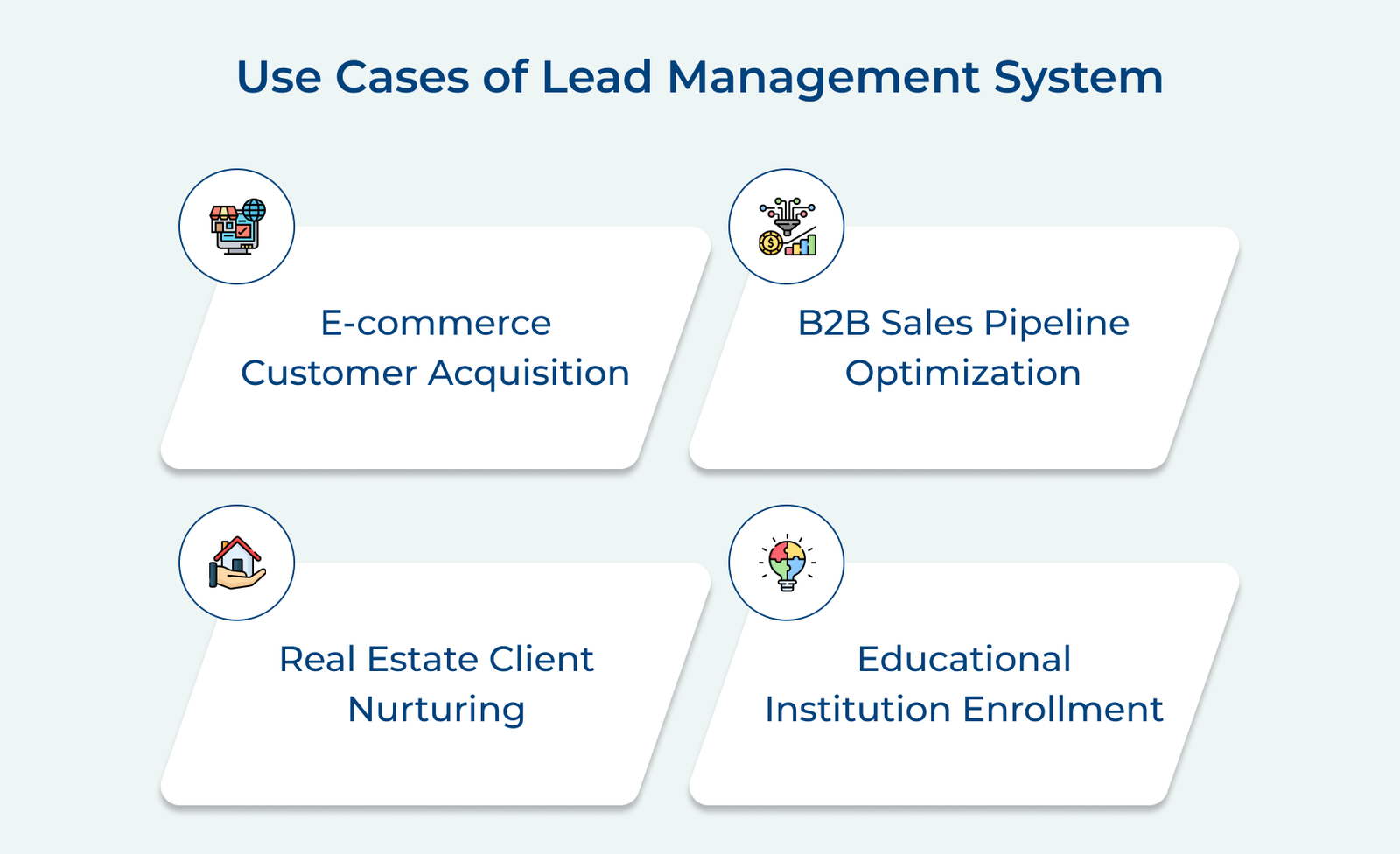
Use Cases of Lead Management System

Let us go through the practical use cases of a lead management system to understand how it can be leveraged to optimize sales efforts and achieve your business goals.

Use Cases of Lead Management System

1. E-commerce Customer Acquisition
Lead management systems help e-commerce businesses capture and nurture potential customers. Businesses can create targeted campaigns by tracking visitor behavior on the website, such as products viewed or items left in shopping carts. Prospect management systems enable personalized follow-ups, like sending tailored product recommendations or abandoned cart reminders.

2. B2B Sales Pipeline Optimization
Lead management is essential for maintaining a healthy sales pipeline for B2B companies with complex sales cycles. The system helps qualify leads based on criteria like company size, industry and engagement level. Sales teams can then focus on high-potential leads, scheduling demos, or sending relevant case studies at the right time.

3. Real Estate Client Nurturing
Real estate agents use prospect management to keep track of potential buyers and sellers over extended periods. The system helps categorize leads based on their readiness to transact, preferred property types and budget. Automated nurturing campaigns can keep leads engaged with market updates, new listings, or investment opportunities.

4. Educational Institution Enrollment
Educational institutions leverage lead management to guide prospective students through the application and enrollment process. Automated workflows can send program information, application deadlines and financial aid details. The personalized approach helps institutions increase enrollment rates and attract the right students for their programs.

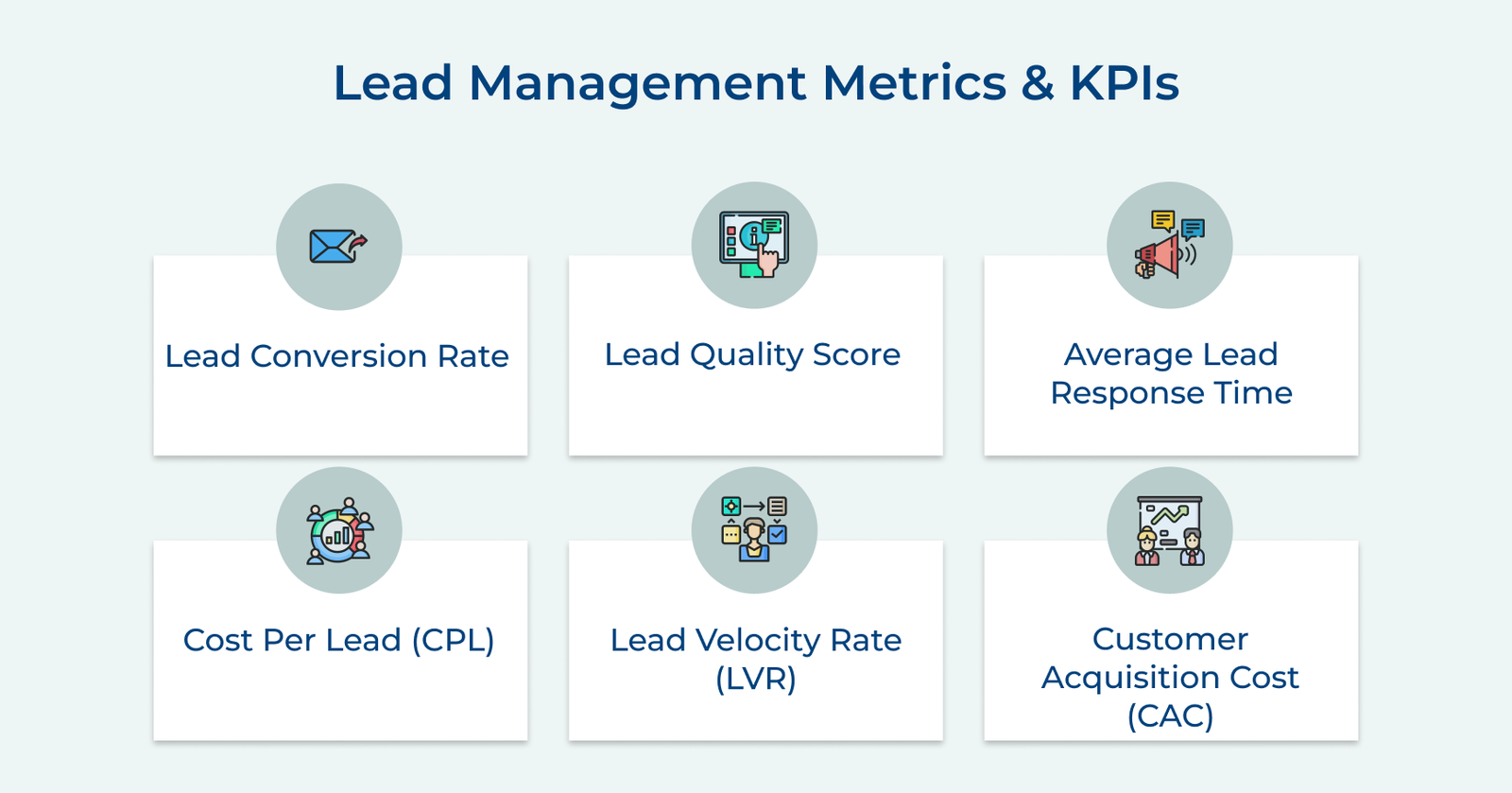
Lead Management Metrics & KPIs

Explore the most important lead management metrics to track and how they can help you refine the approach to achieve better sales outcomes.

Lead Management Metrics KPIs

1. Lead Conversion Rate
The fundamental metric measures the percentage of leads that convert into customers. Calculate it by dividing the number of converted leads by the total number of leads in a given period. A higher conversion rate indicates effective lead nurturing and sales processes.
Tracking the metric over time helps identify trends and the impact of changes in the lead management strategy.

2. Lead Quality Score
Assign a quality score to leads based on demographics, behavior, engagement level, and conversion likelihood. The metric helps prioritize high-potential leads and allocate resources effectively. Monitor the average quality score of the leads and how it correlates with conversion rates to refine the lead scoring model continuously.

3. Average Lead Response Time
Measure the time it takes for the team to respond to new leads. Faster response times often correlate with higher conversion rates. Track the metric for different lead sources and team members to identify bottlenecks.

4. Cost Per Lead (CPL)
Calculate the total cost of the lead generation efforts divided by the number of leads acquired. The metric helps evaluate the efficiency of the marketing spend across different channels. Compare CPL against the lifetime value of customers to ensure a positive return on investment.

5. Lead Velocity Rate (LVR)
The metric measures the month-over-month growth in qualified leads. Calculate it by comparing the number of qualified leads in the current month to the previous month. A consistently positive LVR indicates healthy business growth and effective lead-generation strategies.

6. Customer Acquisition Cost (CAC)
While similar to CPL, CAC takes into account all costs associated with converting a lead into a customer, including sales and marketing expenses. Calculate it by dividing the total sales and marketing spend by the number of new customers acquired in a given period. Compare CAC against customer lifetime value to ensure profitability.

Streamline the Sales Process with Veemo’s Lead Management System

Streamlining the sales process with a lead management solution is essential for modern businesses seeking to maximize efficiency and growth. The approach centralizes lead information, automates follow-ups and provides insights into customer behavior.

A robust client management system enhances collaboration between marketing and sales. It ensures consistent communication with prospects and helps create a personalized experience. Implementing such a solution is not just beneficial—it’s necessary to stay ahead, make data-driven decisions and drive revenue growth. Without it, businesses risk falling behind more agile competitors.

FAQs about Lead Management

Effective lead management allows companies to streamline their sales process, improve conversion rates and maximize ROI. Companies can target their efforts toward prospects who are most likely to convert by properly nurturing and qualifying leads. Effective prospect management enables companies to build stronger relationships with customers, increasing loyalty and repeat business.

Choosing a lead management system involves considering factors like budget, features, integration capabilities and scalability. Evaluate the needs, research available options and request demos to find a system that aligns with the objectives. Look for user-friendly interfaces, customization options and robust reporting features to effectively track leads.

Start by defining the sales process, determining key lead stages and selecting a CRM software. Customize fields, set up lead scoring and create automated workflows. Ensure integration with other tools for data sync. Train team members on system usage. Regularly optimize its performance for effective lead tracking and conversion.

Lead management functions include capturing leads, tracking their activities, qualifying them based on criteria, nurturing them with relevant content and passing them to sales teams. The process helps businesses prioritize potential customers, improving conversion rates and sales performance. Efficient prospect management is essential for maximizing ROI and driving business growth.

Examples of lead management include lead scoring, lead nurturing and CRM integration. Lead scoring involves assigning a value to leads based on their behavior and engagement. Lead nurturing involves building relationships with leads through personalized and targeted communication. CRM integration allows businesses to track leads throughout the sales funnel and ensure effective follow-up.