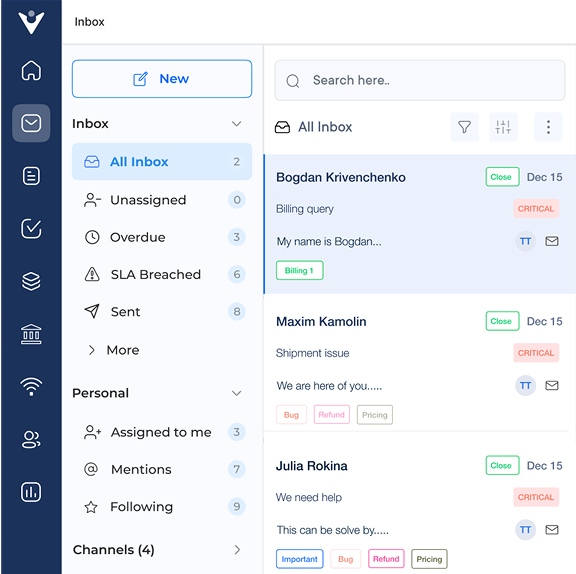
Veemo Sales is a comprehensive CRM and sales management platform that helps businesses organize their sales processes and manage customer interactions in one place.
The sales managers can track team performance, monitor deal progress and identify gaps. While the reps get the tools and structure they need to move deals forward. The platform supports growing teams and established sales organizations as their sales operations become more complex.
Key features:
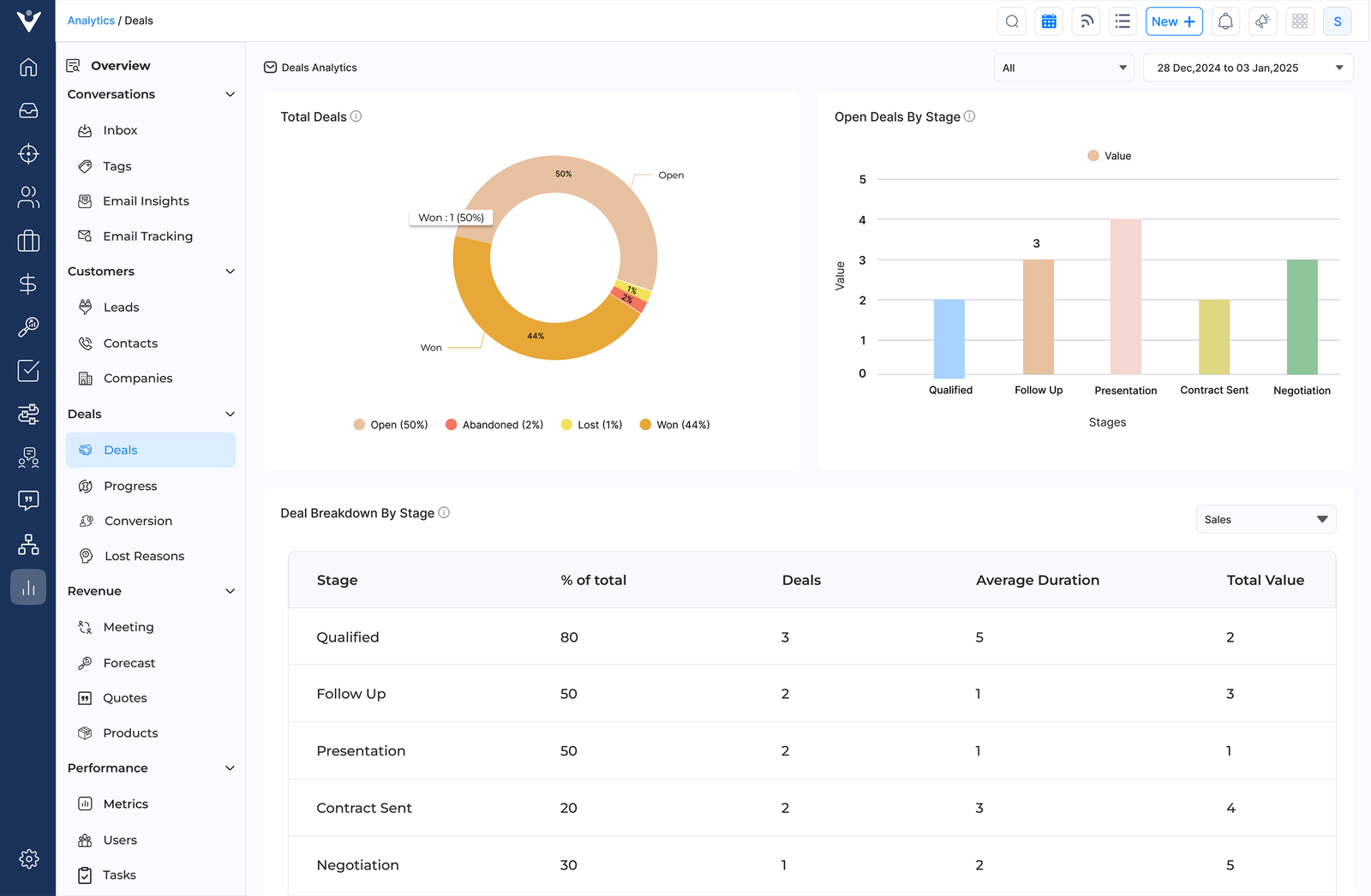
- Pipeline visualization: Veemo Sales offers a customizable pipeline view that allows managers to track deals at every stage and identify bottlenecks quickly.
- AI-powered lead scoring: The software utilizes artificial intelligence to analyze prospect data and assign priority scores. It helps sales reps focus on the most promising leads.
- Automated task management: Veemo Sales automates routine tasks and follow-ups, ensuring no opportunity falls through the cracks.
- Real-time performance analytics: The platform provides detailed, real-time insights into individual and team performance. It enables data-driven decision-making and targeted coaching.
Pricing: There are four different plans ranging from $29 to $129. Visit Veemo’s pricing page for more insights.
HubSpot Sales Hub
HubSpot Sales Hub is a comprehensive CRM platform designed to streamline sales processes and boost team productivity. The platform offers a centralized database for managing customer interactions, pipeline tracking and sales forecasting.
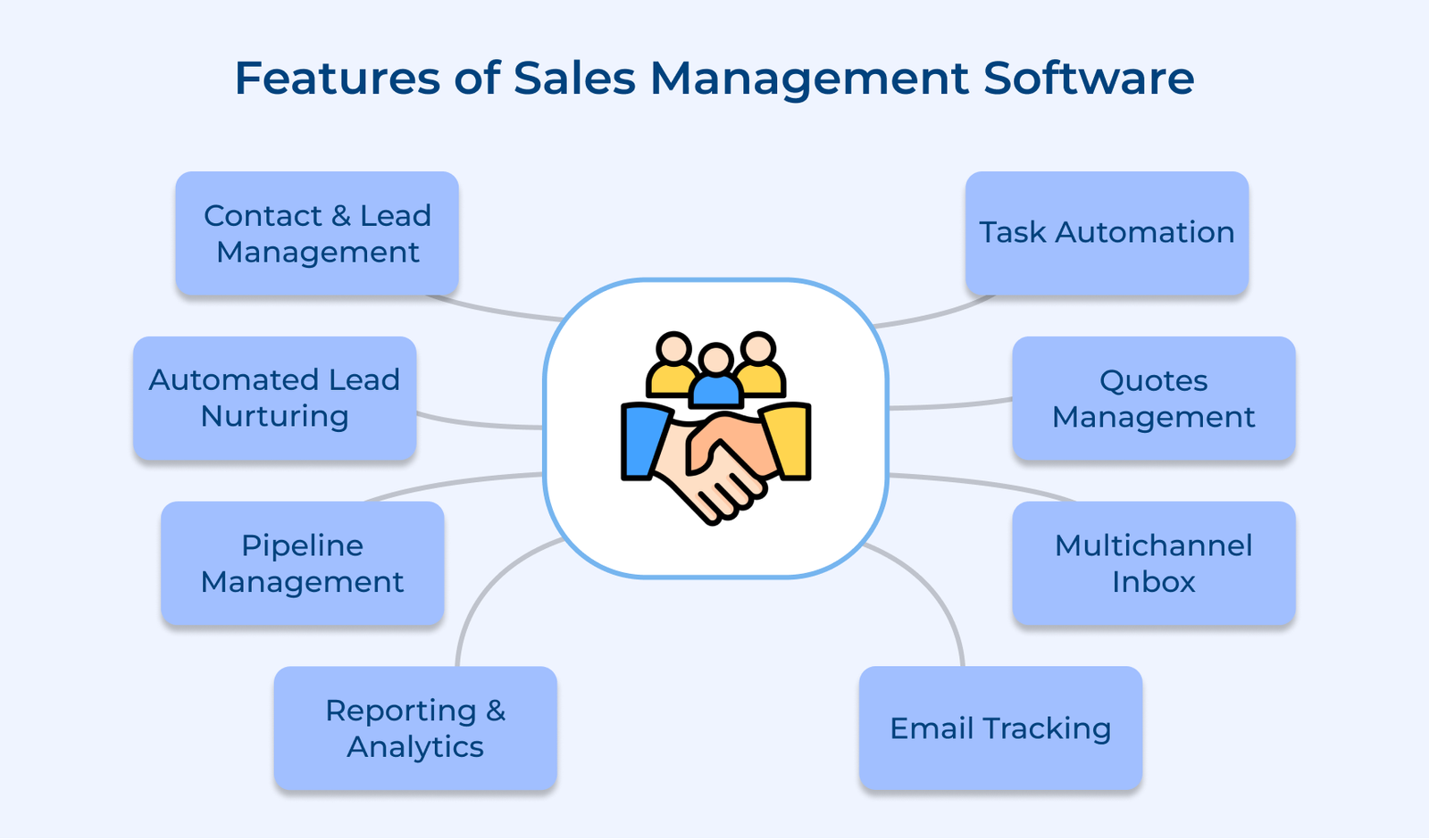
Contact and deal management, email tracking, meeting scheduling and customizable dashboards are the primary features of the software. Sales Hub also provides tools for creating quotes, automating follow-ups and analyzing team performance. The integration capabilities with other HubSpot products ensure seamless alignment between marketing, sales and customer service efforts.
Pipedrive
Pipedrive is a user-friendly sales management software designed to streamline the sales process for businesses of all sizes. The software offers a visual pipeline view, allowing sales teams to track deals and prioritize activities effectively.
Key features of Pipedrive include customizable sales pipelines, contact management, email integration and activity tracking. It also provides reporting and forecasting tools, mobile apps for on-the-go access and integrations with various third-party applications. Sales teams can easily manage leads, automate tasks and close deals more efficiently.
Zoho CRM
Zoho CRM is a sales operation software designed to streamline and optimize the sales process for businesses of all sizes. The software offers a centralized platform for managing customer relationships, tracking leads and monitoring sales activities. It enables teams to work more efficiently and collaboratively.
The notable capabilities of Zoho CRM include lead management, pipeline visualization, email integration, task automation and customizable dashboards. It also provides tools for forecasting, territory management and performance analytics.
Freshsales
Freshsales is a CRM platform designed to streamline sales processes. It offers a user-friendly interface that integrates essential sales tools and analytics in one centralized system. Freshsales’ unique selling point is its AI-powered assistant, Freddy AI.
Amongst the standout features of Freshsales are deal management, built-in phone, AI-powered lead scoring and customizable sales pipelines. The platform also provides automation capabilities, robust reporting and mobile accessibility for on-the-go sales teams.