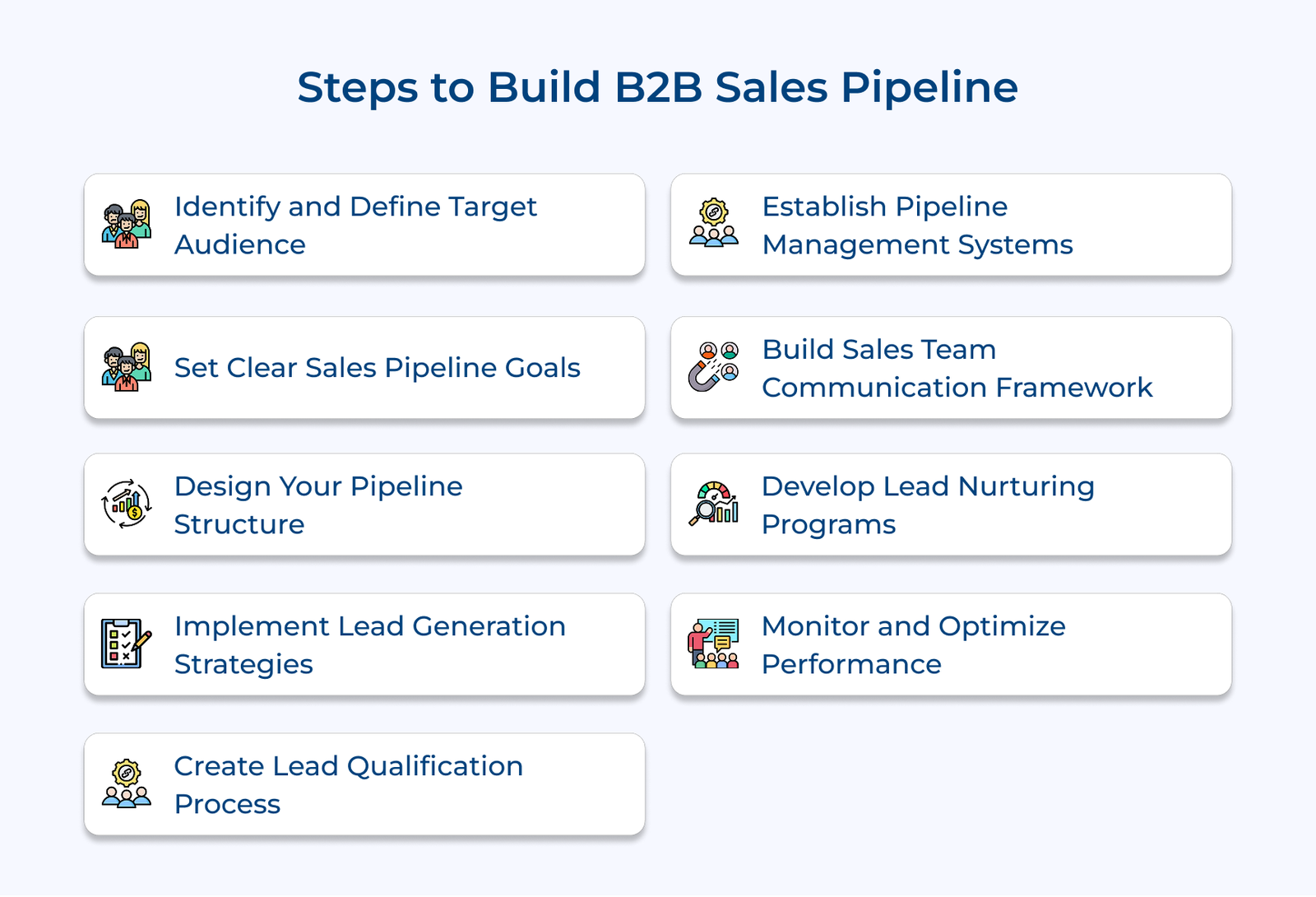
1. Identify and Define Target Audience
Defining your target audience is the cornerstone of a successful B2B sales pipeline. Teams can optimize resources and craft messages that resonate with decision-makers by focusing on prospects most likely to convert.
Start by analyzing existing successful customers to identify common traits like company size, industry and needs. It forms the ideal customer profile (ICP) that guides prospecting efforts. Conduct competitive analysis to uncover market gaps and differentiate your offerings.
Best practices:
- Regularly review and update customer profiles to stay aligned with market shifts.
- Tailor engagement strategies to specific roles within target companies.
2. Set Clear Sales Pipeline Goals
Setting clear, measurable goals provides a focus for sales teams, guiding their efforts and optimizing resource allocation. Revenue targets form the foundation, with specific objectives cascading to individual reps. Teams set achievable yet motivating revenue goals by analyzing past performance and market trends.
Teams break down the revenue goals into conversion rates as well as timeline milestones for each pipeline stage, such as lead generation, qualification and deal closure times.
Pro tips:
- Regularly review and adjust goals based on actual performance data.
- Use visual dashboards to track progress and enhance transparency across the organization.
3. Design Your Pipeline Structure Framework
A well-structured pipeline provides a clear roadmap, ensuring consistency and effective tracking as prospects move through the sales journey. Starting with mapping customer stages, from awareness to purchase, teams identify key touchpoints and decision milestones, aligning the process with buyer behavior.
Next, set clear criteria for stage transitions and define actions needed at each stage. It includes creating checklists and guidelines to help sales reps know when a prospect is ready to advance.
Actionable tips:
- Use visual process maps to illustrate stage progression and share them with the sales team.
- Regularly review the pipeline to stay aligned with evolving customer behaviors.
4. Implement Lead Generation Strategies
Effective lead generation fuels the pipeline with high-quality prospects. A multi-channel approach ensures a steady flow of potential customers while reducing reliance on any single source, boosting pipeline stability.
Start by launching coordinated marketing campaigns across platforms like social media, email and industry events with tailored messaging for each. Content marketing plays a key role, offering valuable resources like whitepapers, case studies and educational content. Website optimization with clear calls-to-action then guides visitors to meaningful engagement.
Best practices:
- Create channel-specific content calendars aligned with buyer personas.
- Use A/B testing for landing pages and lead capture forms to enhance conversions.
5. Create a Lead Qualification Process
Lead qualification streamlines the sales process by focusing efforts on the most promising prospects, ensuring resources are allocated efficiently and maximizing return on investment.
Start by creating a scoring system based on key indicators like budget, authority, urgency and fit. The standardized approach ensures consistency across the sales team. Design qualification questionnaires to uncover buying intent, decision-making processes and potential roadblocks, helping reps gather crucial insights.
Pro tips:
- Update scoring criteria quarterly based on closed-won analysis and market trends.
- Set automated alerts for leads that meet qualification thresholds for quick follow-up.
6. Establish Pipeline Management Systems
A strong pipeline management system is essential for efficient sales operations, offering the insights and structure needed to optimize performance. Start by selecting the right CRM platform that fits your needs, considering factors like integration, customization and ease of use. The system becomes the core of your sales activities.
Focus on defining key metrics and creating intuitive dashboards. The visual tools provide real-time insights, helping teams stay aligned with business objectives and quickly address areas for improvement.
Actionable tips:
- Conduct monthly audits to maintain data accuracy and remove outdated information.
- Create a role-specific dashboard to highlight relevant metrics for each team member.
7. Build Sales Team Communication Framework
A strong communication framework ensures smooth information flow and collaboration across the sales team. The structured approach enables teams to share insights, coordinate activities and maintain consistent customer engagement while enhancing a collaborative environment.
Start by establishing clear communication protocols for sharing key information, such as deal updates, customer feedback and strategy discussions. It ensures that critical insights reach the right people promptly. Next, develop customer engagement guidelines and feedback systems to maintain consistency in customer communications while enabling continuous improvement.
Pro tips:
- Hold weekly pipeline review meetings to stay aligned and tackle bottlenecks.
- Build a centralized knowledge base for sharing best practices and successful strategies.
8. Develop Lead Nurturing Programs
Strategic lead nurturing keeps prospects engaged and moves them closer to a purchase. Teams maintain relationships and guide prospects through their buying journey by providing valuable content at each stage. Start by creating targeted content that addresses buyer needs, such as educational resources and case studies. It ensures prospects receive relevant information at the right time.
Set up automated follow-up systems and engagement triggers to deliver timely outreach based on prospect behavior. The automation helps maintain communication while enabling sales teams to focus on high-value interactions.
Best practices:
- Design nurture tracks tailored to specific industry pain points.
- Regularly review and optimize nurture sequences for better engagement.
What Is The Difference Between A B2B Sales Pipeline And A Sales Funnel?
Let’s explore the critical differences between these two essential concepts and discover how they can elevate your business success.